
On this page
Start here
Quick answer
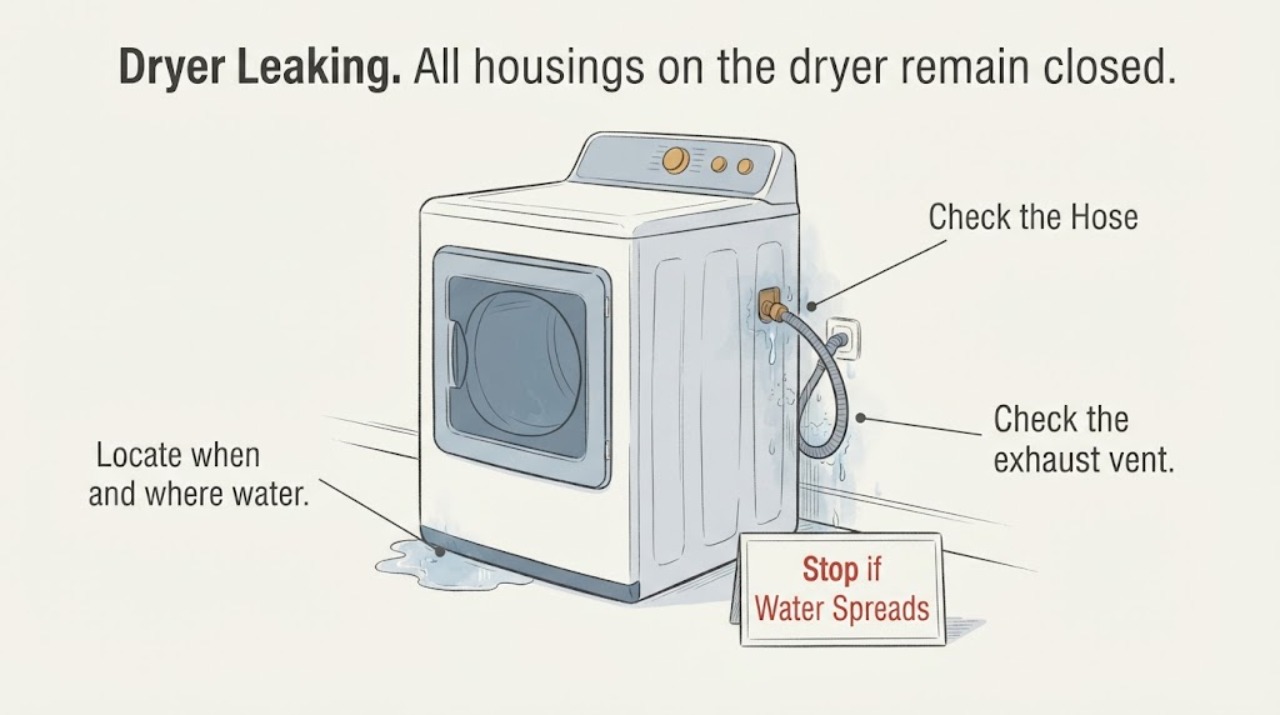
Start by locating where the water appears. On a Samsung steam dryer, moisture left in the drum after a steam-dry cycle can be normal, but dripping from the water supply hose calls for an inspection of the hose, cracks or holes, and both end gaskets or O-rings. Water entering the drum while steam is not in use needs Samsung service. Moisture inside the cabinet or around the vent can instead come from an exhaust vent that does not meet the model's requirements or needs cleaning; outside moisture on metal surfaces is often condensation in a humid room. If the dryer was recently installed, notify the installer and keep the exact model manual available. Stop for water near electrical parts, smoke, a gas smell, or uncontrolled leakage.
Work through in order
Diagnostic checks
Use only checks that match the exact appliance or system and its official guide.
-
Locate when and where water appears
Stop the cycle, let the dryer reach a safe handling state, and from a dry position note whether water is only inside the drum after a steam-dry cycle, dripping from the rear water hose, entering the drum while steam is off, collecting inside or around the exhaust vent, or appearing on the outside cabinet while idle.
Expected result: The water follows one of those patterns, or the source cannot be identified without moving panels or reaching wet electrical areas.
Next step: Use the matching branch below. If the source is not visible from safe, dry access, keep the dryer off and arrange service rather than opening the cabinet.
Stop if: Stop for water near the plug, controls, or wiring; smoke; a burning or gas odor; an uncontrolled leak; or any need to remove panels.
Why this matters
Why: Residual drum moisture after steam use can be normal; a hose drip, non-use steam leak, vent moisture, and exterior condensation have different causes and remedies. An unknown source is not a safe reason to dismantle the dryer.
-
Inspect the steam water supply hose
For a steam-dry model only, with the dryer stopped and safe to approach, inspect the visible water supply hose and both ends for dripping, cracks, holes, and intact gaskets or O-rings. Do not loosen a pressurized connection or reach behind a wet appliance; use the exact model manual for isolation and reconnection.
Expected result: The hose and end seals are dry and intact; or water drips from the hose, a crack or hole is visible, or a gasket or O-ring is damaged or missing.
Next step: If damage is visible, keep the water supply isolated and replace only with a part confirmed for the exact model, or arrange service. If the hose is dry and the drum still receives water while steam is off, use the service branch.
Stop if: Do not continue if water reaches electrical parts, the connection will not stop leaking, or a fitting needs force.
Why this matters
Why: A dry, intact hose makes the hose less likely to be the leak source. Samsung identifies a dripping hose and damaged end seals as replaceable water-line conditions, but the leak alone does not establish a universal part fit.
-
Check the exhaust vent for a moisture path
When the dryer is off and safe to access, compare the visible exhaust-vent routing with the exact user manual and look for lint or a restriction at the accessible vent opening. If moisture is already inside the dryer or vent, follow Samsung's stated sequence: detach the exhaust vent, wipe away moisture, run a timed-dry heating cycle with the vent disconnected, then clean the vent before reconnecting it.
Expected result: The vent meets the manual's routing requirements and is clear; or it is blocked, misrouted, wet, or allowing outside moisture to enter.
Next step: If the vent is dirty or misrouted, clean and correct it according to the exact manual before reconnecting. If moisture returns with a clear, compliant vent, stop testing and arrange service.
Stop if: Do not run the dryer if there is smoke, a gas smell, water near electrical parts, or a vent connection that cannot be safely detached and reseated.
Why this matters
Why: A restricted or incorrectly installed vent can keep moisture from leaving and may allow moisture in from outside. A clear, correctly routed vent makes room condensation or another source more likely.
-
Separate exterior condensation from an active leak
With the dryer idle and the floor dry, wipe the outside metal surfaces and observe whether moisture reforms in a humid room or near the drum and exhaust vent, especially if the door is left cracked. Reduce room humidity and keep the exterior dry; do not pour water or use a wet cloth near controls.
Expected result: Light moisture reforms on exterior metal in a humid environment and there is no hose drip or water entering the drum; or water continues to pool from a specific seam, hose, drum, or vent.
Next step: For condensation, reduce humidity and occasionally wipe the dryer dry. For a continuing localized drip, keep the dryer off and arrange service or return to the hose and vent checks without opening the cabinet.
Stop if: Stop for water entering controls, a wet floor around the power connection, smoke, burning odor, gas odor, or an active leak that cannot be contained.
Why this matters
Why: Samsung describes moisture on outside metal in a humid environment as likely condensation. Pooling from a specific connection or internal location is more consistent with a leak or vent problem and needs the relevant branch.
-
Escalate installation and non-use steam leaks
If the dryer was recently installed, record the model and leak location and notify the installer; compare the water-line and vent installation with the exact manual. If water enters the drum when the steam system is not in use, leave the dryer off and request Samsung service.
Expected result: The leak began after installation, a connection or vent differs from the manual, or the drum receives water while steam is off; alternatively, the installation is correct and no non-use steam leak is present.
Next step: Contact the installer for an installation-related leak or Samsung service for a non-use steam leak. Provide the exact model, cycle timing, water location, and photos taken only from dry, safe access.
Stop if: Do not open the cabinet, bypass a water connection, or keep operating when water reaches electrical parts or the leak is uncontrolled.
Why this matters
Why: Samsung treats recent-installation leaks as an installer follow-up and treats water entering the drum with steam off as a service condition. A correct installation with no active drip points back to condensation or vent moisture rather than a proven internal failure.
Use your observations
Decision map
Find the observation that best matches what you see, then follow the next safe action.
-
PATH 01Next step
What you see
The only moisture is a small amount left in the drum immediately after a steam-dry cycle, with no hose drip, cabinet pooling, or water entering while steam is off.
Do this next
Wipe the drum if needed and monitor the next cycle. Escalate if water appears when steam is not in use or begins collecting outside the drum.
Why this path and its safety boundary
Why it matters: Samsung identifies leftover drum moisture after a recent steam cycle as normal rather than a confirmed leak.
-
PATH 02Next step
What you see
A steam-dry model drips from the rear water supply hose, and inspection finds a crack, hole, damaged gasket, or damaged O-ring.
Do this next
Keep the water supply isolated, confirm the exact model, and replace only the model-compatible damaged hose or seal, or arrange service if the connection cannot be made dry and secure.
Why this path and its safety boundary
Why it matters: The water supply connection is the most direct supported source for this pattern; Samsung says damaged hose seals need replacement.
-
PATH 03Next step
What you see
Water is entering the drum even though the steam system is not being used, or a dry hose does not explain the drum water.
Do this next
Stop using the dryer and request Samsung service. Do not open the cabinet or order an internal valve from the symptom alone.
Why this path and its safety boundary
Why it matters: Samsung explicitly routes this non-use steam-system leak to service; it is not a routine hose-cleaning result.
-
PATH 04Next step
What you see
There is moisture inside or around the exhaust vent, or light moisture reforms on outside metal only in a humid environment while the steam hose and drum remain dry.
Do this next
Check and clean the vent according to the exact manual, reduce room humidity, and wipe exterior moisture. Arrange service if localized water persists after a clear, compliant vent and dry environment.
Why this path and its safety boundary
Why it matters: A vent routing or cleaning issue, outside moisture entry, or room condensation is more likely than a steam hose leak.
Helpful context
Understand the symptom
Find the source before calling it a dryer leak
Samsung's official guide starts with the location and timing of the water. A small amount of moisture left in the drum after a steam-dry cycle can be normal. A drip at the steam water supply hose, water entering the drum when steam is not running, dampness inside the exhaust path, and water beading on the outside of the cabinet point to different next steps. Do not buy a part until you know which pattern you have.
Treat vent moisture and room condensation differently
The exhaust vent is intended to carry moisture away and must meet the requirements in the exact user manual. Samsung also notes that humid surroundings can leave condensation on metal parts such as the drum or exhaust vent, especially while the dryer is idle. A dry towel, lower room humidity, and a clear, correctly installed vent address different observations; neither proves an internal water leak.
Know when a steam leak needs service
If water is leaking into the drum even though the steam system is not being used, Samsung directs the owner to request service. A hose with a crack, hole, damaged gasket, or damaged O-ring also needs the damaged sealing component replaced with a model-compatible part. Keep the appliance off if water reaches controls or electrical connections, and report whether the leak is from the hose, drum, vent, or cabinet.
Only after diagnosis
Potential parts
- steam water supply hose or end gasket/O-ring
Consider this category only when a steam-dry model's visible hose has a crack or hole, or an end gasket/O-ring is damaged or missing; normal post-steam drum moisture does not justify a part.
Confirm the complete dryer model and the manufacturer's fit information before ordering; the reviewed Samsung guidance does not establish universal compatibility.
When checks do not resolve it
Need a professional?
Request Samsung or qualified appliance service when water enters the drum while the steam system is not in use, when a hose connection continues to leak after safe isolation, when moisture returns with a correctly installed and clean vent, when water reaches electrical parts, or when the leak source cannot be identified without opening the cabinet. If the dryer was recently installed, notify the installer and provide the exact model, leak location, cycle timing, and installation details.
Common questions
FAQ
Is moisture in a Samsung steam dryer drum always a leak?
No. Samsung says some moisture left in the drum after a recent steam-dry cycle is normal. Water entering the drum while the steam system is not being used is a different condition that needs service.
What should I check on a leaking Samsung steam hose?
Inspect only from safe, dry access for drips, cracks, or holes in the water supply hose and for damaged or missing gaskets or O-rings at both ends. Isolate the water supply and confirm the exact model before replacing a sealing component.
Could a Samsung dryer leak be condensation?
Yes. Samsung says moisture on the outside of the dryer in a humid environment is likely condensation. Reduce humidity and keep the exterior dry, but treat a localized drip from a hose, drum, or vent as a separate fault pattern.
What if the dryer was just installed and is leaking?
Notify the installer and compare the water-line and exhaust-vent connections with the exact model manual. Keep the model number and the leak location available; do not open the cabinet to investigate an installation leak.
Read the exact guide
Official sources
- Samsung dryer is leakingSamsung · Directly supports the reviewed Samsung dryer leak guide's steam-hose inspection, non-use steam leak service boundary, vent requirements and cleaning, recent-installation escalation, and humid-environment condensation guidance.
Community feedback
Share a repair observation
Share a plain-text repair observation. Accepted observations are published automatically; this page may take a moment to update.