
On this page
Start here
Quick answer
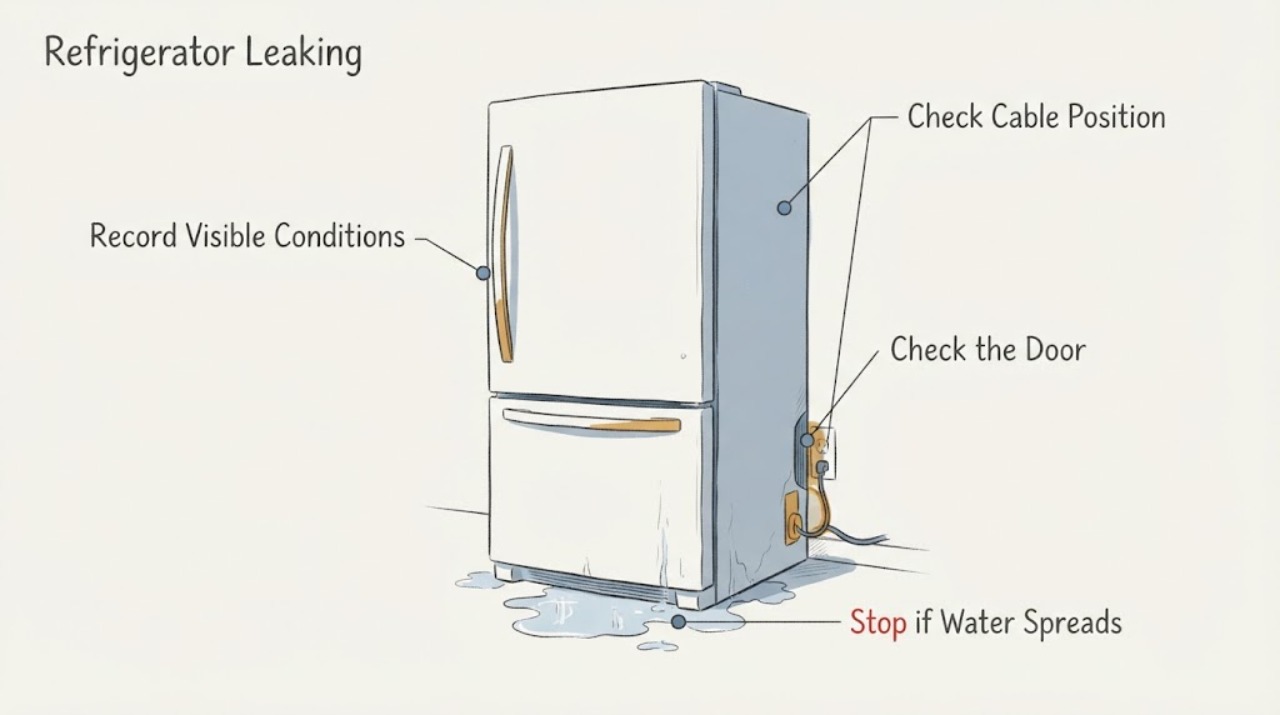
For a leaking Summit refrigerator, first identify whether the water is a normal droplet on the rear interior wall, a pool inside the cabinet, water on the floor, or a leak at a water connection if the model has one. Summit's troubleshooting guidance points to a clogged discharge opening or water gutter, a thick ice layer, poor door sealing, a dirty or damaged gasket, and an unlevel appliance. With power disconnected before cleaning, clear only an accessible drain opening as the exact manual permits, use a model-approved manual defrost procedure for ice, and check the door seal and level. If water continues, the leak is near electrical parts, a supply connection will not stop, or the seal, drain, pan, tubing, or cabinet is damaged, stop using the refrigerator and arrange qualified Summit service.
Work through in order
Diagnostic checks
Use only checks that match the exact appliance or system and its official guide.
-
Check 1
Record the complete model and serial information, then trace the water without removing panels: note whether it is a droplet on the rear interior wall, pooling under drawers, coming from the door edge, collecting beneath the appliance, or emerging from an external water connection. Wipe the accessible spill and protect the floor; keep hands and plugs dry.
Expected result: Only occasional rear-wall droplets appear, water pools inside, water reaches the floor, or a hose/valve connection is wet on a model equipped with water service.
Next step: Continue with the matching drain, frost, seal, or water-connection check. Do not energize a wet plug, pull a built-in unit, or open the rear machinery area.
Why this matters
Why: Rear-wall droplets can be the documented automatic defrost path. Pooling or floor water makes a blocked drain, ice overflow, poor seal, pan, or connection issue more likely; the location of an external connection narrows the path but does not identify a failed part.
-
Check 2
If water is pooling inside the refrigerator and the model manual shows an accessible discharge opening or gutter, turn the controls off and disconnect power before cleaning. Remove loose food or debris and clear the opening only as the Summit instructions allow; Summit's troubleshooting example specifies a plastic straw. Do not push a wire, knife, or other sharp object into the drain.
Expected result: The opening or gutter is visibly blocked and water drains after the accessible cleaning, or the opening looks clear and water still pools.
Next step: Dry the cabinet and monitor one defrost period. If the model does not document the opening or the leak returns, stop probing and arrange service rather than removing the liner or drain pan.
Why this matters
Why: A clear blockage followed by drainage supports a restricted defrost-water path. A clear opening with continued pooling makes ice, a damaged gutter or pan, poor leveling, or an internal drain fault more likely.
-
Check 3
Inspect the rear wall, freezer area if fitted, and the door perimeter for frost or a thick ice layer. If ice is blocking the water path, follow the exact model manual's manual-defrost procedure with power disconnected; do not use an electrical appliance, mechanical tool, or unapproved spray to accelerate defrosting.
Expected result: Ice or frost bridges the drain or gutter, the appliance defrosts and the leak stops, or no abnormal ice is present and the leak continues.
Next step: Let the unit dry fully after the documented defrost and observe once. Recurring ice or water requires service to find the underlying sealing, temperature, drain, or installation cause.
Why this matters
Why: A thick ice layer can divert defrost water or block the drain. A clear cabinet with a continuing leak makes a gasket, door alignment, pan, connection, or hidden drain fault more likely.
-
Check 4
Check the door and cabinet conditions: remove food or packaging that prevents closure, reduce heavy door-shelf loading, inspect the gasket for dirt, tears, or deformation, and confirm the refrigerator is stable on a level surface with the model-required clearance. Clean the gasket only with the mild solution allowed by the manual and dry it before closing the door.
Expected result: The door closes tightly after an obstruction is removed or the gasket is cleaned, the gasket is torn or detached, the cabinet is unlevel, or the door and seal appear normal.
Next step: Keep the corrected loading and verify the seal contacts the frame around the full perimeter. Follow the model manual for foot adjustment; do not repair a torn gasket or hinge by guesswork.
Why this matters
Why: An obstruction, heavy door load, dirty seal, or unlevel cabinet can compromise the seal and cause frost, condensation, and diverted water. A torn seal or persistent gap is a service or exact-model replacement issue.
-
Check 5
Only if the identified Summit model has an ice maker, dispenser, or plumbed water connection, inspect the visible supply hose, shut-off area, and connection for moisture, kinks, or a loose fitting. Do not disconnect the line or tighten a pressurized fitting while water is flowing; use the model installation manual for the shut-off location.
Expected result: The leak is at a visible water connection, the shut-off stops the flow safely, or the connections are dry and the water comes from inside the cabinet.
Next step: If safe, close the water shut-off and arrange service or plumbing help; do not operate a leaking water system near electricity. If the model has no water connection, skip this check and continue with the documented interior path.
Why this matters
Why: A connection leak points to the installation or water-supply path and may need a plumber or appliance technician. Dry connections make an internal drain, pan, door-seal, or defrost path more likely.
-
Check 6
After one documented correction, dry the floor and cabinet, restore power only when the plug and surrounding area are dry, and observe one normal cooling or defrost period. Record whether water returns, whether the refrigerator cools normally, and whether the door closes and seals without frost rebuilding.
Expected result: The leak stays absent, water returns from the same location, the door seal remains poor, or cooling or electrical symptoms accompany the leak.
Next step: Stop repeated testing and provide the model, serial, leak location, photos, and completed checks to Summit support or an authorized technician.
Why this matters
Why: A leak that stays absent after a documented obstruction, defrost, seal, or connection correction supports that accessible cause. Recurrence or a second symptom indicates an unresolved drain, pan, seal, installation, cooling, or electrical fault.
Use your observations
Decision map
Find the observation that best matches what you see, then follow the next safe action.
-
PATH 01Next step
What you see
Only occasional droplets form on the rear interior wall and they flow through the documented opening without pooling or reaching the floor.
Do this next
Keep the opening clear, limit unnecessary door opening, and monitor for pooling, heavy ice, or a change in cooling.
Why this path and its safety boundary
Why it matters: This pattern is consistent with Summit's automatic refrigerator defrost path rather than an external leak.
-
PATH 02Next step
What you see
Water pools inside under the drawers or on the cabinet floor, and the accessible discharge opening or gutter is blocked or covered by ice.
Do this next
Disconnect power and use only the manual's accessible cleaning or defrost procedure; arrange service if the opening is not accessible or the leak returns.
Why this path and its safety boundary
Why it matters: A restricted defrost-water path is more likely than a failed water-supply component.
-
PATH 03Next step
What you see
The door does not close tightly, the gasket is dirty or damaged, the cabinet is unlevel, or frost returns after the leak is dried.
Do this next
Correct only an obvious obstruction or documented leveling condition and arrange exact-model service for a torn seal, hinge, cabinet, or recurring frost problem.
Why this path and its safety boundary
Why it matters: Poor door sealing or installation alignment is more likely to be admitting moisture or diverting defrost water; a damaged gasket is not proven to be interchangeable across Summit models.
-
PATH 04Next step
What you see
Water comes from a plumbed connection, continues after the visible fitting is dry or shut off, reaches electrical parts, or returns after the drain and seal checks.
Do this next
Close the water supply or disconnect power only when safe, keep the appliance out of service, and contact Summit support, an authorized technician, or a qualified plumber as appropriate.
Why this path and its safety boundary
Why it matters: An installation, tubing, valve, pan, drain, or electrical-area fault needs professional diagnosis; continued operation can spread water or create a shock hazard.
Helpful context
Understand the symptom
A few droplets on the rear interior wall can be part of Summit's automatic defrost path: water runs through the rear opening to a tray above the compressor and evaporates. Water pooling under drawers, escaping from the cabinet, or appearing on the floor is a different symptom. The leak location and whether the appliance has a water connection determine the next safe check.
Summit sells compact, freestanding, built-in, and specialty refrigerator models, so do not assume a drain, ice maker, dispenser, or water hose exists on every unit. Use the complete model and serial information with Summit's manuals and support pages before removing a panel, moving a built-in appliance, or ordering a replacement part.
Only after diagnosis
Potential parts
- refrigerator door gasket
Consider a gasket only when the complete Summit model manual or authorized service confirms that the existing gasket is torn, detached, or no longer seals after cleaning and loading checks.
Match the complete model and revision; a gasket that looks similar is not evidence of fit. - drain pan, gutter, or drain component
Consider a drain component only after a qualified technician confirms a cracked pan, damaged gutter, or blocked internal drain that cannot be resolved by the documented accessible cleaning.
Drain layouts vary across Summit refrigerators; do not remove the liner or order a component from leak location alone. - water-supply tubing or inlet fitting
Consider this part class only for a model with a water connection and after a technician or plumber confirms a damaged hose, fitting, or valve at the leak location.
Confirm the exact model, tubing specification, and applicable plumbing requirements before replacement.
When checks do not resolve it
Need a professional?
Contact Summit support or an authorized technician when the refrigerator continues leaking after one documented drain, defrost, seal, or connection check; when a gasket, drain pan, gutter, tubing, or cabinet is damaged; when the leak is inside a built-in or inaccessible area; or when cooling, electrical, or repeated frost symptoms accompany the water. Provide the complete model and serial information, leak location, timing, photos, and the checks already completed.
Common questions
FAQ
Are droplets on the rear wall of a Summit refrigerator always a leak?
No. Summit's troubleshooting guidance says automatic defrost water can run through the rear-wall opening to a tray above the compressor and evaporate. Pooling under drawers, water outside the cabinet, or a blocked opening is a different symptom.
What can I use to clear a Summit refrigerator drain?
For an accessible opening, Summit's troubleshooting example specifies a plastic straw. Use the exact model manual, disconnect power before cleaning, and do not use a wire, knife, sharp object, electrical appliance, or unapproved defrosting method.
Can a dirty or damaged door gasket cause water?
Yes. Summit identifies poor door sealing, a dirty or damaged gasket, and a door that is not properly closed as causes associated with frost, condensation, and refrigerator performance problems. Clean only as the model manual permits; replace a damaged gasket by exact model.
Should I keep using the refrigerator if it is leaking?
Do not keep operating it when water reaches electrical parts, the leak is uncontrolled, the cord or plug is damaged, or the appliance is unstable. Isolate power or water only when safe and arrange qualified service.
Read the exact guide
Official sources
- 9 GENERAL TROUBLESHOOTINGSummit Appliance · Opened official Summit-hosted manual troubleshooting section; construction and part fit vary by model.
- Service and SupportSummit Appliance · Opened official Summit support page; use it to locate model manuals, service, and parts channels after the safe external checks.
- IMPORTANT SAFEGUARDSSummit Appliance · Opened official Summit CT701W compact refrigerator manual; safety boundaries are cited for cleaning and service, while physical design remains model-specific.
- Product Troubleshooting FAQSummit Appliance · Opened official Summit FAQ; use the exact model manual for model-specific clearances and construction.
- TROUBLESHOOTINGSummit Appliance · Opened an official Summit-hosted troubleshooting manual; exact controls and construction remain model-specific.
Community feedback
Share a repair observation
Share a plain-text repair observation. Accepted observations are published automatically; this page may take a moment to update.