
On this page
Start here
Quick answer
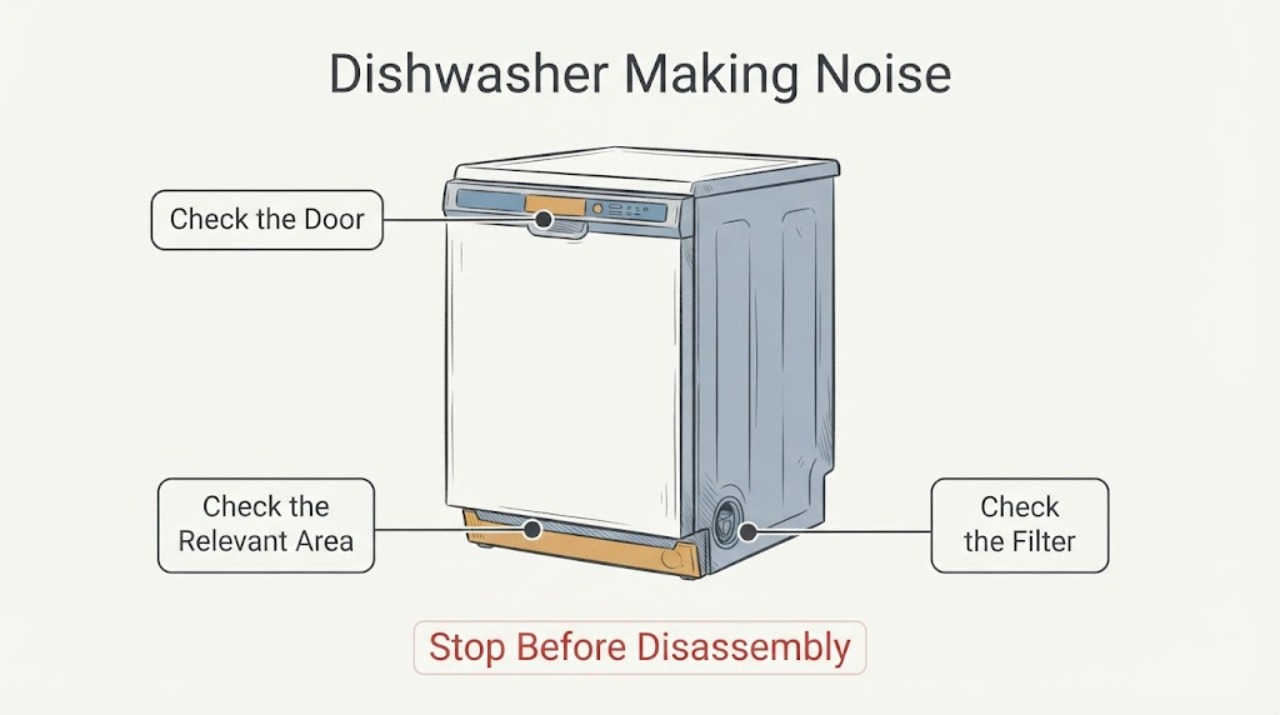
A Viking dishwasher noise often comes from dishes, pot lids, light items, spray arms, or plumbing transmitting sound. Stop the cycle and, when safe, check that dishes do not touch one another or the tub, light items are secured, pot handles and lids do not strike the walls, the spray arms can rotate, and the sink drain plugs are in place. Note whether the sound is a brief water or pump sound, a repeated knock synchronized with spray-arm rotation, or a new grinding, electrical, leaking, or burning sound. If the noise continues with an empty and correctly loaded rack, the spray arm cannot turn, an error appears, water leaks, or there is smoke or a burning odor, stop using the dishwasher and arrange Viking service; do not remove the pump or motor cover.
Work through in order
Diagnostic checks
Use only checks that match the exact appliance or system and its official guide.
-
Check 1
Identify when the noise occurs: filling, washing, draining, drying, or at the end of the cycle. From outside the closed door, note whether it is a splash or hum, a rattle or knock, a squeal or grind, or an electrical buzz, and whether a leak, error light, or wash-result change accompanies it.
Expected result: The noise is brief and tied to water movement, repeats at one point in the cycle, follows a rack item, or is new, loud, grinding, electrical, or accompanied by another fault.
Next step: Continue only with the accessible loading and spray-arm checks for a normal water or contact sound. Stop and arrange Viking service for a new grinding or electrical sound, leak, odor, error, or worsening wash result.
Why this matters
Why: Timing separates water and circulation sounds from a repeatable contact point or an abnormal mechanical or electrical symptom. Sound alone cannot identify a pump, motor, valve, or bearing.
-
Check 2
Stop the cycle and wait for the dishwasher to be safe to open. Inspect both racks and the door area for pot lids, handles, pans, cookie sheets, utensils, or light items touching the tub, another dish, or the spray-arm path; reload so items do not touch and secure light items.
Expected result: A dish or utensil is touching a wall or another item, an item is loose, or the racks are clear and the noise remains.
Next step: Reposition only the accessible load and run one normal cycle. If the noise repeats with a clear load, continue to the spray-arm and drain observations or request service.
Why this matters
Why: Viking's quiet-operation guidance specifically links clattering or thumping to dish contact, unsecured light items, and cookware touching the walls. A clear load makes a load-related rattle less likely but does not clear the circulation system.
-
Check 3
With the dishwasher off, spin each accessible spray arm by hand and check for a loose utensil, food particle, or dish that prevents free rotation. Inspect the user-removable filter only as the exact Viking manual directs; do not remove pump covers or reach behind the sump.
Expected result: A spray arm is obstructed, does not rotate freely, the filter is visibly clogged, or the spray arms and filter appear clear.
Next step: Clear only a loose accessible obstruction and reinstall every part as the model manual shows. Arrange service for a loose, cracked, seized, or persistently noisy spray arm or sump area.
Why this matters
Why: Viking documentation identifies spray-arm cleaning and filter care as owner tasks on applicable dishwashers. A blocked arm can create repeatable knocking and poor circulation; a clear arm does not prove the pump or motor is healthy.
-
Check 4
Check the sink-side drain setup without disconnecting plumbing: confirm the sink drain plugs are inserted during dishwasher operation and note whether the sound changes when the sink is draining or the dishwasher reaches drain. Look for standing water or a visible leak after the cycle.
Expected result: The drain plug was missing, the noise transfers through the sink, drainage is slow, standing water or a leak is present, or the drain setup is normal.
Next step: Replace only a missing sink drain plug and monitor one cycle. For slow drainage, standing water, leakage, or a noise that persists at drain, stop and arrange qualified Viking service.
Why this matters
Why: Viking says drain plugs help prevent noise transfer through drains. Slow drainage, standing water, or a leak changes the issue from a simple noise complaint to a drain or safety fault.
-
Check 5
Record the exact model, cycle and option, rack position, noise timing, and whether the noise follows an empty or loaded rack. Do not test with the door open, bypass a door latch, or run the appliance with any panel or guard removed.
Expected result: The sound disappears after loading is corrected, repeats with an empty rack, or occurs with an error, leak, smoke, burning odor, or electrical smell.
Next step: Use the recorded pattern to arrange Viking service for a repeat or safety-related noise. Do not order a pump or motor from the sound alone.
Why this matters
Why: A load-dependent change supports dish contact; a repeat with no contact leaves a circulation, drain, motor, or installation issue unresolved. Viking manuals use model-specific fault information and direct persistent faults to service.
Use your observations
Decision map
Find the observation that best matches what you see, then follow the next safe action.
-
PATH 01Next step
What you see
The noise is a rattle or thump that stops after pot lids, handles, pans, utensils, and light items are repositioned.
Do this next
Use the corrected loading pattern and monitor one cycle. Arrange service if the noise returns with a clear rack.
Why this path and its safety boundary
Why it matters: Viking's loading guidance supports dish contact or an unsecured item as the likely immediate source.
-
PATH 02Next step
What you see
The noise repeats when a spray arm reaches one position, and the arm is blocked or cannot rotate freely by hand with the appliance off.
Do this next
Clear only the accessible obstruction or follow the exact manual for spray-arm cleaning. Do not force a damaged or seized arm; request service.
Why this path and its safety boundary
Why it matters: A visible obstruction or spray-arm problem is more likely than a general motor diagnosis.
-
PATH 03Next step
What you see
The sound occurs at drain, the sink drain plug is absent, or the drain is slow and standing water or leakage appears.
Do this next
Restore only a missing drain plug. Stop the dishwasher and arrange qualified service for slow drainage, standing water, or a leak.
Why this path and its safety boundary
Why it matters: Drain plumbing or noise transfer is involved, and water or leakage makes continued testing inappropriate.
-
PATH 04Next step
What you see
A grinding, electrical buzz, burning odor, smoke, damaged wiring, leak, error indication, or persistent noise occurs with an empty and correctly loaded rack.
Do this next
Stop using the dishwasher, isolate water or power only from a safe accessible control when appropriate, and arrange Viking service.
Why this path and its safety boundary
Why it matters: An internal motor, pump, valve, electrical, or installation fault remains possible and cannot be identified safely from sound alone.
Helpful context
Understand the symptom
The sound's timing and location are more useful than the word noisy. A rattle that follows a rack item or spray-arm rotation is a loading or obstruction lead; a hum or water sound during circulation may be normal operation; a new grinding, electrical, leak, or burning symptom needs service. Viking has multiple dishwasher series, so the exact use-and-care manual controls any reset or part procedure.
Keep checks external and user-accessible. Do not run the dishwasher with a rack, spray arm, filter, pump cover, or panel removed, and do not reach into a moving spray arm or energized appliance.
When checks do not resolve it
Need a professional?
Viking service should diagnose a persistent noise with a clear load and free spray arms, a grinding or electrical sound, drainage or leak symptoms, an error indication, or any noise requiring access behind a panel. Provide the exact model, cycle timing, rack position, and sound description.
Common questions
FAQ
Why does my Viking dishwasher rattle during washing?
Check whether pot lids, handles, pans, utensils, or light items touch the walls, racks, or one another. Viking recommends loading so items do not touch and securing light items; a repeat rattle with a clear load needs service.
Can the sink drain make a Viking dishwasher sound louder?
Yes. Viking says to keep sink drain plugs inserted during dishwasher operation to prevent noise transfer through drains. Slow draining, standing water, or a leak is a service condition.
Should I replace the Viking dishwasher pump when it makes noise?
Not from sound alone. Record when the sound occurs and check the load and accessible spray-arm path; a persistent or grinding noise needs model-specific Viking service diagnosis.
Read the exact guide
Official sources
- Support FAQs for OwnersViking Range, LLC · Viking dishwasher quiet-operation and noise-reduction loading guidance
- Viking Range, LLC | Support and Docs | DocumentationViking Range, LLC · Viking product documentation archive and model-specific dishwasher use-and-care and troubleshooting manuals
Community feedback
Share a repair observation
Share a plain-text repair observation. Accepted observations are published automatically; this page may take a moment to update.