
On this page
Start here
Quick answer
First separate a lint filter that remains wet after washing from clothes that take too long to dry. A washed filter should be rinsed, towel-dried thoroughly, and reinstalled only when fully dry. If water beads on the mesh, lint falls away while the filter is installed, or clothes remain damp, detergent or fabric-softener residue may be blocking the screen and reducing airflow. If the filter is clean and dry but drying is still slow, check the filter slot, outside exhaust hood, and vent run for restricted airflow. Do not run the dryer with a loose, damaged, blocked, or missing filter; stop and arrange qualified appliance or vent service if lint has built up inside the cabinet, the vent is inaccessible, or airflow remains poor.
Work through in order
Diagnostic checks
Use only checks that match the exact appliance or system and its official guide.
-
Check 1
Clarify whether the lint filter remains wet after you wash it, or whether the filter dries normally but the clothes take too long to dry; note whether the issue started after a deep cleaning.
Expected result: The screen itself is damp, the clothes remain damp while the screen is dry, or both symptoms occur.
Next step: Use the filter-cleaning checks for a damp screen and the airflow checks for slow laundry. Do not put a wet filter into the dryer or run the dryer without its filter.
Why this matters
Why: A damp screen is a reinstallation and residue-removal issue. Slow clothes drying with a dry screen shifts attention to mesh blockage, the filter slot, the exhaust path, or another dryer-performance problem.
-
Check 2
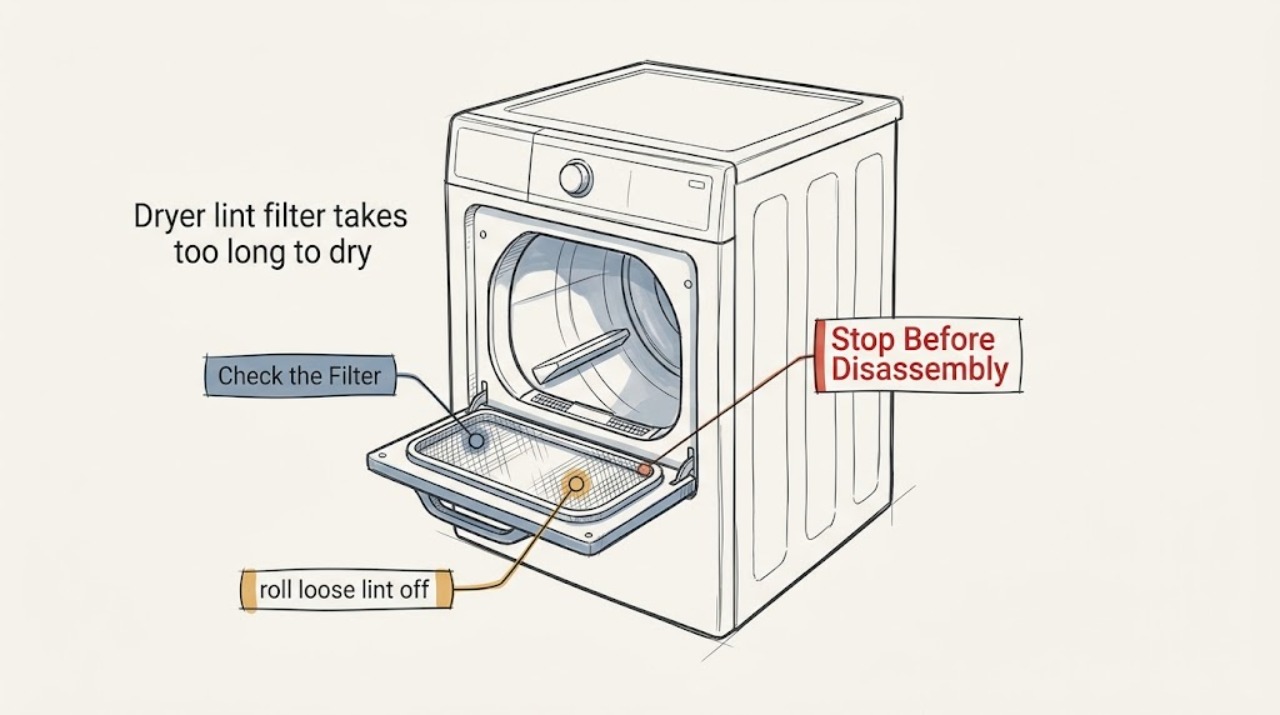
With the dryer off and the filter removed, roll loose lint off the screen with your fingers and inspect both sides of the mesh for a film, water beads, or lint that stays attached in patches.
Expected result: Loose lint comes off readily, or a film and patchy lint remain on the mesh after ordinary lint removal.
Next step: If residue is present, deep-clean the screen with the manufacturer's procedure before judging dryer performance. If the mesh is torn or distorted, do not reinstall it; arrange a correctly fitted replacement.
Why this matters
Why: Loose lint is routine after a load. A film or persistent patchy lint suggests detergent or fabric-softener residue that can block the screen and increase drying time.
-
Check 3
For a screen with visible residue, wet both sides, gently scrub with a nylon brush and liquid detergent, rinse thoroughly, and dry the screen completely with a clean towel before reinstalling it.
Expected result: Water passes through the mesh more freely after cleaning and the filter can be fully dried, or water still beads and the mesh remains coated.
Next step: Reinstall only the fully dry, intact screen and run a normal test load. If the residue remains after careful cleaning or the screen cannot dry because it is damaged, stop using the dryer until the screen is replaced or assessed.
Why this matters
Why: Improved wetting and a fully dry screen support residue buildup as the cause. Continued beading or coating means the mesh may still be blocked, damaged, or contaminated beyond a simple cleaning.
-
Check 4
Check the filter opening and slot for lint that has fallen outside the screen, then clean only the accessible slot area with the dryer's approved cleaning method while the dryer is off.
Expected result: Lint is packed around the slot or falls into the opening, or the slot is clear and the filter seats firmly.
Next step: Remove accessible lint without pushing it deeper into the dryer. If lint has accumulated inside the cabinet or the slot cannot be reached safely, stop and arrange qualified appliance service.
Why this matters
Why: Lint outside the screen can reduce airflow even when the removable filter looks clean. A clear slot and firm fit make the rest of the exhaust path more likely.
-
Check 5
With the filter clean, dry, intact, and installed firmly, inspect the outside exhaust hood and the vent run behind the dryer for visible lint, a crushed or kinked section, or little air movement while the dryer operates normally.
Expected result: The hood is blocked, the vent hose is crushed or kinked, airflow is weak, or the outside path appears clear with strong airflow.
Next step: Clear only accessible exterior lint according to the owner manual. Arrange qualified vent cleaning when the run is inaccessible or restricted, and do not disassemble the dryer cabinet to chase the restriction.
Why this matters
Why: A blocked hood, damaged vent run, or weak airflow can keep moist air from leaving and extend drying time. Strong airflow shifts attention back to load size, cycle selection, moisture sensing, or an appliance fault.
-
Check 6
Run one comparable load using the owner's recommended cycle and load size after the filter and accessible airflow checks are complete; compare whether the screen stays seated and whether the load dries normally.
Expected result: The load dries normally, the filter loosens or becomes blocked again, or the load remains damp despite a clean dry filter and apparently clear vent.
Next step: Stop using the dryer if the filter cannot stay seated or if there is overheating, a burning odor, unusual noise, or visible lint escaping. Otherwise arrange service for persistent poor performance after these checks.
Why this matters
Why: Normal drying after cleaning supports filter residue or an accessible airflow restriction. A loose or repeatedly blocked filter suggests a fit or filter problem. Persistent slow drying with clear airflow needs appliance diagnosis.
Use your observations
Decision map
Find the observation that best matches what you see, then follow the next safe action.
-
PATH 01Next step
What you see
Do this next
Towel-dry the screen thoroughly, let it finish drying outside the dryer, and reinstall it only when fully dry and firmly seated. Do not run a cycle with the wet filter.
-
PATH 02Next step
What you see
Do this next
Repeat the manufacturer's residue-cleaning method on an intact screen, then inspect the slot and outside vent. If wetting remains poor or airflow is restricted, arrange service.
-
PATH 03Next step
What you see
Do this next
Stop at the accessible inspection boundary and arrange qualified vent cleaning or repair when the restriction is inside the run, in the wall, or at an inaccessible hood.
-
PATH 04Next step
What you see
Do this next
Do not run the dryer with a loose or damaged filter and do not open the cabinet. Arrange qualified appliance service with the model number and the observed drying pattern.
Helpful context
Understand the symptom
The filter itself versus slow drying
The lint screen is part of the dryer's airflow path. If you mean that the screen is still wet after you washed it, the immediate answer is to dry it completely before putting it back. If you mean that laundry remains damp for too long, a lint screen coated with detergent or fabric-softener residue can restrict airflow even when loose lint has been removed. Those are related but different checks.
Do not trade drying speed for a fire risk
Never operate the dryer with a loose, damaged, blocked, or missing lint filter. Do not keep running it to dry a wet filter, and do not reach into the cabinet to remove accumulated lint. A vent or cabinet restriction needs the model instructions or a qualified service professional.
Only after diagnosis
Potential parts
- replacement dryer lint filter
Consider this only if the existing screen is torn, warped, blocked beyond cleaning, or cannot remain firmly seated after its model-specific fit is confirmed.
Match the exact dryer model, screen dimensions, frame, and locking or seating features; do not run the dryer with a generic screen that fits loosely. - dryer vent cleaning service or vent component
Consider this only when the clean, dry filter is not the cause and weak airflow, a visible crushed section, or a blocked exterior hood indicates an exhaust-path restriction.
Confirm the vent route, material, outlet, and local installation requirements with a qualified vent professional before changing components.
When checks do not resolve it
Need a professional?
Stop using the dryer if the lint filter is loose, damaged, blocked, or missing; if lint accumulates inside the cabinet; if airflow is weak; or if you notice overheating, a burning odor, smoke, or unusual noise. Arrange qualified appliance or vent service when the vent run is inaccessible, the screen will not seat, the filter remains coated after cleaning, or clothes remain damp after a clean, dry filter and clear accessible vent. Do not open the cabinet or bypass the filter to make a cycle run.
Common questions
FAQ
Can I put a wet lint filter back in the dryer?
No. After washing, rinse the screen and dry it thoroughly with a clean towel before reinstalling it. Do not run the dryer without the screen or with it loose, damaged, or blocked.
Why does a clean-looking lint filter make drying take longer?
Detergent or fabric-softener residue can coat the mesh even after loose lint is removed. If the screen is clean and dry, a blocked slot or exhaust vent can still restrict airflow and keep clothes damp.
How do I know whether the vent is causing the long drying time?
With the filter clean and firmly seated, look for visible lint, a crushed or kinked vent run, a blocked outside hood, or weak airflow. Have an inaccessible or restricted vent professionally cleaned rather than opening the dryer cabinet.
When should I replace the lint filter?
Replace it only when inspection confirms damage, distortion, persistent blockage, or a poor fit that prevents firm seating. Match the exact dryer model and screen features; do not use a loose generic screen.
Read the exact guide
Official sources
- How to clean a dryer lint trap slotWhirlpool · Supports the distinction between a visibly clean removable screen and lint or residue remaining in the slot or on the mesh.
- Cleaning the Dryer Lint FilterWhirlpool Product Help · Directly supports the lint-filter cleaning and drying checks for a dryer screen that stays wet or is associated with longer drying time.
- Not DryingWhirlpool Product Help · Supports separating a clean-filter problem from restricted vent airflow and persistent slow drying.
- AF or "Check Vent" - DryerWhirlpool Product Help · Supports checking the lint screen, crushed or kinked vent run, exterior exhaust hood, and weak airflow when drying takes too long.
Community feedback
Share a repair observation
Share a plain-text repair observation. Accepted observations are published automatically; this page may take a moment to update.