
Repair problem
Takes Too Long To Dry Troubleshooting Guides
Published FixGraph guidance for diagnosing and responding to takes too long to dry.
Matching published guides
Choose a guide that matches the service, equipment, and conditions you are seeing.
-
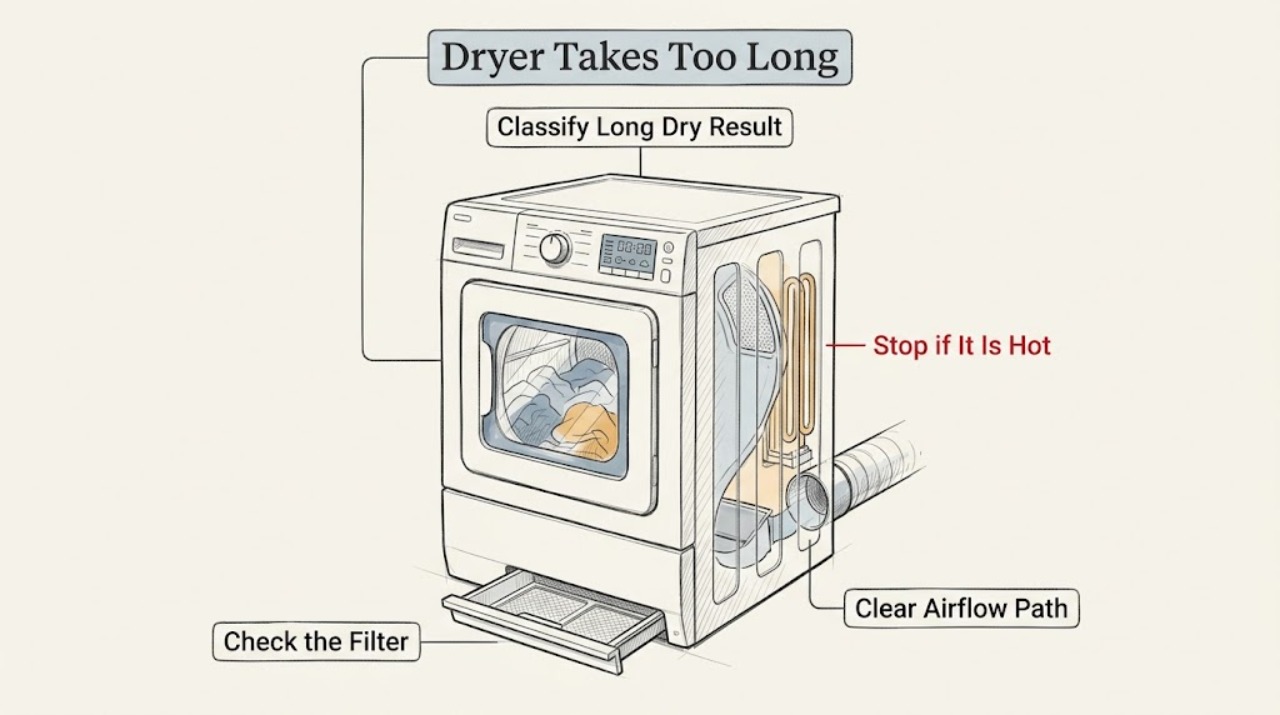
Amana Dryer Takes Too Long to Dry: What to Check and What to Do Next
When an Amana dryer takes too long to dry, start with airflow and load conditions rather than replacing a part. Clean the lint filter, check the outside exhaust hood for a blocked flap or weak airflow, and inspect the accessible hose for kinks or crushing.
-
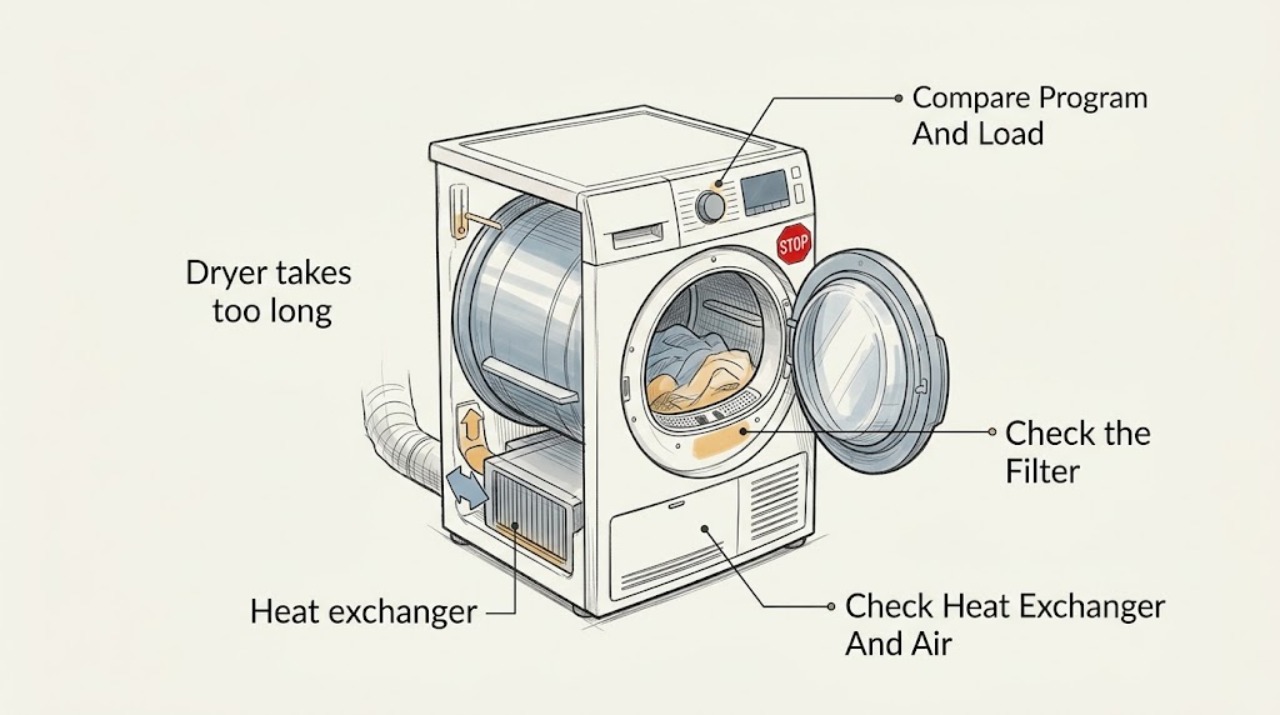
Bosch dryer takes too long to dry: What to Check and What to Do Next
A Bosch dryer can take too long when the lint filter, heat exchanger or condenser, moisture sensor, air inlet, or exhaust path needs attention; the selected program, an overloaded or very small load, high initial moisture, poor room ventilation, or a delayed or adaptive time display can also be involved.
-
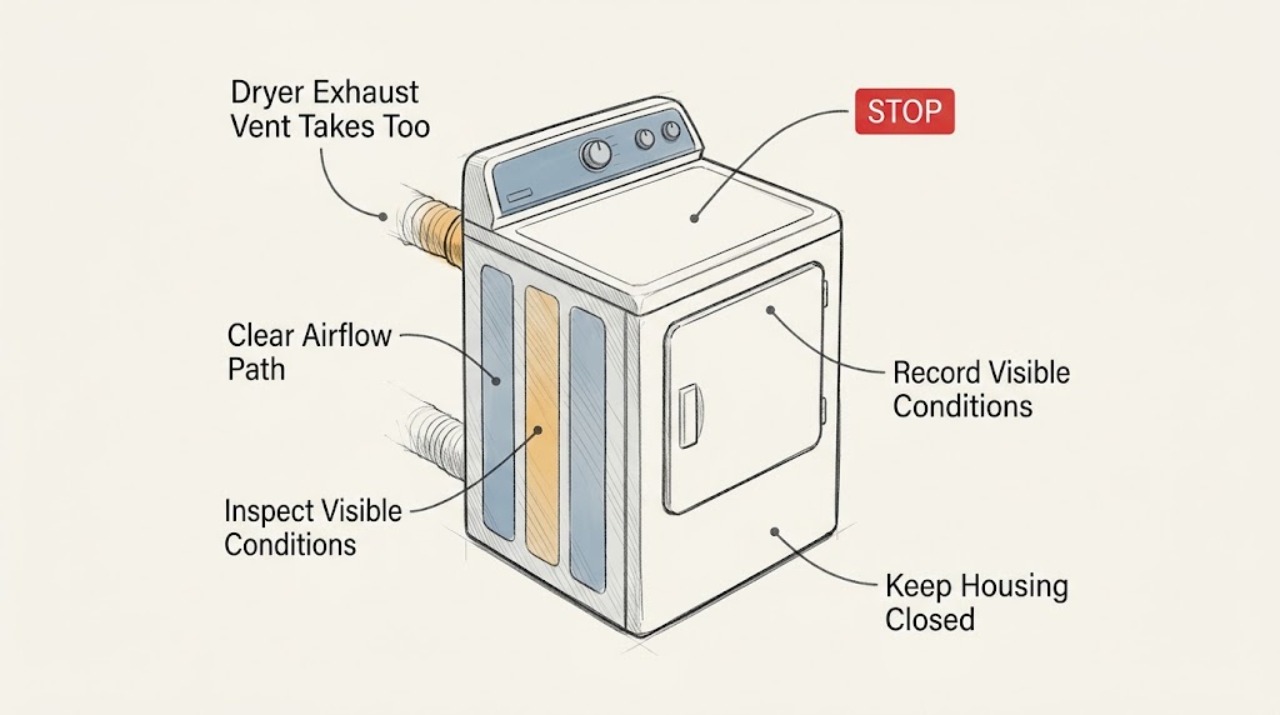
Dryer Exhaust Vent Takes Too Long to Dry: What to Check and What to Do Next
When a vented dryer heats but takes too long to dry, restricted exhaust airflow is a leading suspect. Start with the lint screen, any restricted-airflow or check-vent message, the visible hose behind the dryer, and the outside hood: lint, a crushed or kinked hose, too many bends, excessive length, or a blocked hood can keep moist air from leaving.
-
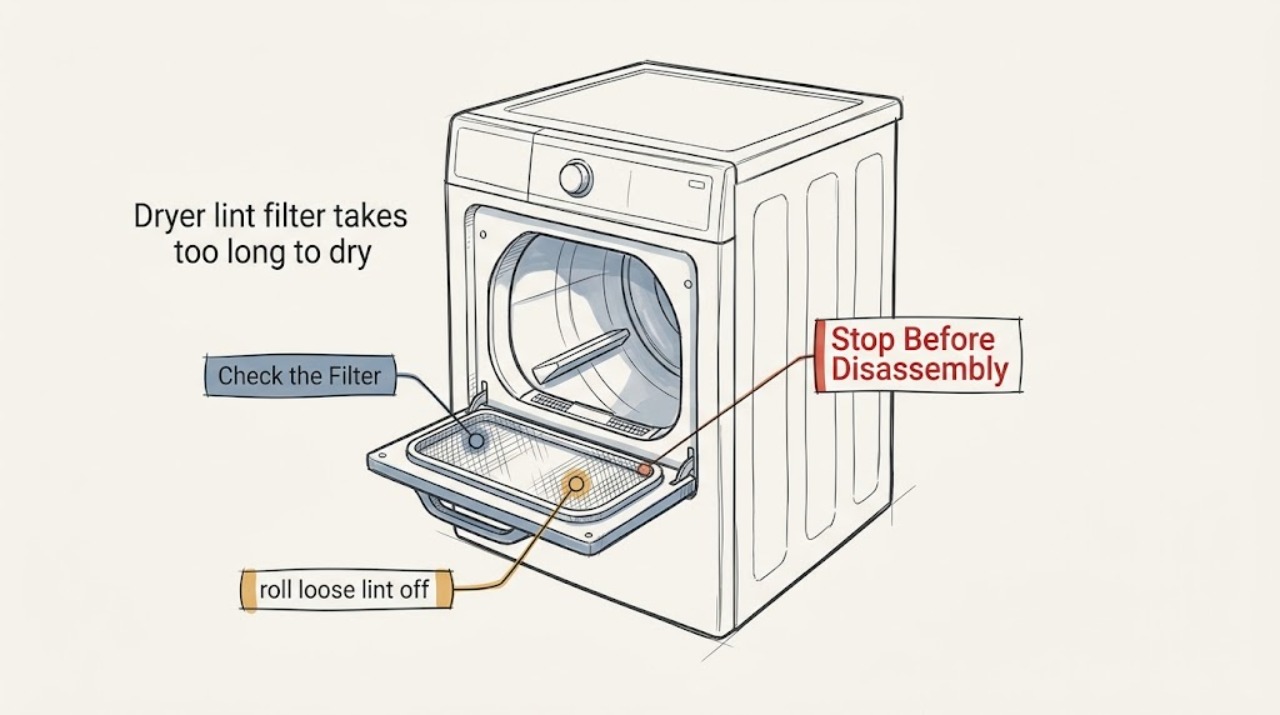
Dryer lint filter takes too long to dry: What to Check and What to Do Next
First separate a lint filter that remains wet after washing from clothes that take too long to dry. A washed filter should be rinsed, towel-dried thoroughly, and reinstalled only when fully dry.
-
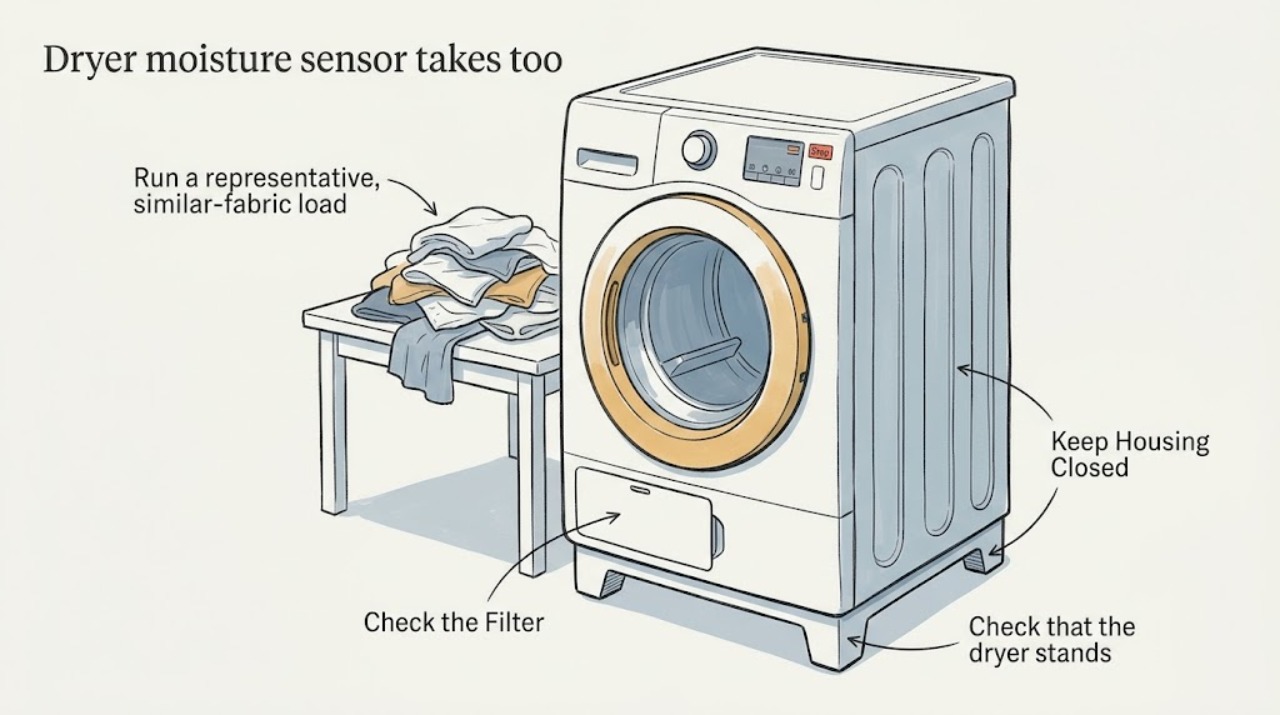
Dryer moisture sensor takes too long to dry: What to Check and What to Do Next
If a dryer takes too long on a moisture-sensing cycle, first check whether the load is actually contacting clean sensor strips and whether the dryer is level. Then check the lint filter, vent hose, outside hood, load size, and the heat result.
-
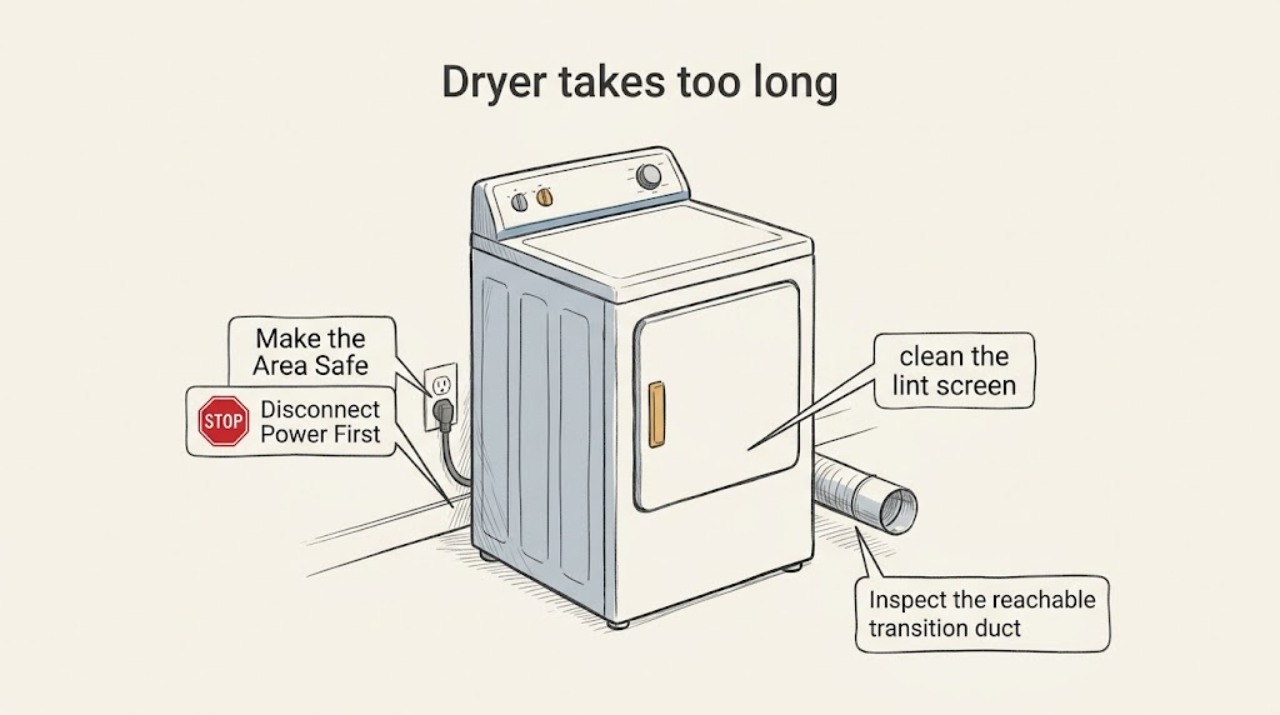
Dryer takes too long to dry airflow is weak: What to Check and What to Do Next
A dryer that takes too long to dry with weak airflow usually has a restriction between the lint screen, drum, duct, and outside hood. Stop and let it cool, then unplug it before checking the lint screen, the reachable hose for crushing or kinks, and the exterior hood for lint, debris, ice, landscaping, or a flap that does not open.
-
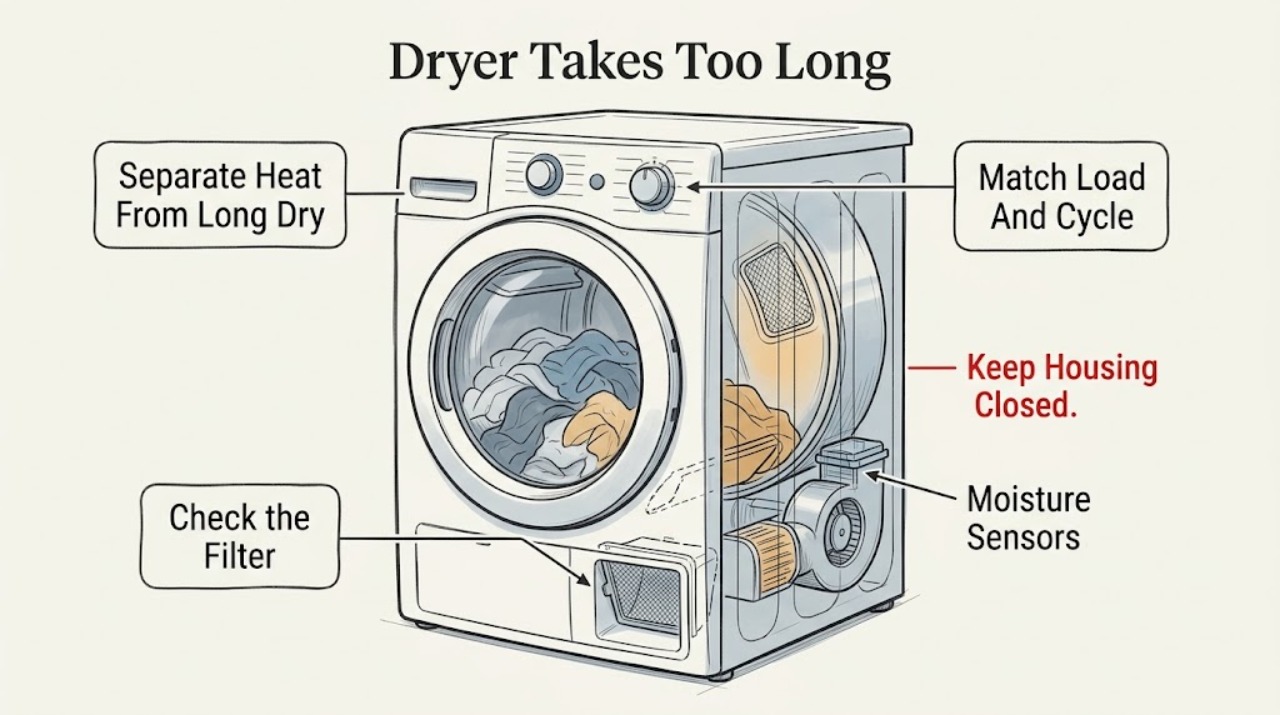
Dryer Takes Too Long to Dry and Clothes Remain Damp: What to Check and What to Do Next
When a dryer runs but clothes remain damp, first determine whether the drum is producing heat. A heated dryer with weak airflow most often points to lint or a restricted exhaust path, while an air-only or energy-saving setting, oversized or very wet load, and a sensor cycle can also lengthen or end a cycle early.
-
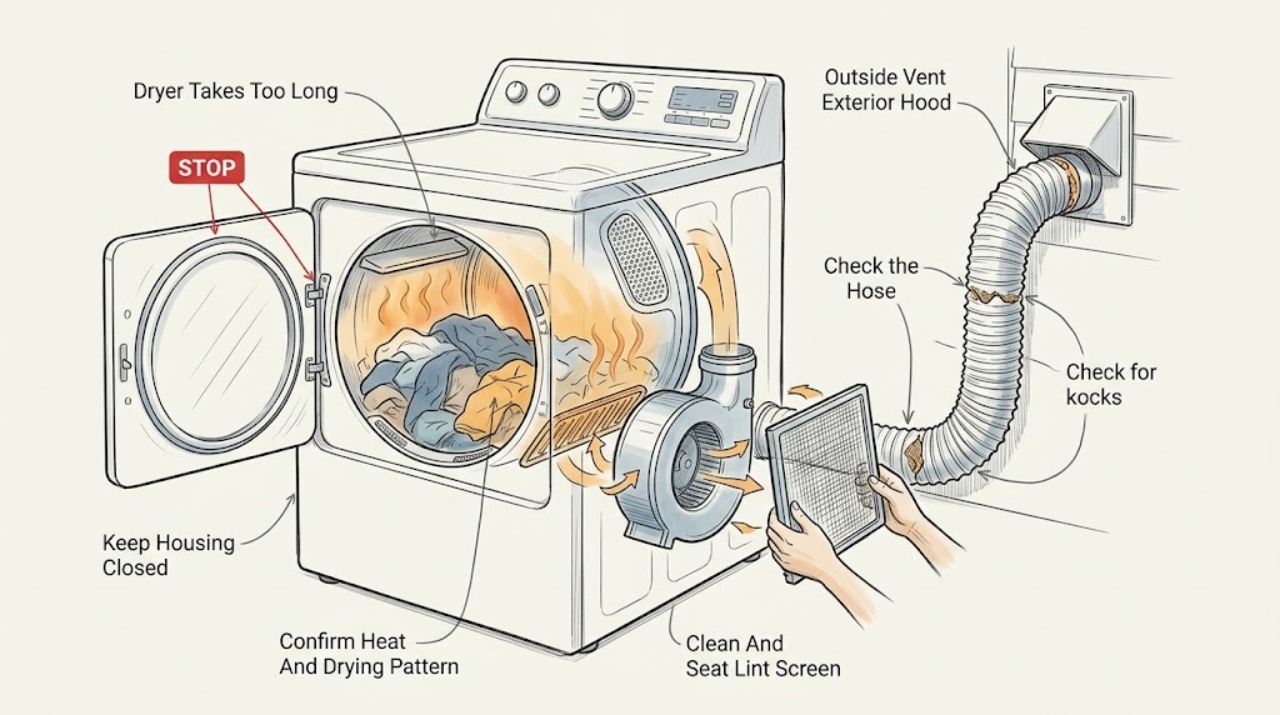
Dryer Takes Too Long to Dry, Heat Is Present: What to Check and What to Do Next
When a dryer produces heat but takes too long to dry, start with airflow rather than replacing a heater. Clean and correctly reinstall the lint screen, then inspect the visible exhaust hose for crushing or kinks and the outside hood for lint, debris, a nest, or a flap that cannot open.
-
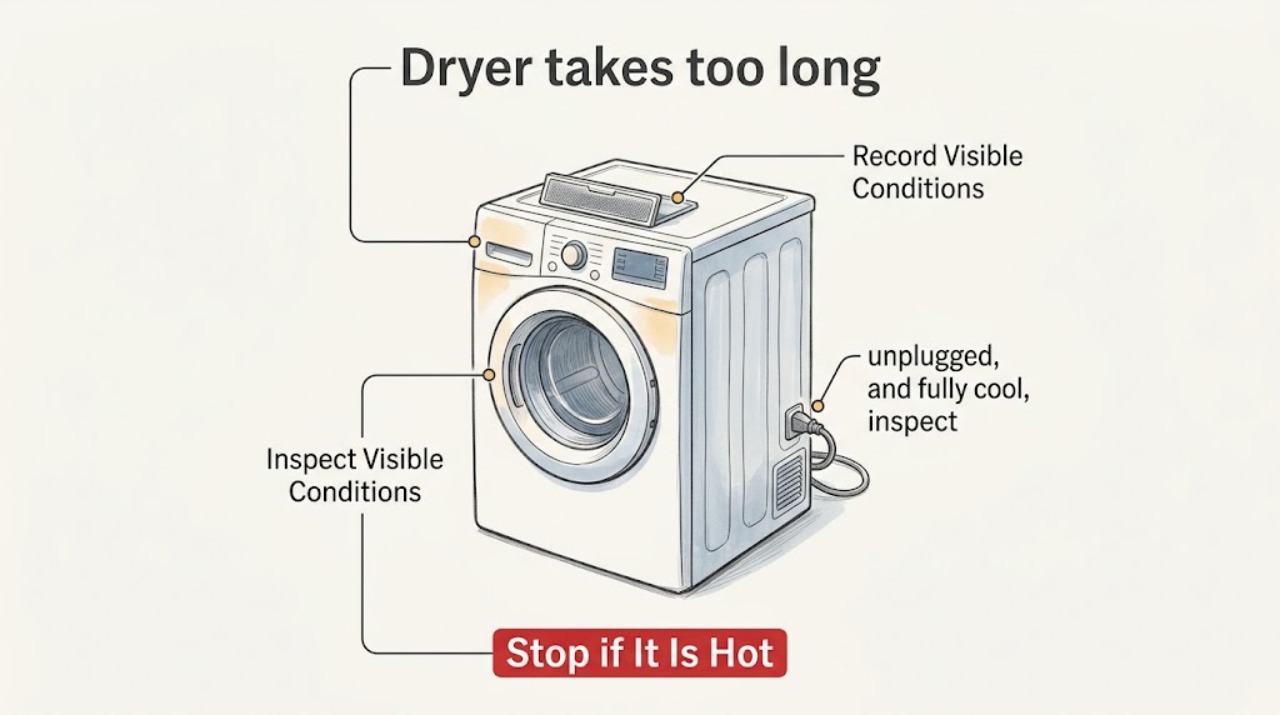
Dryer takes too long to dry: What to Check and What to Do Next
Long dryer times usually come from restricted airflow, a loaded or very wet load, a cycle or sensor expectation, or a heating, drive, or control problem. Start by recording the cycle, load, and whether clothes are warm or cool when they remain damp.
-
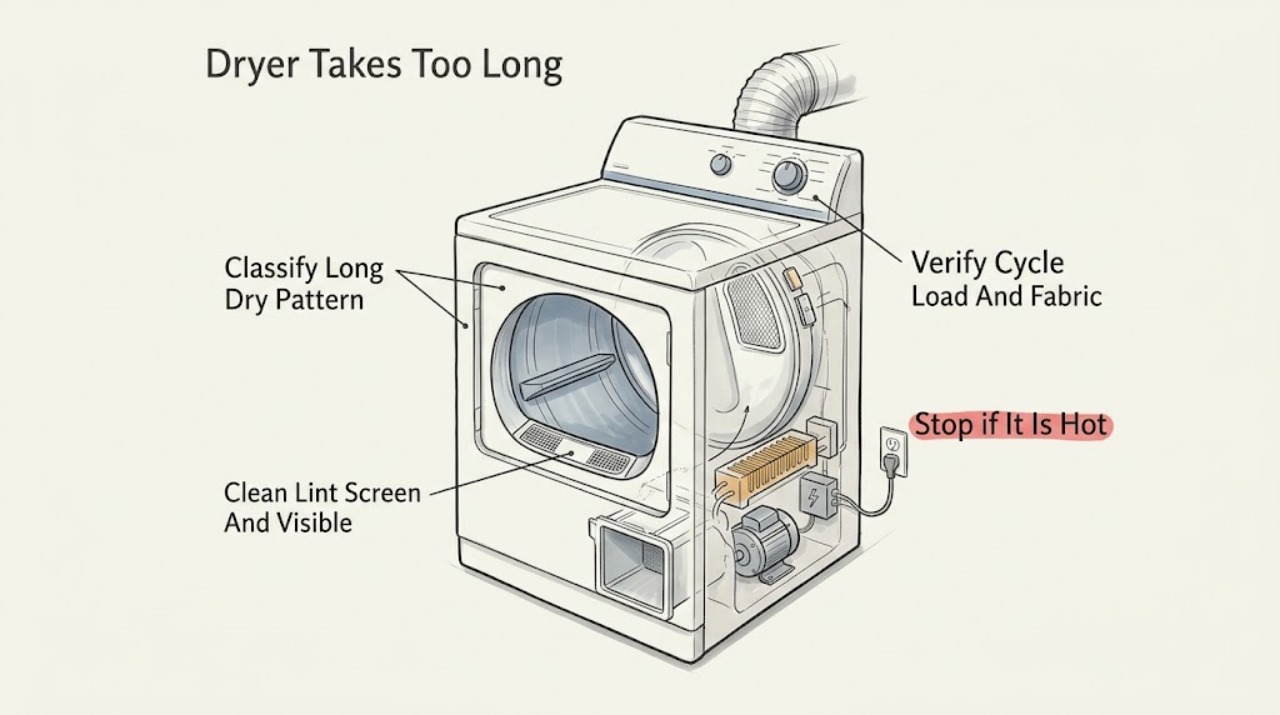
Electrolux Dryer Takes Too Long to Dry: What to Check and What to Do Next
An Electrolux dryer that takes too long to dry usually has restricted airflow, a coated lint screen, an unsuitable cycle or dryness setting, an overloaded or poorly sorted load, residue on the moisture sensors, inadequate power or heat, or a ventilation condition. Start by cleaning and fully drying the lint screen, checking the visible exhaust hose and outside hood, and confirming the cycle and temperature match the fabric and load.
-
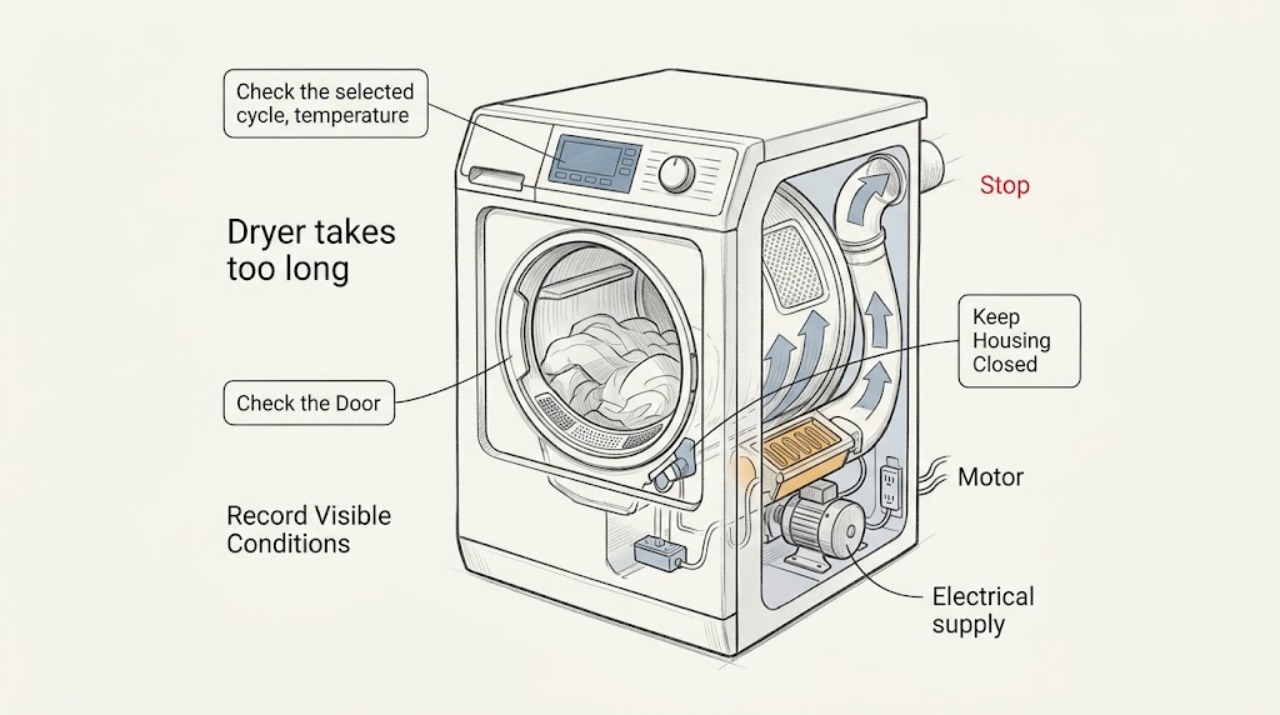
Frigidaire dryer takes too long to dry: What to Check and What to Do Next
Start by separating a true long-dry problem from a cycle or load choice. Frigidaire recommends cleaning the lint screen, checking the selected cycle and temperature, using a suitable load size and fabric mix, inspecting the moisture-sensor bars for residue, and checking the exhaust duct and hood for restrictions.
-
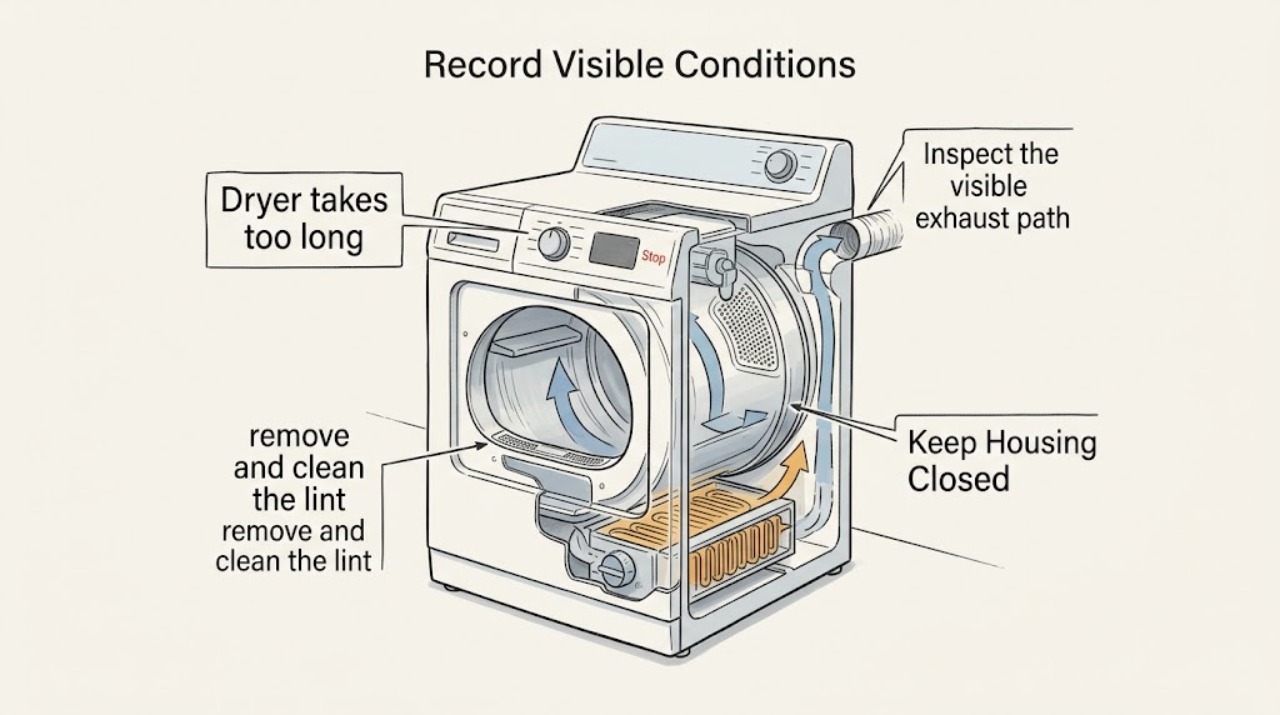
GE dryer takes too long to dry: What to Check and What to Do Next
A GE dryer that takes too long to dry is most often affected by exhaust airflow, a coated lint screen, an unsuitable load or cycle, or clothing that enters the dryer wetter than usual. GE says drying time depends on heat source, load size, fabric, moisture, selected cycle, and vent condition; its support guidance specifically calls out crushed or obstructed ducting, a blocked hood, plastic or unsuitable flexible venting, poor front clearance, and lint buildup.