
Kitchenaid appliance guidance
Kitchenaid Gas Oven Repair Guides
Troubleshooting and repair guidance for published Kitchenaid Gas Oven problems, symptoms, and maintenance questions.
Published Kitchenaid Gas Oven guides
Choose the guide whose symptom or condition most closely matches what you are seeing.
-
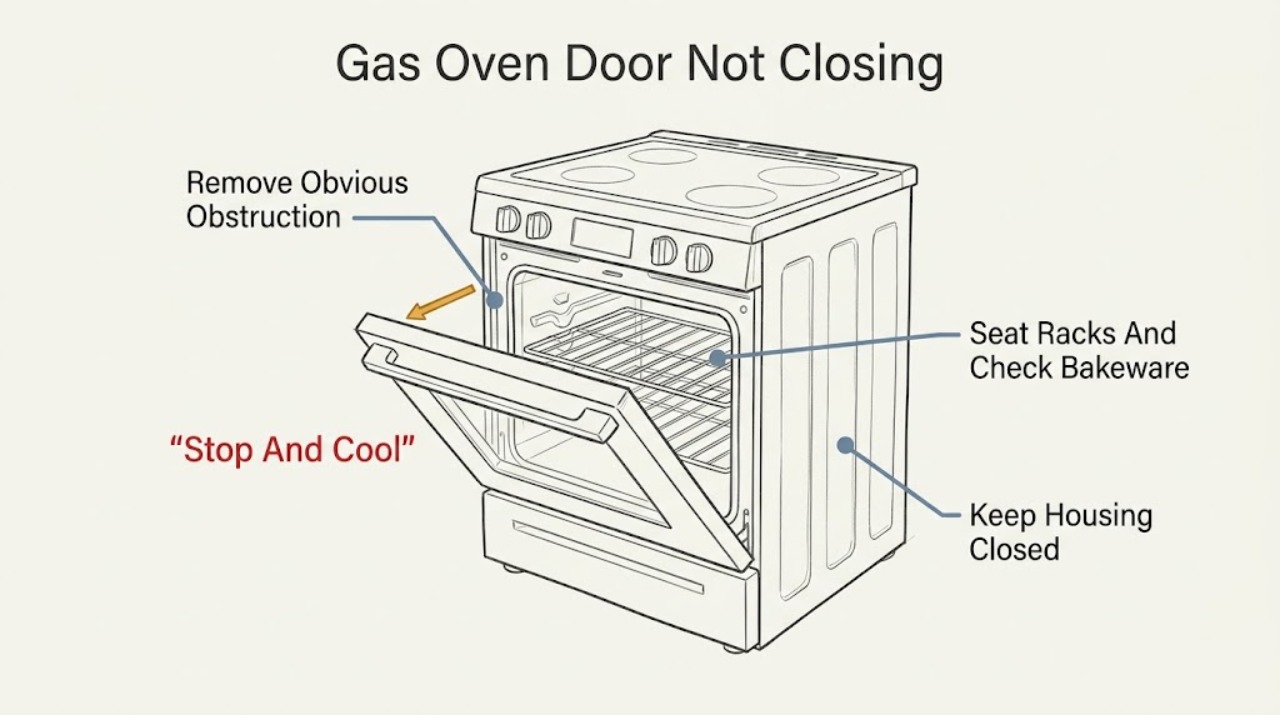
KitchenAid Gas Oven Door Not Closing: Safe Checks Before Service
Do not use a KitchenAid gas oven whose door will not close fully: heat and combustion can escape, and the door may not engage its safety or latch position. Let the oven cool completely, then remove only an obvious rack, pan, packing material, food, or soil that is blocking the frame.
-
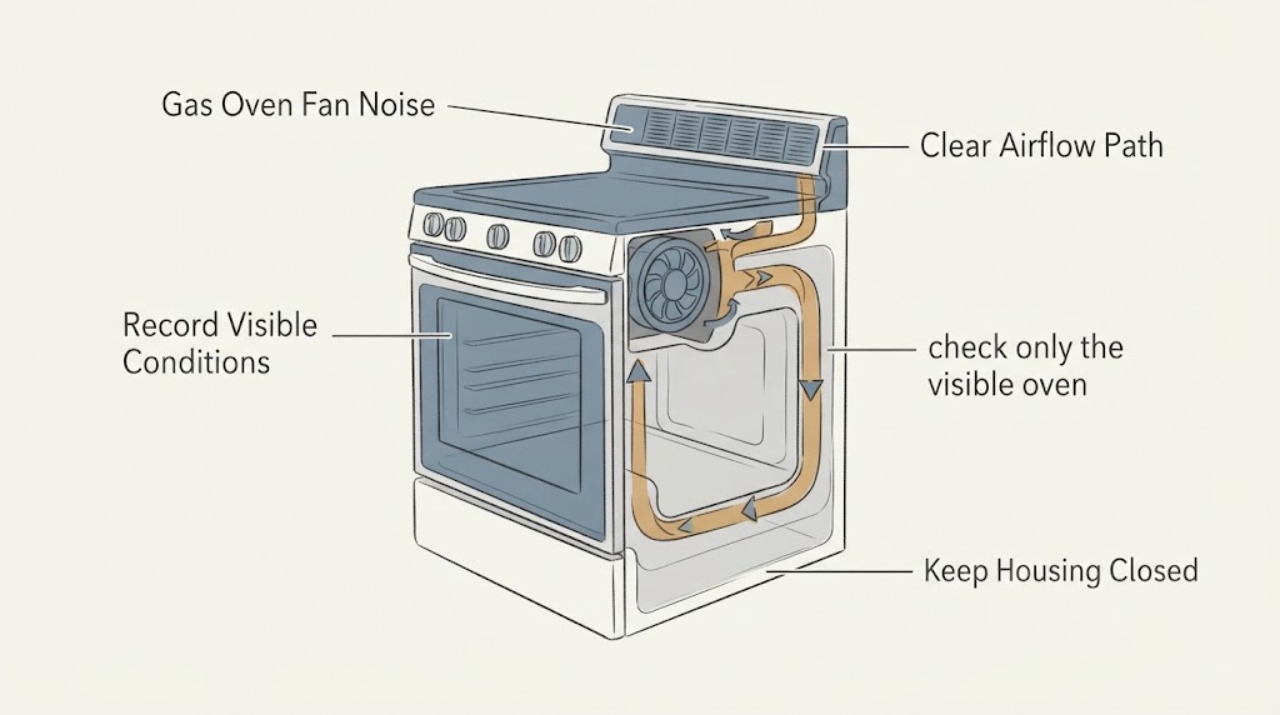
KitchenAid Gas Oven Fan Noise: Normal Cooling Sounds or a Fault?
A KitchenAid gas oven can make a smooth humming or airflow sound while it is operating and for some time after a cycle because the automatic cooling fan protects the oven cavity and electronic controls. The useful first distinction is when the sound occurs and what it sounds like: a steady airflow sound during or after cooking can be normal, while scraping, rubbing, metal-on-metal noise, smoke, a burning smell, or a fan that runs while the oven is cold and idle needs service.
-
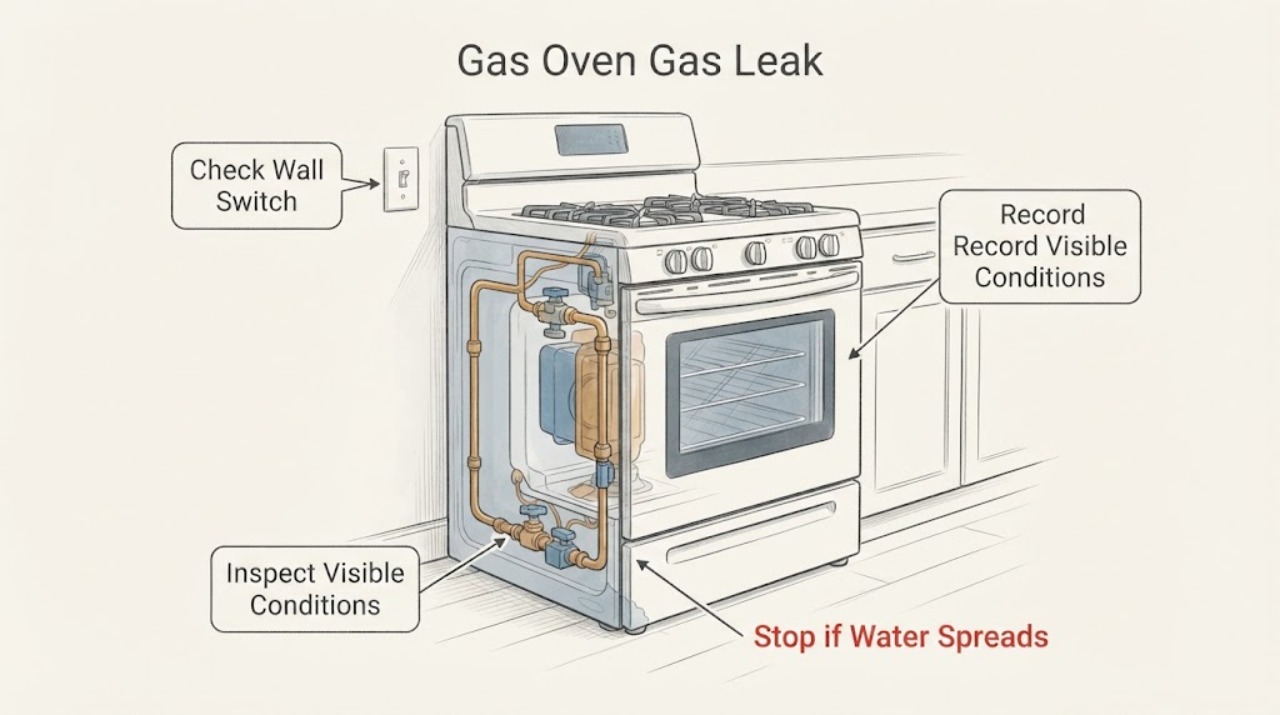
KitchenAid Gas Oven Gas Leak: What to Do Before Checking the Appliance
Treat a KitchenAid gas-oven odor as a possible leak until you know it is only a brief preheat odor. If you smell gas while the appliance is off, hear hissing, notice a sulfur or rotten-egg smell, or anyone feels lightheaded or gets a headache, do not light anything, touch electrical switches, use a phone inside, or search for the leak.
-
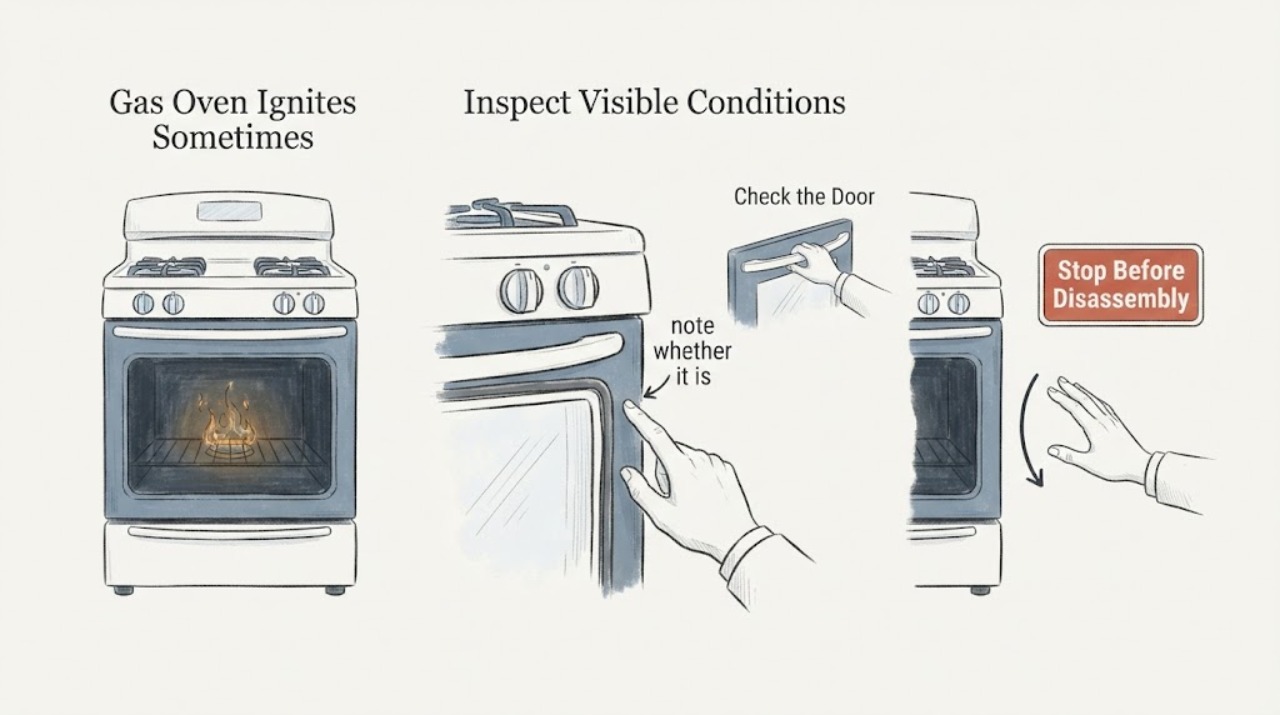
KitchenAid Gas Oven Ignites Sometimes: Normal Cycling or a Fault?
A KitchenAid gas oven can make short clicking sounds while its igniter is trying to establish a flame, and KitchenAid says short clicking every 1–3 minutes during a cycle can be normal. The useful distinction is whether the flame is detected and the oven resumes heating without a warning.
-
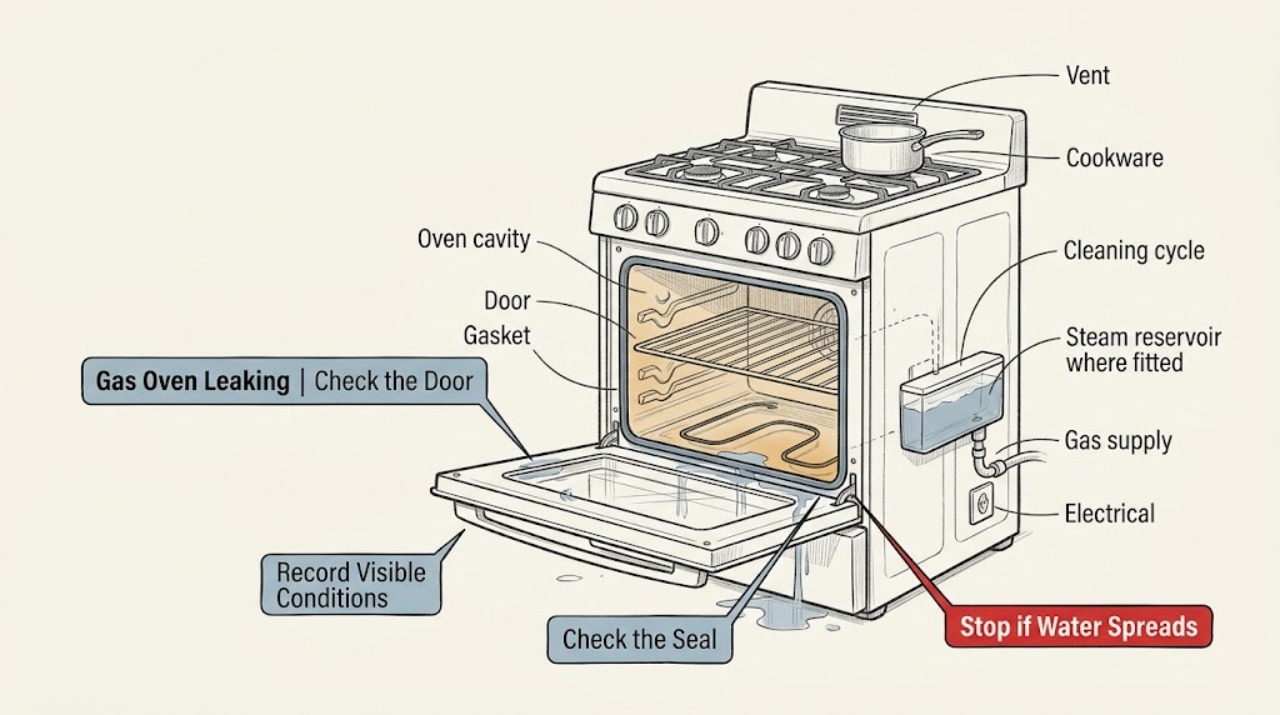
KitchenAid Gas Oven Leaking: Separate Condensation, Spills, and Gas Hazards
First identify what is actually leaking and when: steam or condensation on the door, food liquid, water left by a model-specific steam or cleaning function, or liquid outside the cavity. A standard gas oven does not automatically have a plumbed water line, so do not assume a hidden tank or drain.
-
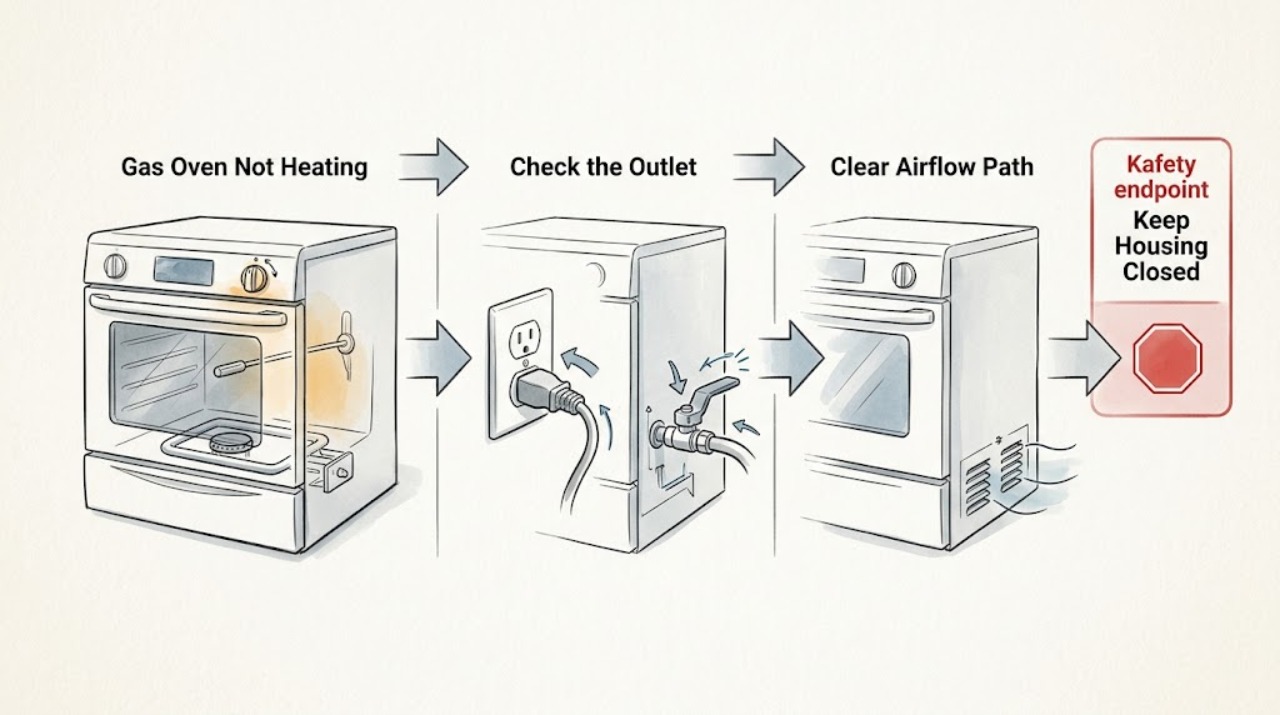
KitchenAid Gas Oven Not Heating: Check Ignition, Gas Supply and Controls Safely
A KitchenAid gas oven that is not heating needs a fuel, control and ignition check in that order. Confirm the full model and that the appliance is a gas range or gas wall oven; the oven still needs safe electrical power for its controls and igniters.
-
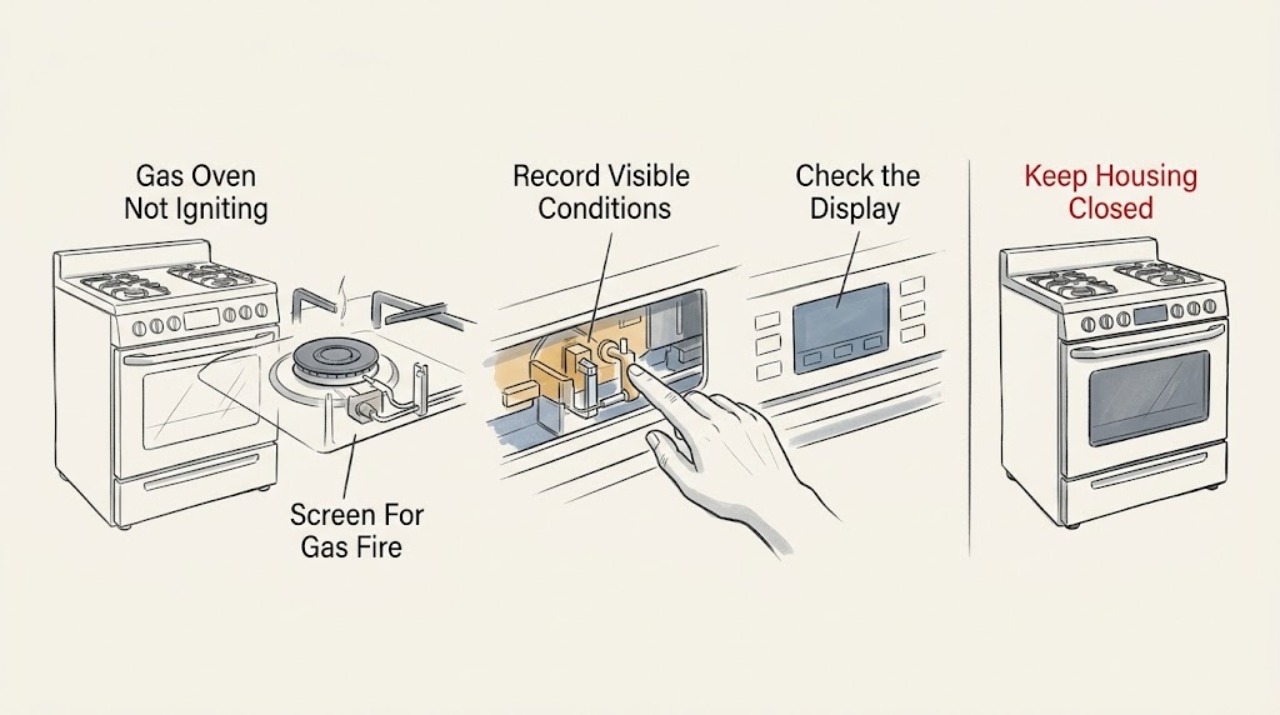
KitchenAid Gas Oven Not Igniting: Safe Checks Before Service
If a KitchenAid gas oven will not ignite, first stop for gas odor, delayed ignition, a bang, abnormal flame, smoke, soot, a burning smell, or a carbon-monoxide alarm; leave the area for a suspected gas or combustion emergency and do not keep trying.
-
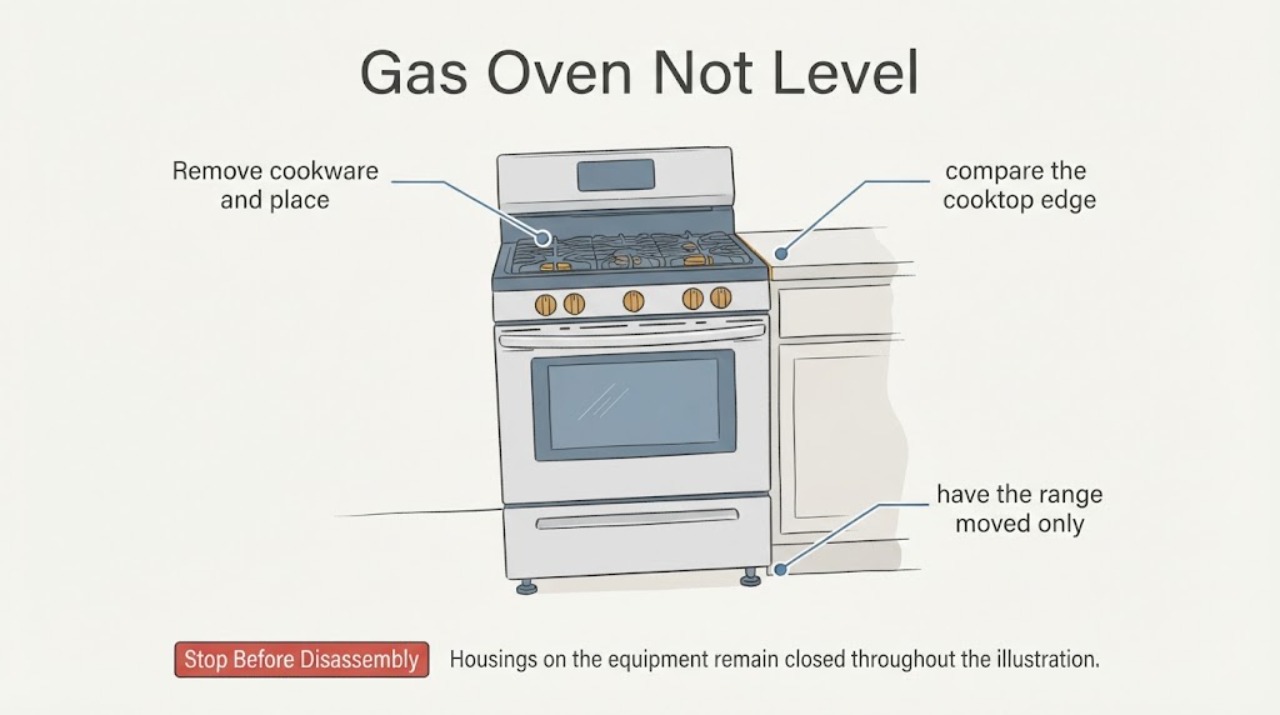
KitchenAid Gas Oven Not Level With the Countertop: Check the Rack and Legs
To diagnose a KitchenAid gas oven that appears not level with the countertop, remove cookware, place a standard flat rack in the cool oven, and check level side-to-side and front-to-back. KitchenAid directs owners to adjust leveling legs using the exact manual. A countertop gap can also come from an uneven counter or bent rack. Do not move an unstable range or disturb gas connections; stop if anti-tip engagement is uncertain and arrange qualified installation service.
-
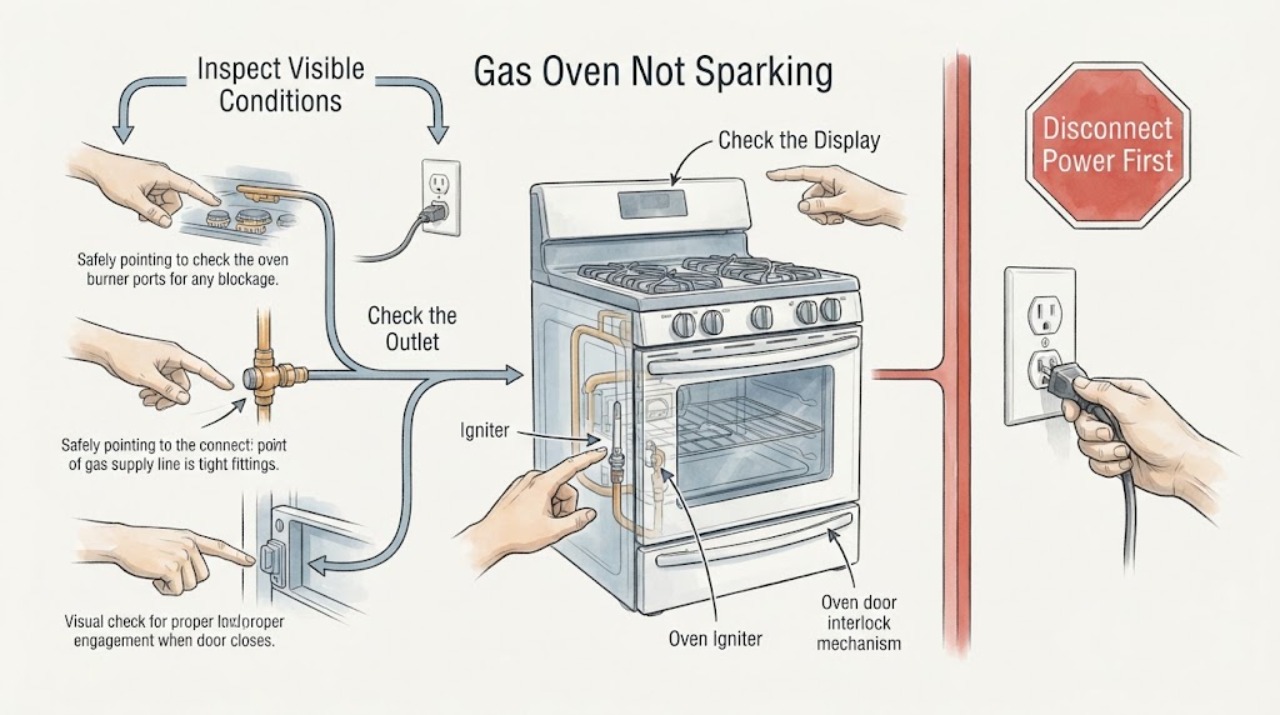
KitchenAid Gas Oven Not Sparking: Check the Ignition Type Safely
A KitchenAid gas oven may not show a visible spark because many gas ovens use a glow-bar igniter that heats until it lights the gas; the cooktop burners are the part that commonly produces an audible spark or click. First identify whether the complaint is a dark oven igniter, a clicking cooktop, or an oven burner that does not light.
-
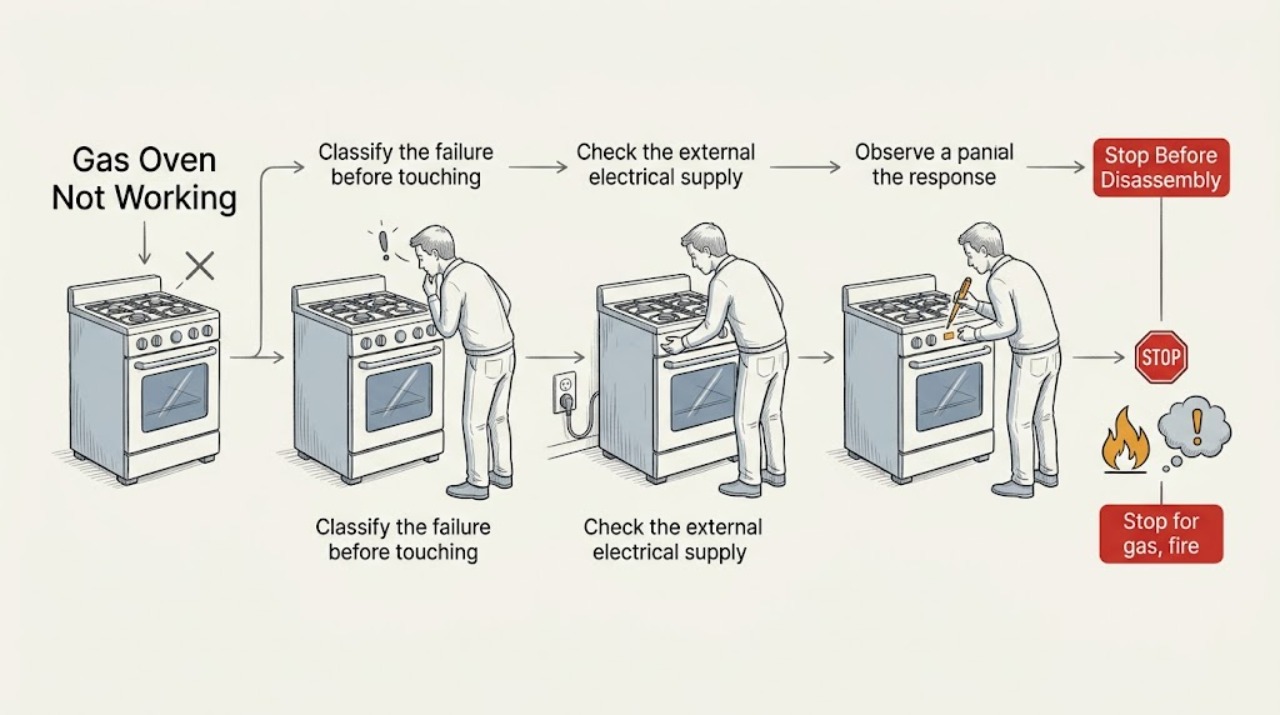
KitchenAid Gas Oven Not Working: Separate Power, Controls, Gas, and Ignition
Start by separating a blank KitchenAid control from an oven that powers up but will not start, click, or heat. Stop immediately for gas odor, delayed ignition, abnormal flame, smoke, sparks, a hot or damaged connection, or a breaker that trips again; do not keep trying to light it.