
On this page
Start here
Quick answer
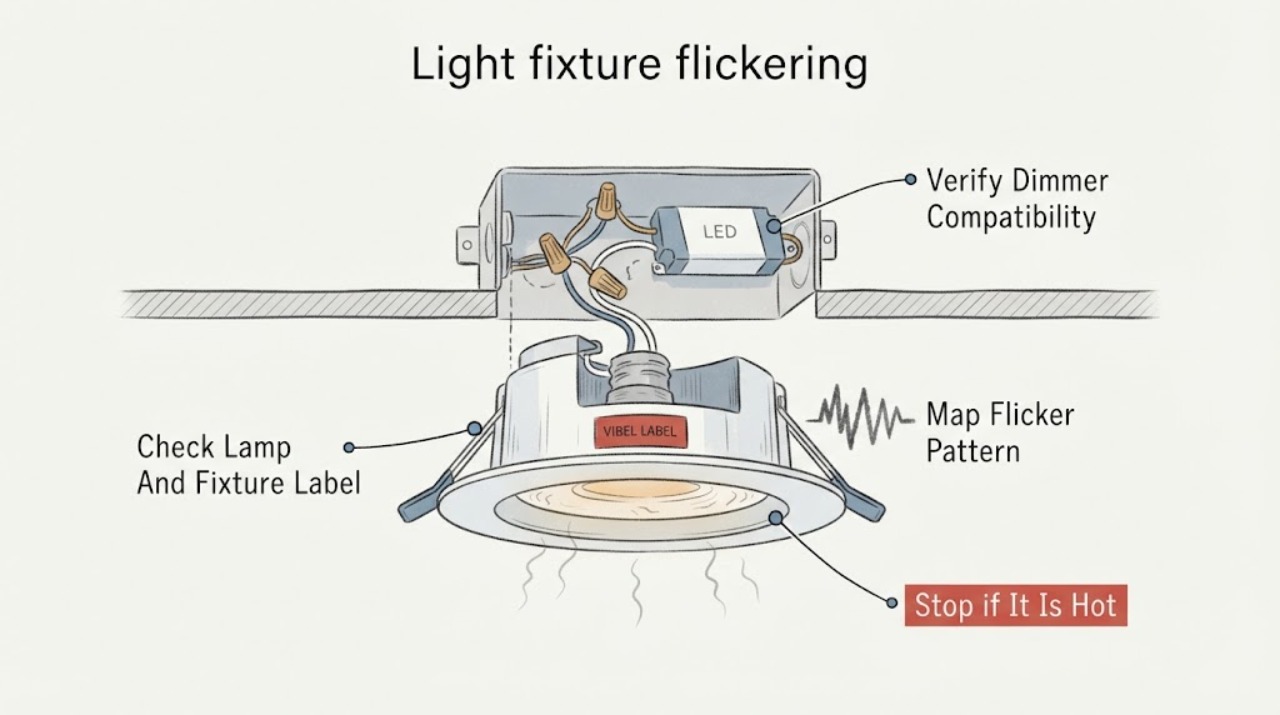
A flickering Feit light fixture can result from a non-dimmable lamp on a dimmer, an LED and dimmer mismatch, a loose or failing lamp, an integrated LED driver fault, or an electrical connection or circuit problem. First note whether one fixture flickers or several lights do, and whether the change follows the dimmer position, switch action, or another appliance. With the circuit off and the fixture cool, check the fixture label and lamp marking, then use Feit's compatibility information for the exact dimmer and LED combination. Do not open a fixture or switch box. Leave the circuit off and arrange a licensed electrician for flicker with buzzing, heat, discoloration, burning odor, sparks, shock, water, or repeated breaker trips.
Work through in order
Diagnostic checks
Use only checks that match the exact appliance or system and its official guide.
-
Check 1
From a safe position, observe the Feit fixture during one normal on cycle. Note whether only this fixture flickers, whether other lights on the same area change too, whether the flicker starts with switch movement, and whether another appliance starting coincides with it.
Expected result: Record a single-fixture flicker, several lights flickering together, flicker only while a dimmer is in use, flicker during switch movement, or flicker that follows another load starting.
Next step: Leave the light off if the flicker is new, worsening, or paired with any warning sign. Otherwise continue with the label and dimmer checks without repeatedly toggling the switch.
Stop if: Stop immediately for smoke, burning odor, sparks, a hot or discolored switch or fixture, shock, water exposure, damaged insulation, or a breaker that trips again.
Why this matters
Why: A single-fixture pattern makes the lamp, integrated driver, dimmer pairing, socket, or fixture connection more likely. Several lights changing together or responding to another load makes a circuit, supply, or overload issue more likely. A switch-linked flicker is not a reason to open the switch box.
-
Check 2
After switching the light off, turning off the circuit at the breaker, allowing the fixture to cool, and following the exact Feit model instructions, read the fixture label and inspect the accessible lamp marking. Note whether the lamp is marked dimmable, its type and wattage, whether it is seated correctly, and whether the fixture is integrated LED.
Expected result: Record a correctly marked lamp, a non-dimmable lamp on a dimmer, a lamp above the fixture limit, a damaged or loose lamp, or an integrated LED fixture with no replaceable lamp.
Next step: Replace a lamp only with one matching the Feit fixture label and model instructions, with the circuit de-energized. Do not touch an integrated LED module or continue using a lamp or socket that shows scorching, cracking, or heat damage.
Stop if: Do not exceed the marked wattage, force a lamp into a socket, touch exposed contacts, remove a driver, or proceed when the fixture label is missing and the lamp limits are unknown.
Why this matters
Why: A non-dimmable, over-limit, damaged, or poorly seated lamp is a plausible local cause and should be corrected only with a documented replacement. A correctly rated lamp or integrated LED fixture shifts attention to dimmer compatibility, driver health, mechanical damage, or wiring.
-
Check 3
If the fixture is controlled by a dimmer, record the dimmer brand and model if visible without removing its wall plate, the number and type of Feit lamps on that control, and the brightness range where flicker appears. Compare those details with Feit's compatibility list and the product packaging or manual.
Expected result: Record no dimmer, a documented compatible pairing, a dimmer marked only for incandescent or halogen loads, an unlisted pairing, a low-end-only flicker, or flicker across the full range.
Next step: Use the light only when the exact pairing is documented and there are no warning signs; otherwise leave it off and have a licensed electrician select or install a compatible control. Do not change a dimmer as a live trial.
Stop if: Do not remove the wall plate, bridge terminals, bypass the dimmer, alter line or load conductors, or assume an unlisted dimmer is safe because the lamp is labeled dimmable.
Why this matters
Why: A low-end-only flicker or a dimmer marked for a different load makes LED-control compatibility the leading suspect. Flicker at every level with a documented pairing makes a lamp, driver, socket, fixture connection, or circuit issue more likely.
-
Check 4
With the circuit de-energized and the fixture cool, inspect from stable access for a cracked lens, water entry, a loose visible shade or trim piece, a fixture that is not flush, or physical damage. Do not remove a canopy, lens that exposes wiring, or integrated LED housing.
Expected result: Record no visible damage, a loose shade or trim, a cracked lens or housing, moisture, an unflush mounting surface, or access that requires removing a cover or working at an unsafe height.
Next step: Keep a cracked, wet, unstable, or damaged fixture off and request qualified service. For a plainly accessible decorative part, follow the exact model instructions; do not improvise a mounting or housing repair.
Stop if: Do not work from an insecure ladder, handle broken glass, support a hanging fixture by its wires, open an integrated LED housing, or place moisture near energized equipment.
Why this matters
Why: Physical damage, moisture, or movement can affect light stability and can create a shock or falling hazard. No visible issue makes a lamp, dimmer, driver, socket, or concealed connection more likely but does not prove which one failed.
-
Check 5
From a safe, dry position, note whether the wall switch or fixture feels warm, looks discolored, smells hot, buzzes, produces sparks, shocks when touched, or coincides with a repeated breaker trip. Also note whether more than one light is affected.
Expected result: Record a cool switch and steady nearby lights, or flicker with warmth, discoloration, buzzing, burning odor, sparks, shock, damaged insulation, water, or breaker action.
Next step: Leave the circuit off for any warning sign and contact a licensed electrician. Provide the flicker pattern, Feit model, lamp and dimmer details, and when the symptom began.
Stop if: Do not reset a repeatedly tripping breaker, touch a hot or discolored switch, test live voltage, open a junction box, or continue using the circuit after smoke, odor, sparks, shock, or water exposure.
Why this matters
Why: Flicker paired with heat, odor, buzzing, discoloration, sparks, shock, moisture, or breaker action is a wiring or control warning and is outside safe lamp troubleshooting. A cool single fixture with no other symptoms can still have an internal driver or compatibility fault.
Use your observations
Decision map
Find the observation that best matches what you see, then follow the next safe action.
-
PATH 01Next step
What you see
One Feit fixture flickers only while dimmed or at the low end, the lamp is on a dimmer, and the dimmer or lamp pairing is undocumented, non-dimmable, or marked for a different load.
Do this next
Leave the light off or at least stop experimenting with the control, confirm the exact compatibility information, and have a licensed electrician change the control or lamp if needed.
Why this path and its safety boundary
Why it matters: An LED and dimmer mismatch is more likely than a whole-house wiring fault. Feit specifically links incompatible dimmers and non-dimmable LED lamps with flicker and dropout.
-
PATH 02Next step
What you see
Only one fixture flickers, the lamp is correctly marked and seated, there is no dimmer mismatch, and there is no heat, odor, visible damage, or circuit-wide flicker.
Do this next
Stop repeated lamp swaps and request qualified lighting or electrical diagnosis, especially for an integrated Feit LED fixture.
Why this path and its safety boundary
Why it matters: A failing lamp, integrated LED driver, socket, or internal fixture connection is more likely than the room circuit. External observations cannot separate those components safely.
-
PATH 03Next step
What you see
Several lights flicker together, or the Feit fixture changes when another appliance starts, while the lamp and dimmer checks do not show a clear mismatch.
Do this next
Leave the affected lighting off and have a licensed electrician inspect the circuit. Do not add loads, reset a breaker repeatedly, or open the panel to investigate.
Why this path and its safety boundary
Why it matters: A branch-circuit, supply, overload, or connection problem becomes more likely than a single Feit lamp or driver.
-
PATH 04Next step
What you see
The fixture has a cracked lens or housing, visible moisture, loose mounting, a damaged lamp or socket, or flicker began after impact or water exposure.
Do this next
Keep the circuit off and arrange qualified service. Preserve the model label and describe the damage; do not open or dry an energized fixture.
Why this path and its safety boundary
Why it matters: Physical or moisture damage can destabilize the light and create shock, fire, or falling-part risk. A replacement part cannot be selected safely without the exact model and damage assessment.
-
PATH 05Next step
What you see
Flicker occurs with a hot or discolored switch or fixture, buzzing, burning odor, sparks, shock, damaged insulation, water near electrical parts, or repeated breaker action.
Do this next
Leave the circuit off and contact a licensed electrician. For smoke, active arcing, or a strong burning odor, leave the area and follow local emergency guidance.
Why this path and its safety boundary
Why it matters: This is an electrical safety condition, not routine LED troubleshooting. ESFI recommends licensed inspection for these warning signs.
Helpful context
Understand the symptom
The flicker pattern narrows the cause
A single Feit fixture that flickers only at one dim level points toward its lamp, LED driver, or dimmer pairing. A fixture that flickers when the switch is moved can have a control or connection issue. Several lights flickering together, or lights changing when another load starts, makes the branch circuit or supply more concerning. Flicker with heat, buzzing, odor, discoloration, sparks, or a breaker trip is an electrical warning, not a normal LED behavior.
Feit LED products need a documented dimmer match
Feit distinguishes dimmable and non-dimmable lighting and provides a tested dimmer list for supported combinations. The number of lamps, their total LED load, their form factor, and the dimmer's LED rating can all affect behavior. A label saying dimmable is not enough to prove that the existing wall control is a suitable match.
Use model instructions for integrated Feit fixtures
Some Feit fixtures use an integrated LED source or an internal controller rather than a replaceable lamp. Feit's fixture guidance treats flicker as a possible dimmer-compatibility or damaged-housing issue and advises licensed help when in doubt. Without the exact model instructions, do not expose the driver, selector, junction box, or wiring to find the fault.
Only after diagnosis
Potential parts
- dimmable LED lamp
Consider only when the fixture has a replaceable lamp and the current lamp is non-dimmable, damaged, incorrectly rated, or not listed as suitable by the fixture instructions.
Match the socket, voltage, enclosure or damp-location rating, wattage limit, dimmable marking, and exact Feit fixture documentation. - LED-compatible dimmer
Consider only when flicker follows dimmer position and Feit's compatibility information or a qualified evaluation identifies a control mismatch.
Confirm the exact lamp or LED driver, load range, wiring arrangement, and tested compatibility before a licensed electrician installs a replacement control. - integrated LED driver
Consider only after qualified testing identifies the internal driver as the source of persistent flicker in an integrated LED fixture.
Use the exact Feit model documentation and electrical ratings; do not substitute a driver based only on physical size or connector appearance.
When checks do not resolve it
Need a professional?
Call a licensed electrician immediately for flicker with a hot or discolored switch or fixture, buzzing, burning odor, sparks, shock, damaged insulation, water, or repeated breaker trips; leave the circuit off. Arrange qualified lighting service for flicker that persists after the lamp and documented dimmer checks, or for an integrated Feit LED fixture. Do not open the fixture, switch box, junction box, socket wiring, or driver enclosure.
Have this ready
- Give the electrician the Feit model if visible, fixture type, replaceable or integrated LED source, lamp marking and wattage, dimmer brand and model if visible, number of affected lights, where and when flicker occurs, any heat or odor, and breaker history.
Common questions
FAQ
Why does my Feit light fixture flicker only when dimmed?
The LED lamp or driver and the dimmer may not be a compatible pair, or the load may be outside the control's supported range. Check that the lamp is dimmable and compare the exact dimmer and Feit combination with Feit's compatibility information.
Can a loose Feit bulb cause flickering?
A loose or damaged lamp can interrupt its contact and cause flicker. Turn power off at the breaker, let the fixture cool, and inspect only the accessible lamp and label. Do not touch exposed contacts or continue using a scorched socket.
When is a flickering light an electrical hazard?
Treat flicker with a hot or discolored switch or fixture, buzzing, burning odor, sparks, shock, damaged insulation, moisture, or repeated breaker trips as a warning. Leave the circuit off and contact a licensed electrician.
Should I replace a Feit fixture that flickers?
Not based on flicker alone. First separate a lamp or dimmer mismatch from a mechanical or circuit issue. If the lamp and documented control pairing are suitable but flicker remains, have a qualified electrician test the fixture and circuit before selecting a replacement.
Read the exact guide
Official sources
- What Dimmers are Compatible with Feit Electric Dimmable Lights?Feit Electric · Feit support guidance used to confirm that a flickering dimmable lamp can still have a control incompatibility.
- Why Won’t My Vista 15-Inch Round Flush Mount Skylight Turn On or Switch Modes?Feit Electric · Feit model-specific support used only for general integrated-fixture branches; this article does not assume the reader owns that Vista model.
- Electrical Safety DosElectrical Safety Foundation International · ESFI safety guidance used for escalation when lighting flicker accompanies heat, discoloration, buzzing, or burning odor.
- LED Dimmer Compatibility - Dimmable Bulbs & Switch GuideFeit Electric · Feit compatibility guidance used for dimmer-linked flicker; exact fixtures and controls remain model-specific.
- Home Wiring Safety TipsElectrical Safety Foundation International · ESFI consumer safety guidance used for flicker, buzzing, heat, discoloration, odor, sparks, shock, and breaker warnings.
Community feedback
Share a repair observation
Share a plain-text repair observation. Accepted observations are published automatically; this page may take a moment to update.