
On this page
Start here
Quick answer
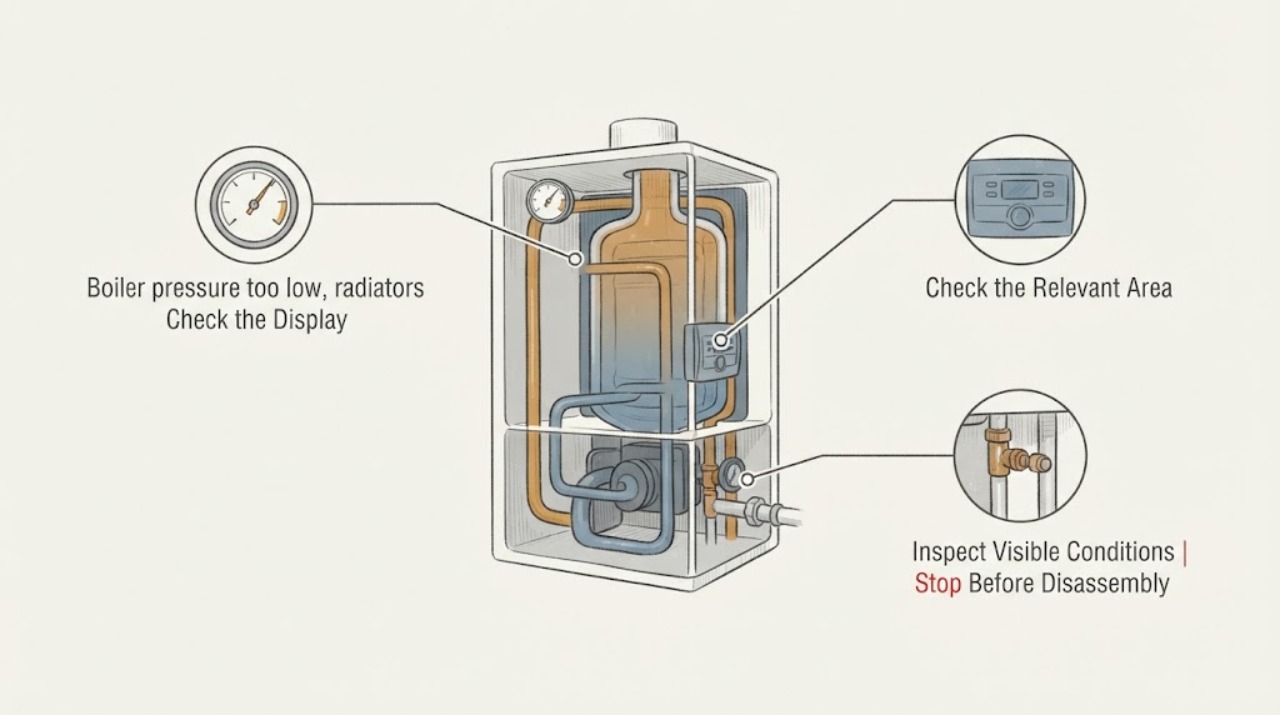
Low boiler pressure can stop a hydronic heating system from circulating water, so several radiators may stay cold or the boiler may show a pressure fault. Read the boiler gauge or display with the system in the state specified by its manual, check normal heating demand and visible leaks around radiators and pipework, and compare whether one radiator or the whole system is affected. If your manual provides a homeowner filling-loop procedure and no leak is visible, you may follow that exact procedure and stop when the specified cold pressure is reached; do not guess a target or open the boiler casing. If pressure will not rise, falls again, a leak is visible, the boiler shows a fault, or there is a gas smell, overheating, or water near electrics, stop and call a licensed heating professional.
Work through in order
Diagnostic checks
Use only checks that match the exact appliance or system and its official guide.
-
Check 1
Read the boiler pressure gauge or digital display and note whether the heating system is cool, calling for heat, or recently running; compare the reading with the normal range printed in the appliance manual, not a generic number.
Expected result: The reading is below the manual's normal area, the display shows a pressure-related fault, the reading is normal, or the reading rises sharply when heating runs.
Next step: Photograph the gauge or code and continue with the leak and heating-demand checks. If the manual's normal range is unclear, the system type is unknown, or the reading is high or unstable, do not operate a filling device; call a licensed heating professional.
Why this matters
Why: A low reading or pressure fault supports insufficient water pressure as a reason several radiators may not heat. A normal reading makes controls, air, valves, circulation, or another boiler fault more likely. A large operating rise needs professional assessment rather than more water.
-
Check 2
Check the boiler display and ordinary room controls for a heating call: confirm the schedule or thermostat is requesting heat, the boiler is in a heating mode, and no unrelated lockout or fault message is present.
Expected result: Heating is disabled or scheduled off, only hot water is selected, a pressure fault is displayed, or heating is enabled without a pressure fault.
Next step: Correct only the normal user setting if it was clearly off, then allow the system to respond. Do not repeatedly reset a boiler that shows a fault; follow the manual's reset limit and arrange professional help if the message returns.
Why this matters
Why: A mode or schedule issue can make radiators appear cold without a pressure repair. A pressure fault with disabled heating supports low system pressure as the immediate reason. Enabled heating with normal pressure shifts attention to circulation, radiator valves, air, or a boiler fault.
-
Check 3
With the system accessible and without removing the boiler casing, look for dampness, rust marks, fresh drips, or discolored paint around radiator valves, exposed heating joints, the floor below the boiler, and nearby skirting or ceilings.
Expected result: A joint or radiator valve is wet, a stain or rust mark is present, water is visible under the boiler, or no obvious leak is found.
Next step: Do not tighten, dismantle, or repair a heating joint or open the boiler casing. If water is actively escaping, protect the area from a safe location and call a licensed heating professional; otherwise record the location and continue only with the manual-based pressure decision.
Why this matters
Why: Visible moisture or corrosion supports escaped heating water as the reason pressure fell and may explain why the system stopped. No visible leak does not rule out pipework inside walls, a concealed system leak, or an internal boiler fault.
-
Check 4
Compare the radiators during a normal heating call without opening any valve: note whether all are cold, one is cold, or a radiator is cold at the top but warmer below; also note unusual boiler or circulation noises.
Expected result: Several radiators are cold together, one radiator is cold while others heat, or a radiator is warm at the bottom and cool at the top.
Next step: Resolve the pressure question first. If the gauge is normal and only one radiator has the pattern, use the radiator and valve guidance in its manual or arrange a heating engineer; do not assume bleeding will fix a system-wide low-pressure fault.
Why this matters
Why: Several cold radiators alongside low pressure point toward a boiler or system-pressure problem. One cold radiator makes a local valve or blockage more likely. A top-cold pattern is consistent with trapped air, but releasing air can change system pressure and does not address a leak.
-
Check 5
If the manual explicitly identifies a homeowner filling loop or filling valve, no leak is visible, and the system is in the manual's stated condition, follow that exact refill procedure while watching the gauge; stop immediately at the manual's specified normal cold range.
Expected result: Pressure rises and stays in the specified range, pressure does not rise, pressure overshoots, or the gauge falls again after heating runs.
Next step: Close the filling device exactly as the manual says and check the radiators once. If the reading does not behave as expected, do not keep adding water or bleed radiators to chase the number; call a licensed heating professional. Never improvise a filling-loop connection or work inside the boiler.
Why this matters
Why: A stable reading after a permitted single refill may restore circulation, but it does not explain why water was lost. No rise, overshoot, or renewed loss indicates a valve, gauge, leak, expansion, or other system problem requiring professional diagnosis.
Use your observations
Decision map
Find the observation that best matches what you see, then follow the next safe action.
-
PATH 01Next step
What you see
Do this next
Follow the exact manual-based filling-loop procedure once if it is explicitly intended for the homeowner. If pressure will not rise, the boiler will not restart, or the reading falls again, call a licensed heating professional.
-
PATH 02Next step
What you see
Do this next
Stop topping up and arrange a licensed heating professional to locate and repair the leak. Keep clear of hot water and do not dismantle valves, pipe joints, or the boiler casing.
-
PATH 03Next step
What you see
Do this next
Check the radiator's ordinary user setting and follow the appliance or radiator manual. If the valve is stuck, the radiator remains cold, or bleeding would be unfamiliar, use a heating engineer rather than forcing the valve or repeatedly releasing water.
-
PATH 04Next step
What you see
Do this next
Stop repeated resets and call a licensed heating professional for system diagnosis. Do not remove the boiler casing or alter gas, electrical, pump, or valve connections.
-
PATH 05Next step
What you see
Do this next
Stop using the boiler, keep people away from the hazard, and follow local emergency or gas-safety procedures for an active gas smell, fire risk, or electrical danger. Do not touch wet electrical equipment, open the casing, or continue cycling the boiler; arrange licensed professional help.
Helpful context
Understand the symptom
Why low pressure can leave radiators cold
A sealed hydronic heating system needs enough water pressure for the boiler, radiators, and connecting pipework to circulate heat. When pressure drops below the appliance's operating range, the boiler may stop or show a low-pressure fault, leaving several radiators cold. A low reading is a clue, not a complete diagnosis: water may have escaped through a visible joint, a hidden system leak may exist, or a component may be faulty. Pressure that falls again after a permitted top-up points away from a one-time adjustment and toward a repair.
Use the manual for the refill decision
Boilers and heating layouts do not all use the same gauge, filling device, or operating range. Read the appliance manual before touching a filling loop. Only use a homeowner refill procedure that the manual explicitly describes, with the boiler and controls in the stated condition. Never remove the boiler casing, alter gas or electrical connections, or keep adding water when pressure is repeatedly lost or a leak is visible.
Only after diagnosis
Potential parts
- heating-system filling loop or refill valve
Consider this part class only when a professional confirms the existing refill device is missing, leaking, or faulty; a low gauge alone does not prove the filling device failed.
The connection type, system design, local requirements, and appliance instructions must be confirmed before ordering; installation should follow the boiler manufacturer's procedure. - radiator valve
Consider this only when one radiator remains cold with normal system pressure and a professional confirms the valve is seized, leaking, or not controlling flow.
Confirm the valve style, pipe connection, radiator arrangement, and heating-system requirements before selecting a replacement; do not infer fit from appearance.
When checks do not resolve it
Need a professional?
Call a licensed heating professional when pressure cannot be restored using the exact homeowner procedure in the appliance manual, falls again after a top-up, a leak or corrosion is visible, the boiler casing or internal components would need to be opened, a fault returns, or several radiators stay cold with normal pressure. Seek urgent help for active water escape, overheating, a strongly unstable gauge, water near electrical equipment, smoke, or a gas smell; follow local emergency gas and fire procedures when applicable. Do not improvise a filling loop, alter gas or electrical connections, dismantle heating joints, or repeatedly add water to hide a recurring pressure loss.
Common questions
FAQ
Can low boiler pressure stop all of my radiators from heating?
Yes. A boiler may stop operating or show a pressure fault when system pressure is too low, so several radiators can remain cold. Confirm the reading against the appliance manual and check for a leak before any permitted refill.
Should I top up a boiler with low pressure?
Only if the appliance manual explicitly gives a homeowner filling-loop or refill procedure and no leak or safety warning is present. Follow that procedure and the manual's range exactly; stop if pressure does not rise or falls again, and call a licensed heating professional.
Why does boiler pressure keep dropping after I refill it?
Recurring loss can indicate a radiator or pipework leak, a hidden system leak, or a boiler or pressure-control fault. Look only for visible dampness or corrosion, do not open the casing or dismantle joints, and arrange professional diagnosis.
Why is one radiator cold when the boiler pressure is normal?
A single cold radiator is more consistent with a local valve issue, trapped air, or a flow restriction than with low system pressure. Check the ordinary user setting and follow the radiator guidance; use a heating engineer if the valve is stuck or the radiator remains cold.
Read the exact guide
Official sources
- How often should I need to top up the pressure in the heating system?Worcester Bosch · Supports using the appliance-specific pressure range, stopping repeated top-ups, and escalating a pressure rise or frequent pressure loss to an installer.
- Why is my boiler losing pressure?Vaillant Group · Supports inspection for damp or rust around radiator connections and the recurring-pressure-loss branch, while keeping boiler casing and pipe repairs professional-only.
- What do I do if my boiler had no pressure?Vaillant Group · Directly supports the low-pressure and cold-radiator condition, checking the manufacturer's gauge range, using only the specified filling procedure, and calling a qualified engineer when pressure will not rise.
- Why is my radiator not working?Vaillant Group · Supports distinguishing one cold radiator or a top-cold radiator from system-wide cold radiators caused by boiler or pressure problems.
Community feedback
Share a repair observation
Share a plain-text repair observation. Accepted observations are published automatically; this page may take a moment to update.