
Repair problem
Pressure Too Low Troubleshooting Guides
Published FixGraph guidance for diagnosing and responding to pressure too low.
Matching published guides
Choose a guide that matches the service, equipment, and conditions you are seeing.
-
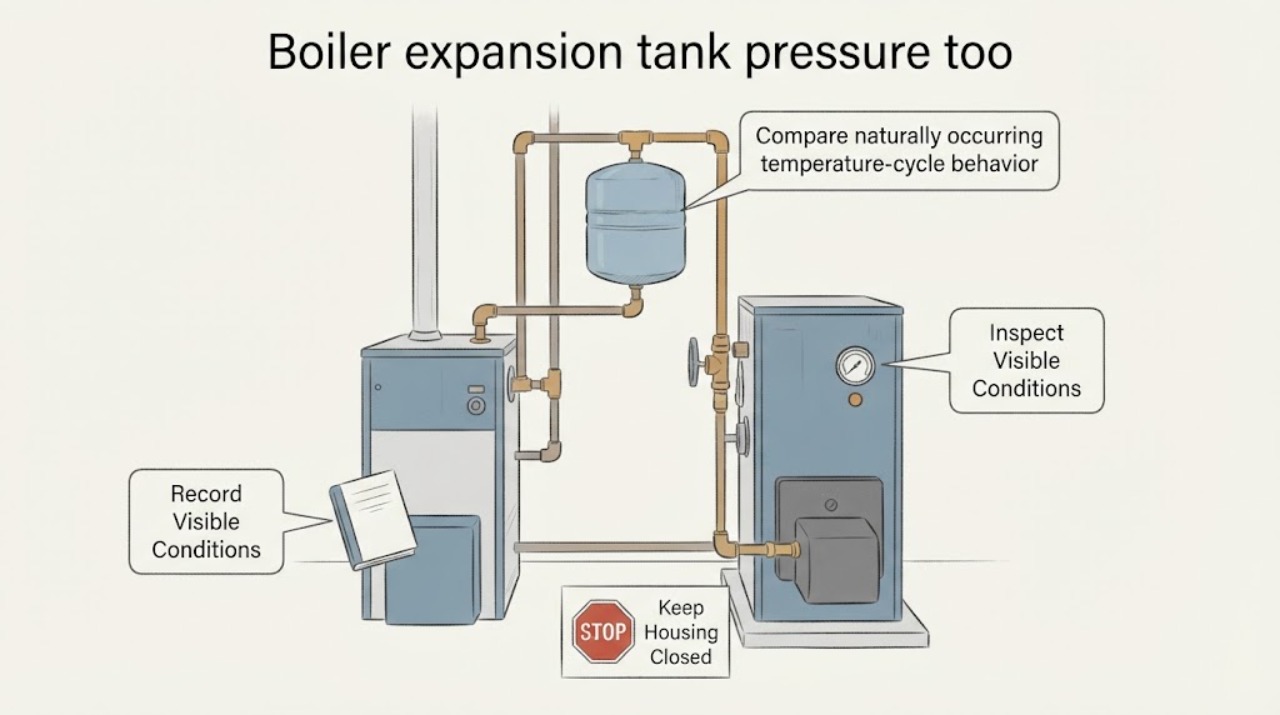
Boiler expansion tank pressure too low: What to Check and What to Do Next
A low boiler-pressure reading does not prove that the expansion tank itself has failed. The reading can reflect a leak, a relief or air-vent discharge, a fill or gauge problem, an incorrectly sized or failed expansion tank, or normal pressure behavior that is being misread.
-
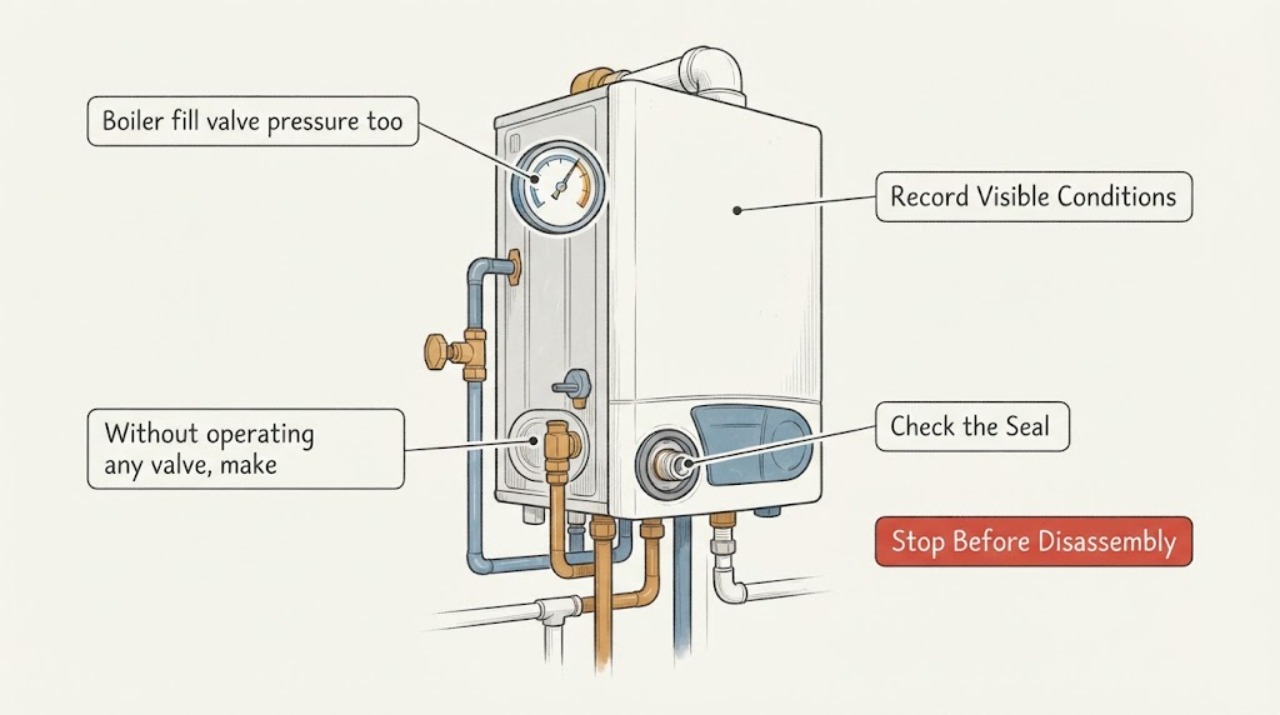
Boiler fill valve pressure too low: What to Check and What to Do Next
A low boiler-pressure reading does not prove that the fill valve itself has failed. With the boiler cool and from a safe external position, record the gauge or display against the range in the model manual, note whether the reading falls again, and look for visible water or discharge around accessible heating-system connections.
-
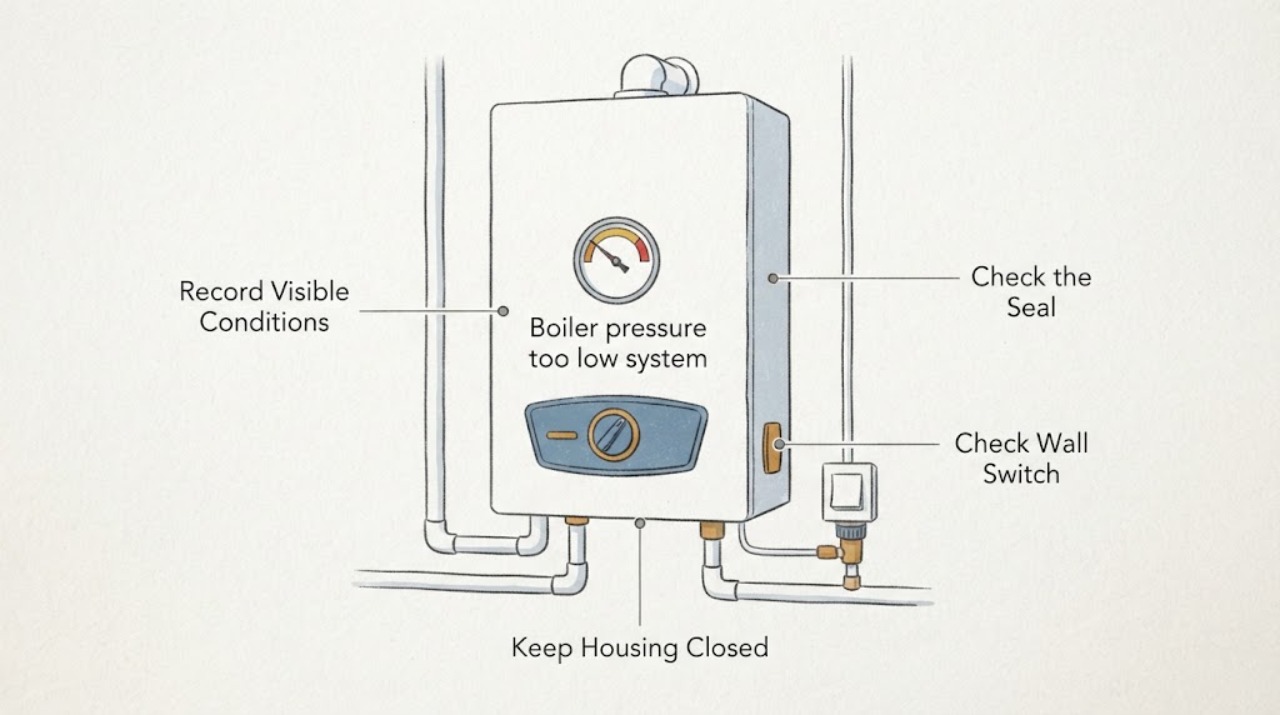
Boiler pressure too low system is cold or hot: What to Check and What to Do Next
Check boiler pressure against the exact appliance manual and note whether the heating system is cool or hot. A low reading on a cool system can follow a leak, radiator bleeding, or gradual water loss; it can stop the boiler from providing heat or hot water.
-
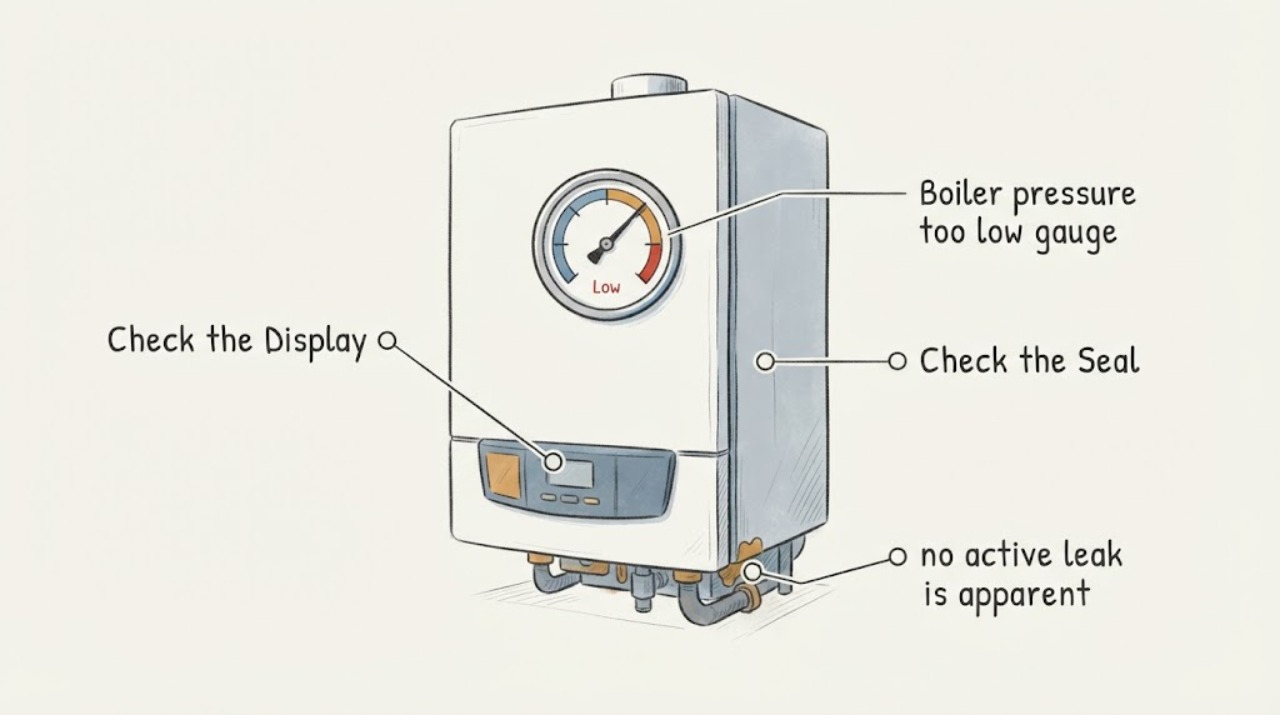
Boiler pressure too low gauge reads: What to Check and What to Do Next
A low boiler pressure reading usually means water has left a sealed heating system, often through a visible or hidden leak, but a reading can also be affected by whether the system is hot or cold or by a faulty gauge or sensor. Let the system cool, check the boiler manual for its own pressure range, and look for dampness or staining around radiators, valves, pipes, and the appliance.
-
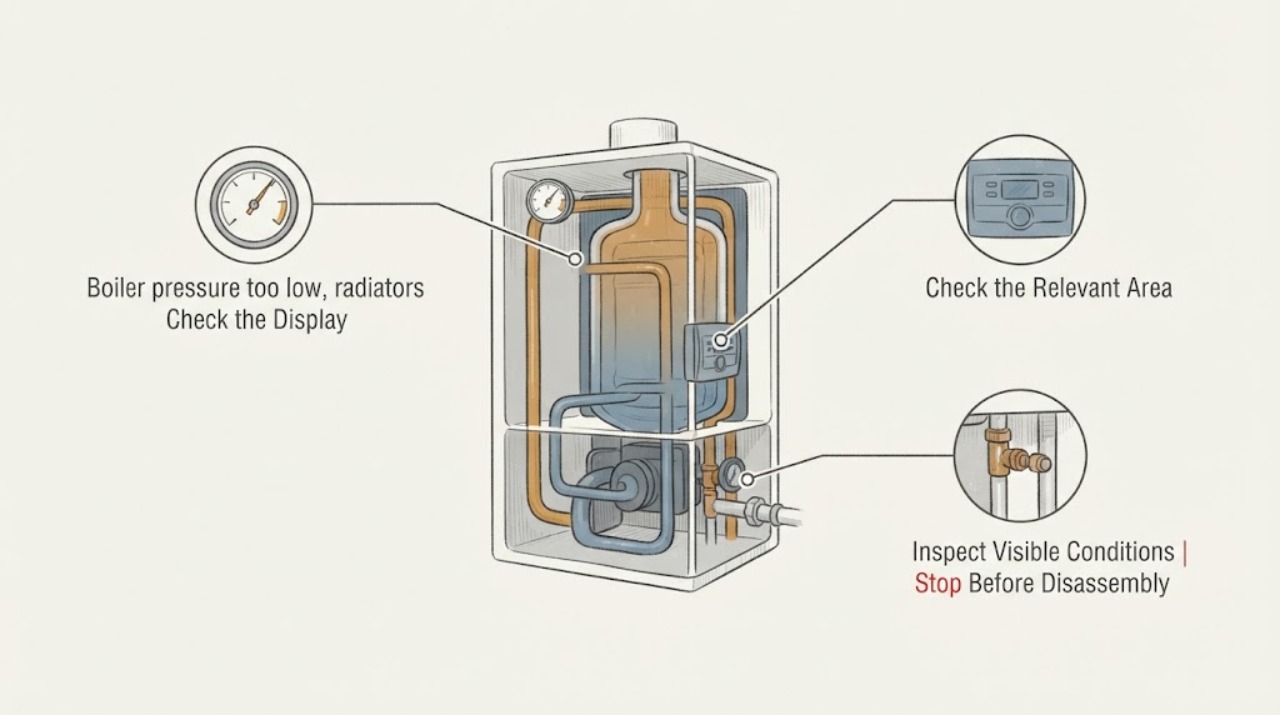
Boiler pressure too low, radiators may not heat: What to Check and What to Do Next
Low boiler pressure can stop a hydronic heating system from circulating water, so several radiators may stay cold or the boiler may show a pressure fault. Read the boiler gauge or display with the system in the state specified by its manual, check normal heating demand and visible leaks around radiators and pipework, and compare whether one radiator or the whole system is affected.
-
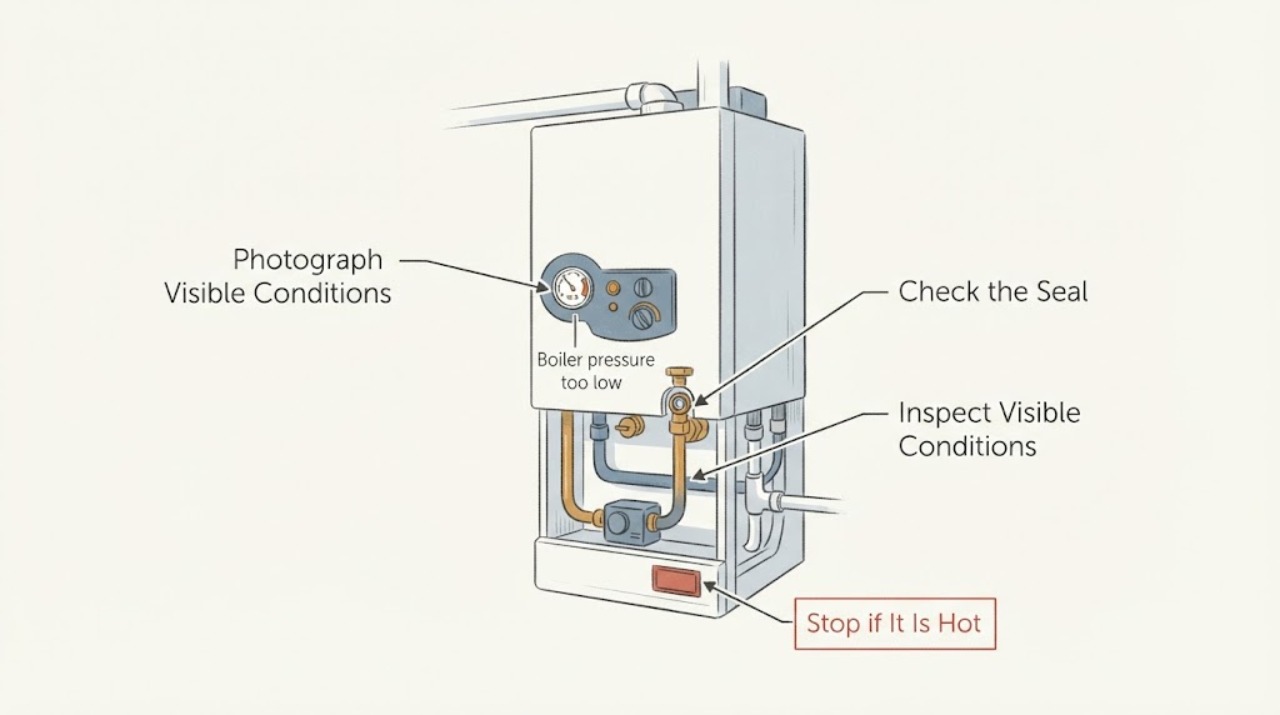
Boiler pressure too low: What to Check and What to Do Next
Treat a low boiler-pressure reading as a symptom, not a cue to open a filling valve. From outside the appliance, photograph the gauge or display and compare it with the normal zone in the boiler manual.
-
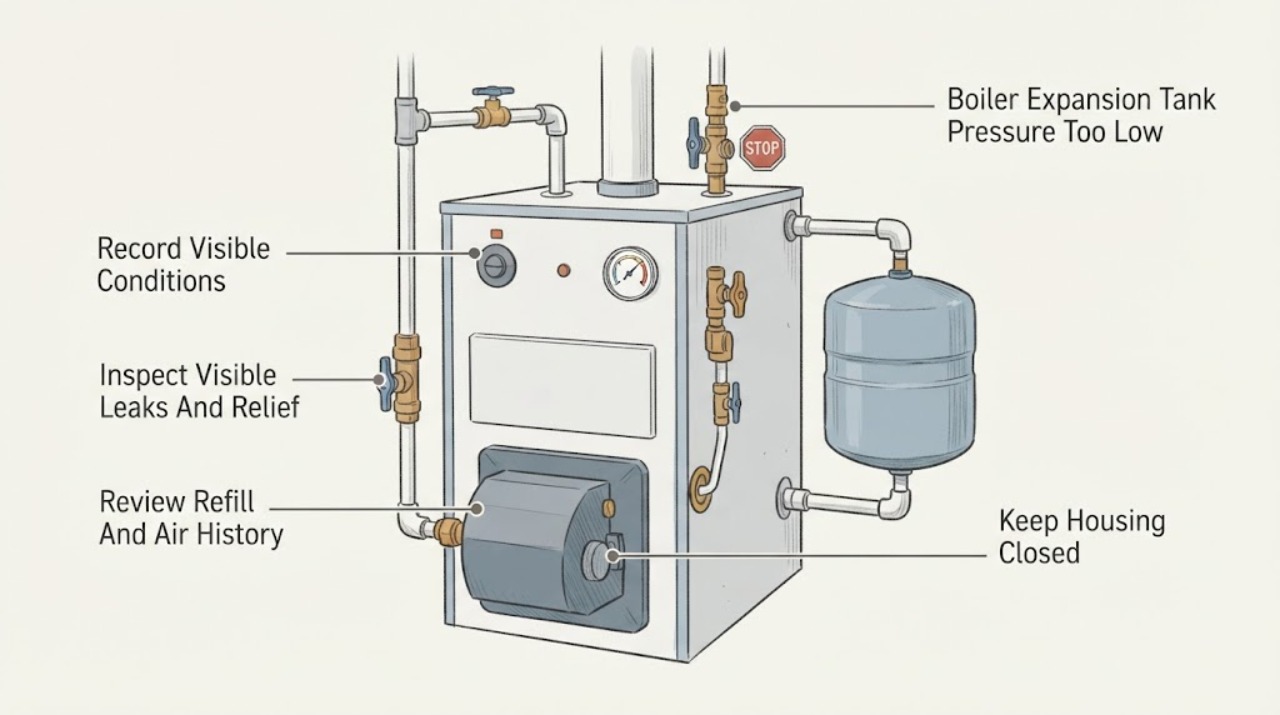
Buderus Boiler Expansion Tank Pressure Too Low: What to Check and What to Do Next
A low reading at a Buderus boiler can mean low system water, air leaving a recently filled system, a leak, a failed or waterlogged expansion tank, or a gauge or sensor problem. Read the pressure and temperature indication only from a safe position and compare it with the exact Buderus model manual; do not assume one pressure target fits every boiler.
-
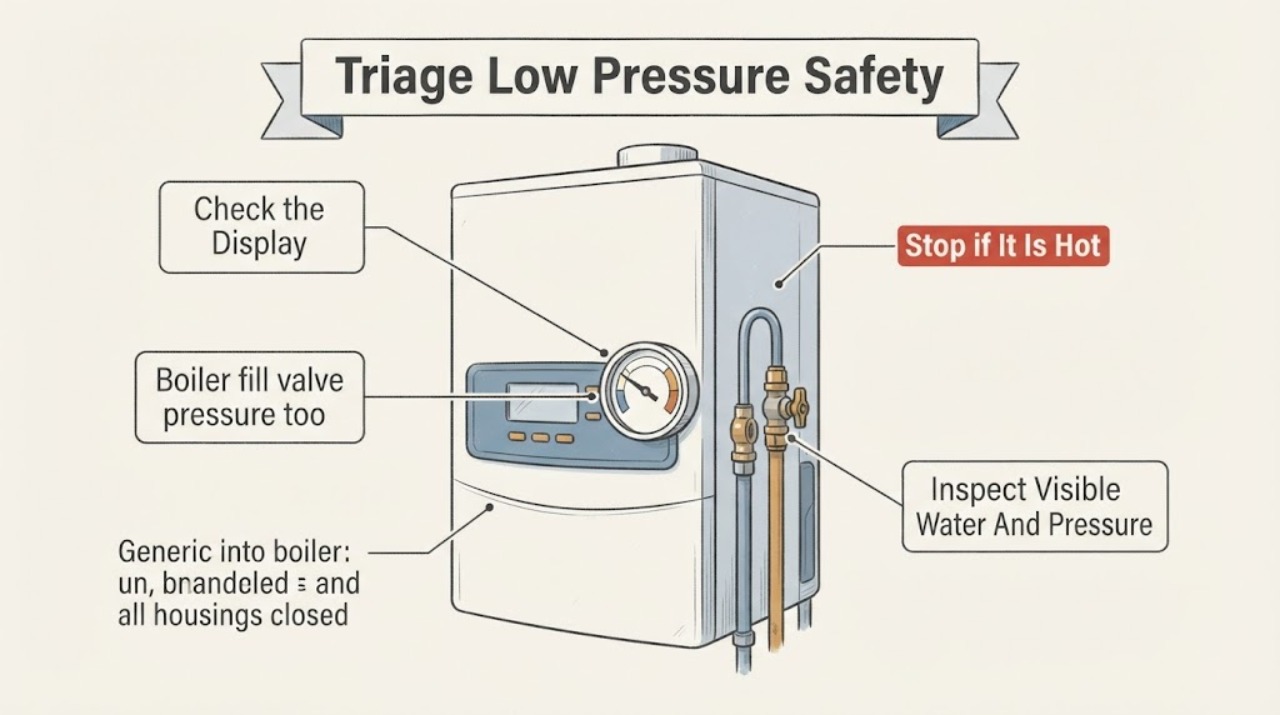
Buderus boiler fill valve pressure too low: What to Check and What to Do Next
A low-pressure reading does not prove that the Buderus fill valve is the failed part. The pressure can be low because water is leaking, air was removed, an expansion vessel or relief valve is faulty, a pressure sensor is inaccurate, the system is not fully filled, or a low-water safety has stopped the boiler.
-
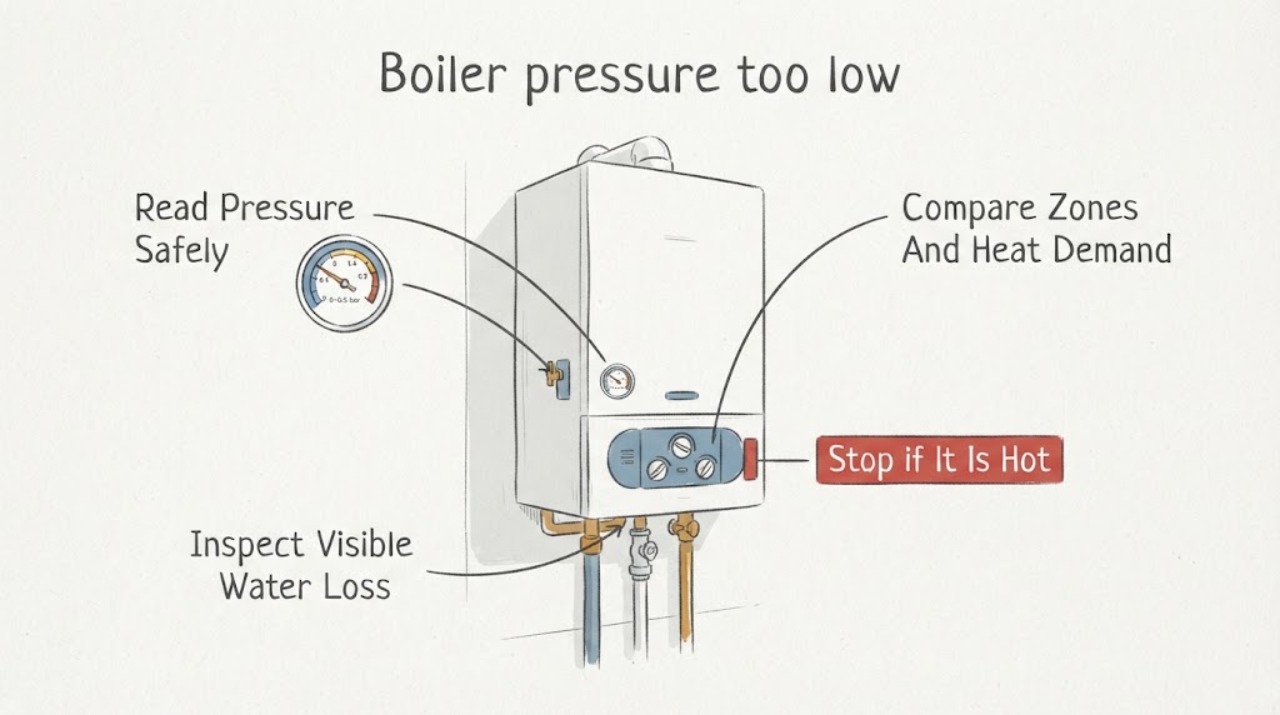
Buderus boiler pressure too low: What to Check and What to Do Next
Read the Buderus system-pressure indication only from a safe position and compare it with the exact model manual; do not use a generic target because Buderus boiler families and installations differ. Low pressure can limit or stop heating and may result from air removal, a leak, a relief path, an expansion-vessel problem, or insufficient system water.
-
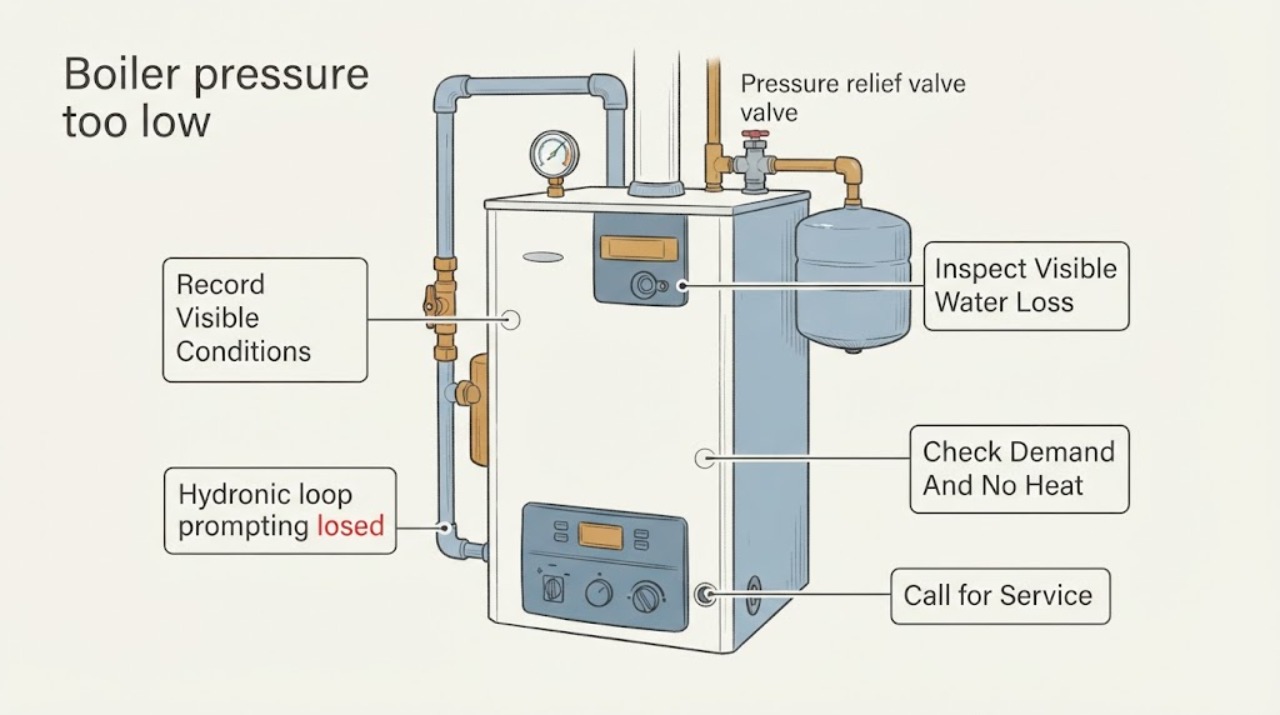
Navien boiler pressure too low: What to Check and What to Do Next
Read the Navien system pressure from a safe, dry position and record whether the reading is low when the system is cool, changes sharply as it heats, or is accompanied by a low-pressure message or no heat. Do not use a generic fill target: Navien models and hydronic systems differ, and the exact manual and installer design control the permitted cold-fill range.
-
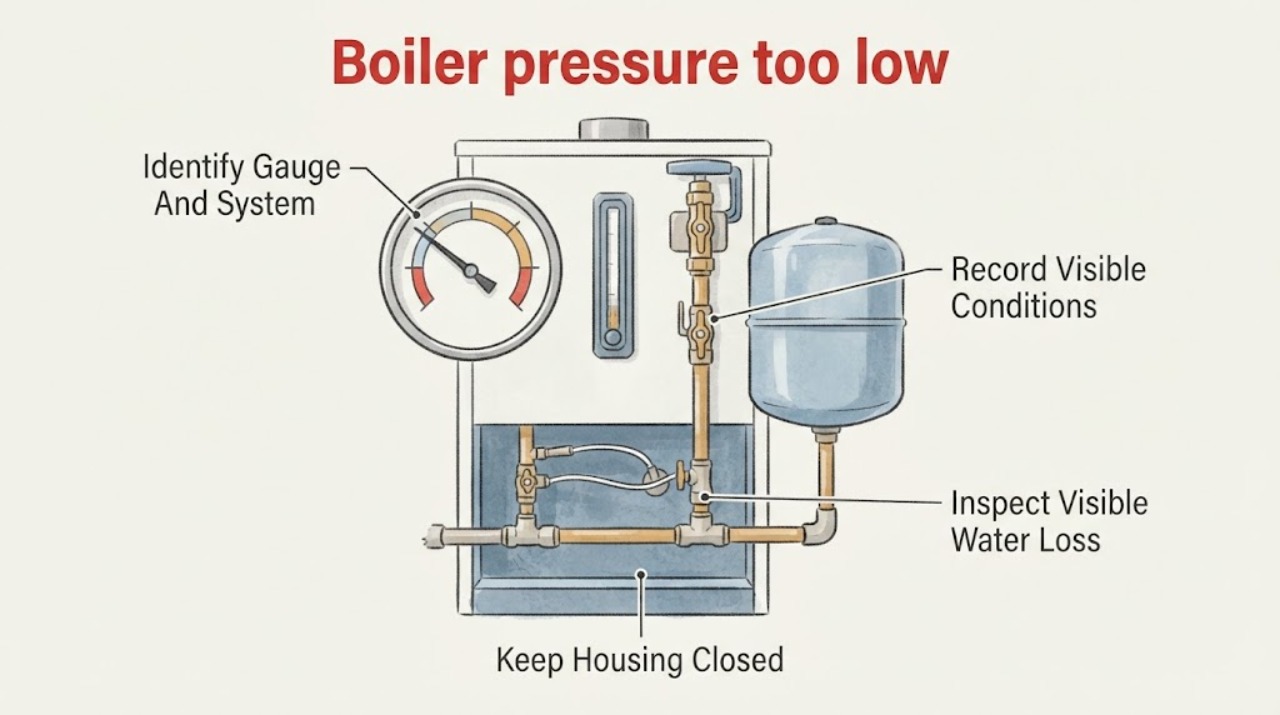
Peerless boiler pressure too low: What to Check and What to Do Next
A Peerless boiler pressure reading that looks too low is not enough to justify opening a fill valve: Peerless makes both steam and hot-water boilers, and their gauges and normal operating behavior differ by model. First identify whether the appliance has a steam gauge and gauge glass or a hot-water pressure/temperature gauge, then record the reading with the system cool and again after a heat call without touching hot pipes or controls.
-
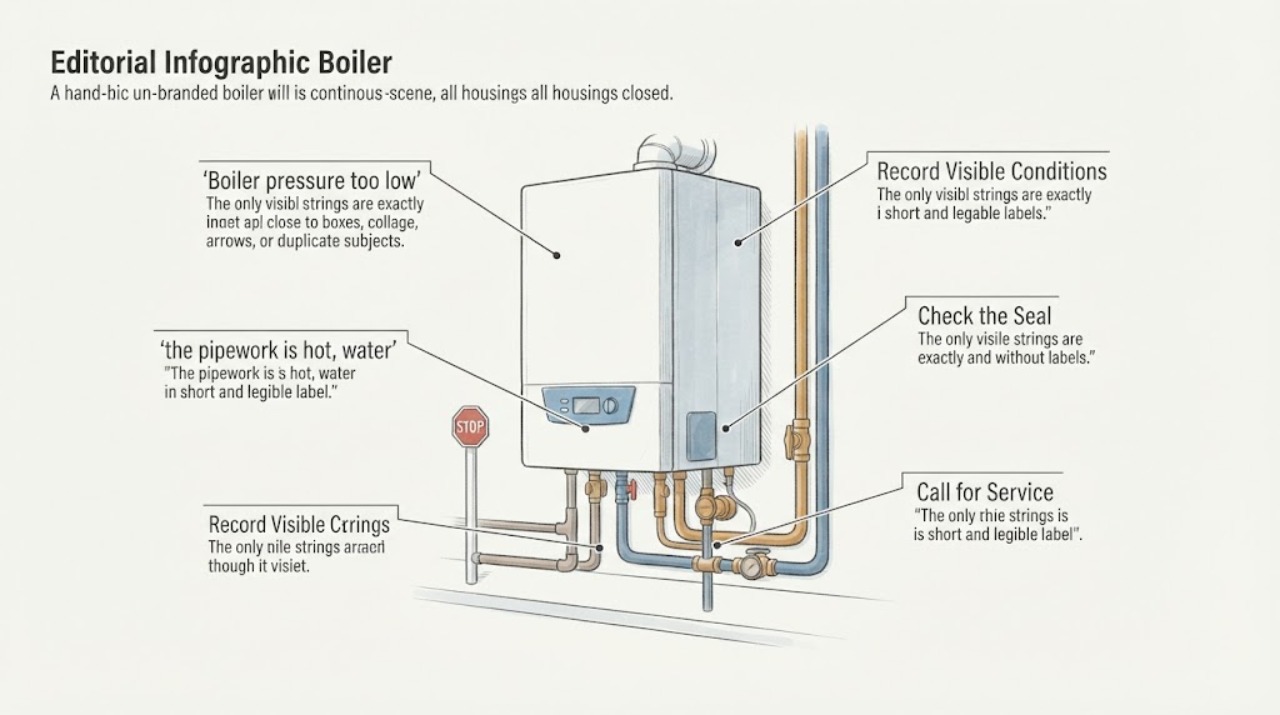
Rheem boiler pressure too low: What to Check and What to Do Next
A Rheem boiler showing low pressure may have lost water through a visible or concealed leak, discharged through a relief path, or developed an expansion-vessel, filling-device, pressure-sensor, or gauge problem. Let the system cool, compare the gauge and display with the exact Rheem model manual, and inspect only accessible pipework and discharge points for water.
-
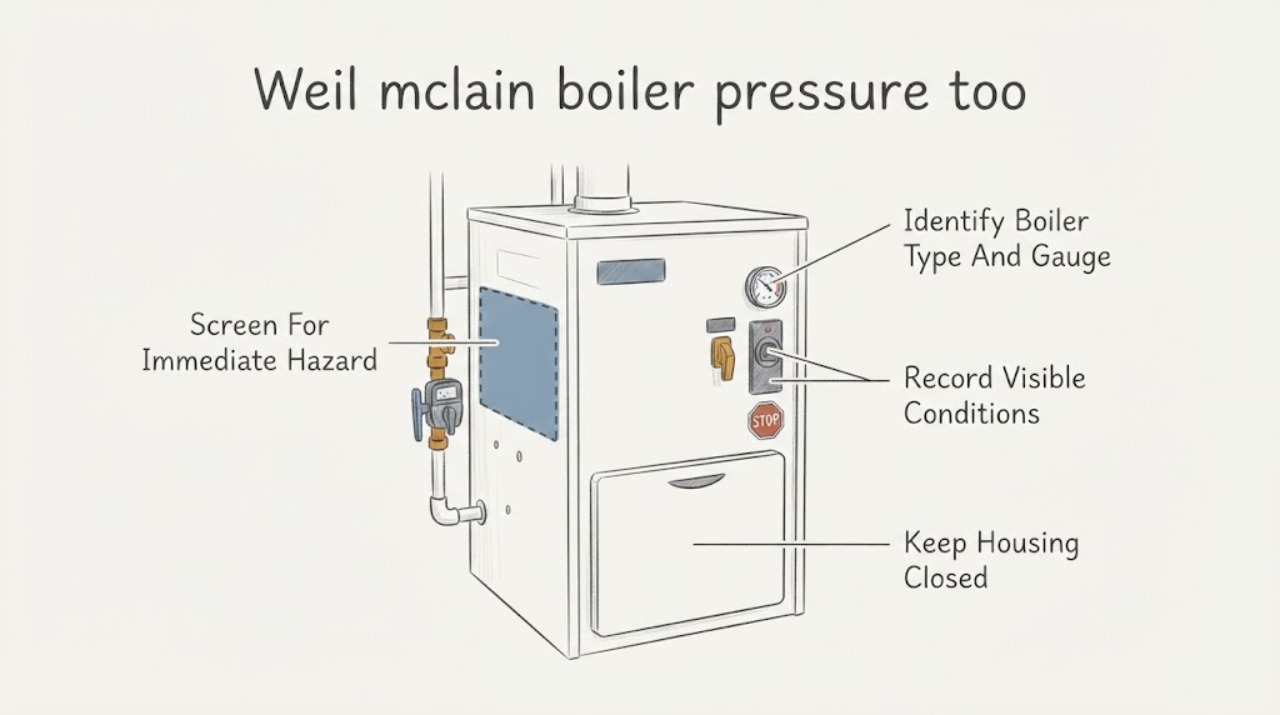
Weil mclain boiler pressure too low: What to Check and What to Do Next
A low reading on a Weil-McLain boiler is a symptom, not a reason to open a fill valve or replace a part immediately. First identify whether the appliance is a hot-water boiler with a pressure/temperature gauge or a steam boiler with a gauge glass and pressure control, then record the reading from a safe position and compare it with the exact model manual.