
HVAC guides
Boilers Repair Guides
Boiler guidance covering heat, pressure, circulation, leaks, and controls.
Published boilers guides
Choose the guide that best matches the equipment and symptom you are seeing.
-
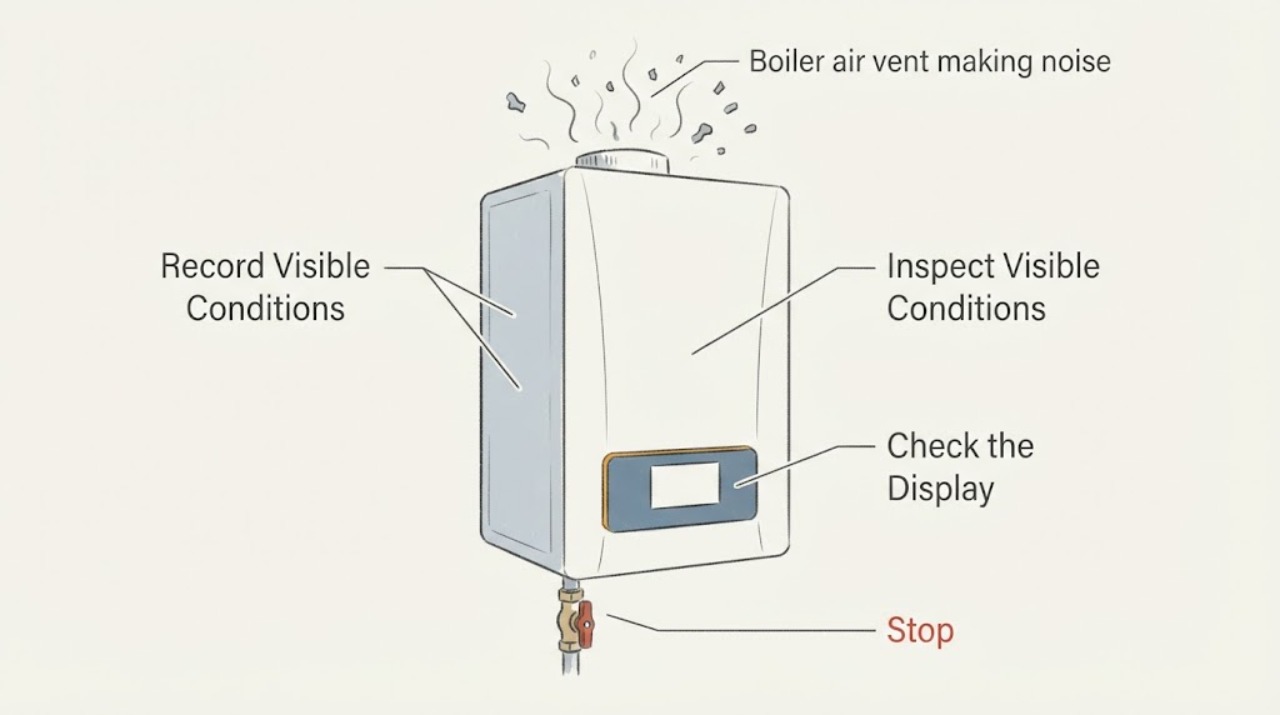
Boiler air vent making noise: What to Check and What to Do Next
A noisy boiler air vent can indicate trapped air, water movement, a fouled vent, an air-vent leak, or a broader pressure and circulation problem. Treat the boiler and vent as a pressurized hot-water system: from a safe position, record the sound, timing, visible moisture, system type, and any visible gauge or fault message, then arrange HVAC service.
-
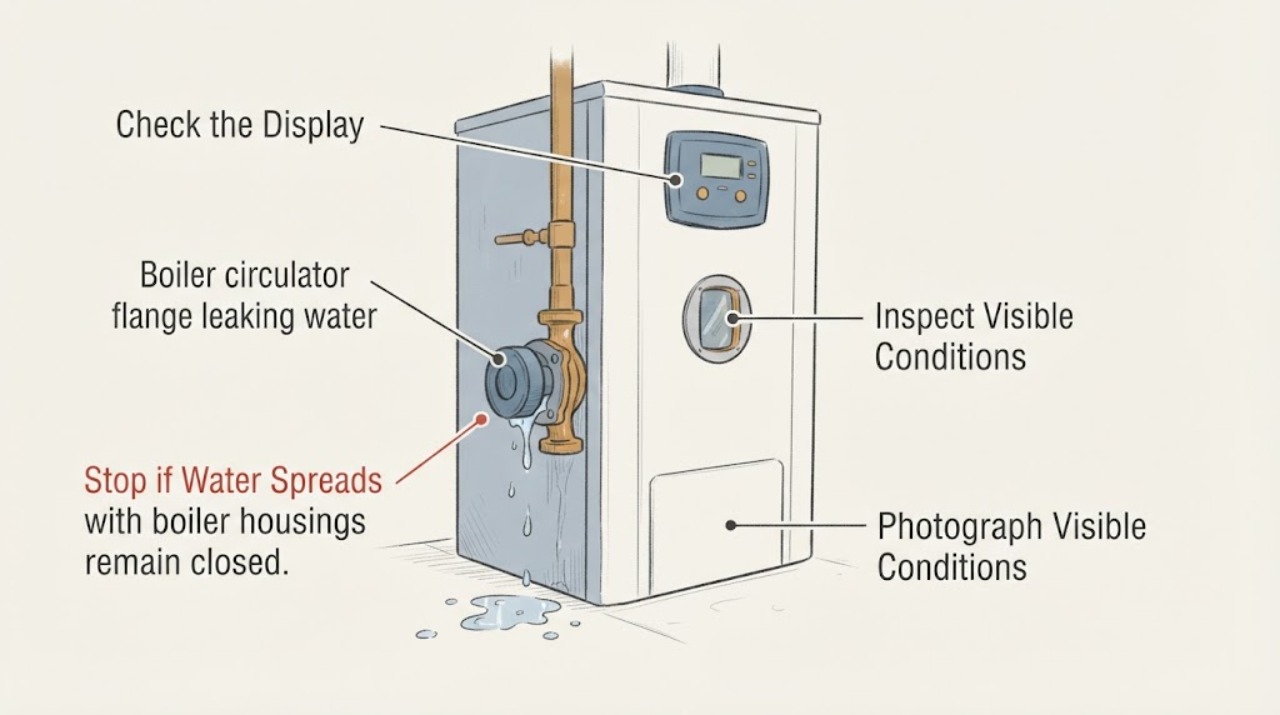
Boiler circulator flange leaking water: What to Check and What to Do Next
A leaking boiler circulator flange is a stop-and-call-professional problem, not a tightening or drain-down project for a homeowner. If the boiler controls are safely reachable and dry, stop the call for heat using the normal user control, keep clear of hot water and moving parts, and arrange a qualified heating professional.
-
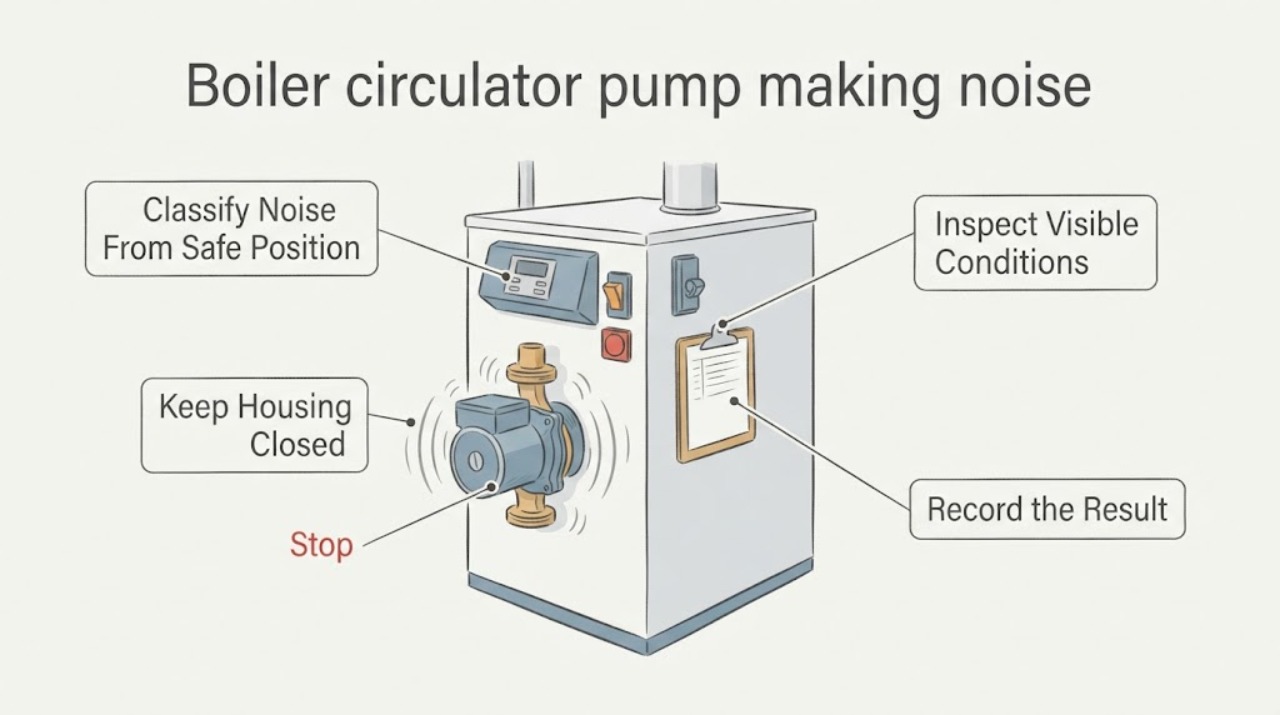
Boiler circulator pump making noise: What to Check and What to Do Next
Treat a noisy boiler circulator pump as a diagnostic clue, not a part to open or adjust. From a dry, safe position, record whether the sound is a hum, rattle, gurgle, squeal, or water-flow noise; when it starts; and whether the boiler still heats normally.
-
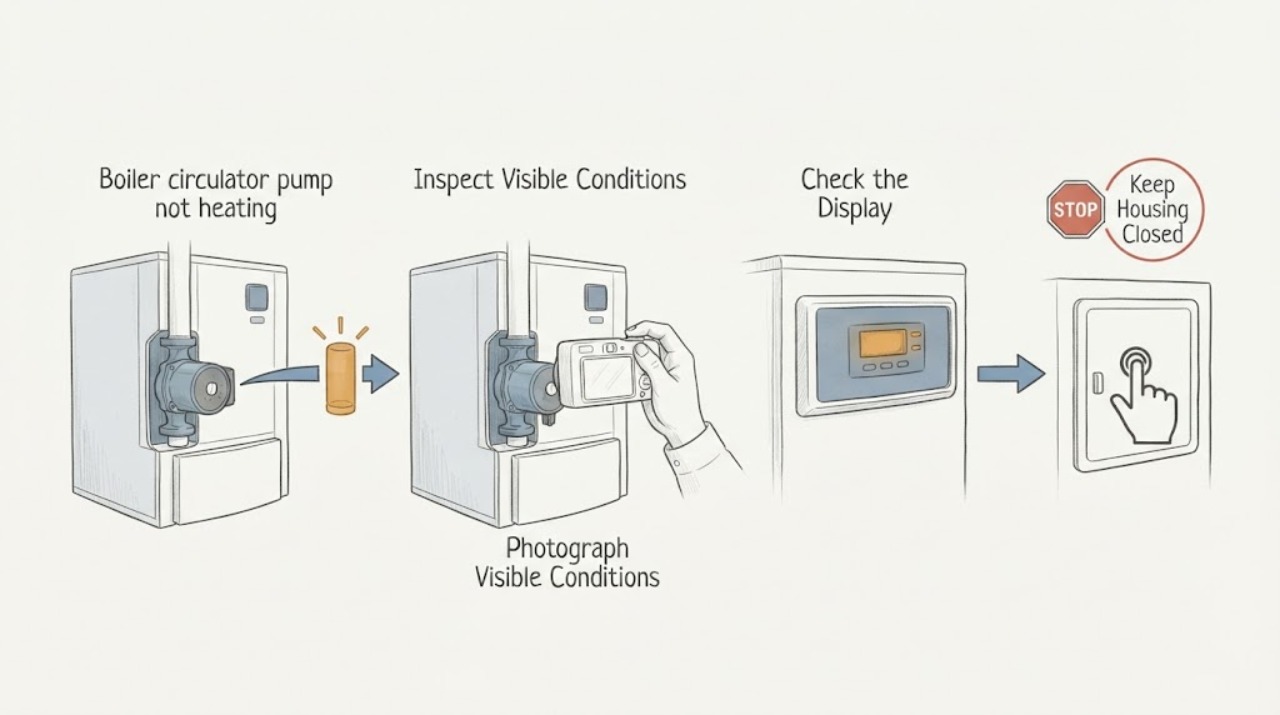
Boiler circulator pump not heating: What to Check and What to Do Next
Do not open a boiler or touch its gas, fuel, electrical, or hot-water components to diagnose a circulator problem. From normal user positions, confirm whether a thermostat is calling for heat, note any boiler display state or warning, compare heat delivery between zones, and listen for unusual circulator noise without touching the pump.
-
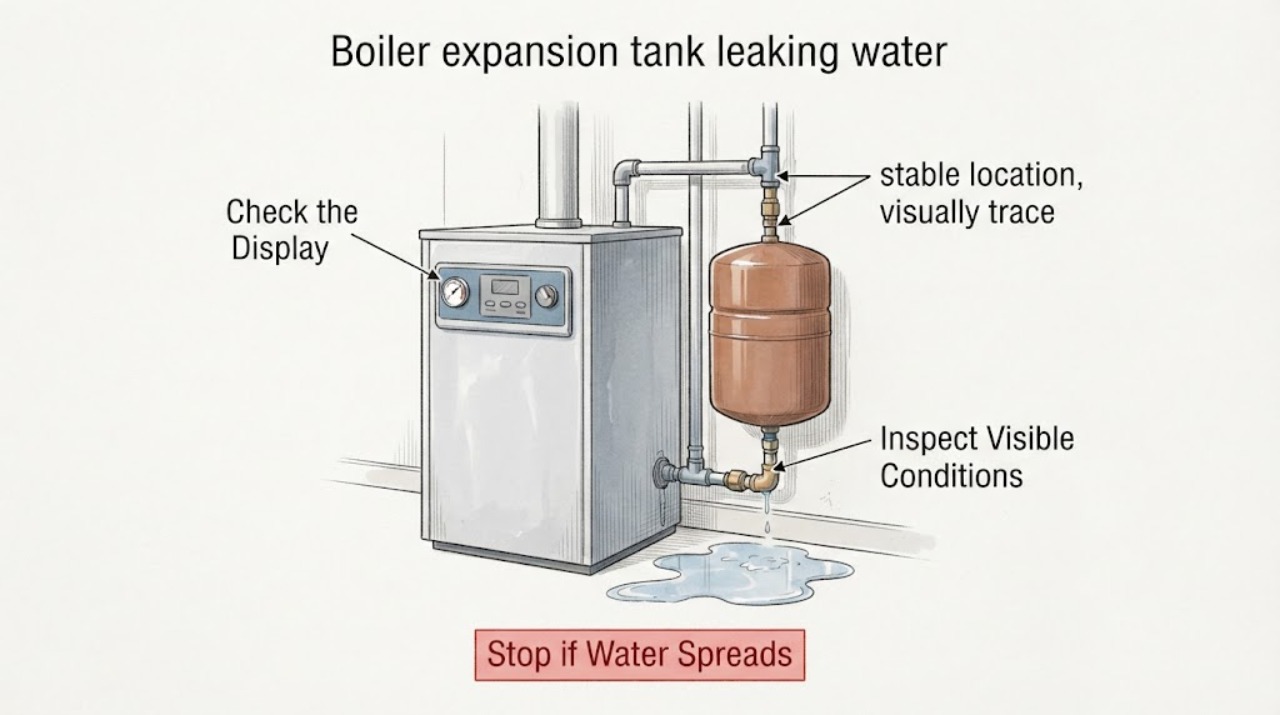
Boiler expansion tank leaking water: What to Check and What to Do Next
Water at a boiler expansion tank or nearby piping is a stop-and-call-professional problem. If the normal heating control is safely reachable and dry, stop the call for heat and leave the boiler out of service.
-
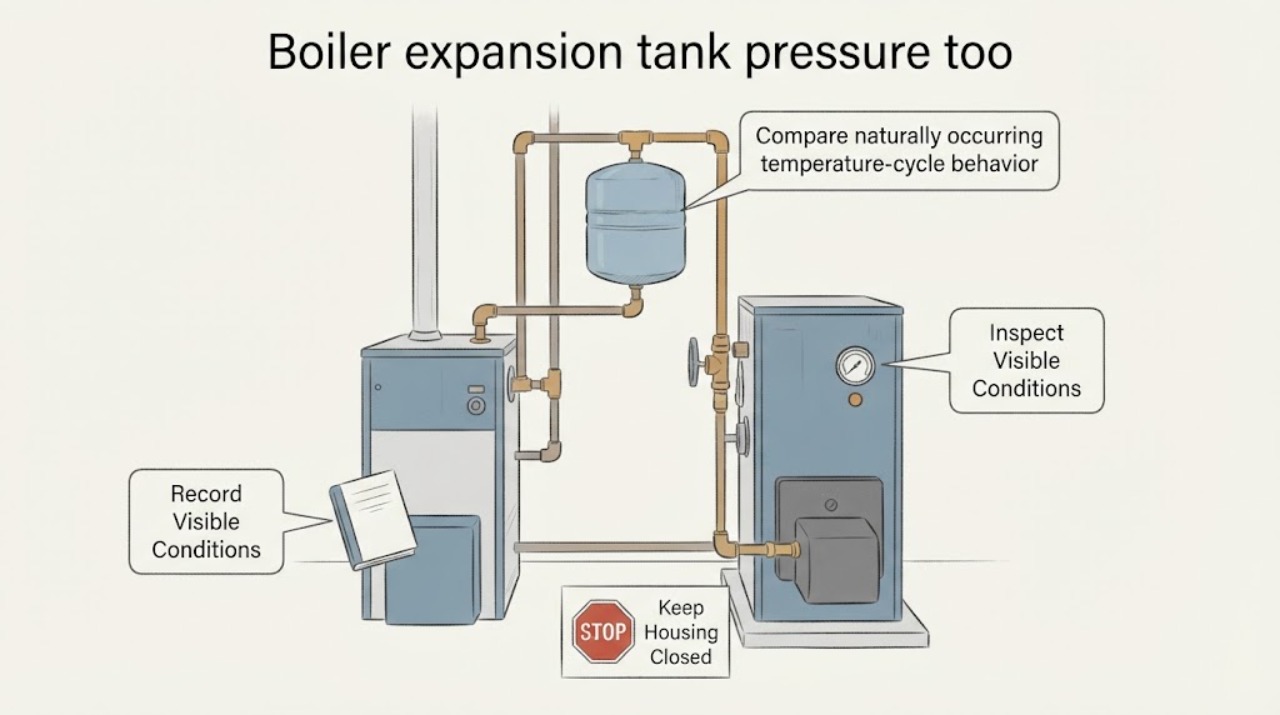
Boiler expansion tank pressure too low: What to Check and What to Do Next
A low boiler-pressure reading does not prove that the expansion tank itself has failed. The reading can reflect a leak, a relief or air-vent discharge, a fill or gauge problem, an incorrectly sized or failed expansion tank, or normal pressure behavior that is being misread.
-
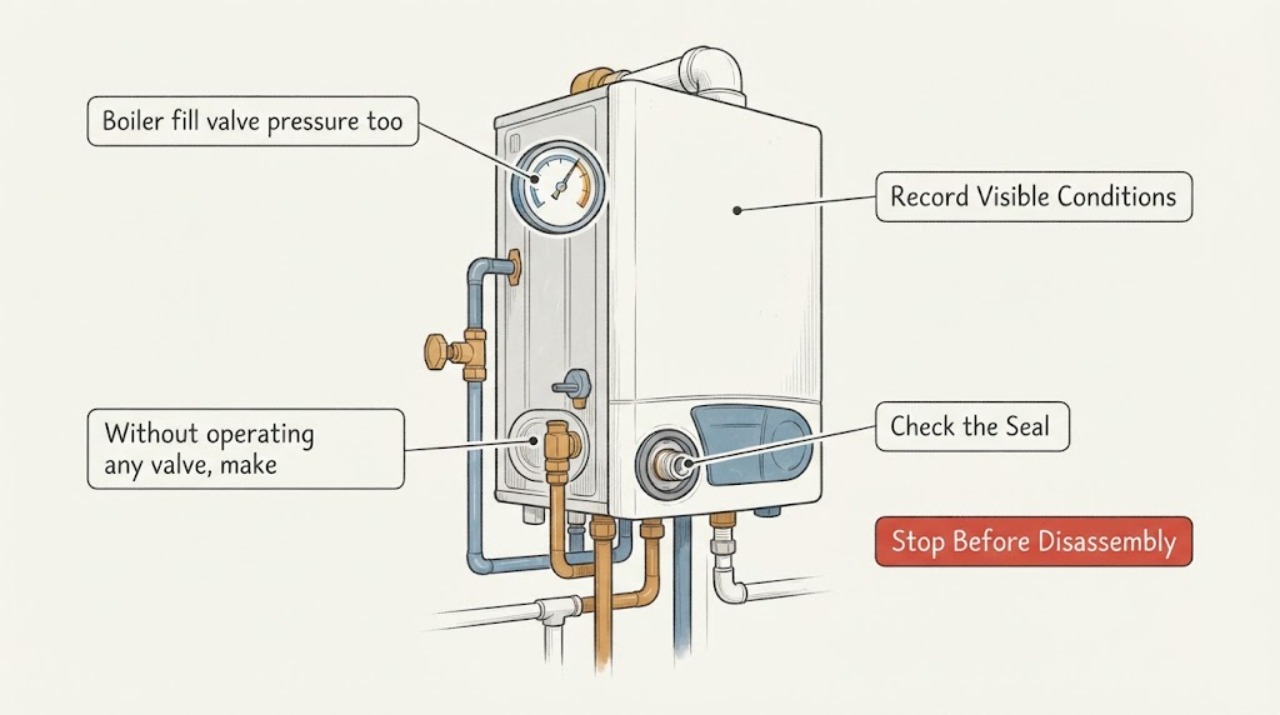
Boiler fill valve pressure too low: What to Check and What to Do Next
A low boiler-pressure reading does not prove that the fill valve itself has failed. With the boiler cool and from a safe external position, record the gauge or display against the range in the model manual, note whether the reading falls again, and look for visible water or discharge around accessible heating-system connections.
-
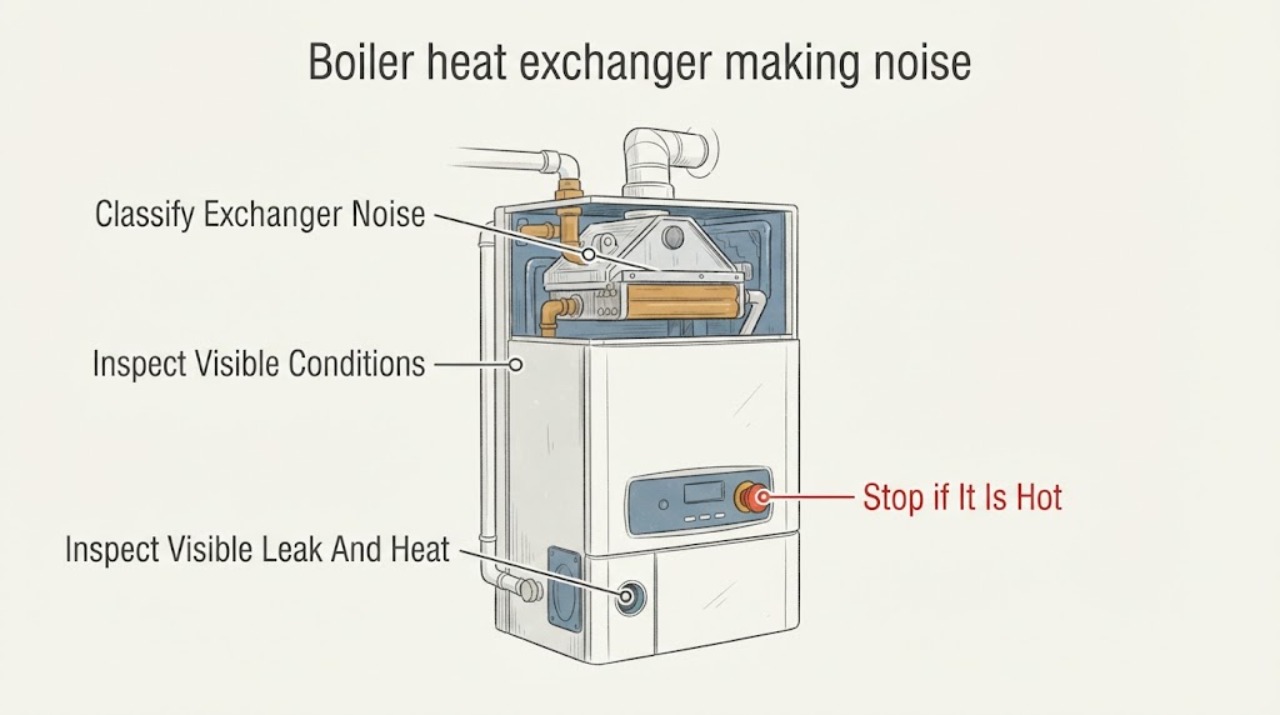
Boiler heat exchanger making noise: What to Check and What to Do Next
A noisy boiler heat exchanger cannot be confirmed or safely repaired from outside the appliance. From a dry, safe position, record the sound type and when it occurs, compare it with the boiler display and heat delivery, and look for visible leaks or overheating warnings without opening the casing.
-
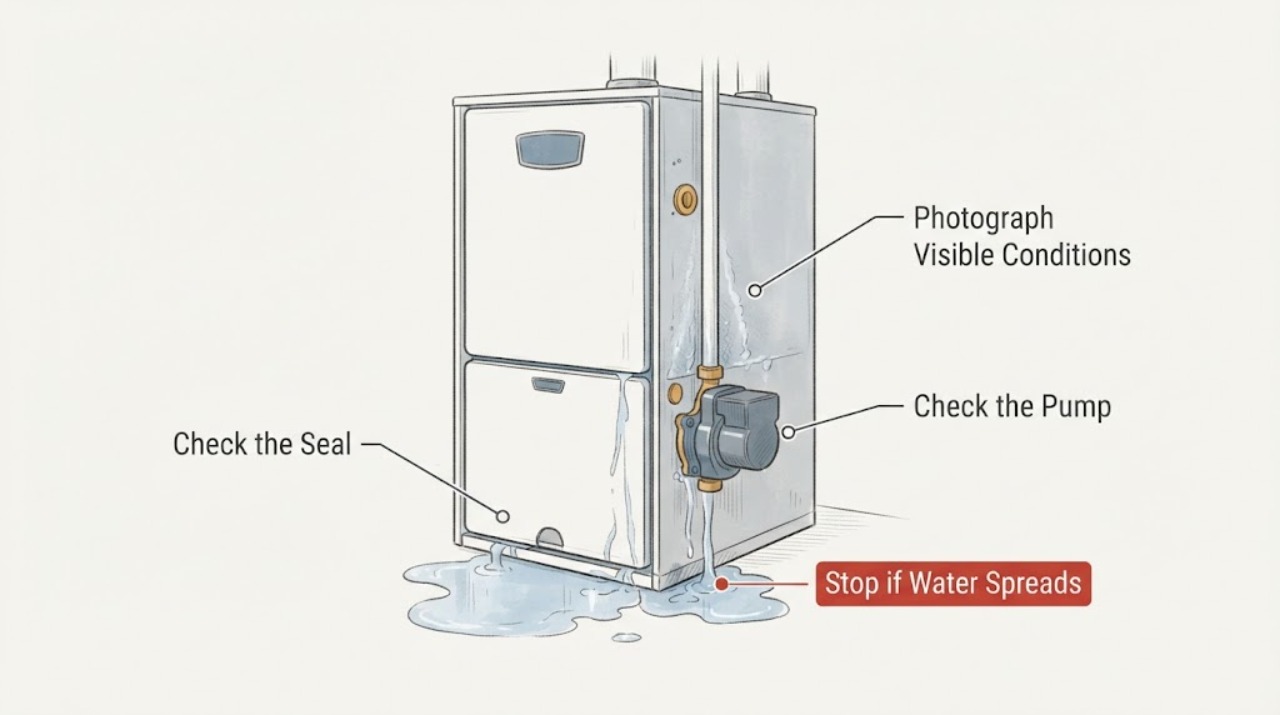
Boiler leaking water leak changes with heating: What to Check and What to Do Next
A boiler leak that increases, starts, or stops as the system heats is a pressure-and-temperature clue, not a reason to keep cycling the boiler. Water may be coming from a pressure-relief discharge, a fitting or seal, a condensate drain on a high-efficiency unit, or a heat-exchanger or other internal fault.
-
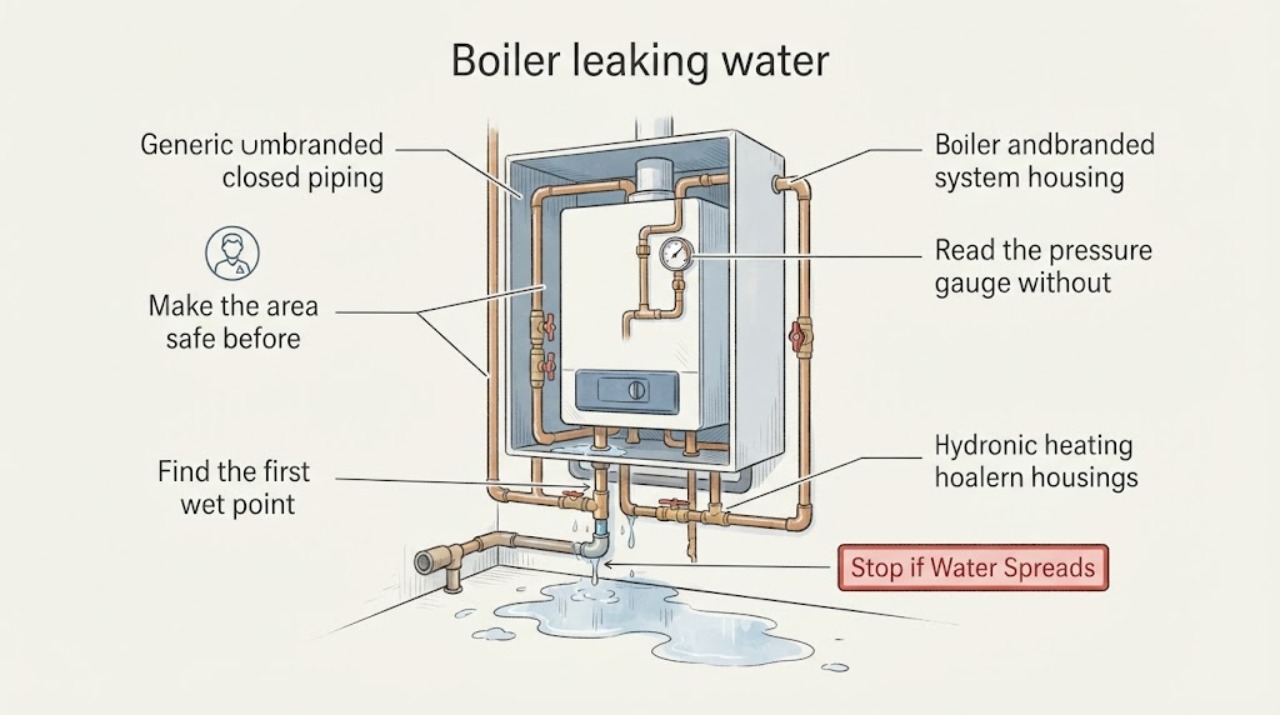
Boiler leaking water: What to Check and What to Do Next
Treat a leaking boiler as a shut-down-and-assess problem, not an internal DIY repair. If it is safe to reach, turn the heating off with the normal user control, keep clear of hot or pressurized water, and trace only accessible exterior surfaces.
-
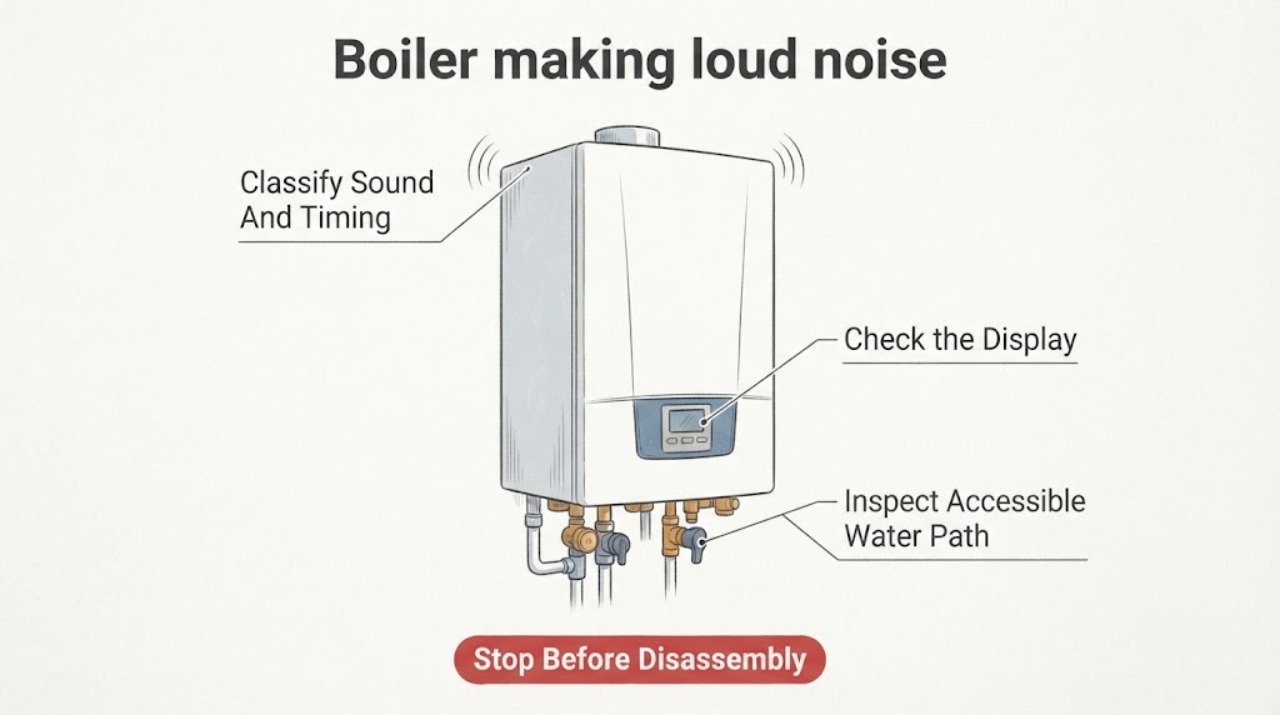
Boiler making loud noise: classify the sound before changing anything
A loud boiler is not diagnosed by volume alone: gurgling, splashing, or whistling can point to air or flow in the hydronic system, while knocking or cracking may come from expanding pipes, brackets, pressure or flow controls, or a boiler component.
-
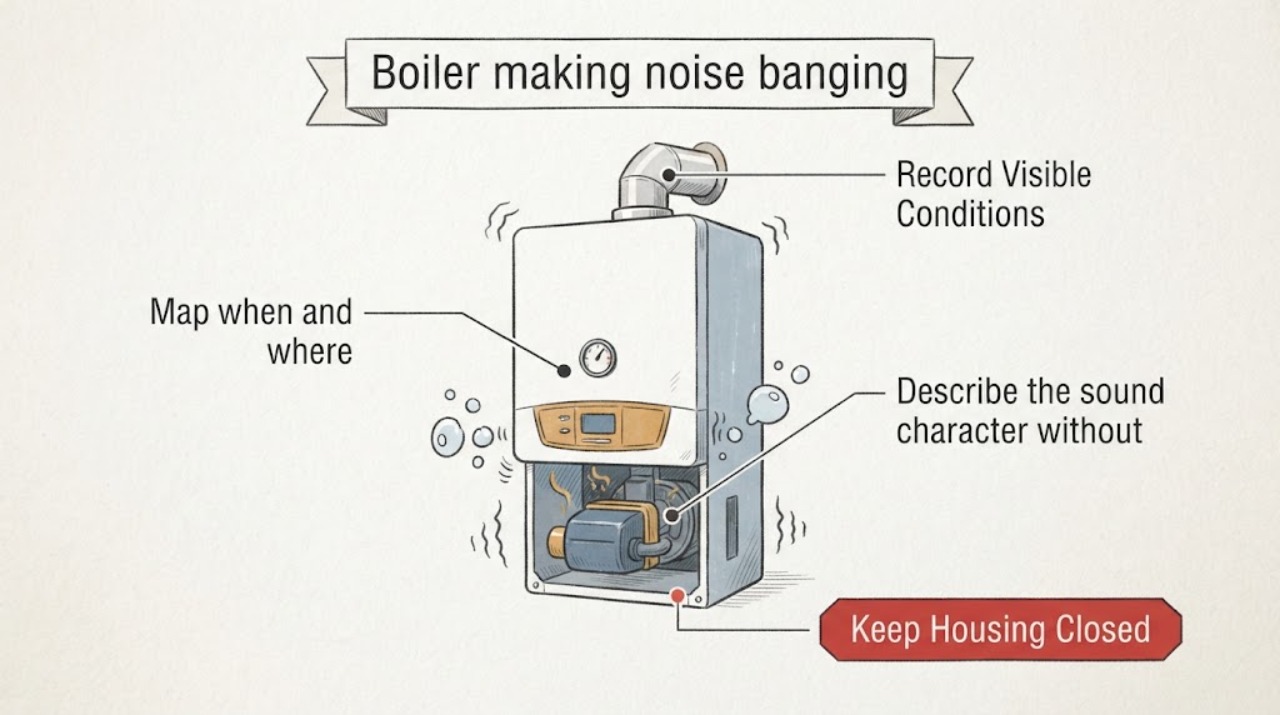
Boiler making noise banging or kettling sound: What to Check and What to Do Next
A boiler that bangs or makes a kettle-like noise needs a pattern record, not a homeowner diagnosis. From a stable position, note whether the sound occurs at startup, shutdown, heating, or pump operation; whether it comes from the boiler cabinet, nearby pipes, or radiators; and what the existing pressure or temperature gauge shows without changing it.
-
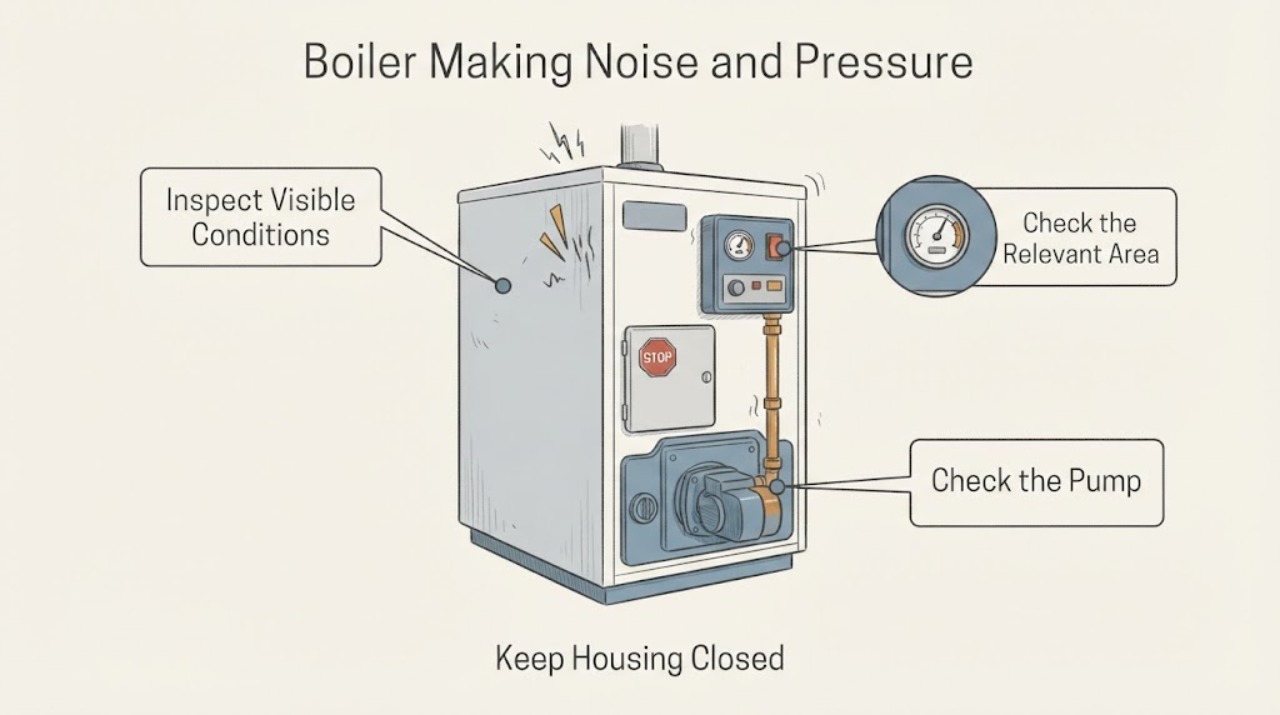
Boiler Making Noise and Pressure May Fluctuate: What to Check and What to Do Next
A small pressure rise while the boiler heats and a small fall as it cools can be normal, but the gauge should remain within the range stated in the boiler manual. Noise together with a rise of more than about 1 bar during heating, entry into the high or red zone, pressure rising while the boiler is off, repeated pressure loss, or frequent topping up points to a fault such as an expansion-vessel, filling-link, leak, circulation, or combustion issue.
-
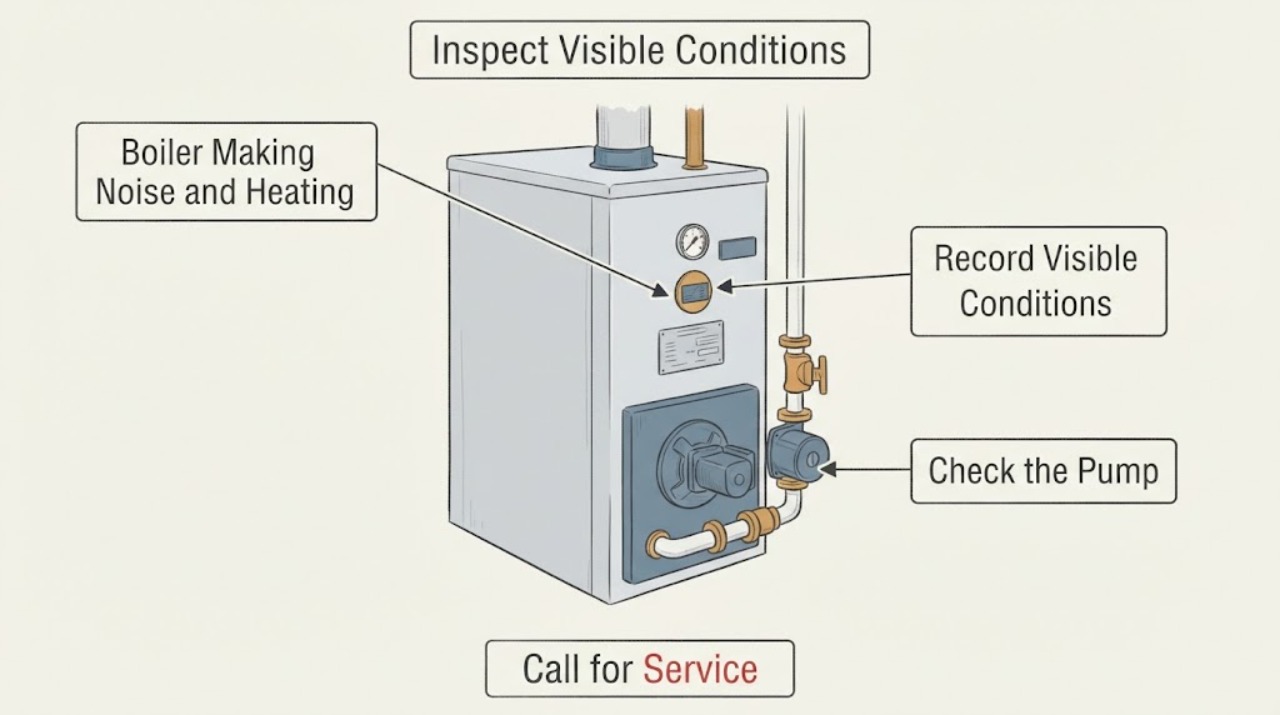
Boiler Making Noise and Heating Unevenly: What to Check Next
A boiler that has become noisy while rooms or radiators heat unevenly may have trapped air, restricted circulation, a control or zone problem, a pump issue, or scale and flow trouble. First classify the sound and compare it with the cold rooms or cold sections of radiators; gurgling with a radiator cold at the top points toward air, while banging or whistling at the boiler, a new drone, repeated pressure change, leaks, or lockouts needs professional diagnosis.
-
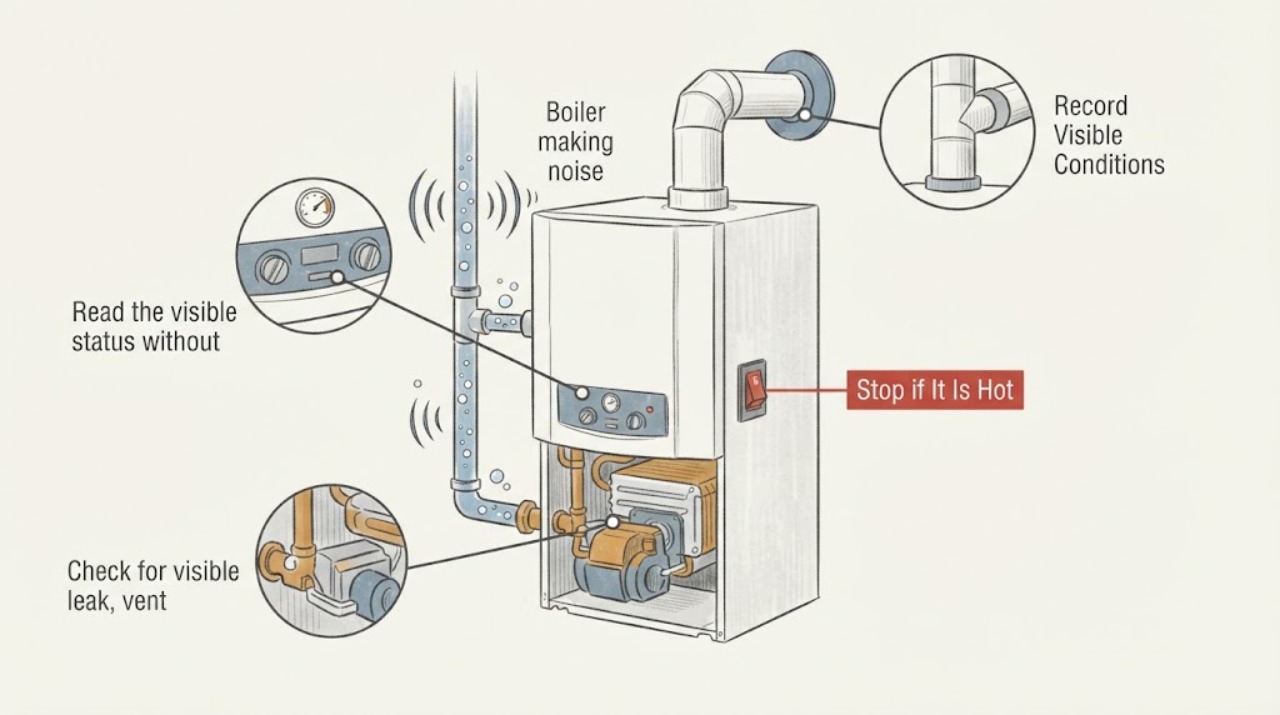
Boiler making noise: What to Check and What to Do Next
A new or unusually loud boiler noise should be treated as a diagnostic signal, not something to fix by opening the casing or adjusting a pressurized system. First identify the sound and when it happens, then read any visible display or gauge from a safe position and look for signs of leakage, overheating, fuel odor, venting trouble, or a carbon-monoxide alarm.
-
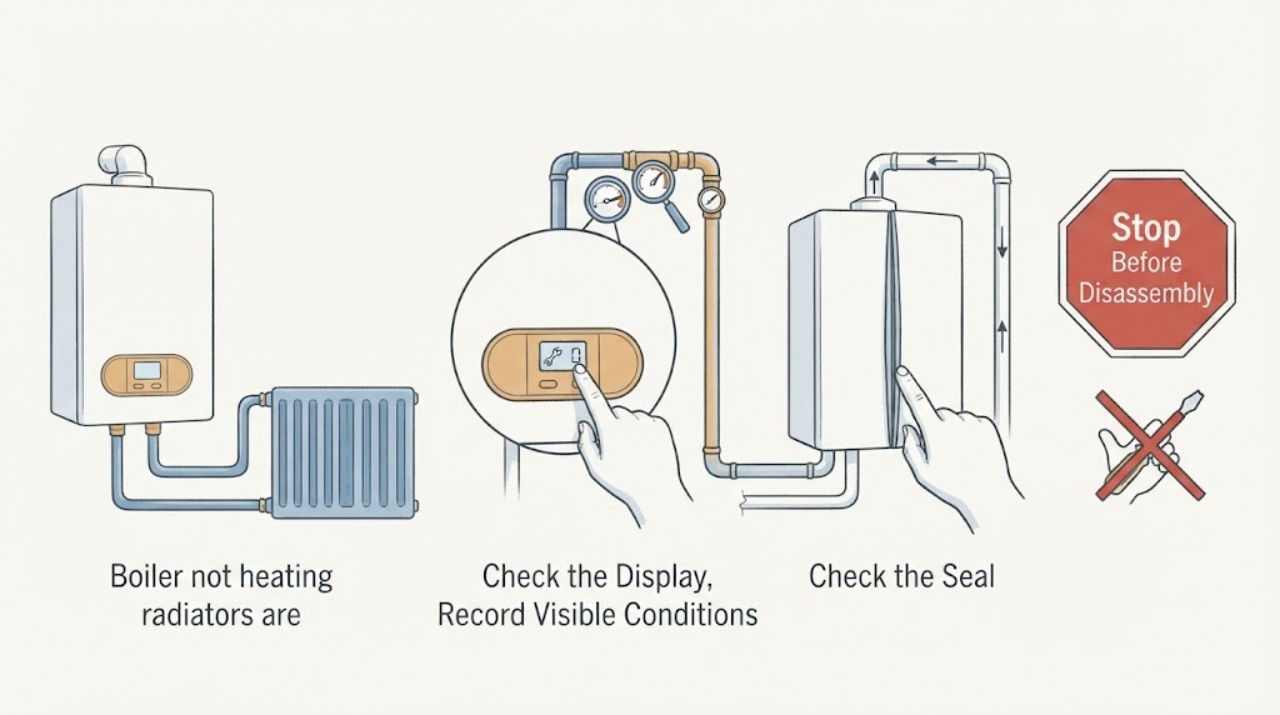
Boiler not heating radiators are cold: What to Check and What to Do Next
If the boiler is not heating and several radiators are cold, first confirm that the programmer or thermostat is actually calling for central heat and that the boiler is in heating mode, not hot-water-only mode. Check the boiler display for a fault or lockout and inspect its pressure indicator and visible pipework without removing the casing.
-
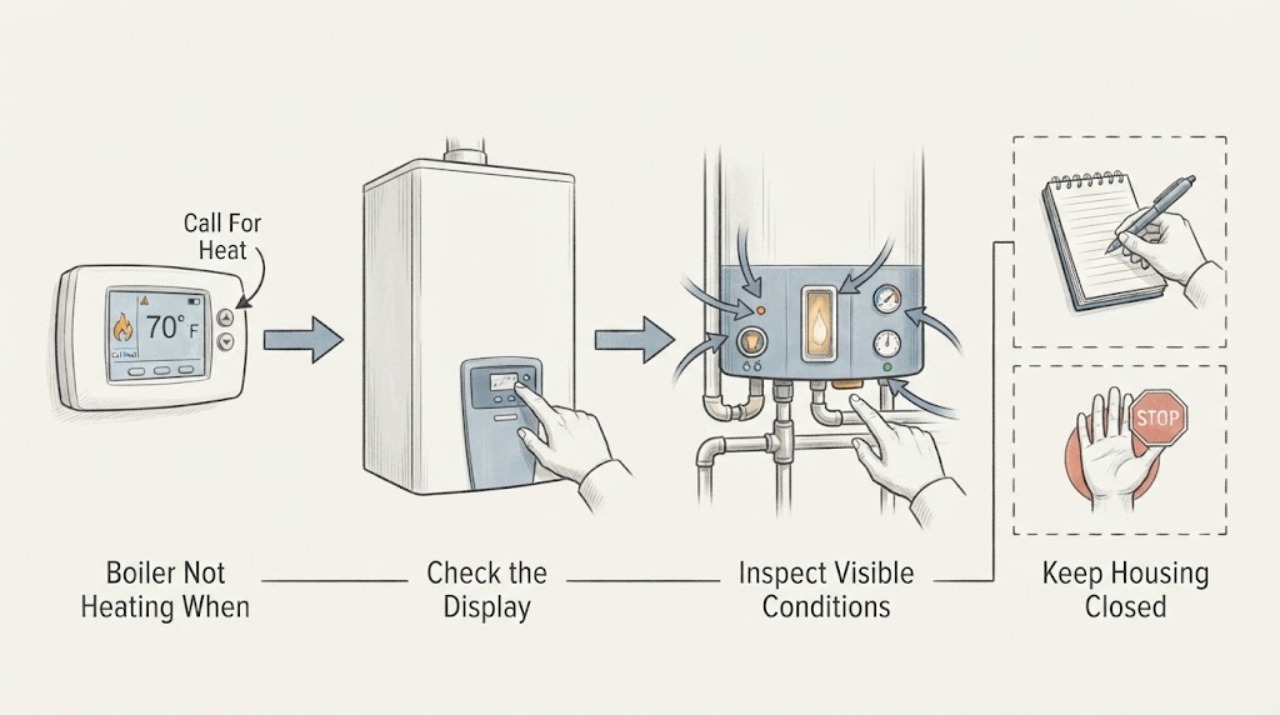
Boiler Not Heating When the Thermostat Calls for Heat: What to Check and What to Do Next
A thermostat showing Heat On, a flame icon, or another call-for-heat indicator is requesting heat; it does not prove that the boiler received the signal or accepted it. Confirm the thermostat mode, schedule and setpoint, then make only visible observations at the boiler: display or power status, fault indication, pressure indication and whether it starts during one normal call.
-
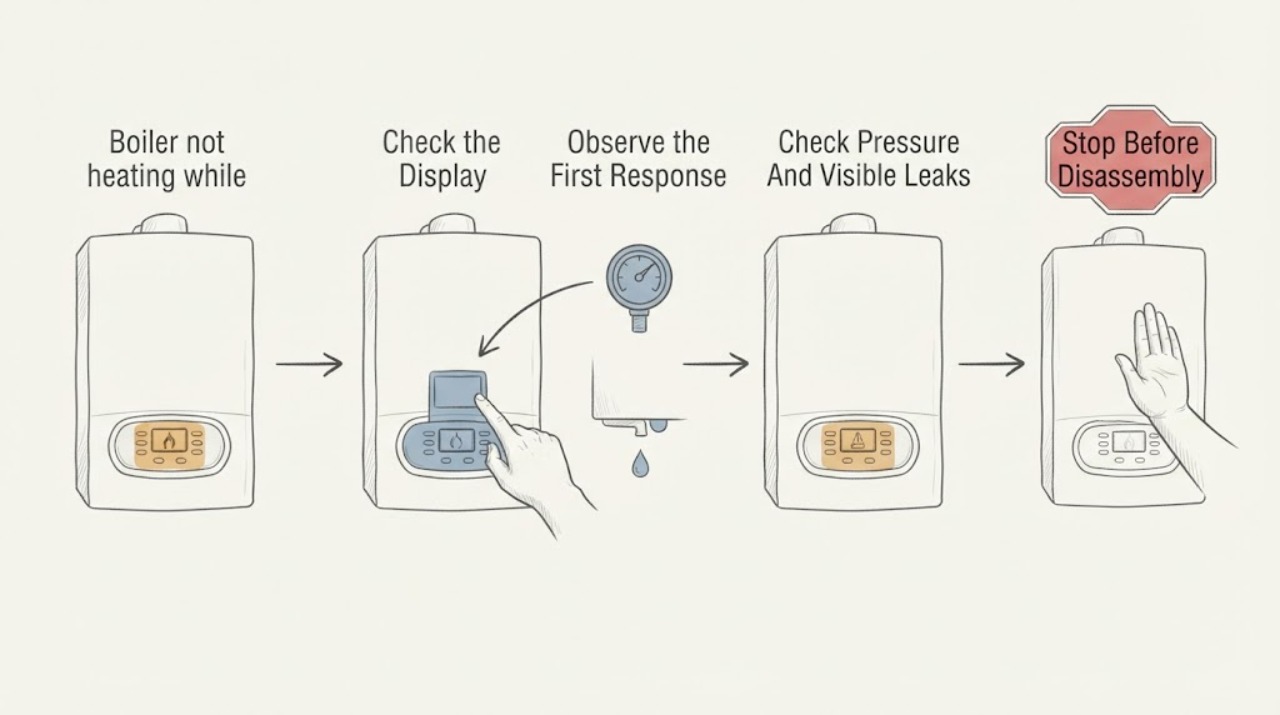
Boiler not heating while the status display is visible: What to Check and What to Do Next
A visible boiler display proves that the appliance has some electrical power, not that it is receiving a heating request or successfully transferring heat to the radiators. First read the display without guessing at an unfamiliar symbol, then check the room thermostat, schedule or programmer, boiler mode, power supply, and system pressure from the user-accessible controls.
-
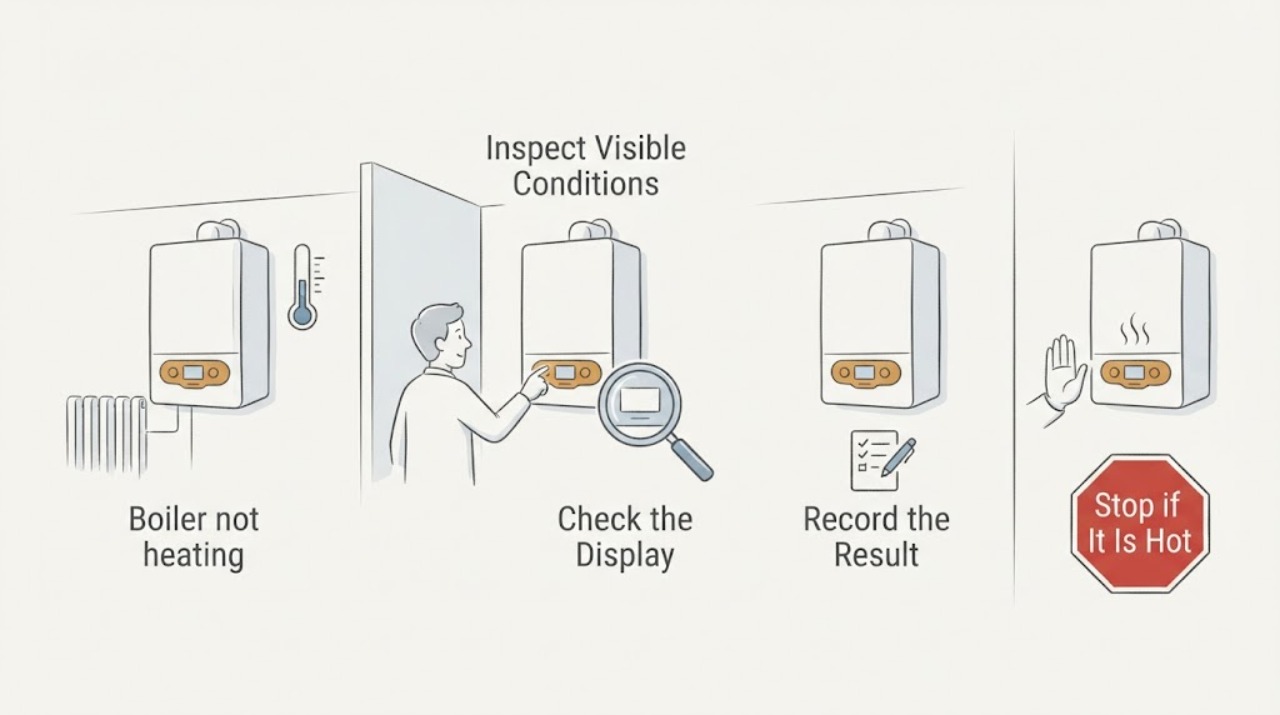
Boiler not heating: What to Check and What to Do Next
Start with observations that do not require opening the boiler: confirm the thermostat or zone control is actually calling for heat, read any visible boiler status or error message, and read the visible pressure gauge or digital pressure display against the range in your manual. Check whether the loss of heat affects every zone or only one.
-
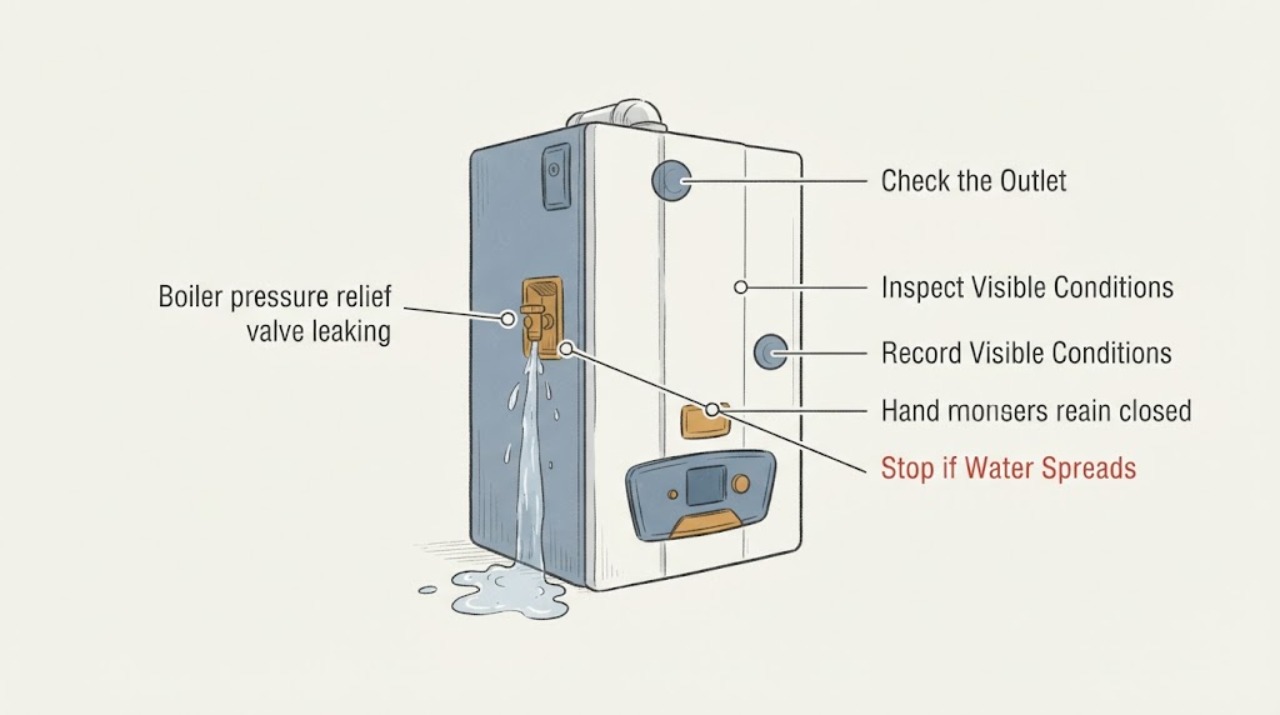
Boiler pressure relief valve leaking water: What to Check and What to Do Next
Water coming from a boiler pressure relief valve or its discharge pipe is a safety signal, not a routine drip to cap or test. From a dry, safe position, note where the water appears, whether it is hot or forceful, what the visible gauge is doing, and whether water is approaching electrical equipment.
-
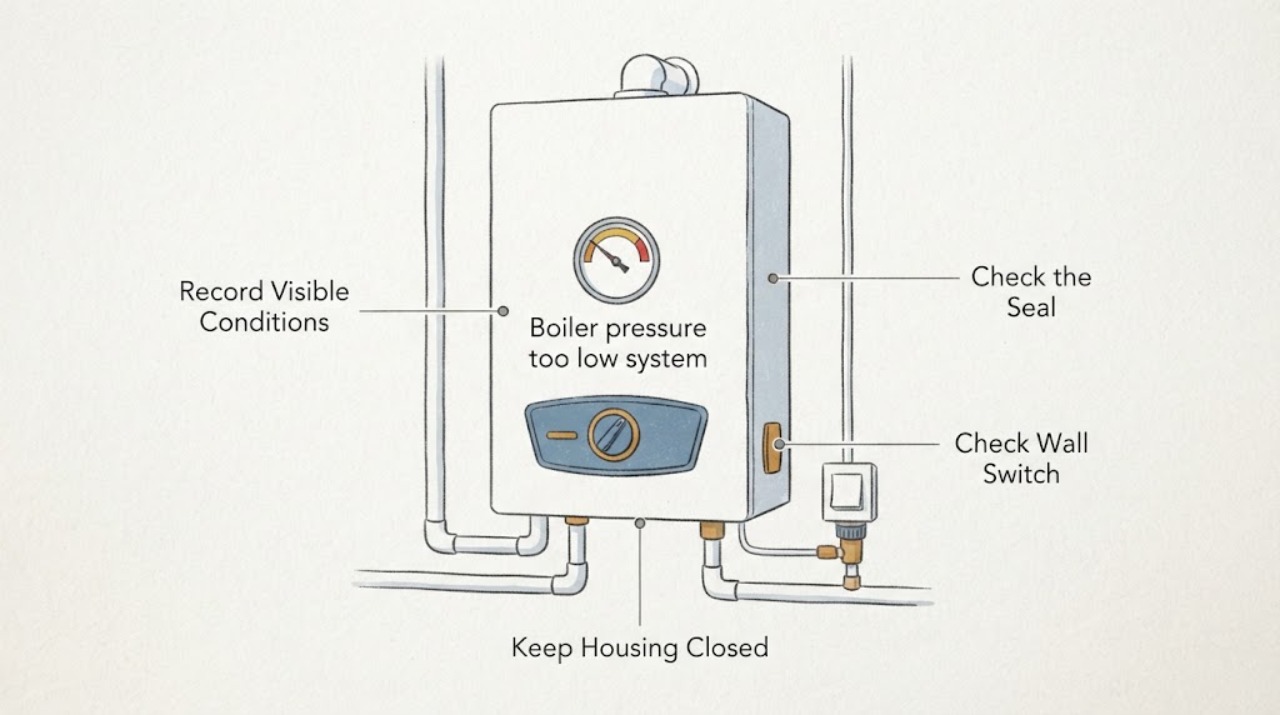
Boiler pressure too low system is cold or hot: What to Check and What to Do Next
Check boiler pressure against the exact appliance manual and note whether the heating system is cool or hot. A low reading on a cool system can follow a leak, radiator bleeding, or gradual water loss; it can stop the boiler from providing heat or hot water.
-
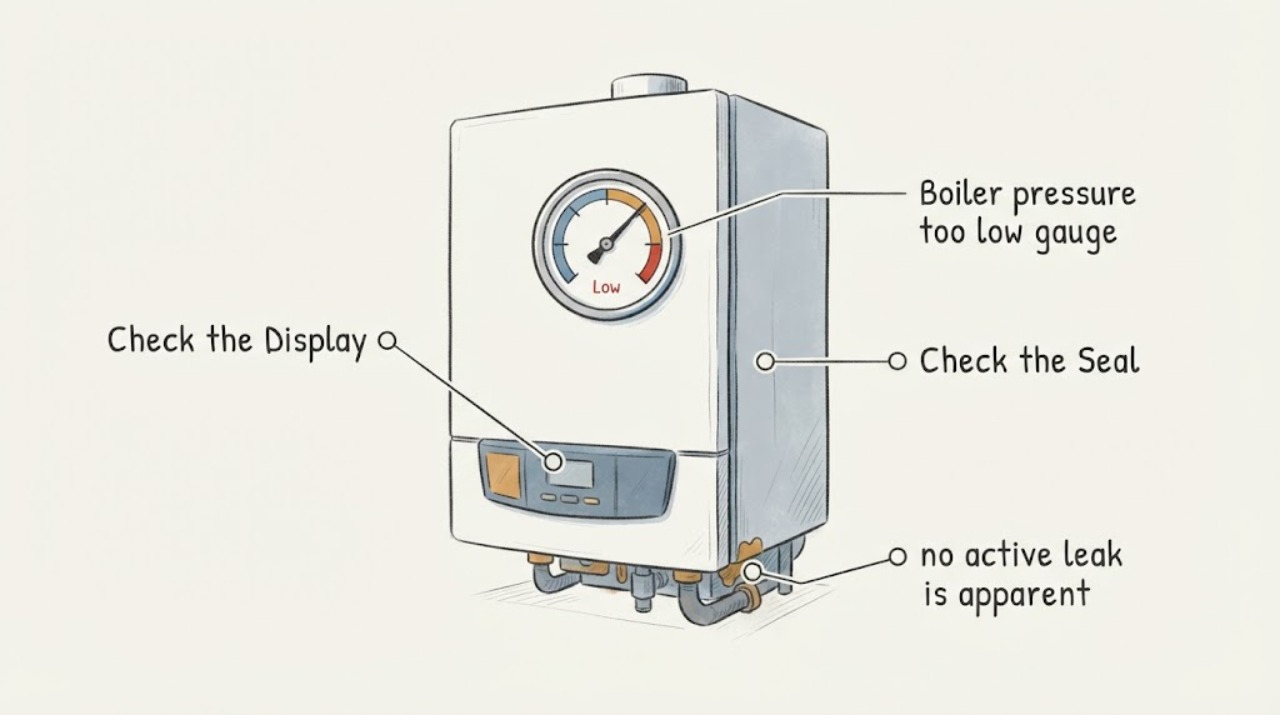
Boiler pressure too low gauge reads: What to Check and What to Do Next
A low boiler pressure reading usually means water has left a sealed heating system, often through a visible or hidden leak, but a reading can also be affected by whether the system is hot or cold or by a faulty gauge or sensor. Let the system cool, check the boiler manual for its own pressure range, and look for dampness or staining around radiators, valves, pipes, and the appliance.
-
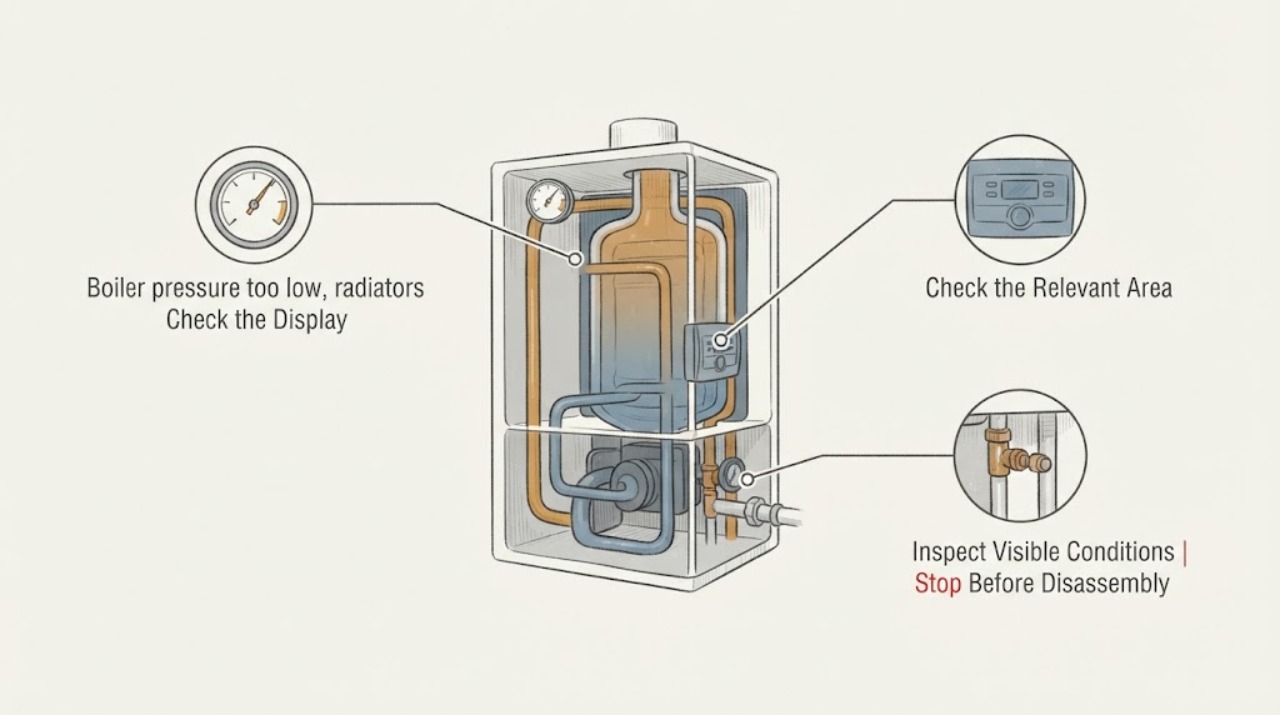
Boiler pressure too low, radiators may not heat: What to Check and What to Do Next
Low boiler pressure can stop a hydronic heating system from circulating water, so several radiators may stay cold or the boiler may show a pressure fault. Read the boiler gauge or display with the system in the state specified by its manual, check normal heating demand and visible leaks around radiators and pipework, and compare whether one radiator or the whole system is affected.
-
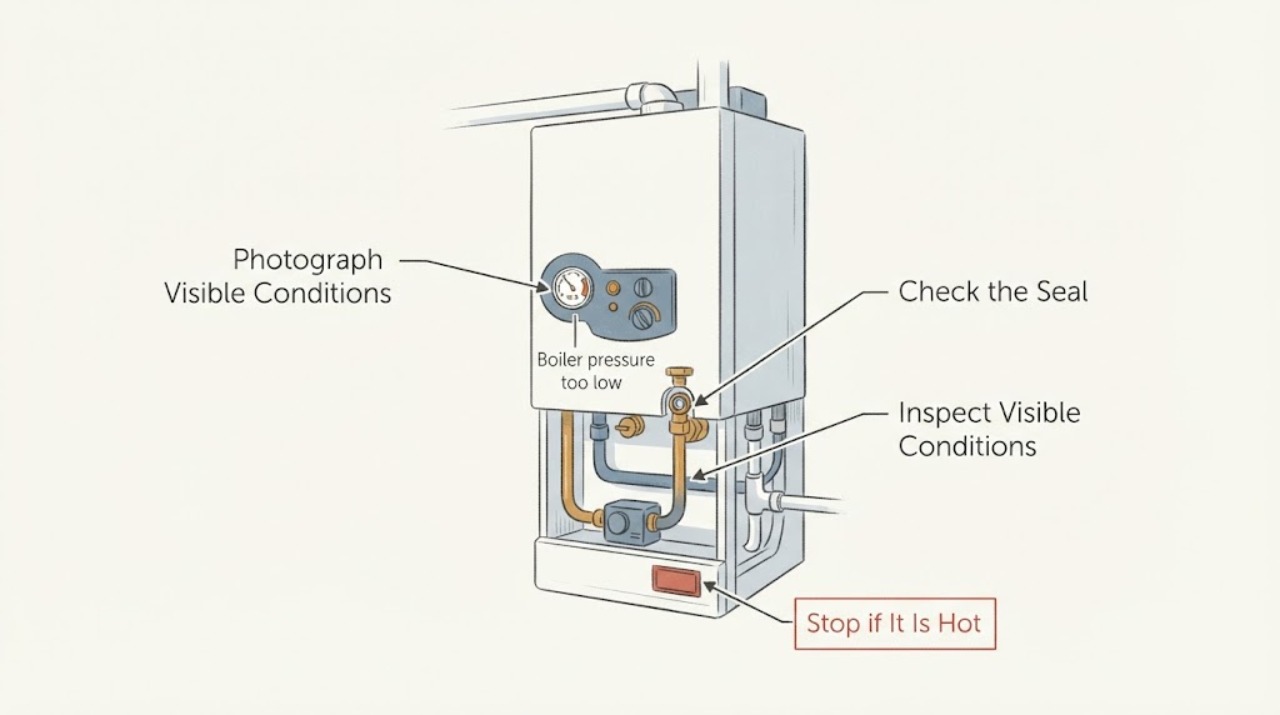
Boiler pressure too low: What to Check and What to Do Next
Treat a low boiler-pressure reading as a symptom, not a cue to open a filling valve. From outside the appliance, photograph the gauge or display and compare it with the normal zone in the boiler manual.
-
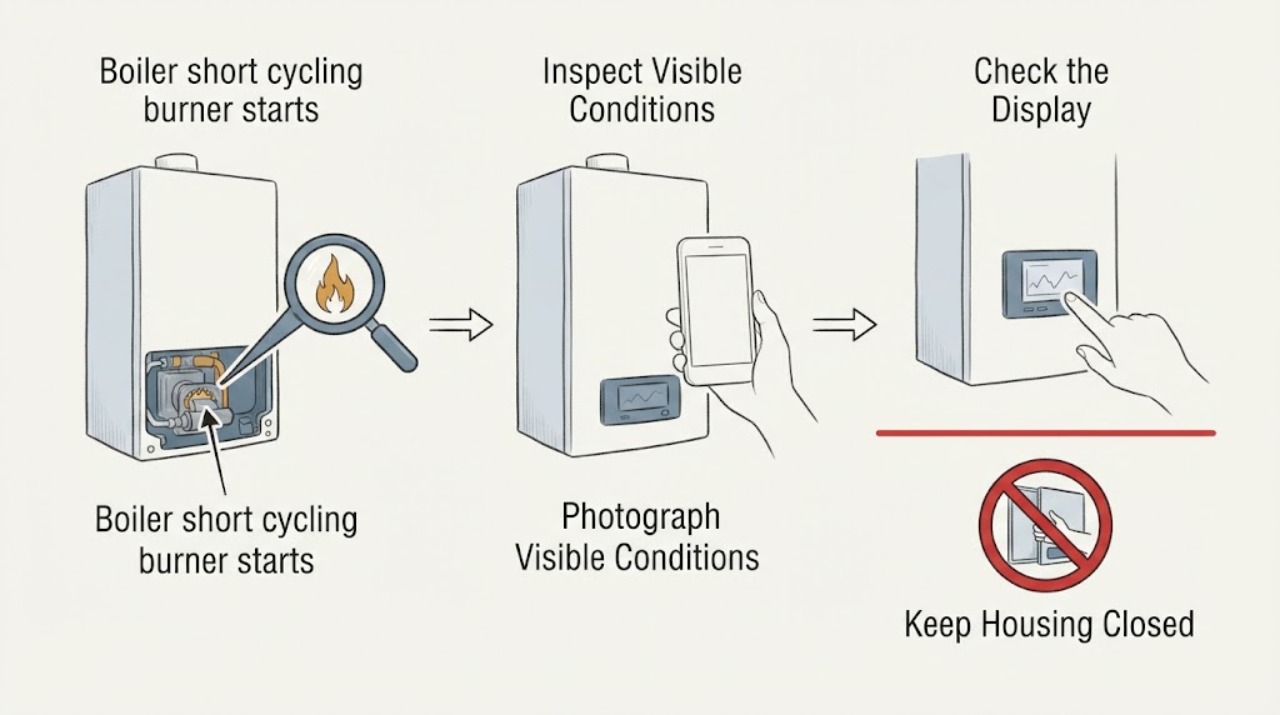
Boiler short cycling burner starts and stops rapidly: What to Check and What to Do Next
First determine whether the thermostat or zone is still calling for heat when the burner stops. A call that ends normally can be ordinary temperature control; a burner that shuts off after a short run and repeatedly relights while the call remains active is short cycling.
-
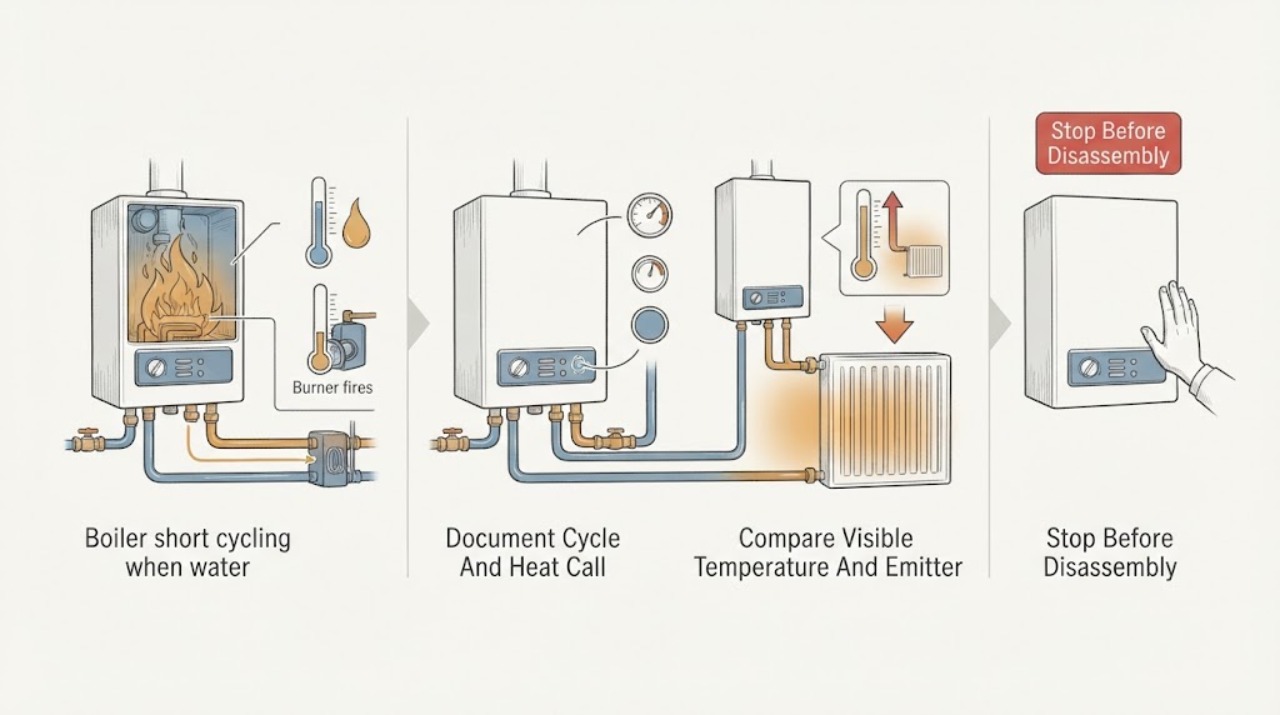
Boiler short cycling when water temperature changes quickly: What to Check and What to Do Next
If a hot-water boiler reaches its supply-temperature target quickly, shuts the burner off, and repeats that pattern while the thermostat still calls for heat, the current heat load may be too small for the boiler's minimum output, the system may have too little water volume, or heat may not be moving through the zones. First document whether the thermostat call remains active, whether the circulator continues, and what the user-visible supply and return temperatures do.
-
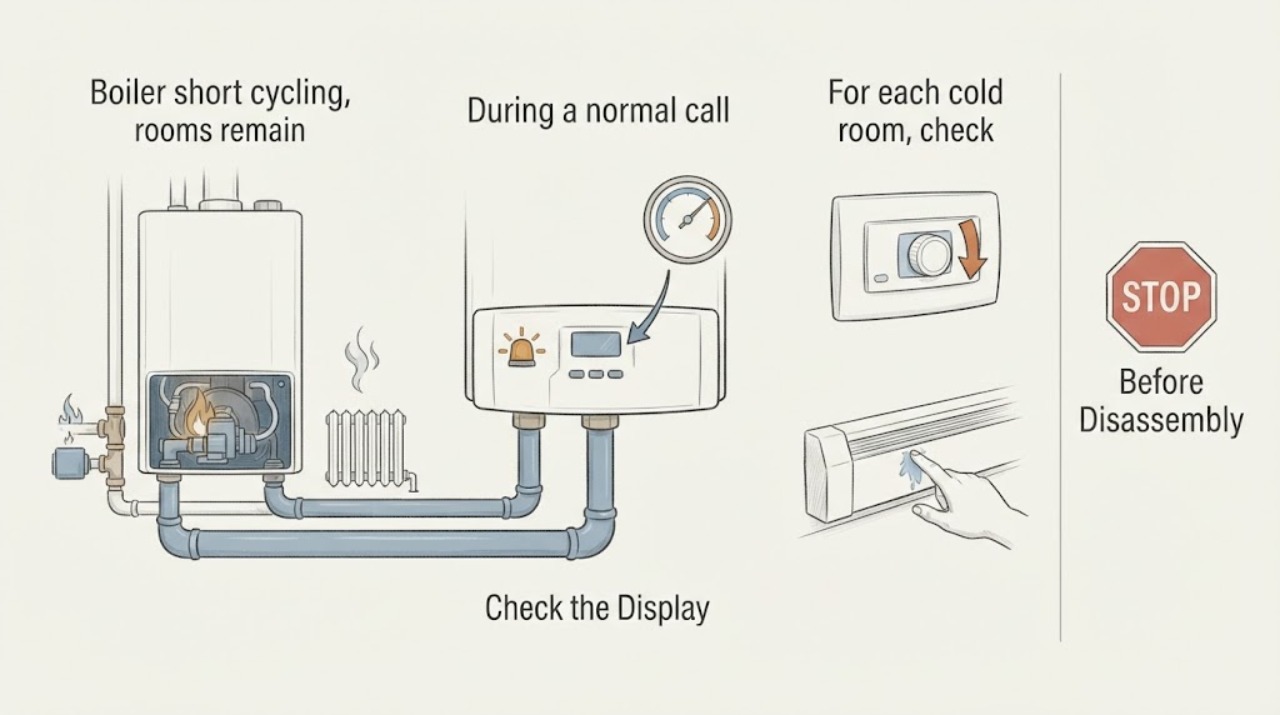
Boiler short cycling, rooms remain cold: What to Check and What to Do Next
A boiler that fires briefly, shuts off, and restarts while rooms remain cold is not simply a thermostat problem. Short cycling can occur when the boiler's available output is too large for the active heating load, when a small zone reaches its boiler temperature quickly, or when circulation, zoning, sensors, controls, or a fault prevents heat from reaching the rooms.
-
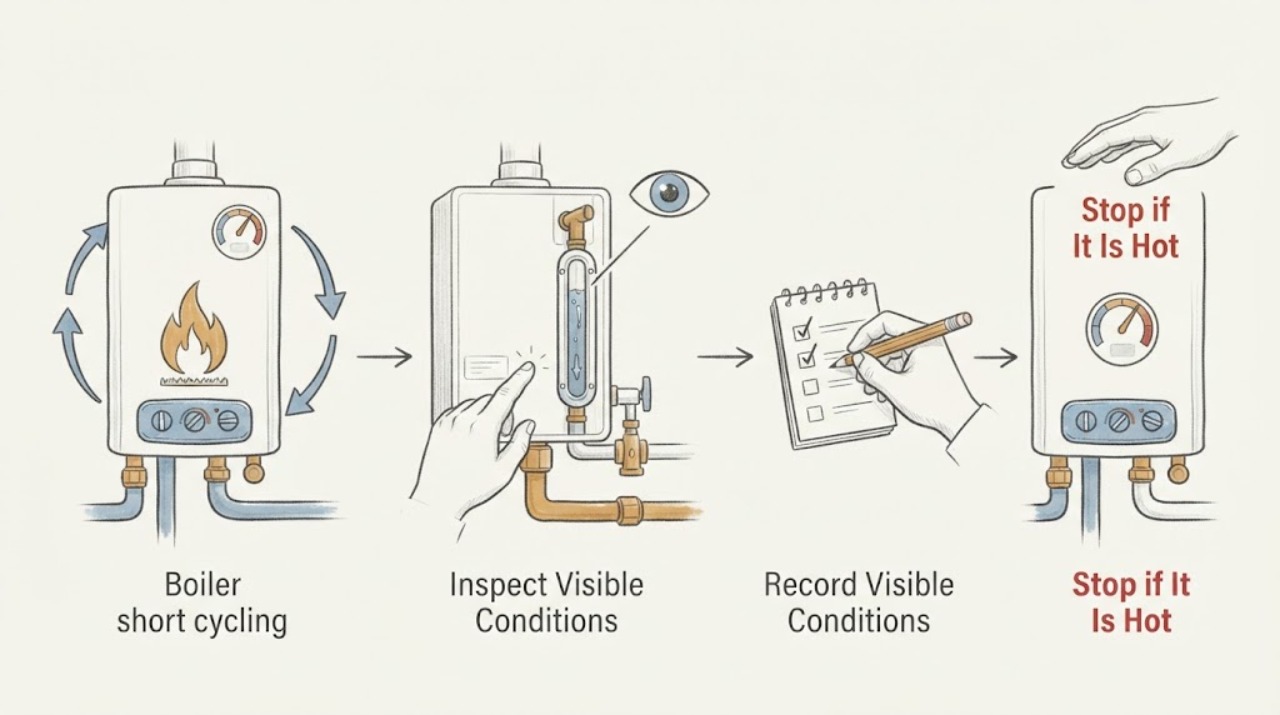
Boiler short cycling: What to Check and What to Do Next
First confirm the pattern: a boiler that repeatedly fires and stops while the thermostat still calls for heat is different from normal control cycling, a scheduled change, or a model-specific anti-cycling wait. From outside the appliance, record the run and off intervals, thermostat demand, display symbols, flow or temperature reading, pressure indication, and visible leak or radiator symptoms.
-
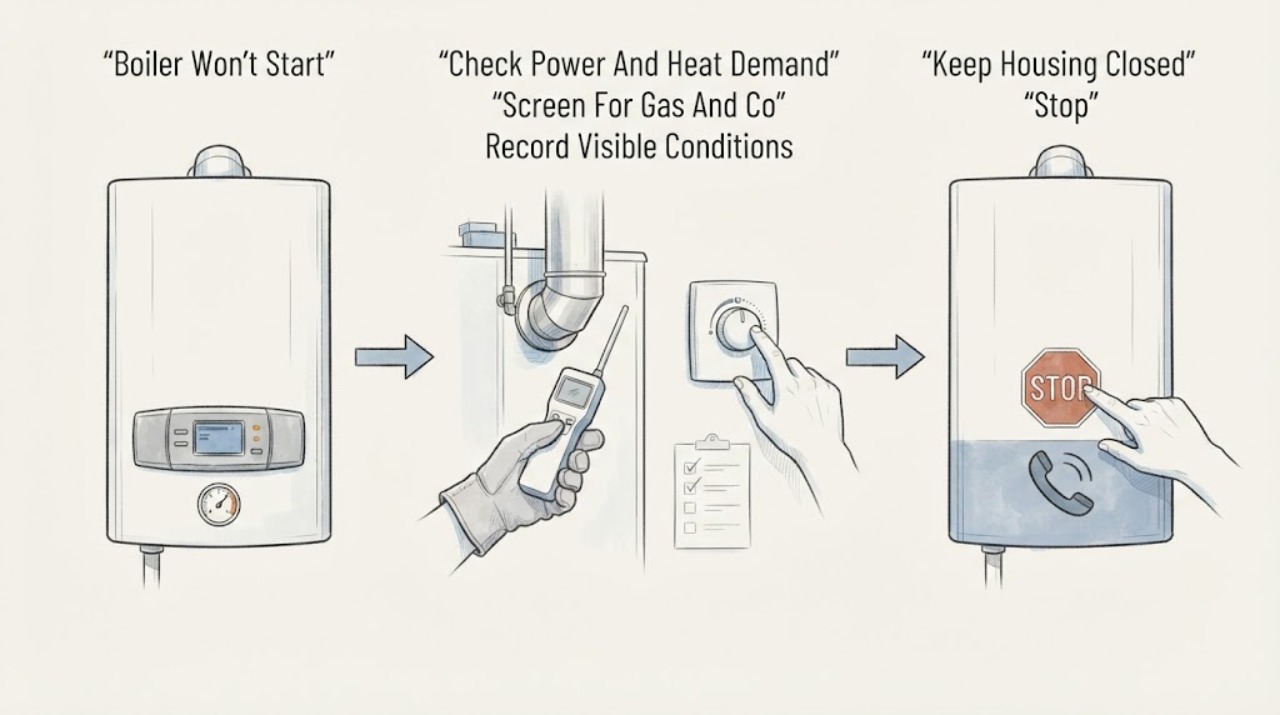
Boiler Won't Start: Check Safety, Power, Demand, and the Model-Specific Fault
If a boiler will not start, first check for a gas odor, carbon-monoxide alarm, smoke, unusual combustion noise, or illness; leave immediately and contact emergency help for a gas or CO warning. If the area is safe, record whether the boiler display has power, whether the programmer or thermostat is asking for heat, whether the fuel supply is available without operating a suspected leak, and what error code or lockout is shown.
-
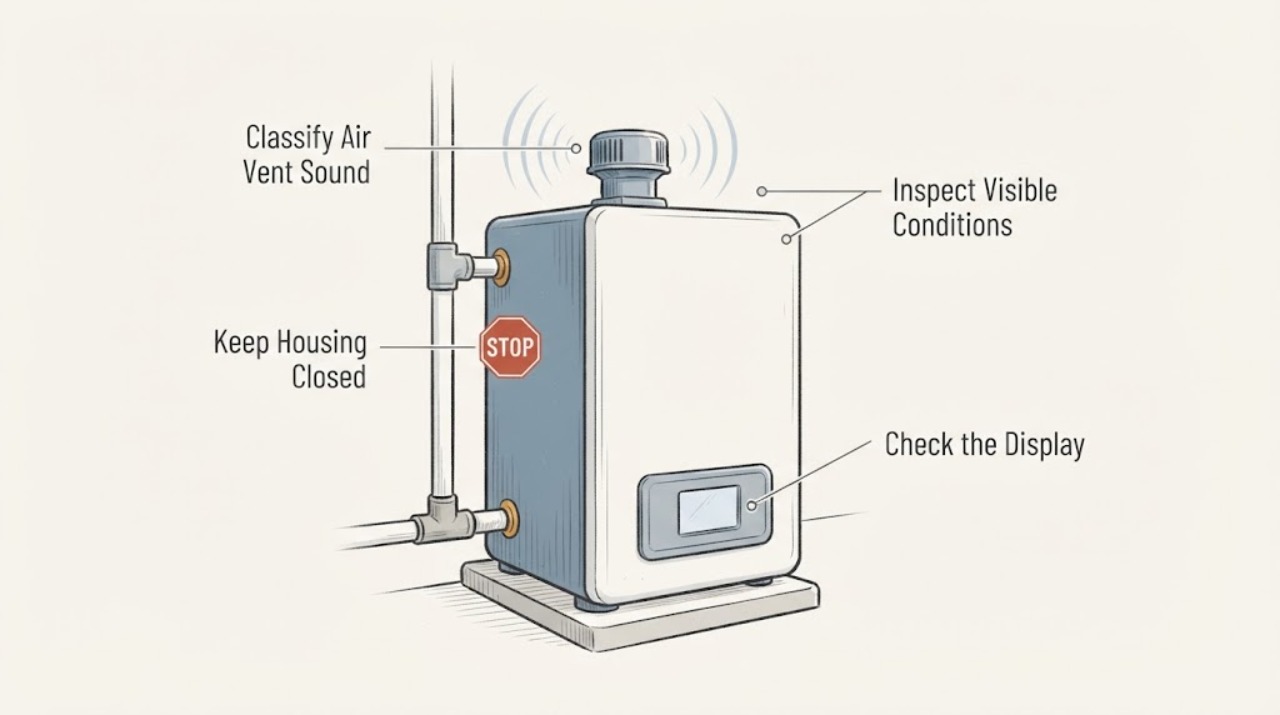
Buderus Boiler Air Vent Making Noise: What to Check and What to Do Next
A noisy air vent on a Buderus boiler can be caused by air moving through the hydronic loop, water or pressure changes, a vent that is leaking or failing, or noise transmitted from a pump or another nearby component. From a dry, safe position, record whether the sound is a hiss, gurgle, whistle, chatter, or vibration; look for visible moisture or corrosion; and note the already-visible pressure or fault display and the effect on heating.
-
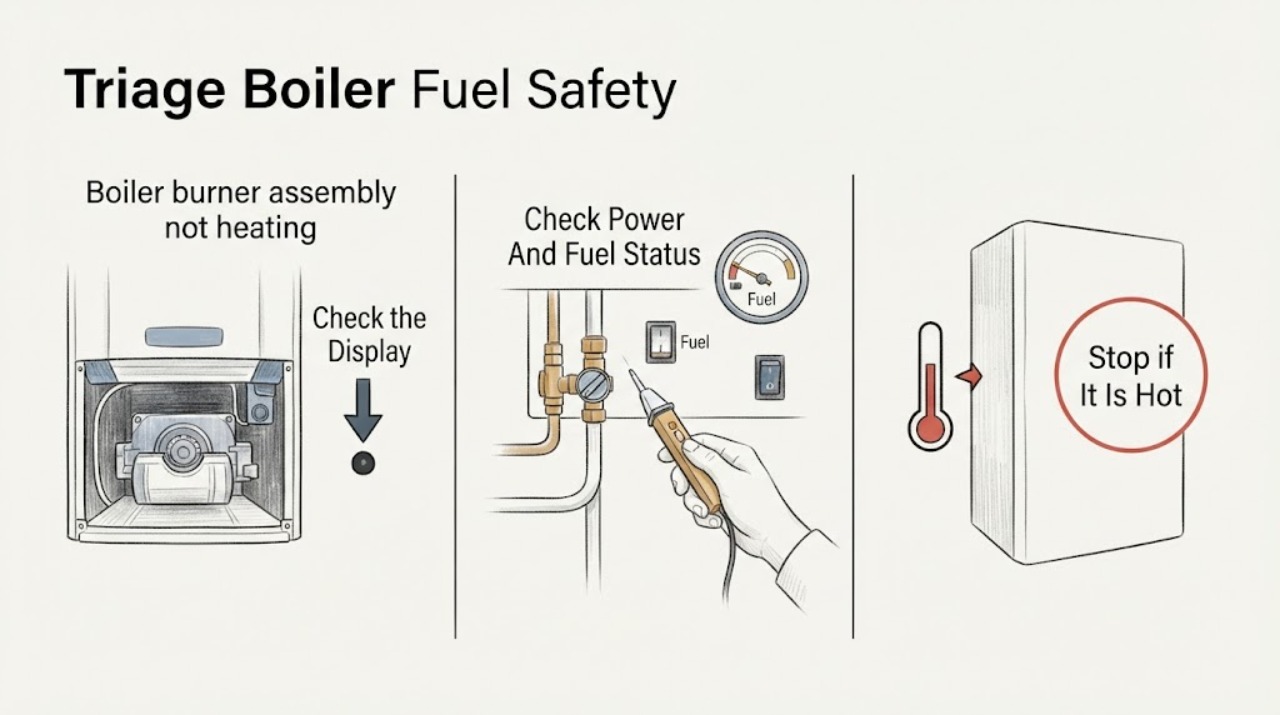
Buderus boiler burner assembly not heating: What to Check and What to Do Next
Do not try to light, adjust, clean, or remove a Buderus burner assembly yourself. First decide whether the boiler has no call for heat, has a control lockout, or calls for heat but does not produce burner heat.
-
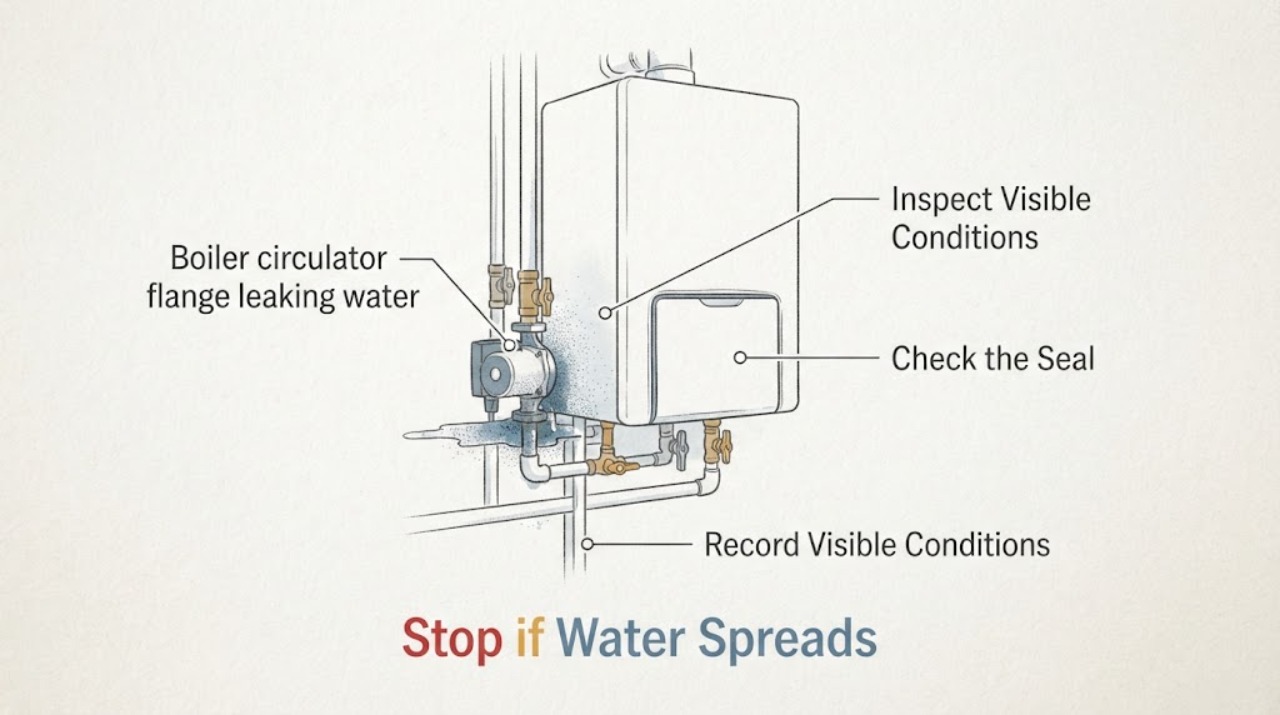
Buderus boiler circulator flange leaking water: What to Check and What to Do Next
Water at a Buderus boiler circulator flange should be treated as a heating-system leak, not as a loose bolt to tighten while the boiler is running. From a safe position, switch the boiler off through its normal control if possible, keep clear of hot water, steam, gas, and electrical parts, and note whether the water is dripping from the flange face, gasket edge, pump body, valve, relief discharge, or an adjacent connection.
-
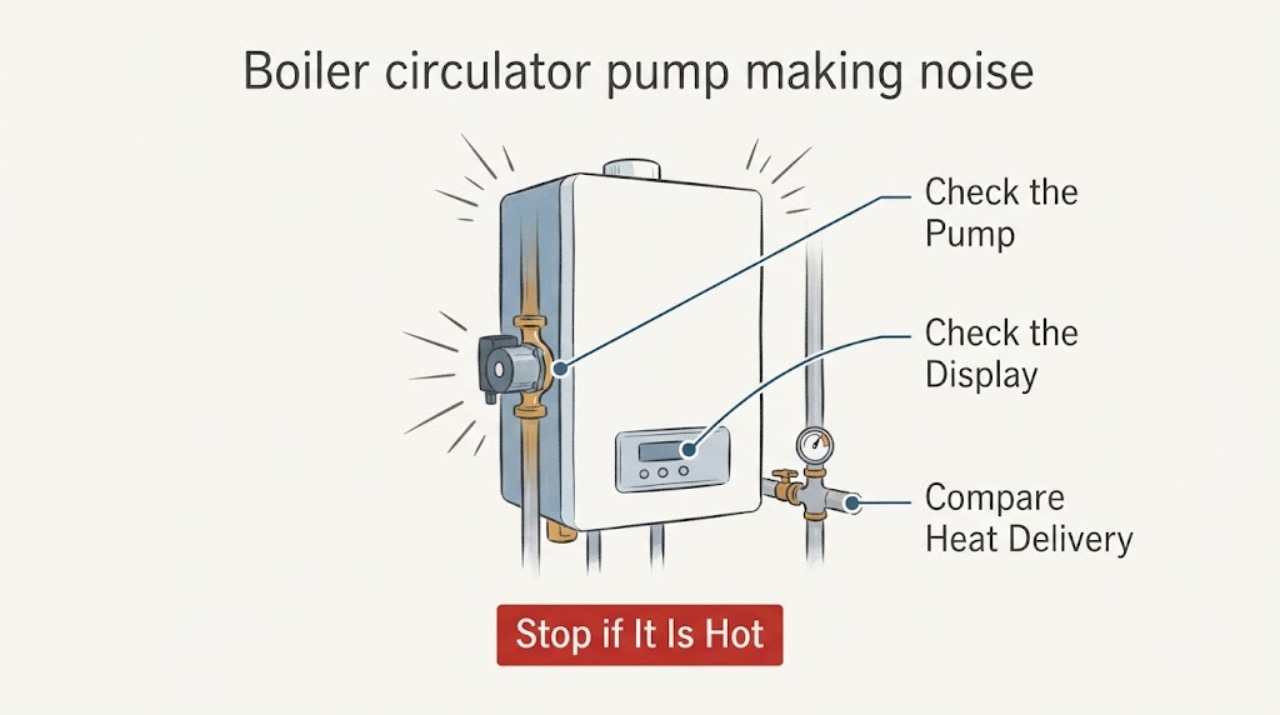
Buderus boiler circulator pump making noise: What to Check and What to Do Next
A noisy Buderus boiler circulator pump needs the sound and the heating result considered together. Light water rushing or an occasional pump sound can occur, but persistent rushing, gurgling, buzzing, rattling, or a high-pitched whine can point to air in the hydronic loop, unsuitable pump output, low system pressure or dry running, flow restriction, pipe vibration, or worn pump bearings.
-
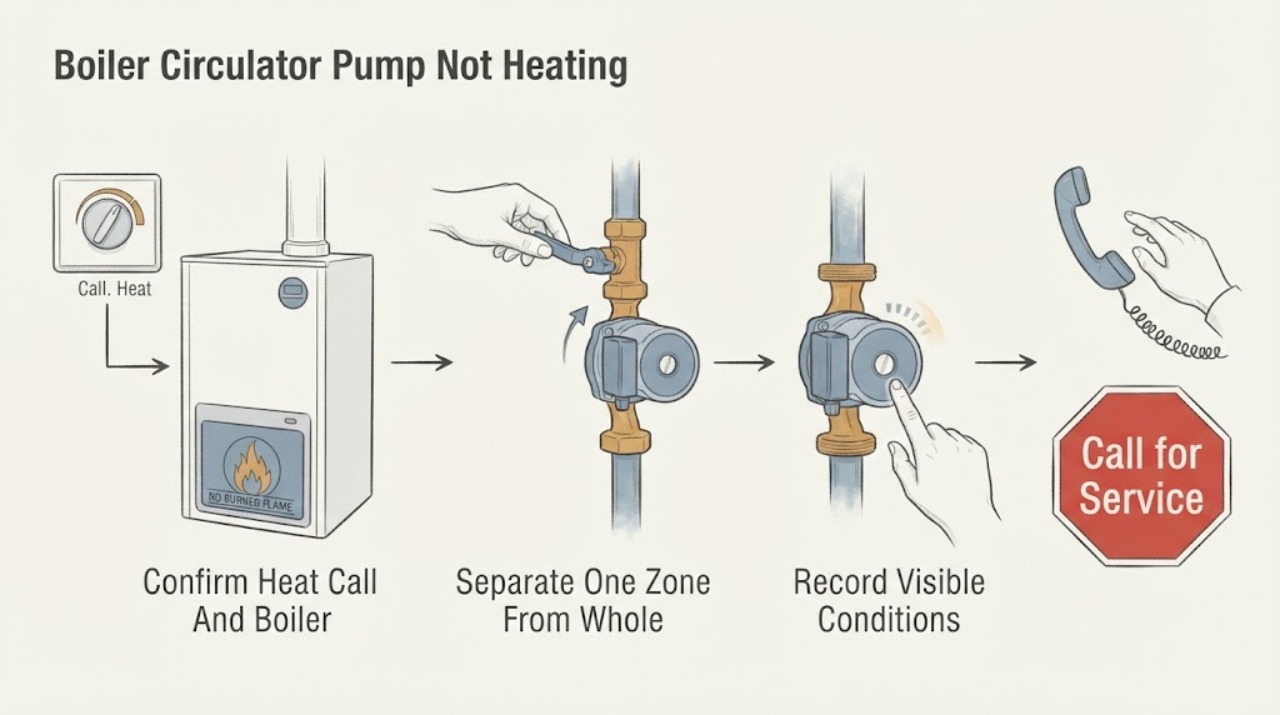
Buderus Boiler Circulator Pump Not Heating: What to Check and What to Do Next
A Buderus boiler that is not heating because the circulator pump may not be moving water needs a safe symptom check, not a pump-cover or wiring test. Confirm that the thermostat is actually calling for heat, note whether the boiler fires, and observe only from outside the casing whether the accessible gauge or controller shows a low-water or flow-related condition.
-
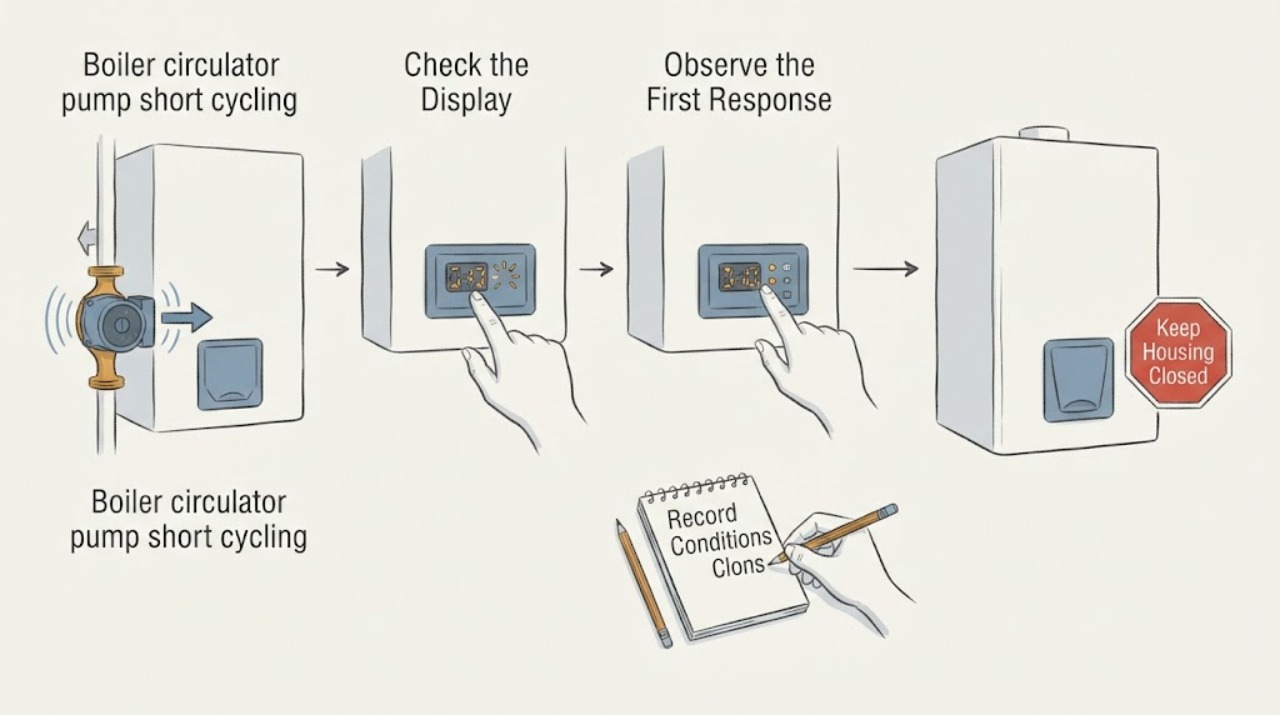
Buderus boiler circulator pump short cycling: What to Check and What to Do Next
First separate a circulator-pump cycle from a burner cycle: watch and time the pump, burner indicator, thermostat or zone demand, supply temperature, and system pressure without opening the boiler or changing settings. Buderus control documents show that a heat call can energize the heating pump, while the burner responds to supply-temperature setpoint and hysteresis; they also describe model-specific pump overrun and anti-cycle functions.
-
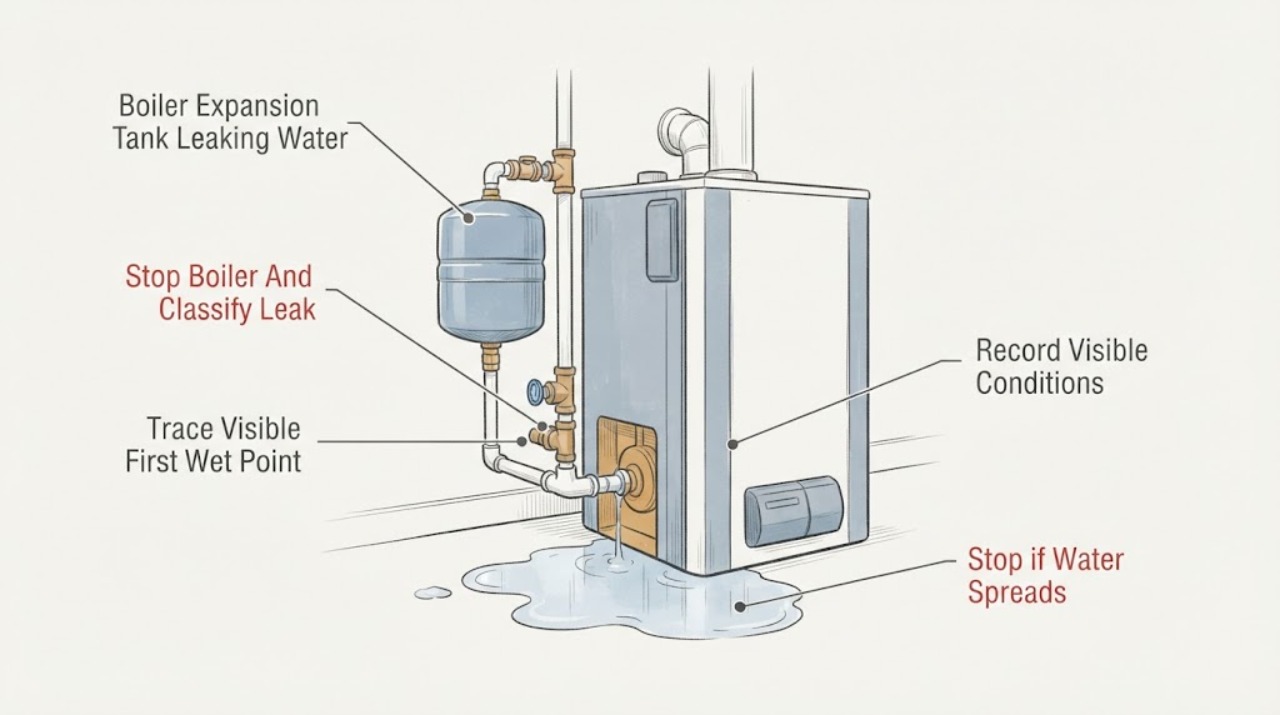
Buderus Boiler Expansion Tank Leaking Water: What to Check and What to Do Next
A leaking Buderus boiler expansion tank needs a safe identification check, not an immediate attempt to recharge or replace the tank. Turn the boiler off and keep people away from hot water or steam.
-
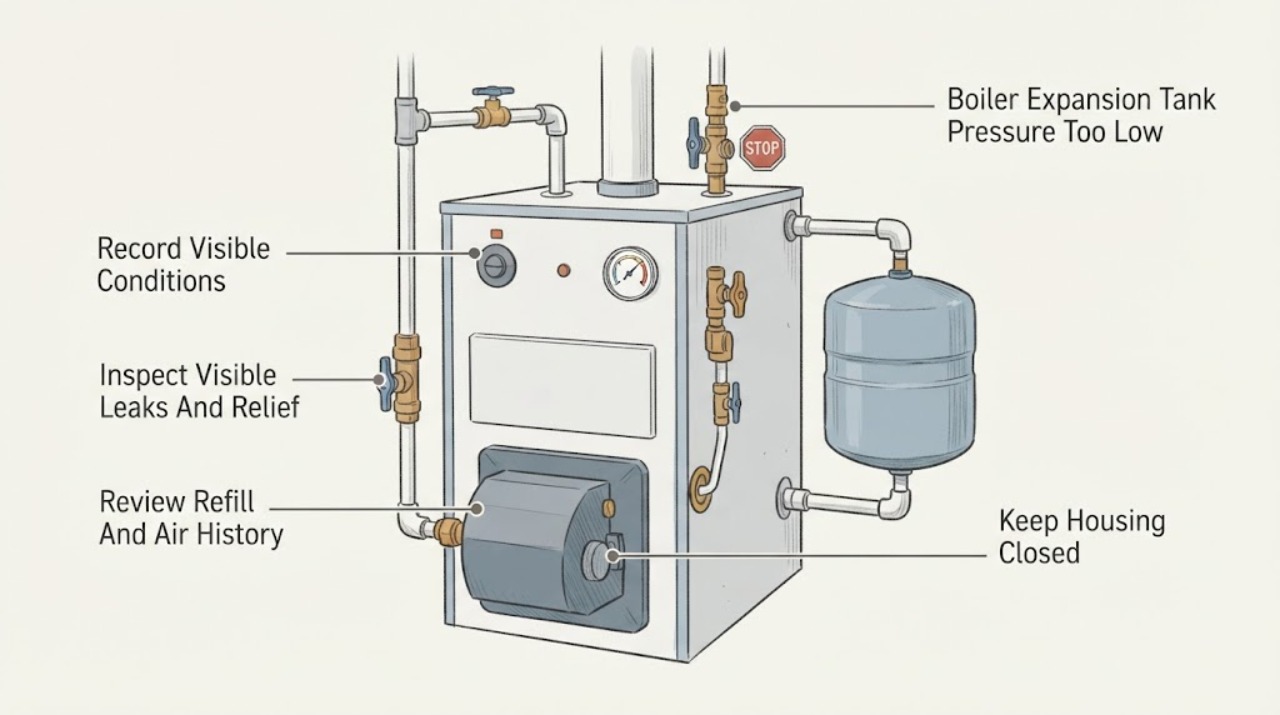
Buderus Boiler Expansion Tank Pressure Too Low: What to Check and What to Do Next
A low reading at a Buderus boiler can mean low system water, air leaving a recently filled system, a leak, a failed or waterlogged expansion tank, or a gauge or sensor problem. Read the pressure and temperature indication only from a safe position and compare it with the exact Buderus model manual; do not assume one pressure target fits every boiler.
-
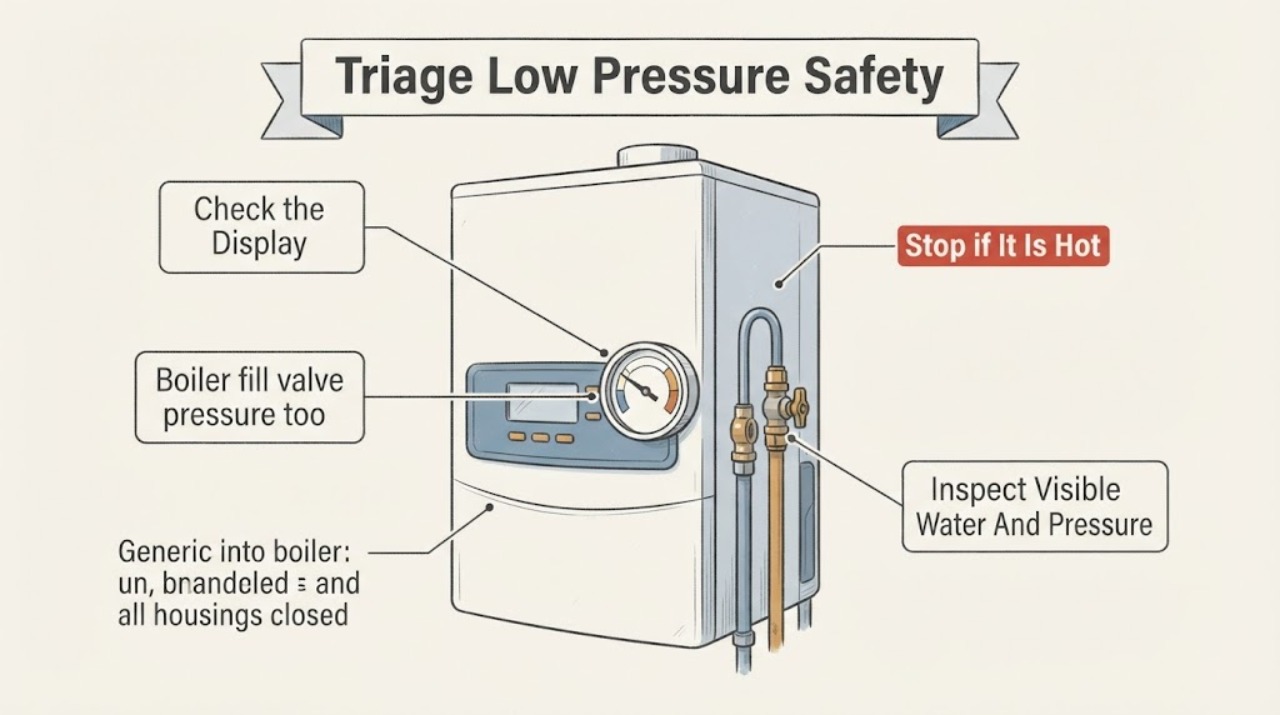
Buderus boiler fill valve pressure too low: What to Check and What to Do Next
A low-pressure reading does not prove that the Buderus fill valve is the failed part. The pressure can be low because water is leaking, air was removed, an expansion vessel or relief valve is faulty, a pressure sensor is inaccurate, the system is not fully filled, or a low-water safety has stopped the boiler.
-
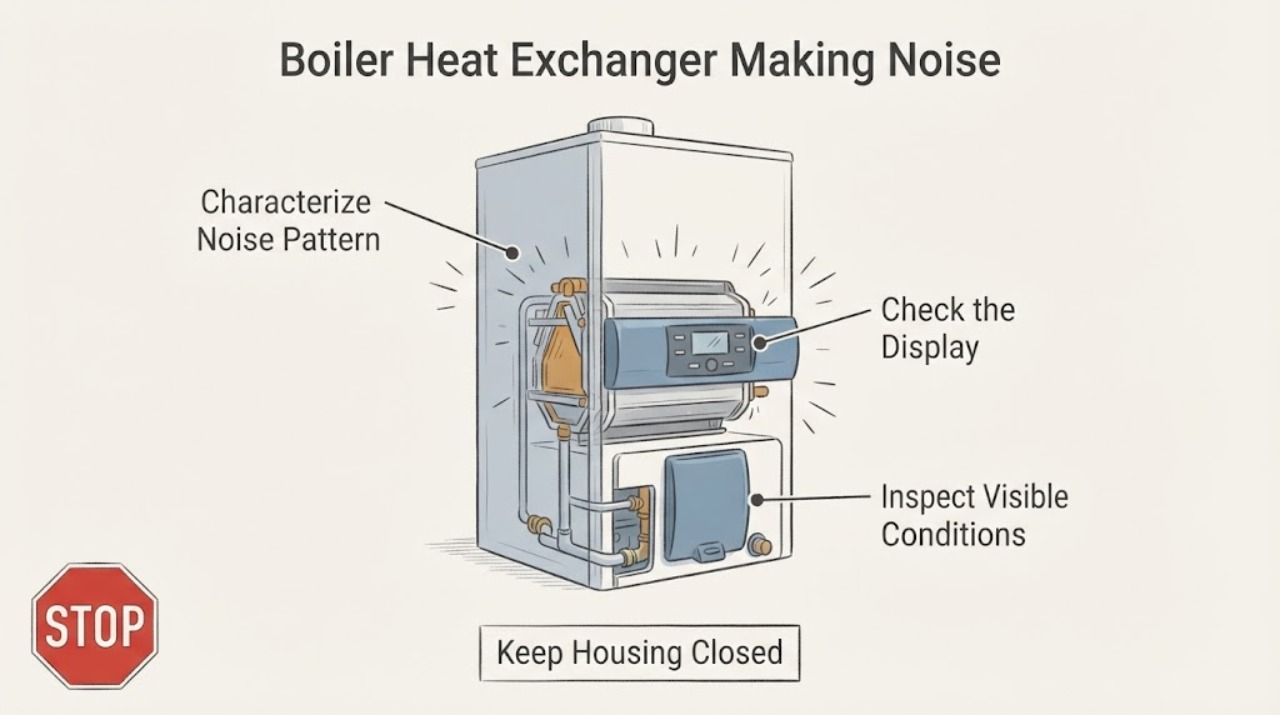
Buderus Boiler Heat Exchanger Making Noise: What to Check and What to Do Next
A Buderus boiler heat exchanger that makes new bubbling, boiling, crackling, rumbling, or whistling sounds should not be diagnosed by sound alone. First note whether the noise occurs only during a call for heat, whether it comes from the boiler cabinet or nearby piping, and whether there is a fault display, temperature instability, pressure change, water leak, or loss of heat.
-
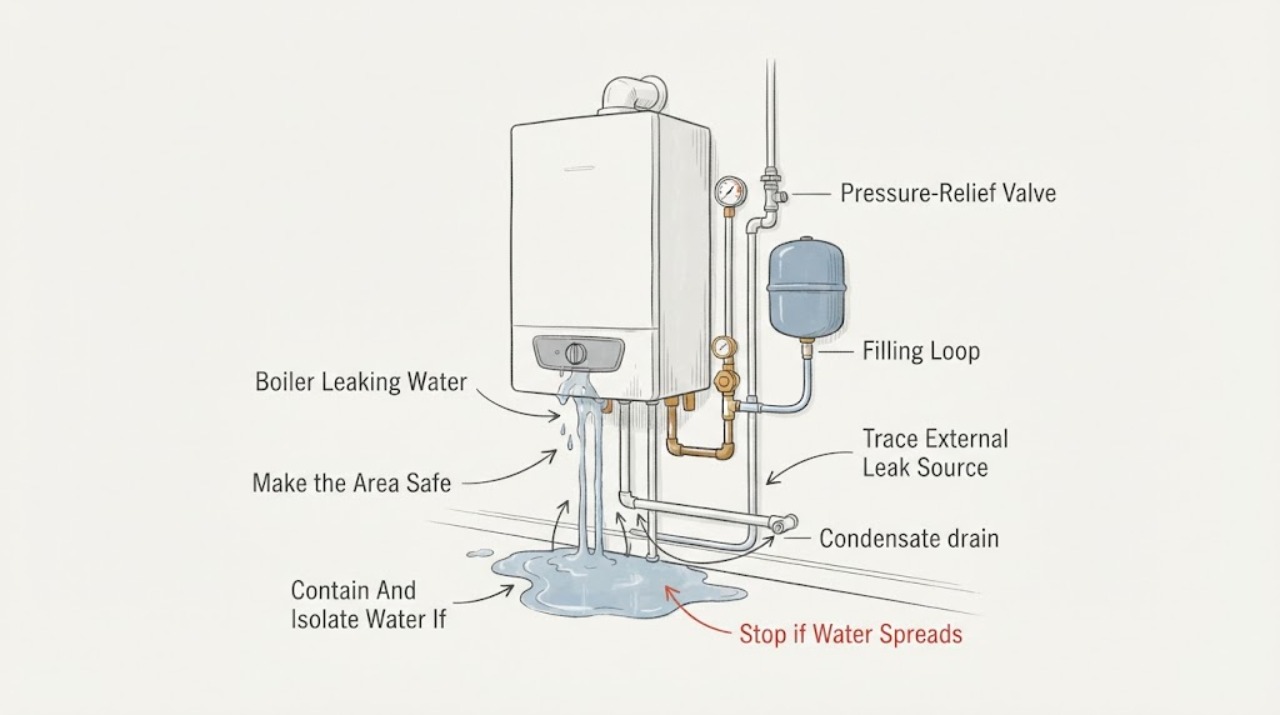
Buderus Boiler Leaking Water: What to Check and What to Do Next
If a Buderus boiler is leaking water, stop the heating and contain the water only if the area is dry and the controls are safely reachable. Do not remove the boiler casing, reset a pressure-relief valve, or repeatedly refill the heating circuit.
-
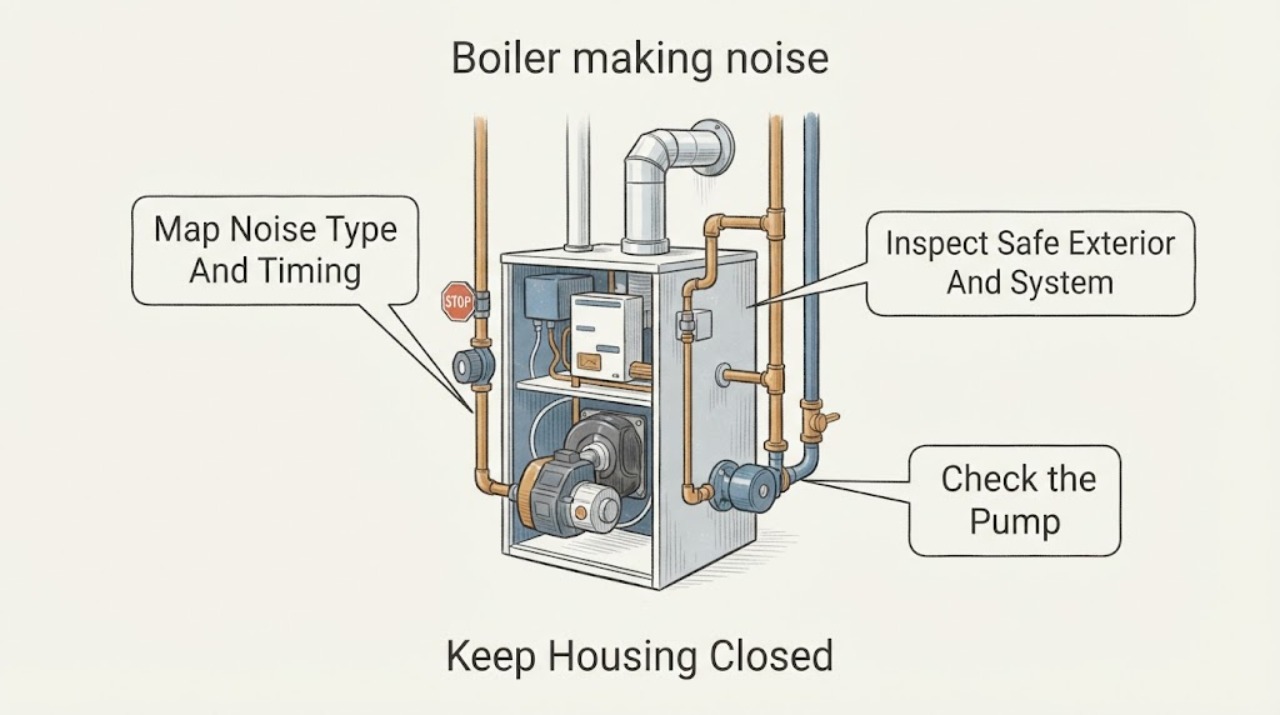
Buderus boiler making noise: What to Check and What to Do Next
The useful clue is when and what kind of noise your Buderus boiler makes. Gurgling, bubbling, or rushing water can point to air or poor circulation; knocking or kettling can accompany restricted flow, scale, or an overheating condition; a hum, whine, or grinding sound can come from a pump or motor; and a boom, rumble, or change in burner sound can be a combustion or ignition concern.
-
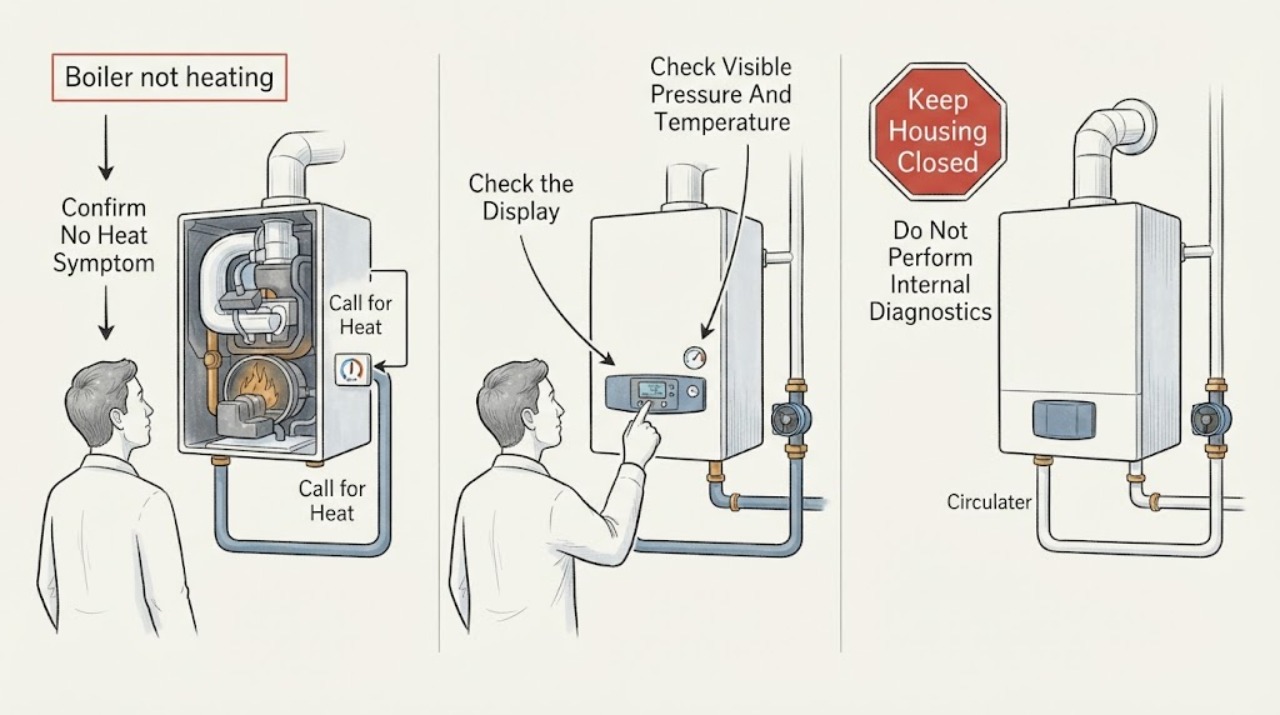
Buderus boiler not heating: What to Check and What to Do Next
A Buderus boiler that is not heating may have no heat call, a control or power problem, a burner lockout, low water or restricted circulation, air in the system, a blocked vent or condensate path, or a zone-side problem.
-
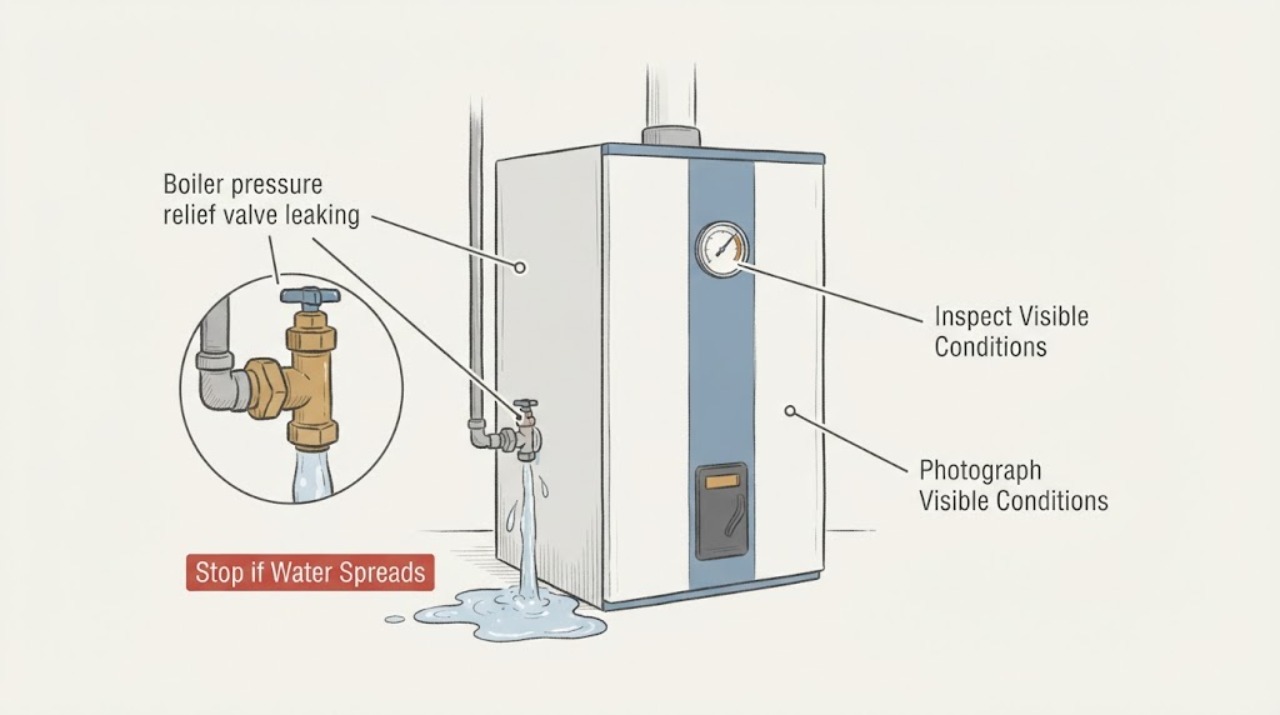
Buderus boiler pressure relief valve leaking water: What to Check and What to Do Next
A Buderus boiler pressure relief valve that is dripping or discharging water is a safety symptom, not a valve to cap, plug, or repeatedly reset. First keep clear of hot water and identify whether water is coming from the relief-valve outlet, the valve body or threaded connection, a nearby pipe, or a condensate path.
-
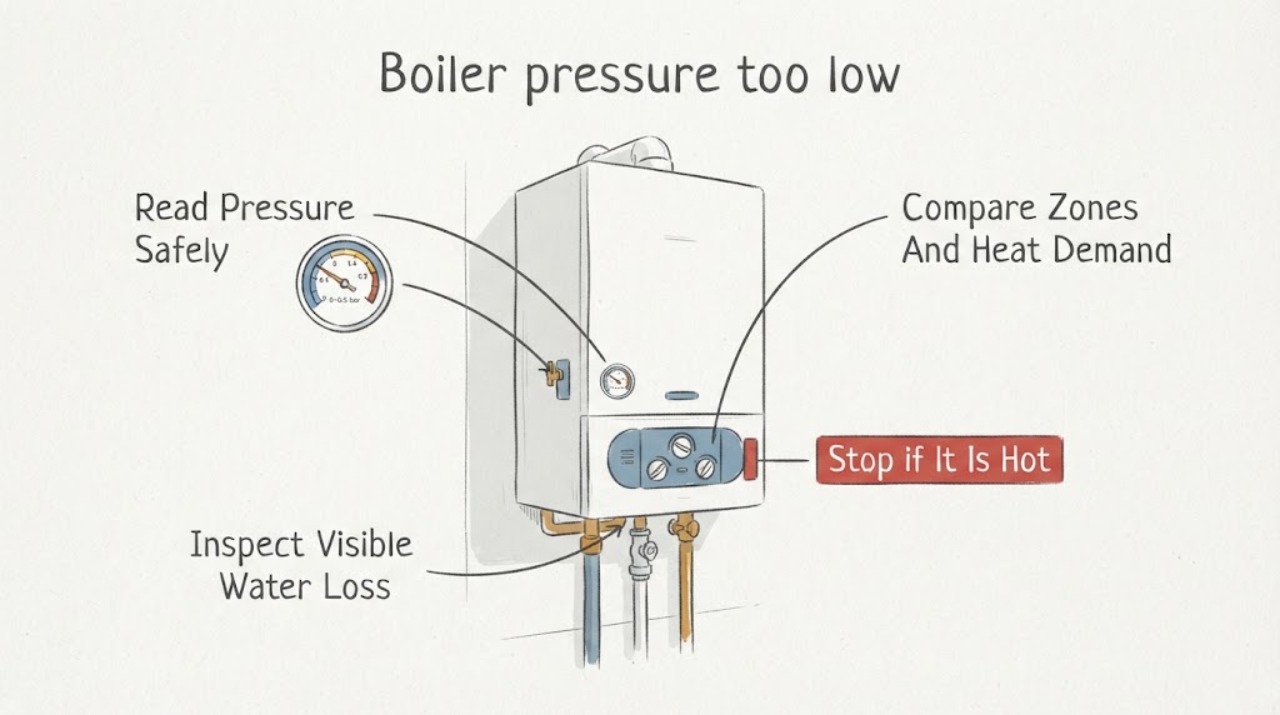
Buderus boiler pressure too low: What to Check and What to Do Next
Read the Buderus system-pressure indication only from a safe position and compare it with the exact model manual; do not use a generic target because Buderus boiler families and installations differ. Low pressure can limit or stop heating and may result from air removal, a leak, a relief path, an expansion-vessel problem, or insufficient system water.
-
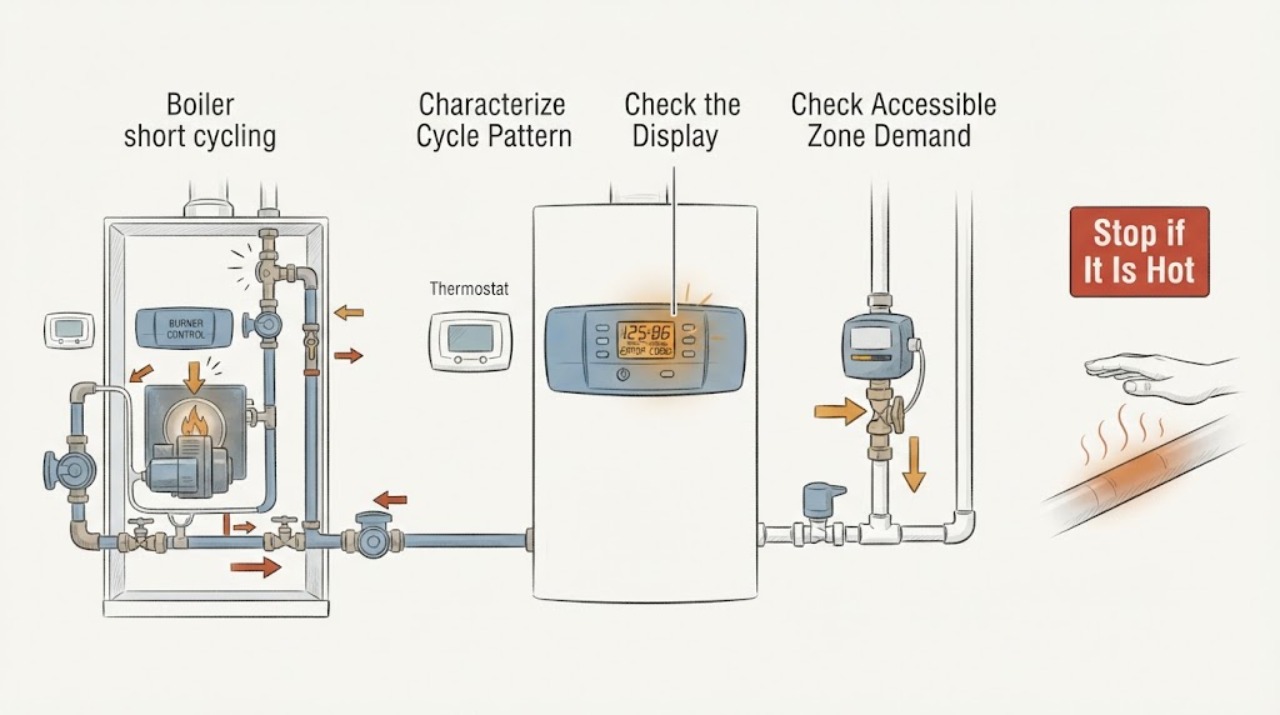
Buderus boiler short cycling: What to Check and What to Do Next
A Buderus boiler that starts and stops repeatedly before the heating demand is satisfied is short cycling. The pattern can occur when the current heat demand is below the boiler's minimum modulation, when a control reaches its supply-temperature limit too quickly, or when water flow through the system is restricted; a thermostat or zone-control problem can create a similar symptom.
-
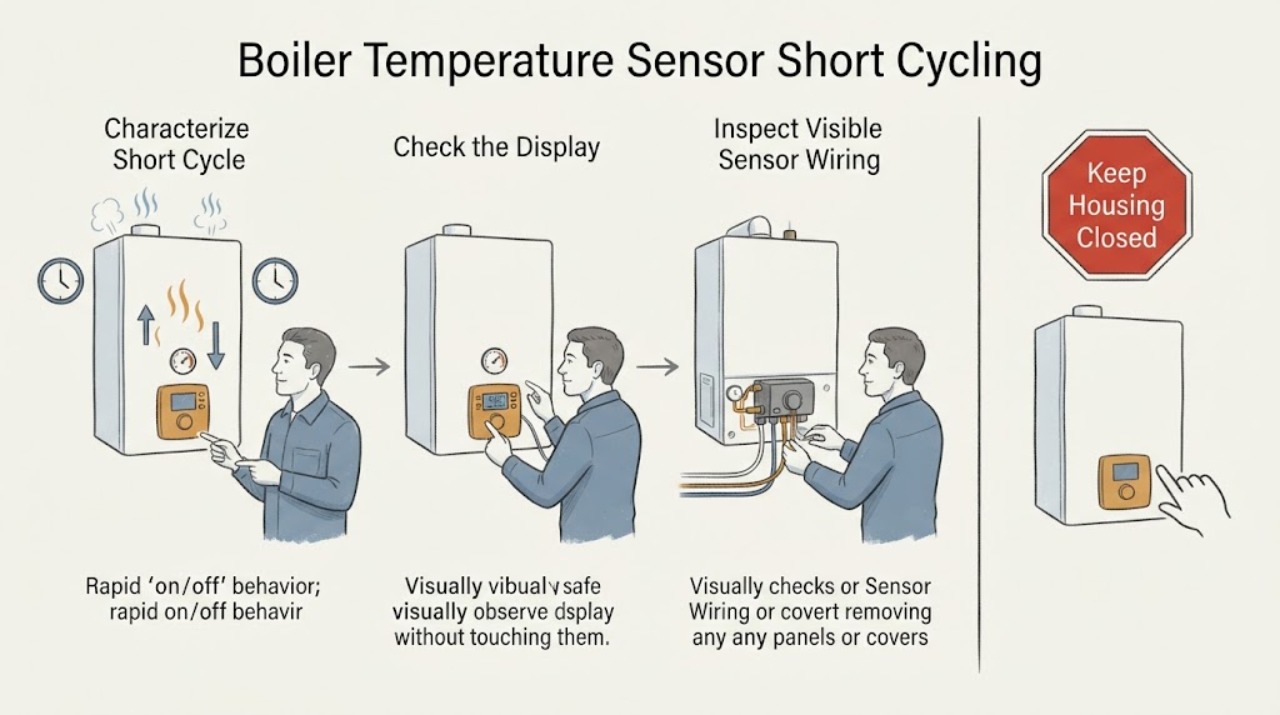
Buderus Boiler Temperature Sensor Short Cycling: What to Check and What to Do Next
Short cycling means a Buderus boiler repeatedly starts and stops before the heating demand is satisfied. A temperature sensor that reports the wrong supply, return, outdoor, or domestic-hot-water temperature can make the control reach its limit too soon, but low water flow, air, a pump or valve problem, a small active zone, control settings, or a boiler-system fault can look the same.
-
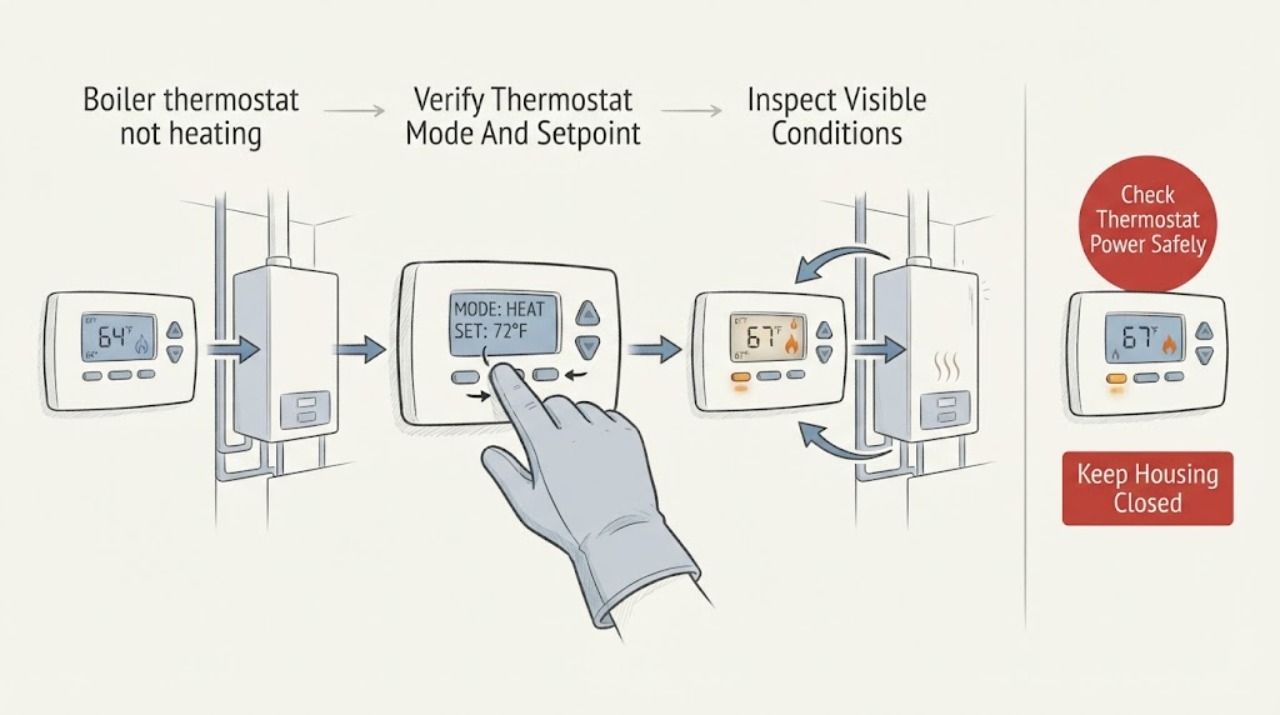
Buderus boiler thermostat not heating: What to Check and What to Do Next
If a Buderus boiler thermostat is not heating, first verify that the thermostat is in heat mode, its setpoint is above the room temperature, and its schedule or setback is not active. Then note whether the thermostat shows a heat demand and whether the boiler responds, while checking only visible boiler indicators, pressure indication, leaks, and error messages.
-
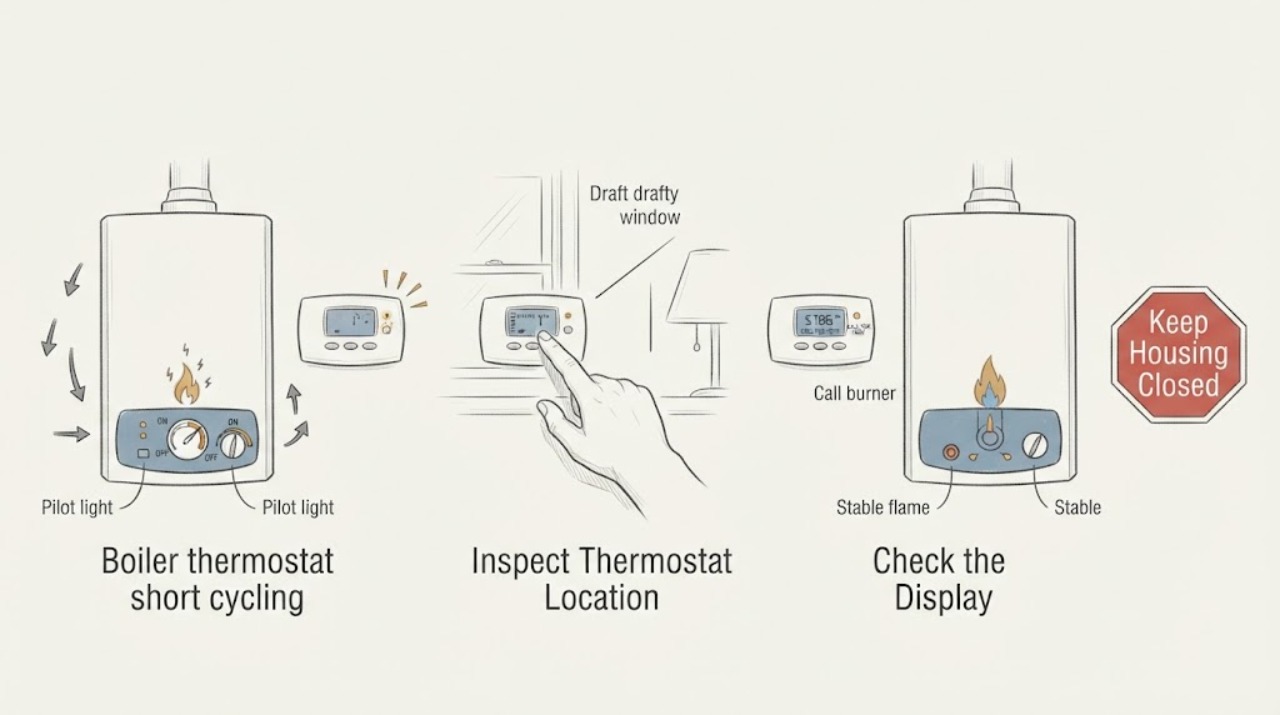
Buderus boiler thermostat short cycling: Safe checks before service
Buderus boiler short cycling means the burner or boiler starts and stops repeatedly before the home has a stable heat demand. First establish whether the Buderus thermostat is actually ending the call for heat, or whether the thermostat continues calling while the boiler shuts down and restarts.