
HVAC guides
Boilers Repair Guides – Page 2
Boiler guidance covering heat, pressure, circulation, leaks, and controls.
Published boilers guides
Choose the guide that best matches the equipment and symptom you are seeing.
-
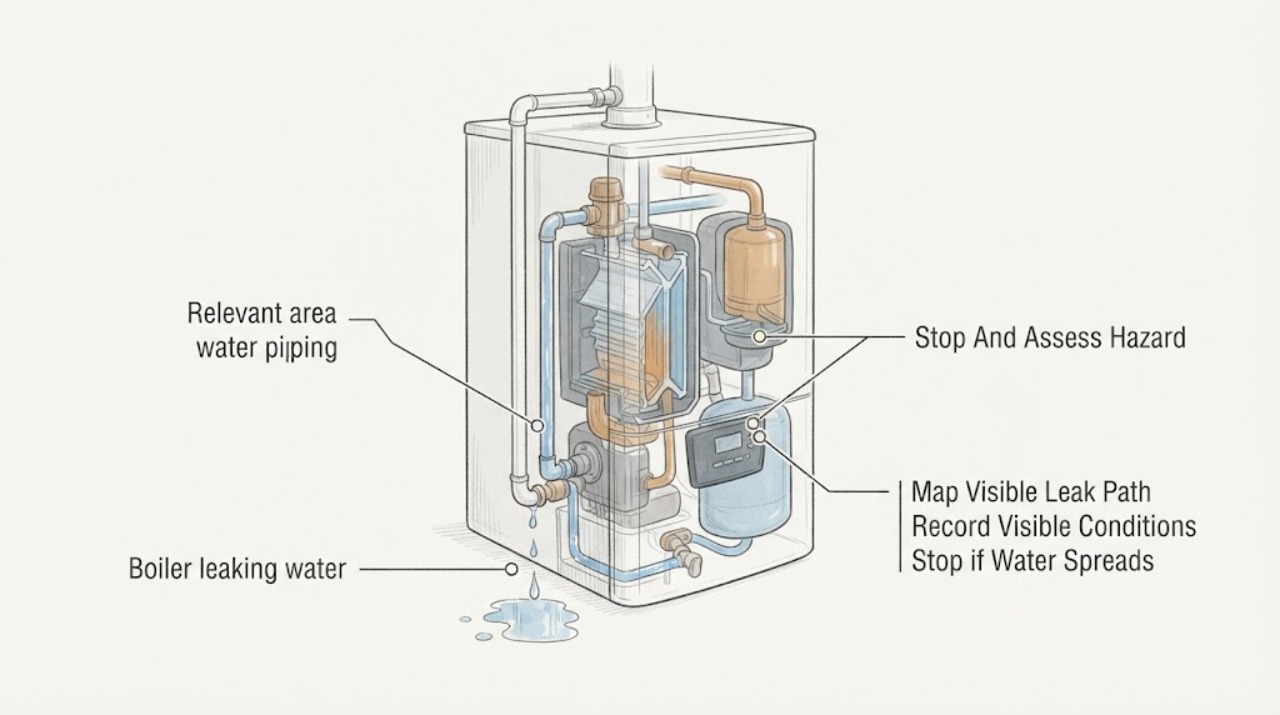
Navien boiler leaking water: What to Check and What to Do Next
Treat water under or around a Navien boiler as a leak until the source is identified. From a dry, safe position, note whether water is actively flowing, where the first wet point appears, whether it is hot, and whether the leak changes when the boiler heats.
-
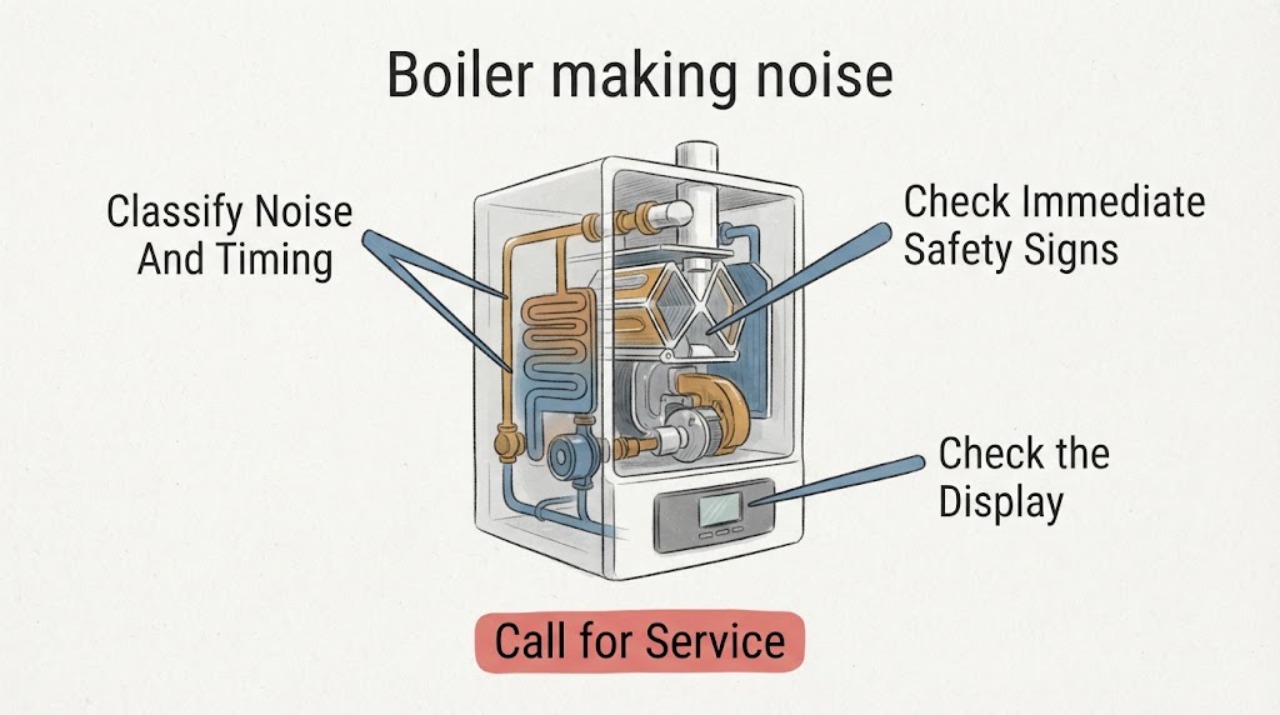
Navien boiler making noise: What to Check and What to Do Next
A noisy Navien boiler should be narrowed by sound, timing, and the part of the system where it is heard—not by opening the cabinet or changing gas, water, or safety settings.
-
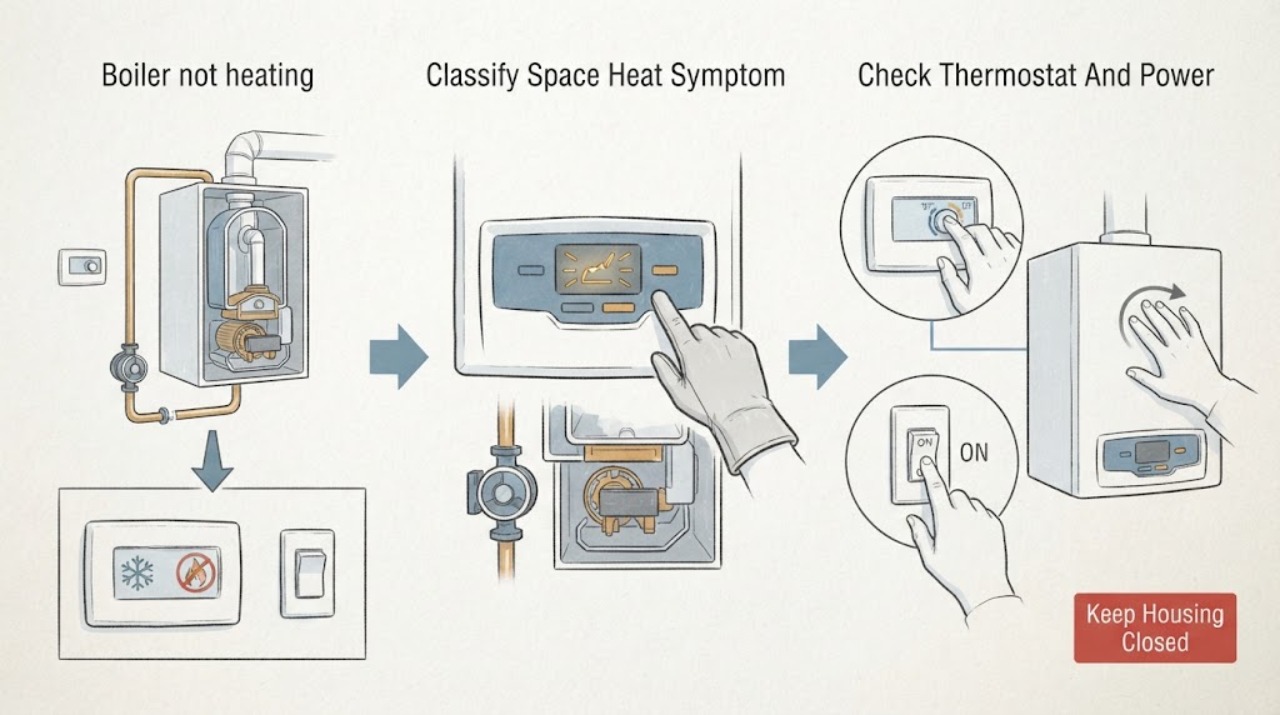
Navien boiler not heating: What to Check and What to Do Next
First separate a no-heat call from a boiler that fires but cannot move heat: check whether the thermostat is calling for space heat, whether the Navien display has power or an error message, whether domestic hot water still works, and whether any radiator, baseboard, or radiant zone warms. Navien's user guidance allows only limited homeowner troubleshooting because the unit combines water, electricity, and gas.
-
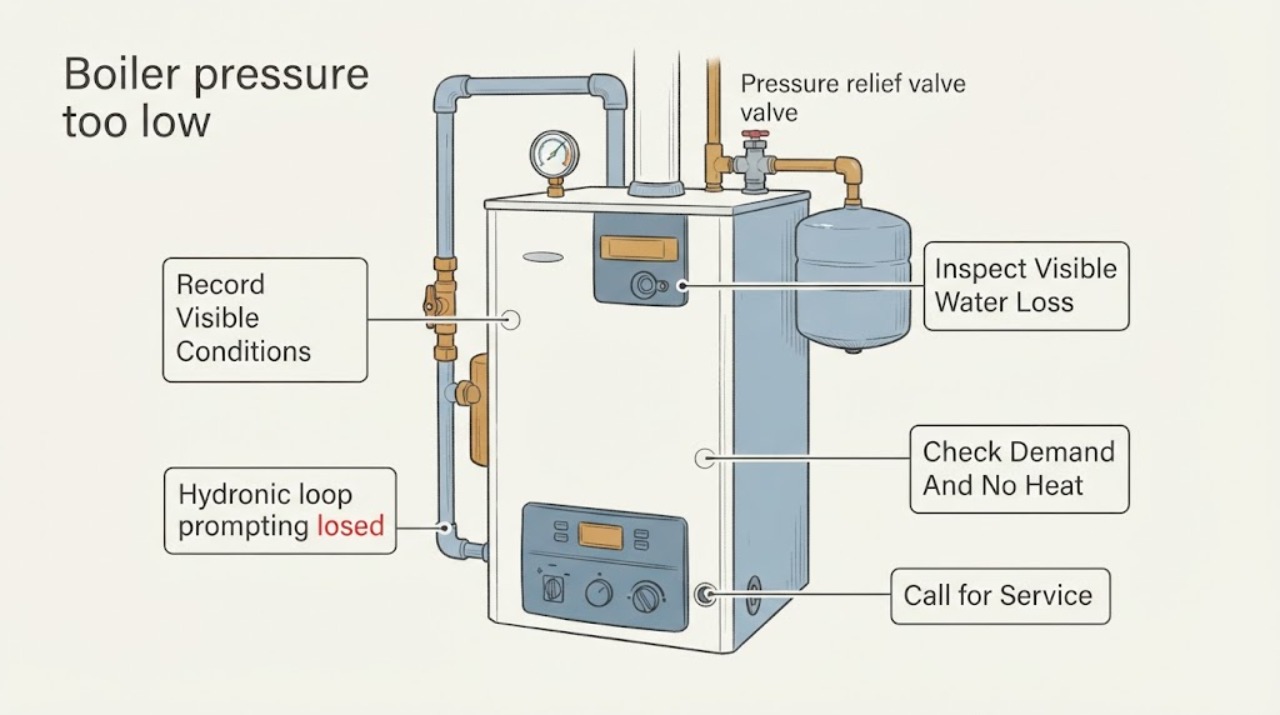
Navien boiler pressure too low: What to Check and What to Do Next
Read the Navien system pressure from a safe, dry position and record whether the reading is low when the system is cool, changes sharply as it heats, or is accompanied by a low-pressure message or no heat. Do not use a generic fill target: Navien models and hydronic systems differ, and the exact manual and installer design control the permitted cold-fill range.
-
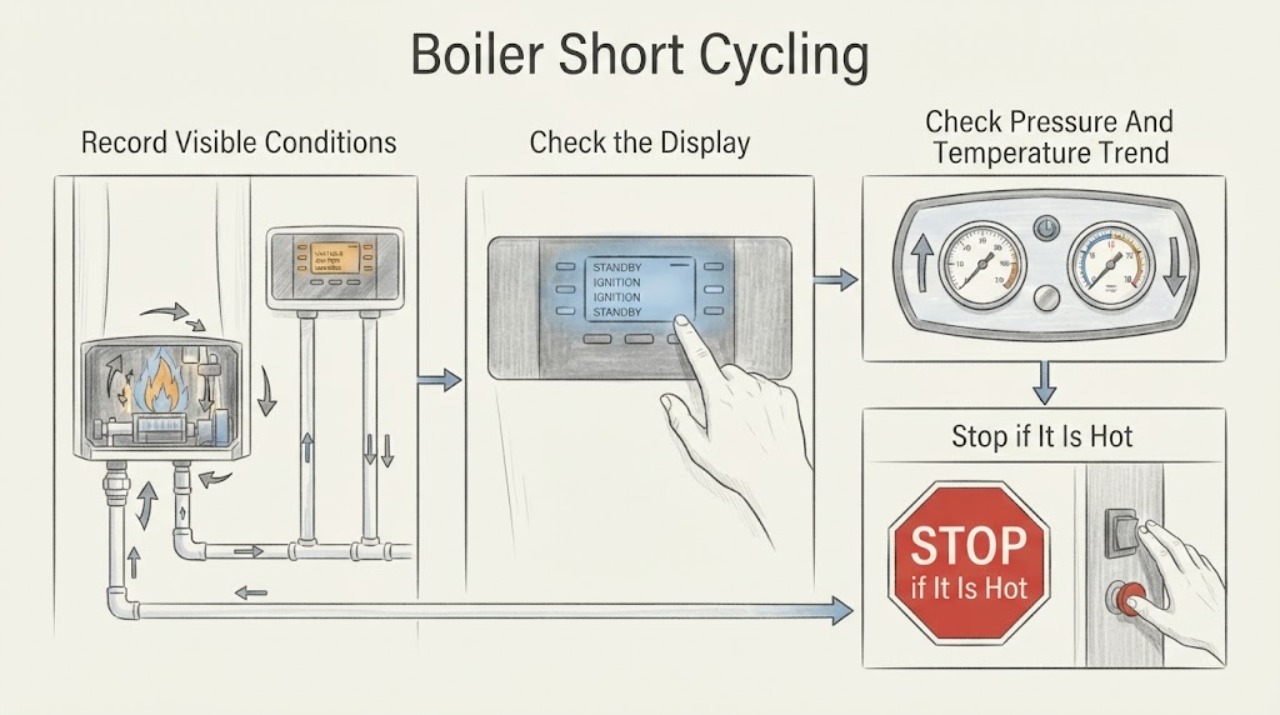
Navien Boiler Short Cycling: What to Check and What to Do Next
A Navien boiler is short cycling when it starts and stops repeatedly during one thermostat call instead of running long enough to heat the zone. The pattern can come from a small current heat load or oversized capacity, a supply temperature or differential control setting, restricted circulation, air or low system pressure, a zone or thermostat problem, or a vent, sensor, or combustion fault.
-
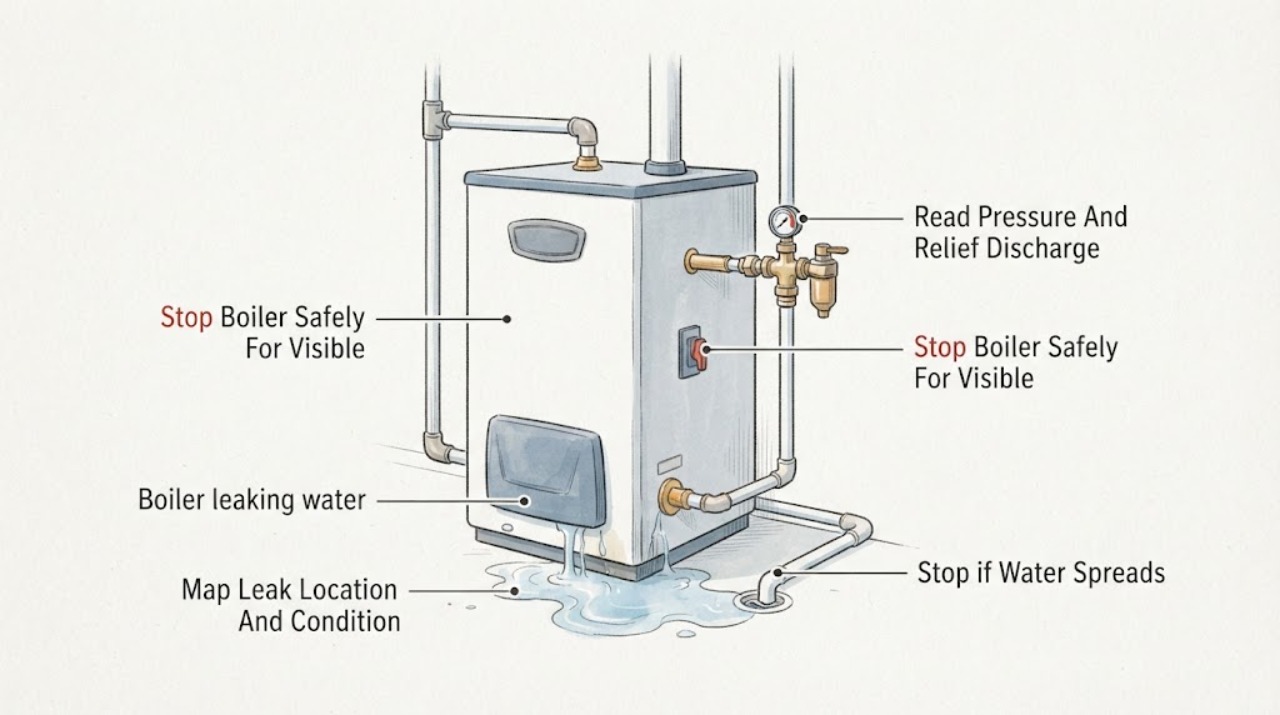
Peerless boiler leaking water: What to Check and What to Do Next
A leaking Peerless boiler may be losing water from a fitting, valve, pump, relief discharge, expansion or pressure problem, condensate drain, or the boiler vessel itself. From a safe position, note exactly where water starts, whether it is cool or near a hot surface, whether the pressure gauge is outside its normal marked range, and whether the leak appears only while the boiler fires or heats.
-
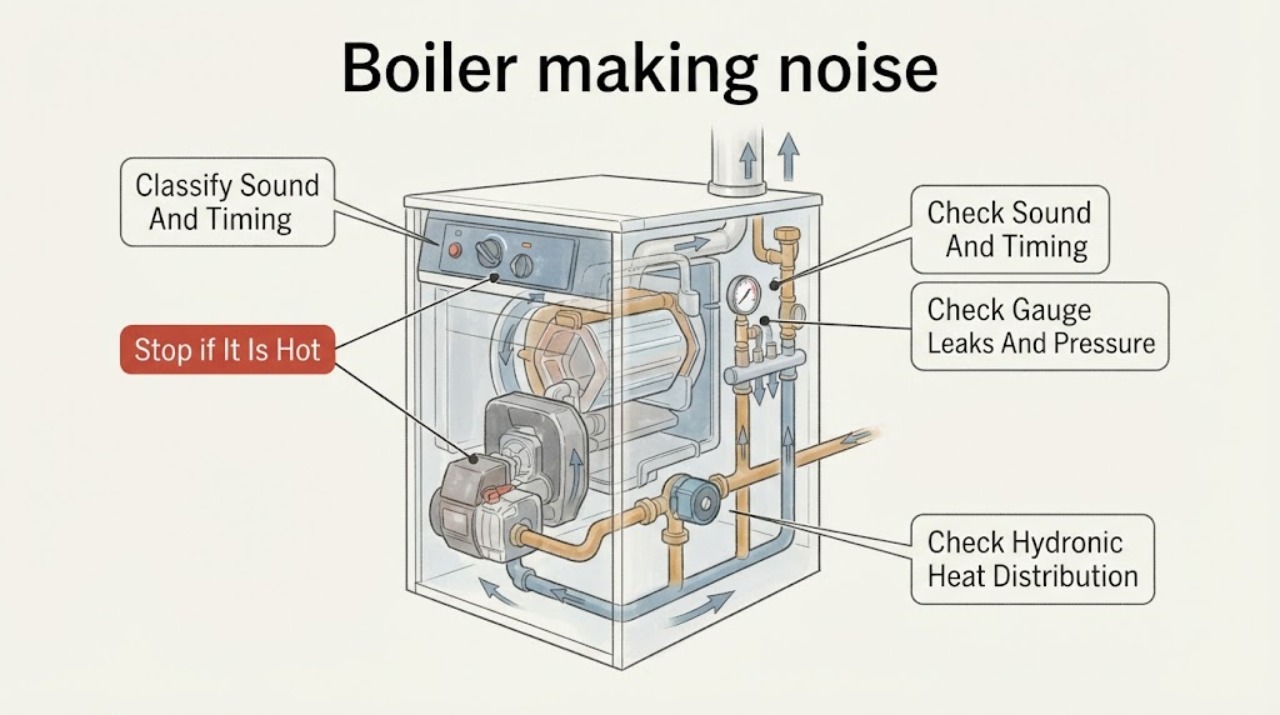
Peerless boiler making noise: What to Check and What to Do Next
A noisy Peerless boiler can be producing water-flow noise from air or excessive velocity, a circulator or other moving-part sound, expansion or pressure-related banging, or a combustion, venting, ignition, or control fault. First identify whether the sound is a bang, gurgle, hiss, hum, vibration, roar, delayed ignition, or relief-valve discharge and whether it comes from the boiler, pump, pipes, radiators, or vent.
-
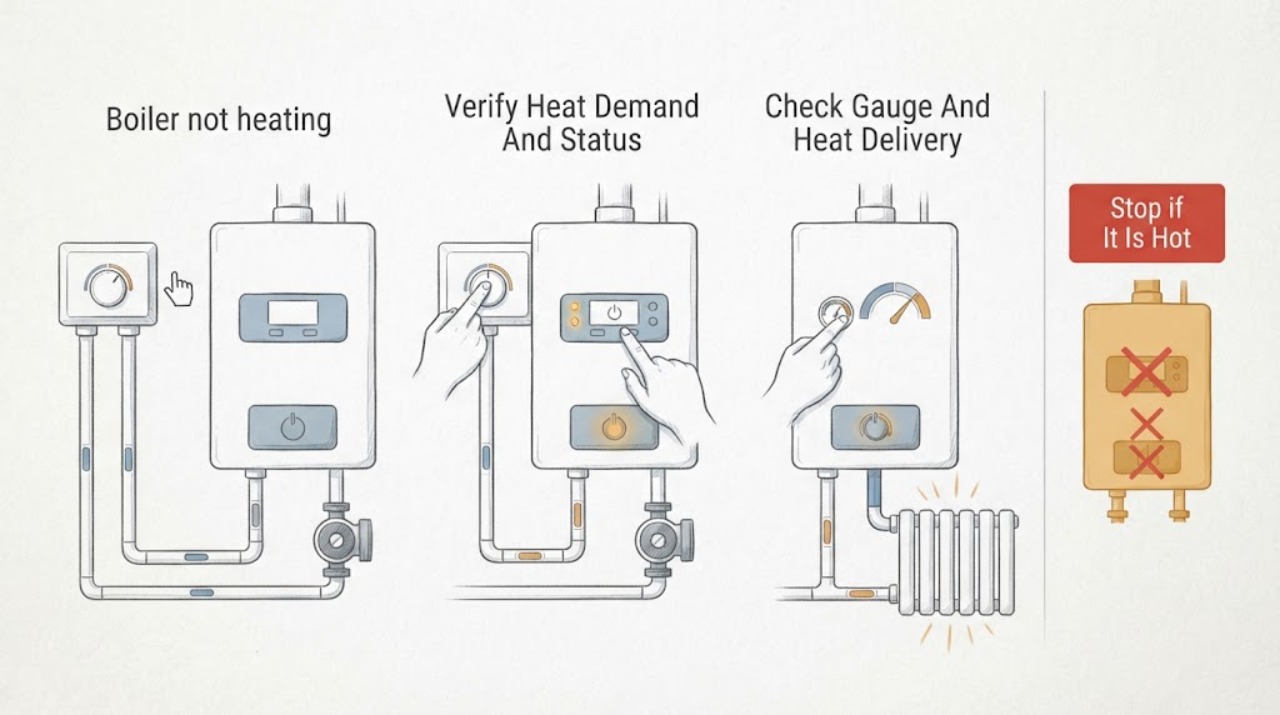
Peerless boiler not heating: What to Check and What to Do Next
When a Peerless boiler is not heating, first determine whether the thermostat is calling, whether the boiler has power and an alert, whether the burner starts, and whether hot water reaches the heating zones. A no-heat condition can come from a thermostat or control demand problem, loss of power or fuel, a limit or low-water safety response, air or a circulation blockage, circulator failure, ignition or venting trouble, or a clogged system.
-
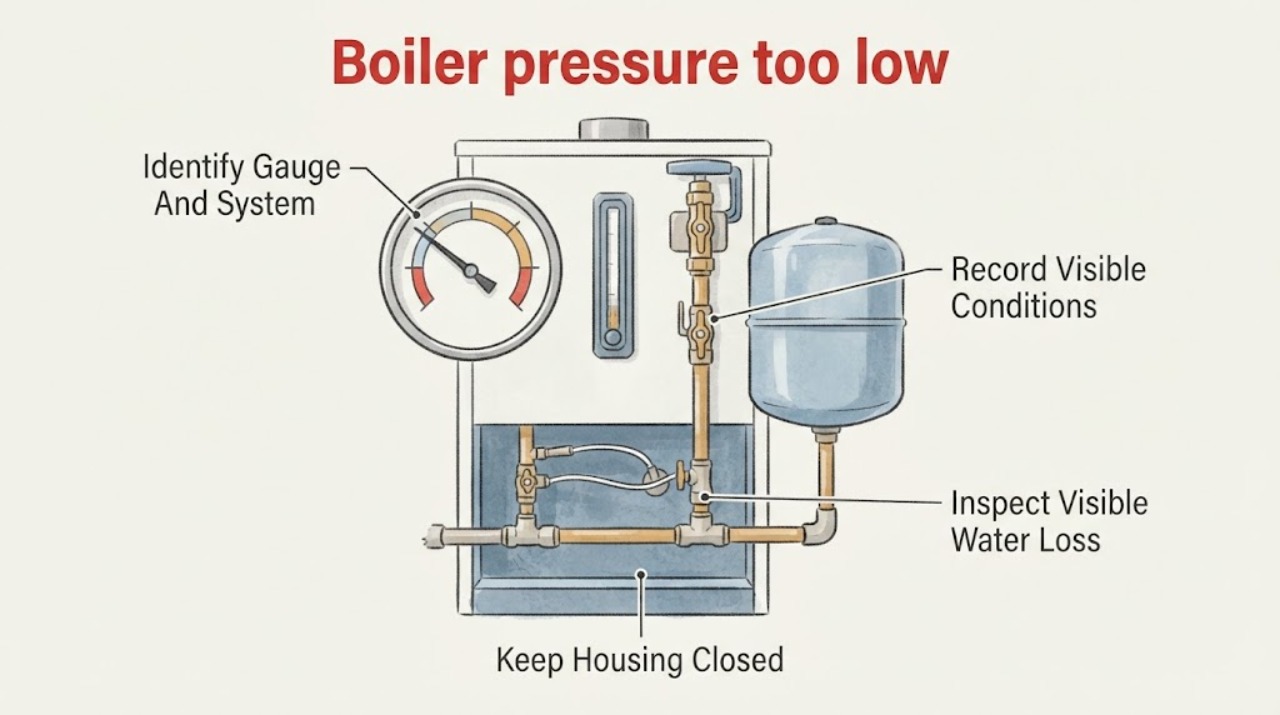
Peerless boiler pressure too low: What to Check and What to Do Next
A Peerless boiler pressure reading that looks too low is not enough to justify opening a fill valve: Peerless makes both steam and hot-water boilers, and their gauges and normal operating behavior differ by model. First identify whether the appliance has a steam gauge and gauge glass or a hot-water pressure/temperature gauge, then record the reading with the system cool and again after a heat call without touching hot pipes or controls.
-
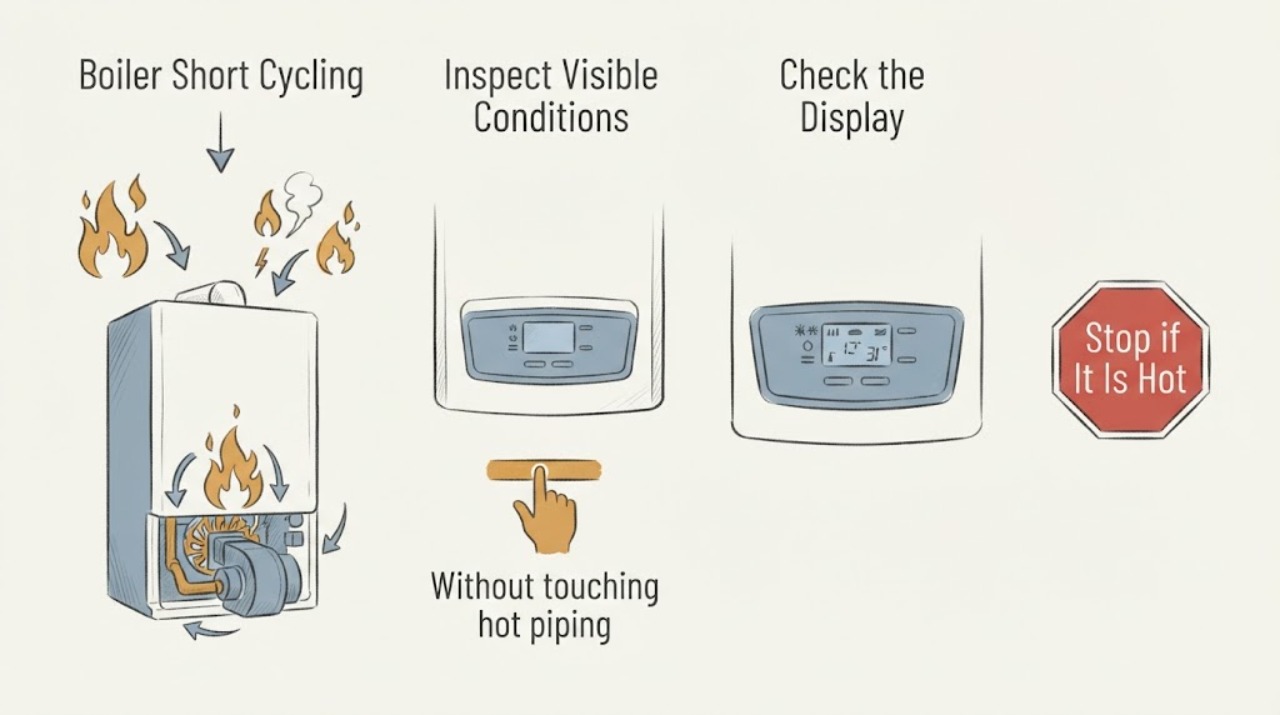
Peerless Boiler Short Cycling: What to Check and What to Do Next
A Peerless boiler is short cycling when its burner starts and stops repeatedly before the thermostat or zone has been satisfied. First record whether the thermostat or zone call stays on, whether the boiler reaches a temperature limit quickly, whether one or all zones receive heat, and whether a lockout or fault appears.
-
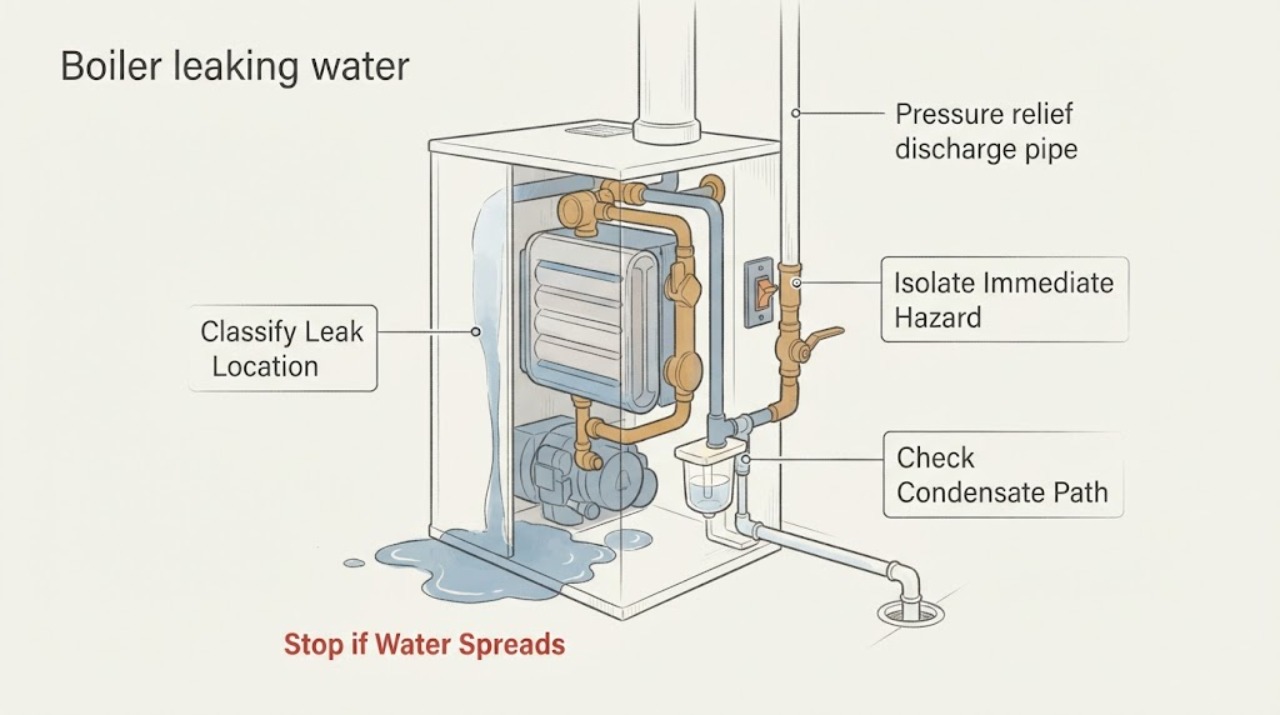
Rheem boiler leaking water: What to Check and What to Do Next
Treat water around a Rheem boiler as a source-identification and safety issue, not as a loose-fitting repair by default. From a dry, safe position, look for the first wet point: a heating-water joint or valve, the pressure-relief discharge, the condensate trap or outlet, or water emerging from the cabinet or heat-exchanger area.
-
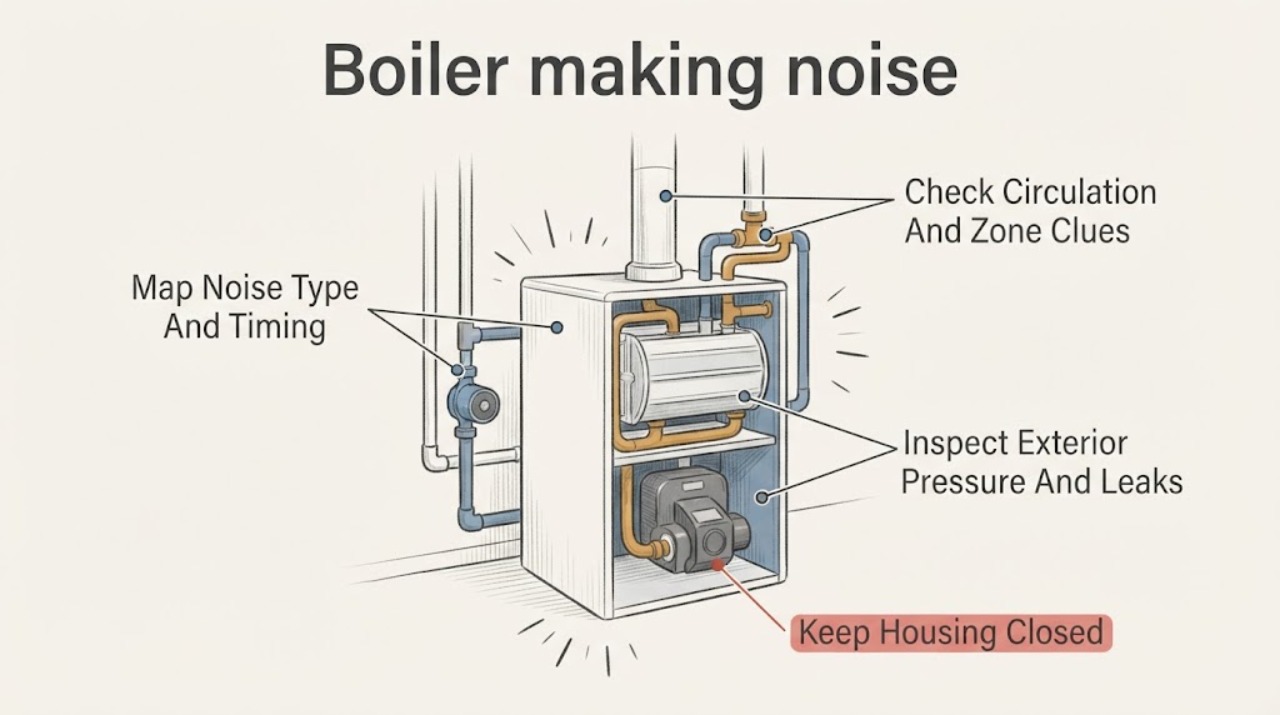
Rheem boiler making noise: What to Check and What to Do Next
The timing and character of the sound are the best first clues. Gurgling or rushing can accompany air or poor circulation; a hum, whine, vibration, or grinding sound can involve the circulator or another motor; knocking or rumbling can accompany restricted flow, scale, or a loose pipe; and a sharp bang, delayed ignition, hissing, smoke, gas odor, or carbon-monoxide alarm is a combustion or safety warning.
-
Rheem boiler not heating: What to Check and What to Do Next
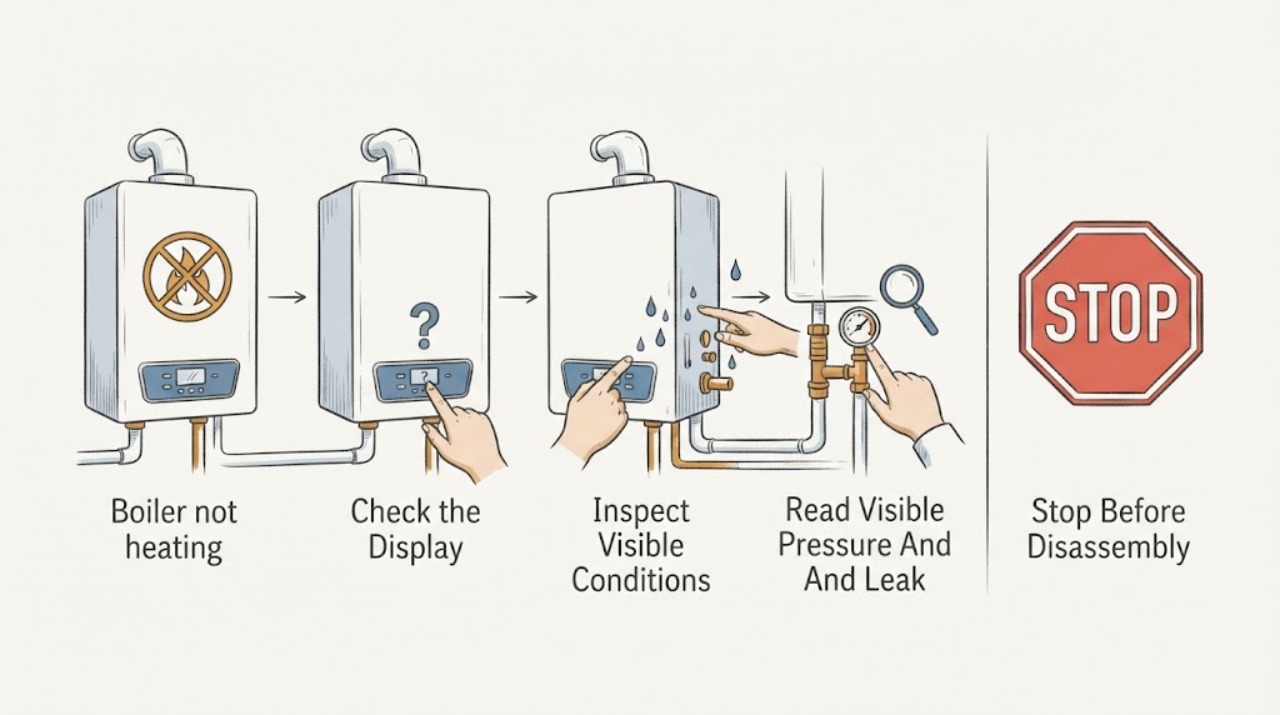
First separate a boiler that is not firing from a boiler that fires but does not deliver heat to the home. Check the thermostat or zone control's call for heat, the Rheem display for a warning or alarm, and the visible supply and return temperatures or pressure indication without opening the cabinet.
-
Rheem boiler pressure too low: What to Check and What to Do Next
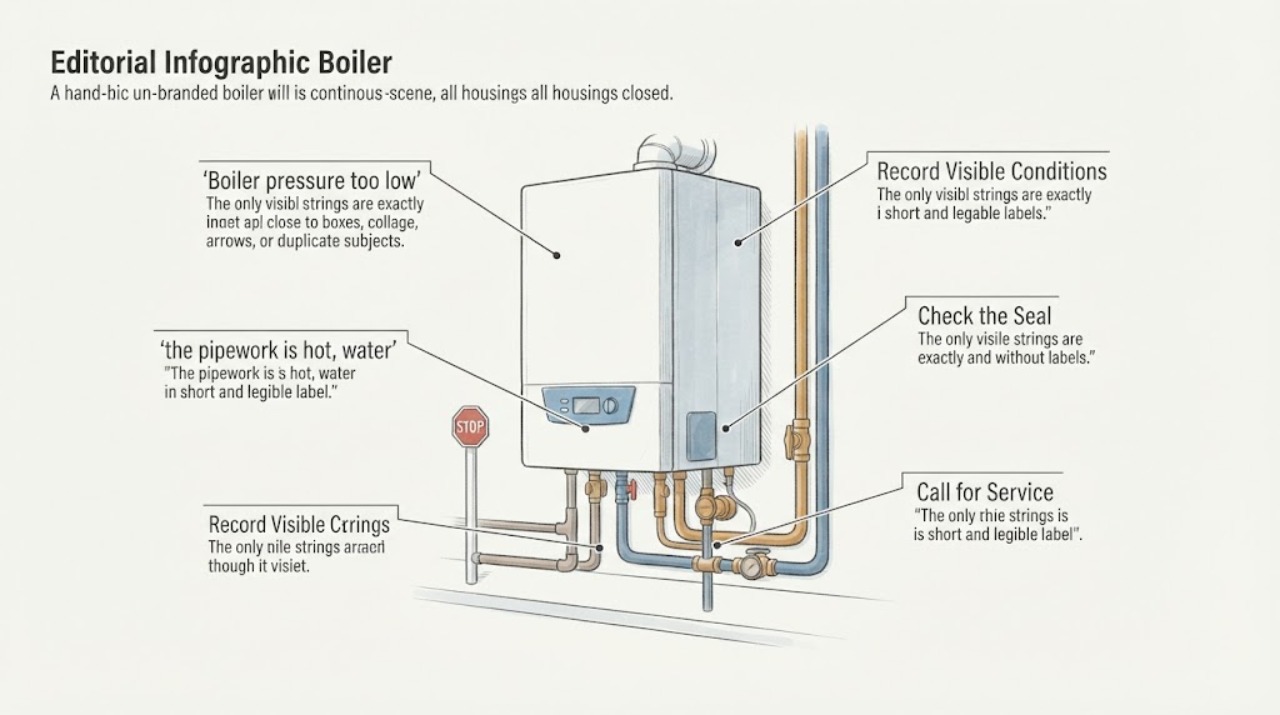
A Rheem boiler showing low pressure may have lost water through a visible or concealed leak, discharged through a relief path, or developed an expansion-vessel, filling-device, pressure-sensor, or gauge problem. Let the system cool, compare the gauge and display with the exact Rheem model manual, and inspect only accessible pipework and discharge points for water.
-
Rheem boiler short cycling: What to Check and What to Do Next
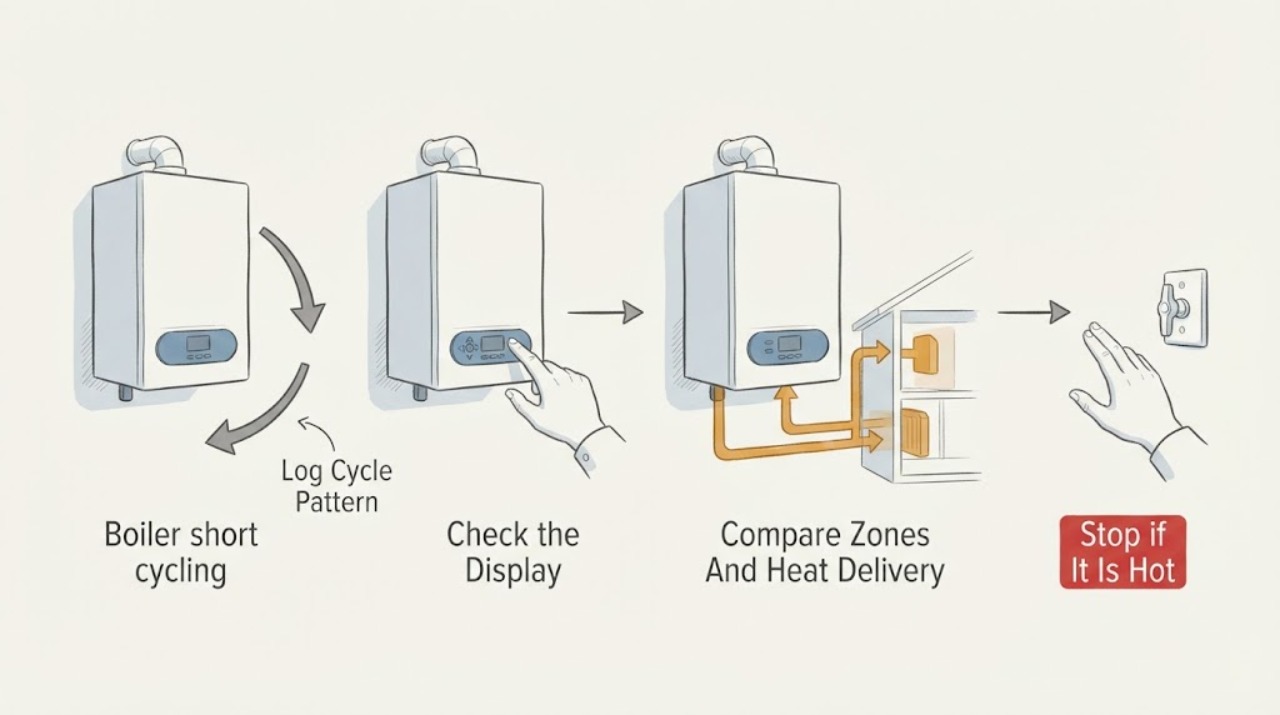
A Rheem boiler is short cycling when it starts and stops repeatedly before the space or active zone has met its demand. First record how long each run lasts, whether the thermostat or zone is still calling for heat, and whether the pattern affects every zone or only one.
-
Weil mclain boiler pressure too low: What to Check and What to Do Next
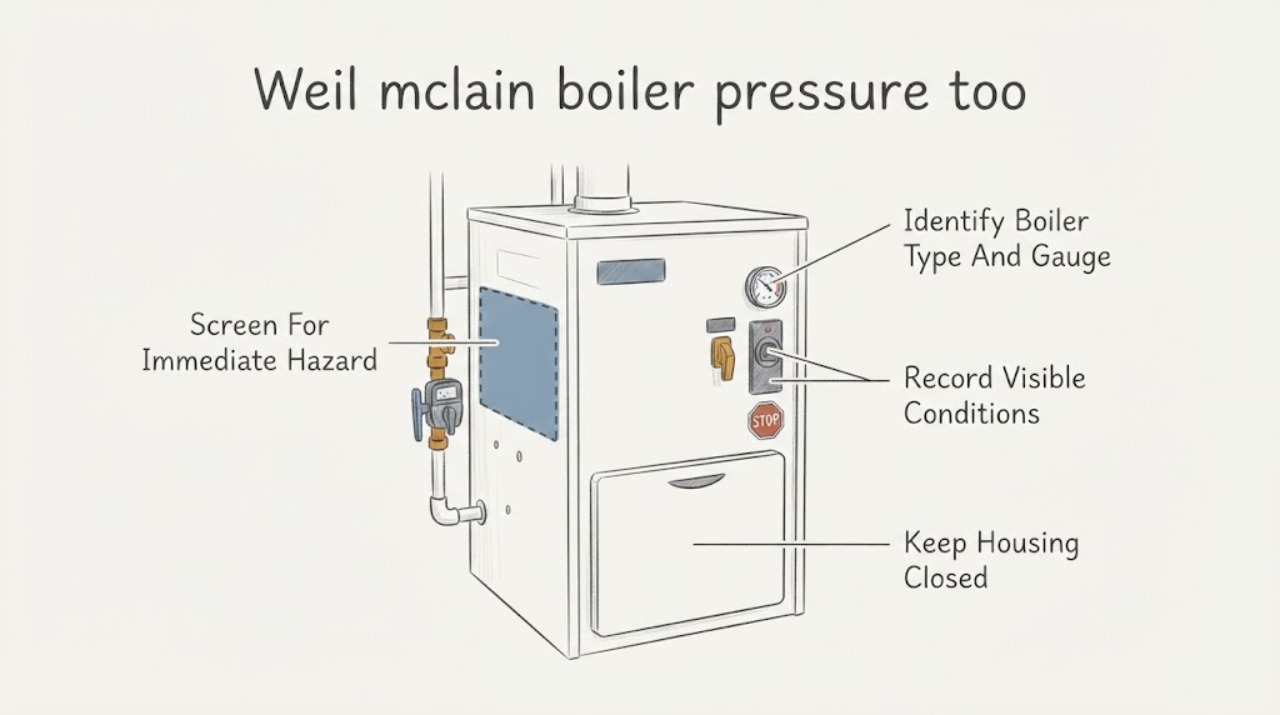
A low reading on a Weil-McLain boiler is a symptom, not a reason to open a fill valve or replace a part immediately. First identify whether the appliance is a hot-water boiler with a pressure/temperature gauge or a steam boiler with a gauge glass and pressure control, then record the reading from a safe position and compare it with the exact model manual.
-
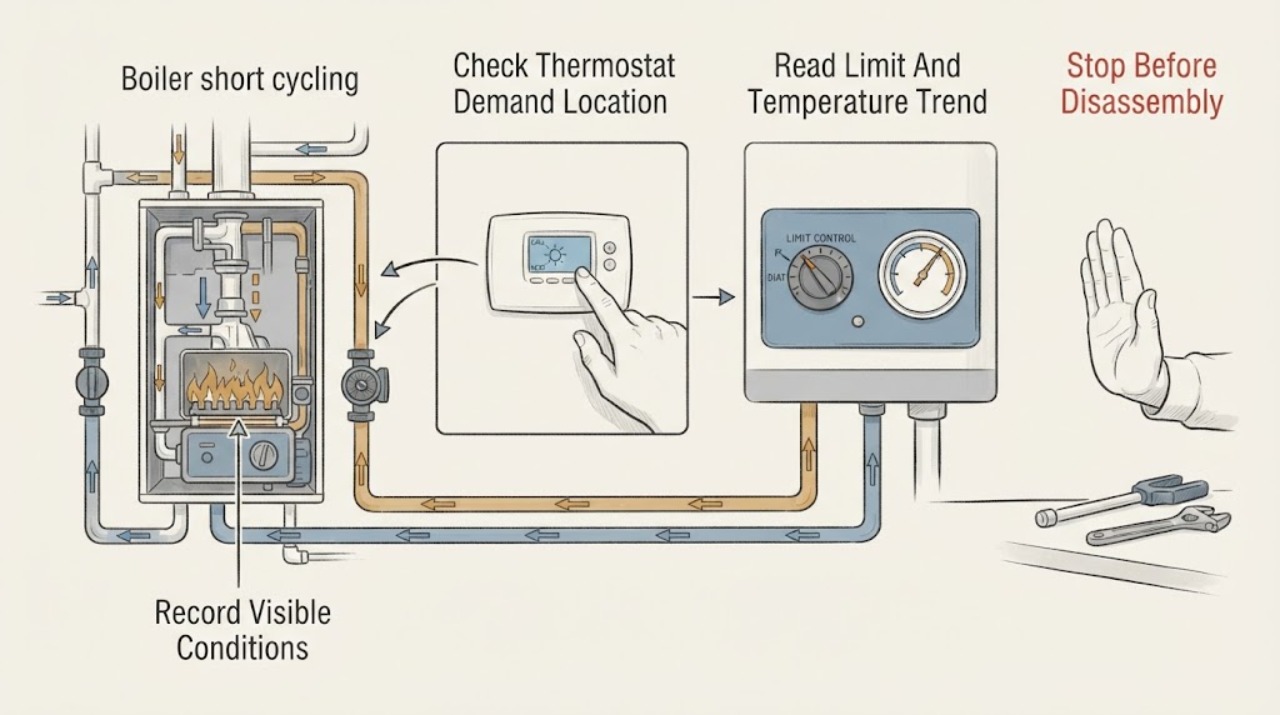
Weil mclain boiler short cycling: What to Check and What to Do Next
A Weil-McLain boiler is short cycling when its burner starts and stops repeatedly during a continuing call for heat, before the home or zone is satisfied. The cause may be a thermostat or heat-anticipator issue, an operating limit reached too quickly, insufficient water flow through the boiler, a closed or failed circulator path, low system demand for the installed output, or a control or safety response.
-
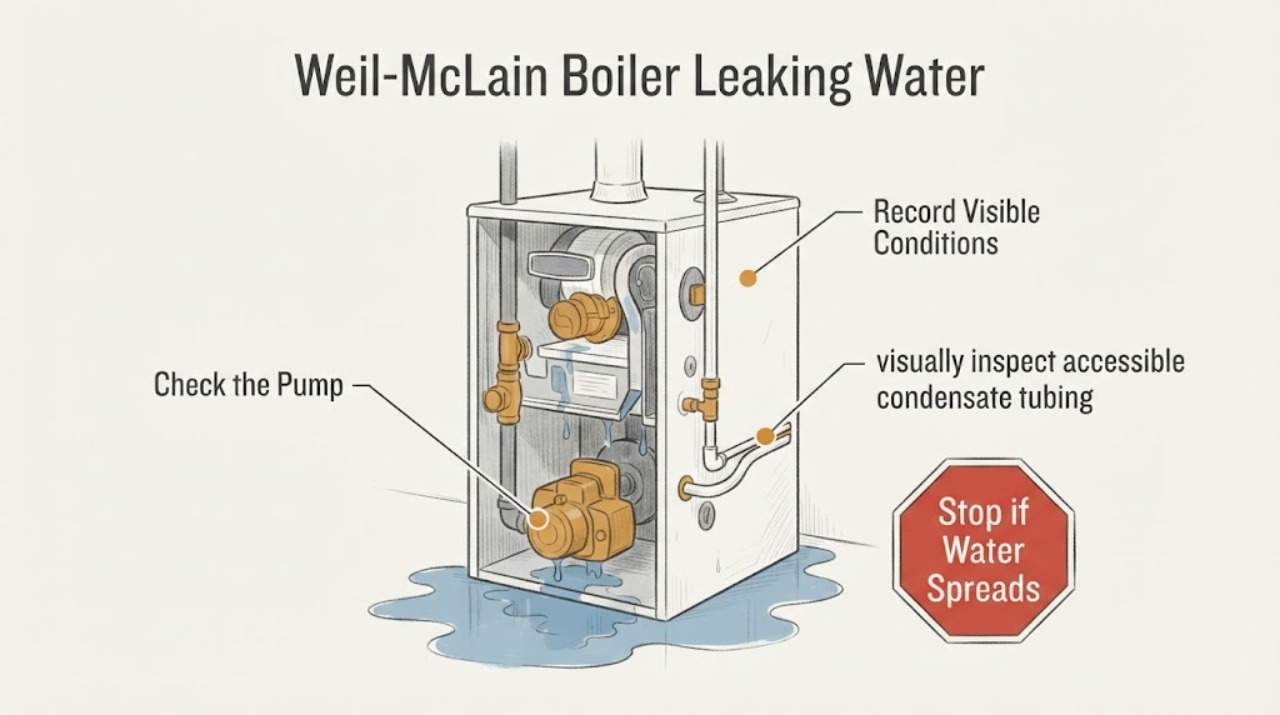
Weil-McLain Boiler Leaking Water: What to Check and What to Do Next
Treat water around a Weil-McLain boiler as a system problem, not as proof that one part needs replacement. If it is safe to do so, photograph the wet area and visually trace the highest accessible point around the boiler, piping, valves, pump, radiators, baseboards, and—on a high-efficiency unit—the condensate drain.
-
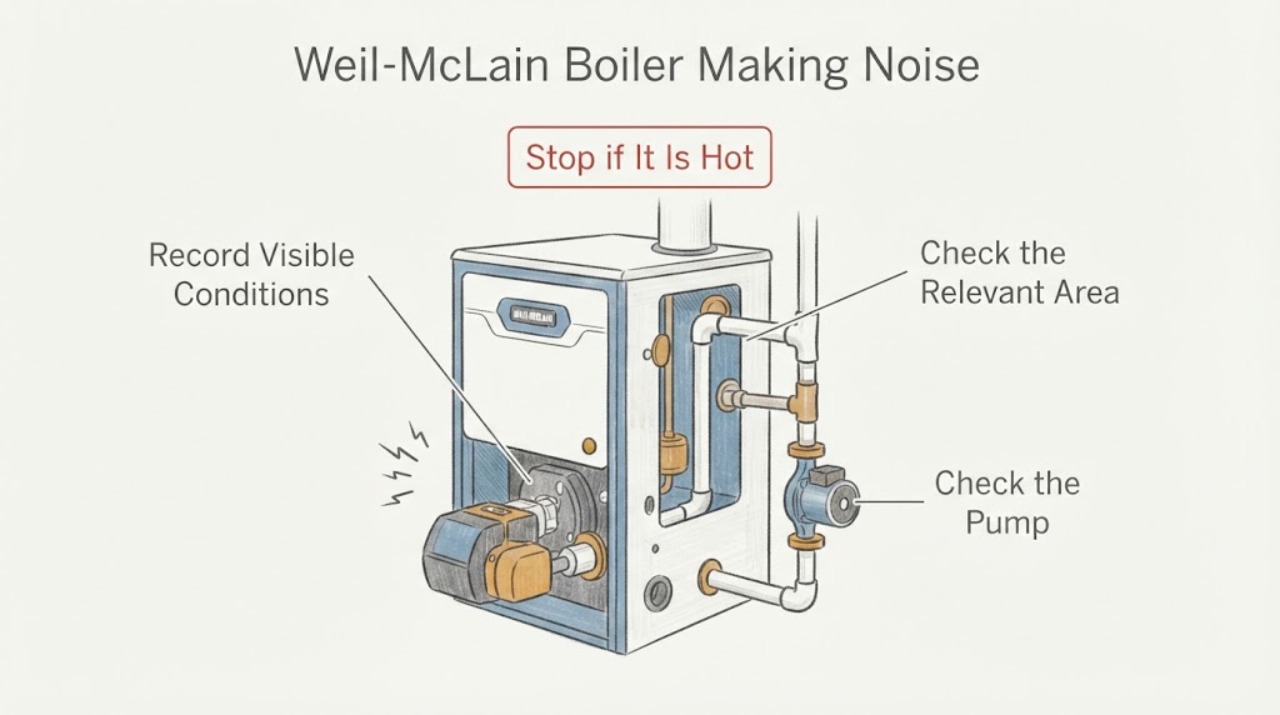
Weil-McLain Boiler Making Noise: What to Check and What to Do Next
A new Weil-McLain boiler noise is a symptom, not a diagnosis. First record whether it is gurgling, banging, popping, whistling, or a pump or burner sound, and whether it happens at startup, while firing, during circulation, or at shutdown.
-
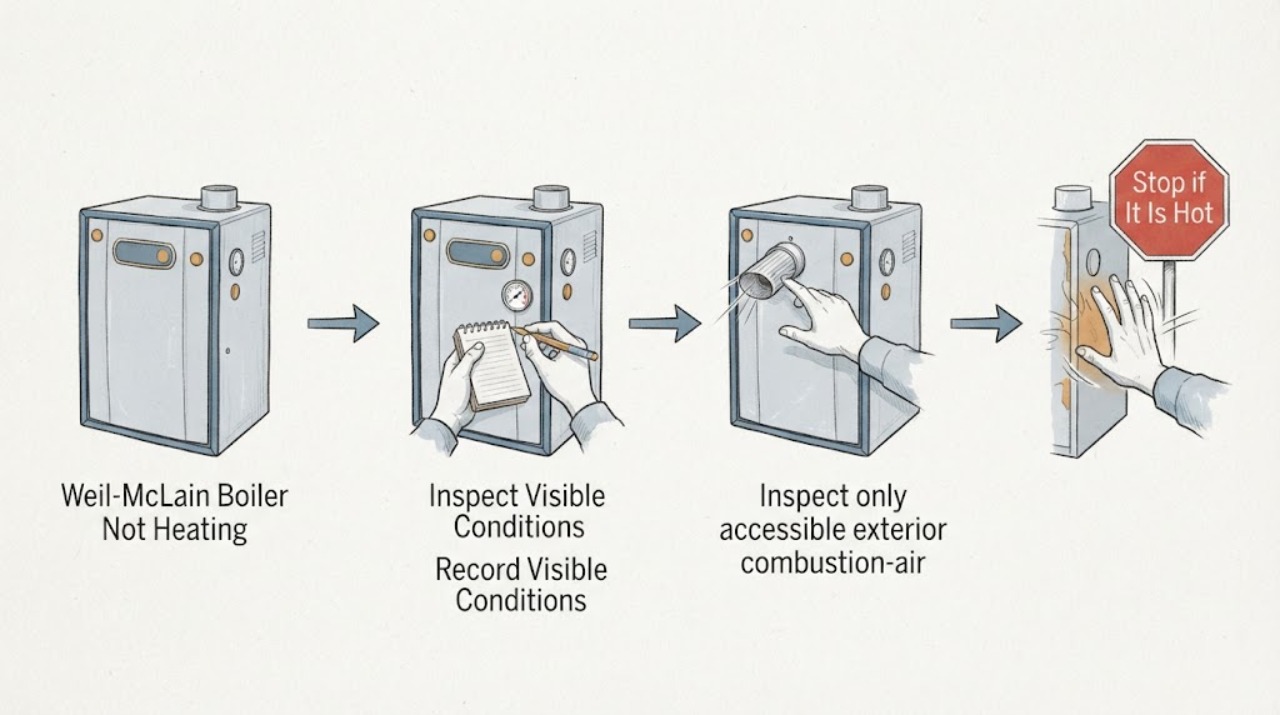
Weil-McLain Boiler Not Heating: What to Check and What to Do Next
When a Weil-McLain boiler is not heating, start at the thermostat and zone call, then observe the boiler display or indicator, pressure gauge, burner or circulator response, and the radiators or baseboards. Check only accessible air and vent openings and, on a high-efficiency model, the condensate path; do not open the jacket or adjust gas, electrical, pressure, or combustion controls.