
On this page
Start here
Quick answer
Droppings that reappear after a safe cleanup are evidence of continuing rodent activity, but the pattern alone does not identify the species, nest, or entry point. First document where and when the signs appear, then ventilate and wet the waste with disinfectant before wiping it up; do not sweep or vacuum dry droppings. Inspect indoors and outdoors for gaps, gnaw marks, nesting material, food, water, and shelter, and seal openings where it is safe to do so. Place and check appropriate snap traps according to their instructions while keeping them away from children and pets. If new droppings, urine, or gnawing continue after a week, the infestation is heavy or inaccessible, the rodents reached ducts or insulation, or anyone is ill after exposure, stop DIY cleanup and contact a pest-control professional and the appropriate health authority.
Before you begin
Safety first
- Professionals should handle heavy contamination, air ducts, exposed insulation, inaccessible voids, structural entry repairs, regulated pesticide decisions, multi-unit or commercial sources, and any situation involving uncertain authorization or health exposure.
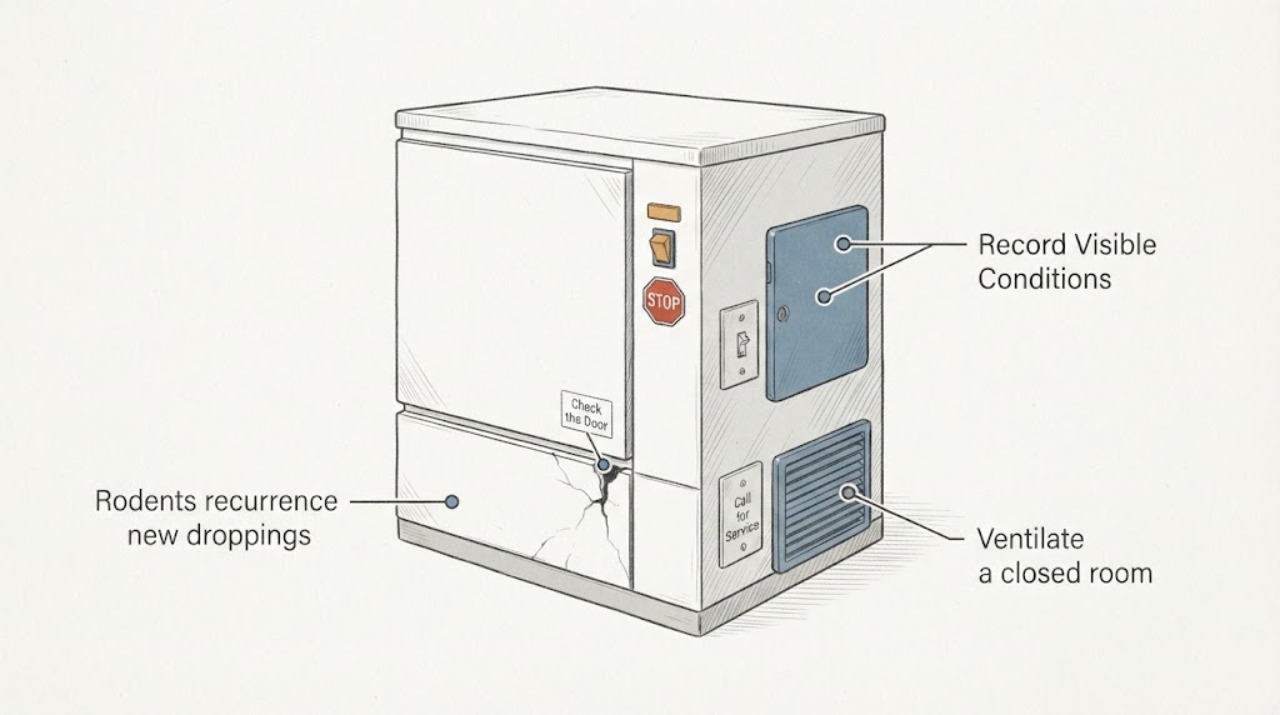
Work through in order
Diagnostic checks
Use only checks that match the exact appliance or system and its official guide.
-
Check 1
Mark each droppings location, take a dated photo, and record whether urine spots, gnaw marks, nesting material, odor, or a live or dead rodent is also present; do not touch or disturb the waste while inspecting.
Expected result: Signs are isolated to one area, recur in the same cleaned area, appear in several rooms or building levels, or occur near food, water, vents, insulation, or a wall/ceiling void.
Next step: Keep a simple dated activity log and proceed to safe cleanup and an entry-point inspection. If signs are widespread, in an inaccessible void, or accompanied by a heavy infestation, stop before disturbing the area and arrange professional assessment.
Why this matters
Why: Recurrence after cleanup supports active presence. Several locations or signs near inaccessible building systems suggest a route or scope that a single surface cleanup will not resolve; droppings alone do not safely identify species or exact timing.
-
Check 2
Ventilate a closed room or outbuilding before re-entry, wear rubber or plastic gloves, spray droppings and urine until very wet with an EPA-registered disinfectant or the CDC-described bleach solution, let it soak for the product's required time, and wipe with paper towels.
Expected result: The waste is on a small hard surface that can be fully wet and wiped, or it is dry and widespread, mixed with nesting material or dead rodents, on contaminated insulation, or inside an air duct.
Next step: Never sweep or vacuum dry rodent waste. Stop and use a qualified cleanup or pest professional for heavy contamination, contaminated insulation, or air ducts; wash gloved hands before removing gloves and wash hands afterward for routine cleanup.
Why this matters
Why: A small accessible hard-surface cleanup can follow the CDC household procedure. Dry, widespread, duct, insulation, nest, or heavy-infestation conditions increase the risk of airborne contamination and need specialized precautions.
-
Check 3
Inspect indoors and outdoors along the sign path for gaps, gnaw marks, nesting material, and movement routes around cabinets, appliances, doors, windows, vents, pipe and utility openings, attics, crawl spaces, foundations, and roof edges.
Expected result: An opening, damaged screen or door seal, unprotected vent, utility gap, food or garbage source, standing water, clutter, brush, or outdoor nesting site is found; or no accessible route is visible.
Next step: Remove accessible food, water, garbage, and shelter sources and seal openings with rodent-resistant materials appropriate to the location. Do not block a vent, alter a gas or electrical penetration, or seal a route before a professional confirms it is safe; escalate if the route is hidden or shared with another unit.
Why this matters
Why: A gap or attractant provides a plausible route or resource, while no visible route does not rule out a concealed void, roofline, drain, or neighboring-unit source. New droppings can continue until both access and resources are addressed.
-
Check 4
After safe cleanup and exclusion work, place appropriately sized snap traps along walls or in the documented activity areas, follow the product instructions, keep children and pets away, and check traps and the cleaned locations on a consistent schedule.
Expected result: A rodent is captured, bait is disturbed without a capture, no capture occurs and no new signs appear for a week, or new droppings, urine, or gnawing continue after a week.
Next step: Dispose of dead rodents safely and continue only as the trap instructions allow. If new signs persist after a week, signs spread, or trapping does not resolve the problem, stop expanding DIY measures and arrange professional rodent control.
Why this matters
Why: A capture confirms activity at that route. No capture plus no new signs for a week is a useful indication that activity has stopped, while persistent new signs indicate an unresolved infestation or route; bait disturbance without capture requires continued monitoring rather than assuming success.
-
Check 5
Check whether food, water, HVAC ducts, insulation, stored clothing, or other porous materials were contacted, and note any bite, illness, or breathing concern after rodent exposure; do not consume visibly contaminated food or water.
Expected result: Contamination is limited to a cleanable hard surface, food or porous material is contaminated, rodents entered an air duct or inaccessible cavity, or someone develops illness after exposure.
Next step: Discard contaminated food or water and follow the CDC material-specific cleanup guidance. Contact a professional for ducts, inaccessible cavities, or heavy contamination, and contact a healthcare provider or local health department about illness or unusual exposure.
Why this matters
Why: Hard surfaces can follow disinfectant instructions, but contaminated food and porous materials may need disposal or material-specific handling. Duct access and illness create health and exposure issues beyond routine household pest work.
Use your observations
Decision map
Find the observation that best matches what you see, then follow the next safe action.
-
PATH 01Next step
What you see
New droppings appear again at a cleaned monitoring point, or new urine spots or gnaw marks appear during the same week.
Do this next
Continue the dated log, inspect the nearby and exterior route, remove food/water/shelter sources, and use appropriately managed traps. If signs persist after a week or spread, arrange professional control.
Why this path and its safety boundary
Why it matters: Active rodent presence is more likely than a one-time historic deposit, and the entry route or an animal still inside has not been resolved.
-
PATH 02Next step
What you see
The area remains clean, no new droppings or gnaw marks appear for a week, and no additional signs are found after accessible entry points and attractants are addressed.
Do this next
Keep food, garbage, and pet supplies sealed, maintain the exclusion work, and recheck the former sign locations periodically rather than reopening clean surfaces unnecessarily.
Why this path and its safety boundary
Why it matters: The available evidence supports that activity has stopped in the monitored area, although an uninspected neighboring or concealed route could still become active later.
-
PATH 03Next step
What you see
Droppings or nesting material are widespread, inside air ducts or exposed insulation, in a wall/ceiling void, or in a space that cannot be safely ventilated or reached.
Do this next
Do not sweep, vacuum, open the void, or disturb insulation. Leave the area as appropriate and arrange qualified pest and cleanup professionals; use local health guidance for unusual or heavy exposure.
Why this path and its safety boundary
Why it matters: The exposure and access problem exceeds routine hard-surface cleanup; hidden animals or contaminated materials may remain even if visible waste is removed.
-
PATH 04Next step
What you see
Rodent waste contacts food or drinking water, someone is bitten or scratched, or a person develops illness after substantial contact with rodents or their waste.
Do this next
Do not eat or drink contaminated food or water. Contact a healthcare provider about illness or a bite and tell them about the rodent exposure; contact the local health department for situation-specific cleanup or exposure guidance.
Why this path and its safety boundary
Why it matters: There is a potential health exposure in addition to the pest problem; ordinary trapping or cleaning advice cannot determine medical risk.
Helpful context
Understand the symptom
Treat recurrence as a new activity signal
A cleaned spot is a useful monitoring point. Date a photo and record the room, cabinet, wall edge, attic or crawl-space location, nearby food or water, and whether there are gnaw marks, urine spots, nesting material, or odors. CDC notes that it can be difficult to determine activity by examining droppings alone; if waste returns after safe cleanup, that supports active presence. Do not infer a species or an exact age from appearance alone.
Clean the evidence without making dust
Ventilate a closed home or outbuilding before cleaning, wear rubber or plastic gloves, wet droppings and urine thoroughly with a household disinfectant or a freshly prepared bleach solution, let the product sit for the label time, and wipe with paper towels. Do not sweep or vacuum dry rodent waste or nesting material. Heavy infestations, contaminated insulation, and waste in air ducts need specialized precautions or professional cleanup.
Find the route and remove what sustains it
Inspect inside and outside around cabinets, appliances, doors, windows, vents, pipe and utility penetrations, attics, basements, crawl spaces, roof edges, and foundations. Seal openings with a material suited to the size and location, and correct food, water, garbage, clutter, brush, and nesting sources. A sealed room can still show new droppings if rodents remain inside or can move through an uninspected void.
Use monitoring and traps as a connected plan
Place traps where signs show activity and follow the trap instructions, keeping traps and bait inaccessible to children and pets. CDC recommends traditional snap traps for reducing rodents around the home and advises against glue and live traps. Continue monitoring after cleanup and exclusion; no captures and no new signs for a week is a more useful endpoint than one empty trap checked once.
Safety boundary
Stop conditions
- Do not sweep, vacuum, dry-brush, or stir rodent droppings, urine, nests, or contaminated insulation; wet them with an appropriate disinfectant first and follow the label and CDC cleanup procedure.
- Stop routine DIY work for heavy or widespread infestation, inaccessible wall/ceiling or crawl-space contamination, air ducts, exposed insulation, dead rodents or nests in large numbers, or any area that cannot be ventilated safely; use qualified pest and cleanup professionals.
- Discard contaminated food or water and seek healthcare guidance for bites, breathing problems, or illness after exposure; contact the local health department when the situation is unusual, heavy, or uncertain.
When checks do not resolve it
Need a professional?
Safety scope: Professionals should handle heavy contamination, air ducts, exposed insulation, inaccessible voids, structural entry repairs, regulated pesticide decisions, multi-unit or commercial sources, and any situation involving uncertain authorization or health exposure.
Common questions
FAQ
Do new droppings after cleaning prove there is still a rodent?
They are strong evidence of active presence when the area was cleaned safely and the waste returns. CDC cautions that examining droppings alone is not a reliable way to determine activity, so use safe cleanup followed by dated monitoring and look for gnaw marks, urine, nesting, or captures.
Can I vacuum or sweep new rodent droppings?
No. CDC advises against sweeping or vacuuming rodent urine, droppings, and nesting material because disturbing dry waste can put contaminated particles into the air. Ventilate, wear gloves, wet the material with disinfectant, let it soak as directed, and wipe it up; use professional cleanup for heavy or inaccessible contamination.
What should I inspect when droppings keep returning?
Inspect the sign path inside and outside around cabinets, appliances, doors, windows, vents, utility and plumbing penetrations, attics, crawl spaces, foundations, roof edges, garbage, pet food, standing water, clutter, and nesting sites. Seal openings and remove resources where it is safe and appropriate, but do not alter gas, electrical, or shared building systems without qualified help.
How long should I monitor after setting traps?
CDC recommends continuing until rodents are no longer captured; no captures and no new signs for a week is a useful indication that activity has stopped. New droppings, urine, or gnawing that persist after a week can indicate an infestation and is a reason to seek professional help.
When should I call a pest professional instead of doing more cleanup?
Call when signs are heavy, widespread, recurring after a week, in air ducts, exposed insulation, or inaccessible voids, or when trapping and exclusion do not resolve them. Also seek health guidance after a bite, illness, substantial exposure, or contamination of food or water.
Read the exact guide
Official sources
- How to Clean Up After RodentsCenters for Disease Control and Prevention · Household, outbuilding, vehicle, and other rodent-contaminated spaces; heavy infestations require additional precautions
- Pest Control: Resources for Housing ManagersU.S. Environmental Protection Agency · Apartments, shared buildings, and property-management contexts; principles also inform residential inspection
- Controlling Wild Rodent InfestationsCenters for Disease Control and Prevention · Household and building rodent presence involving mice, rats, and similar wild rodents
- Identify and Prevent Rodent InfestationsU.S. Environmental Protection Agency · Residential and property-level rat or mouse prevention and identification
- How to Trap Up to Remove RodentsCenters for Disease Control and Prevention · Household rodent activity where traps can be placed and checked safely
- How to Seal Up to Prevent RodentsCenters for Disease Control and Prevention · Homes, garages, outbuildings, and surrounding property where rodents may enter or find resources
Community feedback
Share a repair observation
Share a plain-text repair observation. Accepted observations are published automatically; this page may take a moment to update.