
On this page
Start here
Quick answer
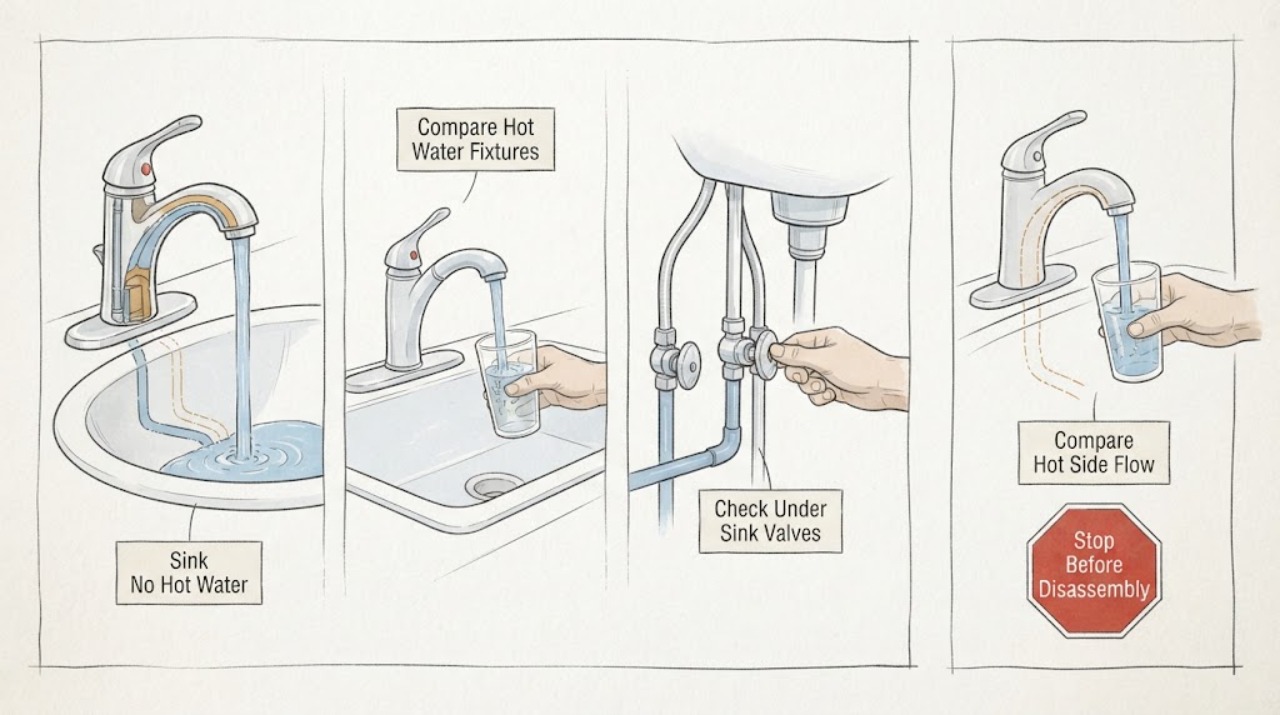
When a sink has no hot water, first compare it with another hot-water fixture. If other fixtures are hot, inspect this sink's hot shut-off valve and supply line, then consider a faucet-side restriction; if the whole home is cold, the problem is upstream at the water heater or hot-water supply. Open both under-sink valves fully, look for a kinked hose, and clean an accessible aerator only if the faucet instructions allow it. Do not open a water-heater cover, adjust live electrical parts, or keep resetting a tripped device. A leak, gas odor, scalding water, electrical symptom, or no hot water throughout the home needs qualified professional help.
Work through in order
Diagnostic checks
Use only checks that match the exact appliance or system and its official guide.
-
Check 1
Turn the sink's hot handle briefly and note whether water flows cold, barely flows, or does not flow. Then check another nearby fixture that normally supplies hot water, such as a shower or another sink, without running water long enough to create a scalding risk.
Expected result: Other fixtures have normal hot water, or hot water is absent or weak at multiple fixtures.
Next step: Follow the local-faucet checks when another fixture is hot. If the whole home is affected, stop at safe external observations and arrange water-heater or plumbing service.
Stop if: Stop if water is scalding, there is a leak near electrical equipment, a gas odor is present, or reaching another fixture requires unsafe access.
Why this matters
Why: Hot water elsewhere makes a sink-local valve, hose, or faucet restriction more likely. No hot water at several fixtures shifts the problem upstream to the water heater, its controls, or the household hot-water supply.
-
Check 2
If another fixture has hot water, look under the sink and verify that the hot and cold shut-off valves are open. Follow the visible hot supply line from the hot valve to the faucet and check for a kink, crushing, or a sharp bend; do not disconnect a pressurized line.
Expected result: The hot shut-off valve is closed or partly closed, the hot line is kinked or obstructed, or both valves and lines appear open and undamaged.
Next step: Open a sound shut-off valve fully by its normal hand control and straighten only a movable hose without stressing its fittings. Retest gently; if hot flow remains absent, continue to the faucet outlet check or call a plumber.
Stop if: Stop if the valve is seized, the hose is cracked or leaking, water sprays, the connection twists with the valve, or moving the line would require tools.
Why this matters
Why: A closed valve or restricted supply line can remove hot flow at one faucet while the rest of the home remains normal. If both supplies are open and the line is clear, the restriction may be in the faucet or upstream plumbing.
-
Check 3
Compare the hot-side flow with the cold side at the same faucet position. If the faucet manual allows it, inspect the spout aerator or flow restrictor for debris and clean it without scratching the finish; do not remove the faucet cartridge or valve body as a first-user check.
Expected result: Cold flow is normal but hot flow is a trickle, both sides are reduced, or the outlet is clean and flow is still absent on hot.
Next step: Refit the aerator and retest if debris was found. If only hot flow remains restricted, have a plumber identify the faucet cartridge or supply restriction rather than ordering a generic part.
Stop if: Stop if the aerator is seized, the faucet begins leaking, the cartridge or valve body would need removal, or cleaning would require force or an unapproved chemical.
Why this matters
Why: A temperature-specific reduction supports a hot supply, valve, or cartridge restriction; a restriction at the outlet can reduce flow but does not by itself prove that the water heater is faulty. Equal flow with cold water but no temperature change points back to the hot supply or mixing hardware.
-
Check 4
Look for water at the faucet base, under-sink connections, flexible lines, and shut-off valves while the hot handle is briefly opened. Note whether the handle moves normally, feels loose, or reaches a stop before hot water flows; do not tighten or dismantle a pressurized connection.
Expected result: There is a drip or spray at the faucet or line, the handle movement is abnormal, or no leak is visible and the handle operates normally.
Next step: Close the affected shut-off valve if it can be operated safely and arrange plumbing service for leaks, loose hardware, or cartridge/valve problems. If no local fault is visible, compare another fixture again and follow the whole-home branch.
Stop if: Stop for uncontrolled water, a damaged valve or hose, water near an outlet, a loose fixture that could detach, or any need to remove the faucet body.
Why this matters
Why: A leak can reduce usable flow and can damage the cabinet or floor; a handle or cartridge fault can block the hot path even when the supply valve is open. A dry, normally moving faucet with no hot flow keeps the supply-line restriction in consideration.
-
Check 5
If hot water is absent at multiple fixtures, inspect only the water heater's normal external indicators and surrounding area: check for a visible warning, leak, unusual noise, or an obviously off user control. Use the water-heater manual for any user-accessible status check; do not open an electrical panel, remove insulation, adjust a gas control, or perform electrical tests.
Expected result: The heater has a warning or fault indication, visible leakage, an unusual odor or sound, no normal external status, or no obvious external issue.
Next step: Record the model and any displayed indication, then contact a qualified water-heater or plumbing technician. If the heater area is wet, hot, smoky, or smells of gas, leave it isolated and escalate immediately.
Stop if: Stop for gas odor, smoke, scorching, a burst or active leak, exposed wiring, a wet electrical area, or any need to remove a heater cover.
Why this matters
Why: No hot water can result from loss of power, a high-temperature safety shutdown, a sensor or heating fault, a leaking hot-water system, or other equipment conditions. These causes are not distinguishable safely from the sink and should not be guessed from a faucet symptom.
Use your observations
Decision map
Find the observation that best matches what you see, then follow the next safe action.
-
PATH 01Next step
What you see
Another sink or shower has normal hot water.
Do this next
Treat the issue as local to this sink: check the hot shut-off valve and supply line, then the accessible outlet restriction or faucet hardware.
-
PATH 02Next step
What you see
The hot under-sink valve is closed or the visible hot supply line is kinked or crushed.
Do this next
Open the sound valve by hand or restore a gentle hose path, then retest. Keep the water off and call service for a damaged or seized connection.
-
PATH 03Next step
What you see
Cold flow is normal but the hot side is a trickle, or an accessible aerator contains debris.
Do this next
Clean and refit the permitted outlet part, then retest. Persistent hot-only restriction needs faucet or supply diagnosis; do not remove the cartridge as a generic fix.
-
PATH 04Next step
What you see
Water leaks at the faucet, valve, or supply line, or the handle cannot select hot normally.
Do this next
Close the affected valve if safe, protect the cabinet and floor, and arrange a qualified plumber or faucet technician. Do not tighten pressurized fittings with force.
-
PATH 05Next step
What you see
Hot water is absent or weak at multiple fixtures.
Do this next
Stop sink-level part swapping and have the water heater or household hot-water piping assessed. Record any external warning or model details without opening the heater.
-
PATH 06Next step
What you see
There is gas odor, smoke, scorching, an active heater leak, exposed wiring, or water near electrical parts.
Do this next
Do not touch switches or heater controls. Leave the area for a gas odor or fire risk, isolate only from a safe location, and contact the appropriate emergency, gas, electrical, or plumbing professional.
Helpful context
Understand the symptom
The first useful split is local versus whole-home. A sink faucet can lose hot water because its hot shut-off valve is closed, its supply line is kinked or obstructed, or its internal valve has a restriction. If showers and other sinks are also cold, the faucet is probably only where the symptom was noticed; the water heater, its supply, or the home's hot-water piping needs attention.
These checks stay at the fixture and at safe external observations of the water-heating equipment. Do not remove a water-heater access cover, test energized wiring, dismantle a faucet cartridge, or change a gas control to diagnose this symptom. Use the exact faucet and water-heater manuals for model-specific instructions.
When checks do not resolve it
Need a professional?
Request qualified plumbing or water-heater service for persistent sink-local hot-water loss, leaking supply hardware, or no hot water throughout the home. Provide the faucet type, whether cold flow is normal, the state of both shut-off valves, which fixtures were tested, any visible leak, and any safe external heater indication; do not prescribe a cartridge, valve, heating element, or other part from the symptom alone.
Common questions
FAQ
Why does one sink have no hot water but other fixtures do?
The fault is likely local to that sink's hot shut-off valve, supply line, faucet outlet, or internal valve. Check the visible valve and line, then an accessible aerator only if the faucet instructions allow it. If the hot side remains blocked while cold flow is normal, have the faucet or supply diagnosed.
Should both under-sink valves be open when checking no hot water?
Yes. Moen's sink-faucet guidance says to check that both shut-off valves are fully on and that the supply lines deliver pressure. Operate only a sound valve by hand; do not force a seized valve or disconnect a pressurized line.
What if no sink or shower has hot water?
The problem is upstream of one faucet and may involve the water heater, its power or safety controls, or the household hot-water piping. Check only normal external indicators and the model manual. Do not open the heater or test electrical or gas components; arrange qualified service, especially for a leak, odor, smoke, or warning.
Read the exact guide
Official sources
- DOE Water Heater Meeting 111612U.S. Department of Energy · Water-heater troubleshooting chart for no or insufficient hot water, safety limits, sensors, leaks, and qualified-person boundary
- Low water flow from spout- ONLY hot or cold water on sink faucetsMoen Solutions · Sink-faucet hot-only or cold-only flow, shut-off valves, supply lines, and faucet restriction guidance
- Why does my faucet have low water pressure?Delta Faucet · Faucet aerator and flow-restrictor obstruction, safe flushing, and supply isolation guidance
Community feedback
Share a repair observation
Share a plain-text repair observation. Accepted observations are published automatically; this page may take a moment to update.