
Repair problem
Garage Door Opener Making Loud Noise Troubleshooting Guides
Published FixGraph guidance for diagnosing and responding to garage door opener making loud noise.
Matching published guides
Choose a guide that matches the service, equipment, and conditions you are seeing.
-
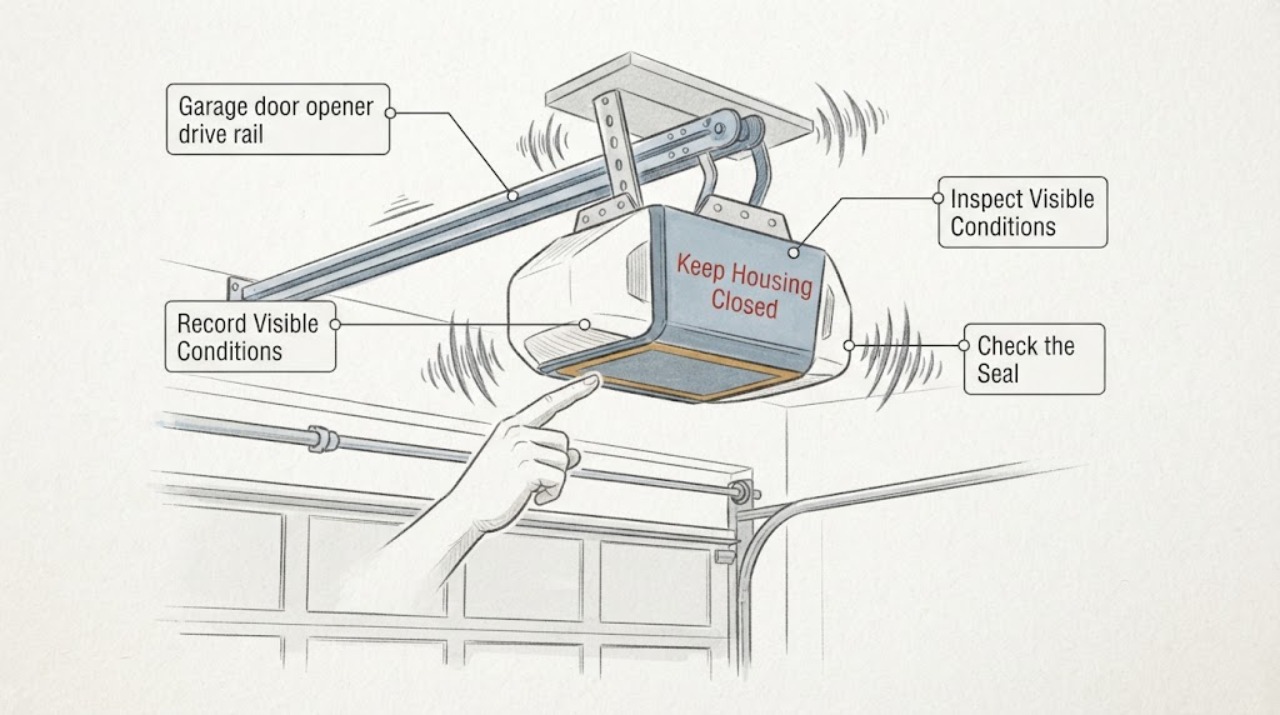
Garage door opener drive rail making loud noise: What to Check and What to Do Next
A drive rail that suddenly becomes loud should not be treated as normal. Do not keep cycling the door if the sound is grinding or scraping, the door is unbalanced, binds, jumps its path, stalls, or moves unevenly.
-
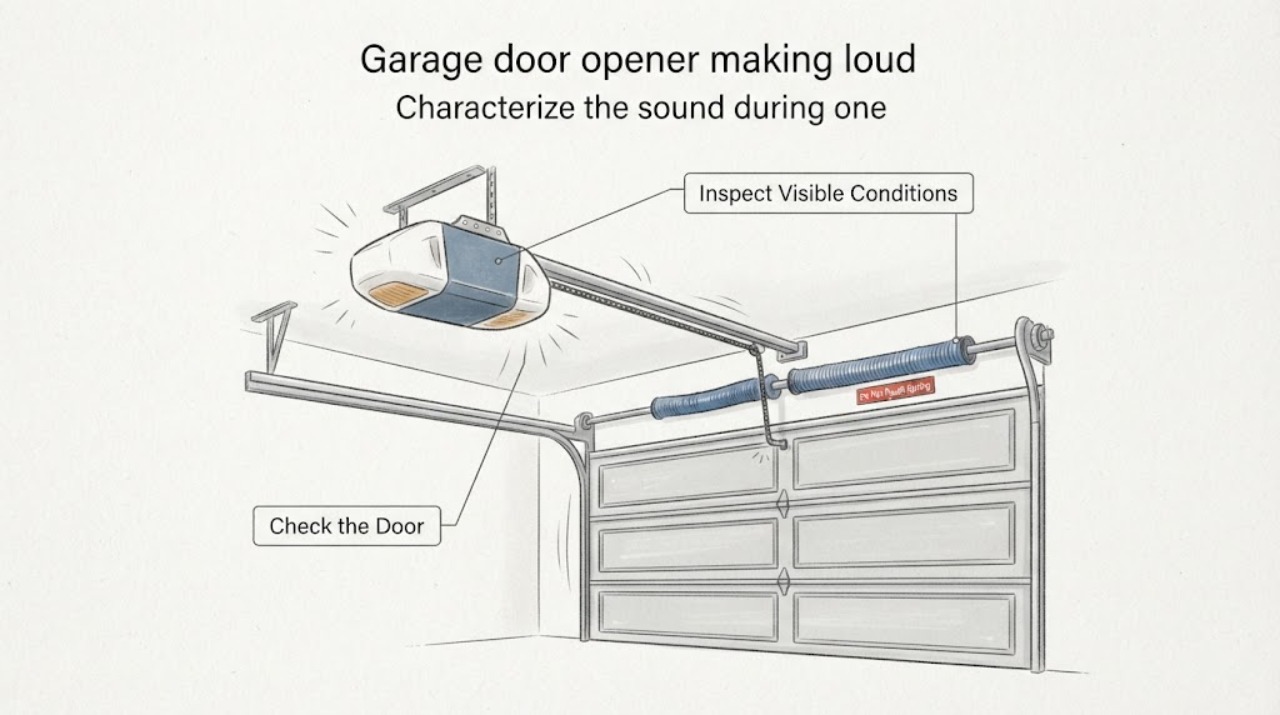
Garage door opener making loud noise occurs under load: What to Check and What to Do Next
If a garage-door opener becomes loud only when it is lifting or lowering the door, stop repeated cycles and observe from the side, with the full door in view and no one in its path. Note whether the sound is grinding, popping, scraping, rattling, or a steady vibration, and whether the door jerks, binds, moves unevenly, or stops.
-
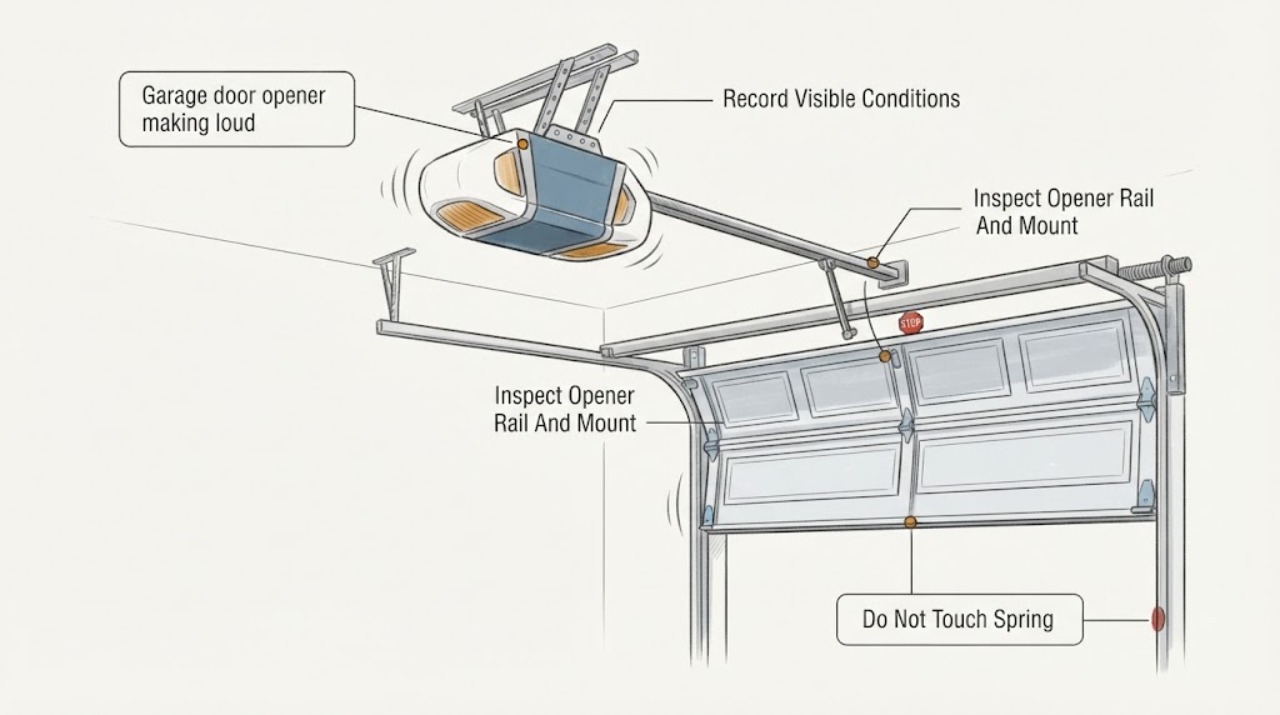
Garage door opener making loud noise moves or stalls: What to Check and What to Do Next
A loud garage-door opener that moves the door only partway, stalls, or reverses can be reacting to a door-path or hardware problem, an opener-drive problem, or a safety-sensor/control issue. From a standing position, make one safe observation of the sound and movement, inspect the visible path and opener mounting without touching moving hardware, and note both photo-eye indicators and which control was used.
-
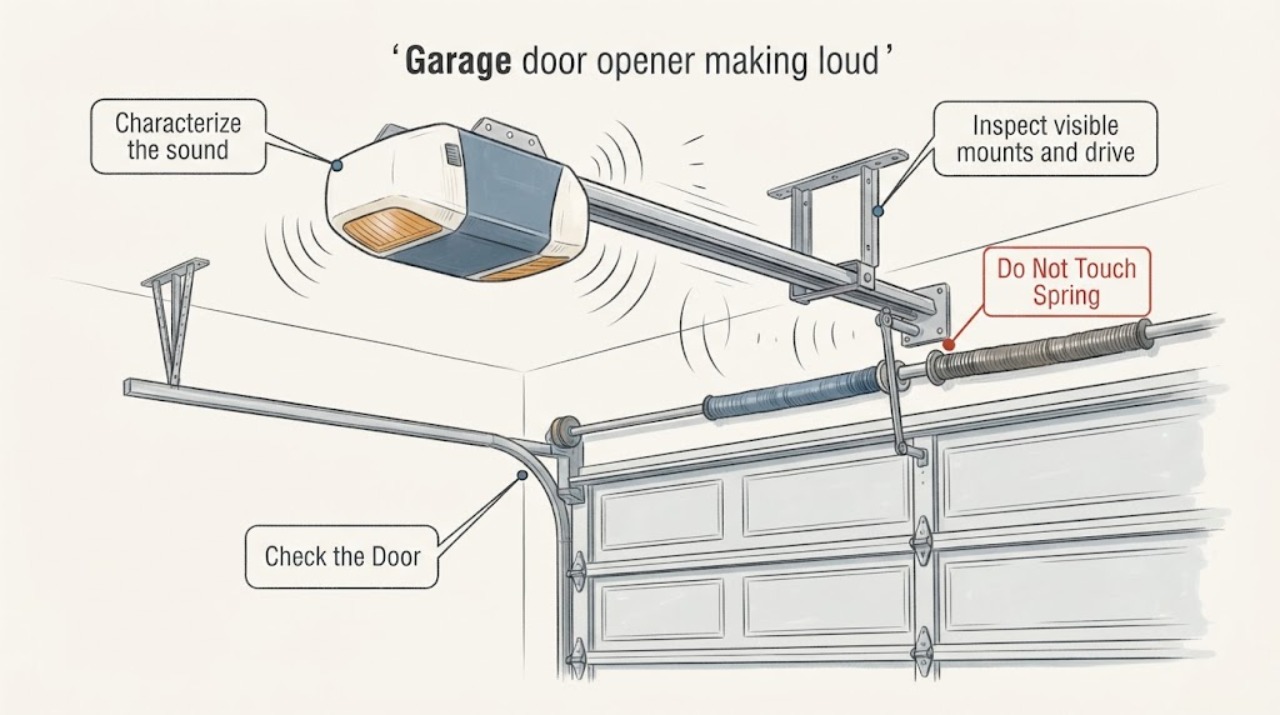
Garage door opener making loud noise: What to Check and What to Do Next
A new loud noise from a garage door opener is a safety clue, not just an annoyance. From the floor, note whether the sound is grinding, scraping, rattling, squeaking, or a low hum, and whether the door moves smoothly.
-
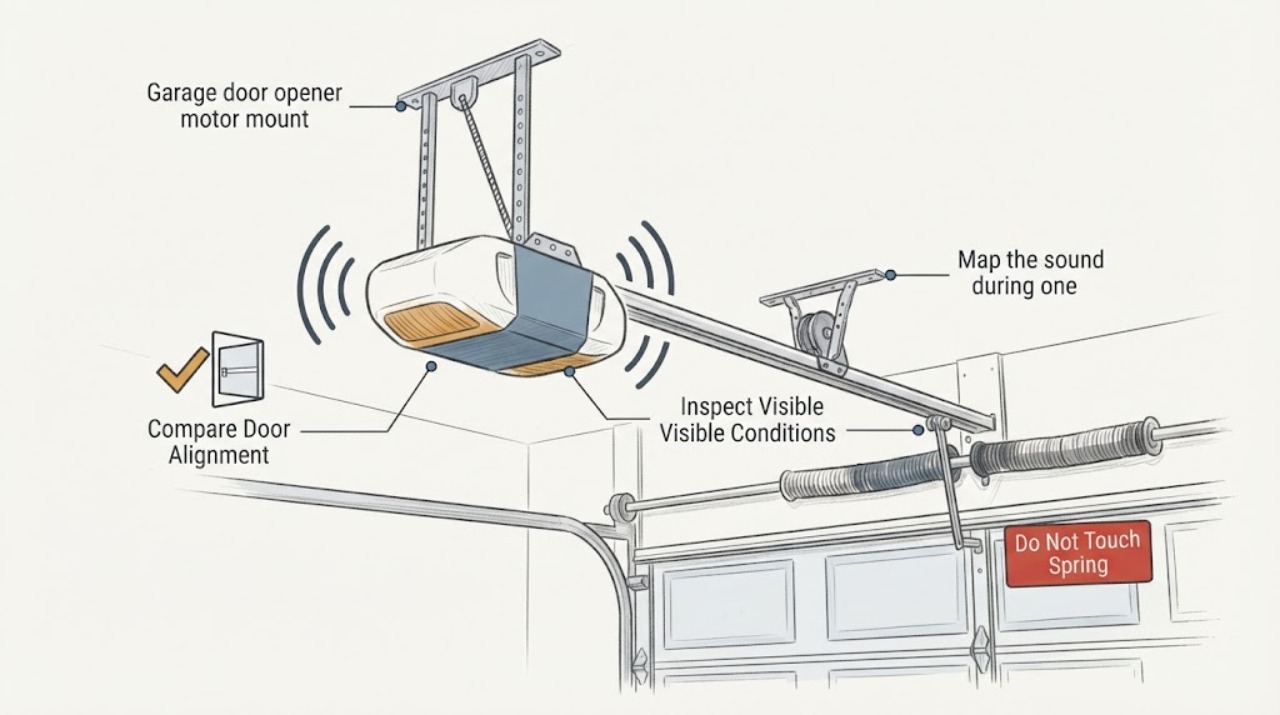
Garage door opener motor mount making loud noise: What to Check and What to Do Next
A loud garage-door opener may be transmitting vibration through its motor mount, but the same sound can come from the drive, rail, door hardware, or an unbalanced door. From a safe position on the garage floor, listen during one normal cycle, note where the sound starts, observe visible movement of the opener or support, and watch whether the door travels smoothly and stays aligned.
-
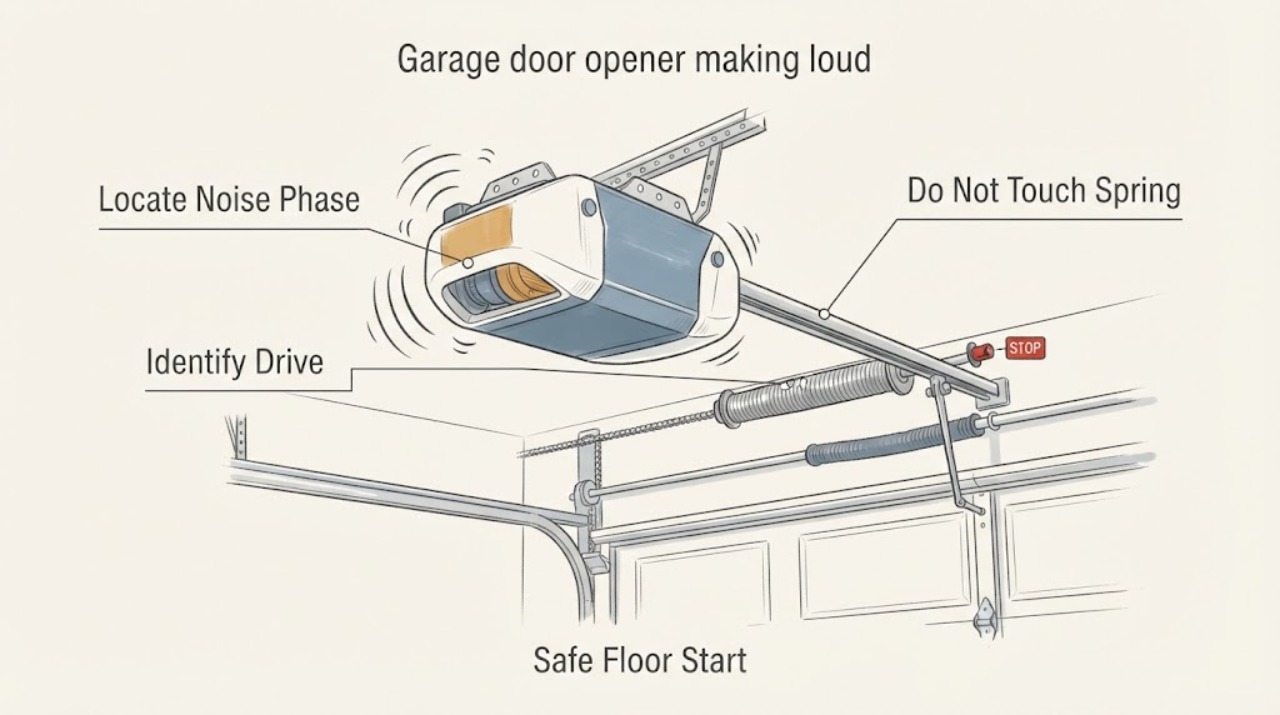
Genie garage door opener making loud noise: What to Check and What to Do Next
If a Genie garage door opener suddenly becomes loud, keep the door area clear and make only a floor-level observation of when the sound starts and where it comes from. Read the exact Genie model and identify the drive style from a safe label view; belt, chain, screw, and wall-mount systems have different normal characteristics and compatible guidance.
-
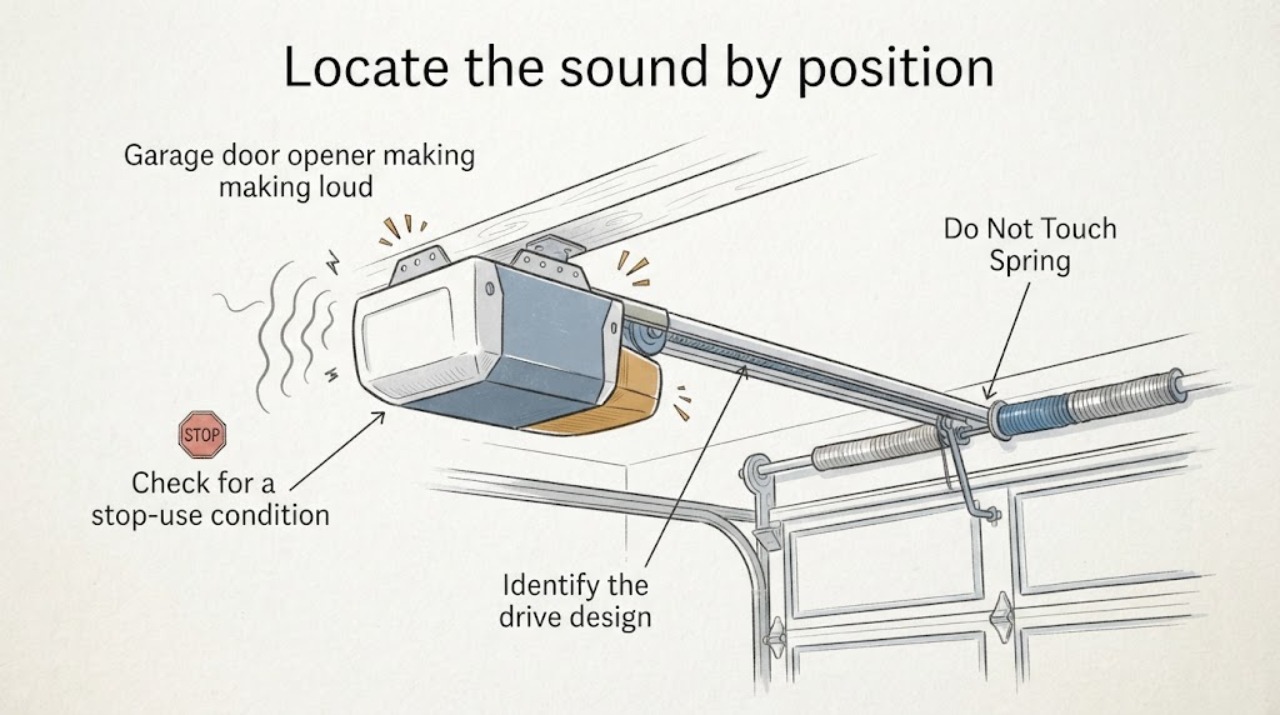
Liftmaster garage door opener making loud noise: What to Check and What to Do Next
For a LiftMaster opener that suddenly makes loud noise, first decide whether the sound comes from the moving door hardware, the opener rail and trolley, or the opener motor and drive. From the ground, record the sound, door position, visible movement, drive type, model number, and any myQ health report.
-
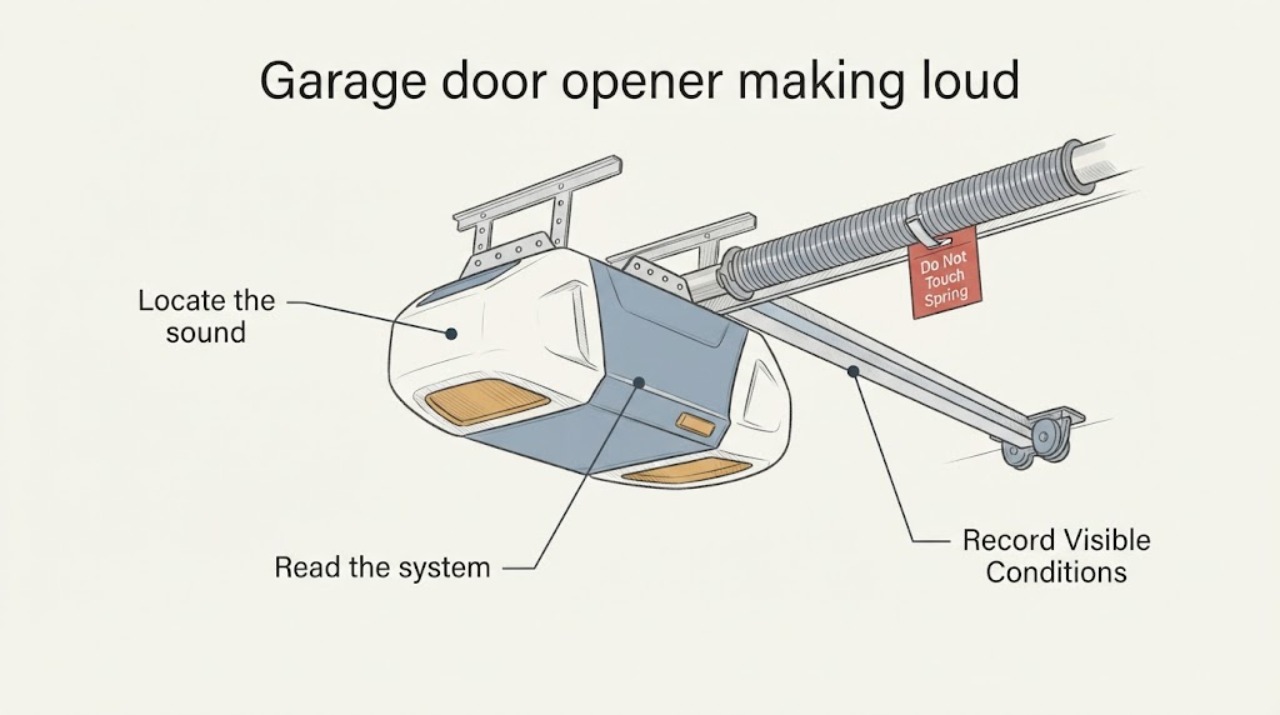
Wayne dalton garage door opener making loud noise: What to Check and What to Do Next
For a Wayne Dalton garage door opener making loud noise, first identify whether the sound comes from the opener, the door's visible track and rollers, or the Wayne Dalton counterbalance area, using only a safe ground-level view. Check the nameplate or manual for an iDrive, TorqueMaster, or TorqueMaster Plus configuration and record whether the door jerks, rubs, reverses, or appears unbalanced.