
On this page
Start here
Quick answer
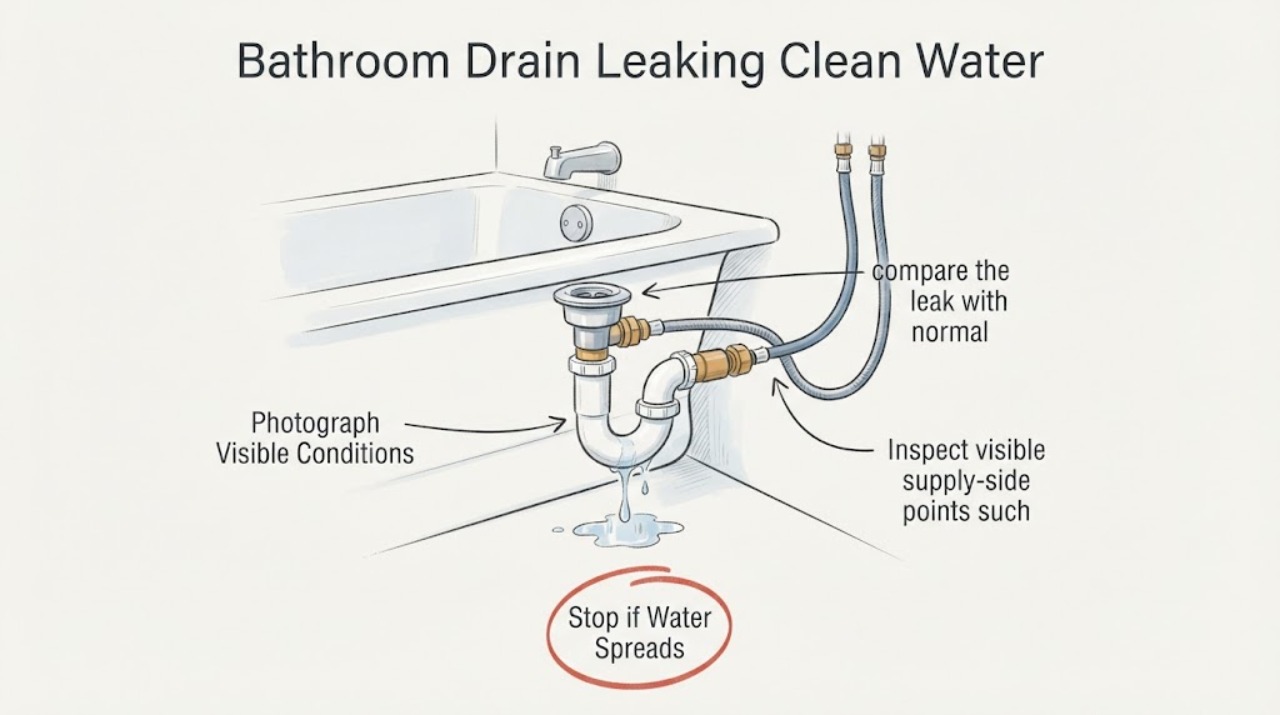
Stop using the bathroom fixture and find the first place that becomes wet, rather than assuming the visible puddle marks the source. Clean water that appears while the faucet or shower runs can come from a supply connection, faucet, shower arm, or diverter; water that appears only as the tub or sink drains points more toward the drain, overflow, trap, or a connection below the fixture. Turn off the local or whole-home water supply from a safe, dry location if flow continues. Do not open walls, loosen hidden fittings, or touch wet electrical equipment. If water is near an outlet, ceiling, light, or appliance, the leak is active or concealed, or the first wet point cannot be reached safely, stop and call a plumber; use an electrician for any electrical concern.
Work through in order
Diagnostic checks
Use only checks that match the exact appliance or system and its official guide.
-
Check 1
Stop the faucet, shower, toilet, or tub use and dry only the visible floor area that is safe to reach; mark or photograph the first wet edge without opening a wall or ceiling.
Expected result: The first wet point is at a supply connection or faucet, at the drain or overflow, below the fixture, or not visible from an accessible dry position.
Next step: Keep the fixture unused and follow the matching source-and-timing branch; call a plumber if the first wet point is hidden or unsafe to reach.
Why this matters
Why: The first wet point is more useful than the largest puddle: it separates clean-water supply leakage from drain, overflow, trap, concealed, or waterproofing leakage.
-
Check 2
From a dry position, compare the leak with normal fixture states without adding a large volume of water: note whether it appears when the supply is on, only while water drains, or even when all bathroom fixtures are off.
Expected result: Water appears during faucet or shower use, only during tub or sink discharge, after flushing a nearby toilet, or while no fixture is operating.
Next step: Stop using the fixture, shut off the relevant water supply from a safe dry location if flow continues, and arrange plumbing service for anything beyond a plainly visible accessible connection.
Why this matters
Why: Supply timing favors a faucet, valve, hose, shower arm, or diverter. Drain timing favors a strainer, overflow, trap, or discharge connection. Leakage while everything is off favors a pressurized supply leak or concealed line.
-
Check 3
Inspect visible supply-side points such as the faucet base, shower arm, diverter, shutoff area, and exposed connection for droplets, mineral trails, or water that starts above the drain; do not tighten hidden fittings by force.
Expected result: The leak begins at a faucet or diverter during shower use, at an exposed supply connection, or nowhere on the visible supply side.
Next step: Stop use and call a plumber if the leak persists, the connection is hidden, or tightening would require opening a wall or applying force; do not rely on a towel to contain an active leak.
Why this matters
Why: EPA notes that a bath or shower diverter can leak at the tub spout while diverting water, while an unseen supply leak may continue independently of drainage.
-
Check 4
Inspect visible drain-side points only after the fixture is no longer in use: the strainer, stopper, overflow cover, tub or sink underside if open and dry, and the ceiling or cabinet below if accessible without entering a hazardous area.
Expected result: Water appears at the drain or overflow while the fixture empties, below the trap or connection, or only through a ceiling or floor.
Next step: Keep the fixture unused, protect the area from further water, and arrange plumbing service; treat sewage-colored or foul water as contaminated rather than clean water.
Why this matters
Why: A drain, overflow, trap, or connection may be leaking under discharge. A ceiling or floor leak indicates concealed damage and does not justify opening the structure as a first step.
-
Check 5
With all fixtures off and only if the meter is safely accessible, check whether the home's water-use indicator changes; do not enter a wet area or touch a wet electrical panel to perform the check.
Expected result: The indicator moves while all fixtures are off, or it remains still while the bathroom leak appears only during discharge.
Next step: If flow continues, shut off the home or fixture supply from a safe dry location and call a plumber; if the meter is inconclusive, use the first-wet-point and timing evidence for service.
Why this matters
Why: Continued metered flow supports an active pressurized supply leak. A still meter with discharge-only leakage is more consistent with a drain, overflow, trap, or fixture-seal path.
-
Check 6
Check whether another nearby fixture changes the leak: do not run repeated tests, but record if a toilet flush, sink drain, shower, or tub discharge makes water rise, gurgle, or appear elsewhere.
Expected result: Only one fixture produces clean water, or multiple fixtures cause backflow, odor, slow drainage, or wetness at the same time.
Next step: Stop using the affected fixtures and call a plumber for shared symptoms, backflow, or odor; do not pour chemicals into the drain or continue flushing.
Why this matters
Why: A single fixture favors a local connection or seal. Multiple fixtures can indicate a shared drain or wastewater restriction, which can back up into the home and is not a clean-water repair.
-
Check 7
Prepare a plumber handoff with the first wet point, water appearance, fixture timing, meter observation, affected fixtures, location below or behind the bathroom, and any safe photos; do not dismantle hidden plumbing.
Expected result: The leak is active, concealed, recurring, associated with a shared drain, or stopped only after the water supply was isolated.
Next step: Keep the bathroom fixture unused and follow the plumber's water-isolation and drying instructions; involve an electrician if water contacted electrical equipment.
Why this matters
Why: The sequence helps distinguish supply, diverter, drain, overflow, trap, shared line, and concealed-water damage without destructive inspection.
Use your observations
Decision map
Find the observation that best matches what you see, then follow the next safe action.
-
PATH 01Next step
What you see
Clean water appears at a faucet, shower arm, diverter, or supply connection while water is being supplied, and the drain itself stays dry.
Do this next
Stop using the fixture, isolate its water supply if safely accessible, and call a plumber for a persistent, hidden, or pressurized leak.
Why this path and its safety boundary
Why it matters: A supply-side or diverter leak is more likely than a drain leak.
-
PATH 02Next step
What you see
Water appears only while the tub or sink drains, at the strainer, overflow, trap, or underside connection.
Do this next
Keep the fixture unused and arrange plumbing service; do not open walls, remove a hidden trap, or continue running water to reproduce it.
Why this path and its safety boundary
Why it matters: A drain-side seal, overflow, trap, or discharge connection may be leaking.
-
PATH 03Next step
What you see
Water appears while fixtures are off, the meter indicates continuing use, or the first wet point is behind a wall, under a floor, or above a ceiling.
Do this next
Shut off the water from a safe dry location, keep clear of wet structure, and obtain prompt plumbing service; do not open the structure yourself.
Why this path and its safety boundary
Why it matters: A pressurized or concealed supply leak is possible and may cause serious structural damage.
-
PATH 04Next step
What you see
Several fixtures drain slowly, gurgle, rise, or produce wastewater odor or backflow along with the bathroom leak.
Do this next
Stop using connected fixtures and call a plumber. Keep people away from wastewater and do not pour chemical products into the line.
Why this path and its safety boundary
Why it matters: A shared branch or main wastewater restriction may be causing a backup rather than a clean-water leak.
-
PATH 05Next step
What you see
Water is near an outlet, light, appliance, cord, or electrical panel, or the ceiling, floor, or wall shows active wetting or damage.
Do this next
Do not touch wet electrical equipment or switches. Leave or isolate utilities only from a safe dry location and obtain urgent plumbing and electrical help.
Why this path and its safety boundary
Why it matters: The leak has become an electrical, structural, or property-damage hazard.
Helpful context
Understand the symptom
Clean water does not identify the leak source
A bathroom puddle can travel along a tub edge, floor, pipe, cabinet, or ceiling before it becomes visible. A supply-side leak usually changes when the faucet, shower, or toilet is supplied with water; a drain-side leak usually changes when water is discharged. Compare those timings without creating a large test flow, and inspect the first wet point from a dry, safe position.
Protect the room before inspecting
Put down a dry towel only if it is safe to approach, keep people away from slippery flooring, and stop using the fixture. If water reaches an outlet, light, appliance, ceiling, or wiring, do not touch the wet equipment or switch. Isolate water or electricity only from a dry, safe location; otherwise leave the area and obtain professional help.
Why the first wet point matters
A wet faucet connection, shower arm, supply valve, or diverter points to clean water entering the room before it reaches the drain. A wet strainer, overflow cover, trap, or ceiling below while the fixture drains points to the discharge path. If no accessible point explains the leak, hidden plumbing or waterproofing may be involved and opening the wall can increase damage.
Safety boundary
Stop conditions
- Stop immediately for active flow, water through a ceiling or floor, wet structural material, fast-spreading water, or a leak that cannot be isolated safely.
- Stop for water near an outlet, light, appliance, cord, or electrical panel; do not touch wet electrical equipment or switches.
- Stop for sewage-colored or foul water, multiple fixtures backing up, chemical product in the drain, or any need to open a wall, ceiling, floor, or concealed connection.
- Do not keep running water to reproduce the leak, force fittings, dismantle a trap, pour drain chemicals, or use a fixture that is still leaking.
Only after diagnosis
Potential parts
- faucet, diverter, or supply seal
Consider only if a plumber confirms the clean-water leak starts at the faucet, diverter, valve, or an accessible supply connection.
Confirm fixture style, connection size, and installation requirements before selecting a replacement. - drain or overflow gasket
Consider only if qualified testing links leakage during discharge to the drain or overflow seal.
Fixture material and drain style vary; do not loosen hidden fittings or select a seal from appearance alone. - trap or drain connection
Consider only after a plumber identifies a damaged or loose trap or drain connection below the fixture.
Access, layout, and local requirements vary; concealed plumbing work should be performed by a qualified professional.
When checks do not resolve it
Need a professional?
Call a plumber promptly for any active or recurring bathroom leak, a hidden first wet point, leakage during drainage, a diverter or supply leak, water below the fixture, or a shared-drain symptom. Obtain urgent plumbing and electrical help for water near electrical equipment, concealed structural wetting, rapid flow, sewage backflow, or a leak that cannot be isolated safely.
Common questions
FAQ
How can I tell whether a bathroom leak is from the drain or the water supply?
Record when the first wet point appears. Water that starts while a faucet, shower, or supply valve is active favors the supply side; water that appears only while the tub or sink empties favors the drain, overflow, trap, or discharge connection.
Is water from a shower diverter always a drain leak?
No. A diverter can allow water to drip from the tub spout while water is directed to the showerhead. If water comes from a connection above the drain or continues independently of drainage, call a plumber to assess the supply or diverter.
What should I do if clean water reaches an outlet or light?
Stop using the fixture and do not touch wet electrical equipment or switches. Isolate utilities only from a safe, dry location; obtain urgent plumbing help and involve an electrician for the electrical concern.
Should I open the wall to find a bathroom leak?
No. Record the first accessible wet point and timing, isolate water if safe, and call a plumber for concealed leakage. Opening a wall or ceiling can increase damage and may expose wiring or contaminated water.
Read the exact guide
Official sources
- Household Hazardous Waste (HHW)U.S. Environmental Protection Agency · Household hazardous-product handling, drain disposal, and chemical-mixing safety
- Home MaintenanceU.S. Environmental Protection Agency · Household water-leak detection, prompt repair, water meters, and plumbing maintenance
- Sanitary Sewer Overflows (SSOs)U.S. Environmental Protection Agency · Wastewater blockages, backups, contamination, property damage, and public-health risk
- Bath and Shower DivertersU.S. Environmental Protection Agency · Bath and shower diverter flow and leakage behavior
Community feedback
Share a repair observation
Share a plain-text repair observation. Accepted observations are published automatically; this page may take a moment to update.