
On this page
Start here
Quick answer
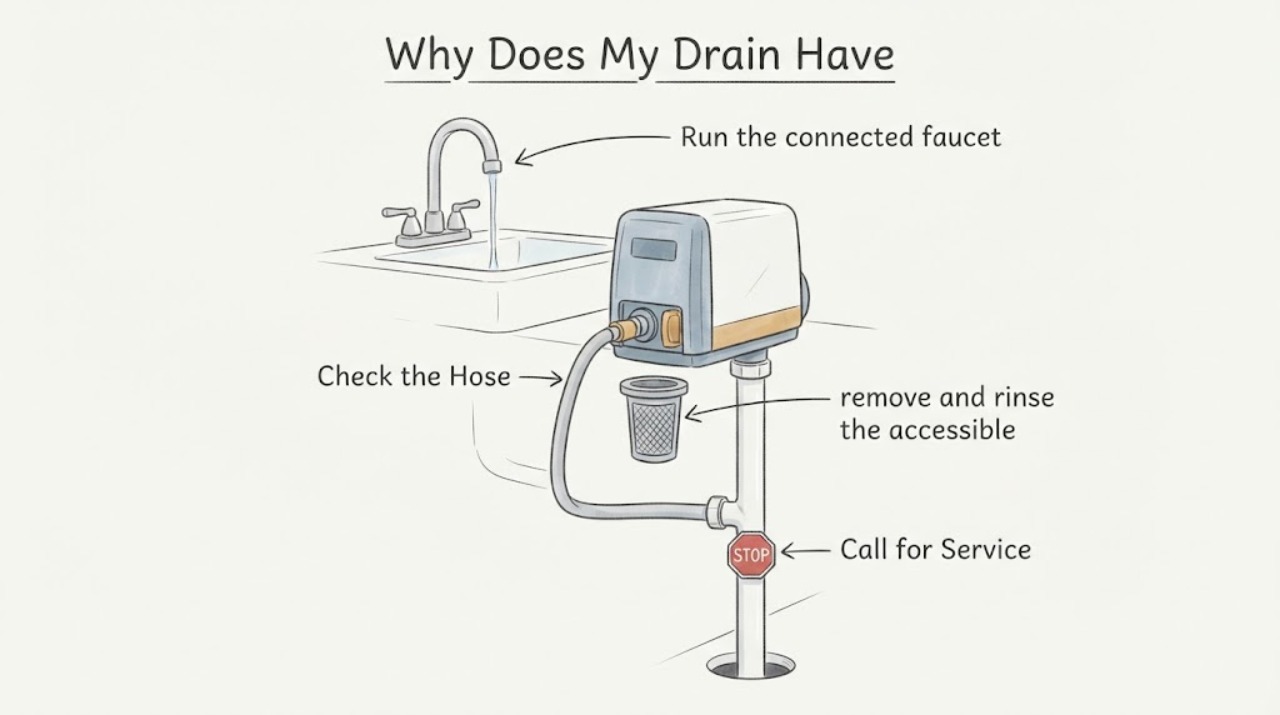
A drain does not normally have incoming water pressure; it carries water away by gravity and a vented drainage path. First decide whether the connected faucet or shower has a weak stream, or whether the basin, tub, or floor drain empties slowly. Weak incoming flow points to a fixture screen, supply, leak, or whole-home pressure issue. A normal faucet stream with slow draining, gurgling, standing water, or a backup points to an obstruction, vent, septic, or shared drain problem instead. Stop using the fixture and call a licensed plumber for sewage backup, concealed leaks, or a problem affecting multiple drains.
Work through in order
Diagnostic checks
Use only checks that match the exact appliance or system and its official guide.
-
Check 1
Run the connected faucet or shower into the drain for a short test while watching both the stream and the drain. Compare the stream with another nearby fixture that normally has good flow.
Expected result: The stream is weak before it reaches the drain, or the stream is normal but water pools and leaves slowly.
Next step: For a weak stream, continue with the fixture and whole-home pressure checks. For normal stream with slow drainage, skip pressure adjustments and inspect only the accessible drain opening and backup signs.
Why this matters
Why: A weak stream is a supply-side flow complaint; a normal stream with pooling is a drain-flow complaint. Treating a slow drain as a pressure problem can send the diagnosis to the wrong side of the plumbing.
-
Check 2
Compare hot and cold flow at the affected fixture, then check one other indoor fixture and an outdoor hose connection if available. Note whether the symptom began after water service was shut off or plumbing work was done.
Expected result: Only one fixture or one temperature is weak, or every fixture including the outdoor connection is weak.
Next step: For one weak fixture, inspect its accessible aerator or screen without opening the supply line. For whole-home weakness, measure service pressure or contact the water utility or a licensed plumber rather than changing a drain component.
Why this matters
Why: A single-fixture or single-temperature problem keeps the faucet screen, valve, cartridge, or local connection in focus. Weak flow throughout the home points farther upstream to service pressure, a leak, a pressure-regulating device, or a utility condition.
-
Check 3
If the issue is weak faucet or shower flow, remove and rinse the accessible aerator or showerhead screen according to the fixture instructions, then flush the open fixture briefly before reinstalling the screen. Do not remove a flow restrictor or disassemble the valve.
Expected result: Mineral scale or debris is visible, and flow improves, stays weak, or becomes uneven after the screen is cleaned.
Next step: Keep the cleaned screen in place and check for leaks. If flow remains weak, stop disassembling the fixture and arrange manufacturer-specific or licensed-plumber diagnosis.
Why this matters
Why: Improvement identifies a local restriction at the outlet. No improvement means the restriction may be farther upstream or the fixture's internal parts may need model-specific service; it does not show that the drain has low pressure.
-
Check 4
If the complaint is whole-home weak supply flow, turn off all water-using fixtures and systems, attach a water-pressure test gauge to an outdoor hose bib, and open that bib fully for the reading. Do not remove the pressure-regulating valve or alter a shutoff to chase a reading.
Expected result: The incoming reading is much lower than 45 psi, much higher than 60 psi, or normal while only one fixture remains weak.
Next step: Document the reading and which fixtures were affected. Have a licensed plumber investigate a low or high whole-home reading, and have the utility check for a service condition when the problem is widespread or sudden.
Why this matters
Why: EPA identifies 45 to 60 psi as the range in which water-using fixtures operate best. A low reading can warrant finding a leak; a high reading can warrant professional pressure-regulating-valve work. A normal reading with one weak fixture returns the diagnosis to that fixture rather than the drain.
-
Check 5
For a slow drain, inspect the visible stopper, strainer, and drain opening for hair, food, or other reachable debris while wearing gloves; observe whether other drains gurgle, back up, or drain slowly at the same time.
Expected result: Visible debris is present, or multiple drains are slow, gurgling, backing up, or surrounded by standing water or foul odor.
Next step: Clear only reachable debris and retest with clean water. If more than one drain is affected, water backs up, sewage is present, or the symptom returns, stop using the affected fixtures and call a licensed plumber or septic service provider.
Why this matters
Why: Reachable debris can restrict one opening. Multiple slow or gurgling drains, backups, standing water, or sewage odor indicate a shared drain, vent, or septic problem that an opening-level cleaning cannot establish or safely solve.
Use your observations
Decision map
Find the observation that best matches what you see, then follow the next safe action.
-
PATH 01Next step
What you see
The faucet or shower stream is weak but the drain empties normally
Do this next
Treat it as a supply or fixture-flow issue: compare fixtures, clean an accessible screen, and test service pressure if the weakness is widespread.
-
PATH 02Next step
What you see
The faucet stream is normal but the basin, tub, or floor drain empties slowly
Do this next
Treat it as a drainage-flow issue: inspect only the visible opening and stop if the restriction is not reachable or the symptom returns.
-
PATH 03Next step
What you see
All fixtures, including an outdoor hose connection, have weak flow
Do this next
Record the service-pressure reading if it can be taken safely, then contact the water utility or a licensed plumber for a leak, pressure-regulating, service-line, or supply investigation.
-
PATH 04Next step
What you see
Several drains are slow or gurgling, wastewater backs up, or there is standing water or sewage odor
Do this next
Stop using affected fixtures and call a licensed plumber or septic system service provider. Avoid contact with sewage and do not keep adding water to test the system.
Helpful context
Understand the symptom
The important distinction
People often call any weak or slow plumbing symptom low pressure. A drain itself is not a pressurized supply outlet. If the water comes out of the faucet normally but remains in the basin, the useful diagnosis is slow drainage, not low supply pressure. If the faucet stream is weak before water reaches the drain, test the supply side instead.
Stay on the accessible side
These checks are limited to observing flow, cleaning a visible screen or strainer, and looking for visible leaks. Do not open a wall, disconnect a pressurized line, enter a tank, or use a chemical cleaner when water is backing up. Sewage should not be touched; arrange professional cleanup and plumbing or septic help.
Only after diagnosis
Potential parts
- faucet or shower aerator screen
Consider this only if one connected fixture has weak flow and its accessible screen is damaged or remains restricted after cleaning.
Match the fixture model, thread, and flow specification; do not assume a screen will correct a whole-home pressure problem or a slow drain. - water pressure test gauge
Use a gauge only when the symptom is weak supply flow at multiple fixtures and an incoming service-pressure reading is needed before professional diagnosis.
Use the gauge only at an accessible hose bib and follow its instructions; pressure-regulating-valve adjustment belongs to a qualified professional.
When checks do not resolve it
Need a professional?
Use professional service for persistent low flow, pressure-regulating or concealed-line work, repeated drain blockage, multiple affected fixtures, sewage backup, or suspected septic malfunction.
Common questions
FAQ
Can a drain itself have low water pressure?
Usually no. A drain carries water away rather than supplying it under pressure. Check whether the connected faucet or shower stream is weak, or whether a normal stream is simply draining slowly; those are different troubleshooting paths.
Why is my drain slow when the faucet pressure seems normal?
A normal stream with slow emptying points toward a visible drain restriction, shared drain, vent, or septic-related problem rather than low incoming pressure. Inspect only the accessible opening and call a plumber if the problem returns or affects multiple drains.
What service-pressure reading should I expect?
EPA says residential water-using fixtures operate best with incoming pressure between 45 and 60 psi. Test at an accessible hose bib with all water use off; have a professional investigate readings much below or above that range.
When should I stop using the drain?
Stop when wastewater backs up, sewage is present, several drains are slow or gurgling, standing water or sewage odor appears, or a concealed leak is suspected. Avoid contact with wastewater and arrange licensed plumbing or septic service.
Read the exact guide
Official sources
- Home MaintenanceU.S. Environmental Protection Agency · Incoming home water pressure and visible plumbing leak checks when a connected fixture has weak flow
- Resolving Septic System MalfunctionsU.S. Environmental Protection Agency · Drainage symptoms that involve multiple fixtures, wastewater backup, standing water, gurgling, or sewage odor
- Why does my faucet have low water pressure?Delta Faucet · A single kitchen, lavatory, tub, or shower faucet with reduced flow
- How to Fix Low Pressure in Your ShowerDelta Faucet · Distinguishing weak fixture flow from a pressure complaint and checking accessible showerhead screens
Community feedback
Share a repair observation
Share a plain-text repair observation. Accepted observations are published automatically; this page may take a moment to update.