
On this page
Start here
Quick answer
A bang described as drain water hammer is often not coming from the drain itself. True water hammer is a pressure shock in a pressurized supply pipe when a fast-closing valve stops moving water; a thump that occurs as a sink, washer, or dishwasher drains can instead be noisy drainage, pipe contact, a loose support, or a vent or flow problem. First match the sound to the exact fixture and moment in the cycle, then inspect only visible, reachable areas for leaks or movement. Do not open walls, loosen pressurized fittings, adjust a pressure device, or install an arrestor yourself. Persistent or forceful banging, any leak or water damage, repeated drain backup, or uncertainty about the pipe path needs a qualified plumber.
Work through in order
Diagnostic checks
Use only checks that match the exact appliance or system and its official guide.
-
Check 1
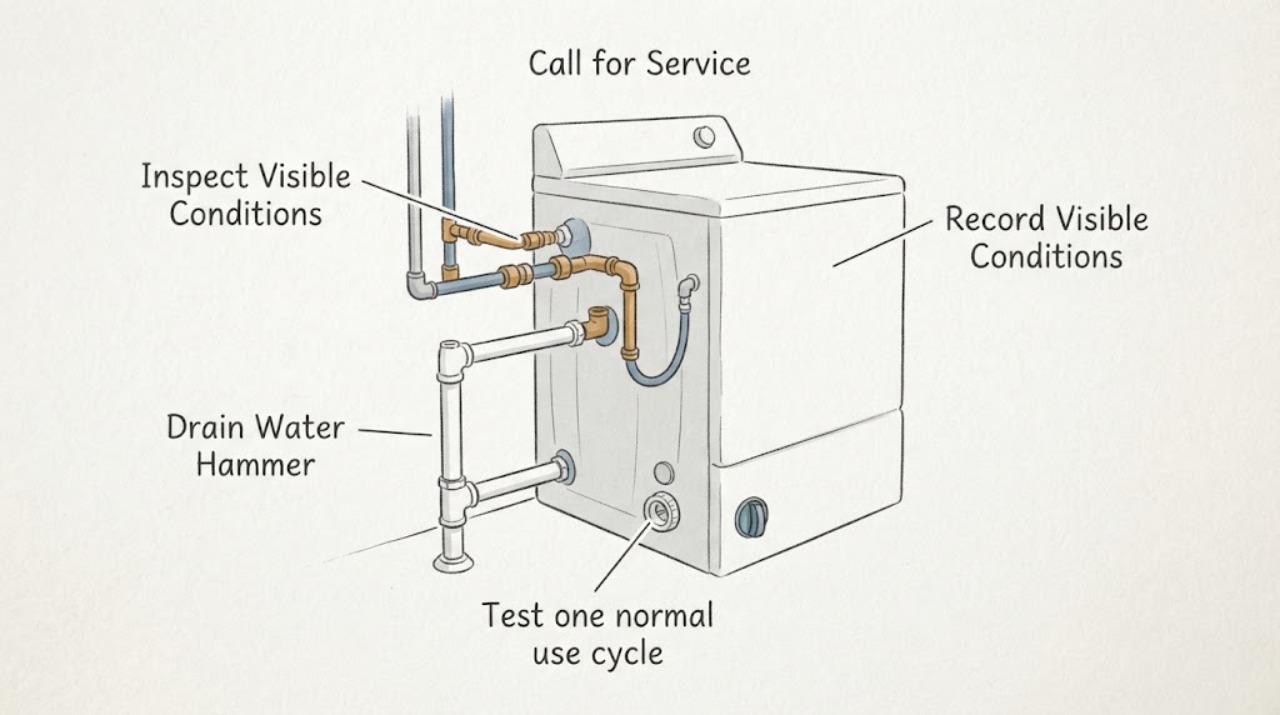
Record exactly when the bang occurs: while a faucet or appliance is filling, immediately after a faucet or appliance valve closes, when a drain begins or finishes carrying water, or when a pump stops. Note whether the sound is at the fixture, along an exposed pipe, or behind a wall, without opening any enclosure.
Expected result: The sound follows a fast valve closure during filling, follows the start or end of draining, or cannot be tied to one fixture or moment.
Next step: Use the matching supply or drainage branch below. If the trigger remains unclear, stop repeated testing and arrange a plumber's inspection rather than guessing at a hidden component.
Why this matters
Why: A bang immediately after a supply valve closes supports a supply-side water-hammer path. A thump during drainage keeps noisy drainage, pipe contact, venting, or a flow restriction in consideration. A whole-house or unexplained pattern is not specific enough for a part diagnosis.
-
Check 2
From a safe, accessible position, inspect the visible drain and supply piping below the affected fixture or in an open utility area. Look for a drip, mineral or rust deposit, damp cabinet or wall, a pipe visibly touching framing, or a pipe that moves when the fixture operates; do not remove fittings or supports.
Expected result: There is moisture, a deposit around a joint, visible pipe movement, a sag, or contact with a cabinet, stud, floor, or other building surface; or the visible piping stays dry and stable.
Next step: If there is a leak or water damage, stop using the affected fixture and call a plumber. If the area is dry, continue with the trigger-specific check; do not add makeshift packing or tighten a pressurized connection.
Why this matters
Why: Moisture or deposits can indicate a leak, while movement or contact can transmit and amplify vibration. A dry, stable visible section does not clear concealed piping, a valve, a drain restriction, or a vent problem.
-
Check 3
If the noise follows a faucet, test one normal use cycle while closing the faucet gradually rather than snapping it shut, staying clear of any exposed moving pipe. Compare the sound with the same fixture opened and closed normally; do not change the home's pressure regulator or any hidden valve.
Expected result: The bang becomes weaker when the flow stops more gradually, remains the same, or appears only when an automatic washer or dishwasher valve operates.
Next step: Limit repeated cycles and document the fixture, timing, and sound for a plumber. A professional can determine whether an approved arrestor, pressure diagnosis, or pipe-support correction is appropriate; do not install or size one from the noise alone.
Why this matters
Why: A response to closing speed supports a supply-side pressure transient. An appliance-only pattern keeps a fast-closing appliance valve or its nearby piping in focus. No change does not prove the noise is in the drain, because pipe supports, pressure, and concealed fittings can still transmit sound.
-
Check 4
If the bang occurs as a sink, shower, washer, or dishwasher drains, observe the drain behavior without adding chemicals or opening the trap. Note whether water drains freely, gurgles, rises, backs up, or leaves a repeating thud as flow hits a change in direction; stop if wastewater approaches an overflow point.
Expected result: Drainage is slow or backs up, the fixture gurgles, the noise repeats as water leaves, or the drain flows normally with only a single isolated thump.
Next step: Stop using the fixture if water backs up or leaks, and arrange a plumber for the drain path and vent assessment. If drainage is normal, record the cycle and continue only with safe visual observation; do not push a tool into a concealed drain or cleanout.
Why this matters
Why: Slow flow, gurgling, or backup makes a restriction, venting issue, or drainage configuration more important than a supply-side water hammer diagnosis. A single thump during otherwise normal drainage can be pipe impact or vibration, but it still does not identify a hidden failure by itself.
-
Check 5
Compare the symptom across nearby fixtures without dismantling anything: note whether only one fixture, one appliance, several fixtures on one branch, or the entire home produces the bang. Stop the comparison if the noise is forceful, the piping visibly jumps, or any leak appears.
Expected result: Only one fixture or appliance triggers it, several fixtures share it, or the sound is forceful or accompanied by a leak or water damage.
Next step: Give the plumber the trigger list, locations, drainage behavior, and any visible evidence. Stop using the affected fixtures for a leak, backup, severe vibration, or water damage instead of carrying out more tests.
Why this matters
Why: A single trigger helps a plumber focus on that valve, drain connection, or nearby support. Several fixtures or a whole-home pattern points toward shared piping, pressure, or a common drainage path. Force, leakage, and damage indicate possible system stress rather than harmless noise.
Use your observations
Decision map
Find the observation that best matches what you see, then follow the next safe action.
-
PATH 01Next step
What you see
The bang occurs immediately after a faucet or appliance supply valve closes, especially during washer or dishwasher filling
Do this next
Treat it as a likely supply-side water-hammer path. Ask a qualified plumber to check pressure, fast-closing valves, pipe supports, and whether an approved water-hammer arrestor is required and correctly located; do not install one yourself.
-
PATH 02Next step
What you see
The thump happens as a fixture drains, with gurgling, slow flow, rising water, or backup
Do this next
Stop using that fixture if water may overflow and arrange a plumber to evaluate the accessible drain path, venting, and concealed obstruction. Do not open a cleanout or remove a trap when wastewater may be under pressure or may spill.
-
PATH 03Next step
What you see
The drainage cycle is normal but an exposed pipe moves or touches the building
Do this next
Document the location and ask a plumber to correct the support or isolation using plumbing-appropriate materials. Do not wedge improvised material into a pressurized connection or inside a wall.
-
PATH 04Next step
What you see
Only one fixture or appliance triggers the noise and there is no visible leak
Do this next
Limit repeated operation and provide the trigger and timing to a plumber. The fixture valve, nearby supply piping, drain connection, or support may need diagnosis; the noise alone is not enough to select a replacement part.
-
PATH 05Next step
What you see
There is a leak, damp wall or cabinet, sewage backup, forceful pipe movement, water damage, or an unexplained whole-home pattern
Do this next
Stop using the affected fixture or fixtures, use the local accessible shutoff only if it can be operated without entering a hazardous area, and arrange prompt qualified plumbing service. Do not open walls or make pressure adjustments.
Helpful context
Understand the symptom
Why a drain can be blamed for a supply-side noise
The word water hammer is commonly used for any plumbing bang, but the mechanism matters. Utah's plumbing training material describes water hammer as pressure released when a fast-moving supply flow meets a suddenly closed valve, often at a washing machine or dishwasher. The same material describes drainage noise when wastewater strikes a fitting or when a drain pipe vibrates against a building surface. A sound heard near a drain may therefore be transmitted from a nearby supply line or may be a separate drainage noise; timing and location are more useful than the label alone.
Keep the checks non-invasive
Use your ears, the fixture controls, and a flashlight from a safe standing position. Do not remove a trap, open a cleanout, pull a wall or ceiling panel, loosen a threaded fitting, change a pressure setting, or touch concealed or pressurized piping just to chase the noise. A visible leak, damp building material, sewage backup, or forceful movement changes this from a noise investigation into a repair call.
Only after diagnosis
Potential parts
- water-hammer arrestor
Consider this only if a qualified plumber confirms that the noise is a supply-side pressure transient caused by a fast-closing valve and identifies the correct installation location.
The plumber must confirm the piping arrangement, valve type, approved device standard, location, and local requirements; do not assume a generic arrestor fits a drain or every supply system. - plumbing pipe support or isolation material
Consider this only if inspection finds an accessible pipe that moves or contacts framing and a plumber confirms that support or isolation is the cause of the transmitted noise.
Use material suited to the pipe material, location, movement, and code requirements; do not add a makeshift wedge inside a wall or against a pressurized joint.
When checks do not resolve it
Need a professional?
Use professional plumbing service for persistent or forceful banging, appliance-triggered supply noise, drainage thumps with slow flow or backup, leaks, pipe movement, concealed piping, or any repair involving pressure devices, arrestors, cleanouts, or wall access.
Common questions
FAQ
Is water hammer actually coming from the drain?
Often it is not. True water hammer is a pressure event in a supply pipe after a fast-closing valve, while a drain can make a separate thump when wastewater hits fittings or a pipe vibrates against the building. Match the sound to the fixture and exact point in the cycle before choosing a repair path.
Why does the noise happen when my washer or dishwasher runs?
These appliances can use fast-closing supply valves, so a bang immediately after filling stops supports a supply-side water-hammer path. If the sound occurs while the appliance is emptying, slow drainage, pipe impact, or another drainage issue remains possible.
Can I install a water-hammer arrestor on the drain myself?
Do not install one based only on the word water hammer. Arrestors address supply-side pressure surges, not every drain noise, and plumbing guidance says approved devices must be correctly located and installed to their specifications. Have a qualified plumber identify the pipe and device first.
When is a drain bang an urgent plumbing problem?
Stop using the fixture and arrange prompt service for a leak, wet wall or cabinet, sewage backup, rapidly worsening water damage, forceful pipe movement, or a noise affecting many fixtures. A recurring but less severe bang still deserves a plumber when the source is concealed or the drain is slow or gurgling.
Read the exact guide
Official sources
- Section 890.1210 Design of a Building Water Distribution SystemIllinois Department of Public Health · The opened code page provides a jurisdiction-specific example that water supply systems use air chambers, approved mechanical devices, or water-hammer arrestors, with manufacturer installation specifications followed.
- Plumbing SystemsBay County, Michigan · The opened county plumbing guidance covers water-hammer symptoms in supply lines, visible leak and weakness checks, and the need for professional help for air chambers or persistent conditions.
- Introduction to Continuing Education Class on What Can Go Wrong? [Common Plumbing Problems] for Utah Plumbers (Video)State of Utah · The opened Utah plumbing training material distinguishes drainage impact and vibration noise from supply-side water hammer, and describes arrestor placement near fast-closing valves.
Community feedback
Share a repair observation
Share a plain-text repair observation. Accepted observations are published automatically; this page may take a moment to update.