
Repair problem
Water Hammer Troubleshooting Guides
Published FixGraph guidance for diagnosing and responding to water hammer.
Matching published guides
Choose a guide that matches the service, equipment, and conditions you are seeing.
-
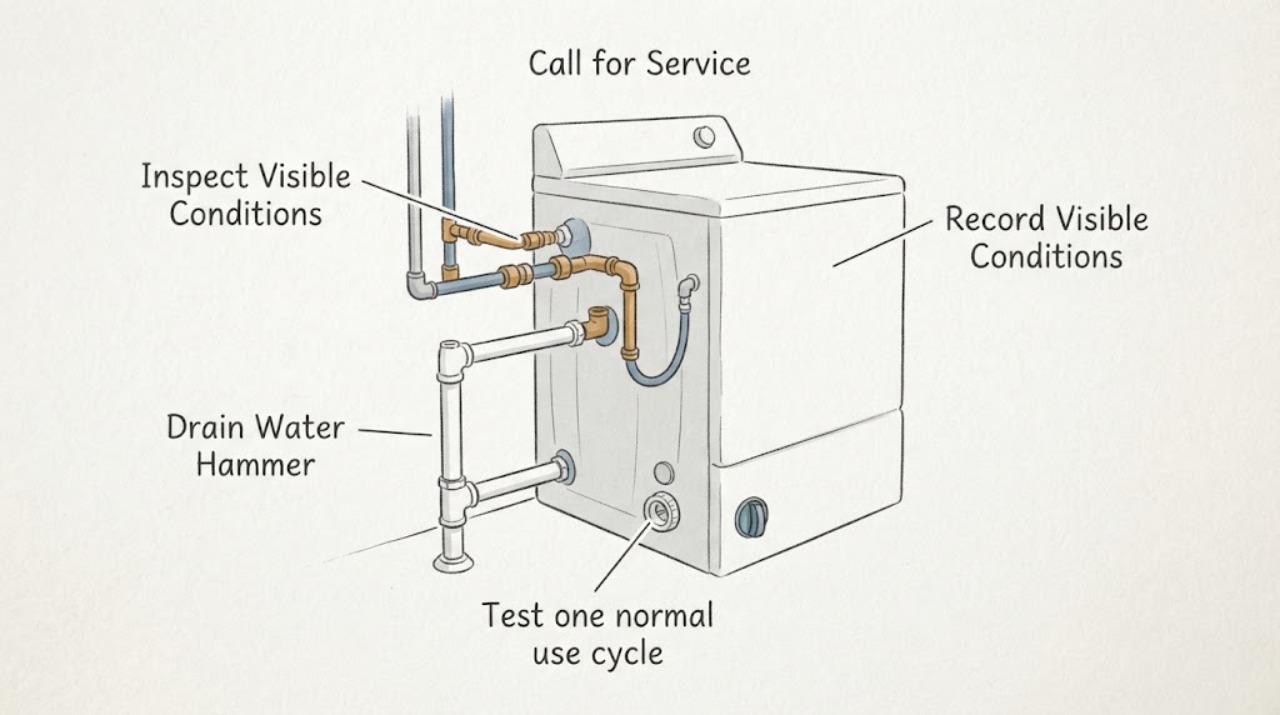
Drain Water Hammer: Identify the Noise Safely
A bang described as drain water hammer is often not coming from the drain itself. True water hammer is a pressure shock in a pressurized supply pipe when a fast-closing valve stops moving water; a thump that occurs as a sink, washer, or dishwasher drains can instead be noisy drainage, pipe contact, a loose support, or a vent or flow problem.
-
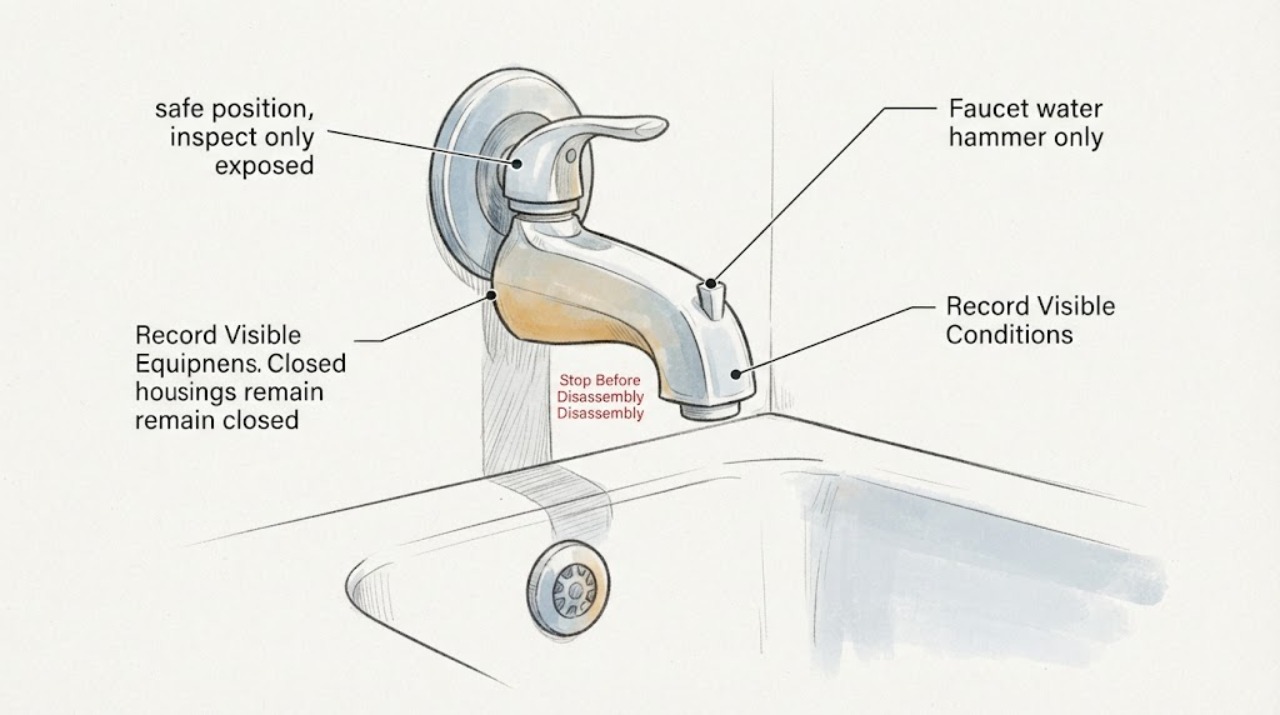
Faucet water hammer only in the bathtub: trace the local pipe noise safely
When a water hammer occurs only at the bathtub, first note whether one sharp knock happens as the faucet closes or whether the pipes keep vibrating. A quick valve closure, a loose local pipe support, a worn faucet washer or seal, a restriction, or a local pressure issue can all make a bathtub branch louder than the rest of the home.
-
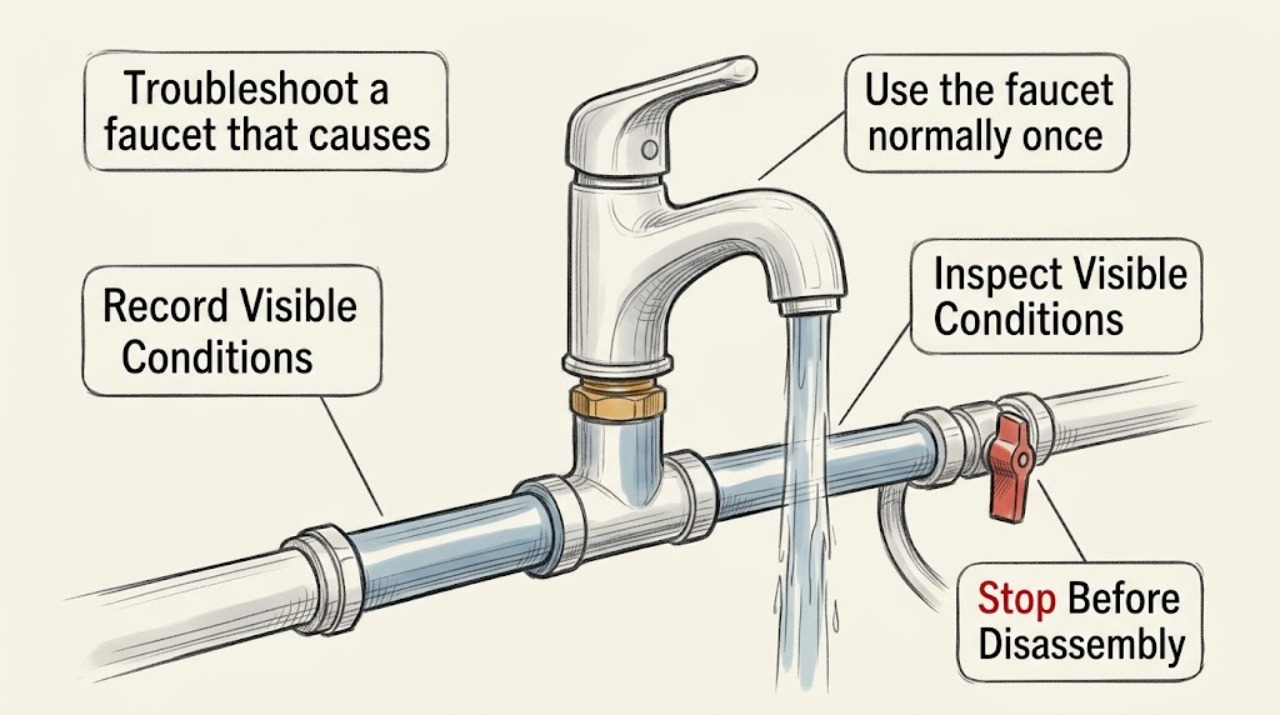
How to troubleshoot a faucet that causes water hammer
A bang that happens immediately when a faucet closes is usually a pressure shock in the water-supply piping, especially when a quick-closing valve stops moving water abruptly. First separate that trigger from a noise that occurs only while water is draining, then note whether the sound is limited to one faucet or affects several fixtures.
-
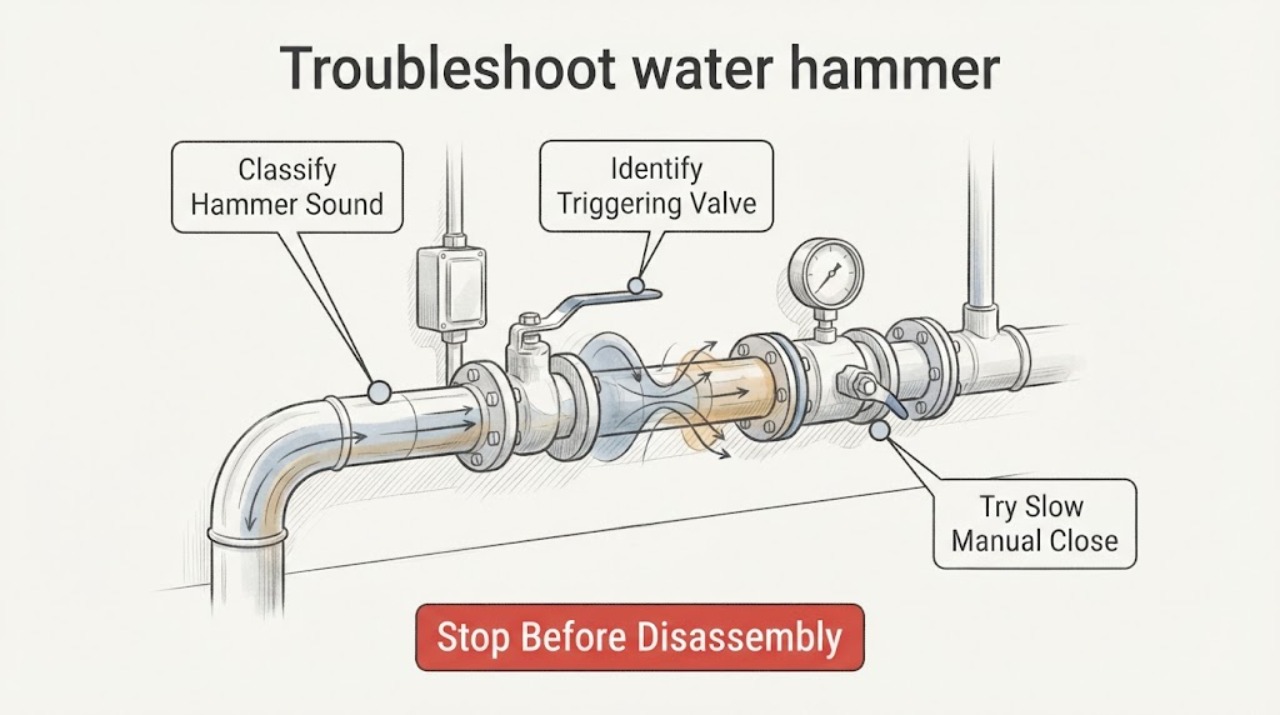
How to troubleshoot water hammer in a pipe
Water hammer is usually a sharp bang, knock, or pipe vibration when moving water stops or changes direction quickly, often as a valve closes. Note which faucet, toilet, washer, dishwasher, or automatic valve triggers it, try closing a manual valve more slowly, and inspect only accessible pipe supports and joints for movement or leaks.
-
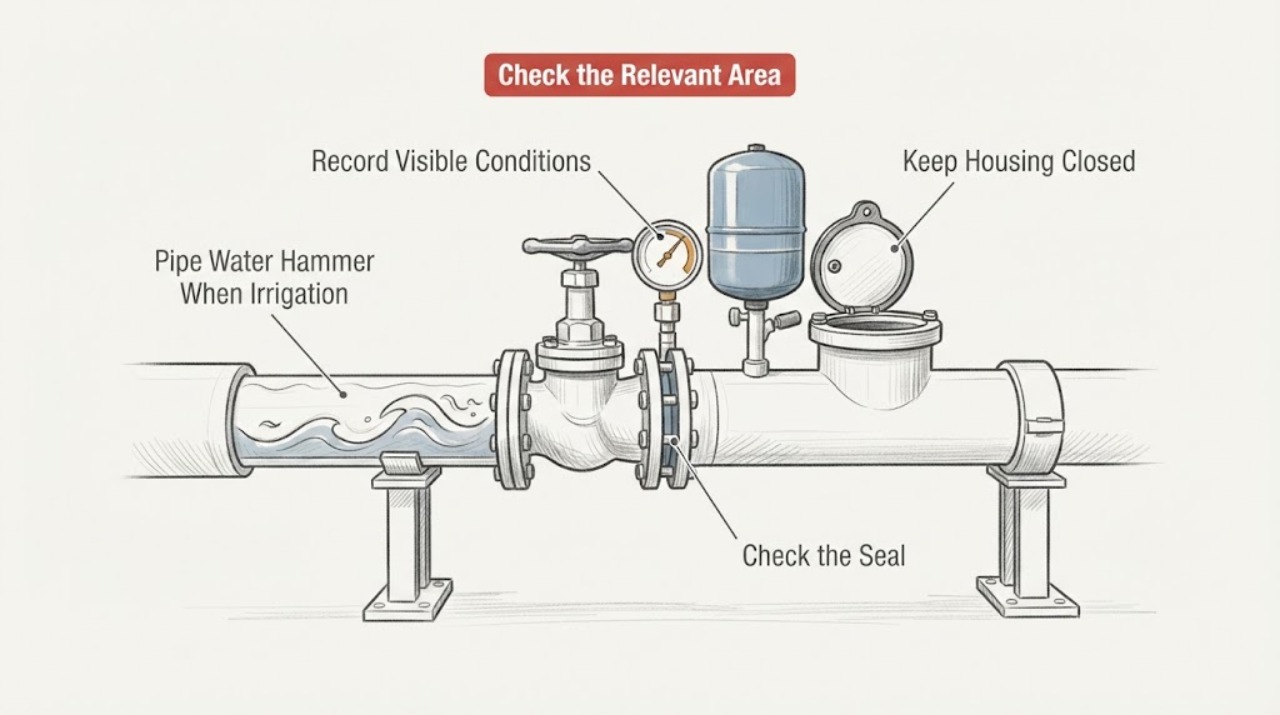
Pipe Water Hammer When Irrigation Shuts Off: Safe Checks and Valve Control
A bang, thump, or pipe movement exactly when an irrigation zone or pump stops is usually a water-hammer or surge event: moving water is stopped or changes speed too quickly, creating a pressure wave. From a dry, safe location, note which zone, valve, or pump action triggers it, where the sound is loudest, whether pipes move or leak, and whether the event occurs at every shutoff or only one zone.
-
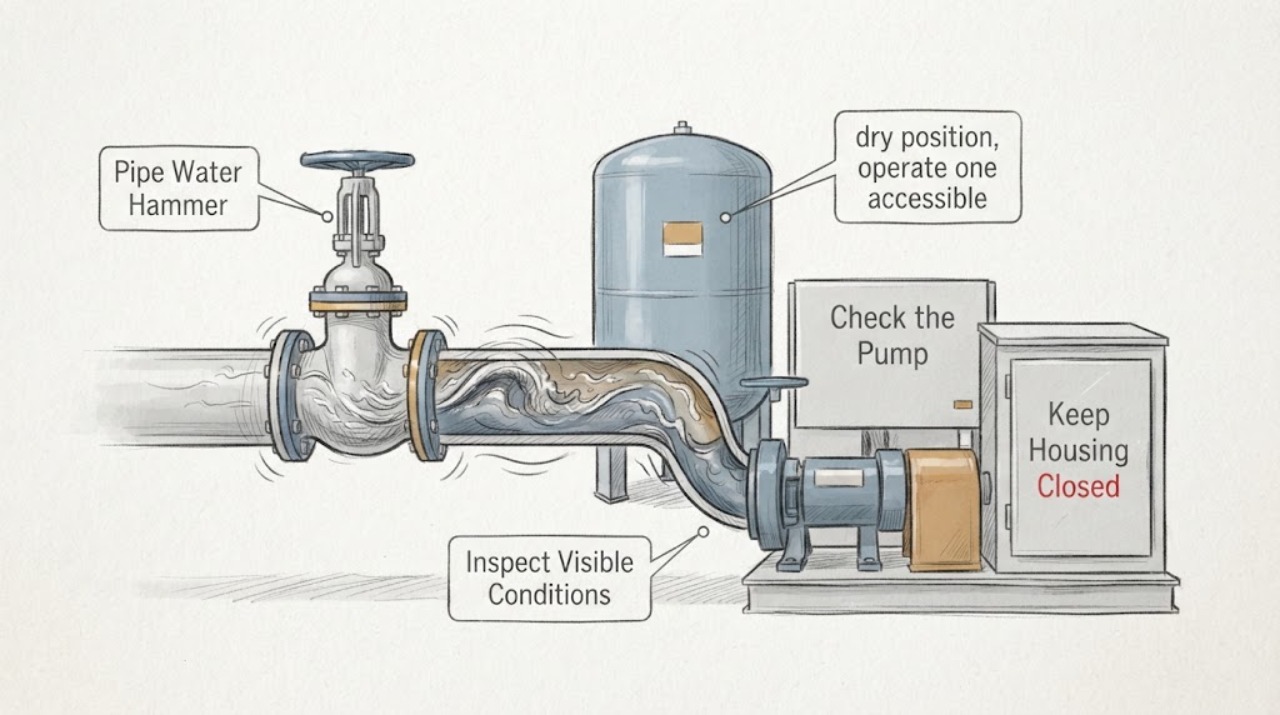
Pipe Water Hammer: Pressure Valve and Tank Checks
A bang or thump when a faucet, appliance valve, or toilet valve closes is usually a pressure surge caused by fast-changing water flow. First identify the exact valve and whether the sound is on cold water, hot water, or both.
-
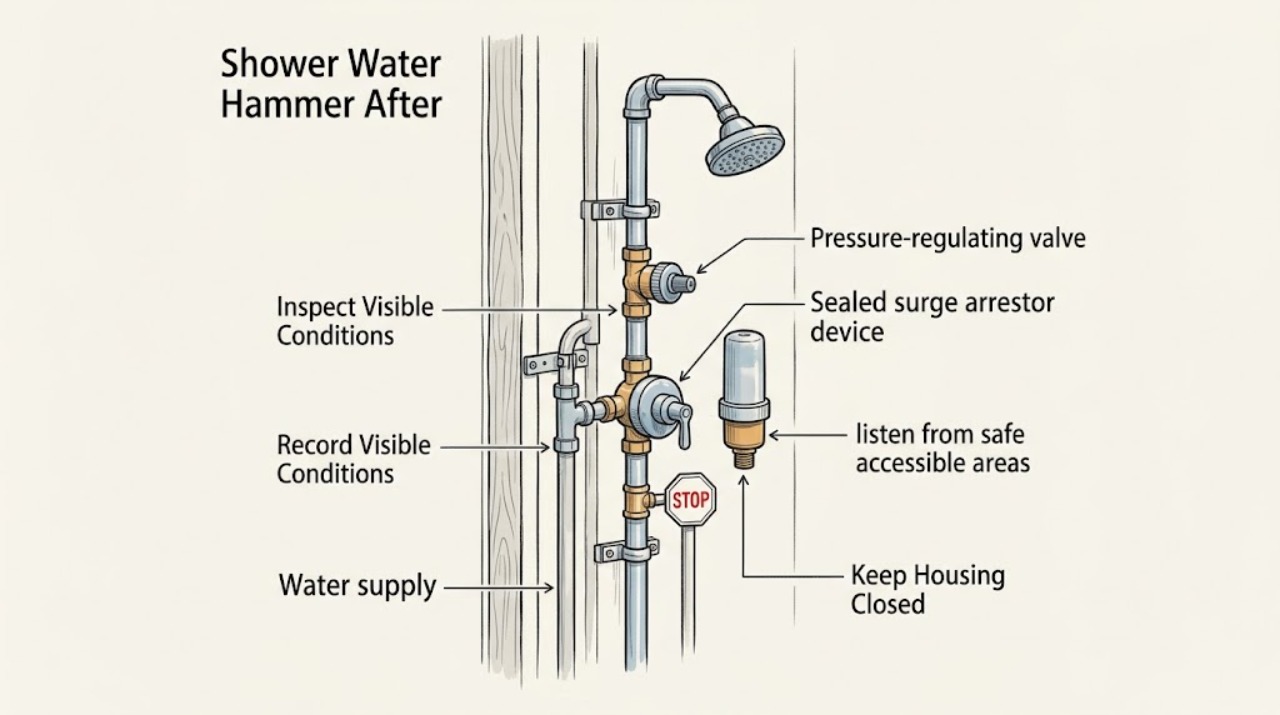
Shower Water Hammer After the Unit Above Runs Water
A bang or knock in your shower area only after the unit above finishes a shower or bathroom faucet use is often a pressure wave from a quick-closing valve, but the sound may also be pipe movement where a shared riser passes through the building. First confirm the exact timing, location, and whether your own water use can reproduce it.
-
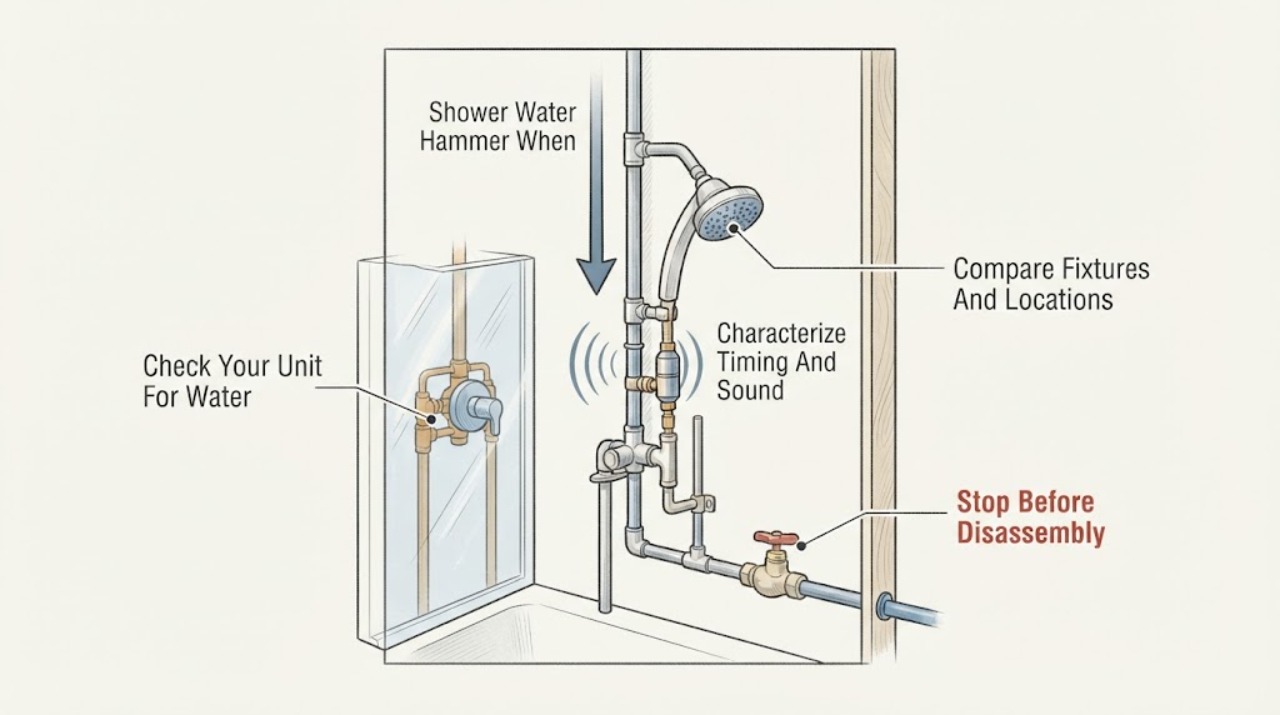
Shower Water Hammer When an Upstairs Neighbor Uses Their Shower
A bang, knock, or vibration in your ceiling or walls when an upstairs neighbor uses a shower is often a water-flow or pipe-support noise rather than an immediate emergency. Water hammer occurs when moving water changes speed abruptly, commonly as a quick-closing valve stops flow; a shared riser can transmit that pressure wave and vibration between units.
-
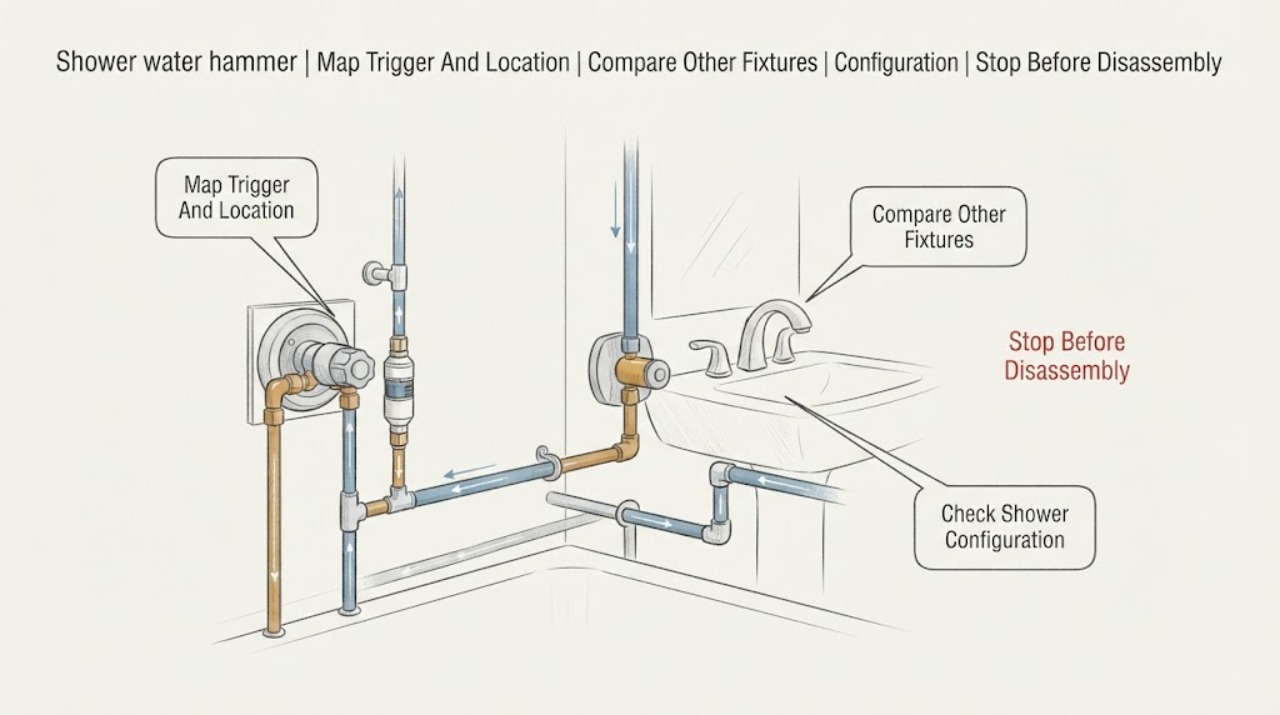
Shower water hammer: locate the shock and choose the safe next step
A bang or thump when the shower valve closes is usually a pressure shock from a sudden change in water flow, but the safe fix depends on where and when it occurs. Close the shower valve normally and note whether the sound is at the shower, in the wall, or elsewhere, whether it happens on hot, cold, or both supplies, and whether pipes move, leak, or vibrate.
-
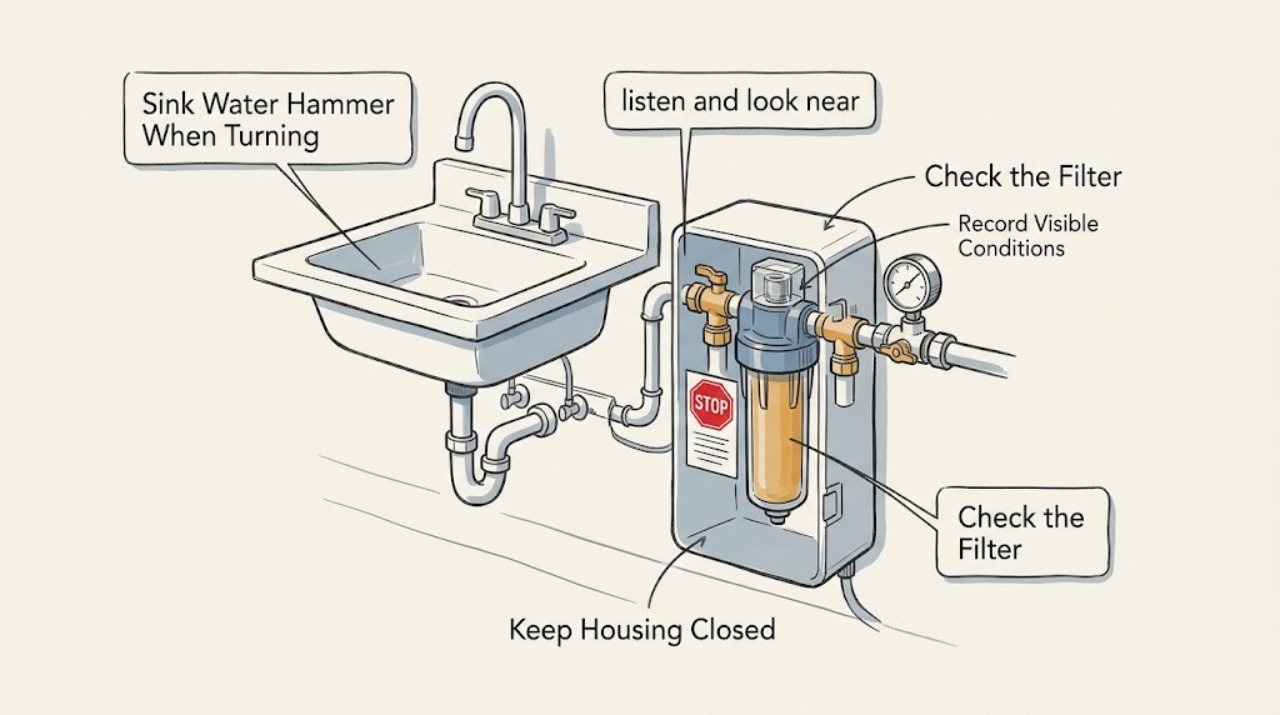
Sink Water Hammer When Turning Water On and Off
A bang, knock, or vibration at the sink when water is turned on or off is usually a pressure surge caused by a rapid valve change, but loose or poorly supported piping, a worn faucet valve or washer, trapped air, excessive pressure, or a nearby device can make it worse. Record whether the noise occurs on hot, cold, opening, closing, or both, and whether it is only at this sink or throughout the home.
-
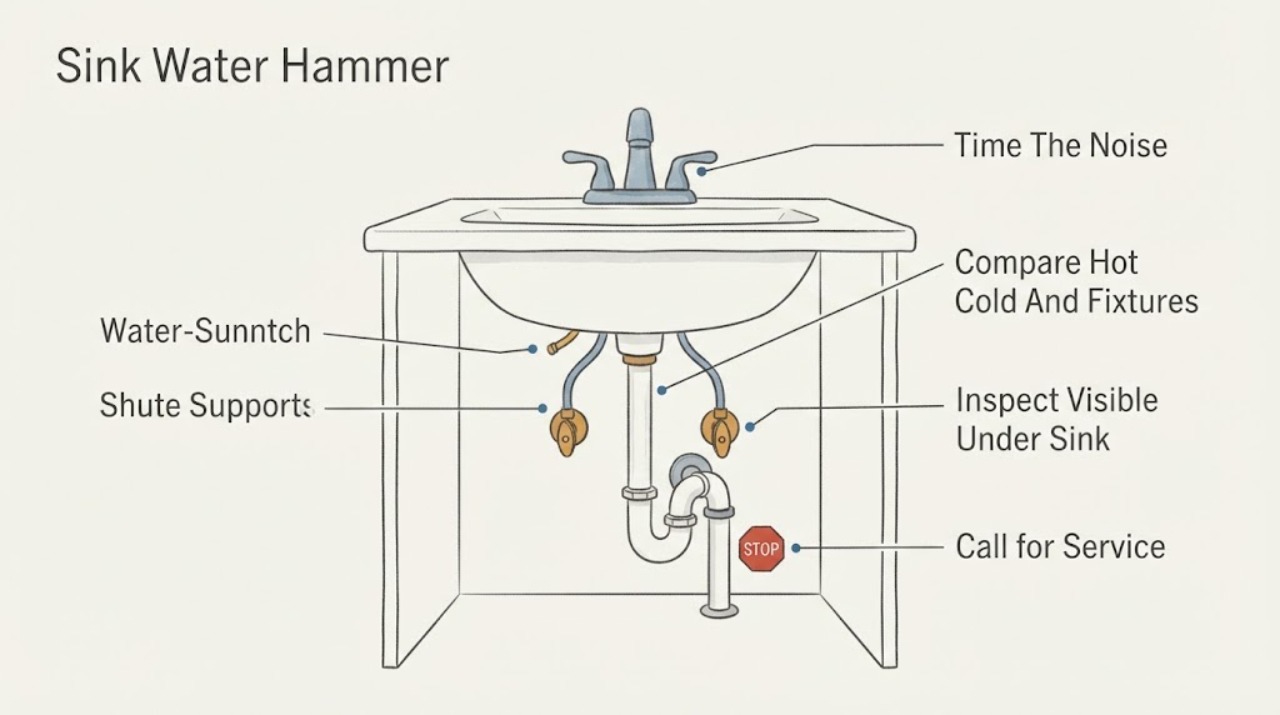
Sink Water Hammer: Safe Checks and Plumbing Next Steps
If pipes bang or vibrate at a sink, first note whether the noise starts when the faucet is turned on or turned off, and whether it affects hot water, cold water, or another fixture. Water hammer is most likely when a sudden valve closure creates a pressure surge; vibration that starts when a tap is opened can instead be air in the pipes.
-
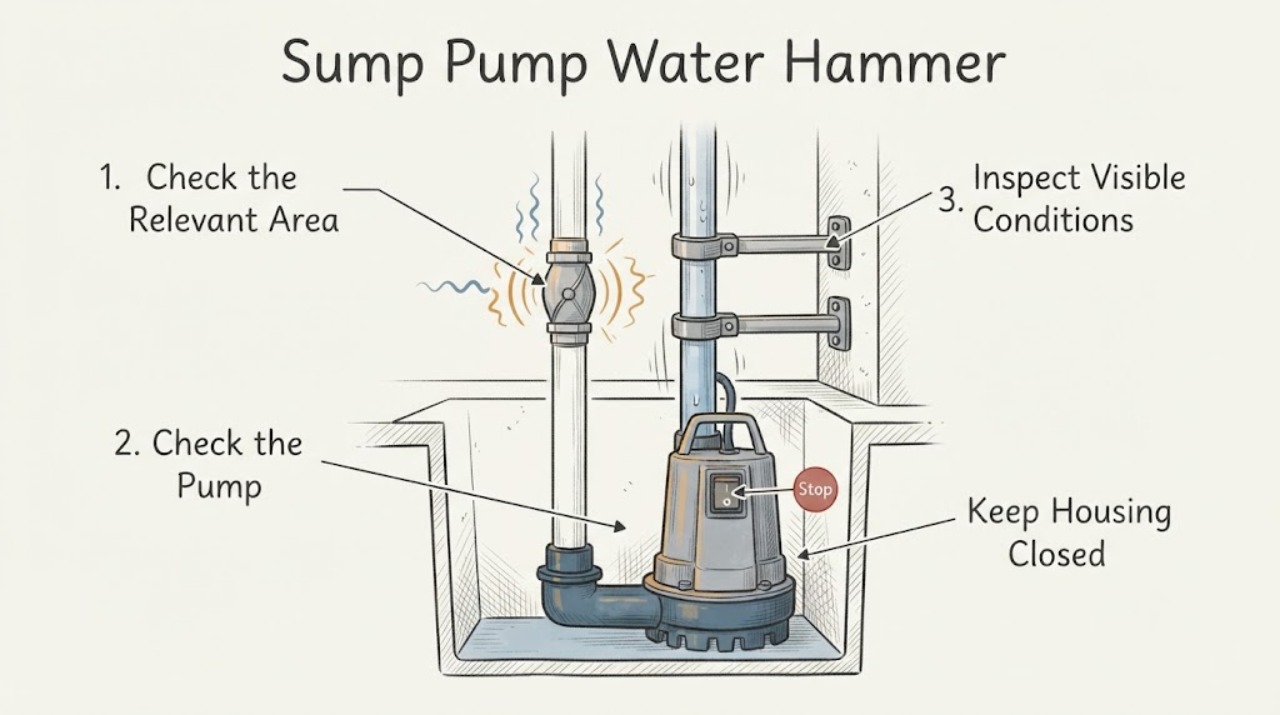
Sump Pump Water Hammer: Find the Bang and Quiet the Discharge Line
A sump pump bang that occurs just after the motor stops is commonly the discharge check valve closing as water reverses, or the water column and pipe striking a nearby wall or joist. First listen for when the noise occurs and watch the exposed discharge pipe without putting hands near the pump.
-
Toilet Water Hammer
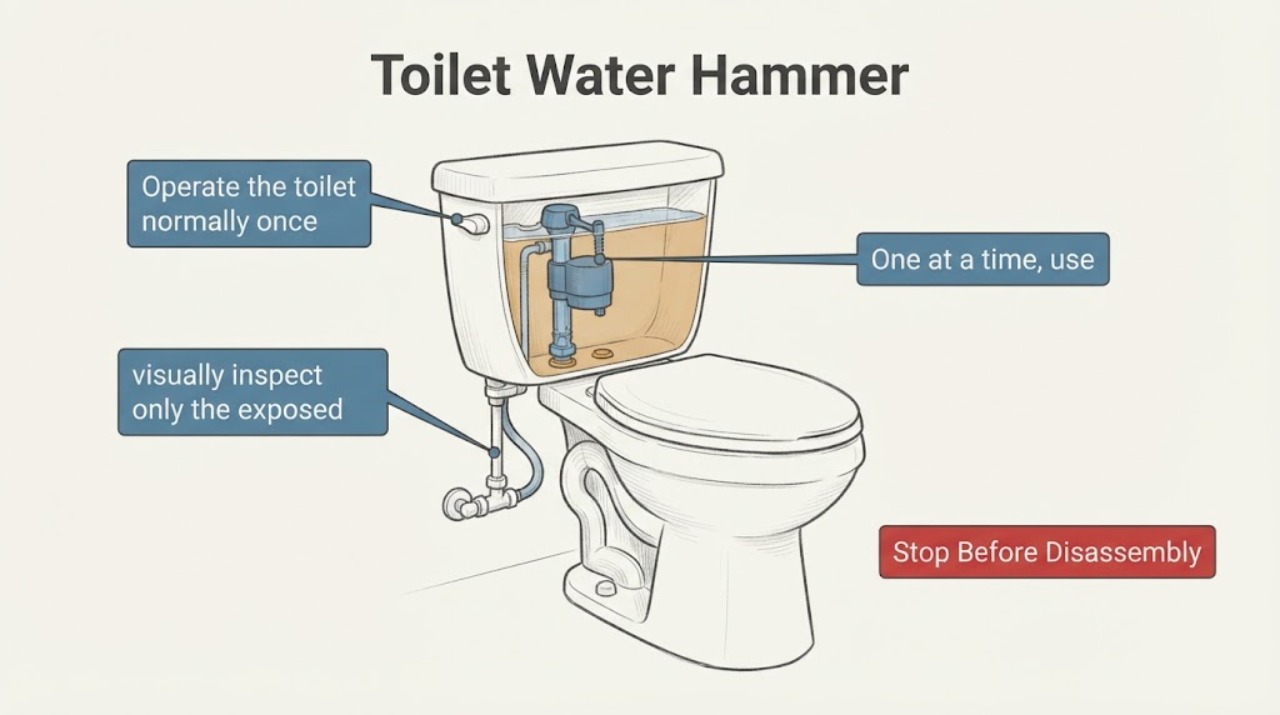
A bang or thump immediately after a toilet refills is usually hydraulic shock: water stops or changes direction quickly, and the pressure surge makes a valve, hose, or pipe move. First confirm that the sound is tied to this toilet, look for an accessible loose line or leak without forcing the shutoff, and compare it with other fixtures.
-
Valve Water Hammer: Find the Fast-Closing Valve Before Replacing Parts
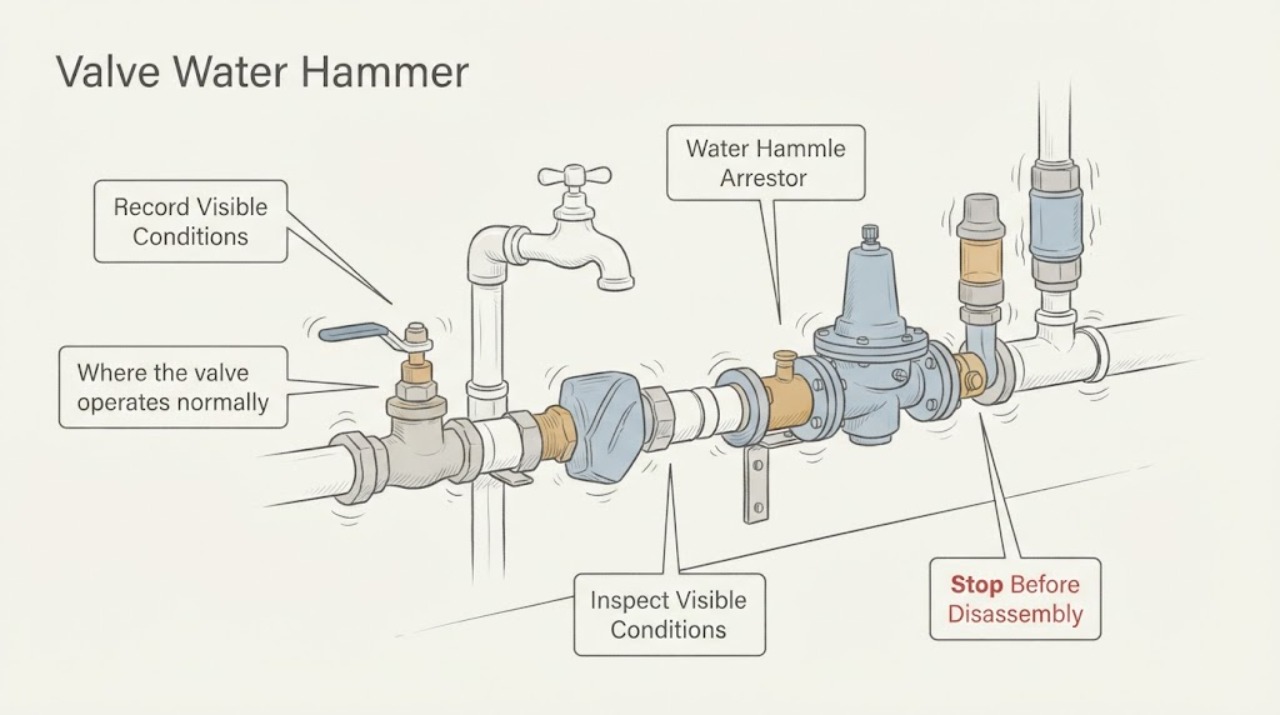
Water hammer is a pressure shock caused when moving water is stopped or redirected suddenly, often as a tap, appliance valve, or shutoff closes. Note exactly which valve or fixture triggers the bang, close taps more gently, and inspect only visible pipework for movement or loose supports.
-
Water Heater Water Hammer: Find the Shock Source Safely
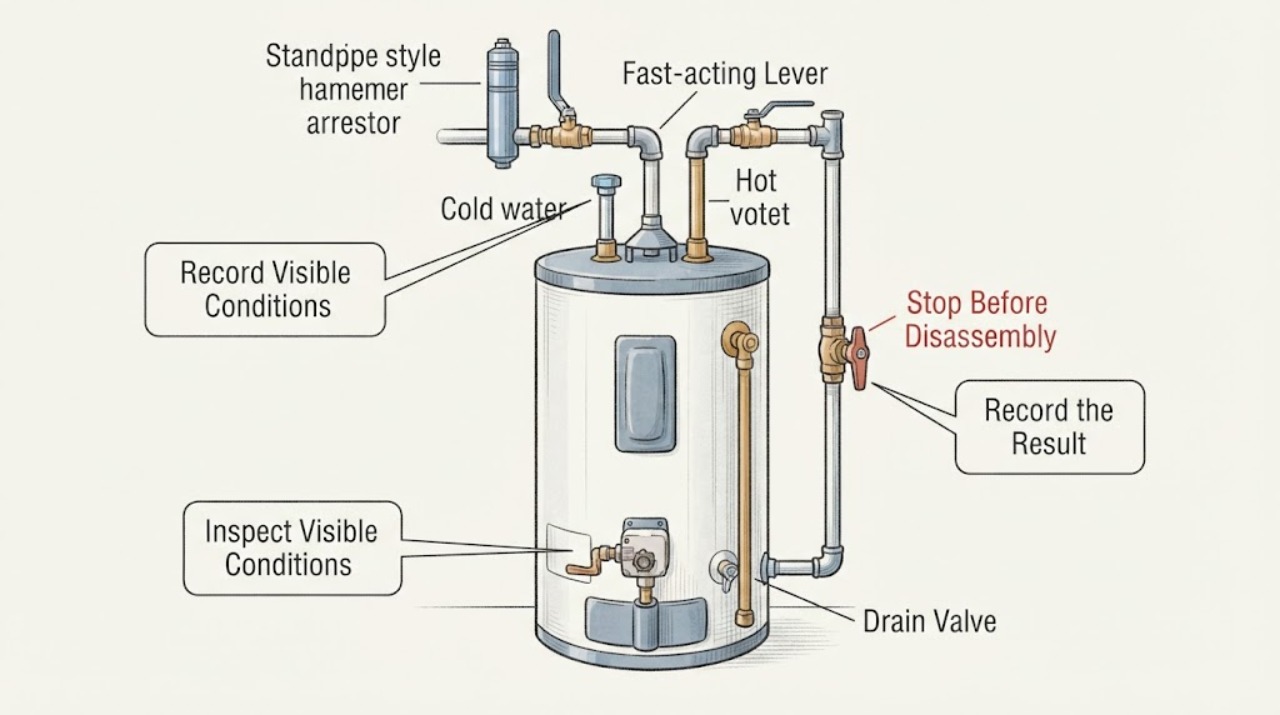
Water hammer is a pressure shock that happens when flowing water stops abruptly; the water heater may be where the bang is heard even when a fast-closing faucet, dishwasher, washing-machine valve, or other fixture is the source. Note exactly when the bang occurs, inspect the heater and nearby piping externally for leaks or movement, and stop if there is damage.