
On this page
Start here
Quick answer
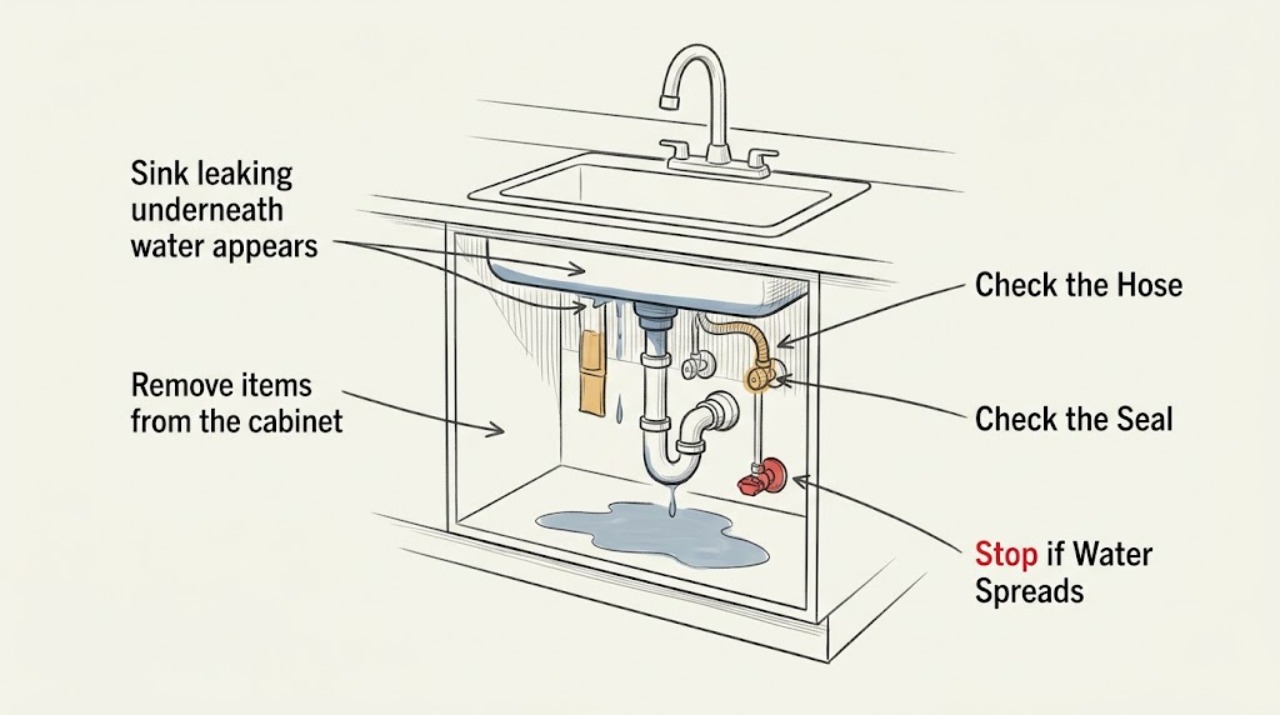
Water under a sink cabinet can come from a pressurized supply valve, hose, or faucet connection, or from the drain, P-trap, strainer, drain flange, disposal, or sink overflow path. Remove stored items, dry the area, and use a flashlight and dry paper towel to find the first wet point while the faucet is off and during a small, controlled flow. Water that appears continuously with the faucet off points toward the supply side; water that appears only while draining points toward the waste side; water that appears only when the basin is filled can point to the drain flange or overflow seal. If water is spraying, a shutoff will not close, a pipe is corroded or cracked, sewage is involved, or cabinetry and flooring are being damaged, stop using the sink and arrange plumbing service. Do not force valves, open pressurized connections, or hide wet materials before the leak is repaired and dried.
Before you begin
Safety first
- A qualified plumber should isolate and repair pressurized supply connections, shutoff valves, faucet bodies, drain flanges, traps, wall pipes, disposals, concealed leaks, and corroded or glued sections; cleanup professionals may be needed for sewage, mold, or extensive water damage.
Work through in order
Diagnostic checks
Use only checks that match the exact appliance or system and its official guide.
-
Check 1
Remove items from the cabinet, dry the pooled water, place a tray or towel below the plumbing, and keep hands away from wet electrical devices while checking whether water continues with the faucet and drain unused.
Expected result: Water continues to appear with the faucet unused, a supply hose or valve sprays or drips, water is near an electrical device, or the area stays dry until the sink is used.
Next step: If water is active, near electricity, or cannot be stopped by a normally moving fixture valve, stop using the sink and arrange urgent plumbing or electrical help. Otherwise continue with a controlled source-tracing test.
Why this matters
Why: Continuous moisture with no use supports a pressurized supply or faucet leak. Water near electricity or an active spray raises immediate safety and damage risk. A dry cabinet until use makes a drain-side leak more likely.
-
Check 2
With the faucet off, wrap a dry paper towel around the accessible shutoff valves, supply hose ends, faucet shanks, and connections below the basin; wait briefly and inspect which towel becomes wet first without loosening a connection.
Expected result: Moisture begins at a shutoff handle or body, a hose or threaded end, the faucet shank, or no supply-side point becomes wet.
Next step: Do not force or overtighten a corroded valve or pressurized fitting. Contain the drip, keep the cabinet dry, and arrange plumbing service for a confirmed supply-side leak or any connection that cannot be safely isolated.
Why this matters
Why: A wet valve body or handle supports a failed shutoff seal; a wet hose end or faucet shank supports a supply connection or hose leak. Dry supply points shift attention to the drain, trap, or water entering from above.
-
Check 3
After drying the area, run a small, controlled amount of water into the sink while watching the drain body, tailpiece, P-trap joints, disposal or dishwasher connection if present, and wall pipe with a flashlight.
Expected result: Water appears only during draining at a particular joint, the P-trap fills or drips, the wall connection becomes wet, or all visible drain joints stay dry.
Next step: Stop using the sink if a drain joint leaks or the wall connection is wet. Do not dismantle a corroded or glued trap; arrange plumbing service and leave the area accessible for inspection.
Why this matters
Why: A use-dependent drip at a drain joint supports a waste-side seal or fitting leak. A wet wall connection or clear visible trap with continued water suggests a concealed or downstream defect. Dry visible joints shift attention to the flange, overflow, sink body, or a supply leak that was not reproduced.
-
Check 4
With the drain closed and the cabinet dry, add a shallow amount of clean water to the basin and inspect beneath the drain flange and overflow area; do not rotate the drain body or cover its exterior with sealant.
Expected result: Water appears under the flange while the basin is holding water, water emerges near an overflow opening, or the basin test stays dry until water is sent down the drain.
Next step: Stop the basin test and arrange plumbing service for a failed flange or overflow seal, especially if the drain body moves or the sink surface is damaged. Continue only with a small drain-flow observation if no water is reaching the cabinet.
Why this matters
Why: A basin-only leak supports a drain-flange or overflow-seal problem rather than a supply leak. A leak only during drainage points more toward the waste piping, while a dry test does not rule out a leak at a joint under flow.
-
Check 5
If the visible fittings are intact, inspect the sink underside, cabinet floor, nearby wall, dishwasher or disposal connections, and the countertop or faucet deck for an upper or adjacent water source while the sink is used normally but briefly.
Expected result: Water starts above the drain, travels from the faucet base or sink rim, appears at an appliance connection, or cannot be traced to an accessible point.
Next step: Stop using the affected appliance or sink when the source is active and photograph the trail. Have a plumber or appropriate appliance professional isolate the source; do not caulk over a wet seam or open concealed walls as a first response.
Why this matters
Why: A faucet-deck, sink-rim, appliance, or adjacent source can run into the cabinet and mimic a drain leak. An untraceable trail may involve concealed piping or water trapped beneath the sink rather than the lowest visible puddle.
-
Check 6
After a confirmed repair, run a small amount of water through the sink and check every accessible supply and drain connection, then dry the cabinet and inspect the floor, stored contents, and wall for returning moisture or damage.
Expected result: No new water appears and materials dry normally; a joint still drips; the cabinet floor is swollen or stained; or musty odor, mold, sewage, or contaminated water is present.
Next step: Keep the sink out of service if moisture returns or contamination is present. Arrange follow-up plumbing and, when needed, water-damage or mold cleanup; do not paint, caulk, or close the cabinet while materials remain wet.
Why this matters
Why: Dry connections and a dry cabinet support a successful repair. A continuing drip means the leak source or seal remains unresolved. Swelling, mold, sewage, or persistent wet materials require building or cleanup attention in addition to plumbing work.
Use your observations
Decision map
Find the observation that best matches what you see, then follow the next safe action.
-
PATH 01Next step
What you see
Water appears continuously with the faucet off and begins at a shutoff valve, supply hose, or faucet shank.
Do this next
Stop using the sink, close a normally moving local shutoff if safe, and arrange plumbing service for the valve, hose, or faucet connection. Do not force a seized valve or loosen a pressurized line.
Why this path and its safety boundary
Why it matters: A pressurized supply-side leak is more likely than a drain leak; Moen's timing guidance distinguishes steady under-sink leaks from leaks that occur only during use.
-
PATH 02Next step
What you see
The cabinet stays dry with the sink unused, then a drain joint, P-trap, disposal connection, or wall pipe becomes wet during a controlled drain flow.
Do this next
Stop using the sink and arrange plumbing service. Leave the fittings visible and do not disassemble corroded or glued sections as an ordinary homeowner repair.
Why this path and its safety boundary
Why it matters: A waste-side fitting or trap seal problem is more likely than the supply side, and continued use can spread water into the cabinet and wall.
-
PATH 03Next step
What you see
Water appears while the basin is holding water, around the drain flange or overflow, but the visible trap and supply connections stay dry.
Do this next
Stop the test and have the drain assembly and sink surface inspected. Do not rotate the drain body, cover its exterior with sealant, or ignore returning moisture.
Why this path and its safety boundary
Why it matters: A drain-flange or overflow seal is more likely than a supply or P-trap leak; water can travel beneath the basin before appearing on the cabinet floor.
-
PATH 04Next step
What you see
All accessible plumbing remains dry, but water enters from the faucet deck, sink rim, nearby appliance, countertop, or an untraceable wall or cabinet path.
Do this next
Stop the source activity and arrange the appropriate plumbing or appliance inspection. Dry and document the area before sealing, repainting, or replacing cabinet material.
Why this path and its safety boundary
Why it matters: An upper, adjacent, or concealed source is more likely than the lowest visible fitting. The puddle location alone is not enough to identify the repair.
-
PATH 05Next step
What you see
Water is spraying, a shutoff will not stop it, sewage or contaminated water is present, cabinetry or flooring is being damaged, or mold or persistent wet materials are found.
Do this next
Stop using the sink, isolate water only through a safe accessible shutoff, keep people away from contaminated or energized areas, and arrange urgent plumbing and appropriate cleanup help.
Why this path and its safety boundary
Why it matters: The leak exceeds a routine visual check and presents property, electrical, sanitation, or indoor-air risk.
Helpful context
Understand the symptom
Stop the damage before tracing the water
Take everything out of the cabinet, protect nearby contents, and dry the visible water so a new wet trail can be distinguished from old moisture. If a supply line is spraying or a valve will not stop the flow, close the fixture's shutoff only if it moves normally; use the main shutoff or emergency plumbing help when the local valve is stuck. Keep electrical devices and extension cords away from wet areas.
Leak timing is the fastest clue
A continuous drip with the faucet off is more consistent with a pressurized valve, hose, or faucet connection. A leak that begins only while water drains points toward the strainer, tailpiece, P-trap, disposal connection, or wall drain. A leak when the basin is filled but not drained can point to the drain flange or overflow route. These patterns narrow the source but do not prove which seal or fitting has failed.
Trace from above and below
Use a dry paper towel around each accessible joint, then run a small amount of water while watching the faucet shanks, shutoffs, hose ends, drain body, trap joints, and wall connection. Do not wrap every fitting at once or tighten blindly; the first wet point upstream of a trail is usually more useful than the lowest puddle.
A drain flange can leak without a visible basin leak
A sink drain's seal sits between the flange and the sink, so water can travel beneath the basin and appear on the cabinet floor. With the drain closed and the area dry, a controlled basin test can show whether water emerges around the flange. Do not rotate the drain body or apply sealant over the outside of a flange as a shortcut; a damaged or failed seal is a repair decision for the correct sink and drain design.
Drying is part of the repair
Fixing the fitting does not remove water from cabinet floors, particleboard, insulation, or stored contents. Dry the accessible area promptly and watch for swelling, staining, musty odor, or mold. Sewage or other contaminated water, extensive damage, and materials that cannot be dried safely need professional cleanup as well as plumbing repair.
Safety boundary
Stop conditions
- Stop using the sink and arrange plumbing service for active spray, a shutoff that will not close, a cracked or corroded pipe, water near electricity, or a leak that cannot be isolated safely.
- Do not loosen pressurized supply fittings, force shutoff valves, dismantle glued or seized drain piping, rotate a drain body, or seal over a wet leak without identifying and repairing its source.
- Treat sewage or contaminated water, extensive cabinet or flooring damage, mold, and materials that cannot be dried promptly as professional plumbing and cleanup conditions.
- If a repair appears dry but water returns during a full use cycle, stop operation and arrange follow-up service rather than repeatedly tightening fittings or replacing an unconfirmed part.
Only after diagnosis
Potential parts
- faucet supply hose
Consider this only when a supply hose is visibly split, swollen, leaking at its connection, or confirmed defective; a dry hose does not justify replacement.
Match connection type, length, material, and faucet and shutoff configuration; have a plumber handle corroded or pressurized connections. - sink drain flange seal or gasket
Consider this only when a controlled basin test isolates leakage to the drain flange or overflow seal and the sink and drain design are identified.
Confirm the sink material, drain assembly, overflow arrangement, sealant requirements, and manufacturer's installation guidance before ordering. - P-trap washer or trap assembly
Consider this only when inspection confirms a damaged washer or trap and the connection can be serviced safely; a wall-side or concealed leak needs diagnosis instead.
Match pipe material, diameter, configuration, and local requirements; do not force or modify corroded, glued, or concealed piping.
When checks do not resolve it
Need a professional?
Safety scope: A qualified plumber should isolate and repair pressurized supply connections, shutoff valves, faucet bodies, drain flanges, traps, wall pipes, disposals, concealed leaks, and corroded or glued sections; cleanup professionals may be needed for sewage, mold, or extensive water damage.
Common questions
FAQ
Why is water appearing under my sink cabinet?
The source may be a continuously leaking supply valve, hose, or faucet connection, or a drain-side leak at the strainer, flange, tailpiece, P-trap, disposal, appliance connection, or wall pipe. Dry the area and compare the first wet point with the faucet off and during a small controlled flow.
How can I tell a supply leak from a drain leak?
If water appears while the faucet is off and the sink is unused, check the pressurized valves, hoses, and faucet connections. If the cabinet stays dry until water is sent down the drain, inspect the drain body, P-trap, and wall connection. A leak while the basin is holding water can point to the drain flange or overflow seal.
Can a sink drain flange leak into the cabinet?
Yes. A failed seal between the drain flange and sink can let water travel beneath the basin and appear below. A controlled basin test can help isolate that pattern, but do not rotate the drain body or cover a wet flange with sealant without identifying the correct repair for the sink and drain design.
Should I tighten the fitting that is dripping?
Do not blindly tighten a corroded, cracked, glued, or pressurized fitting. Over-tightening can damage threads, seals, or the pipe. Dry and identify the first wet point, isolate the sink if needed, and arrange plumbing service when the connection will not move normally or the leak returns.
When is an under-sink leak urgent?
Treat it as urgent when water is spraying, a shutoff will not stop it, water reaches electricity, sewage or contaminated water is involved, or cabinetry, flooring, or wall materials are being damaged. Stop using the sink and arrange plumbing and appropriate cleanup help.
Read the exact guide
Official sources
- Home MaintenanceU.S. Environmental Protection Agency WaterSense · Residential water-using fixtures and plumbing; exact leak source and repair depend on installation
- UPCS-V Protocol V1U.S. Department of Housing and Urban Development · HUD housing inspection protocol; it is an inspection reference, not a model-specific repair manual
- Bathroom Faucet: Leaking Under The Sink BaseMoen Solutions · Moen bathroom faucet examples; leak timing and location principles generalize, while connection designs vary by faucet
- Why doesn't my pop-up sink stopper stop the water from draining?Delta Faucet · Delta pop-up sink drain designs; other drain assemblies and sink materials may differ
- Mold Cleanup in Your HomeU.S. Environmental Protection Agency · Residential water and mold cleanup; cleanup decisions depend on contamination, material, and damage extent
Community feedback
Share a repair observation
Share a plain-text repair observation. Accepted observations are published automatically; this page may take a moment to update.