
Repair problem
Leaking Underneath Troubleshooting Guides
Published FixGraph guidance for diagnosing and responding to leaking underneath.
Matching published guides
Choose a guide that matches the service, equipment, and conditions you are seeing.
-
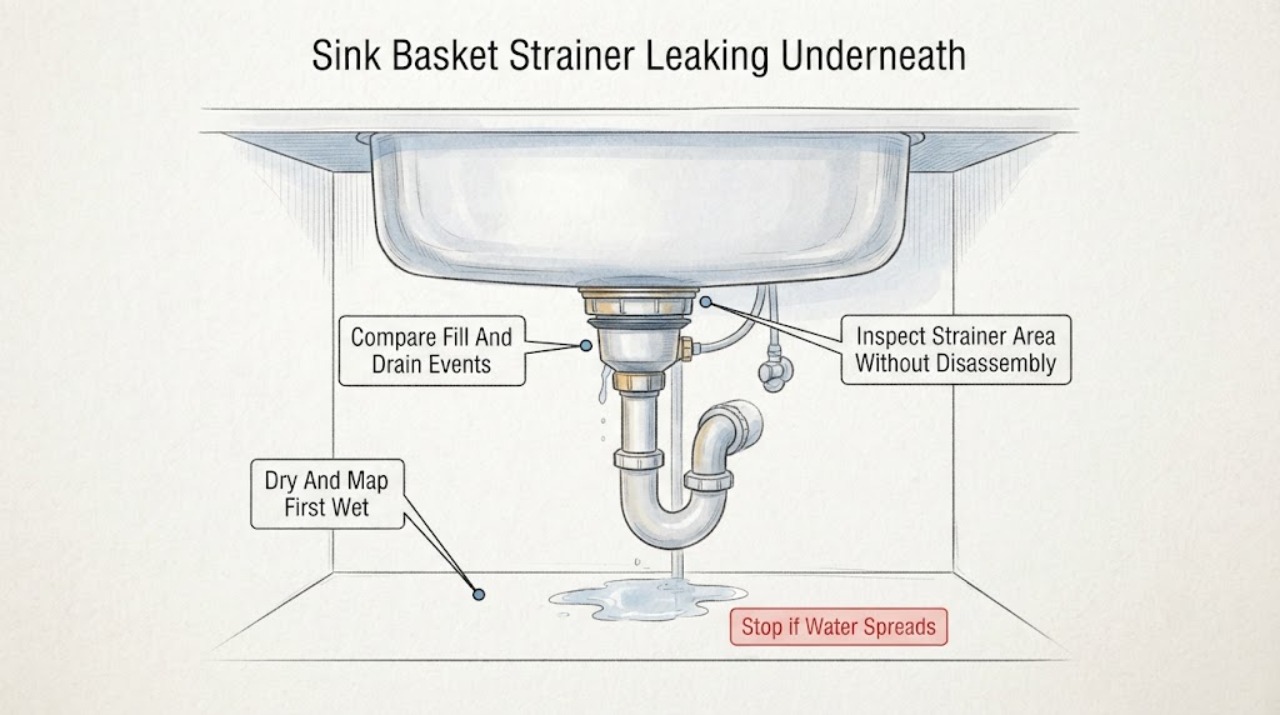
American Standard Sink Basket Strainer Leaking Underneath: What to Check and What to Do Next
Water under an American Standard sink does not prove the basket strainer is the source. First dry the cabinet and identify the first wet point while observing the drain, then compare water entering the basin with water draining through it.
-
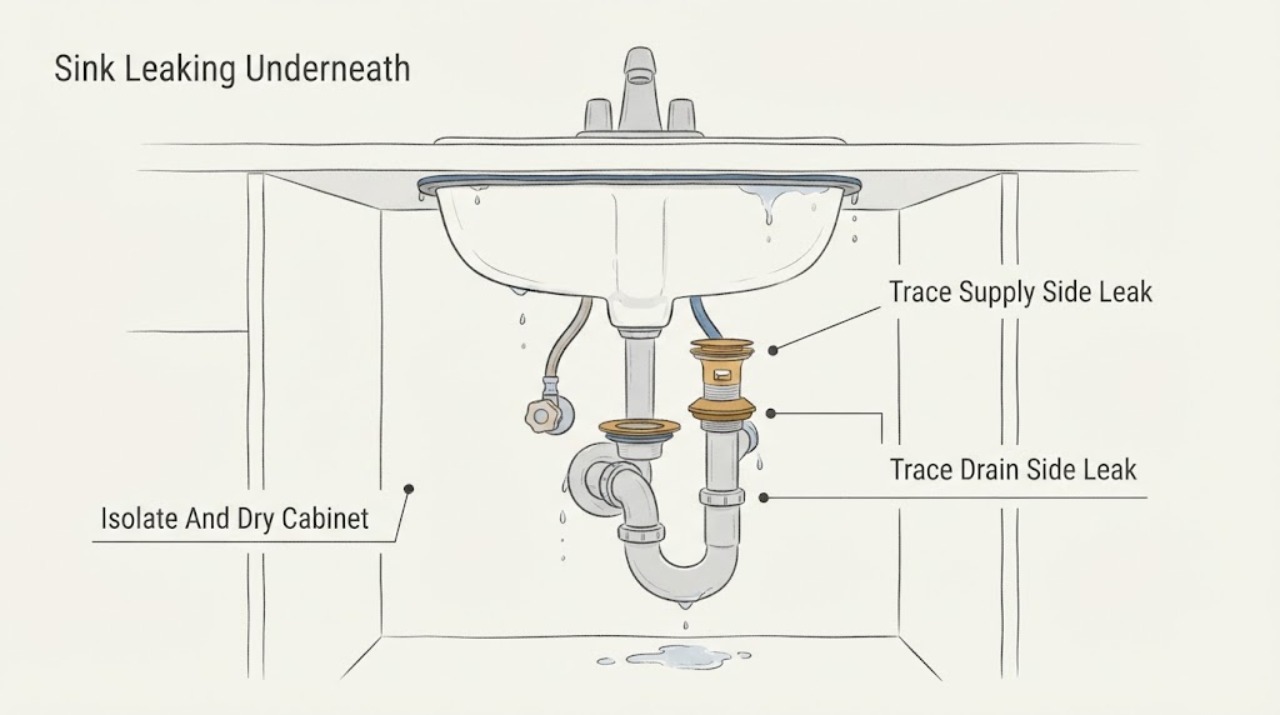
American Standard Sink Leaking Underneath: What to Check and What to Do Next
Water under an American Standard sink can come from a faucet supply connection, the faucet mounting area, the drain flange or gasket, the pop-up or strainer, the P-trap, or a hose or pipe farther back in the cabinet. First stop using the sink, empty and dry the cabinet, and place a dry paper towel beneath each visible joint.
-
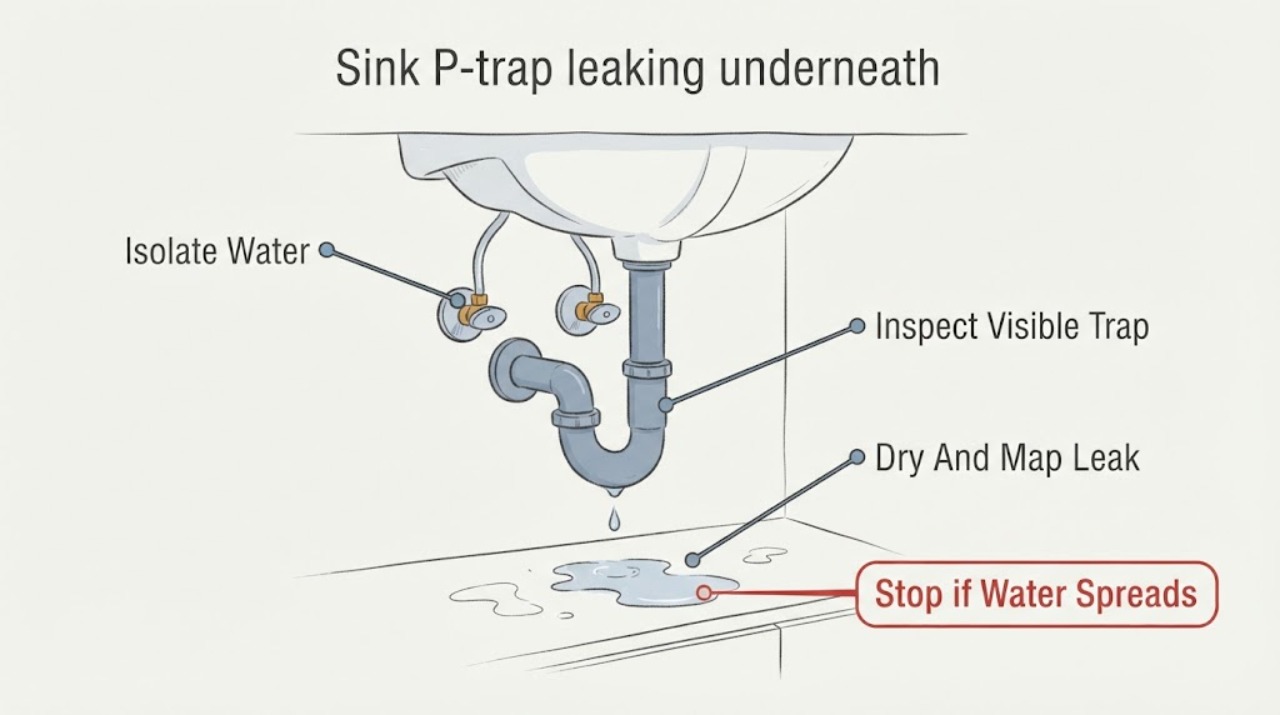
American Standard sink P-trap leaking underneath: What to Check and What to Do Next
Water under an American Standard sink can come from a P-trap joint, the sink tailpiece or drain body, a supply connection, a wall connection, or water that ran down from the faucet rather than from the trap. Stop using the sink, empty standing water carefully, and dry the underside so you can identify the first wet point during one small controlled drain test.
-
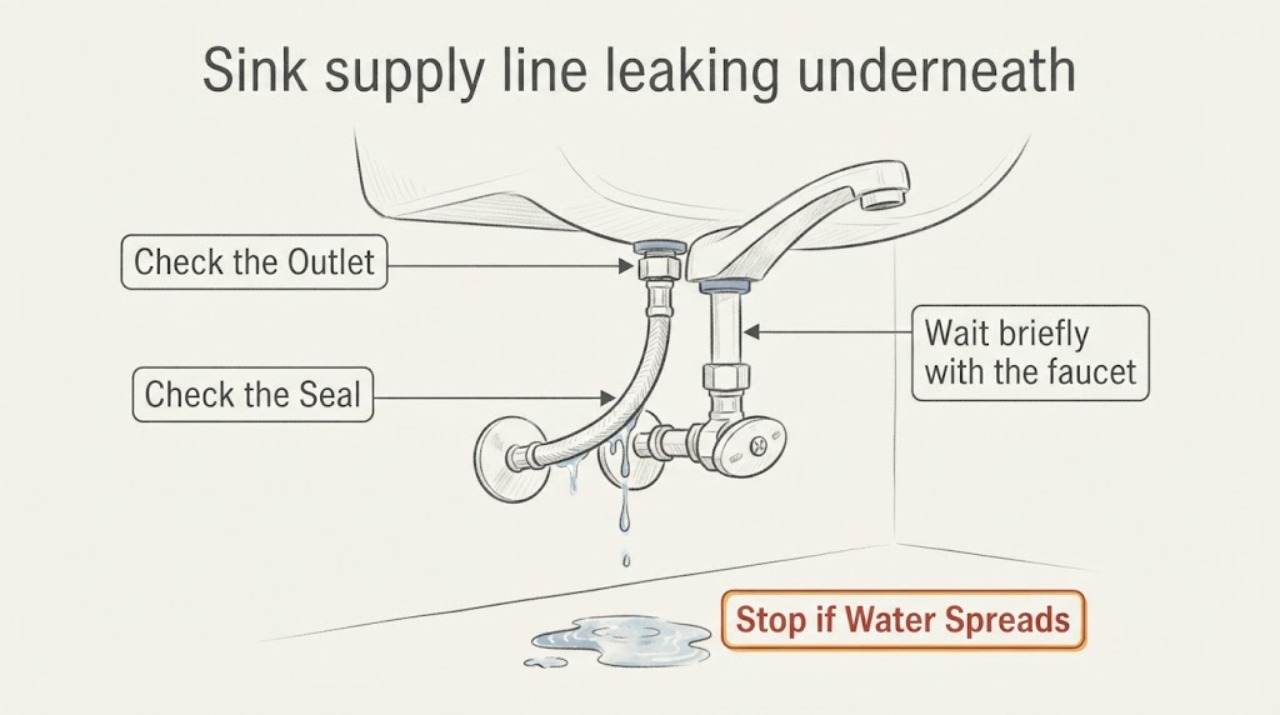
American standard sink supply line leaking underneath: What to Check and What to Do Next
If an American Standard sink supply line is leaking underneath, first protect the cabinet and identify the first wet point with the faucet off. A continuous drip at a shutoff, braided tube, compression connection, or faucet inlet is a pressurized supply leak; water that appears only while the faucet or sink drain is used may instead come from a hose, faucet body, drain, or trap.
-
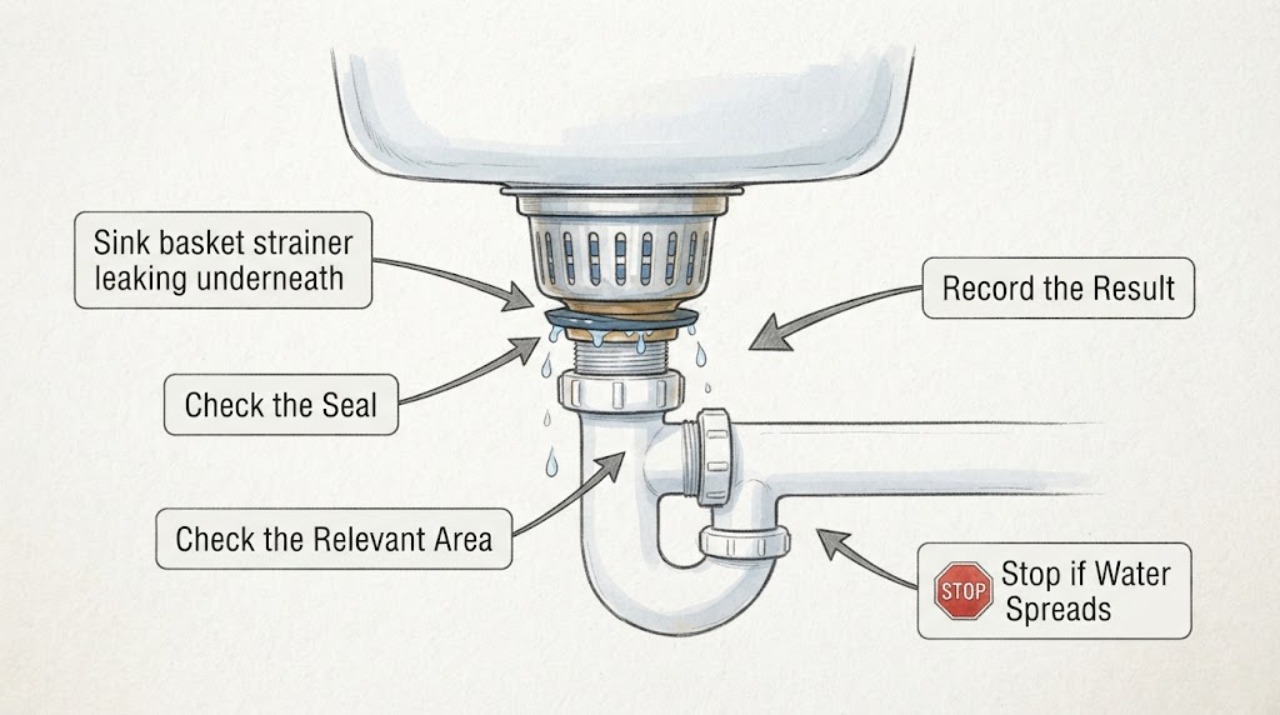
Delta sink basket strainer leaking underneath: What to Check and What to Do Next
Stop using the Delta sink until you know where the water starts. Dry the underside, place a dry tissue or paper towel below the basket strainer, and add only a small amount of clean water to the sink while watching from a safe position.
-
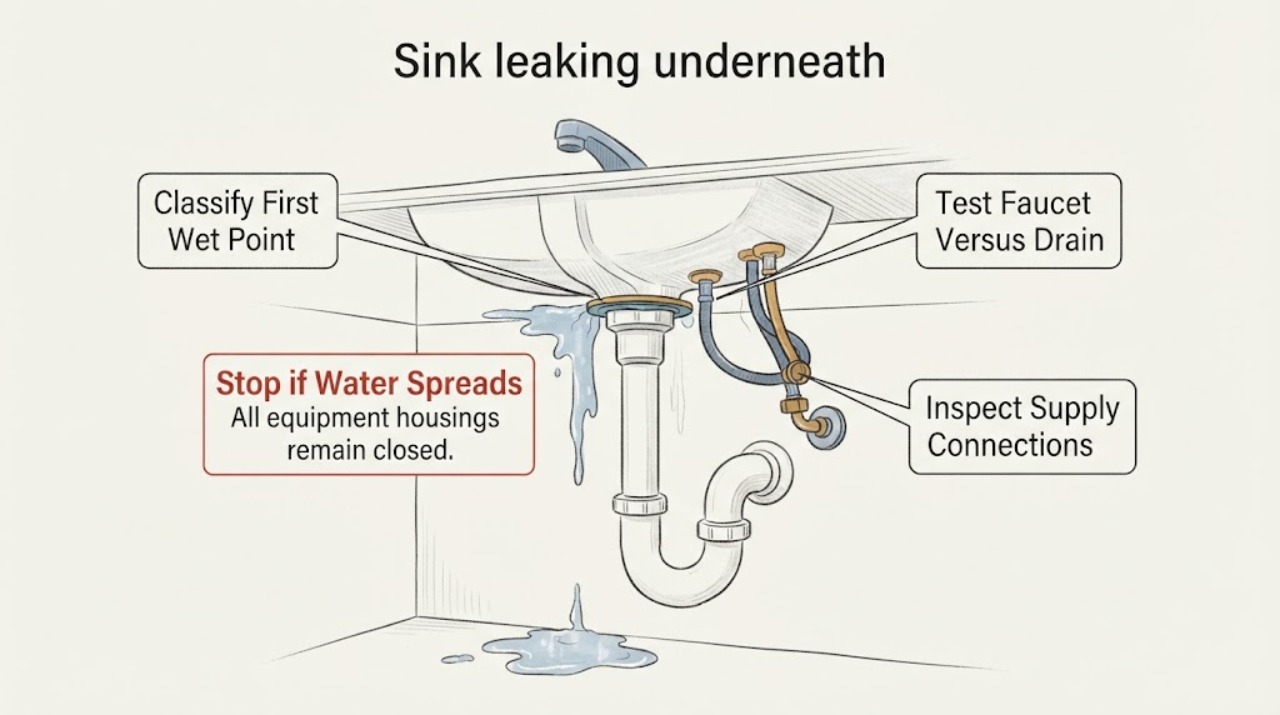
Delta sink leaking underneath: What to Check and What to Do Next
A Delta sink that leaks underneath must first be separated into a pressurized supply-side leak, a faucet body or mounting leak, a drain-side leak, or water arriving from the wall, countertop, or another appliance. Dry the area, place a paper towel under separate connections, and briefly run water while watching from a safe position; the first wet point matters more than where the puddle collects.
-
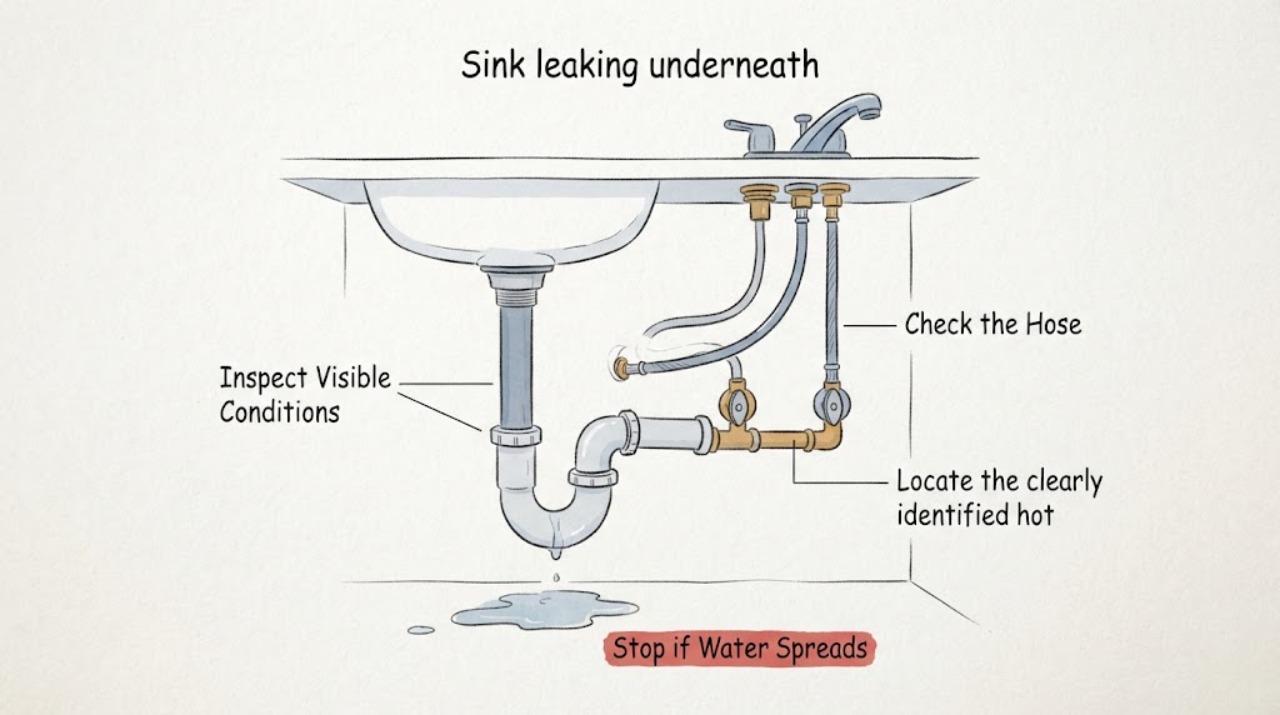
Kohler sink leaking underneath: What to Check and What to Do Next
If a Kohler sink is leaking underneath, dry the cabinet and identify the first wet point while the faucet is off, then while water drains. A leak that appears only while the faucet runs or the sink drains points toward a faucet supply, spray hose, drain, strainer, trap, or connection gasket; a continuous leak with no use can point toward a pressurized supply line or shutoff.
-
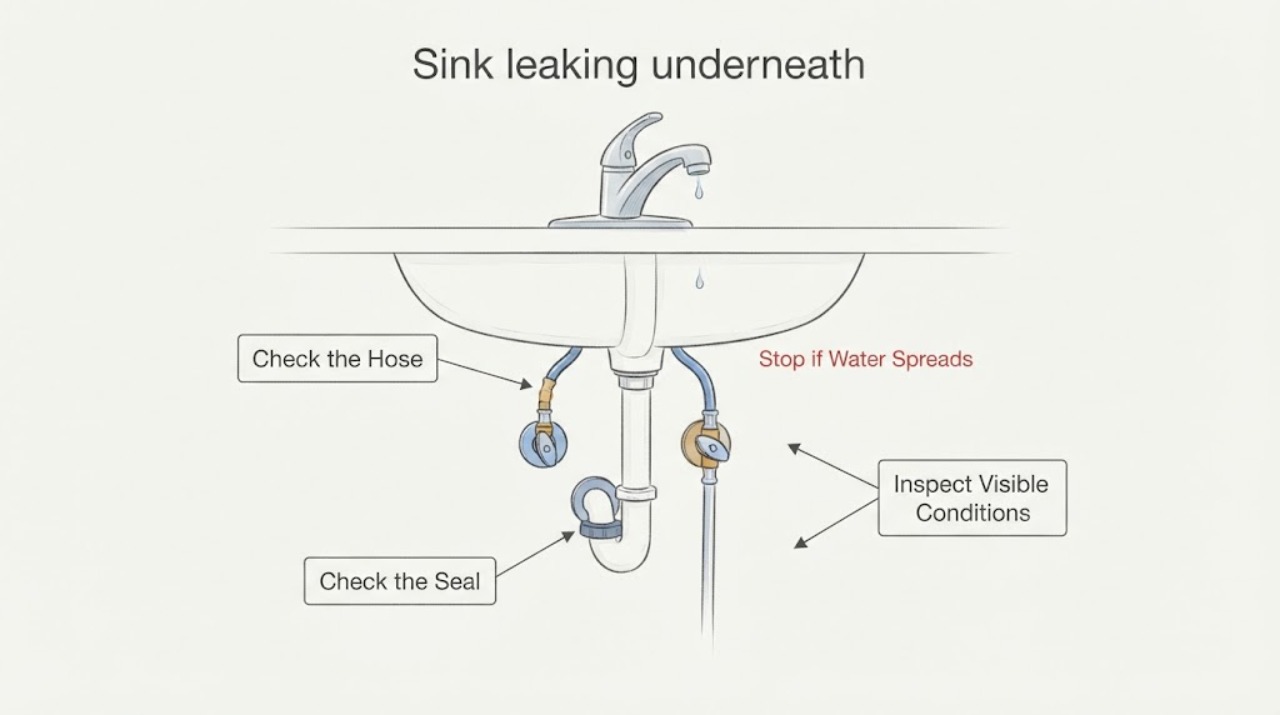
Moen sink leaking underneath: What to Check and What to Do Next
If water is leaking underneath a Moen sink, first protect the cabinet and identify whether the leak is steady or appears only while the faucet, sprayer, drain, or disposal is used. Dry the area, place a towel or container below the suspected connection, and use a dry tissue to trace the first wet point without reaching around energized disposal wiring.
-
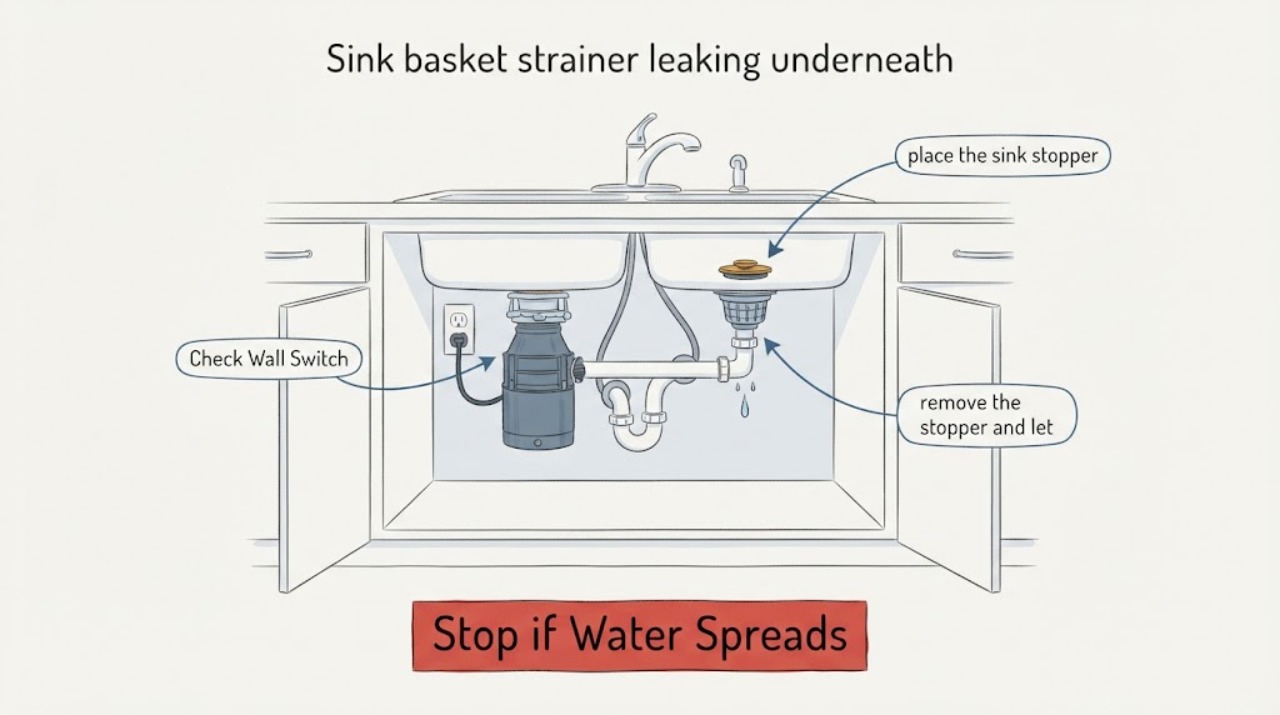
Sink basket strainer leaking underneath: What to Check and What to Do Next
To troubleshoot a sink basket strainer leaking underneath, first empty and dry the cabinet and place a dry paper towel beneath the drain assembly. With the disposal off and no hands near moving equipment, use a brief, controlled test: hold water in the basin, then release it while watching the underside.
-
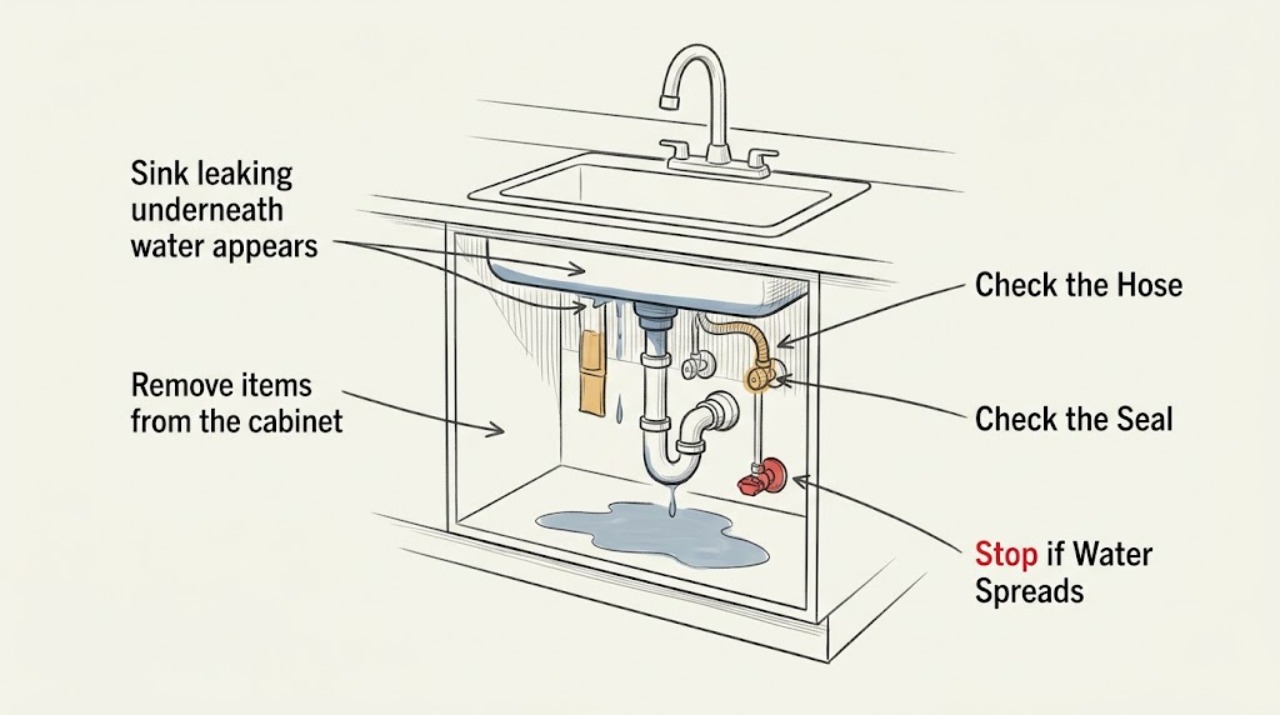
Sink leaking underneath water appears under cabinet: What to Check and What to Do Next
Water under a sink cabinet can come from a pressurized supply valve, hose, or faucet connection, or from the drain, P-trap, strainer, drain flange, disposal, or sink overflow path. Remove stored items, dry the area, and use a flashlight and dry paper towel to find the first wet point while the faucet is off and during a small, controlled flow.
-
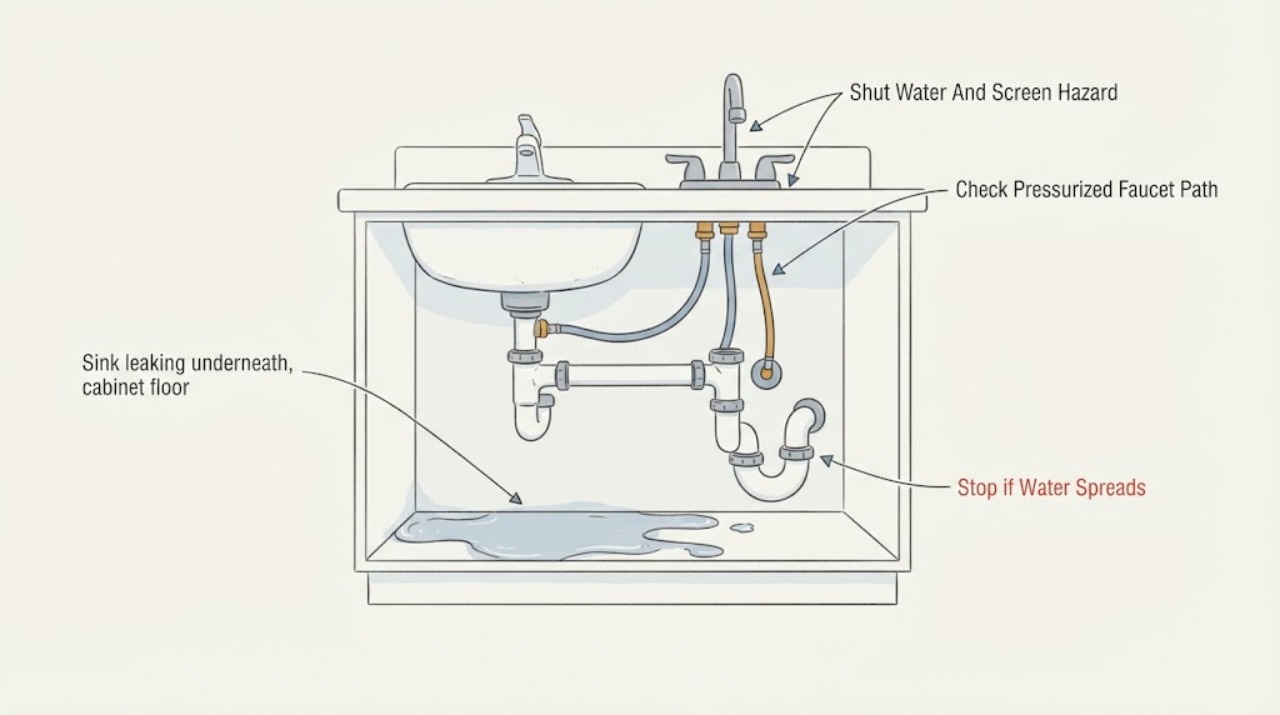
Sink leaking underneath, cabinet floor is wet: What to Check and What to Do Next
Remove items from under the sink, close the hot and cold stop valves, and dry the cabinet floor and every visible connection. Do not run a garbage disposal or touch a wet electrical outlet.
-
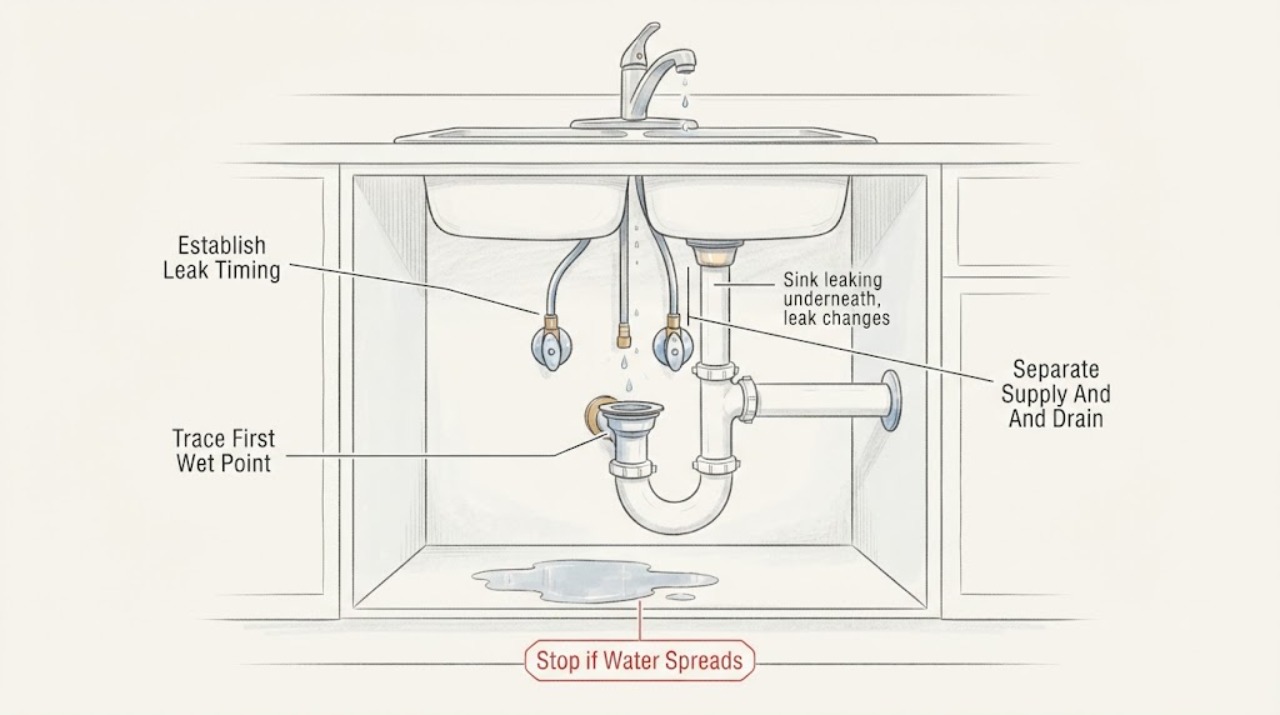
Sink leaking underneath, leak changes when faucet runs: What to Check and What to Do Next
A leak under a sink that changes when the faucet runs is usually separated by timing and location. Dry the cabinet, place paper towels under the faucet supply connections, shut-off valves, drain flange, trap, and nearby dishwasher or disposal connections, then run a small amount of water while watching from a safe position.
-
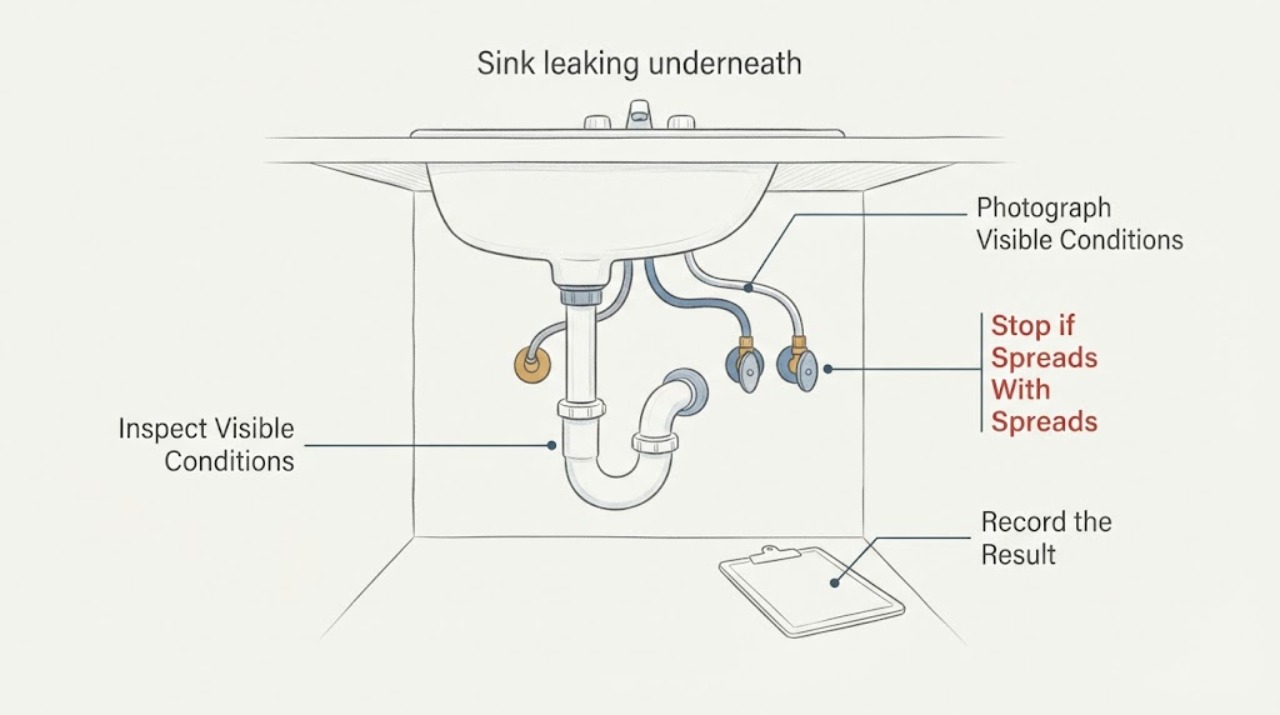
Sink leaking underneath: What to Check and What to Do Next
Stop using the sink if water is actively escaping underneath, then observe from a dry, safe position. If the leak is worsening and the fixture shutoff is dry, clearly accessible, and operates normally, close it gently; do not force it or dismantle any plumbing.
-
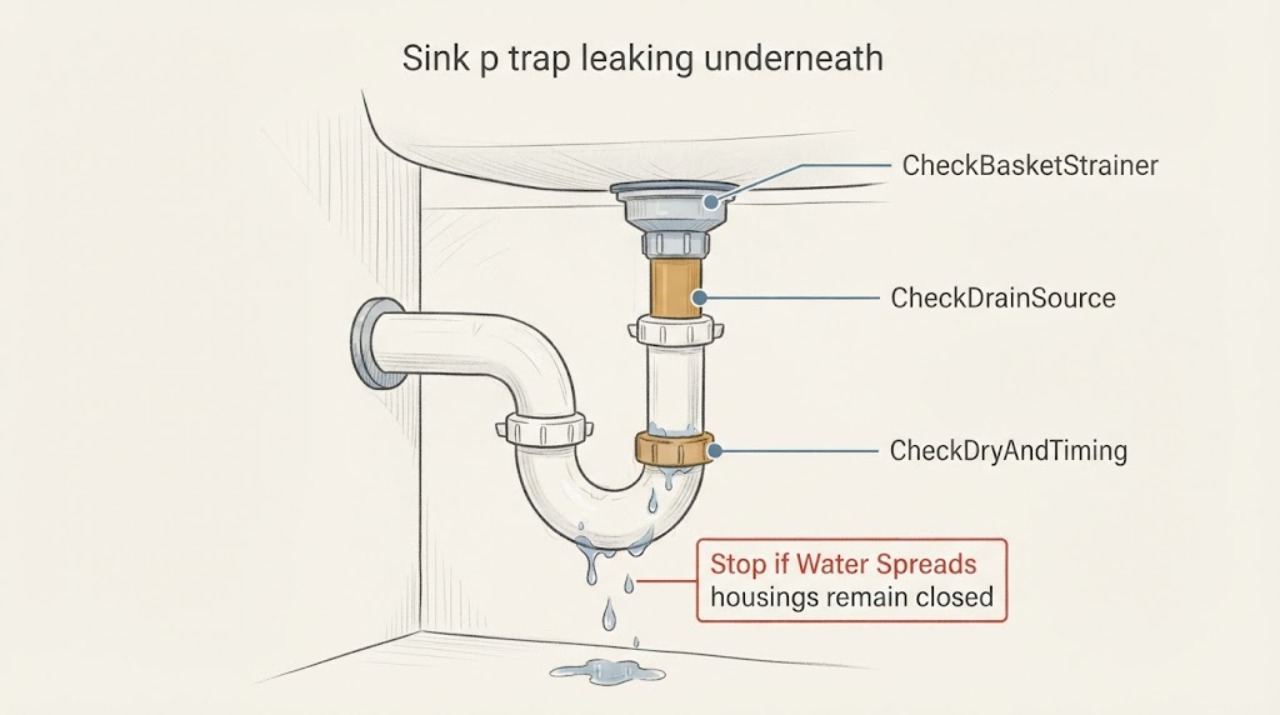
Sink p trap leaking underneath: What to Check and What to Do Next
A wet P-trap does not prove that the trap itself is leaking. First dry the cabinet and identify whether water appears only when the sink drains, at a P-trap slip-joint, at the tailpiece above the trap, or around the sink basket strainer.