
On this page
Start here
Quick answer
If a sink still has no water after heat was applied, stop applying heat and do not use a torch, open flame, or high-heat device. First check from a dry, safe position whether the loss is at this sink only or also affects other fixtures, and whether both hot and cold sides are affected. A frozen supply pipe can block flow, but thawing can reveal a split pipe and cause a sudden leak. Look for water, bulging walls or ceilings, dripping sounds, or a wet cabinet without opening walls or touching damaged piping. If a pipe has burst, water is escaping, or electrical equipment is wet, keep clear and have the water supply shut off by a safe, known valve or emergency professional; otherwise arrange a licensed plumber when the line remains frozen, inaccessible, or the whole home has no water.
Work through in order
Diagnostic checks
Use only checks that match the exact appliance or system and its official guide.
-
Check 1
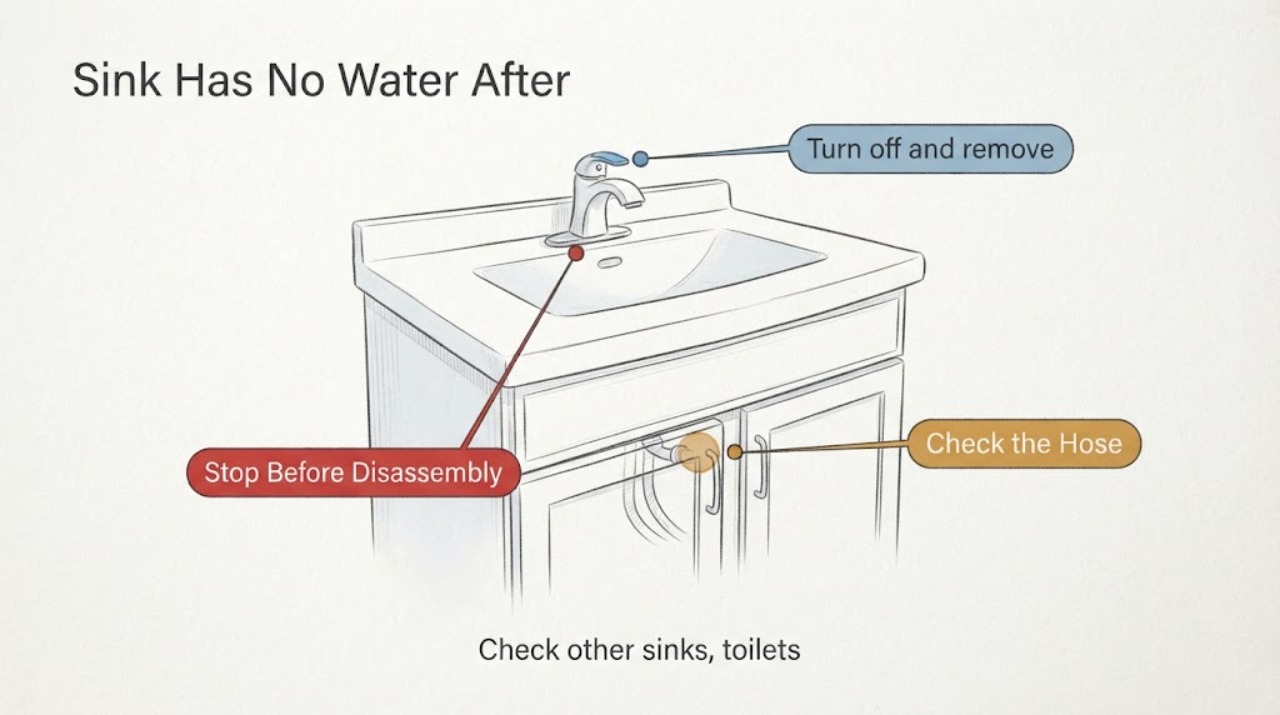
Turn off and remove the heat source from the area without continuing to heat the pipe. From a dry position, look and listen for dripping, spraying, wet cabinetry, water on the floor, a bulging wall or ceiling, or a sudden change in the sink's flow.
Expected result: No water or damage is visible, a slow drip or wet area appears, or water is actively escaping or approaching electrical equipment.
Next step: Keep away and do not apply more heat. For active leakage or water near electrical equipment, use only a known safe shutoff if it can be reached without entering water; otherwise leave the area and call a plumber or emergency service.
Stop if: Stop immediately for active spraying, rapidly increasing water, a sagging ceiling, wall movement, smoke, sparks, or water near electrical equipment.
Why this matters
Why: No flow can still be a frozen or closed supply; water appearing after warming can indicate a split line, while active water near electricity is an immediate hazard.
-
Check 2
With no visible leak, test the sink briefly using its normal handle controls and compare both hot and cold sides. Do not force the handles, remove the aerator, or disconnect a supply hose while the condition may be frozen.
Expected result: Neither side flows, only hot or only cold is absent, a trickle appears, or flow returns and then changes after warming.
Next step: Record the exact result and stop repeated handle tests. Compare other fixtures from safe, dry locations to decide whether the problem is local or whole-home.
Stop if: Stop if the handle or cabinet leaks, water appears unexpectedly, a pipe bulges, or the flow becomes uncontrolled.
Why this matters
Why: Both sides absent at one sink favors a local branch, faucet inlet, or frozen shared supply; one side favors its individual supply; a trickle is consistent with a partial restriction such as ice; changing flow after warming increases concern for a thawing leak.
-
Check 3
Check other sinks, toilets, and showers without opening concealed plumbing, and note whether cold water, hot water, or all fixtures are affected. If a neighboring property or building unit is accessible to ask safely, note whether it has the same outage rather than manipulating shared equipment.
Expected result: Only this sink is dry, the same side is absent at several fixtures, all fixtures are dry, or the wider property or neighborhood also lacks water.
Next step: For a local result, arrange a plumber if flow does not return safely. For a whole-property result, check only known safe user controls and contact the building manager, water utility, or plumber; do not adjust a pressure device or open a meter or service box.
Stop if: Stop if water appears at another location, the main area is flooded, a pipe is visibly split, or any check requires entering standing water or opening a wall or ceiling.
Why this matters
Why: A single-sink result points toward a local valve, faucet, branch, or frozen cabinet/exterior-wall line; a broad result points toward a service line, main shutoff, building system, utility interruption, or widespread freezing.
-
Check 4
From a safe position, inspect only exposed pipe sections under or behind the sink cabinet and along known exterior-wall areas for frost, swelling, cracks, corrosion, or moisture. Do not touch a frozen pipe, dismantle the faucet, or remove insulation or wall material.
Expected result: An exposed section is visibly frozen but dry and intact, inaccessible or concealed, visibly cracked or swollen, or wet.
Next step: Do not apply additional heat. Arrange a licensed plumber when the freeze is inaccessible, the pipe is damaged, or flow does not return; keep the sink unused and monitor from a safe distance for water.
Stop if: Stop for cracks, bulges, active moisture, a pipe moving under pressure, a damaged cabinet or wall, or any need to use a torch, heat gun, or open flame.
Why this matters
Why: A visible, intact section may identify the likely frozen area, while an inaccessible, damaged, or wet section requires professional thawing and leak control; the damage may be elsewhere along the line.
-
Check 5
Record what heat was used, where it was applied, how long the sink had no water, the last known normal flow, indoor or outdoor cold conditions, hot/cold results, other fixture results, and all safe-distance leak observations. Do not repeat the heating experiment.
Expected result: Water returns fully with no leak, remains absent, returns only as a trickle, or returns with a leak, pressure surge, discoloration, or unusual sound.
Next step: Keep the record and arrange a licensed plumber for persistent, recurring, inaccessible, or damaged conditions. If full flow returns, continue monitoring without applying more heat and have the vulnerable line inspected if freezing is likely to recur.
Stop if: Stop and keep clear for any leak, structural moisture, electrical hazard, or return of no-flow after the line appeared to thaw.
Why this matters
Why: Full flow without damage may indicate a temporary restriction but does not prove the line is undamaged; persistent absence or a new leak needs plumbing diagnosis, and a pressure surge or unusual sound can accompany a compromised line.
-
Check 6
Prepare the service handoff with the sink location, whether hot and cold are affected, one-sink versus whole-home results, exposed pipe observations, heat method already used, leak or pressure changes, and any known safe shutoff location. Do not open concealed piping or restore a suspected damaged line for testing.
Expected result: The line remains frozen or inaccessible, flow is absent throughout the home, a pipe has split, or the sink works but the issue recurs in cold weather.
Next step: Arrange licensed plumbing service and provide the complete record. If there is active water, use only an already-known safe water shutoff without entering a wet or hazardous area, or wait for emergency professionals.
Stop if: Stop all work for flooding, wet electrical equipment, ceiling or wall damage, unsafe access, or any requirement to cut, drill, solder, or heat the pipe.
Why this matters
Why: These patterns need a plumber to evaluate the branch or service line, leak damage, insulation and exposure, valves, or building/utility supply; recurrence indicates an underlying freeze vulnerability.
Use your observations
Decision map
Find the observation that best matches what you see, then follow the next safe action.
-
PATH 01Next step
What you see
Only this sink has no water and both hot and cold sides are affected.
Do this next
Keep the sink unused and inspect only exposed, dry areas for a local frozen branch, damaged pipe, shutoff appearance, or faucet inlet issue. If flow remains absent or the line is concealed, call a licensed plumber.
-
PATH 02Next step
What you see
Only hot or only cold water is absent at the sink.
Do this next
Treat the affected supply path as the likely branch to report, without disconnecting hoses or dismantling the faucet. Compare the same temperature at another fixture and arrange service if the loss persists.
-
PATH 03Next step
What you see
Several fixtures or the whole property have no water after cold weather or heating.
Do this next
Check only known safe user controls and contact the building manager, water utility, or plumber. Do not adjust a main pressure device, open a service box, or assume the sink faucet is the cause.
-
PATH 04Next step
What you see
A trickle appears, or water returns after warming but a wet spot, drip, pressure change, or pipe noise follows.
Do this next
Stop heating and stop using the line. Keep clear, use only a safely reachable known shutoff if appropriate, and arrange prompt plumbing service for a possible split pipe.
-
PATH 05Next step
What you see
A torch, open flame, kerosene or propane heater, heat gun, or other high-heat method has been used or is being considered.
Do this next
Stop using that method. Do not continue heating; have a plumber assess the pipe and any heat or fire damage, especially if there is an odor, discoloration, smoke, or structural moisture.
-
PATH 06Next step
What you see
Active water, a burst or visibly split pipe, wet electrical equipment, a sagging ceiling, smoke, or unsafe access is present.
Do this next
Leave the hazard area, keep people away, and obtain emergency plumbing, electrical, or fire help as appropriate. Do not enter standing water or attempt a repair.
Helpful context
Understand the symptom
The condition matters: no water after applying heat is not proof that the pipe is clear or intact. Water expands when it freezes and can break a metal or plastic supply pipe. As ice melts, a damaged section may begin leaking, so stop the heat source and look for signs of water before attempting another test.
Compare the sink with the rest of the home. Both hot and cold sides failing only at one sink suggests a local supply, faucet, or frozen branch; one side failing suggests its individual supply path; several fixtures failing suggests a broader frozen service, closed supply, utility interruption, or leak. Keep the comparison brief and do not open walls, disconnect hoses, or force valves.
Never thaw a pipe with a torch, open flame, kerosene or propane heater, charcoal stove, or other high-heat method. If a pipe is accessible and intact, official winter guidance describes slow warming methods, but a line that remains blocked, cannot be safely reached, or shows a leak belongs with a licensed plumber.
Safety boundary
Stop conditions
- Stop immediately for active water, a burst or swollen pipe, water near electrical equipment, a sagging ceiling, smoke, fire, or unsafe access; keep clear and obtain appropriate emergency help.
- Stop using heat if any method involves a torch, open flame, kerosene, propane, charcoal, heat gun, or other high-heat device. Do not resume heating to chase water flow.
- Stop any check that requires entering standing water, forcing a shutoff, disconnecting a hose, dismantling the faucet, opening walls or ceilings, or working on a main valve or service line.
When checks do not resolve it
Need a professional?
Call a licensed plumber when the sink remains dry, the frozen area is concealed or inaccessible, several fixtures are affected, or flow returns only as a trickle., Request prompt service for a leak, split or swollen pipe, pressure surge, unusual pipe noise, recurring freeze, wall or ceiling moisture, or any water damage., Do not continue heating, use open flame or high heat, disconnect supply lines, open walls, force valves, or adjust the main water equipment to restore flow.
Common questions
FAQ
Should I keep applying heat if my sink still has no water?
No. Stop applying heat, especially any open flame or high-heat method. Check for leaks and compare other fixtures from a safe, dry position; a concealed or persistent frozen line needs a licensed plumber.
How can I tell if the problem is a frozen pipe or a sink faucet?
Compare hot and cold at the sink and check other fixtures. Both sides failing only at one sink favors a local branch or faucet supply; one side favors that supply path; several fixtures failing suggests a broader supply or frozen service issue. Do not dismantle the faucet while a freeze or leak is possible.
What if water returns after heating but then leaks?
Stop using the line and stop heating. A thaw can reveal a split pipe; keep clear, use only a known safe shutoff if it can be reached without entering water, and arrange prompt plumbing service.
Is a torch safe for thawing a frozen sink pipe?
No. Official winter guidance warns against torches, open flame, kerosene or propane heaters, charcoal stoves, and similar methods. If the line cannot be safely thawed or is inaccessible, call a licensed plumber.
Read the exact guide
Official sources
- Preventing & Thawing Frozen PipesAmerican Red Cross · American Red Cross frozen-pipe risk, safe thawing, and licensed-plumber guidance
- Winter Weather and Indoor Air QualityU.S. Environmental Protection Agency · EPA winter-weather pipe-freeze, burst-pipe, water-damage, and safe-heating guidance
- Home MaintenanceU.S. Environmental Protection Agency WaterSense · EPA WaterSense household leak observation and plumbing maintenance guidance
Community feedback
Share a repair observation
Share a plain-text repair observation. Accepted observations are published automatically; this page may take a moment to update.