
Repair problem
No Water Troubleshooting Guides
Published FixGraph guidance for diagnosing and responding to no water.
Matching published guides
Choose a guide that matches the service, equipment, and conditions you are seeing.
-
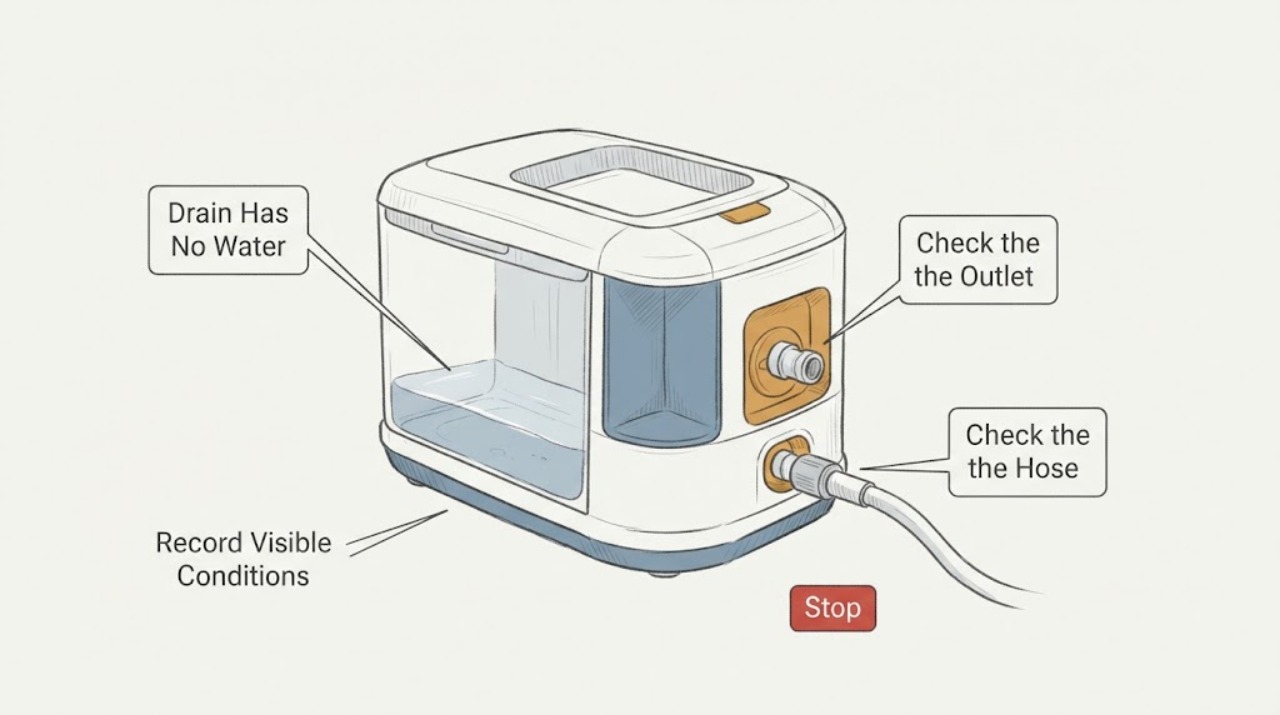
Drain Has No Water: Check the Tank, Trap, and Flow Path Safely
First clarify which part has no water: the tank or fixture is not filling, the drain opening receives water but it does not move, or the drain and trap are completely dry. With no leak, sewage, chemical, or electrical hazard, record the tank/fixture type and check the accessible supply, valve, level control, stopper or drain opening, and visible pipe path.
-
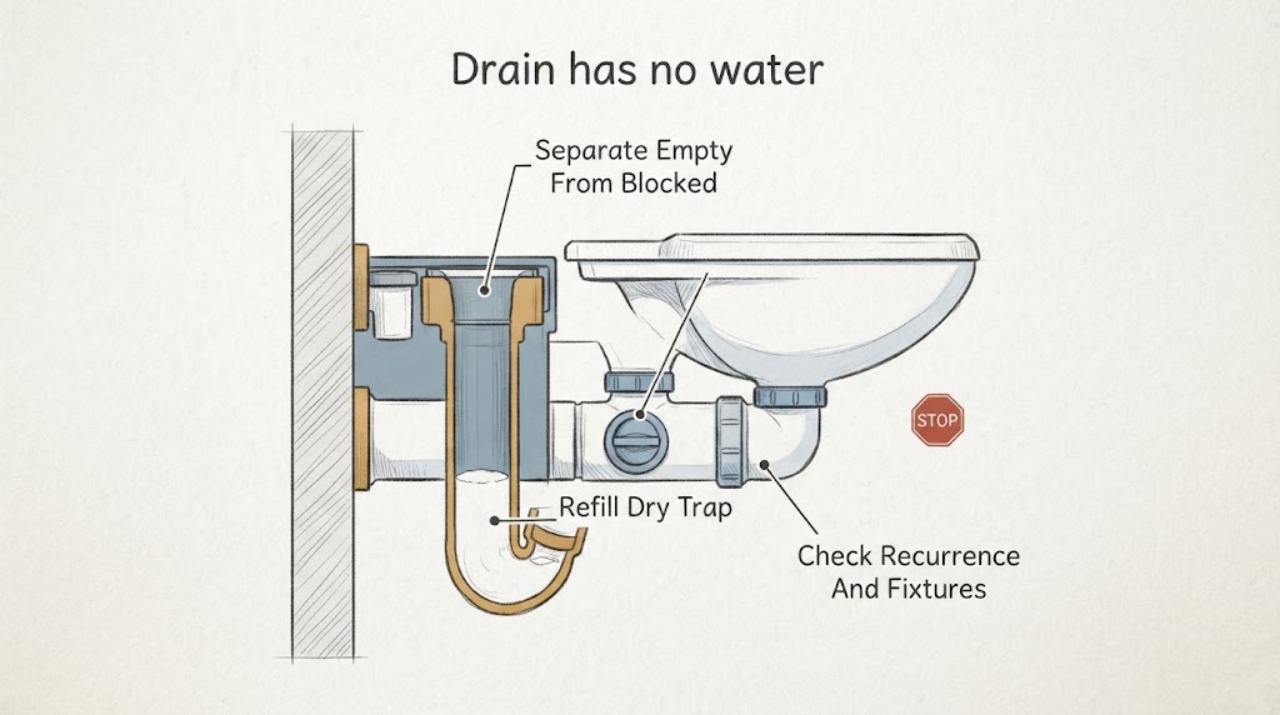
Drain has no water: Check the trap and know when to call a plumber
If a seldom-used drain is empty and you can see or smell an open drain path, its trap may have dried out and lost the water seal that blocks sewer gas. First distinguish an empty drain from a drain holding water that will not flow: the latter is a blockage or drainage problem, not a dry-trap fix.
-
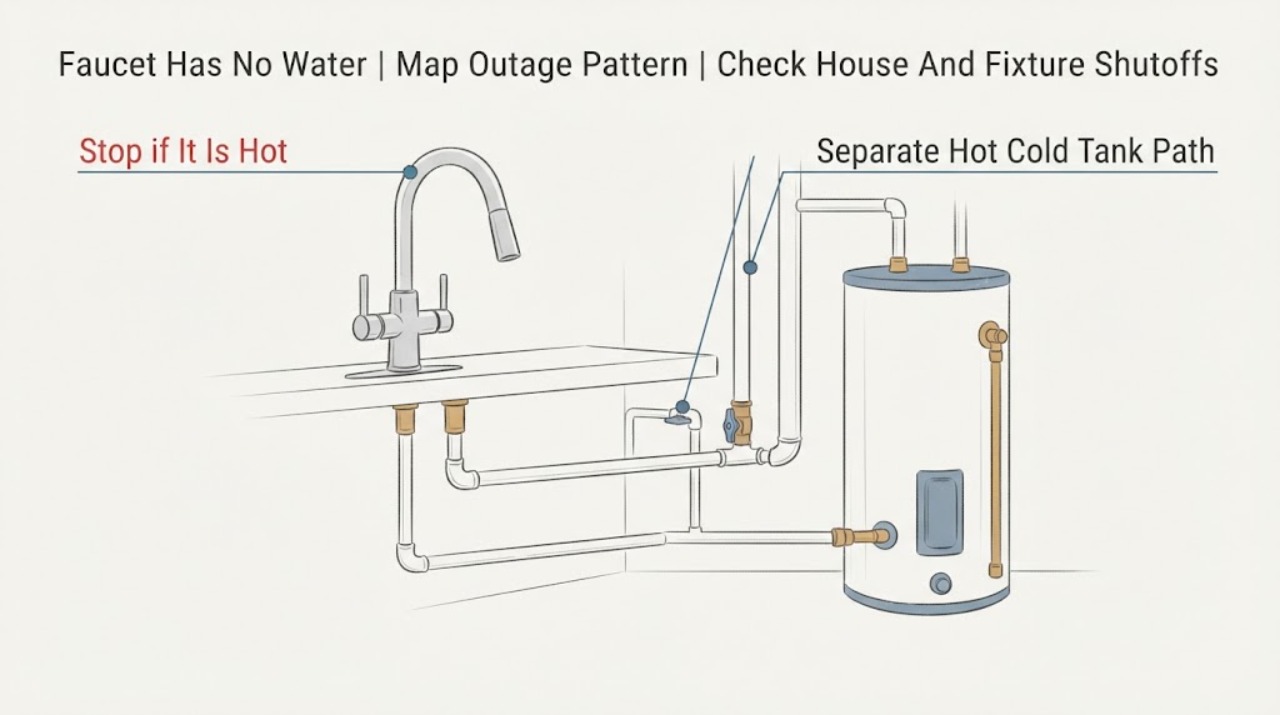
Faucet Has No Water: Check the Tank Supply Without Guessing
When a faucet has no water, do not assume the tank is the cause. First compare this faucet with another fixture and compare hot with cold.
-
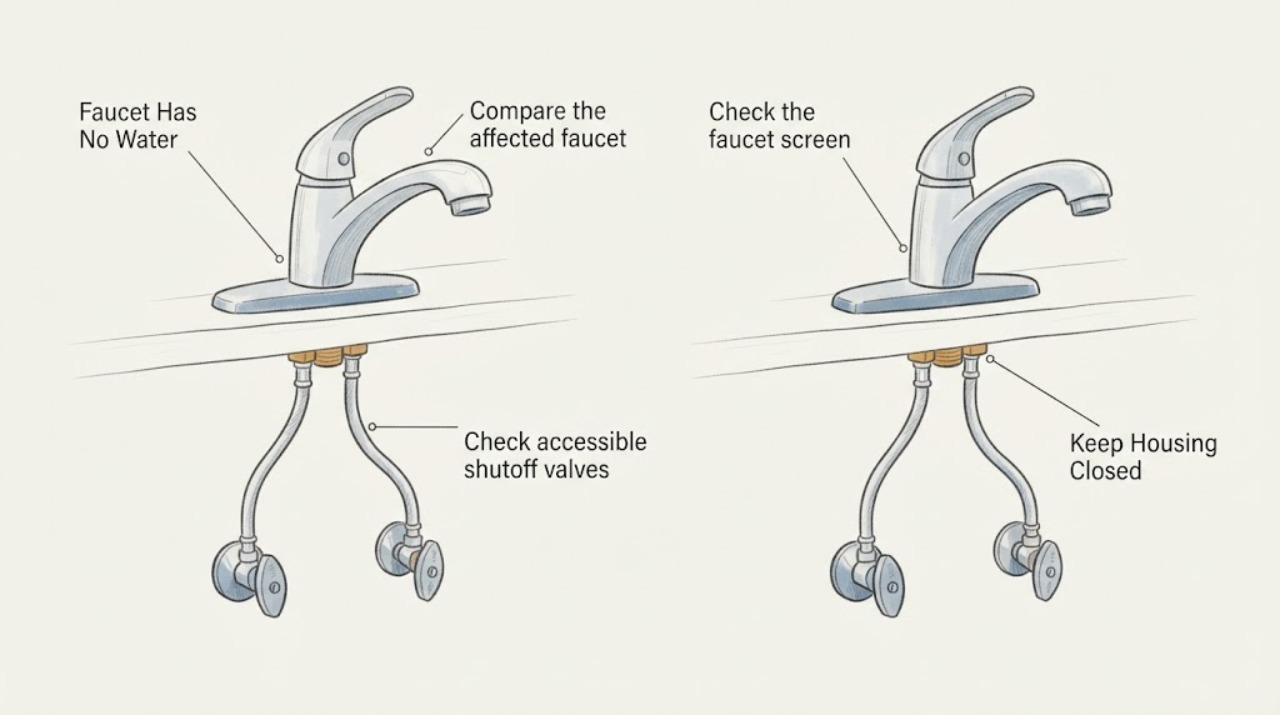
Faucet Has No Water: Safe Checks to Find the Supply Problem
Start by comparing the affected faucet with other fixtures and with both hot and cold handles. If only one faucet is dry, inspect its accessible shutoff valves, aerator, and visible supply path; if every faucet is dry, check the home's main valve, a utility or building shutoff, and whether neighbors are also affected.
-
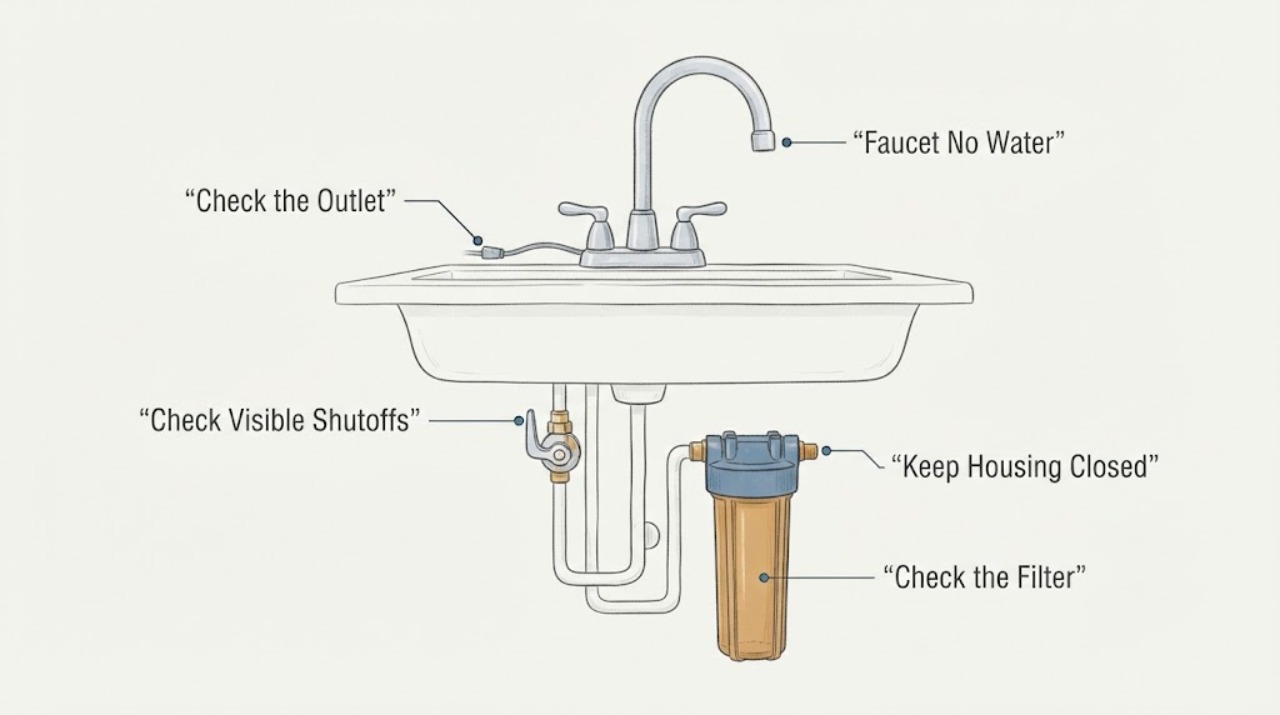
Faucet No Water: Check the Filter, Shutoff, and Supply Path
When a faucet has no water, first compare it with another faucet and test hot and cold separately. A blocked aerator or faucet-mounted filter can stop one outlet, but a closed shutoff, kinked supply line, cartridge, diverter, under-sink filter housing, or building-wide supply problem can look similar.
-
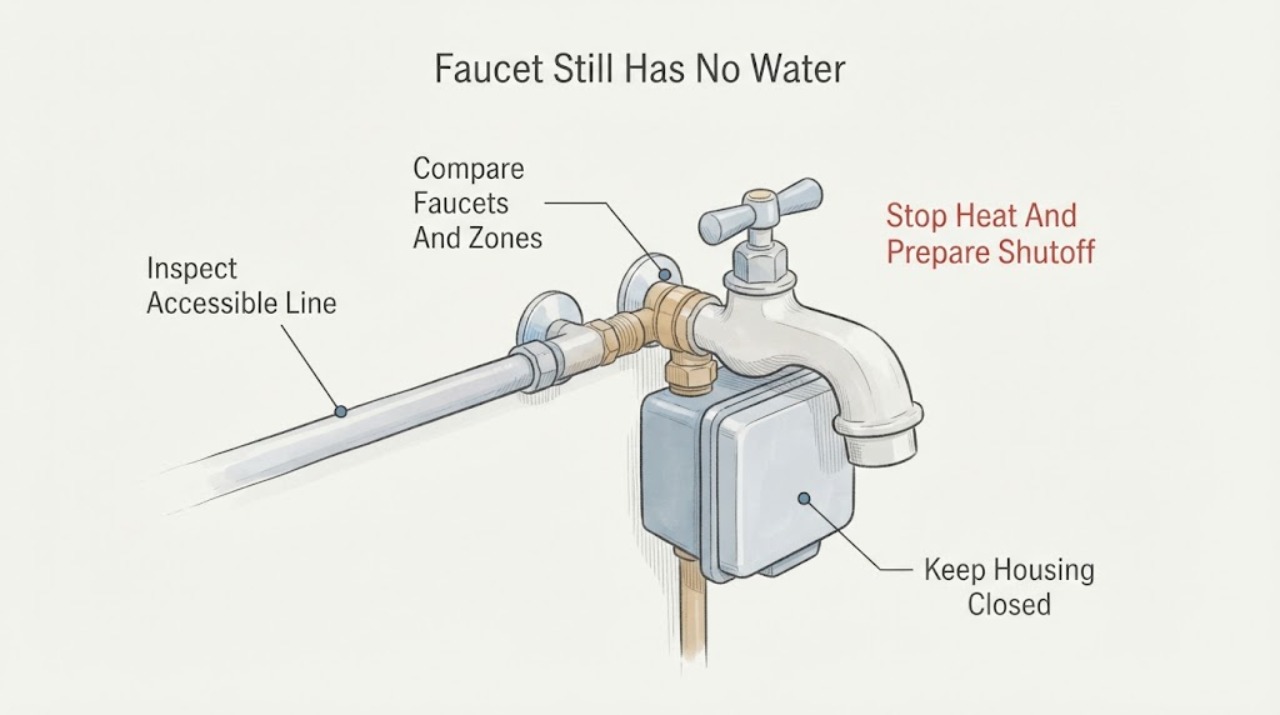
Faucet Still Has No Water After Applying Heat: Check for a Burst or Frozen Supply Line
Stop the heat treatment first; do not keep heating a faucet or pipe simply because water has not returned. If the faucet was dry or only trickled during freezing weather, the restriction may be in the supply line under the sink, in an exterior wall, at the service entry, or near the water heater.
-
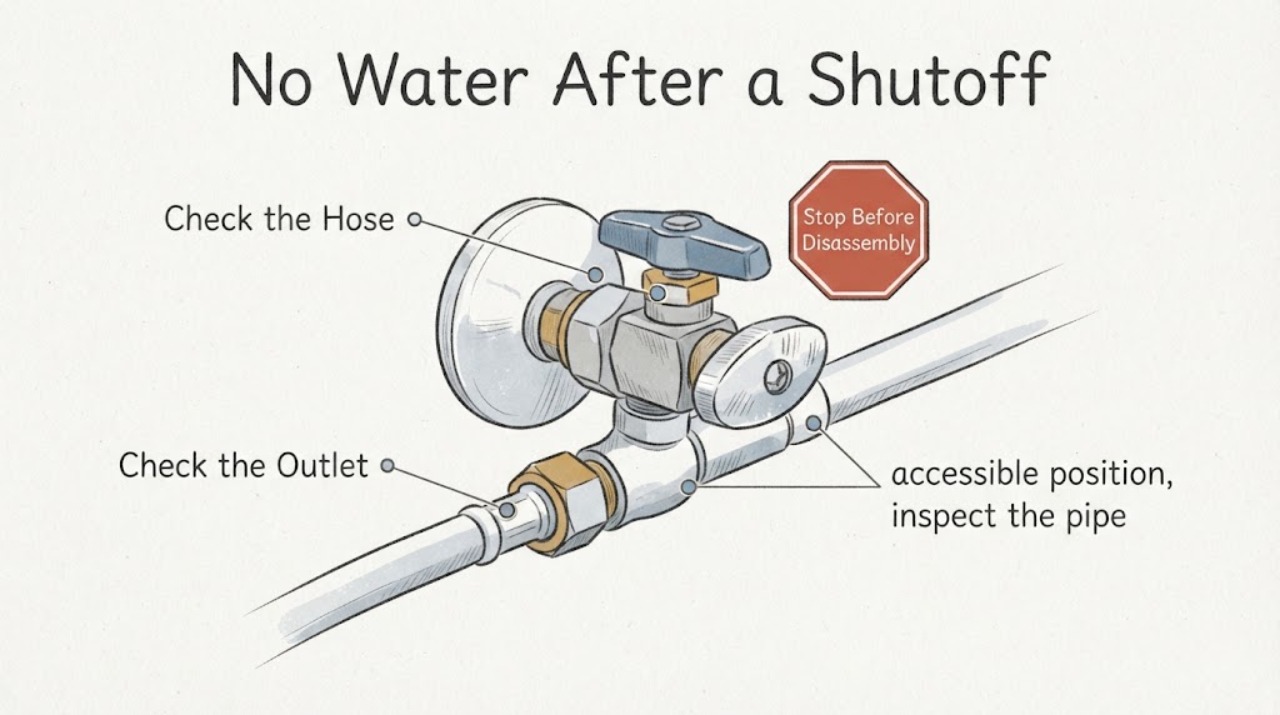
No Water After a Shutoff Valve: Safe Plumbing Checks
When no water comes through a valve, first compare the affected outlet with other fixtures to determine whether the problem is local or affects the whole property. Then identify the correct upstream shutoff and check its visible position and condition without forcing the handle.
-
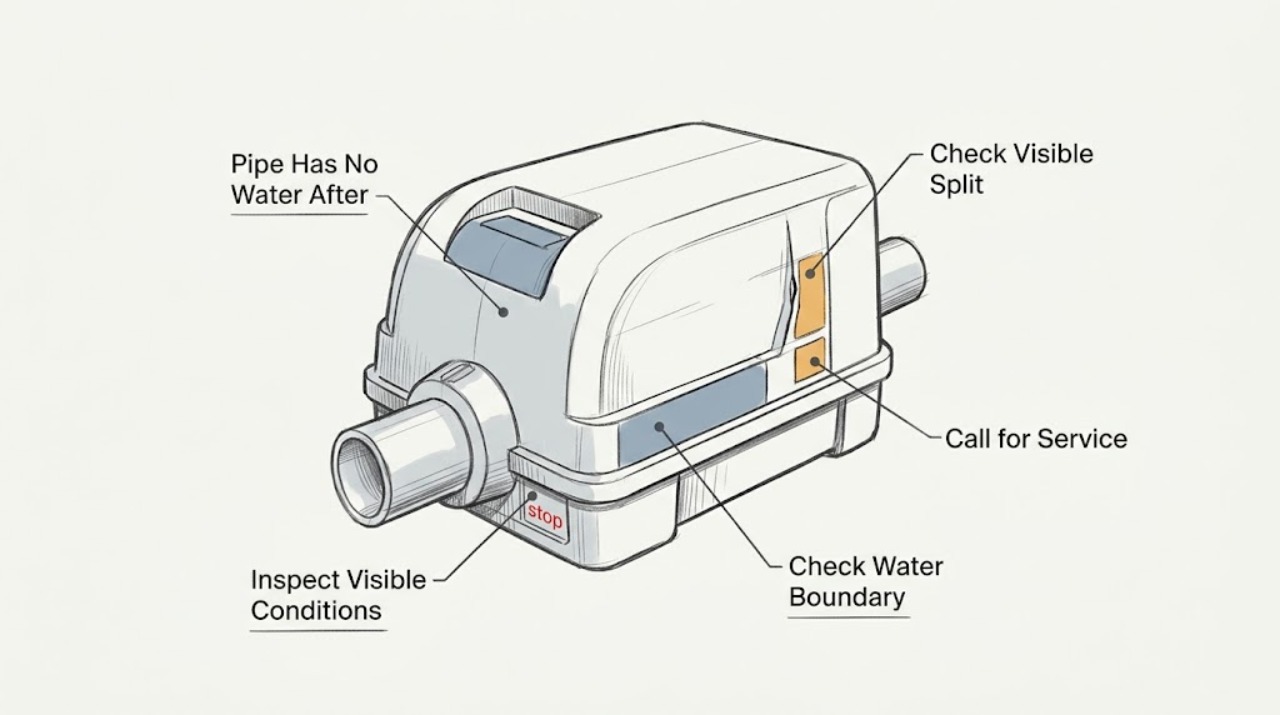
Pipe Has No Water After Applying Heat: Check for a Frozen or Split Line
If a pipe still supplies no water after heat was applied, the ice may not have cleared, the heat may not have reached the frozen section, a valve may be closed, or the pipe may have split while frozen and is now leaking as it thaws. Stop applying heat and check the nearest faucet, visible pipe, joints, walls, ceiling, and floor from a dry, safe position.
-
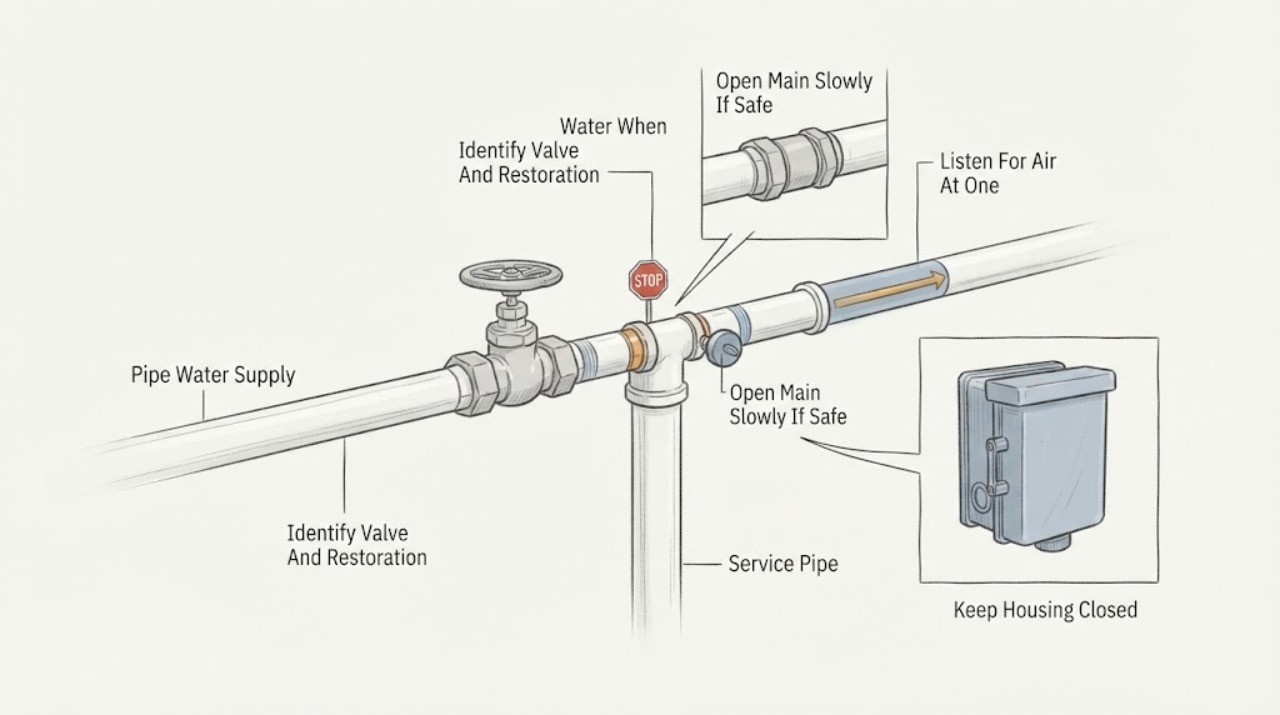
Pipe Has No Water When Turning the Main Back On
If a pipe or the house has no water when the main is turned back on, first confirm that the correct house valve is actually open and that the water company or building has restored service. Open one safe faucet slowly and listen for rushing air, but do not force the main valve, operate a meter or curb-stop valve, or repeatedly cycle the supply.
-
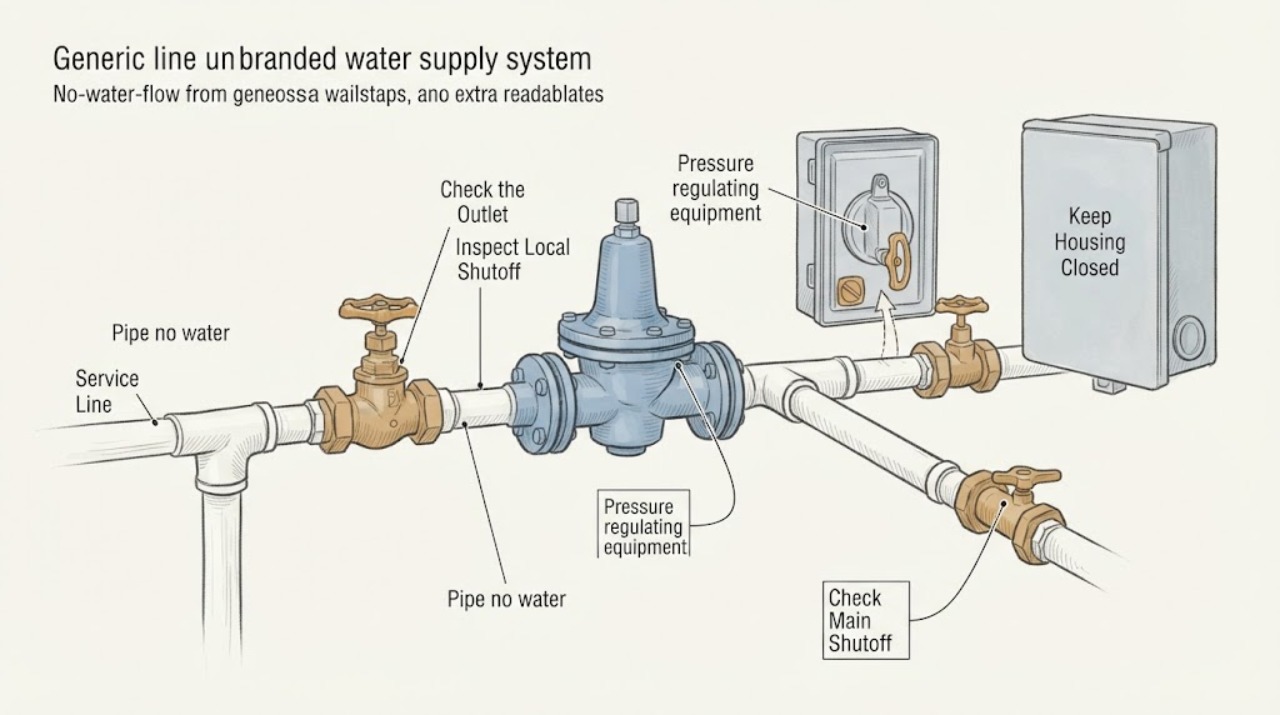
Pipe no water: determine whether the shutoff, supply, leak, or branch is stopping flow
No water from a pipe or fixture does not identify one failed part. First compare several fixtures and separate a whole-home outage from one branch, one faucet, or hot water only.
-
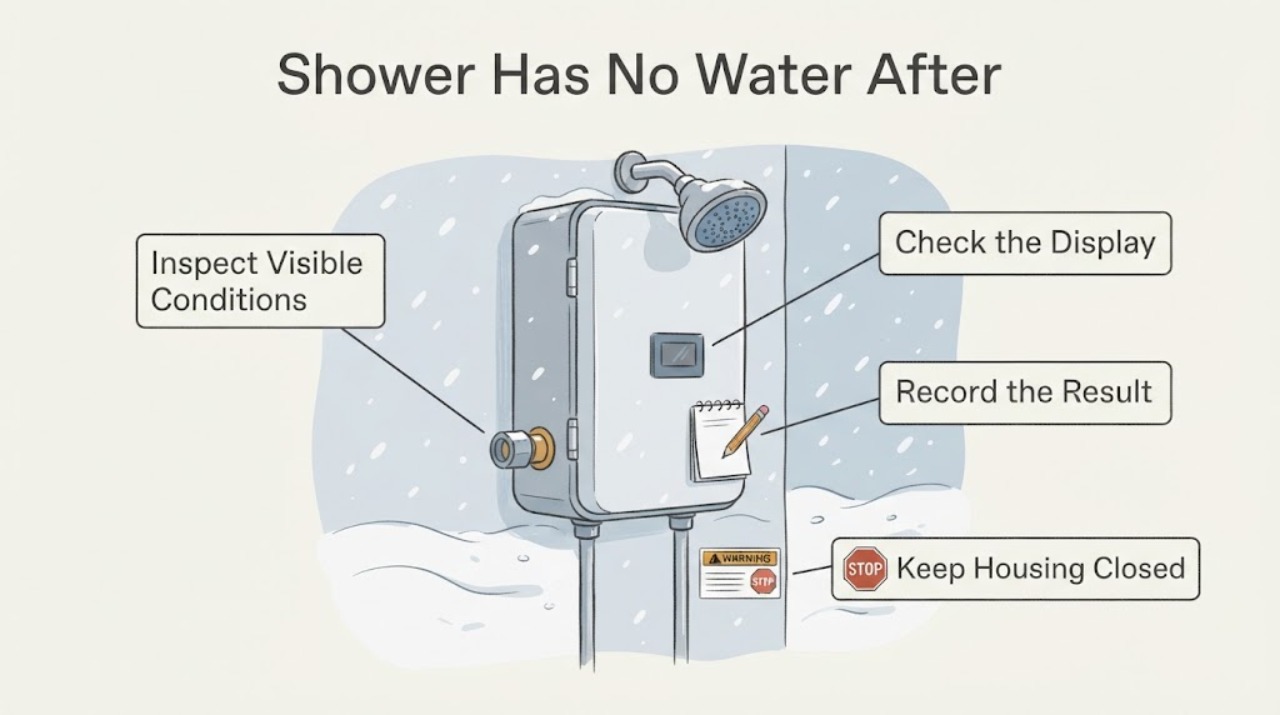
Shower Has No Water After a Blizzard: Check for Frozen Supply Safely
After a blizzard, a shower with no water may have a frozen branch pipe, a frozen or closed shower valve, a home water shutoff or utility outage, or a burst pipe that has lost pressure. First compare the shower with a nearby sink and both hot and cold sides without entering unsafe snow, ice, or flooded areas.
-
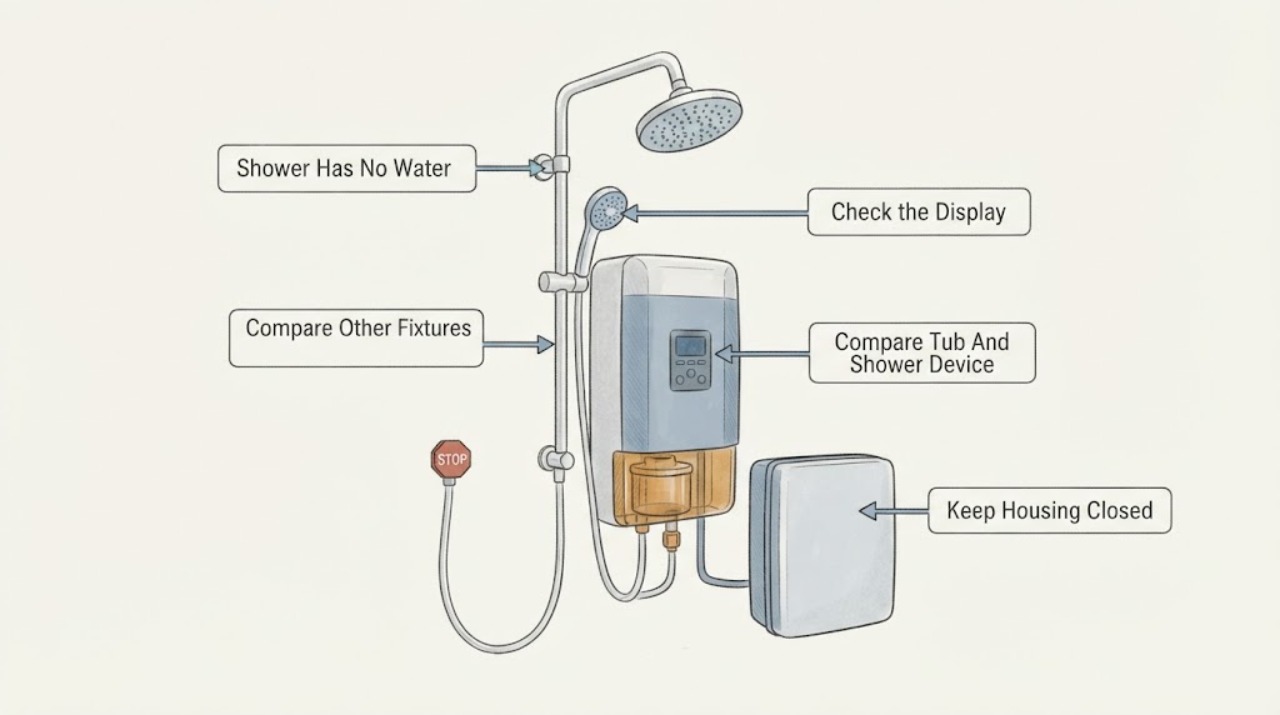
Shower Has No Water: Check the Valve, Showerhead, and Tank Supply
If a shower has no water at all, first separate a shower-only blockage or valve problem from a house-wide supply problem. Check another cold-water fixture and the tub spout if the shower shares one, then make sure the shower control is being operated in the direction required by its model and that any safely accessible supply stops are open.
-
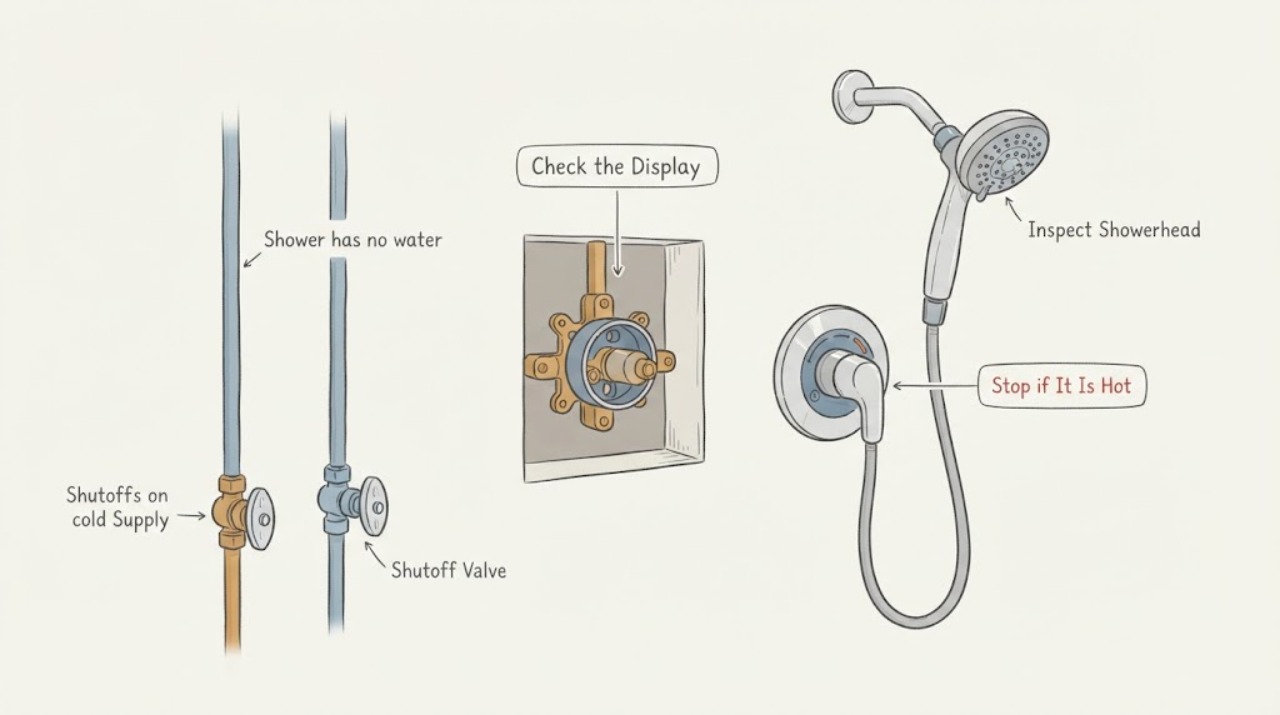
Shower has no water: safe checks before calling a plumber
First determine whether the problem is only the shower, only hot or cold water, or the whole home. Check other faucets and a lower-level fixture, compare hot and cold flow, and stop using the shower if water is leaking behind the wall, the floor is unsafe, or an electrical shower/controller is wet or damaged.
-
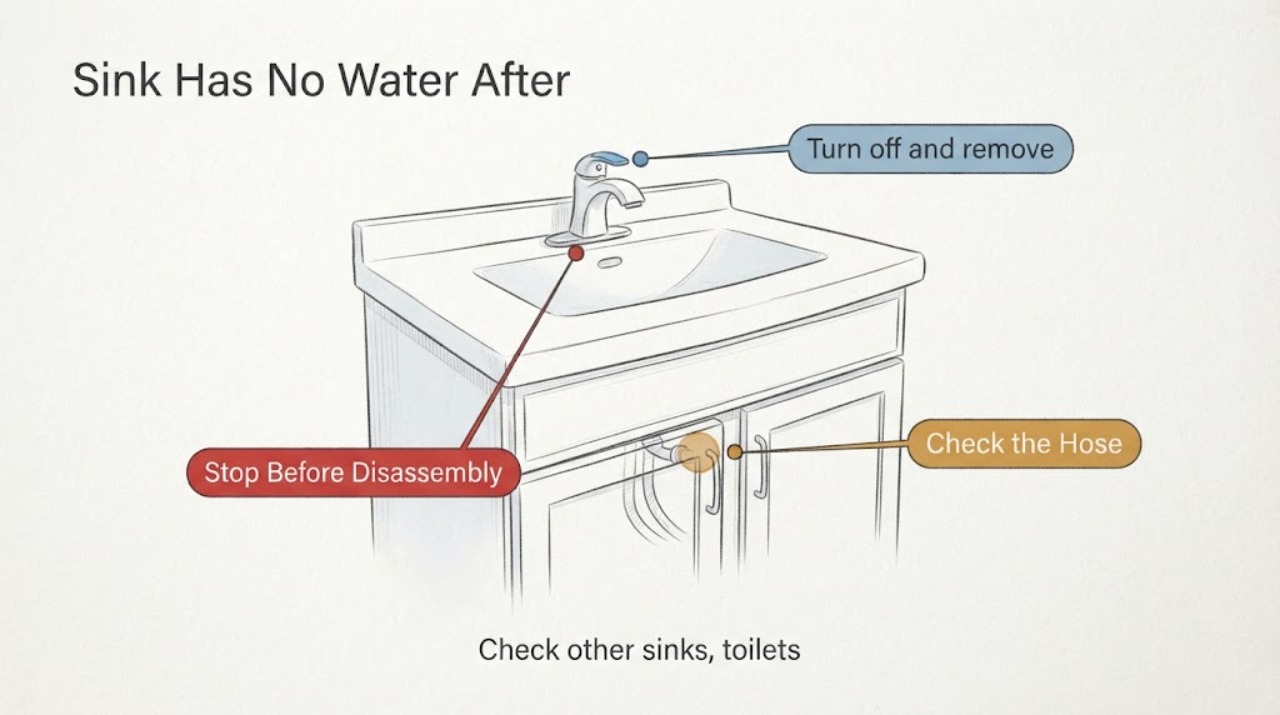
Sink Has No Water After Applying Heat: Stop and Check for a Frozen or Burst Pipe
If a sink still has no water after heat was applied, stop applying heat and do not use a torch, open flame, or high-heat device. First check from a dry, safe position whether the loss is at this sink only or also affects other fixtures, and whether both hot and cold sides are affected.
-
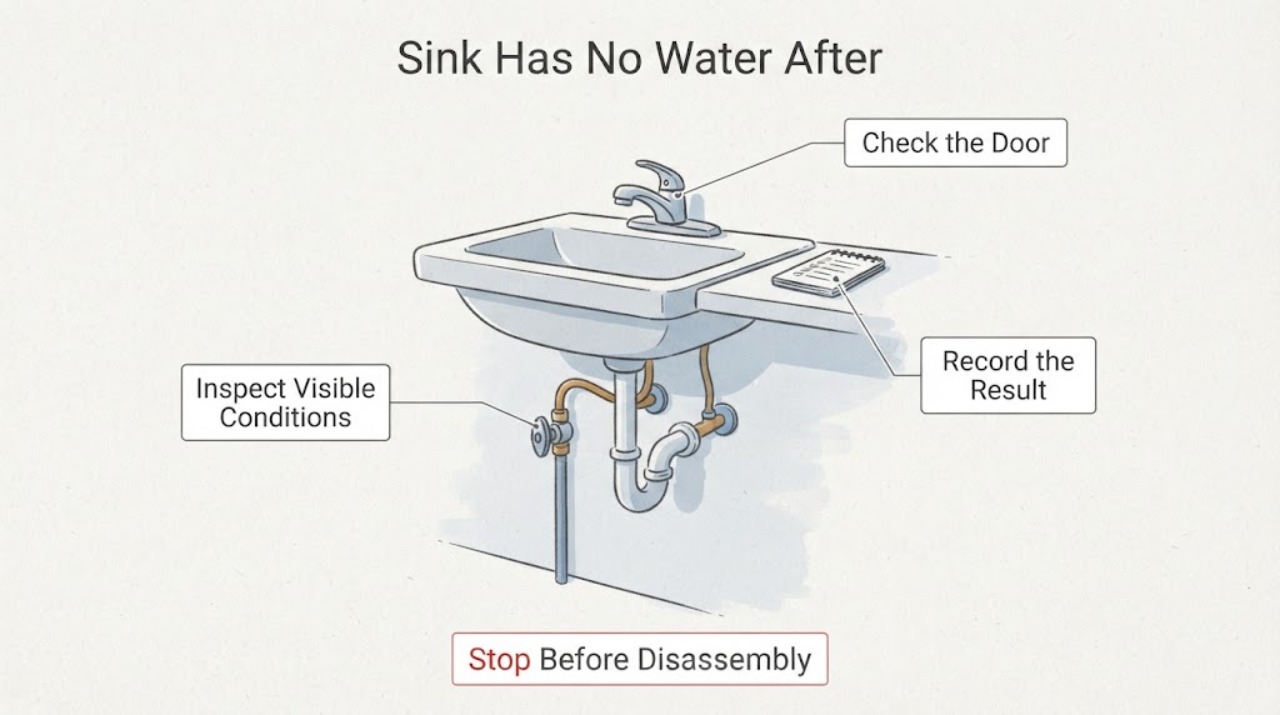
Sink Has No Water After Turning the Main Back On: Check the Valve, Air, and Sediment
After a main shutoff is turned back on, a sink may remain dry because the main or sink branch valve is not fully open, the neighborhood supply is still off, air is moving through the lines, or sediment has reached the faucet screen. First check whether other fixtures and neighbors have water, then inspect only the clearly accessible main and under-sink valves without forcing them.
-
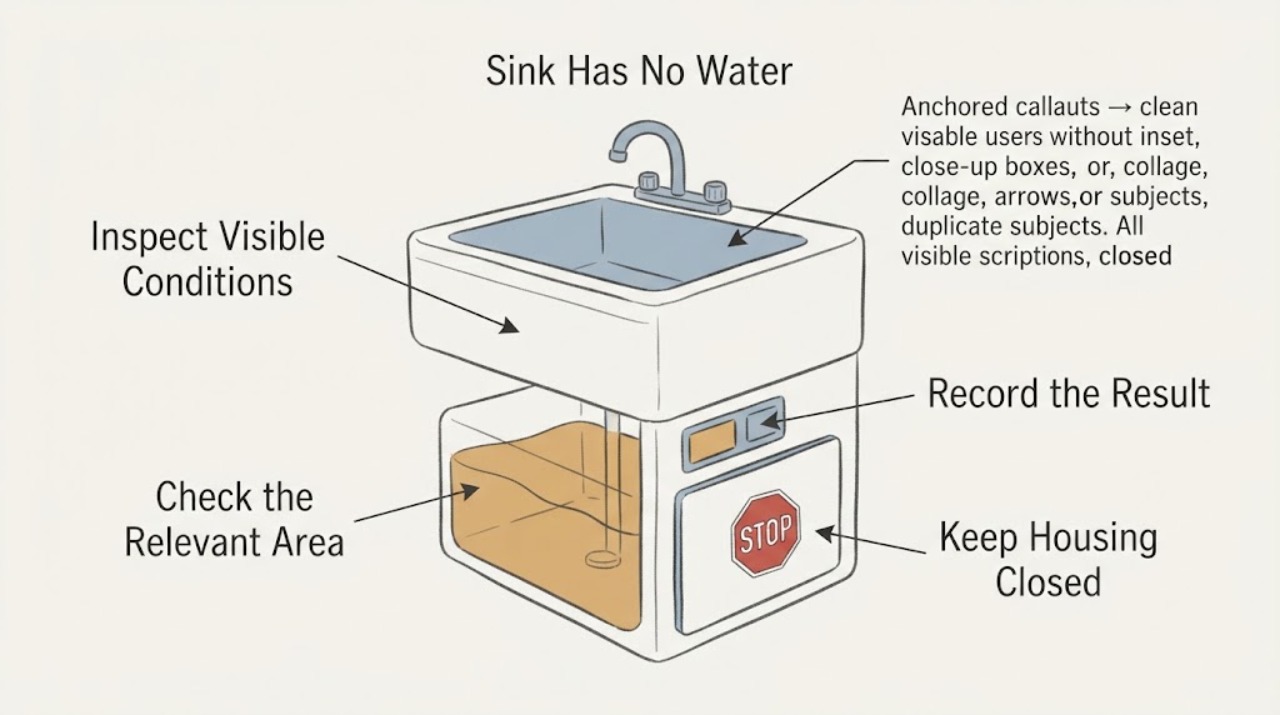
Sink Has No Water: Check the Tank and Supply Path Without Guessing the Device
First determine whether no water affects the whole sink, only hot or cold water, or only a dedicated filtered faucet. Confirm the local shutoff valves are open and dry, compare another fixture, and identify whether the under-sink tank is an actual reverse-osmosis storage tank or a different device.
-
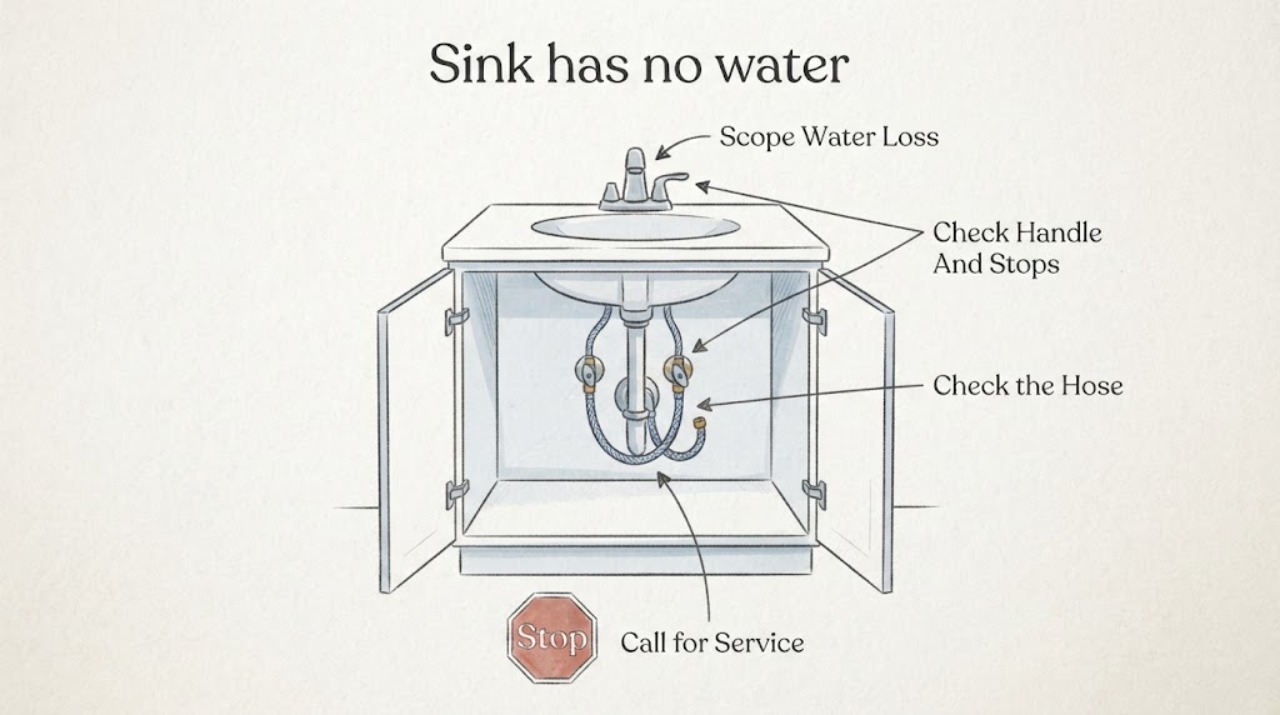
Sink has no water: separate a closed supply from a faucet blockage
When a sink has no water, first determine whether both hot and cold sides are affected and whether other fixtures still have water. A closed or partially closed shutoff valve, kinked supply hose, blocked aerator or sprayhead, low incoming supply, sensor or power issue on a touchless faucet, or a failed cartridge can all look like a dead faucet.
-
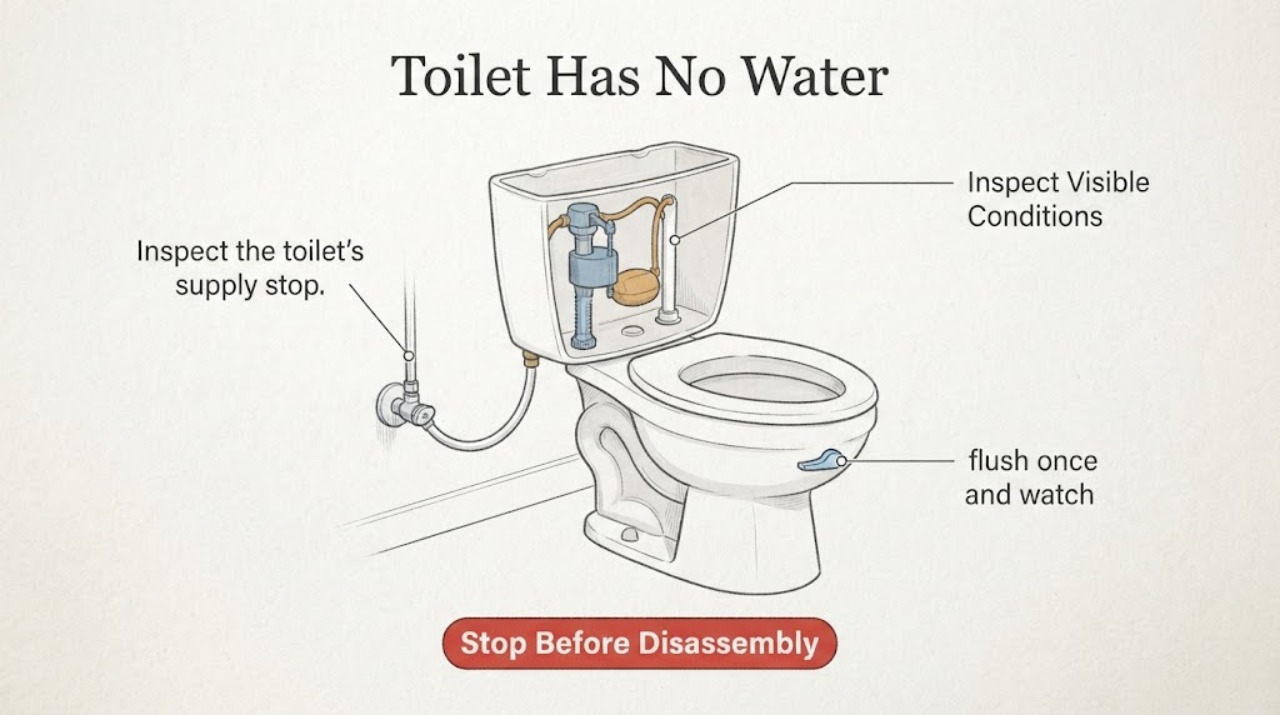
Toilet Has No Water: Check the Supply, Shutoff Valve, and Fill Valve
If the toilet tank is empty after a flush, first check whether other fixtures have water, then verify the toilet's supply stop is fully open and the supply line is not kinked. If water reaches the fill valve but the tank still does not refill, debris or a failed fill-valve/float assembly is more likely.
-
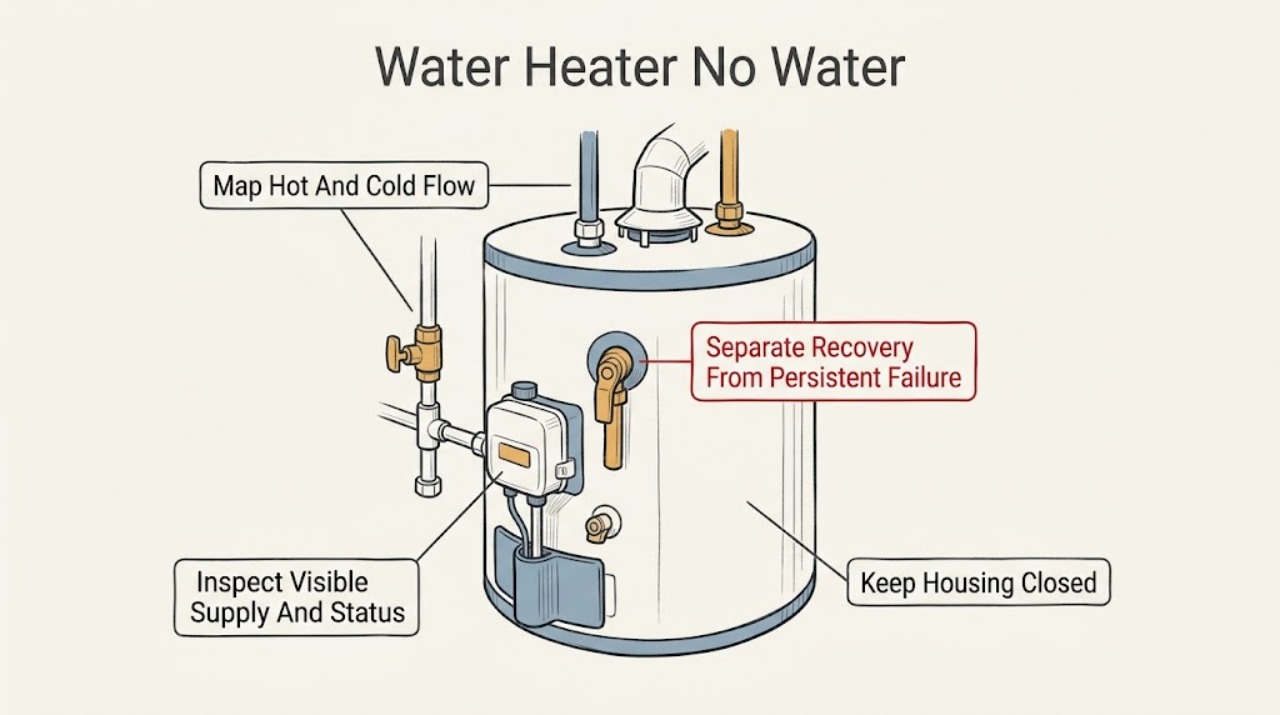
Water Heater No Water: Safe Checks for Flow and Heating
If a water heater seems to have no water, first distinguish no hot water from no water flow: compare hot and cold flow at more than one faucet. Normal cold flow with no hot water points toward the heater, a hot-side restriction, a mixing valve, or a plumbing leak; low flow from both hot and cold faucets points toward the home's supply or a wider plumbing issue.