
On this page
Start here
Quick answer
Water from a water heater's discharge pipe means the temperature-and-pressure relief valve has opened or is not sealing. A small drip that appears during or just after a heating or recovery cycle often points to thermal expansion, excessive incoming pressure, or a missing or failed expansion tank. A continuous drip when the heater is not recovering can indicate debris or a worn relief valve. A large flow of very hot water, a blocked or capped pipe, a leaking tank, or any sign of overheating is an urgent safety condition. Observe the source, timing, amount, and safe drainage path from a distance; never cap, plug, valve off, or otherwise restrict the discharge pipe, and do not manually lift the relief lever unless the exact manufacturer instructions and a safe discharge location are confirmed. Arrange qualified plumbing service for diagnosis and any pressure, expansion-tank, or valve work.
Before you begin
Safety first
- Do not cap or plug the relief path, touch hot discharge, manually operate the valve without verified safe conditions, remove the valve, adjust pressure controls, or open electrical or combustion covers.
Work through in order
Diagnostic checks
Use only checks that match the exact appliance or system and its official guide.
-
Check 1
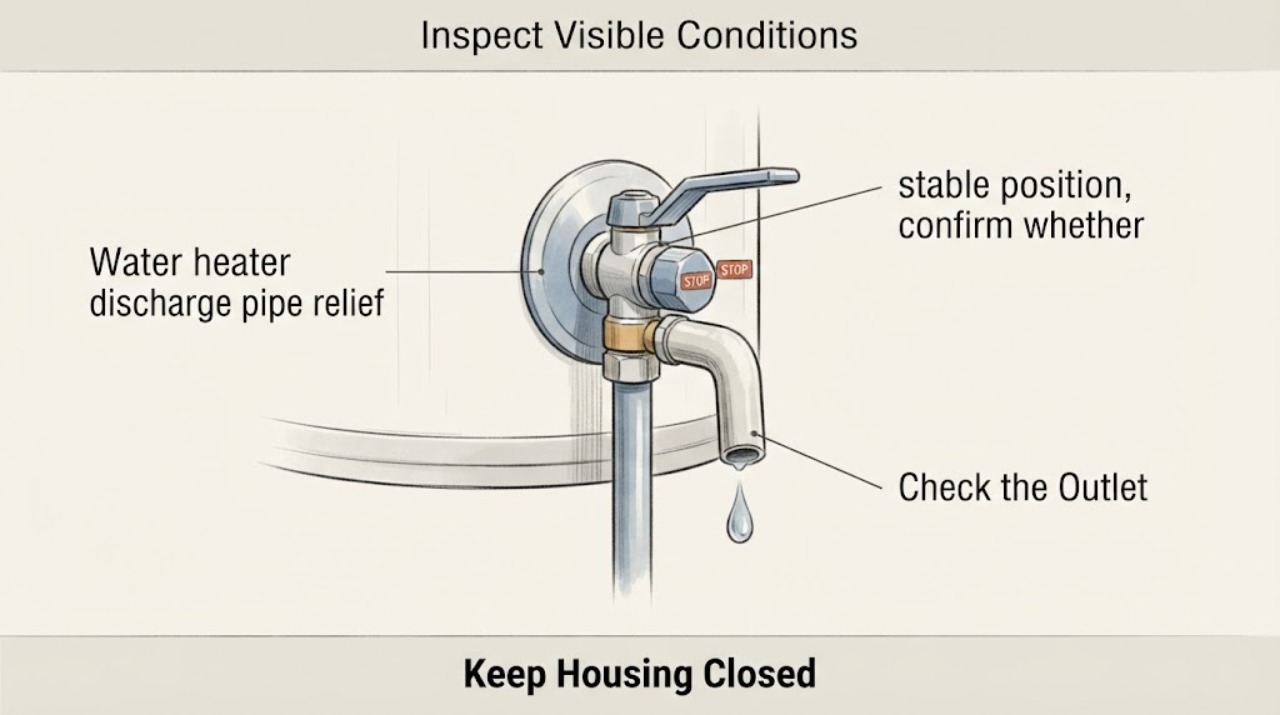
From a dry, stable position, confirm whether the water is actually coming from the relief-valve discharge pipe rather than a nearby fitting, drain valve, cold-water connection, condensate line, or tank seam; do not touch the water or relief valve.
Expected result: Record the apparent source, whether the discharge pipe is wet at its outlet, and whether water is also present around the tank body, fittings, electrical parts, or drain pan.
Next step: Photograph the source from a safe position. If water is near electrical parts, pooling around the tank, or coming from the tank body, keep clear and arrange qualified service rather than troubleshooting the relief valve.
Why this matters
Why: Water at the discharge outlet supports relief-valve activation or leakage. Water from the tank body, a connection, or an element area points to a different leak path and may require a faster shutoff and service response.
-
Check 2
Observe the discharge for a complete heating or recovery cycle without standing in front of the outlet or placing a container where hot water could splash.
Expected result: Note whether the drip is a few drops only during recovery, stops when the heater is idle, returns on every cycle, or becomes a steady or large flow of hot water.
Next step: For a recurring or continuous drip, arrange qualified plumbing diagnosis. For a large or very hot discharge, keep people away, stop ordinary troubleshooting, and use urgent qualified help.
Why this matters
Why: Cycle-linked small drips make thermal expansion or elevated supply pressure more likely. A continuous drip can indicate debris or a relief valve that is not sealing, while a large hot flow can indicate overheating or dangerous pressure.
-
Check 3
Inspect the visible end and routing of the discharge pipe from a safe position, without loosening it or inserting anything into the outlet.
Expected result: Record whether the pipe is present, open, unobstructed, able to drain, visibly damaged, kinked, frozen, capped, plugged, reduced, or routed into a location where discharge could injure someone or damage property.
Next step: Do not remove a cap, add a valve, plug the outlet, or alter the pipe as a DIY fix. Have a qualified plumber restore the correct unobstructed discharge arrangement and verify safe termination.
Why this matters
Why: A restricted or unsafe discharge path can prevent the relief valve from performing its safety function. The absence of an obvious restriction does not prove the valve or the plumbing system is safe.
-
Check 4
Look for external signs of a closed water system or pressure-control equipment, such as a pressure-reducing valve, backflow device, check valve, or thermal expansion tank, without adjusting or disconnecting any device.
Expected result: Record whether pressure-control or expansion equipment is visibly installed, whether it was recently changed, and whether the drip begins after hot-water use while all faucets are closed.
Next step: Provide the equipment layout and timing to a qualified plumber. Pressure measurement, expansion-tank sizing or charging, and pressure-reducing-valve work require the installed system's specifications and local requirements.
Why this matters
Why: Heating water in a closed system can increase pressure and activate the relief valve. A missing, undersized, failed, or incorrectly pressurized expansion tank, or excessive supply pressure, can therefore produce cycle-linked drips.
-
Check 5
Read the heater's normal external control or display and review recent service history for an overheating warning, temperature-control change, relief-valve replacement, tank work, or a new pressure-control device; do not remove panels or touch hot components.
Expected result: Note whether a warning is present, the heater is unusually hot, the discharge follows a control change, or the valve began dripping after installation or maintenance.
Next step: Stop if overheating, a large hot discharge, smoke, or damaged equipment is present. Preserve the alert and service record and arrange qualified service to check controls, pressure, expansion, and the relief valve.
Why this matters
Why: A temperature or control warning combined with a large hot discharge raises concern for overheating. A new valve or plumbing change may also have left a pressure or installation issue; the display and timing do not identify the failed part by themselves.
-
Check 6
Prepare a service handoff with the heater's visible brand and model, source of water, drip timing and amount, discharge-pipe condition, control or temperature observations, pressure-control equipment, and photographs taken without touching the outlet.
Expected result: The provider can distinguish thermal expansion, incoming pressure, a blocked or unsafe discharge path, debris, a worn relief valve, overheating, and a separate tank or plumbing leak.
Next step: Use a qualified plumber for pressure measurement, relief-valve inspection or replacement, expansion-tank assessment, discharge-pipe correction, and any adjustment near hot water or pressure controls.
Why this matters
Why: A relief valve or expansion tank is a conditional replacement or installation decision. The correct valve, pressure rating, pipe arrangement, and expansion control depend on the exact heater and the home's plumbing system.
Use your observations
Decision map
Find the observation that best matches what you see, then follow the next safe action.
-
PATH 01Next step
What you see
A few drops appear only during or just after the heater recovers, the outlet is otherwise dry, and there is no large hot flow or tank leak.
Do this next
Arrange a qualified pressure and expansion-control assessment. Do not block the pipe or change a pressure device based only on the drip.
Why this path and its safety boundary
Why it matters: Thermal expansion or elevated incoming pressure is more likely than a continuously failed valve, especially in a closed water system.
-
PATH 02Next step
What you see
The discharge pipe drips continuously while the heater is idle, or the drip remains after a relief event.
Do this next
Keep the discharge path open and arrange qualified plumbing service to assess the valve, pressure, expansion control, and heater temperature. Do not manually exercise the lever unless the manufacturer's instructions and safe discharge conditions are confirmed by the provider.
Why this path and its safety boundary
Why it matters: A relief valve that is not sealing, debris at the seat, or a continuing pressure or temperature condition is more likely; the cause cannot be confirmed from the outlet alone.
-
PATH 03Next step
What you see
A steady or large amount of very hot water is discharging, the control shows overheating, or the heater is unusually hot.
Do this next
Keep people away, avoid the stream and valve, and obtain urgent qualified help. Do not cap the outlet or approach hot equipment to force a reset.
Why this path and its safety boundary
Why it matters: The relief valve may be responding to an overheating or dangerous pressure condition rather than a nuisance drip.
-
PATH 04Next step
What you see
The discharge pipe is capped, plugged, kinked, frozen, reduced, damaged, or cannot drain to a safe location.
Do this next
Do not alter the pipe while the heater is pressurized or hot. Keep clear and have a qualified plumber restore the unobstructed, code-compliant discharge arrangement.
Why this path and its safety boundary
Why it matters: The pressure-relief safety path is compromised even if the current amount of water seems small.
-
PATH 05Next step
What you see
Water is coming from the tank body, a fitting, a drain or element area, or near electrical components rather than from the discharge outlet.
Do this next
Keep clear, protect people and property only if it can be done without approaching the hazard, and arrange qualified service; use urgent help for a serious leak or electrical danger.
Why this path and its safety boundary
Why it matters: This is a separate leak path or tank condition and should not be treated as ordinary relief-valve dripping.
Helpful context
Understand the symptom
The drip is a safety signal, not a drain to block
The temperature-and-pressure relief valve exists to release hot water when temperature or tank pressure becomes unsafe. A discharge pipe that drips is therefore evidence that the valve opened, is being held open by pressure or temperature, or is no longer sealing. The pipe must remain open and able to drain; capping or plugging it removes a safety path rather than fixing the cause.
Timing separates expansion clues from a valve problem
A small drip only while the heater recovers, followed by a dry pipe between cycles, is consistent with pressure rising as water is heated in a closed supply system. Dripping that continues when the heater is not recovering, especially after the valve has opened, can reflect debris or a valve that no longer seals. These are clues, not a reason to test the valve by hand or change pressure controls without a plumber.
Keep hot water and pressure in the safety decision
Do not touch the discharge stream, relief lever, nearby hot pipes, or a wet electrical area. A large amount of very hot discharge may indicate overheating, while an obstructed or badly routed pipe can prevent safe relief. If the discharge path cannot drain safely, stop and have qualified service correct it.
Safety boundary
Stop conditions
- Never cap, plug, valve off, obstruct, reduce, or otherwise restrict the temperature-and-pressure relief valve or its discharge pipe.
- Do not touch the discharge stream, relief lever, hot pipes, electrical parts, or a wet heater; do not manually operate the valve as a casual test.
- Stop for a large or very hot discharge, overheating indication, smoke, burning smell, tank leak, water near electrical parts, a blocked pipe, or an unsafe drainage path.
- Use qualified plumbing service for pressure measurement, expansion-tank work, relief-valve replacement, discharge-pipe correction, or any diagnosis that requires changing the heater or plumbing.
Only after diagnosis
Potential parts
- temperature-and-pressure relief valve
Consider a relief valve only after a qualified provider confirms the valve is not sealing and checks incoming pressure, thermal expansion, temperature control, debris, and the discharge arrangement.
Confirm the exact heater and valve specifications, pressure and temperature rating, connection arrangement, local requirements, and manufacturer fit information before ordering. - thermal expansion tank
Consider expansion control only when the plumbing system is closed or pressure rises during heating and a qualified provider determines that an expansion tank is missing, failed, incorrectly sized, or not correctly pressurized.
Sizing and placement depend on heater capacity, supply pressure, water-system design, and local plumbing requirements; verify with the manufacturer or qualified plumber.
When checks do not resolve it
Need a professional?
Contact the manufacturer or a qualified plumber when the relief valve drips beyond a single brief event, the discharge path is damaged or restricted, pressure or expansion equipment is involved, or the heater shows overheating or leakage.
Safety scope: Do not cap or plug the relief path, touch hot discharge, manually operate the valve without verified safe conditions, remove the valve, adjust pressure controls, or open electrical or combustion covers.
Have this ready
- Provide the visible brand and model, whether the heater is electric or gas, discharge source and timing, approximate amount and apparent temperature, pipe routing and termination, control observations, pressure-control or expansion equipment, recent service history, and safe photographs.
Common questions
FAQ
Why is my water heater relief-valve discharge pipe dripping?
A small drip during recovery often points to thermal expansion or high incoming pressure, especially in a closed system. Continuous dripping can indicate debris or a relief valve that is not sealing, while a large hot flow can indicate overheating.
Can I cap or plug the dripping discharge pipe?
No. The discharge path is a safety outlet and must remain unobstructed. Capping, plugging, adding a valve, or reducing the pipe can prevent relief and create a dangerous pressure condition.
Should I pull the relief-valve lever to flush it?
Do not operate the lever as a casual test. The discharge may be extremely hot, the outlet must drain safely, and a valve that does not reseat can worsen the leak. Follow the exact manufacturer instructions with qualified help when conditions are uncertain.
How does a thermal expansion tank relate to the drip?
When heated water cannot expand back into the supply in a closed system, pressure can rise and open the relief valve during recovery. A qualified plumber must determine whether expansion control is required, correctly sized, and functioning.
When is a dripping relief valve urgent?
Treat a large or very hot discharge, overheating indication, blocked pipe, tank leak, smoke, burning smell, or water near electrical parts as urgent. Keep clear and use qualified or emergency help; never approach hot equipment to block the outlet.
Read the exact guide
Official sources
- Discharging Temperature and Pressure Relief ValvesBradford White Corporation · Manufacturer professional bulletin for all listed residential and commercial units, used for the relationship between closed-system pressure, heating cycles, relief discharge, and expansion control; installation must follow the exact product and local code.
- Installation Instructions and Use & Care GuideA. O. Smith · Manufacturer use-and-care guide used for relief-valve purpose, discharge-pipe safety, dripping causes, overheating warnings, and qualified-service boundaries; the installed model and local code control.
- How to Extend the Life of Your Rheem Heat Pump Water HeaterRheem Manufacturing Company · Manufacturer maintenance article used for safe observation of the T&P valve and the warning that residual dripping may require replacement; heat-pump-specific instructions and the installed model control.
- Technical Bulletin: Thermal Expansion (Bulletin 45)A. O. Smith · Manufacturer technical bulletin used for cycle-linked relief-valve drips and closed-system expansion context; pressure testing and system changes require qualified service and local requirements.
Community feedback
Share a repair observation
Share a plain-text repair observation. Accepted observations are published automatically; this page may take a moment to update.