
Repair problem
Water Heater Relief Valve Dripping Troubleshooting Guides
Published FixGraph guidance for diagnosing and responding to water heater relief valve dripping.
Matching published guides
Choose a guide that matches the service, equipment, and conditions you are seeing.
-
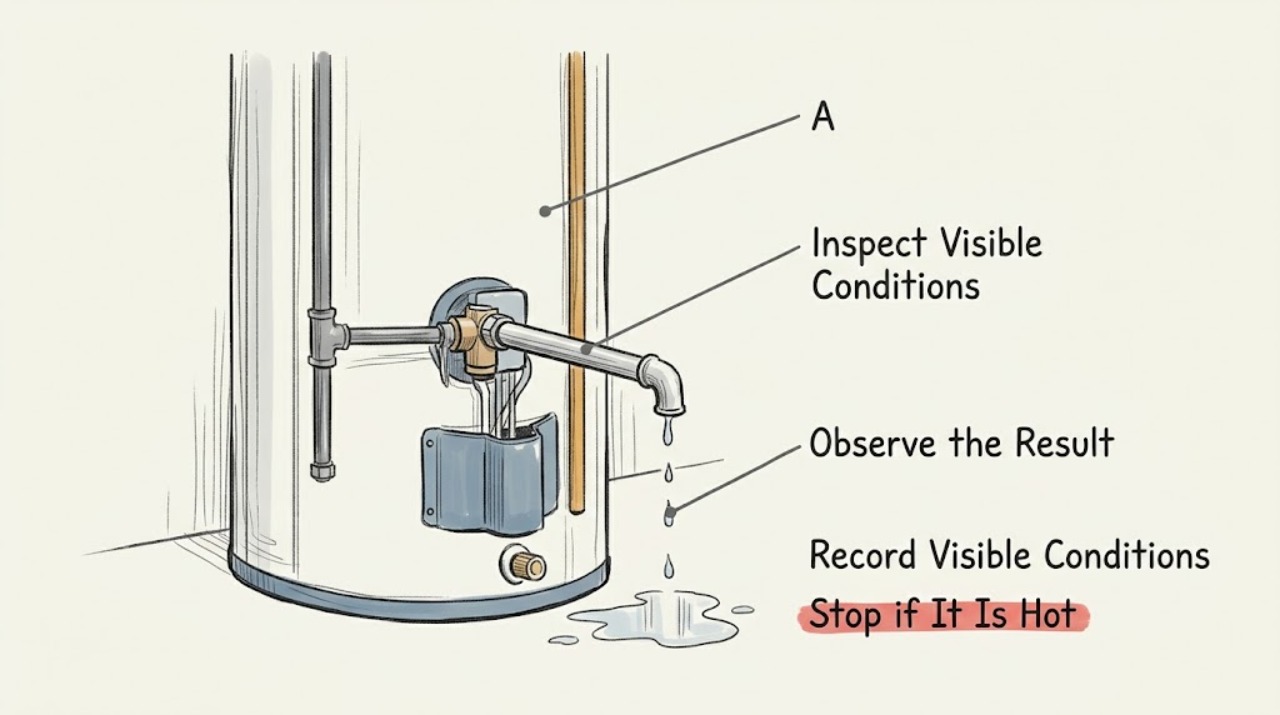
A. O. Smith Water Heater Discharge Pipe Relief Valve Dripping: What to Check and What to Do Next
A dripping discharge pipe on an A. O.
-
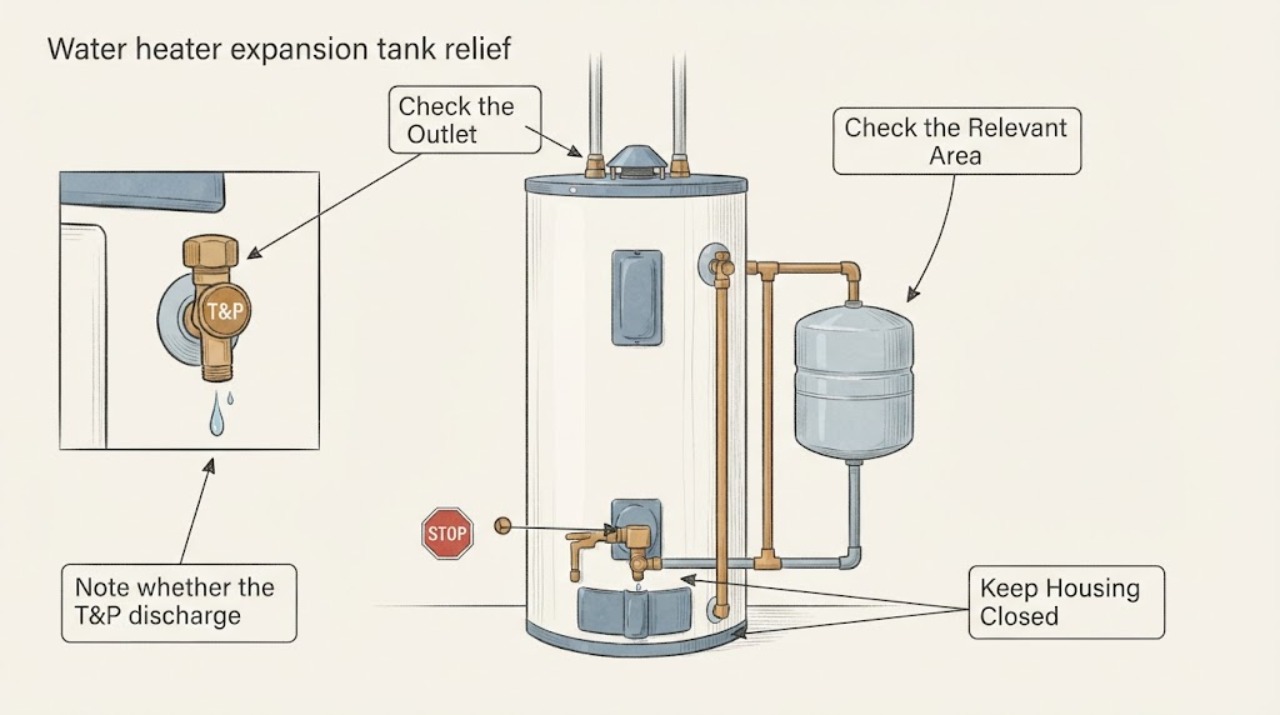
A. O. Smith water heater expansion tank relief valve dripping: What to Check and What to Do Next
A dripping discharge pipe on an A. O.
-
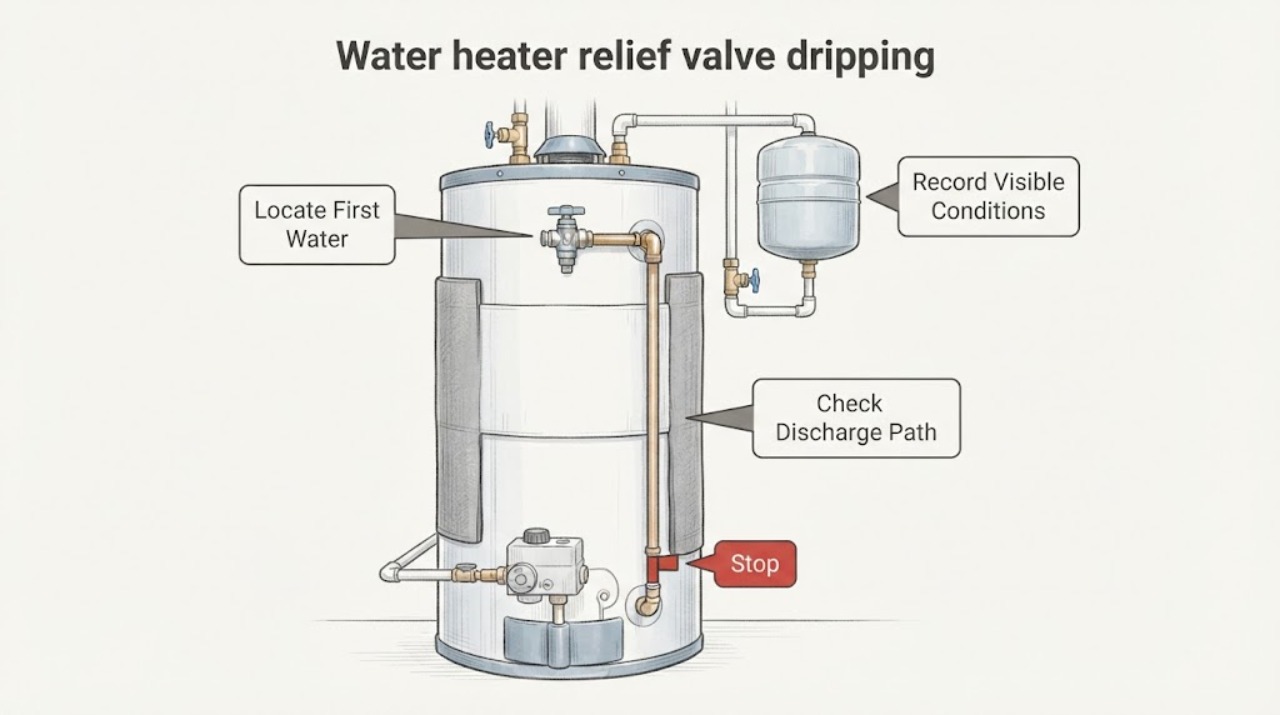
A. O. Smith water heater relief valve dripping: What to Check and What to Do Next
A dripping A. O.
-
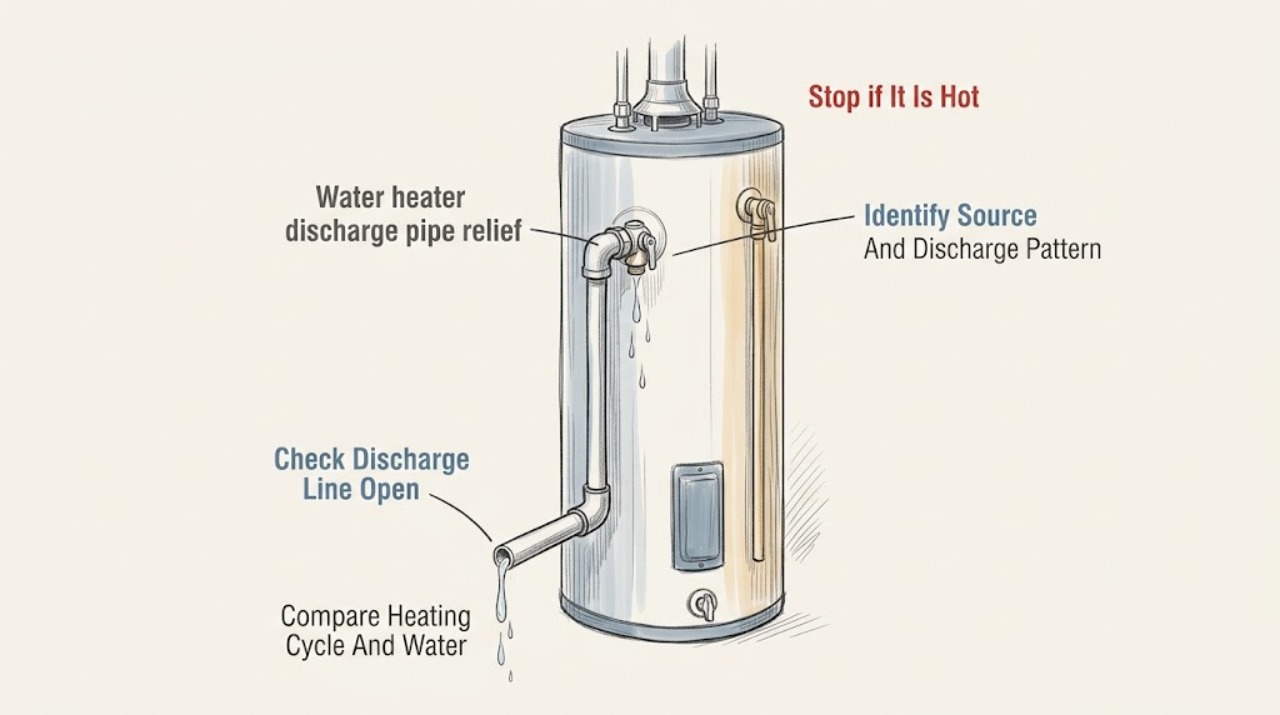
Bradford White water heater discharge pipe relief valve dripping: What to Check and What to Do Next
Water dripping from a Bradford White water heater's temperature-and-pressure relief (T&P) valve discharge pipe is not a pipe to cap or plug. A brief drip during heating can be related to thermal expansion in a closed water system, while a continuous discharge, very hot water, a valve that will not stop, or a leaking tank can indicate excessive pressure, overheating, a contaminated or failed relief valve, or a more serious water-heater fault.
-
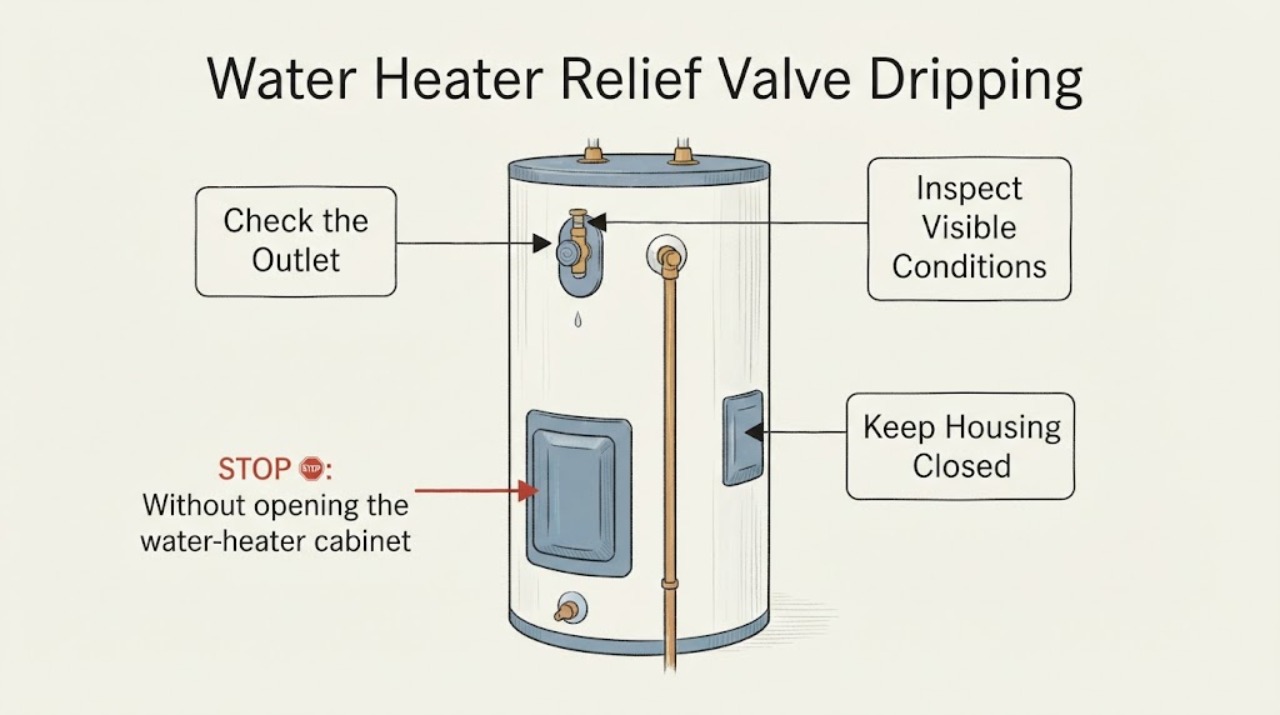
Bradford White Water Heater Relief Valve Dripping: What to Check and What to Do Next
A dripping temperature and pressure relief valve is a safety signal, not a nuisance leak to cap. Water may be discharged because a closed water system is building pressure as water heats, because the valve is defective or contaminated, or because temperature or another water-heater condition needs attention.
-
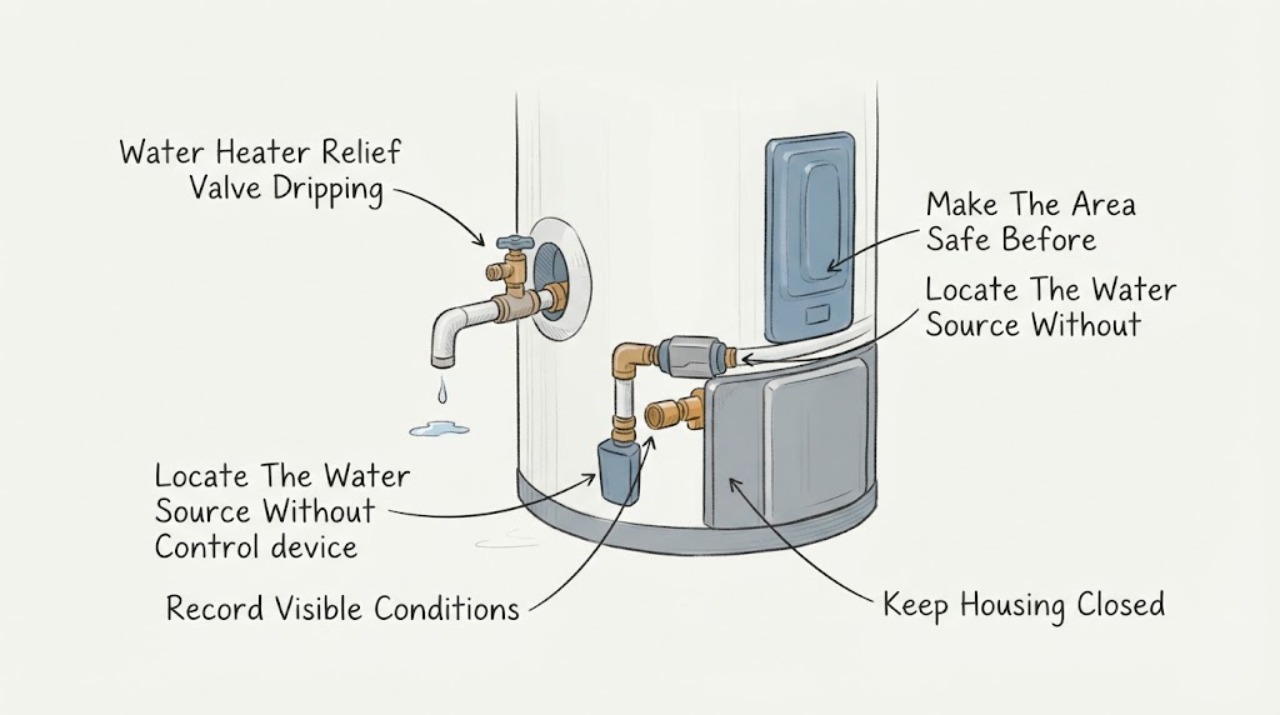
Rheem Water Heater Relief Valve Dripping: What to Check and What to Do Next
A drip from a Rheem water heater's temperature-and-pressure (T&P) relief valve or its discharge pipe is a safety signal, not a fitting to cap. Keep people away from the outlet because the water may be scalding, and do not lift the lever, remove the valve, or work on the heater while it is hot.
-
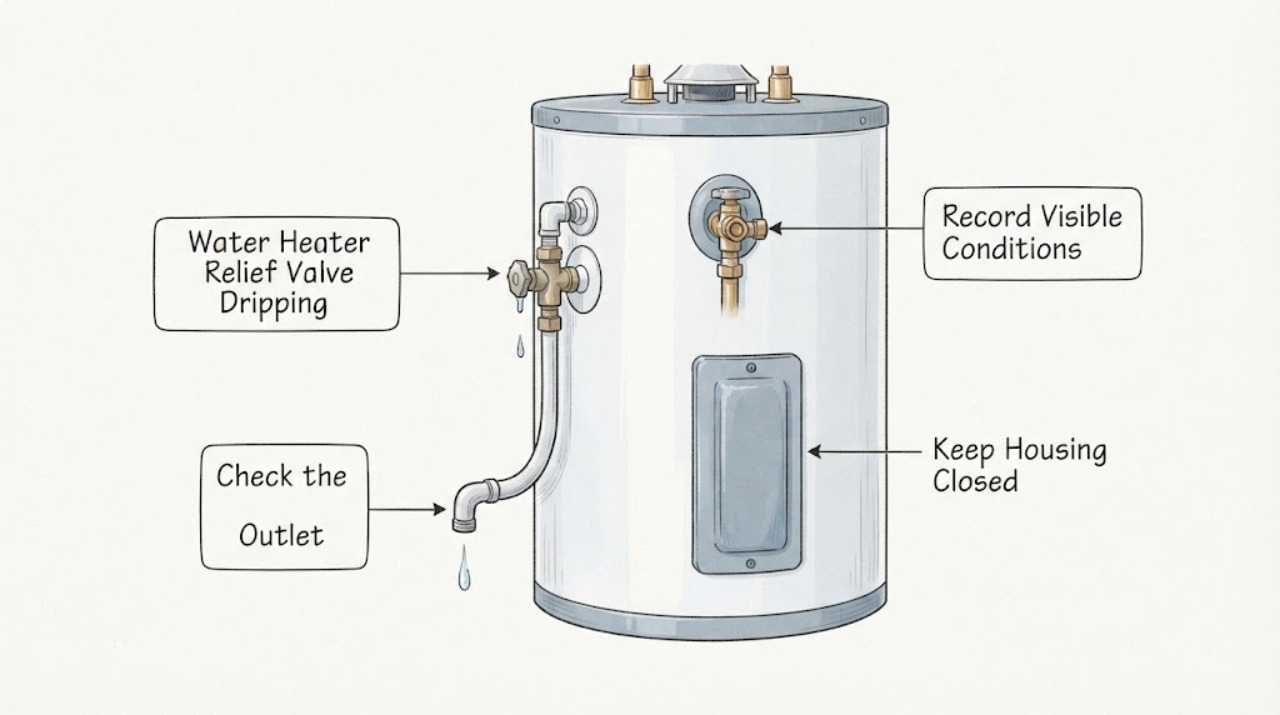
Rinnai Water Heater Relief Valve Dripping: What to Check and What to Do Next
A dripping Rinnai relief valve is a safety signal, not a leak to cap. Rinnai tankless manuals describe a pressure relief valve, while some Rinnai hybrid systems use a temperature and pressure relief valve; the exact model manual controls the diagnosis.
-
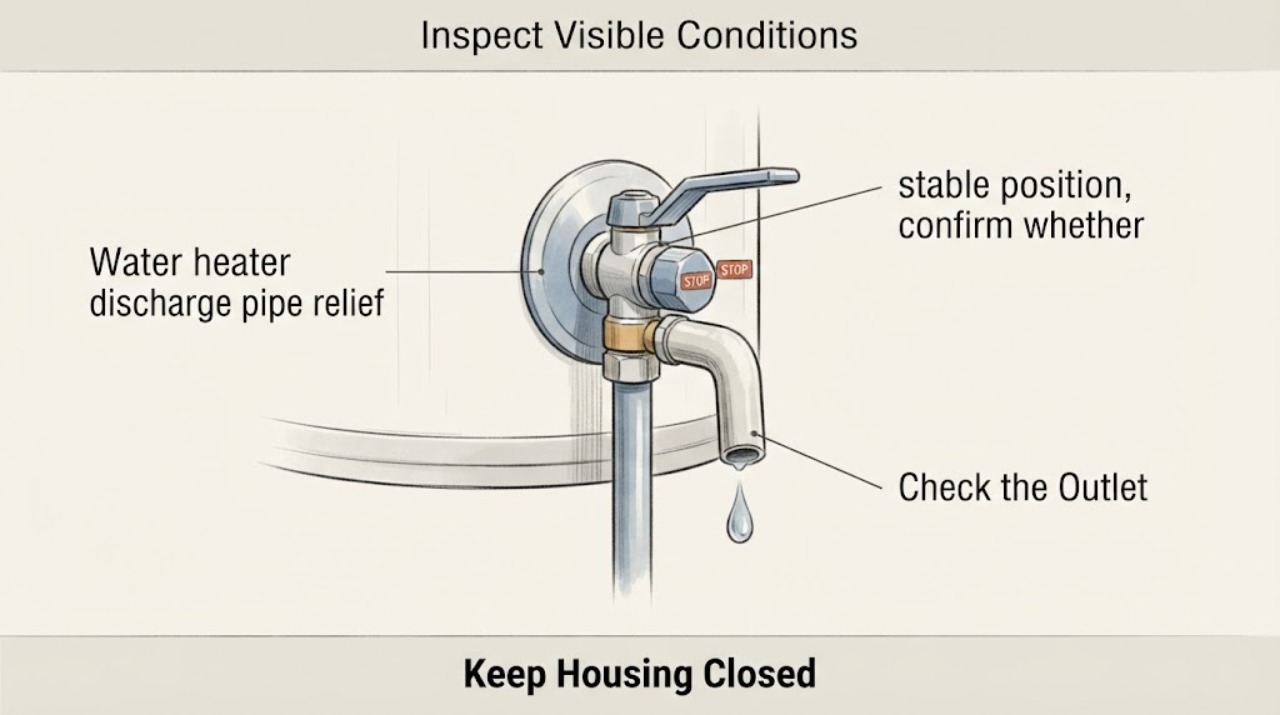
Water heater discharge pipe relief valve dripping: What to Check and What to Do Next
Water from a water heater's discharge pipe means the temperature-and-pressure relief valve has opened or is not sealing. A small drip that appears during or just after a heating or recovery cycle often points to thermal expansion, excessive incoming pressure, or a missing or failed expansion tank.
-
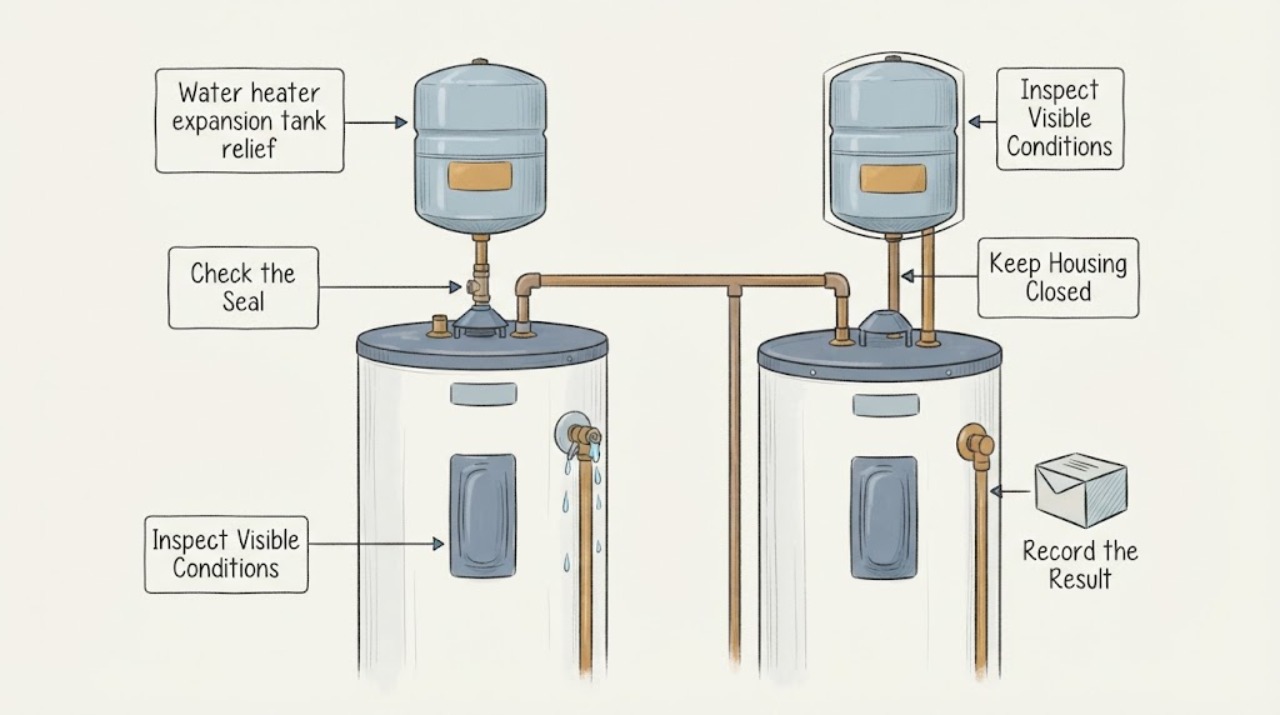
Water heater expansion tank relief valve dripping: What to Check and What to Do Next
A dripping water-heater relief valve is a safety signal, not a leak to cap or ignore. First identify whether water is coming from the temperature-and-pressure (T&P) discharge pipe, the valve's threaded connection, the expansion tank connection, or another drain or pan.
-
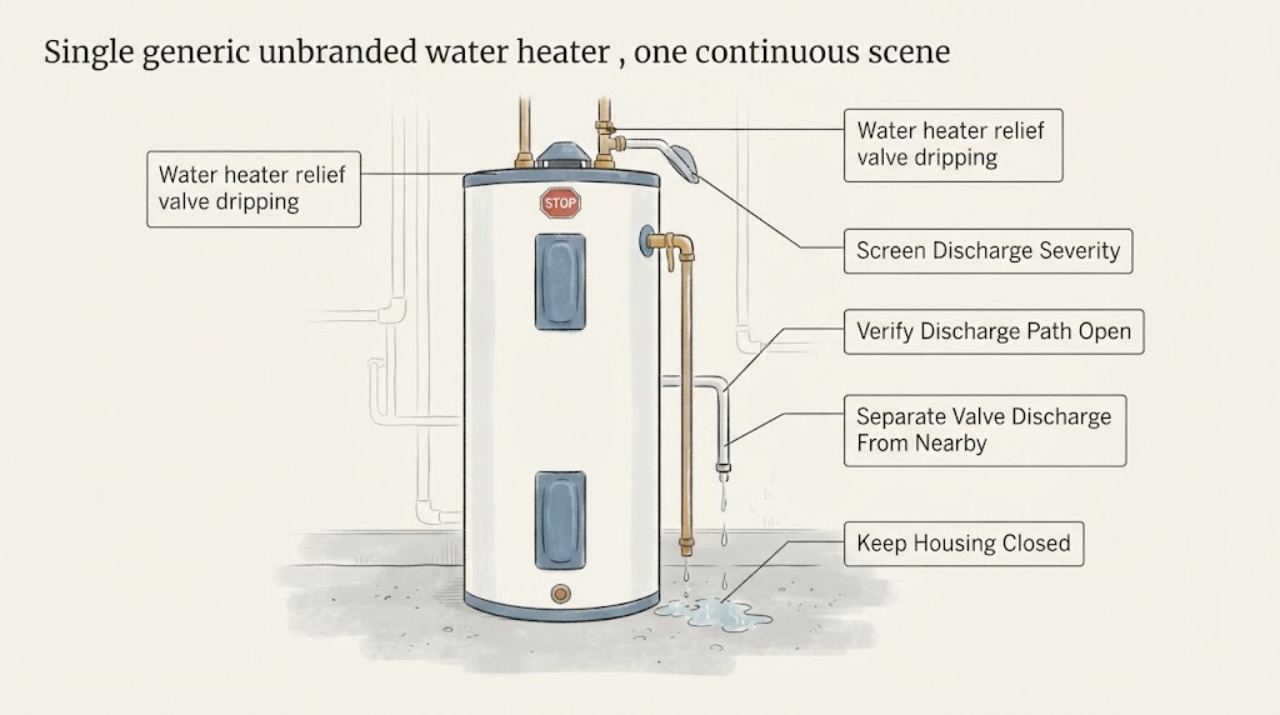
Water heater relief valve dripping exits discharge pipe: What to Check and What to Do Next
Water dripping from a water heater's temperature-and-pressure relief valve discharge pipe usually means the valve is responding to pressure or temperature, not that the pipe itself needs to be capped. Thermal expansion in a closed plumbing system, excessive supply pressure, a failed expansion tank, debris at the valve seat, or an overheating condition can be involved.
-
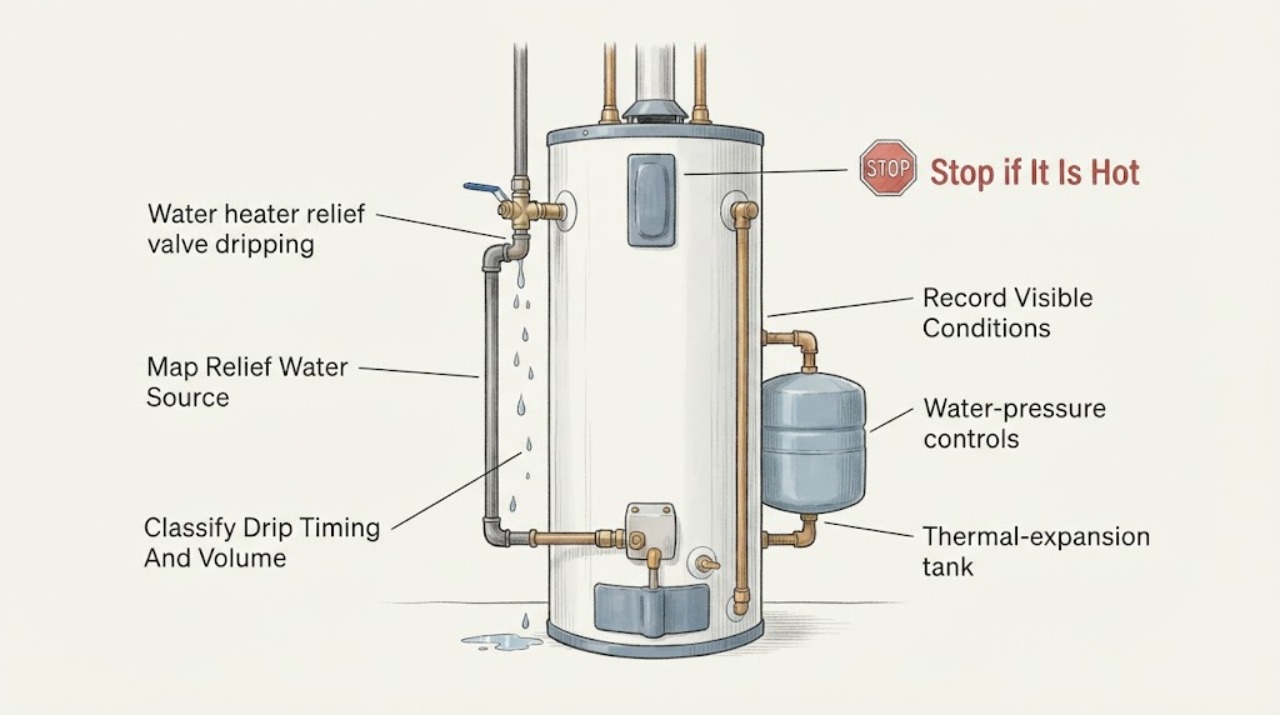
Water heater relief valve dripping while the tank is heating: What to Check and What to Do Next
A temperature-and-pressure (T&P) relief valve that drips while a storage water heater recovers is commonly reacting to thermal expansion in a closed plumbing system, excessive supply pressure, debris at the valve seat, or a valve that no longer seals. A small drip still needs diagnosis; a large flow of very hot water, a rapid pressure rise, overheating, a leak from the tank, gas odor, smoke, or a carbon-monoxide warning is an urgent safety event.
-
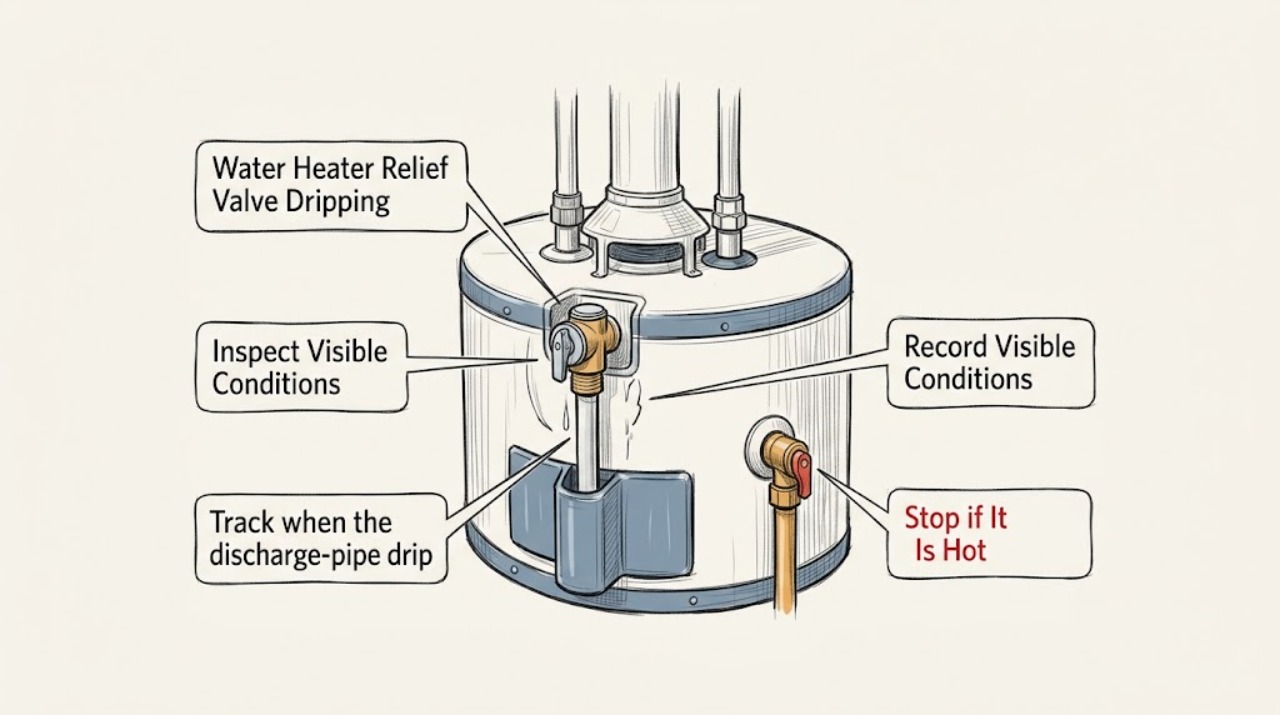
Water Heater Relief Valve Dripping, Pressure May Be Elevated: What to Check and What to Do Next
A water heater temperature-and-pressure relief valve that drips may be responding to thermal expansion or elevated supply pressure, especially when the dripping happens during a heating cycle after hot water use. Continuous dripping can also mean the valve is not seating, its connection is leaking, or the tank or controls have a separate fault.
-
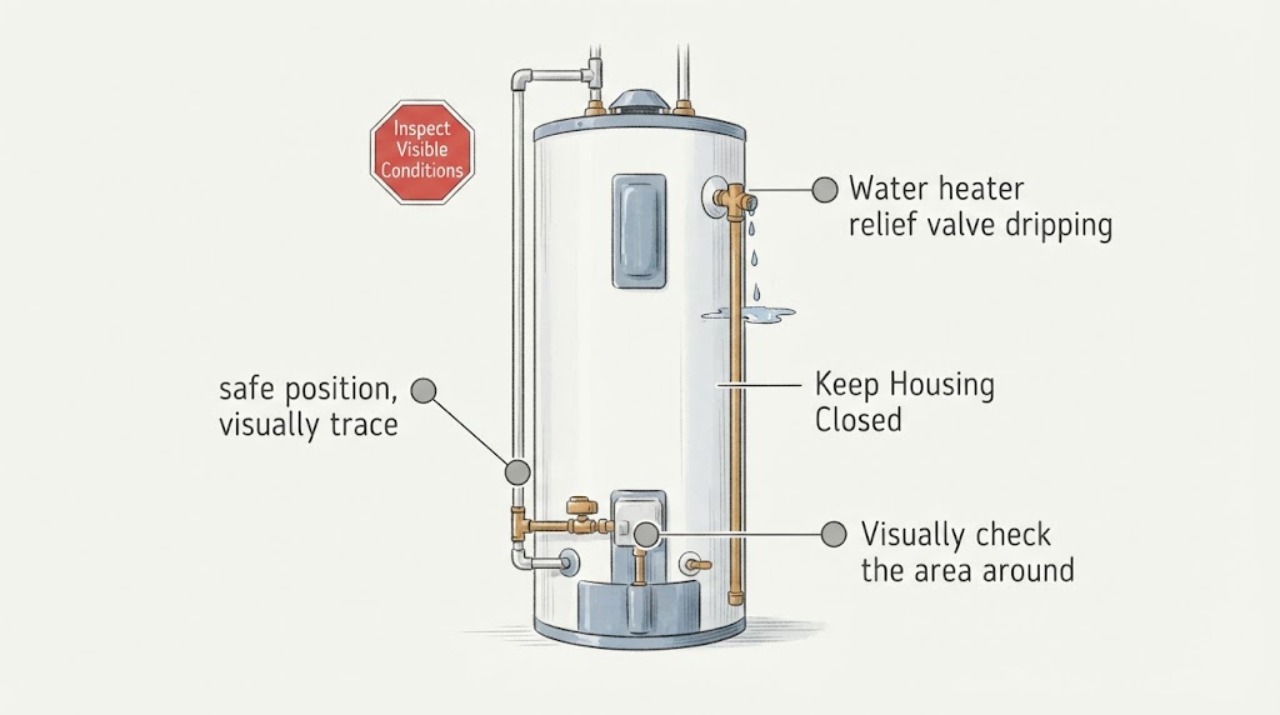
Water heater relief valve dripping: What to Check and What to Do Next
Do not cap, plug, clamp, block, or otherwise disable a dripping water-heater temperature-and-pressure relief valve or its discharge pipe. From a safe position, identify whether water is coming from the discharge opening, the valve connection, or another nearby fitting; note whether it is a small intermittent drip or a hot, continuous discharge; and keep people away from the hot-water path.