
On this page
Start here
Quick answer
First separate a temporary high-demand shortage from a real slow-recovery fault. Note whether the problem affects the whole home, whether it began after a change in household use, and whether the water heater shows unusual noises, leaks, odors, fault indicators, or inconsistent temperature. Sediment, a failing heating element or thermostat, a damaged dip tube, gas or electrical supply issues, a mixing-valve or plumbing leak, or an undersized system can all reduce available hot water. Keep gas, electrical, burner, thermostat, element, control, and tank work for a qualified water-heater professional.
Before you begin
Safety first
- Do not open panels, test live electrical parts, adjust gas or combustion components, relight or modify controls, drain or flush a hot tank, open pressurized plumbing, or replace internal elements, thermostats, dip tubes, or mixing valves yourself.
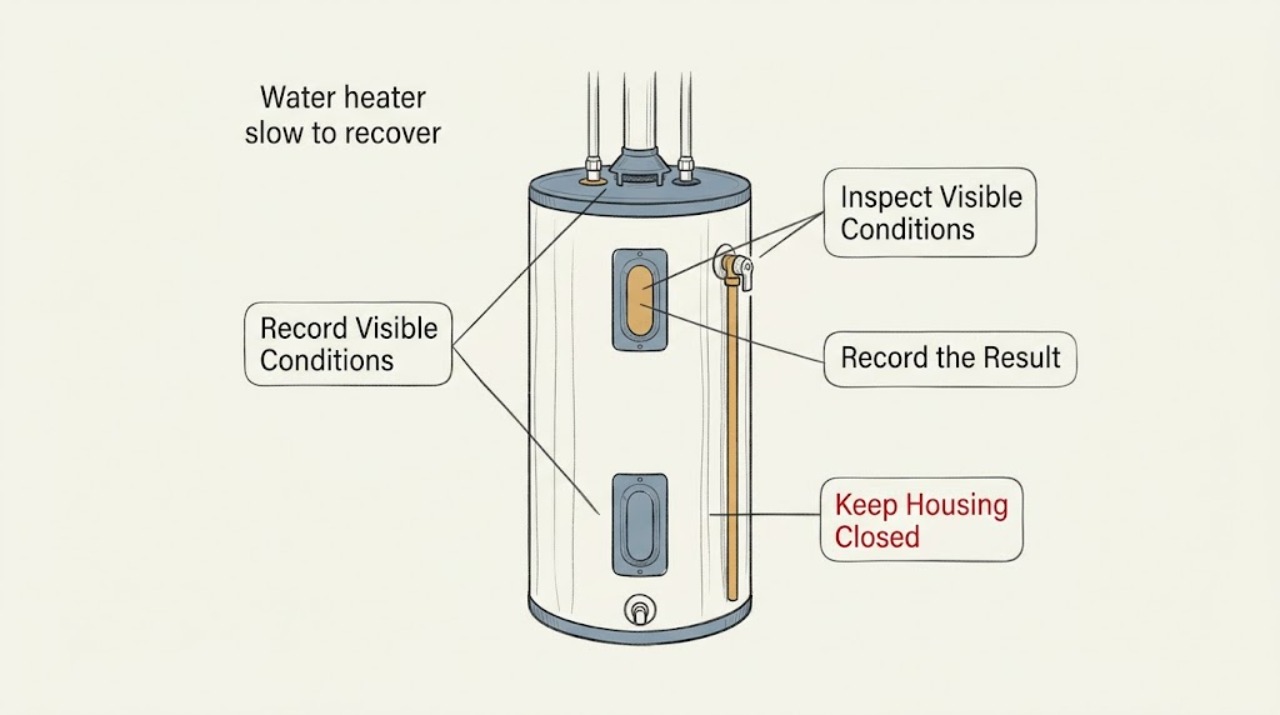
Work through in order
Diagnostic checks
Use only checks that match the exact appliance or system and its official guide.
-
Check 1
Write down the symptom across a normal day: which fixtures run out of hot water, how much hot water was used beforehand, whether multiple fixtures were used together, and whether the issue is new or gradually worsening.
Expected result: Compare the current pattern with the household's usual demand rather than assuming every short shower or delayed recovery has the same cause.
Next step: Give the usage pattern and timing to the water-heater professional and avoid changing the temperature setting to compensate.
Stop if: Stop normal use and seek prompt service if hot water becomes scalding, the heater leaks, or the shortage is accompanied by gas odor, smoke, or electrical warning signs.
Why this matters
Why: A demand increase or an isolated fixture symptom can differ from a whole-home recovery problem; a whole-home change without more demand deserves service diagnosis.
-
Check 2
Use the same safe fixture at separate times and observe whether the water begins hot and then becomes cool, never reaches the usual temperature, or varies unpredictably; do not remove the faucet or shower valve.
Expected result: Record whether the symptom is consistent at multiple fixtures or limited to one shower, faucet, or branch of the plumbing.
Next step: Report the fixture comparison and do not open the heater or fixture internals as a homeowner test.
Stop if: Stop if water is dangerously hot, discolored, foul-smelling, or accompanied by active leakage or a burn hazard.
Why this matters
Why: A whole-home pattern points toward the heater, supply, control, or plumbing system; a single-fixture pattern can be a local mixing or fixture issue instead.
-
Check 3
From outside the equipment, listen and look for rumbling, popping, hissing, unusual cycling, rust-colored water, visible leaks, dampness, or a change in energy use; do not remove covers or insulation.
Expected result: Note which signs occur during heating or water use and whether the tank body, piping, pan, floor, burner area, or controls show moisture or damage.
Next step: Photograph only from a safe distance and arrange qualified service; do not drain, flush, relight, or adjust the heater yourself.
Stop if: Stop immediately for gas odor, smoke, soot, hot-water discharge, tank bulging, active flooding, wet electrical equipment, or abnormal combustion sounds.
Why this matters
Why: Noise can be associated with sediment or scale, while leaks, corrosion, or abnormal cycling can indicate a component or tank problem that needs professional assessment.
-
Check 4
Read only the external nameplate, user-facing display, or app and note the heater type, model information, operating mode, visible fault code, and any user-facing availability or element-status message.
Expected result: Record whether the system reports normal operation, a fault, reduced capacity, a heat-pump mode change, or no status at all.
Next step: Provide the exact status and model information to the manufacturer or qualified technician; do not change protected settings or open the control compartment.
Stop if: Stop if obtaining the information would require opening a panel, touching wiring or gas components, or approaching hot or wet equipment.
Why this matters
Why: The model and status determine which recovery behavior is expected and whether a professional should check a heating element, thermostat, gas system, sensor, control, or flow condition.
-
Check 5
Review recent changes from a safe position: new occupants, simultaneous laundry or dishwasher use, colder inlet water, remodeling, a new fixture, power or gas interruption, maintenance, or a change in water pressure.
Expected result: Match the onset of slow recovery to the change and note whether the issue persists when demand returns to the previous pattern.
Next step: Include the history in the service request and let the professional decide whether capacity, plumbing, controls, or internal components need attention.
Stop if: Stop DIY diagnosis if the suspected cause involves gas, electrical, combustion, pressurized plumbing, or internal tank components.
Why this matters
Why: A demand or seasonal change may expose a capacity limit, while a persistent problem after normal demand returns is more consistent with a system or plumbing fault.
Use your observations
Decision map
Find the observation that best matches what you see, then follow the next safe action.
-
PATH 01Next step
What you see
The shortage follows an unusual demand spike and the heater otherwise behaves normally.
Do this next
Allow the system to recover under normal use and monitor the pattern; call a professional if recovery remains slow or the symptom returns without unusual demand.
-
PATH 02Next step
What you see
The problem affects every fixture or persists despite normal demand.
Do this next
Arrange qualified water-heater service to assess capacity, sediment, heating components, controls, plumbing crossover, and fuel or electrical supply.
-
PATH 03Next step
What you see
The heater makes new rumbling or popping noises, shows rust or leaks, or has a fault or element-status message.
Do this next
Keep the inspection external and schedule professional diagnosis; do not flush, open, reset, or replace internal components as a guess.
-
PATH 04Next step
What you see
Gas odor, smoke, soot, combustion trouble, wet electrical equipment, scalding water, active flooding, or a tank safety concern is present.
Do this next
Stop using the equipment, leave the area if needed, and seek urgent qualified or emergency help appropriate to the hazard.
Helpful context
Understand the symptom
What slow recovery can mean
A tank heater may simply be serving more simultaneous demand than before, but a new or worsening delay can also point to sediment, a heating component, temperature control, dip tube, plumbing crossover, or fuel and electrical problem. Tankless and heat-pump systems have different flow and recovery behavior, so the exact model and operating mode matter.
Keep the inspection external
Use only normal fixtures, the user-facing display or app, and a visual check around the heater. Do not remove access panels, relight or adjust gas controls, test live electrical parts, open plumbing, drain or flush a hot tank, or replace an element, thermostat, dip tube, or mixing valve as a guess.
Only after diagnosis
Potential parts
- water heater heating element
Consider an element only if a qualified technician confirms an electric heater element has failed and identifies the correct rated replacement.
Voltage, wattage, mounting, tank design, and model fit must be confirmed; do not open an electrical panel or replace an element yourself. - water heater thermostat
Consider a thermostat only after professional diagnosis shows a control or sensor fault rather than demand, sediment, plumbing, or another cause.
Gas, electric, tankless, and heat-pump controls are not interchangeable; confirm the exact model and service procedure. - water heater dip tube
Consider a dip tube only if a qualified professional identifies a tank cold-inlet mixing problem or damaged dip tube after ruling out safer external causes.
Tube length, inlet design, tank model, and access method must be verified; do not open the tank or piping as a homeowner test.
When checks do not resolve it
Need a professional?
Arrange qualified water-heater service when slow recovery is new, whole-home, persistent, or accompanied by noises, leaks, inconsistent temperature, or status warnings. Seek urgent help for gas odor, smoke, soot, scalding water, flooding, wet electrical parts, or combustion concerns.
Safety scope: Do not open panels, test live electrical parts, adjust gas or combustion components, relight or modify controls, drain or flush a hot tank, open pressurized plumbing, or replace internal elements, thermostats, dip tubes, or mixing valves yourself.
Have this ready
- Provide the model and fuel type, demand and fixture pattern, onset and progression, external status or app messages, unusual sounds, visible leaks, water appearance or odor, and recent household, plumbing, power, or gas changes.
Common questions
FAQ
Does running out of hot water always mean the heater is broken?
No. A demand increase, colder inlet water, capacity limit, or a single-fixture issue can look similar. A new whole-home or persistent delay needs professional diagnosis.
Could sediment cause slow recovery?
It can. Sediment or scale may make the heating system work less effectively, but the heater type and condition determine the safe remedy. Do not drain or flush a hot system as a first DIY test.
Can I replace the heating element or thermostat myself?
Not under this safety boundary. Heating elements, thermostats, gas controls, sensors, and wiring require qualified service; do not open panels or perform live testing.
What information will a technician need?
Provide the heater type and model, when recovery changed, demand and fixture pattern, status or fault messages, unusual noises, leaks or odors, recent power or gas interruptions, and any maintenance or plumbing changes.
Read the exact guide
Official sources
- Technical Operations and Maintenance Guidelines on Common Water EquipmentU.S. Department of Energy · Government O&M guidance used for the recommendation to inspect, report leaks, and follow manufacturer specifications; it is not a homeowner gas or electrical troubleshooting manual.
- Water Heater Resources & InfoA. O. Smith · Official manufacturer resource index used to support model-specific recovery guidance and professional repair boundaries; it is not a universal repair procedure.
- 5 Signs Your Water Heater Is Going Bad (And What to Do About It)Rheem Manufacturing Company · Official manufacturer guidance used for general symptom patterns and professional escalation; exact recovery behavior and repair steps vary by water-heater model.
Community feedback
Share a repair observation
Share a plain-text repair observation. Accepted observations are published automatically; this page may take a moment to update.