
Repair problem
Water Heater Slow To Recover Troubleshooting Guides
Published FixGraph guidance for diagnosing and responding to water heater slow to recover.
Matching published guides
Choose a guide that matches the service, equipment, and conditions you are seeing.
-
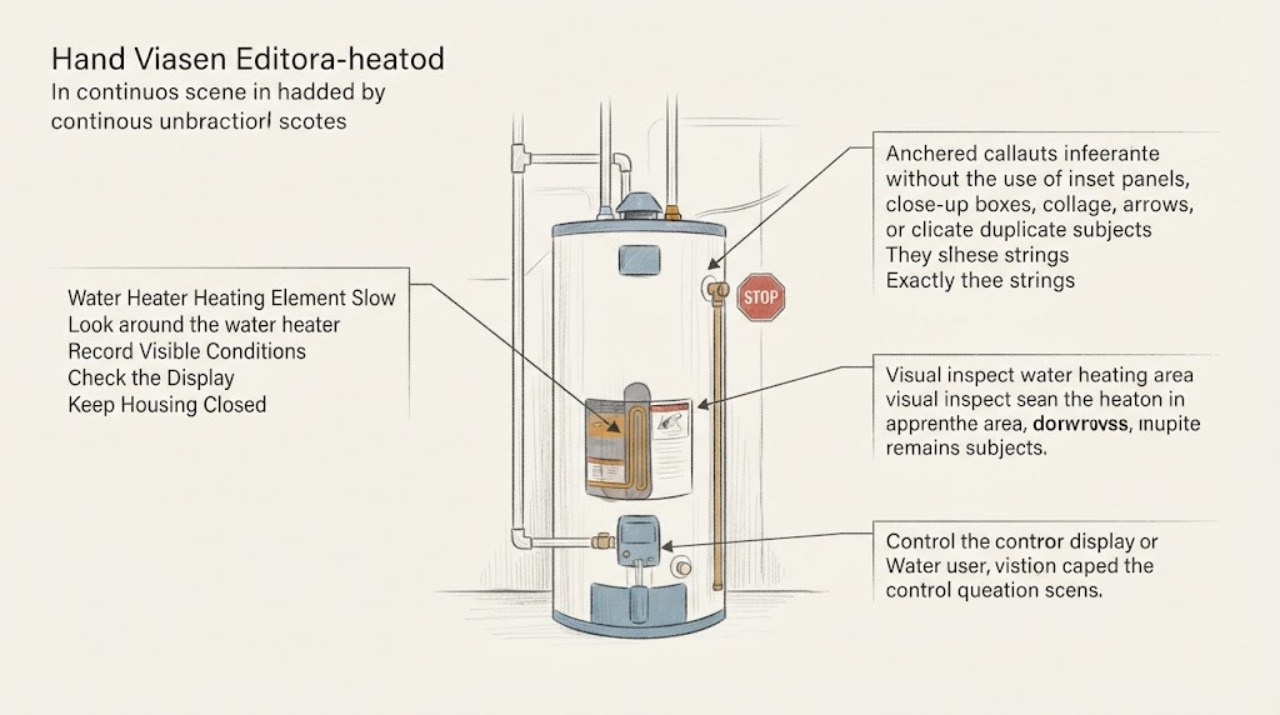
A. O. Smith Water Heater Heating Element Slow to Recover: What to Check and What to Do Next
A slow-recovering A. O.
-
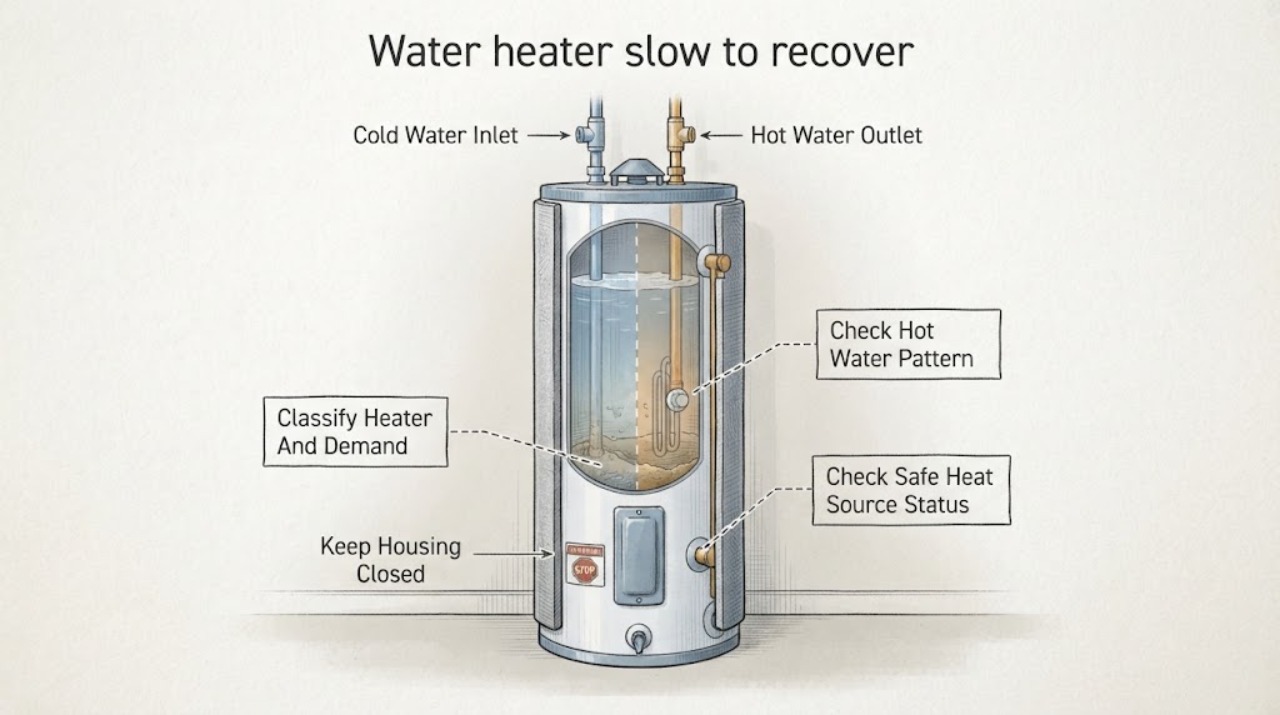
A. O. Smith water heater slow to recover: What to Check and What to Do Next
A. O.
-
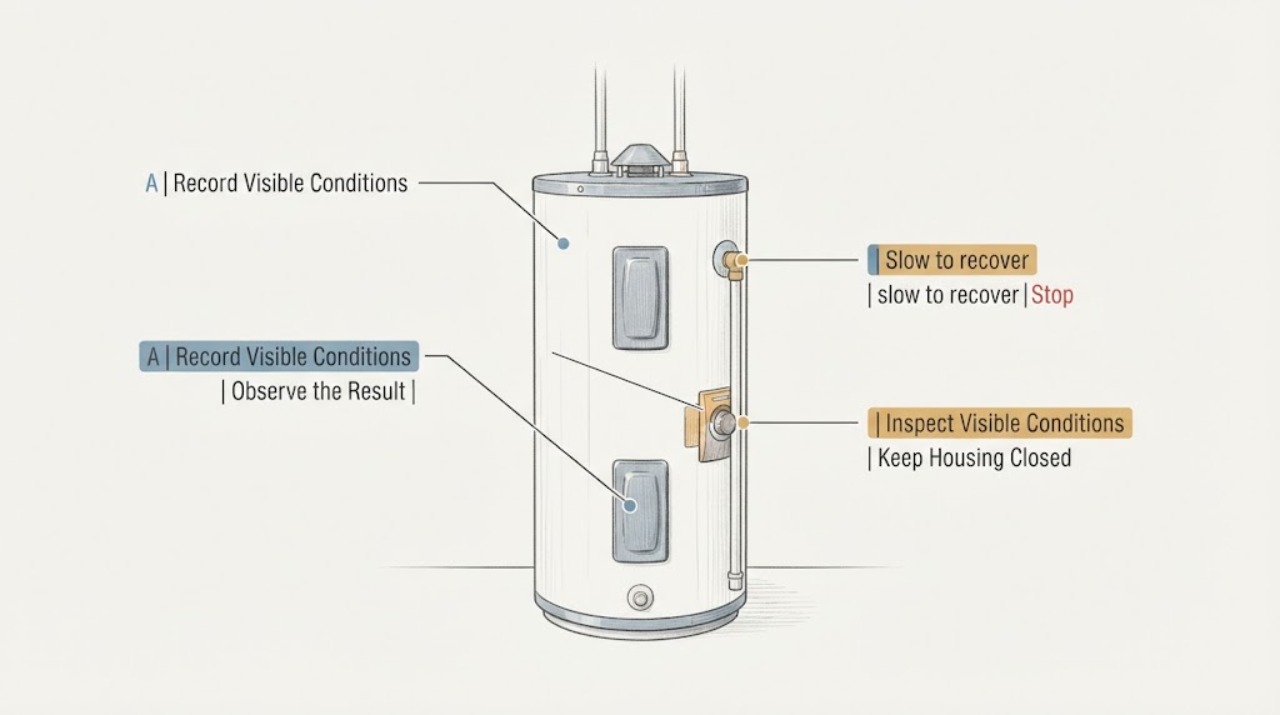
A. O. Smith Water Heater Thermostat Slow to Recover: What to Check and What to Do Next
If an A. O.
-
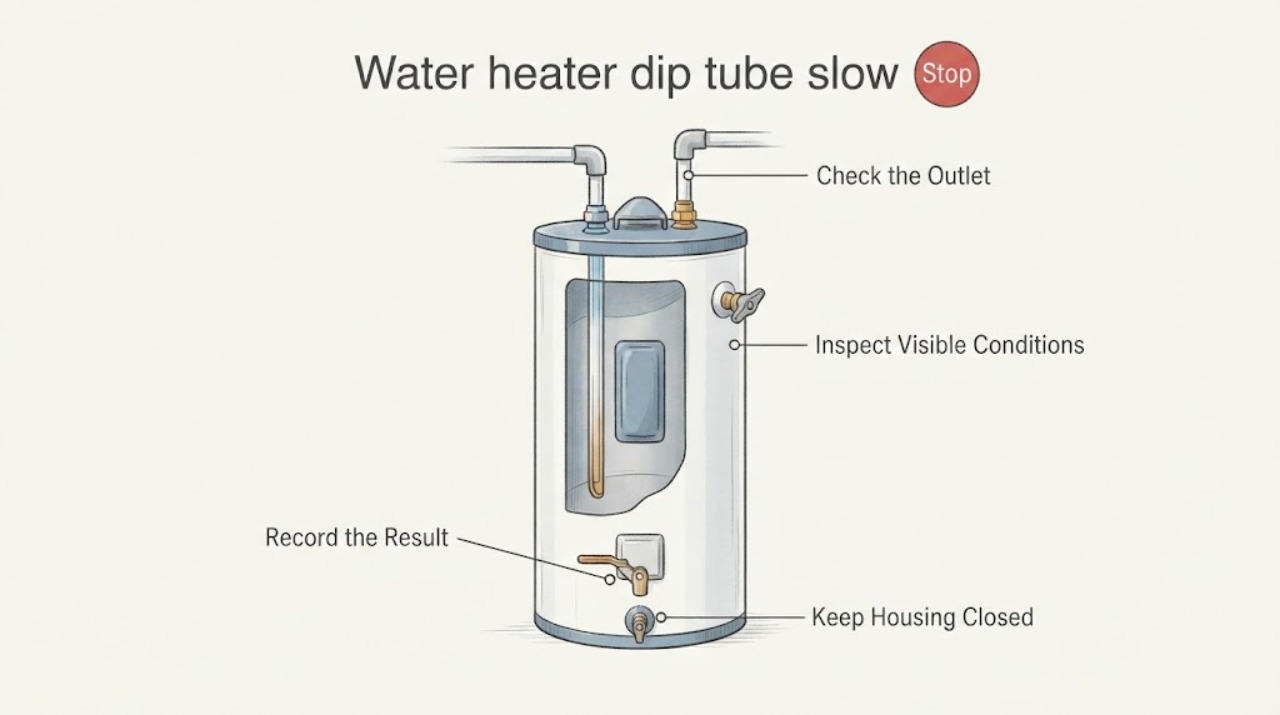
A. O. Smith water heater dip tube slow to recover: What to check and what to do next
A. O.
-
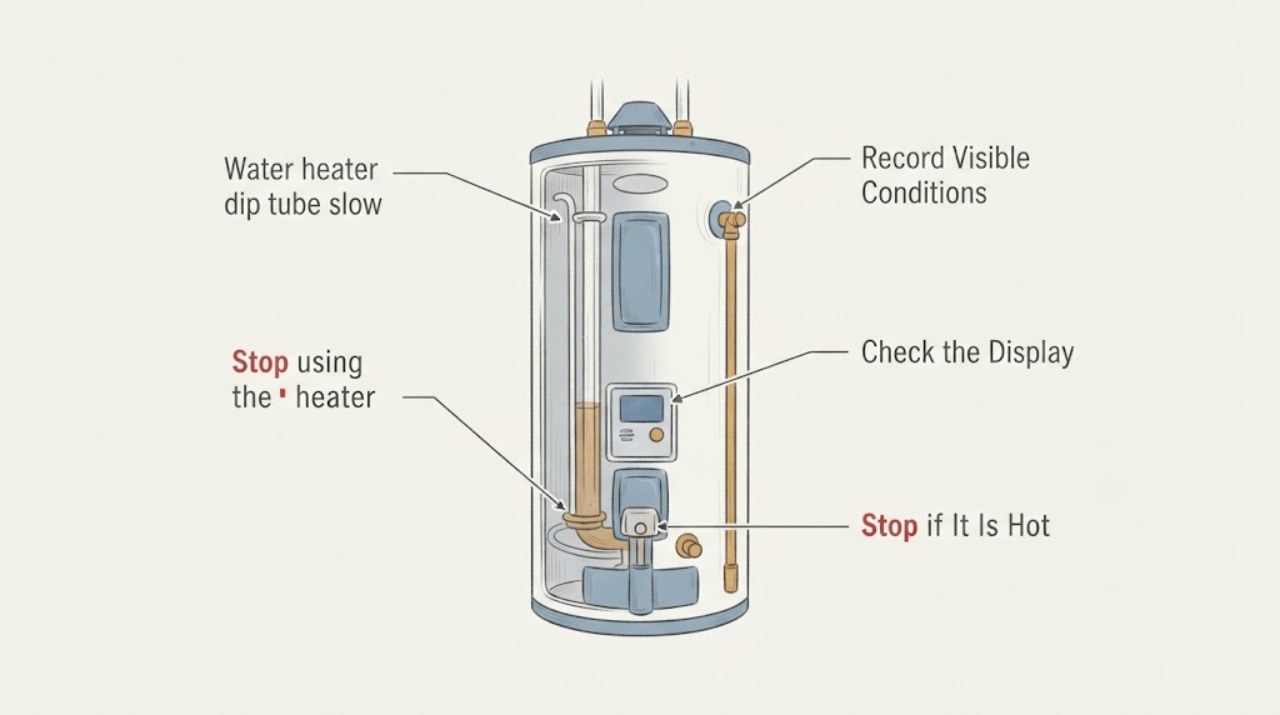
Bradford White water heater dip tube slow to recover: What to Check and What to Do Next
A Bradford White water heater that takes too long to recover may have a cracked or blocked dip tube, but recovery also depends on demand, tank size, burner or element input, thermostat operation, sediment, and the fuel type. The dip tube should send incoming cold water to the bottom of the tank; if it cracks or breaks, cold water can mix with the hot water outlet and make showers turn cool quickly.
-
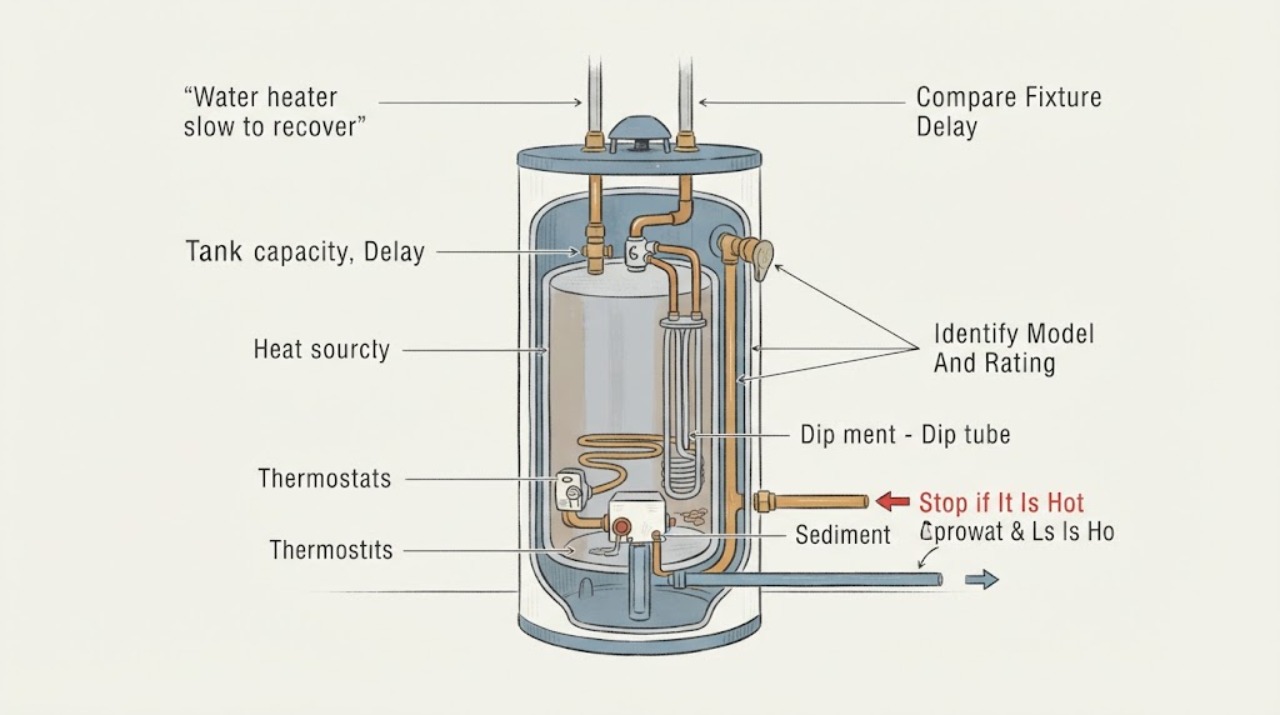
Bradford White water heater slow to recover: What to Check and What to Do Next
First separate slow hot water reaching one distant faucet from a Bradford White tank that actually takes too long to reheat after a known hot-water draw. Recovery depends on the heater's tank capacity, heat source, and burner or element input, so compare the timing with the model's rating and household demand rather than guessing from one shower.
-
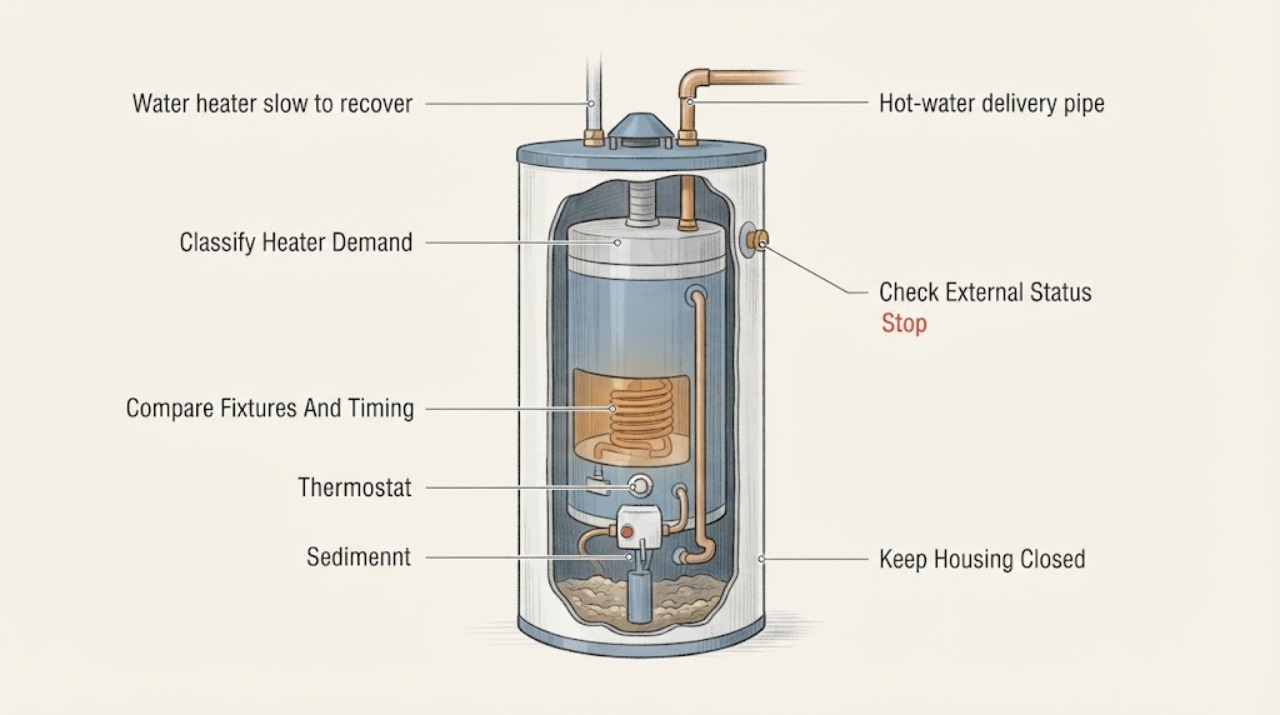
Rheem water heater slow to recover: What to Check and What to Do Next
A Rheem water heater may recover slowly after a large draw because demand, tank capacity, fuel type, heat input, incoming-water conditions, operating mode, and maintenance all affect the result. First compare a repeated equivalent draw: determine whether the shortage has always existed or is new, whether water is lukewarm from the start or only runs out, and whether every fixture is affected.
-
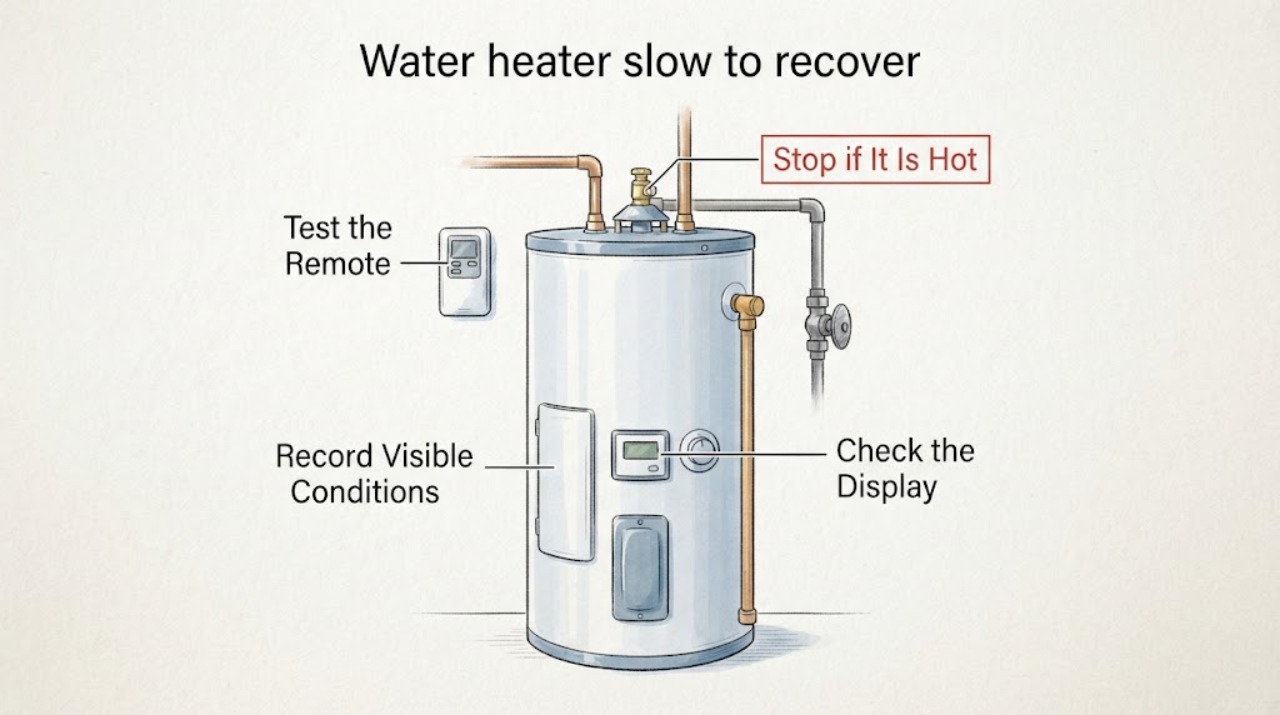
Rinnai water heater slow to recover: What to Check and What to Do Next
A Rinnai water heater that takes too long to restore hot water may be meeting a demand larger than the system's storage or heating capacity, operating on a delayed schedule, receiving too little water flow, or running with a power, gas, inlet-filter, control, or heating fault. First identify whether the unit is a tankless continuous-flow, storage-tank, heat-pump, or solar/boosted system.
-
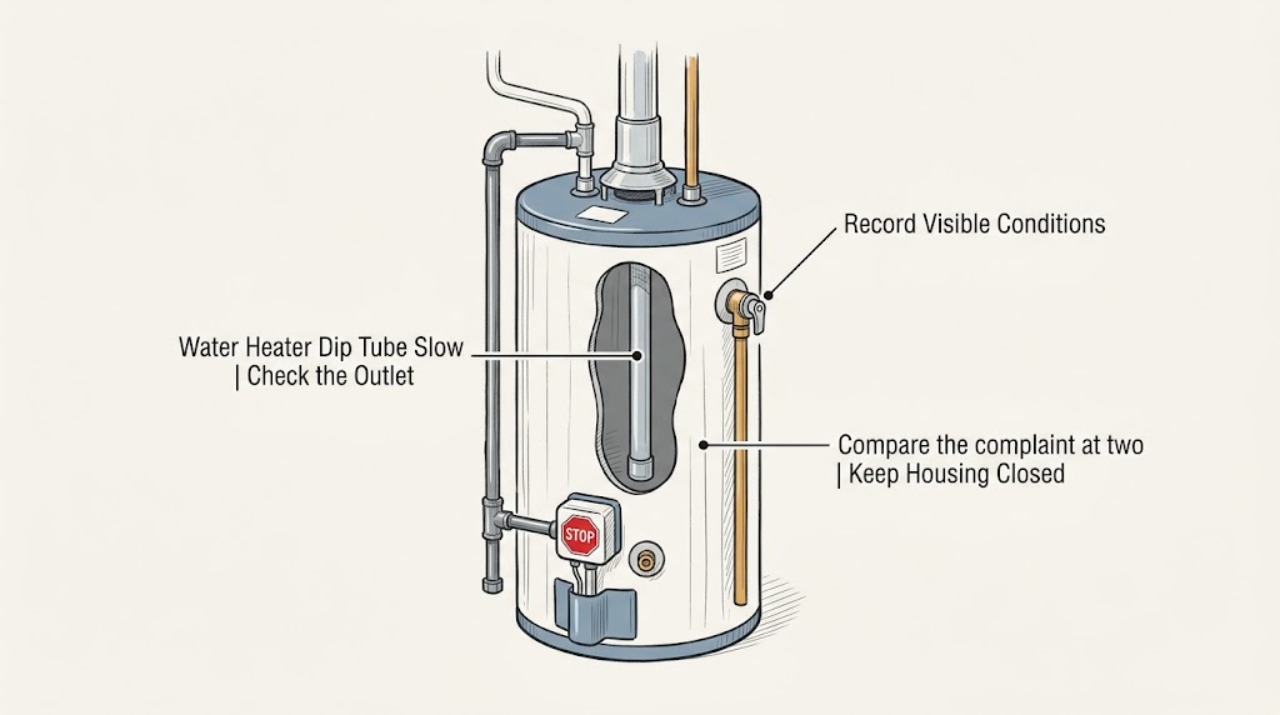
Water Heater Dip Tube Slow to Recover: What to Check and What to Do Next
A storage water heater's dip tube sends incoming cold water to the bottom of the tank so the heated water remains available at the top. If the tube cracks, breaks, or becomes restricted, cold water can mix near the hot outlet and the supply may turn lukewarm unusually quickly; however, slow recovery is also commonly associated with heavy demand, sediment at the heating source, a heating element or thermostat problem, or an undersized or very cold-water-fed system.
-
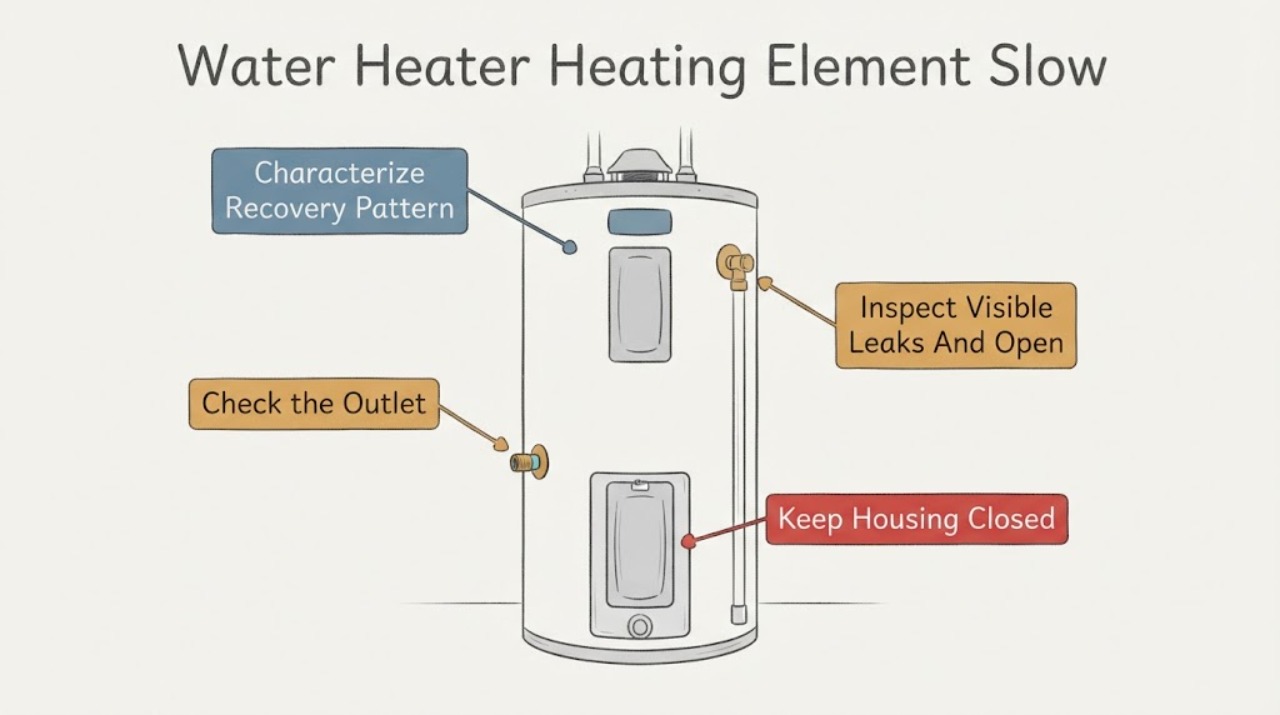
Water Heater Heating Element Slow to Recover: What to Check and What to Do Next
For a storage electric water heater, slow recovery can come from a failing lower heating element, a thermostat or power problem, hot-water demand that exceeds the tank's recovery capacity, a hot-water leak, or an installation or mixing-valve issue. First record whether the shortage follows one unusually heavy use or happens after ordinary use, compare hot water at more than one faucet, and inspect only for visible leaks or a tripped control from ordinary access.
-
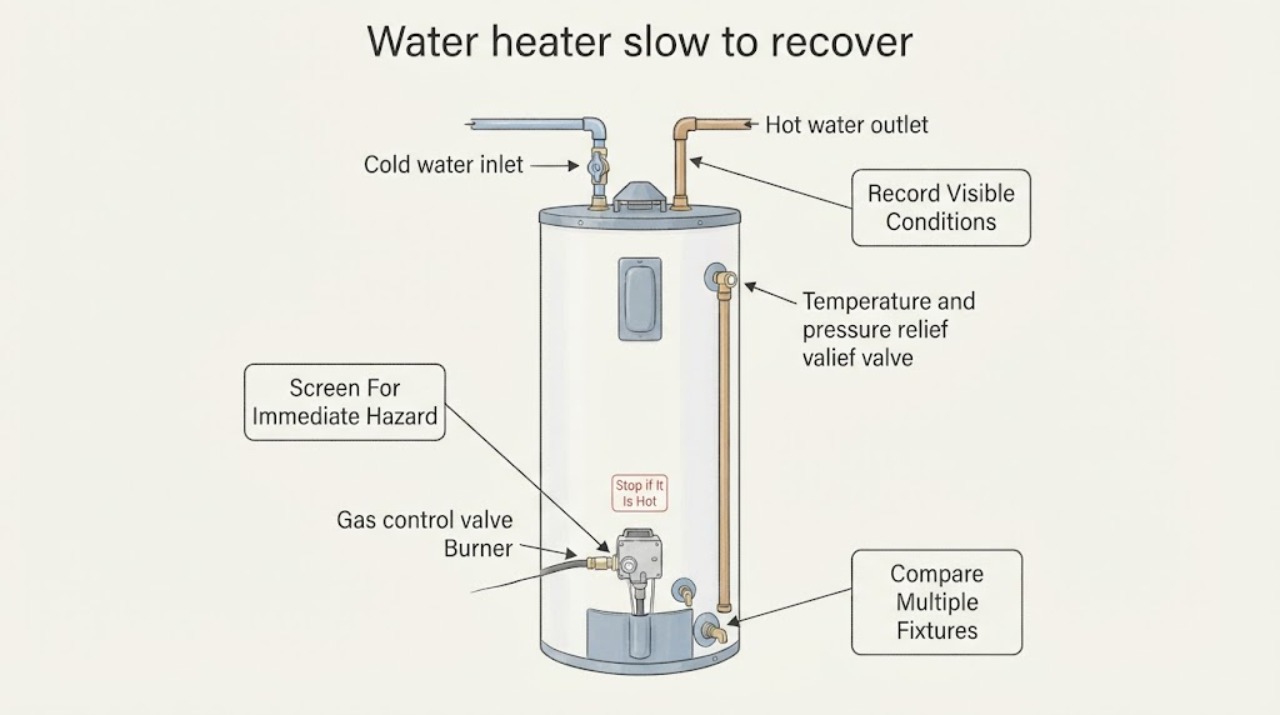
Water heater slow to recover demand has not changed: What to Check and What to Do Next
If hot water used to recover normally but now takes longer even though household demand has not changed, first determine whether the shortage is at every fixture or only one outlet, then identify the heater type and record what changed.
-
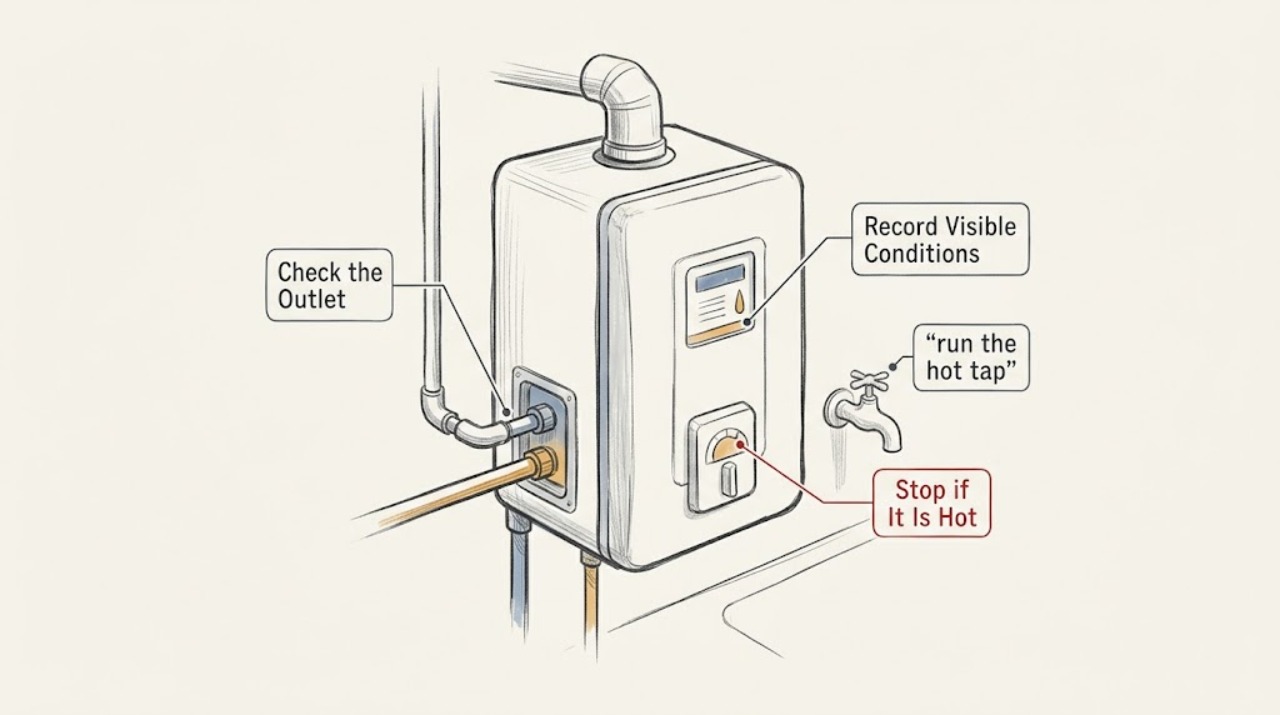
Water heater slow to recover eventually: What to Check and What to Do Next
A water heater that eventually makes hot water may be working normally for a demand that exceeds its stored capacity, or it may be recovering slowly because of cold incoming water, a low setting or restricted operating mode, sediment, a leak or mixing-valve problem, a weak heating element or thermostat, or reduced gas, airflow, or electrical output. First determine whether the delay occurs only after heavy use, at every fixture, or even with little use.
-
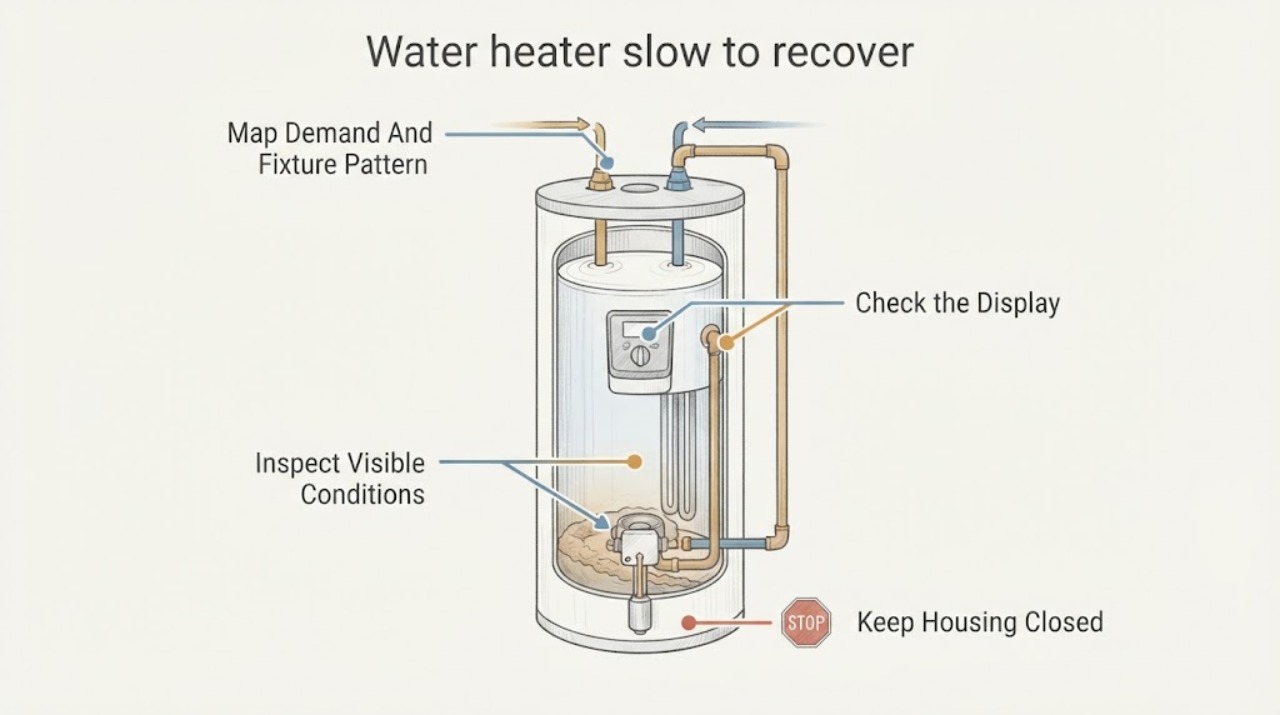
Water heater slow to recover hot runs out quickly: What to Check and What to Do Next
Hot water that runs out quickly and takes too long to return can be caused by unusually high demand, an undersized or incorrectly configured heater, sediment that insulates the heat source, a failed heating element or thermostat, a burner or gas-supply problem, a damaged dip tube, or a mixing valve or plumbing leak that makes usable hot water disappear.
-
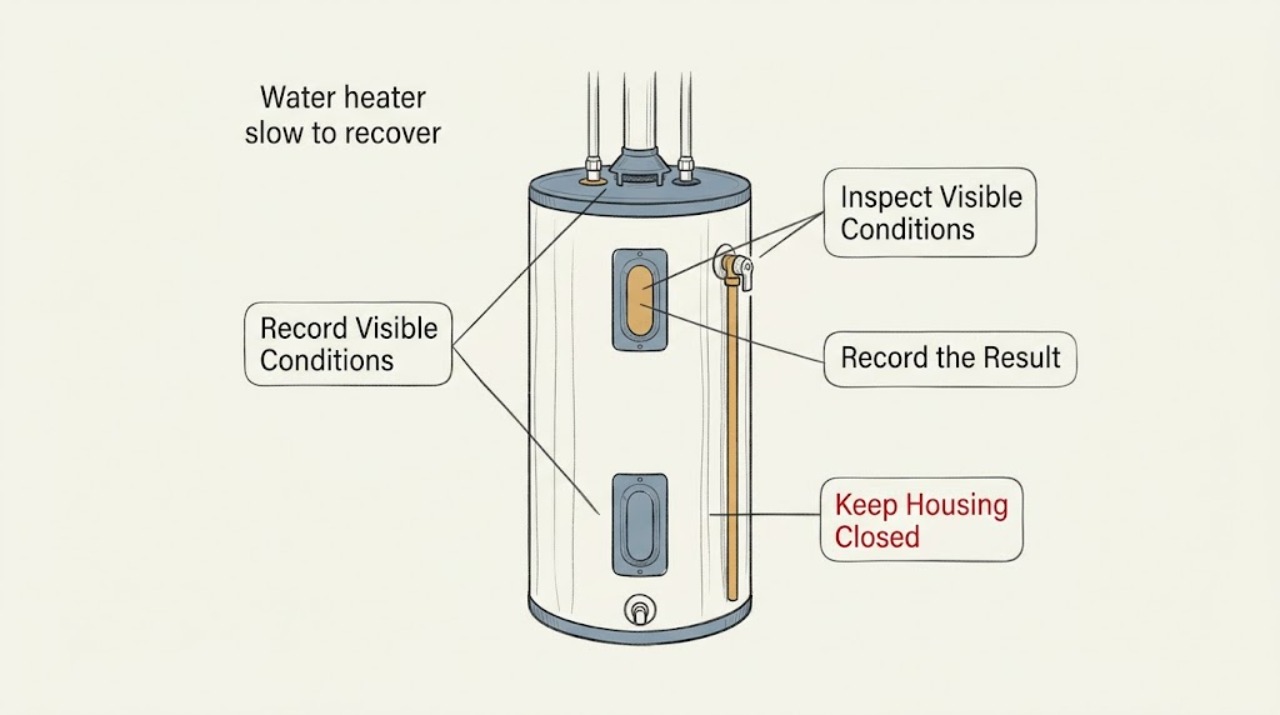
Water heater slow to recover: What to Check and What to Do Next
First separate a temporary high-demand shortage from a real slow-recovery fault. Note whether the problem affects the whole home, whether it began after a change in household use, and whether the water heater shows unusual noises, leaks, odors, fault indicators, or inconsistent temperature.
-
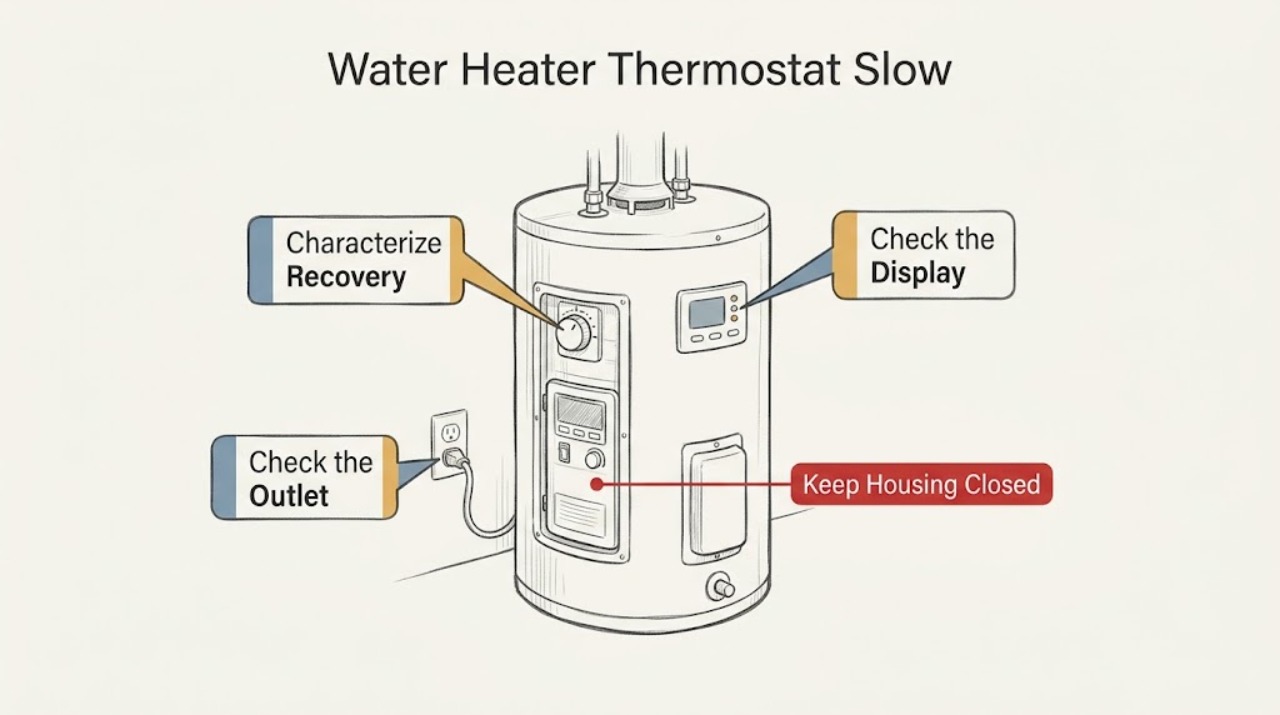
Water Heater Thermostat Slow to Recover: What to Check and What to Do Next
A thermostat can make a storage electric water heater recover slowly if it reads the tank incorrectly, is set lower than expected, or stops the elements prematurely, but the same symptom can come from a failed lower heating element, low power, heavy demand, sediment, a plumbing leak, or a mixing-valve problem.