
Repair problem
Not Igniting Troubleshooting Guides – Page 2
Published FixGraph guidance for diagnosing and responding to not igniting.
Matching published guides
Choose a guide that matches the service, equipment, and conditions you are seeing.
-
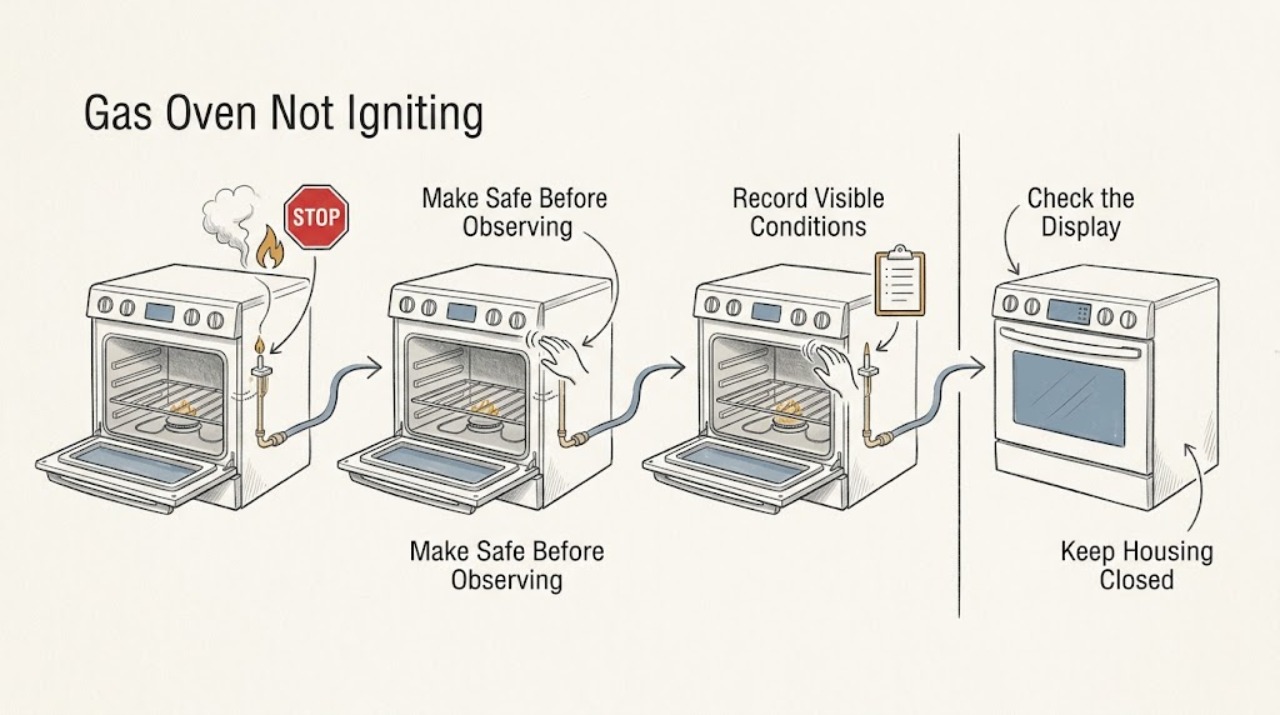
Viking Gas Oven Not Igniting: Check the Controls, Supply, and Ignition Signs
A Viking gas oven that will not ignite needs to be separated into four observations: no display or control response, a control that responds but produces no ignition sign, clicking with no flame, or a flame that lights and then goes out. Confirm the exact Viking model and fuel configuration before using its manual.
-
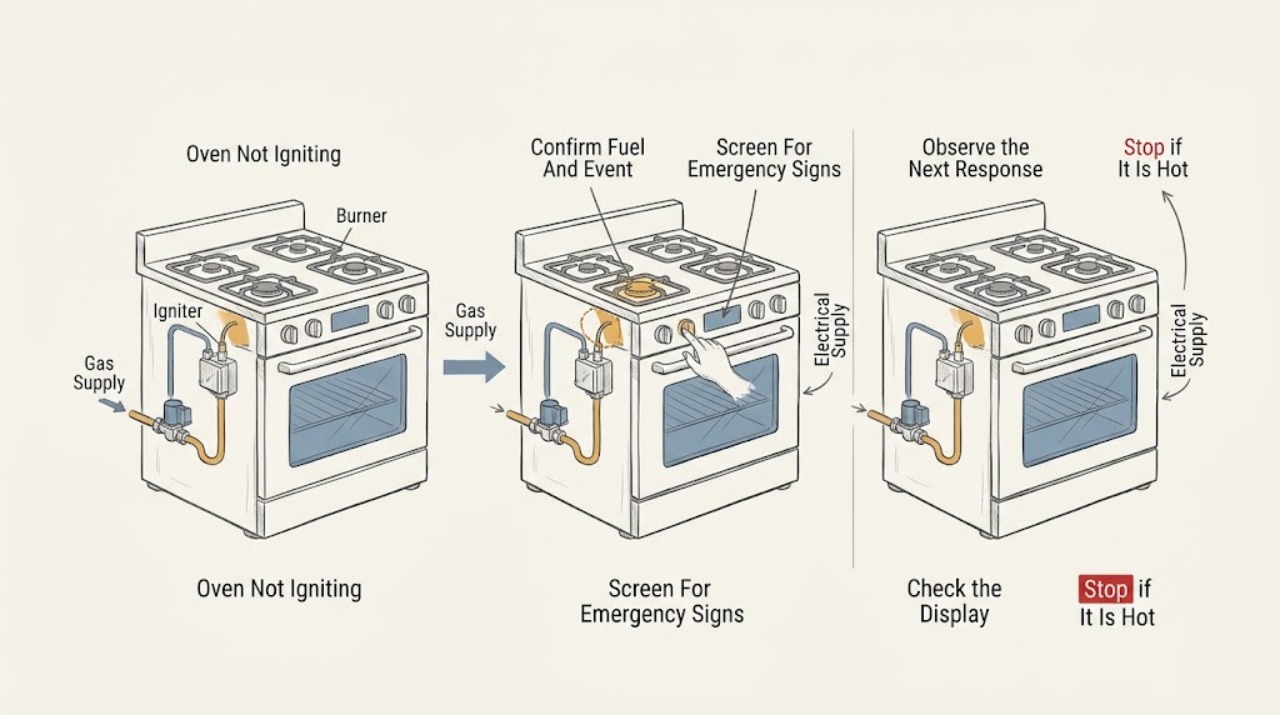
Viking Oven Not Igniting: Safe Checks for Gas and Dual-Fuel Models
First confirm that the Viking oven is a gas or dual-fuel model and record the exact model, cavity, selected mode, and what happens when ignition is requested. A gas oven may make a limited ignition click before a normal flame appears, but no flame after repeated clicking, a delayed whoosh or boom, gas odor, hissing, soot, yellow or unstable flame, smoke, carbon-monoxide alarm, or symptoms is a stop condition.
-
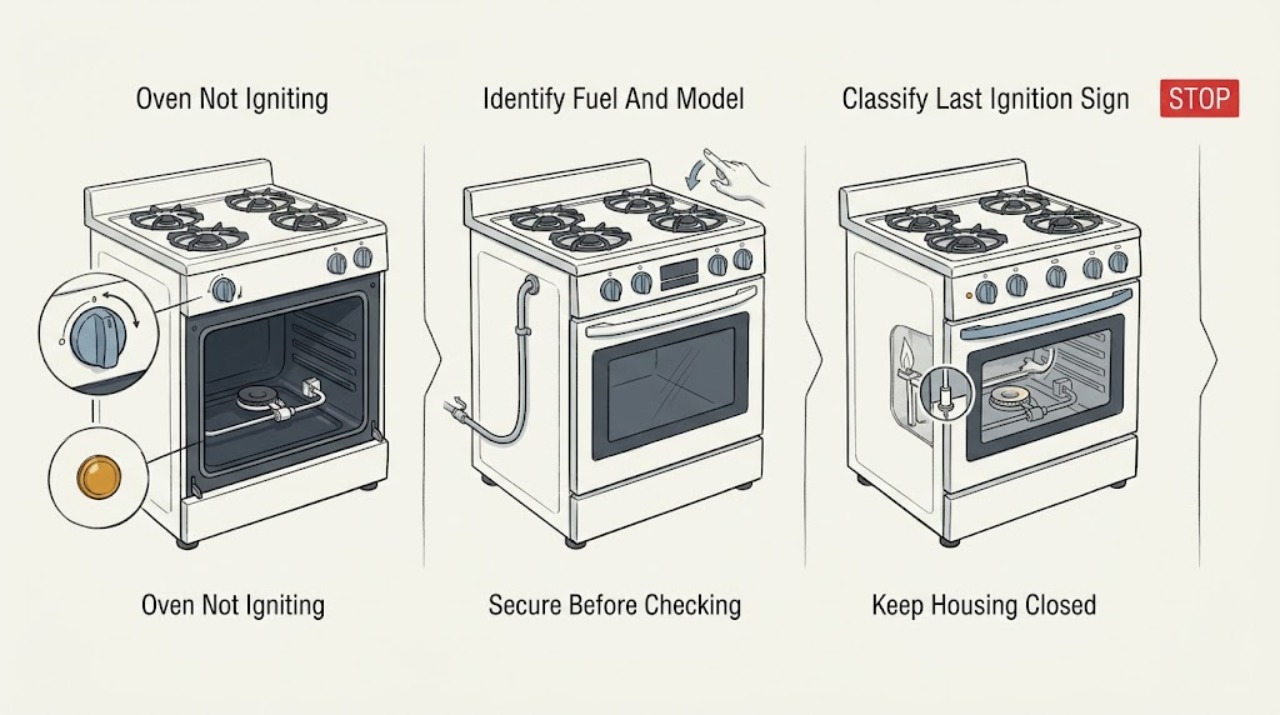
Westinghouse Oven Not Igniting: Check the Model, Ignition Path, and Safety Signs
A Westinghouse oven that will not ignite can have no power to the ignition system, a wet or dirty visible ignition area, a closed gas supply, an ignition-area obstruction, a flame-sensing or control fault, or a model-specific operating condition. First identify whether the oven is gas, electric, or dual-fuel and record the exact model; do not assume that an oven that does not ignite is using the same sequence as another Westinghouse model.
-
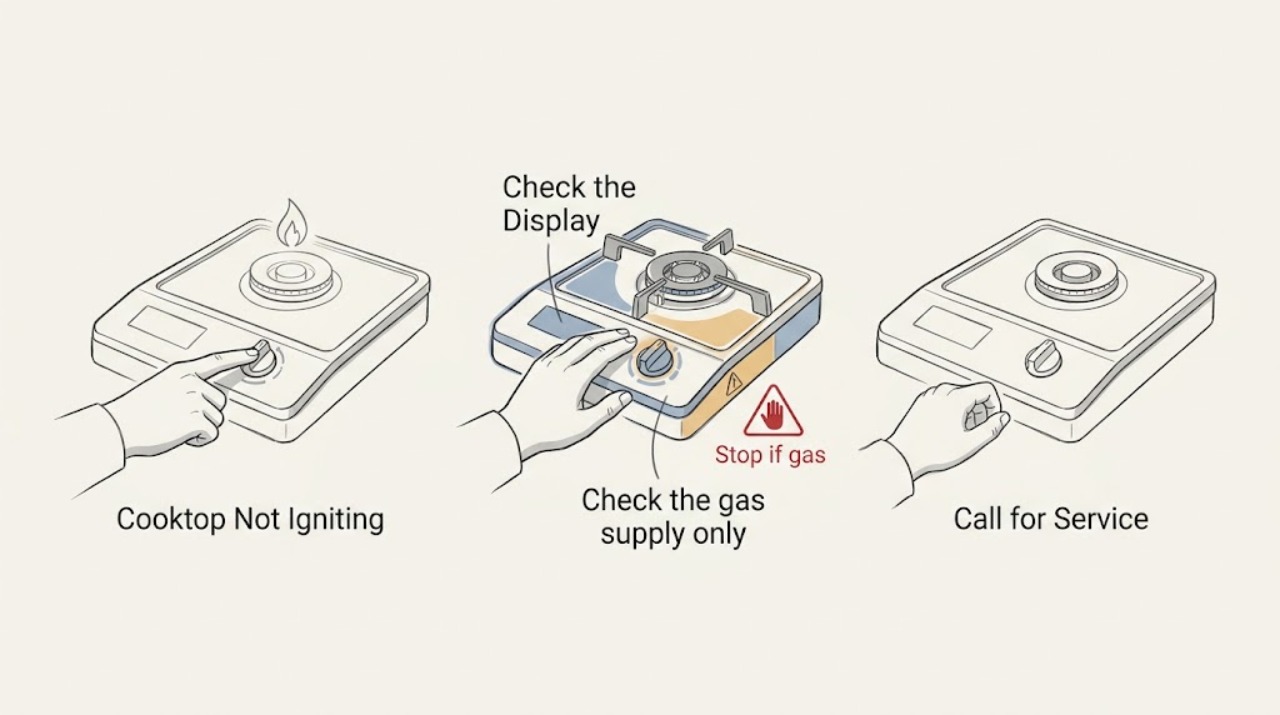
Whirlpool Cooktop Not Igniting
This guidance applies to a Whirlpool gas cooktop, not an electric-only cooktop. If you smell gas, hear hissing, have delayed ignition, see an abnormal flame, or the igniters keep clicking, stop immediately: do not light anything, operate a switch, use a phone inside, or search for the leak; leave and call the gas supplier or emergency service from outside.
-
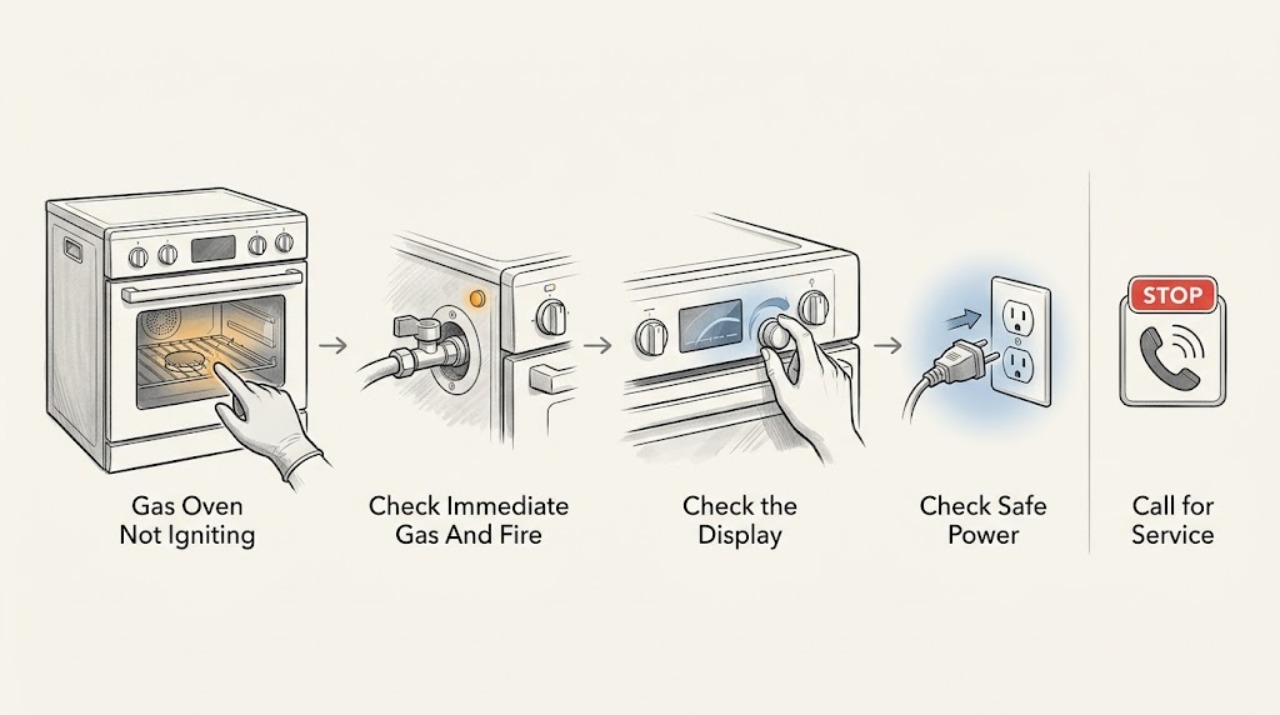
Whirlpool Gas Oven Not Igniting: Check Power, Gas, and Ignition Safely
If a Whirlpool gas oven will not ignite, first stop if you smell gas, hear hissing, see smoke or an abnormal flame, or hear a delayed bang. Otherwise, confirm the selected bake or broil function, the door position, the display and control state, and the household power connection from a safe, dry position.
-
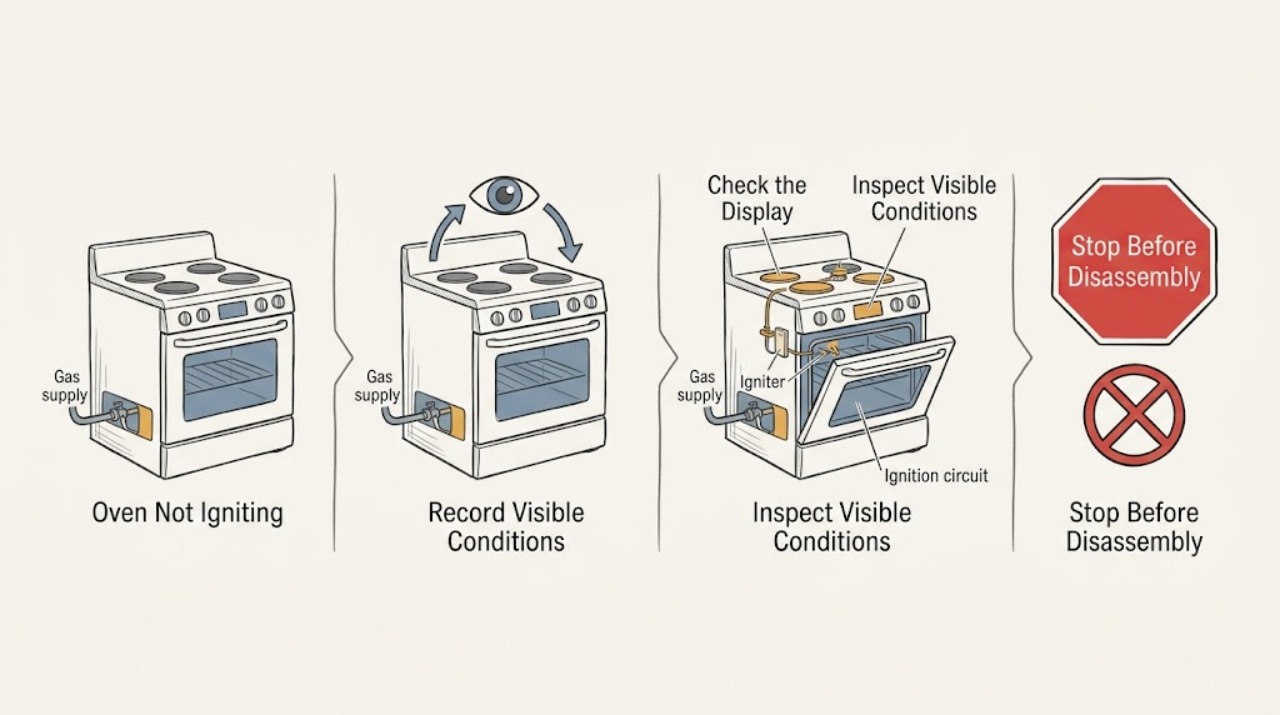
Whirlpool Oven Not Igniting: Check the Gas, Controls, and Ignition Safely
First confirm that this is a Whirlpool gas oven and record whether the display works, the oven starts a countdown, you hear ignition clicking, and a flame appears. A delayed-start or locked control, an open door, a power or grounding problem, a gas shutoff state, or a failed igniter can all look like “not igniting.” Perform only the external, model-manual checks and one normal ignition attempt when there is no gas odor.
-
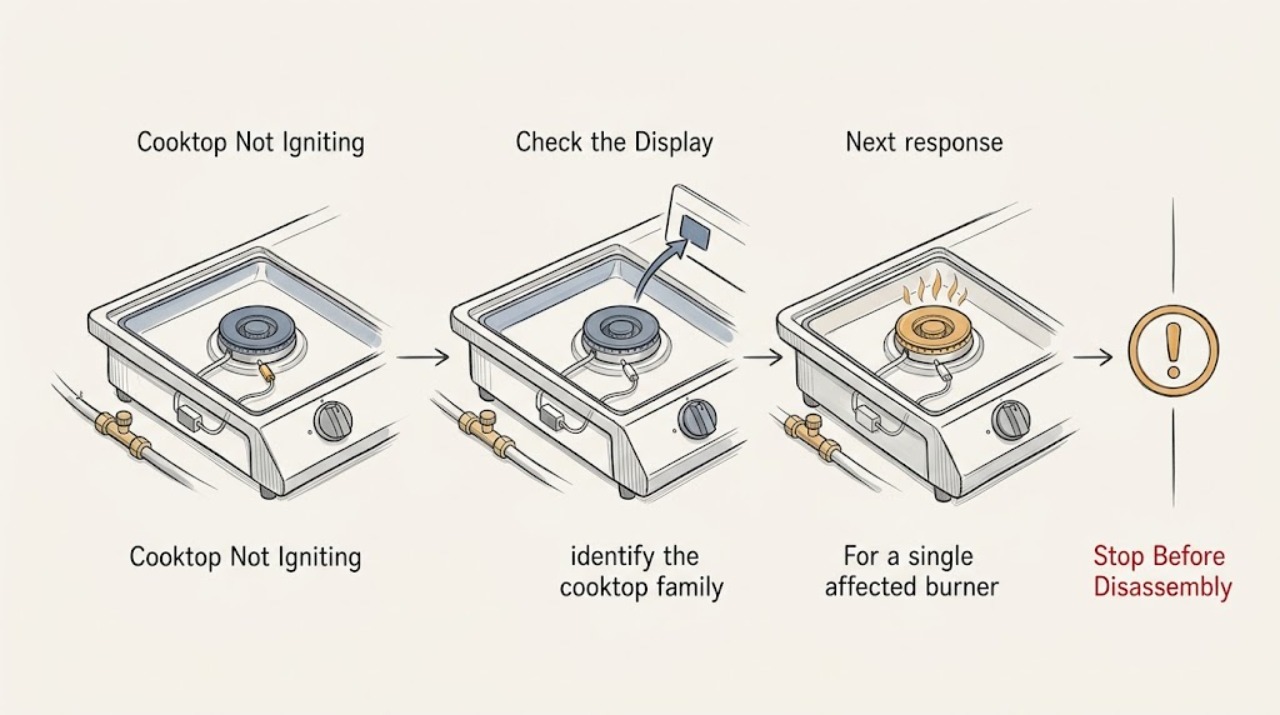
Wolf Cooktop Not Igniting: Separate Gas, Spark, and Burner Problems
For a Wolf gas cooktop that will not ignite, first stop if you smell excessive or persistent gas, see an abnormal flame, or hear sparking when no burner is being used. Otherwise note whether the ignitor clicks, whether a spark is visible, and whether one burner or every burner is affected.
-
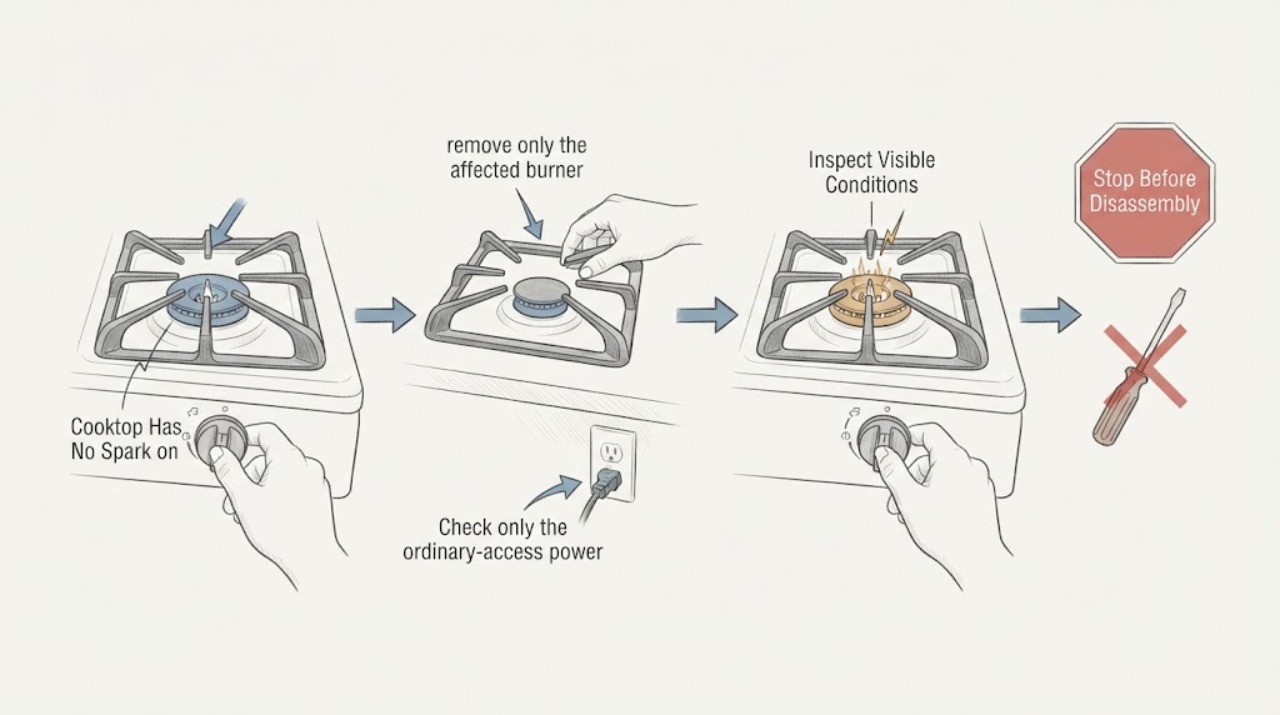
Wolf CT36G/S Cooktop Has No Spark on Two Burners: Safe Checks
If two burners on a Wolf CT36G/S have no spark while other burners still spark, treat it as a partial ignition symptom. Wolf describes an individual spark electrode for each surface burner, so working burners make a total power loss less likely, but they do not prove which local electrode, switch, module, or burner assembly is faulty.
-
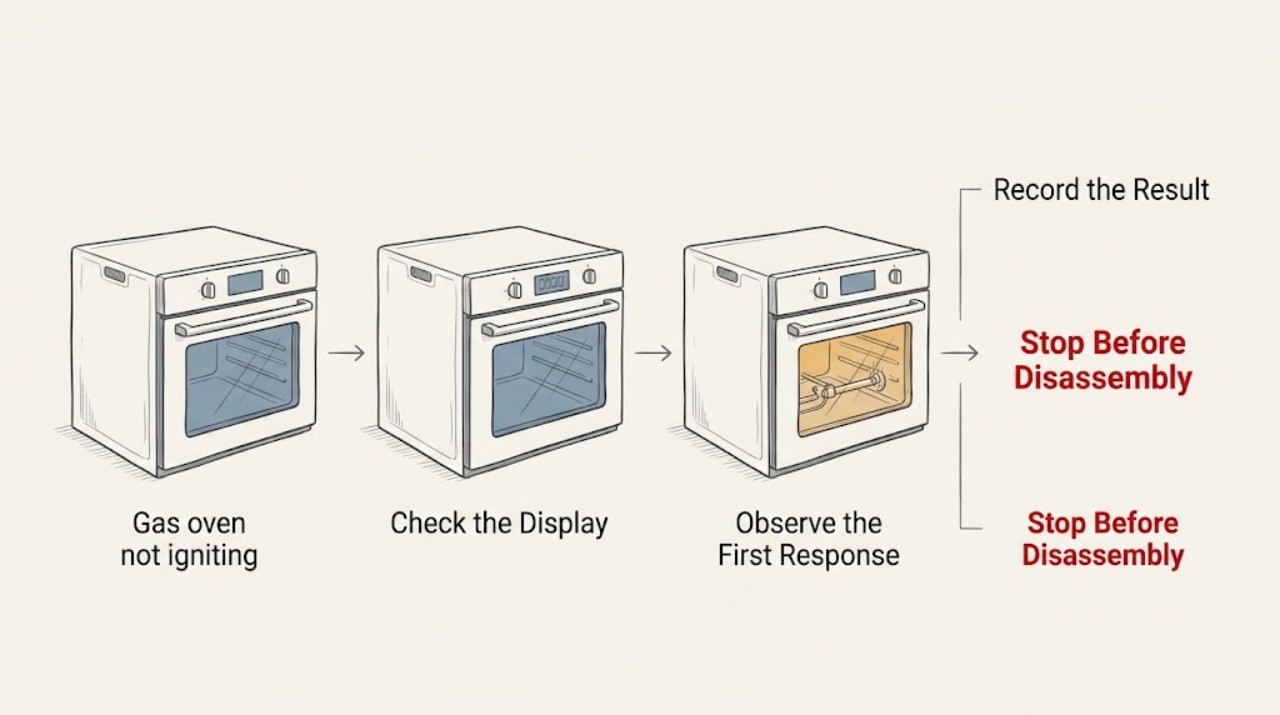
Wolf gas oven not igniting: safe checks before service
Do not keep trying to light a Wolf gas oven if you smell gas, hear a delayed bang, see an unusual flame, or the ignitor clicks without ignition. Turn the control off, leave the area if the odor is strong or persistent, and contact gas or emergency help from a safe location; do not test for a leak, use a flame, or open the gas path.
-
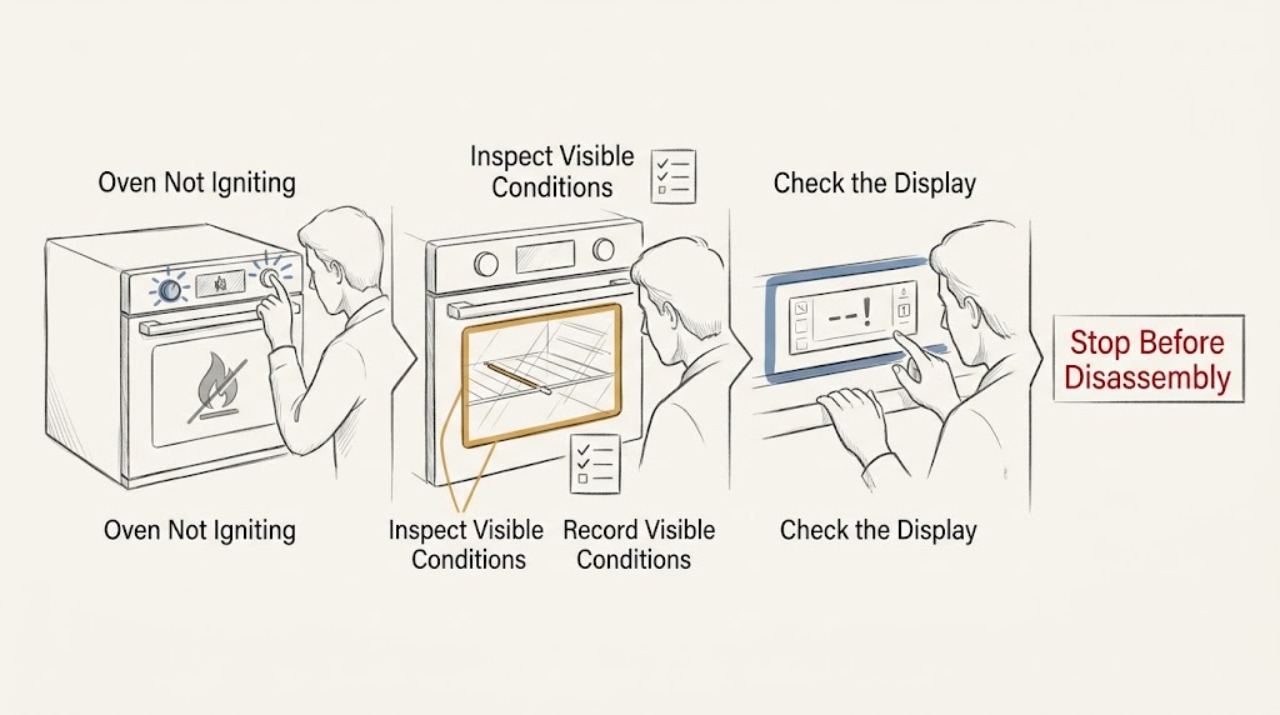
Wolf Oven Not Igniting: Identify the Oven Type and Use Safe Burner Checks
First confirm whether the Wolf oven is gas, electric, induction-range oven, or dual fuel: an electric oven does not use a gas igniter. For a gas Wolf oven, a normal burner may take about 30 to 45 seconds to light, but a gas odor without ignition, delayed ignition, abnormal flame, smoke, or repeated clicking is a stop condition.