
HVAC components
HVAC Contactors Guides
Contactor-related guidance for starting, control signals, and safe service boundaries.
Published contactors guides
Use the equipment name and symptom in each title to choose the most relevant guide.
-
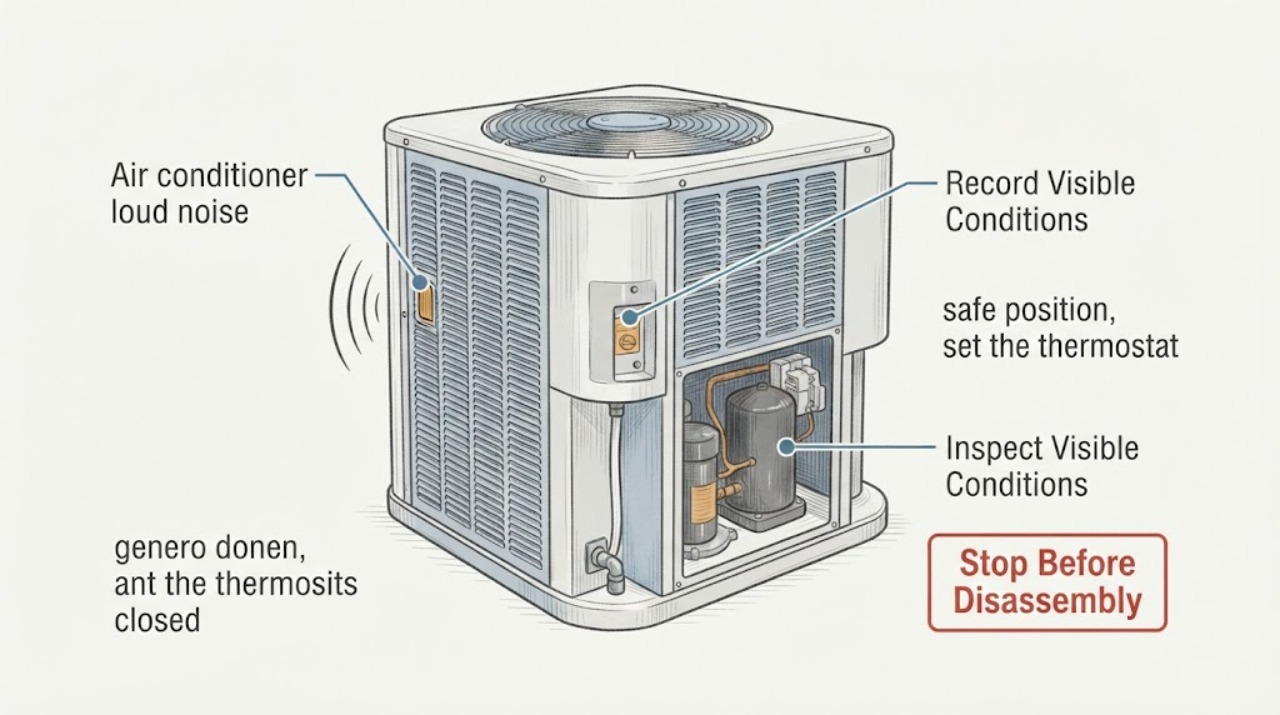
Air conditioner loud noise: check the compressor and contactor safely
A loud air conditioner can be a harmless startup or airflow sound, but a new bang, grinding noise, repeated buzzing or clicking, violent vibration, or a sound that comes with poor cooling can indicate an outdoor fan, compressor, contactor, electrical, mounting, or refrigerant problem. From a safe distance, note whether the sound comes from the indoor or outdoor unit and whether it starts, stops, or changes with a cooling call.
-
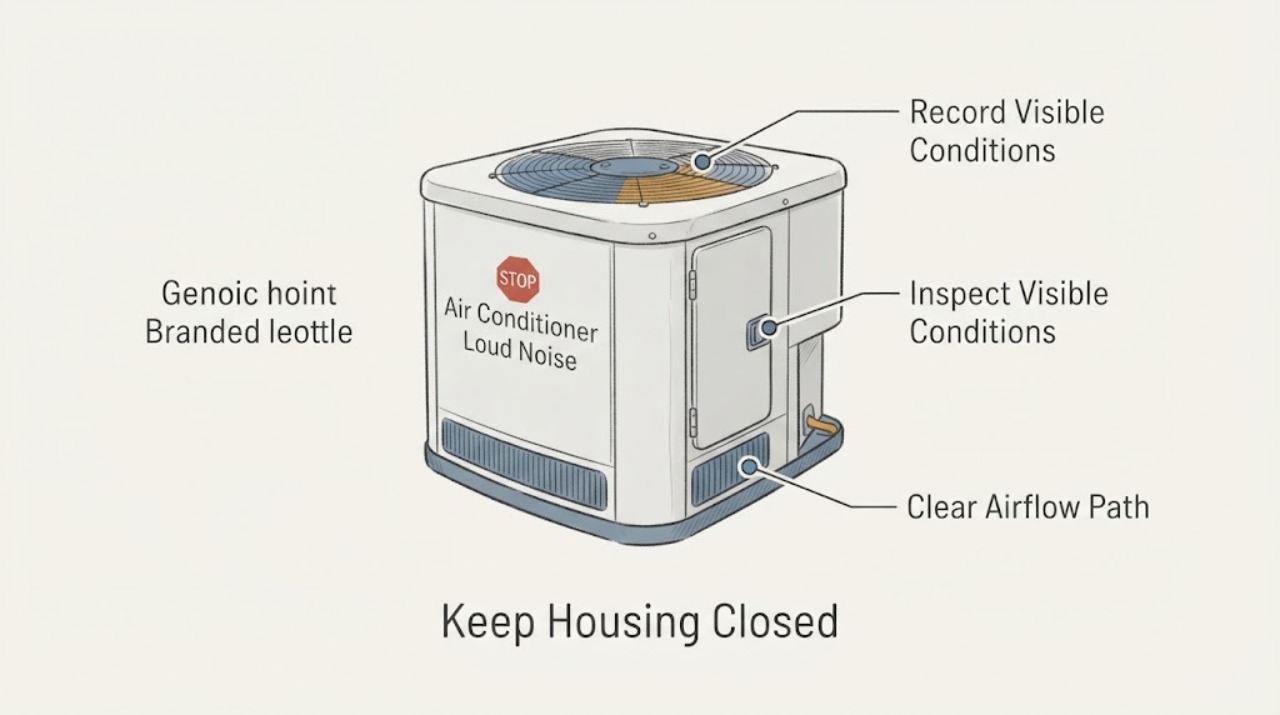
Air Conditioner Loud Noise: When a Contactor Needs HVAC Service
A new or unusually loud hum, buzz, or repeated click from an air conditioner's outdoor unit can involve the contactor, capacitor, fan, compressor, loose hardware, or another electrical or mechanical fault. From a safe position, note whether the sound is indoors or outdoors, whether it occurs at startup, shutdown, or continuously, whether the outdoor fan runs, and whether cooling changes.
-
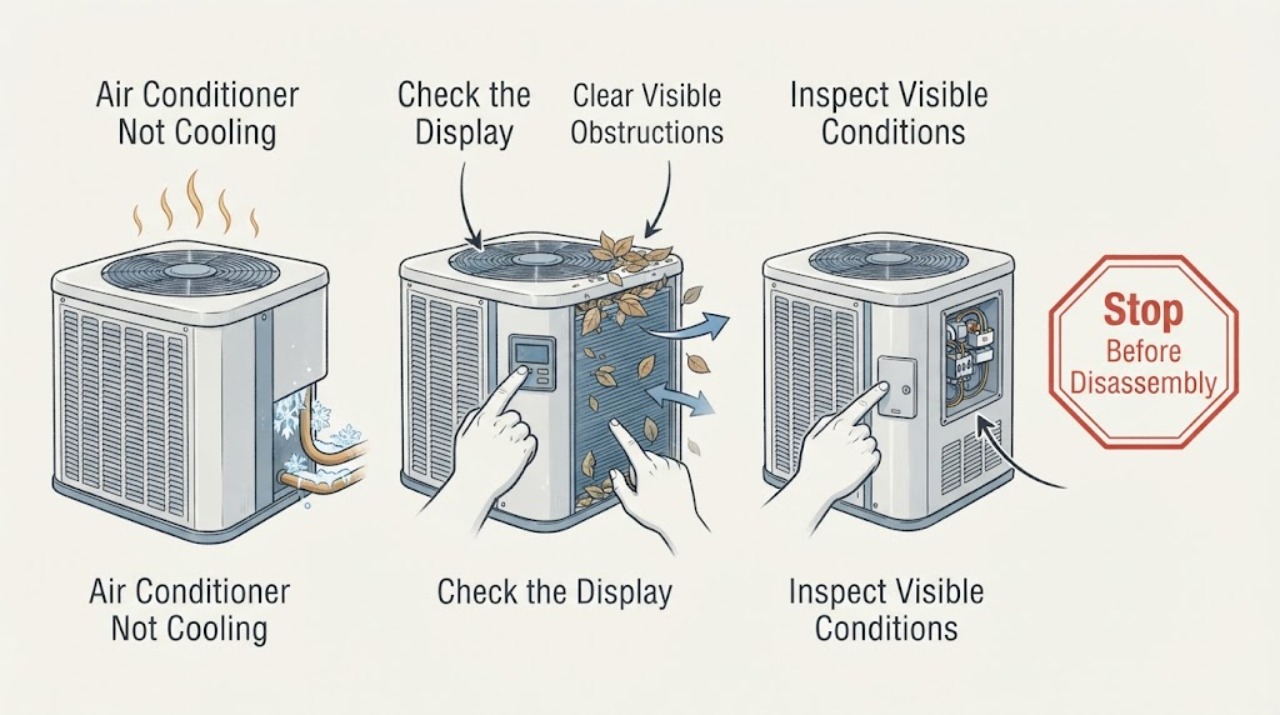
Air Conditioner Not Cooling: Safe Capacitor and Contactor Clues
If an air conditioner is not cooling, begin with the thermostat mode, target, filter, airflow, and visible outdoor clearance. A contactor or capacitor may be involved when the outdoor unit does not start, hums, or stops, but neither part can be confirmed from a sound or a warm room.
-
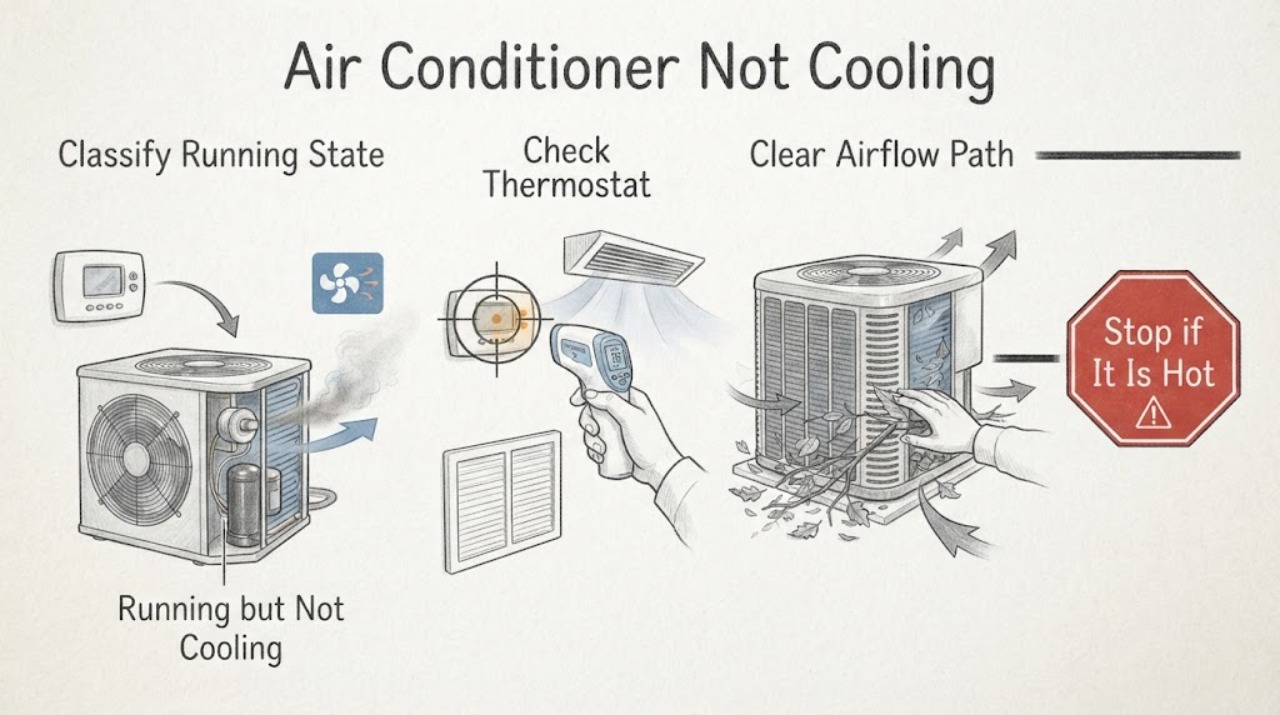
Air Conditioner Not Cooling: Check the Thermostat and Airflow Before Internal Parts
First decide whether the air conditioner is not running, is running with weak airflow, or is blowing air that is not cool. Check the thermostat mode and setpoint, compare supply vents and the return, inspect the accessible filter with the system off, and look from a safe distance for ice, water, or outdoor-unit obstruction.
-
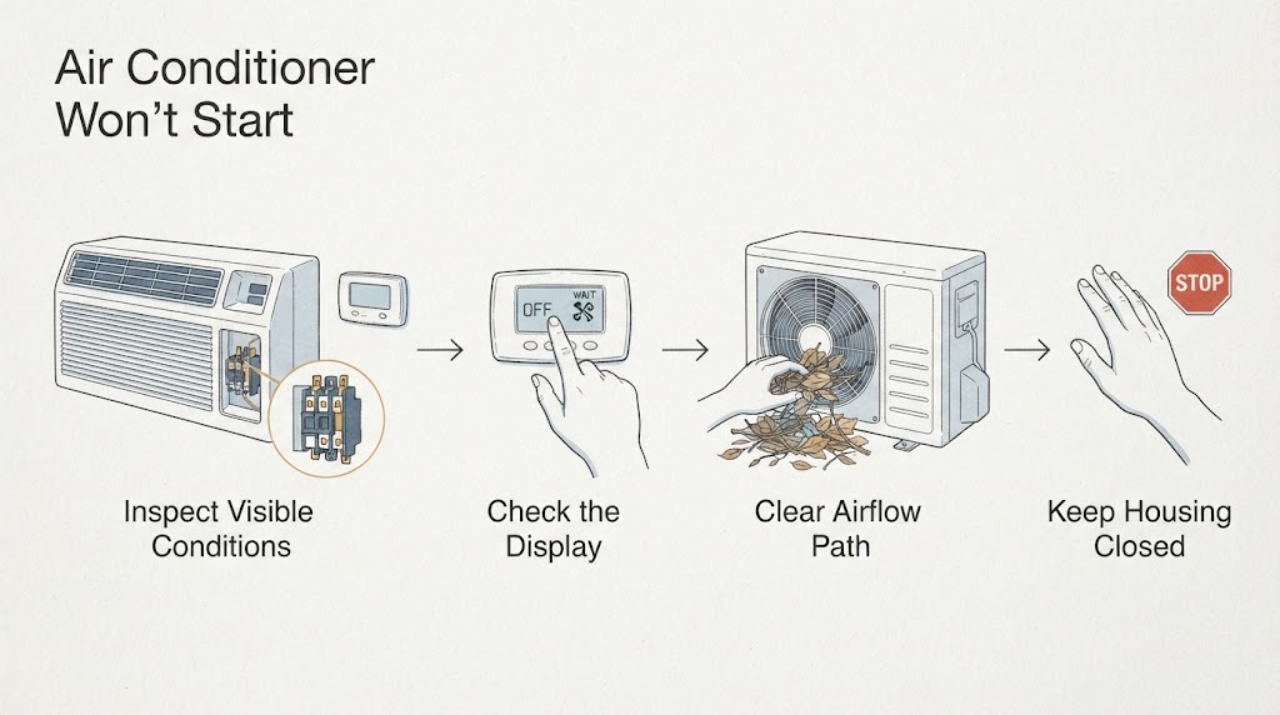
Air Conditioner Won't Start: Check the Thermostat Before Calling HVAC
Use the thermostat and other visible responses to separate a simple call-for-cooling problem from an HVAC equipment fault. Confirm that the thermostat has power, is set to Cool, and is calling for a temperature below the room temperature; allow any normal startup delay.
-
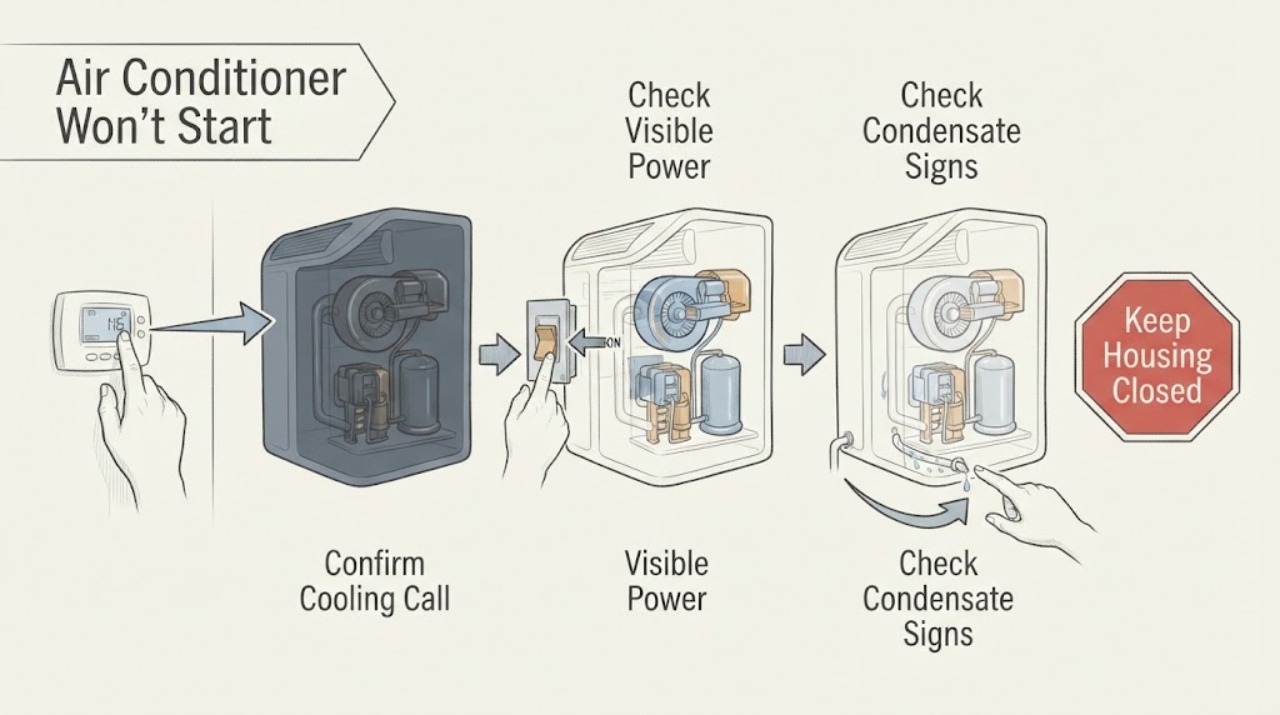
Air Conditioner Won't Start: Blower Motor, Compressor, and Contactor Checks
If an air conditioner will not start, first determine whether the thermostat is actually calling for cooling, whether the indoor blower responds, and whether the outdoor unit responds. From ordinary safe access, check the thermostat setting, the visible power status, the filter, and signs of condensate or an overflow shutdown; do not open panels or test live voltage.
-
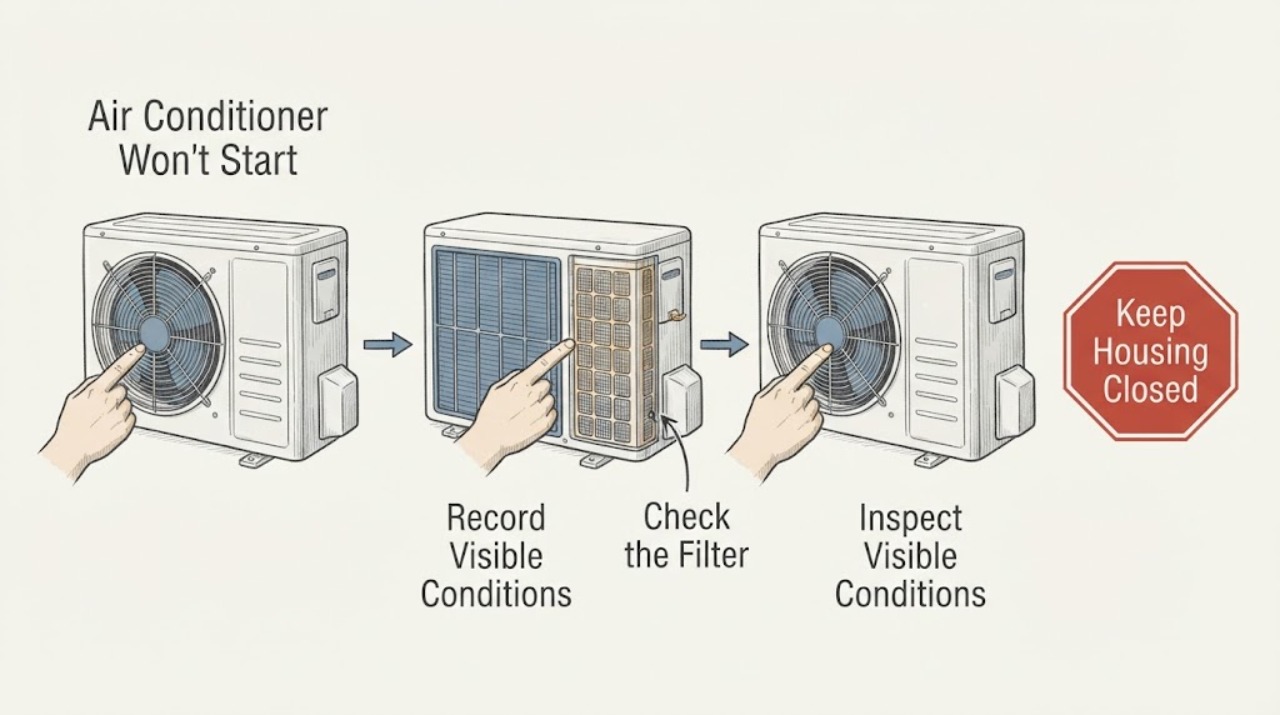
Air Conditioner Won't Start: Check the Safe Causes Before Ordering Parts
When an air conditioner will not start, first separate no thermostat call, no indoor response, and an outdoor unit that stays silent. Check the thermostat mode and setpoint, the accessible air filter, visible supply and return airflow, and whether a clearly labeled HVAC protective device is open.
-
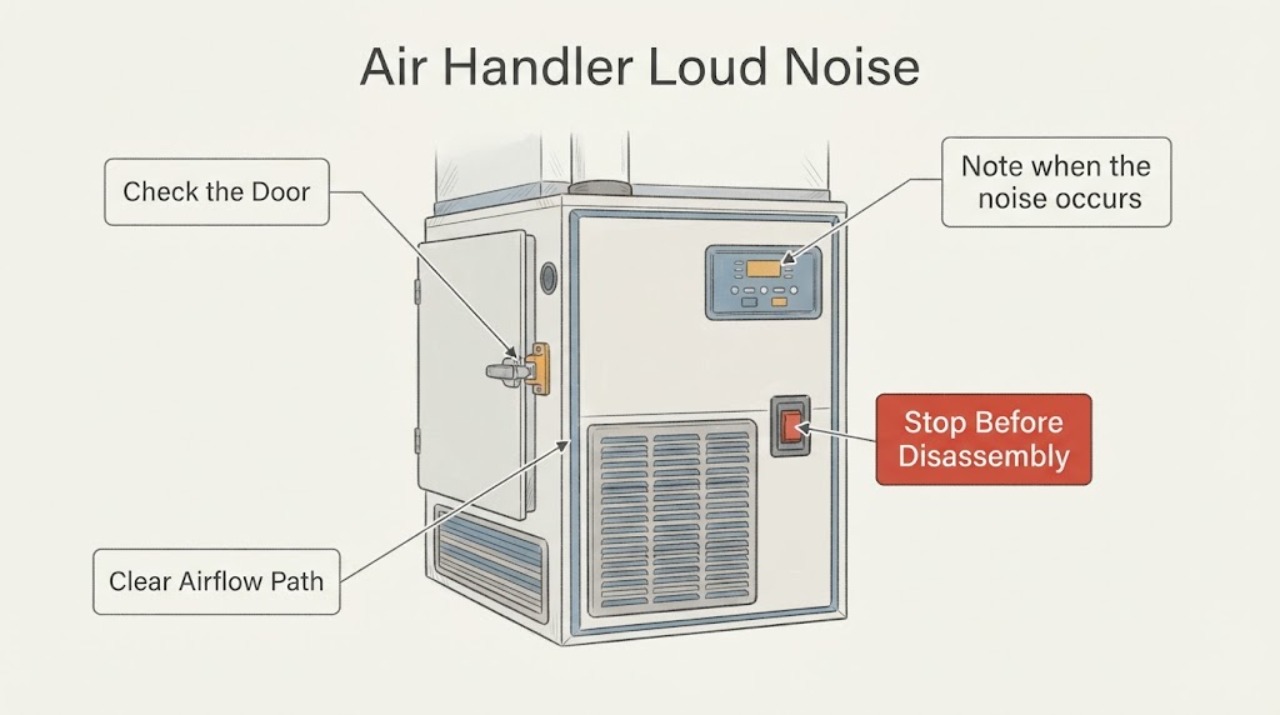
Air Handler Loud Noise: Safe Contactor-Focused Checks
A loud air-handler noise is not enough to prove a contactor is failing. First identify whether the sound comes from the indoor air handler, ductwork, registers, or the outdoor unit, and whether it occurs at startup, shutdown, or continuously.
-
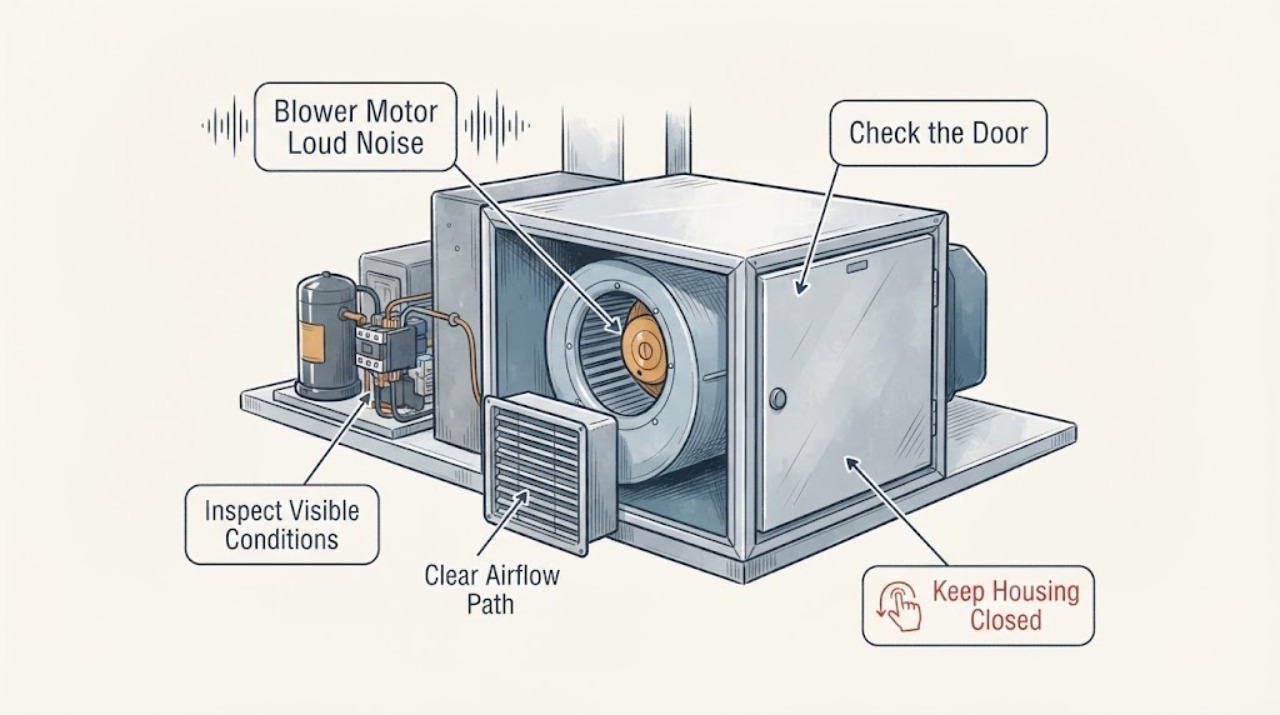
Blower Motor Loud Noise: Separate Indoor Fan, Compressor, and Contactor Clues
A loud noise reported near a blower motor can come from the indoor blower wheel or motor, airflow restriction, cabinet vibration, or a sound transmitted from the outdoor compressor or contactor. First identify where the sound is loudest and whether it occurs when the indoor fan starts, while air is moving, when the system stops, or only when the outdoor unit runs.
-
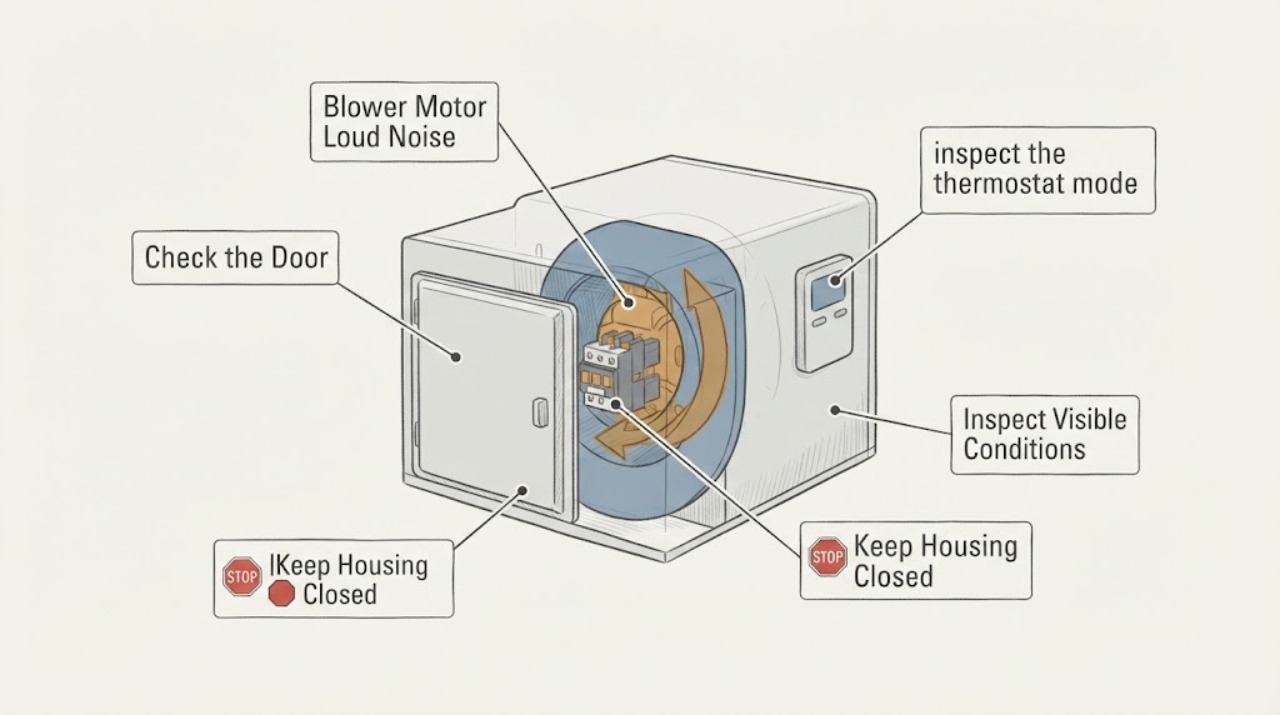
Blower Motor Loud Noise: Is the Contactor Involved?
A loud noise that seems to come from the blower motor is not automatically a contactor fault. First locate the sound: an indoor blower noise that follows fan speed points toward airflow, a filter, a wheel, motor, or mounting; a click, hum, or buzz from the outdoor unit at startup or shutdown can involve the contactor, capacitor, fan motor, or compressor.
-
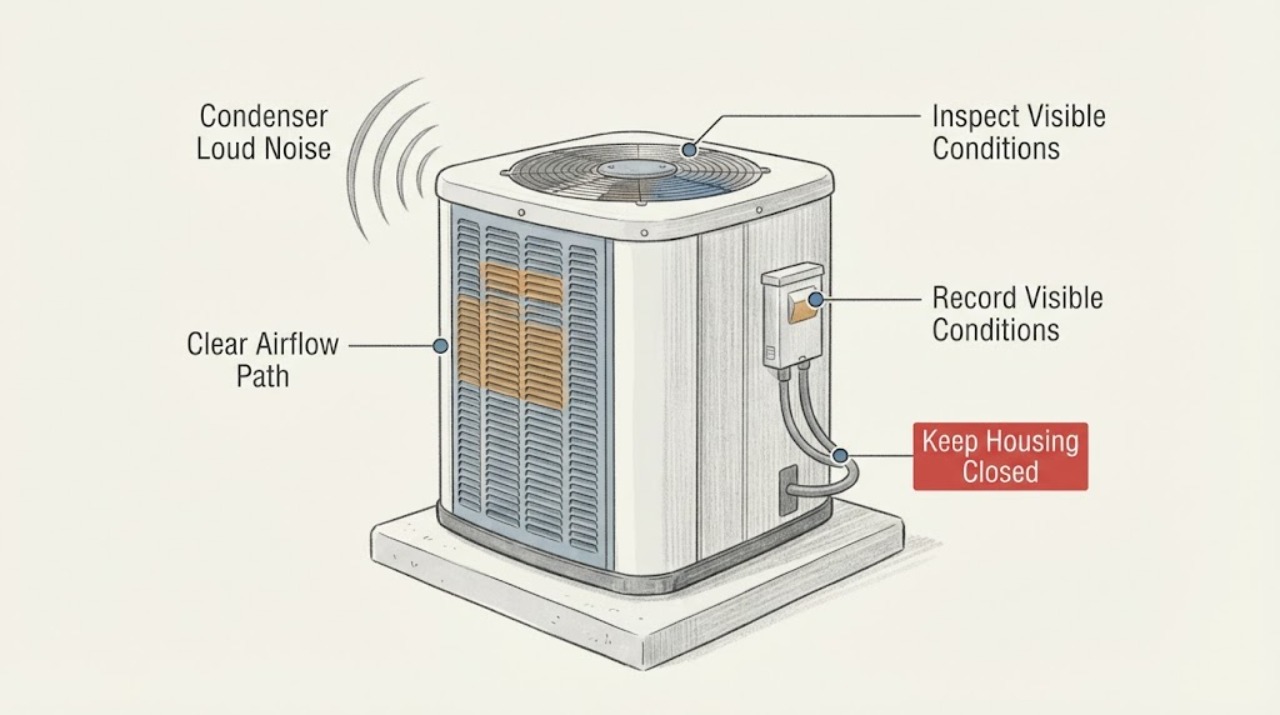
Condenser Loud Noise: How to Tell if the Contactor May Be Involved
A loud outdoor condenser can make a contactor buzz or chatter, but the same sound may come from the fan, compressor, loose cabinet parts, a capacitor, or another electrical fault. Record when the sound occurs and whether the fan starts, the system cools, or a breaker trips, using only safe observations outside the cabinet.