
Repair problem
Drafty Troubleshooting Guides
Published FixGraph guidance for diagnosing and responding to drafty.
Matching published guides
Choose a guide that matches the service, equipment, and conditions you are seeing.
-
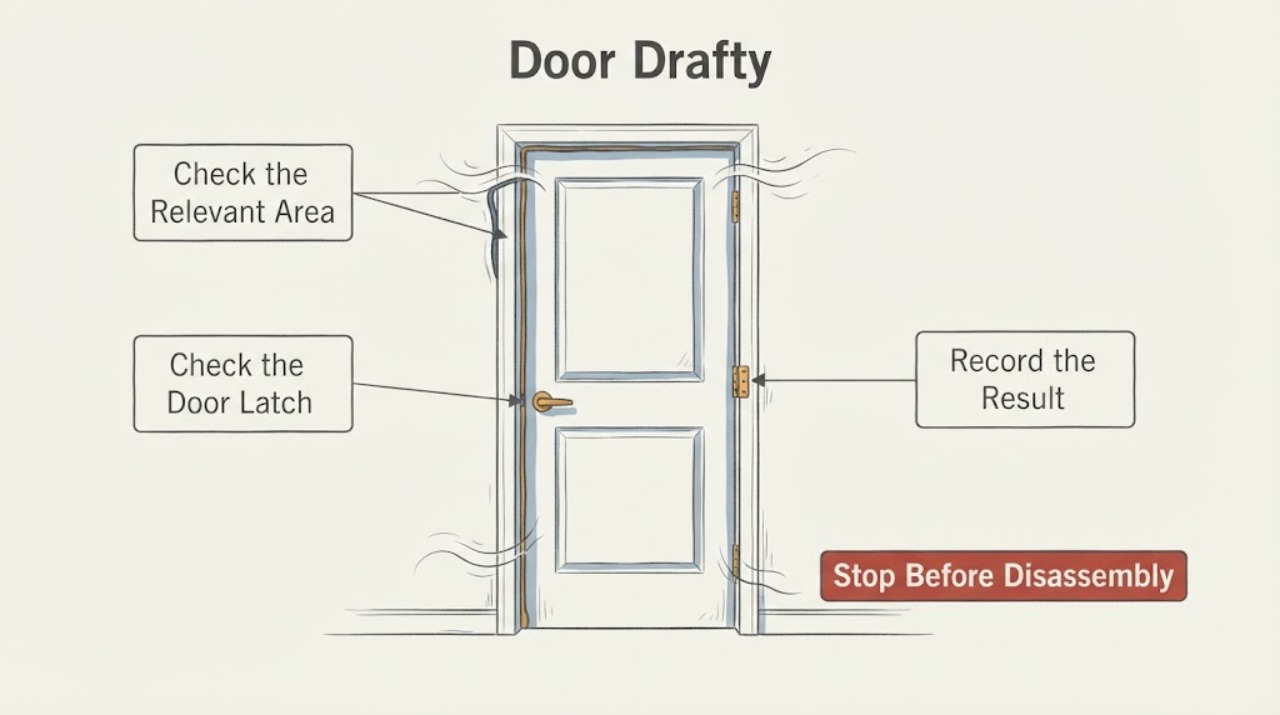
Door Drafty
For a drafty closed exterior door, locate the leak before buying material: check for visible daylight or a loose fit, then use a paper or tissue test around the jamb, head, threshold, hinges, and strike side. If the paper slides freely, inspect the weatherstripping and door alignment.
-
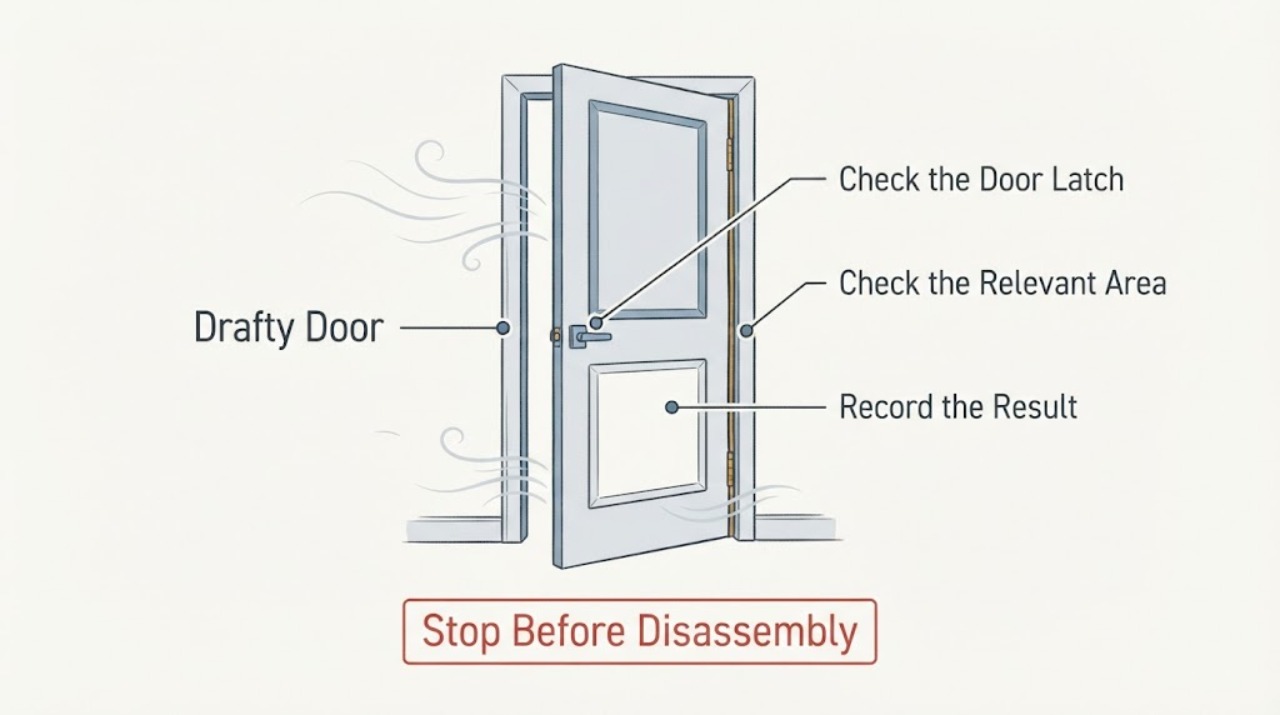
Drafty Door: Find the Gap and Restore the Seal
A draft around a closed door usually comes from a worn or compressed weatherstrip, a door that no longer closes tightly against its stops, a gap beneath the door, or air leakage behind the frame. With the door closed, identify the exact edge where air or daylight enters, then check the seal with a paper or playing-card test and inspect the bottom sweep and threshold.
-
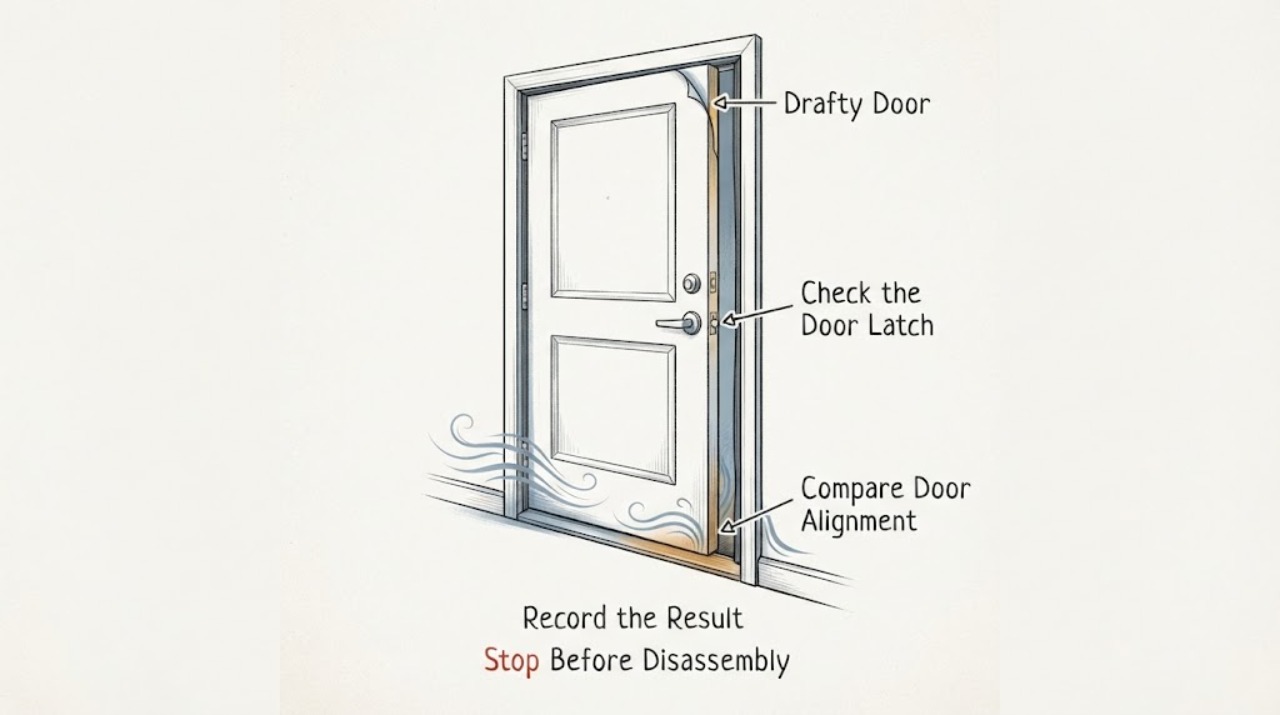
Drafty Door: Check the Seal and Weatherstripping
Close and latch the door, then locate whether the draft crosses the perimeter seal, the bottom sweep or threshold, or the gap behind the frame. Weatherstripping is for the moving door-to-jamb joint; caulk or backer rod is for stationary gaps around the frame.
-
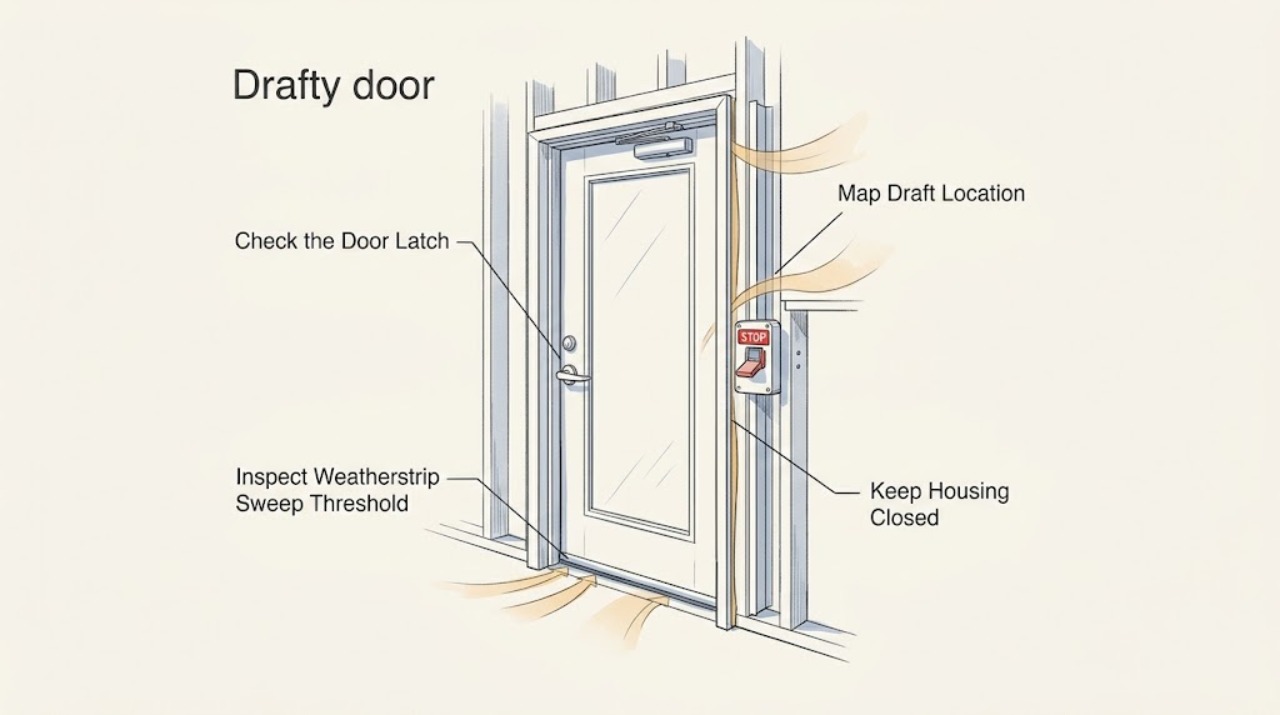
Drafty door: Find the leak before replacing the seal
A drafty door needs a location check before you buy a replacement seal. With the door closed, identify whether air enters at the latch side, hinge side, head, bottom sweep or threshold, or around the frame where it meets the wall.
-
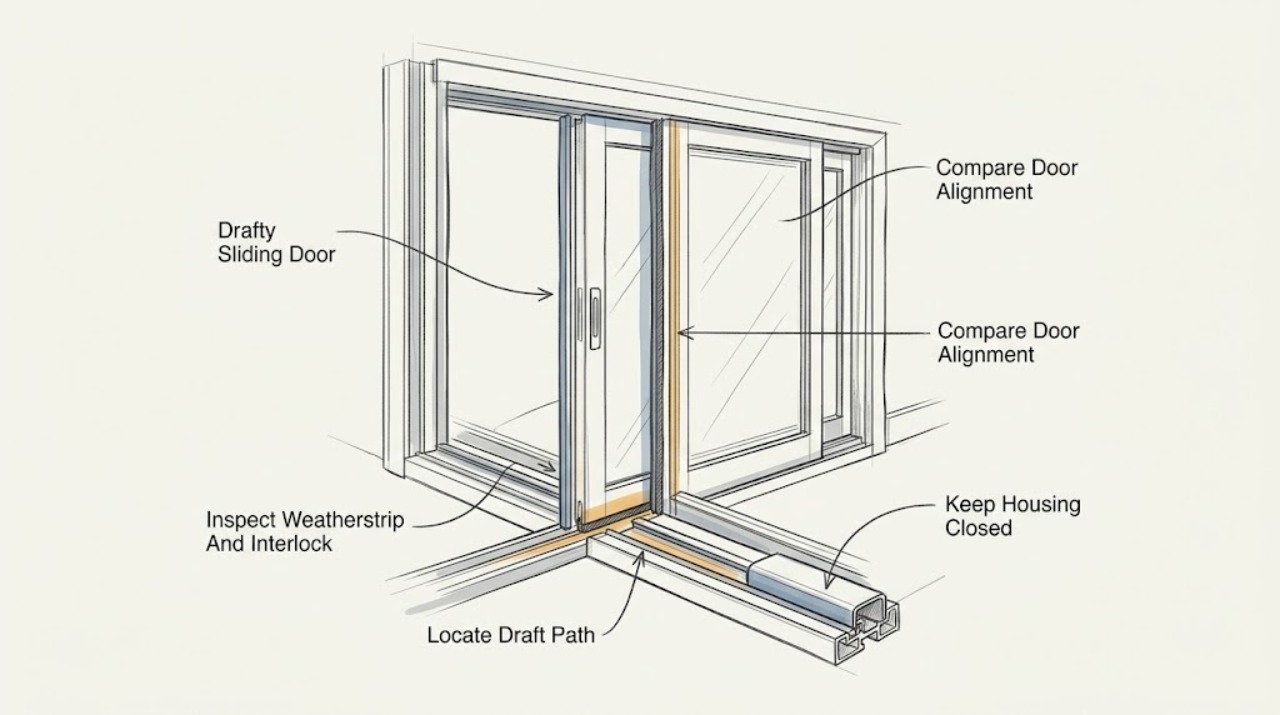
Drafty Sliding Door: Find the Leak at the Panel, Seal, Track, or Frame
A drafty sliding door usually leaks at the moving-panel seal or interlock, a worn or displaced weatherstrip, a panel that is not sitting square on its rollers, or the fixed frame and trim rather than the glass itself. With the door fully closed and locked, locate the draft using a thin-paper or smoke observation, then check the track, panel reveal, latch pull-in, and visible seals.
-
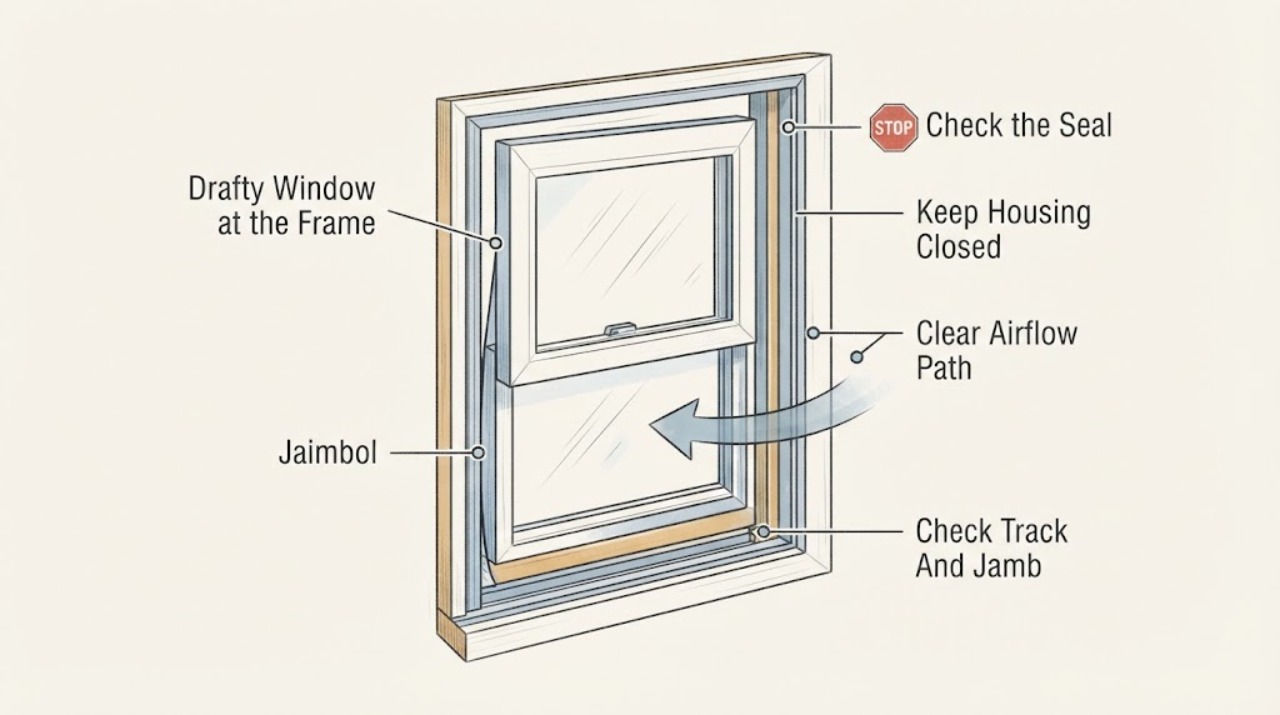
Drafty Window at the Frame or Track: What to Check
Confirm the airflow path before applying material. With the window closed and latched, test the sash edges, meeting rail, sill, jambs, frame-to-trim joint, and track with a paper strip or a safe smoke source.
-
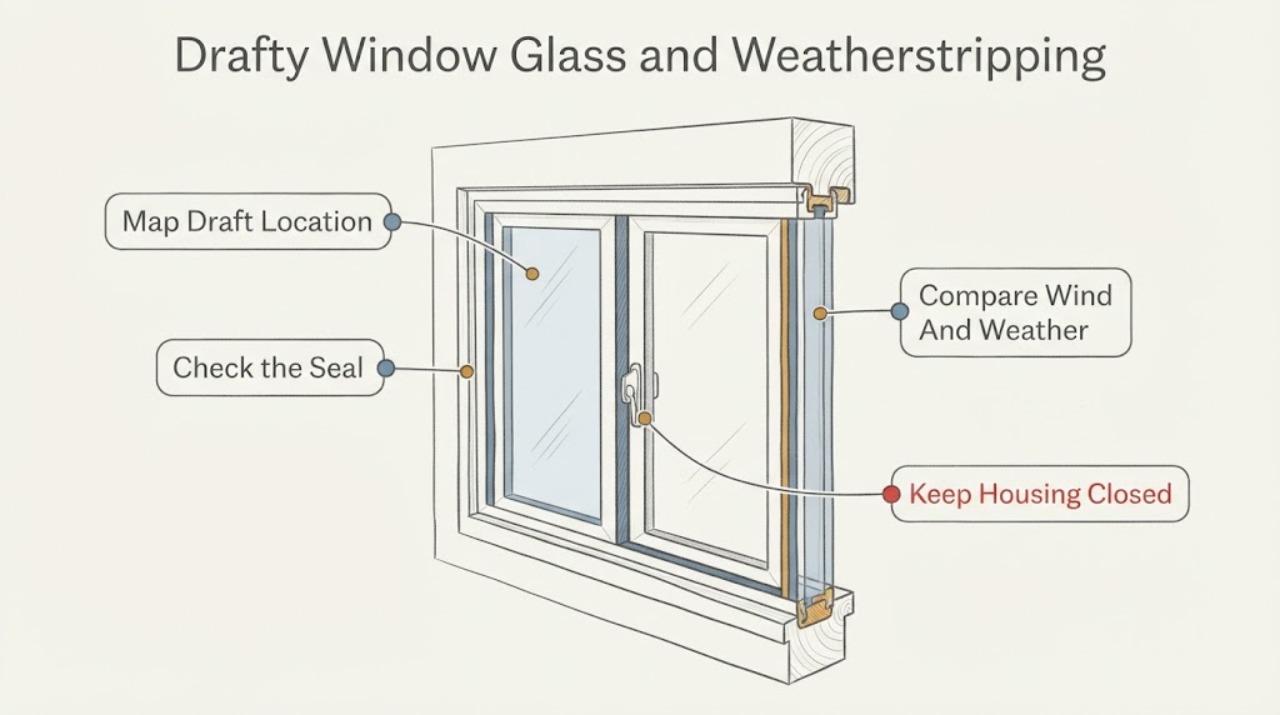
Drafty Window Glass and Weatherstripping: What to Check Next
A draft at a closed window can come through failed sash weatherstripping, a gap around the stationary frame, a cracked or poorly sealed pane, or the rough opening behind the trim. First identify whether air moves at the sash, glass edge, frame, or wall and whether the symptom changes with wind or rain.
-
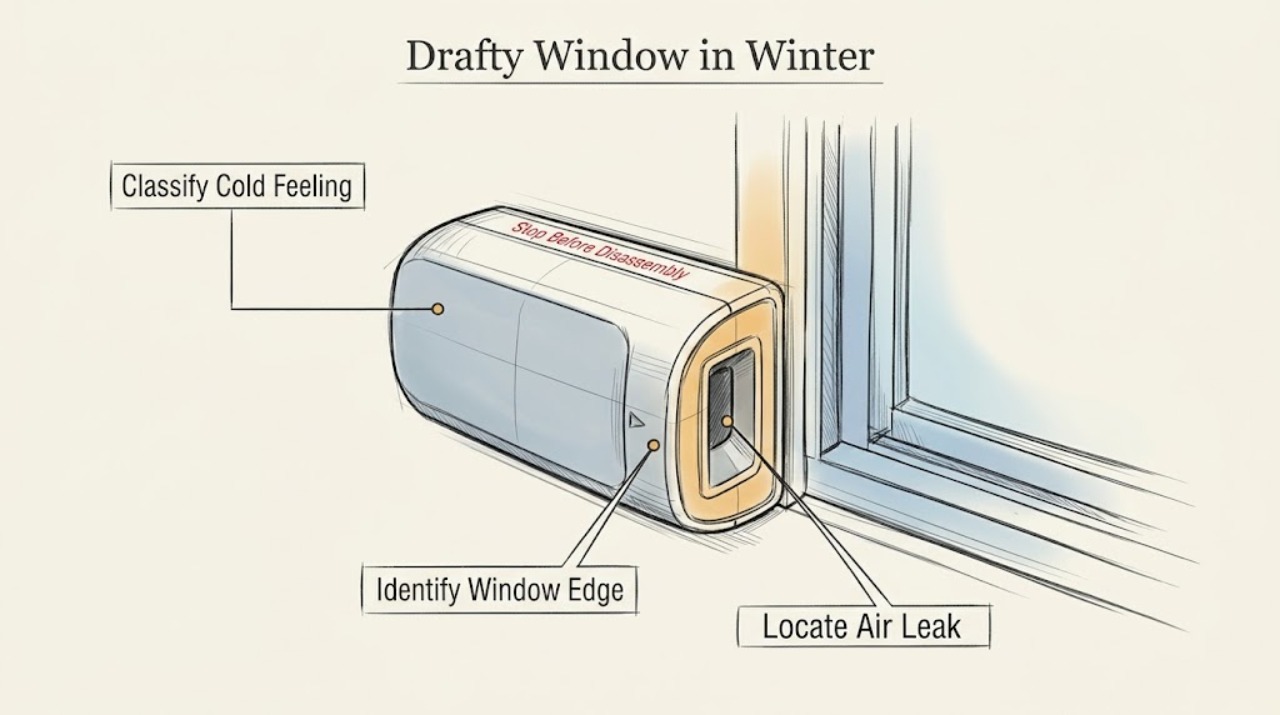
Drafty Window in Winter: Find the Leak Before Replacing the Glass
A winter window can feel drafty because air is passing through the sash, frame, or rough opening, or because cold glass is causing nearby air to move. Close and latch the window, then locate the exact edge with a strip of tissue or a smoke pencil; never use a candle or other flame.
-
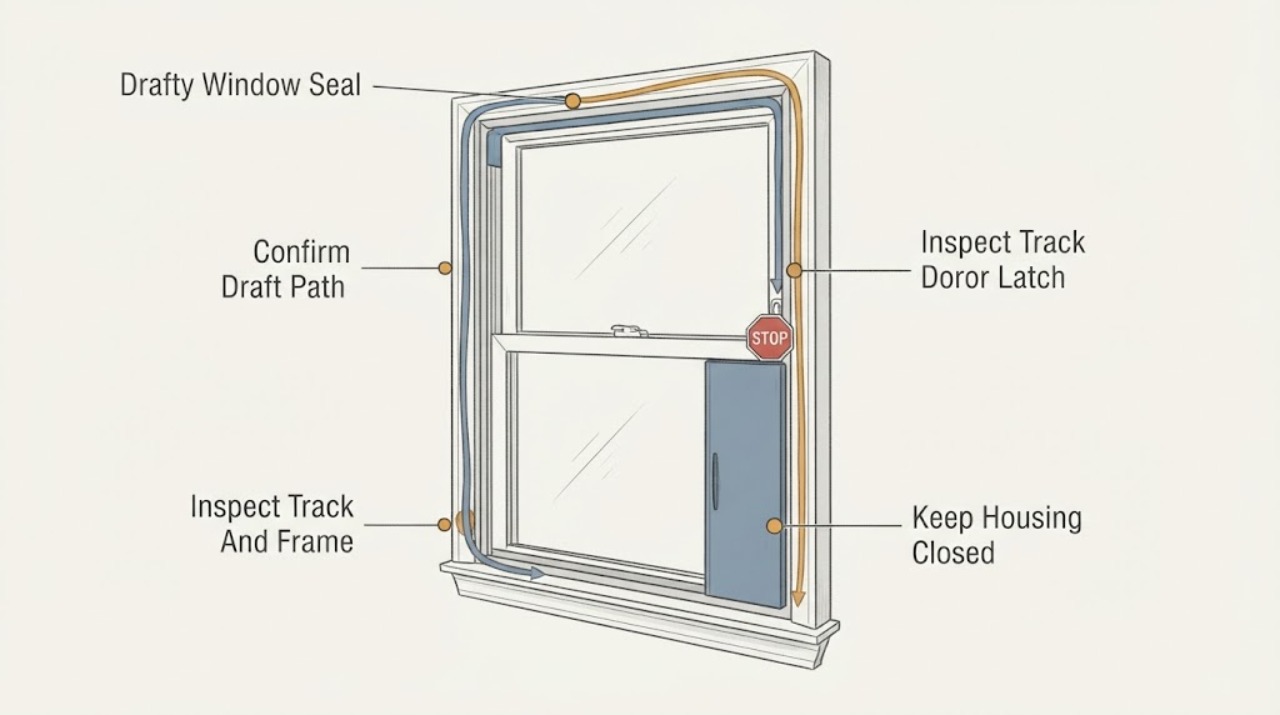
Drafty Window Seal: Check Compression and Gaps
Confirm that air is moving before replacing a seal. Close and latch the window, then test the sash edges, meeting rail, corners, and frame with a paper strip or a safe smoke source.
-
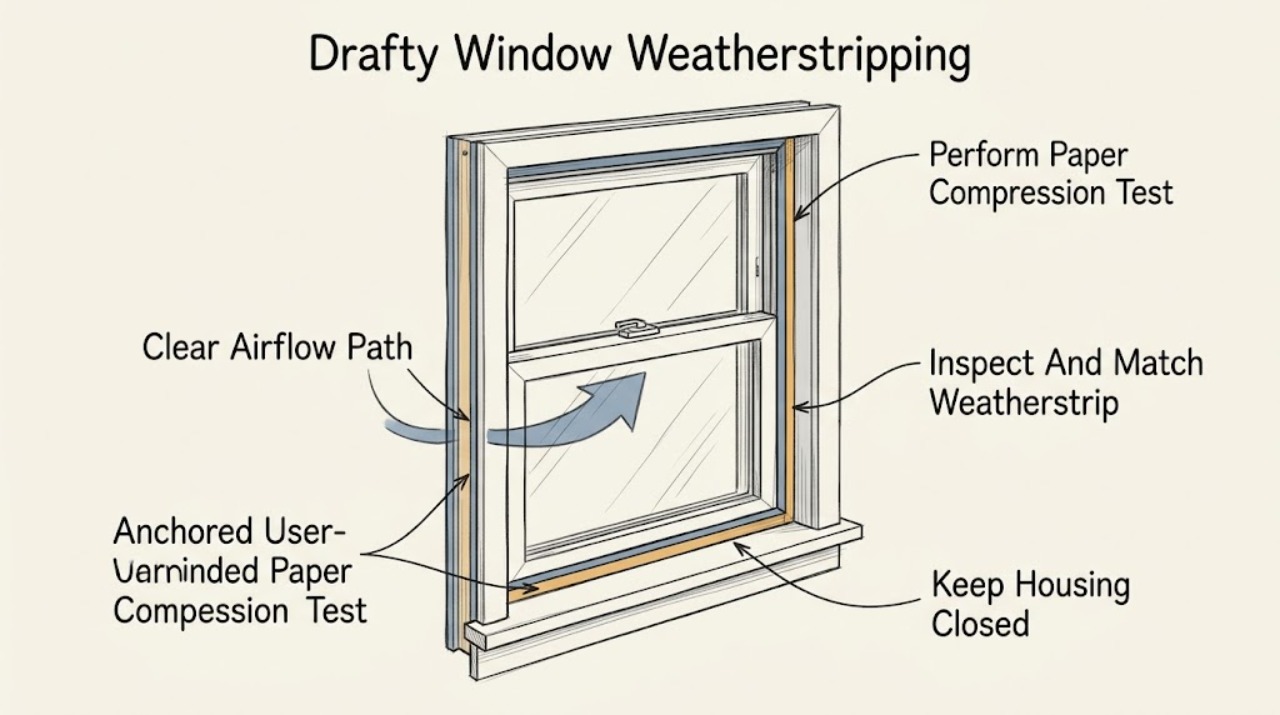
Drafty Window Weatherstripping: Find the Leak and Seal It Safely
To fix a drafty window, first locate whether air is passing the moving sash or through a stationary gap around the frame. A paper test on a closed, latched window can reveal weak compression: if the paper slides out easily, the weatherstrip or closure is not sealing well.
-
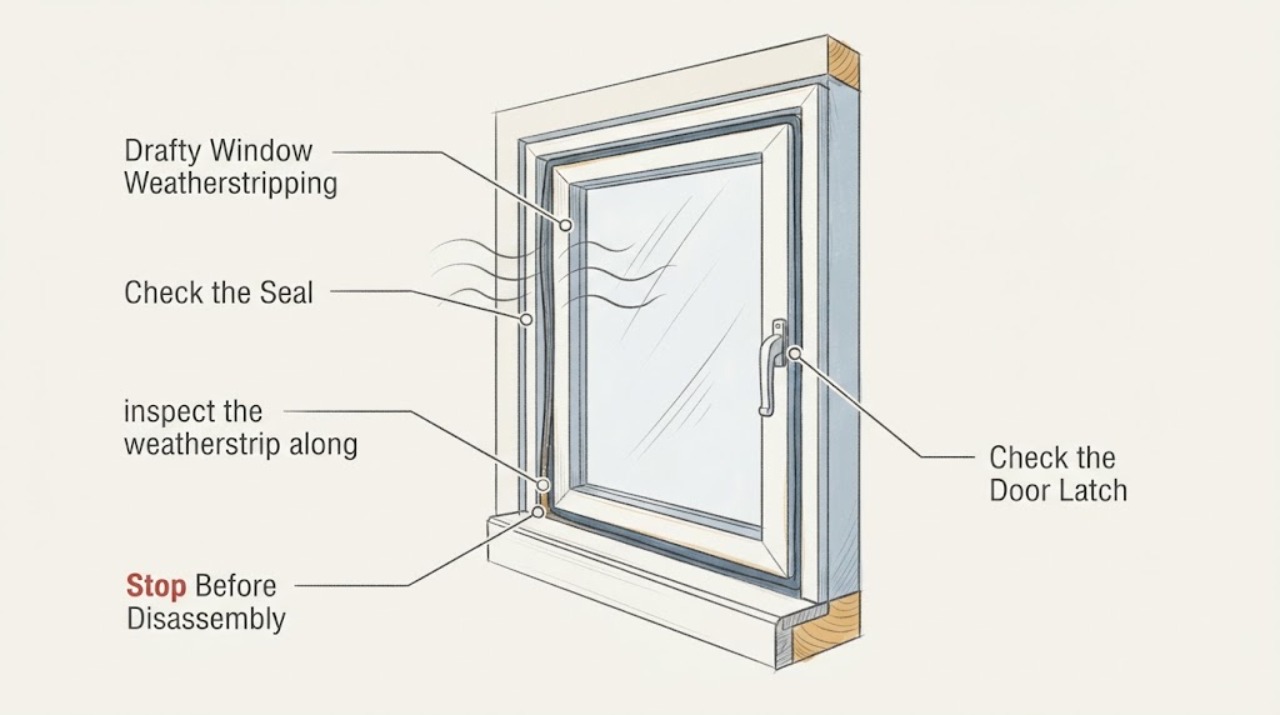
Drafty Window Weatherstripping: Match the Profile
First locate the air movement with the window fully closed and locked, then separate a moving-sash seal problem from a fixed frame, trim, or installation gap. Weatherstripping seals moving joints such as the sash-to-frame contact; caulk or an air-sealing repair is used at stationary frame-to-wall gaps.
-
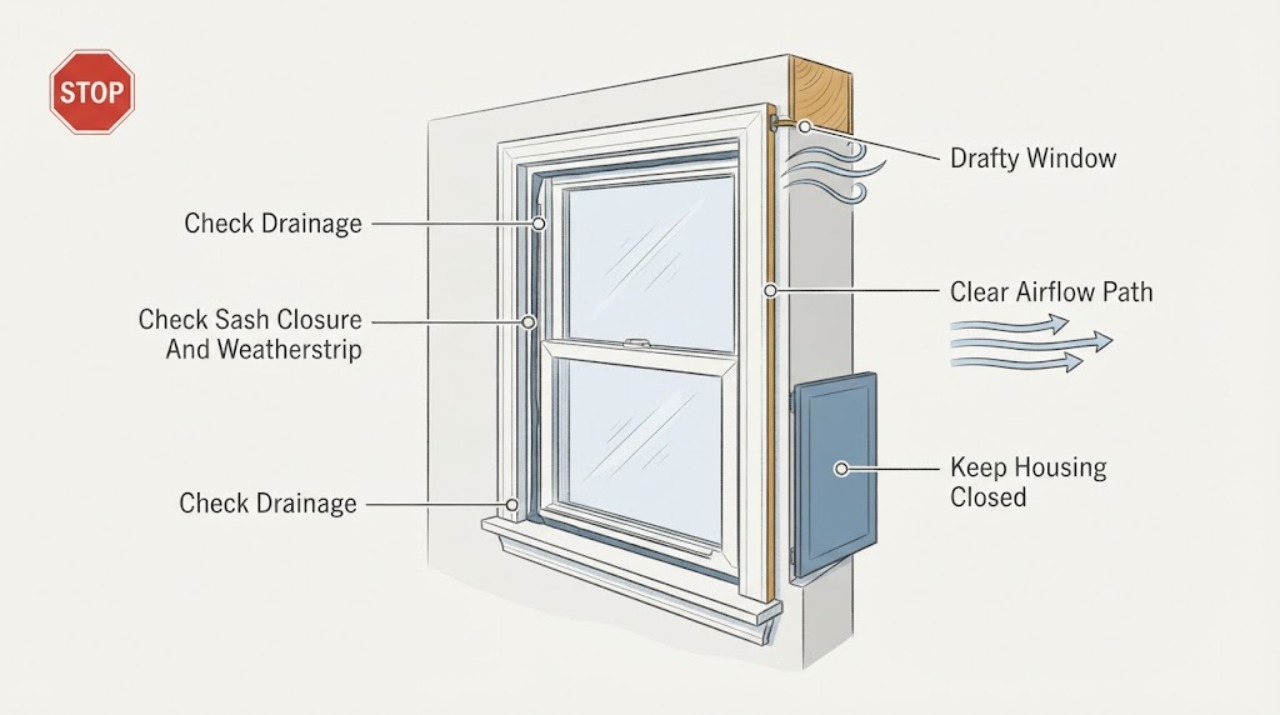
Drafty Window: Find the Air Leak, Check the Sash and Frame, Then Seal Safely
For a drafty window, first locate the air movement without using a flame: compare the sash, meeting rail, frame, trim, and nearby wall on a windy or temperature-difference day. If the draft follows a moving sash or latch, inspect the weatherstripping and whether the window closes squarely.
-
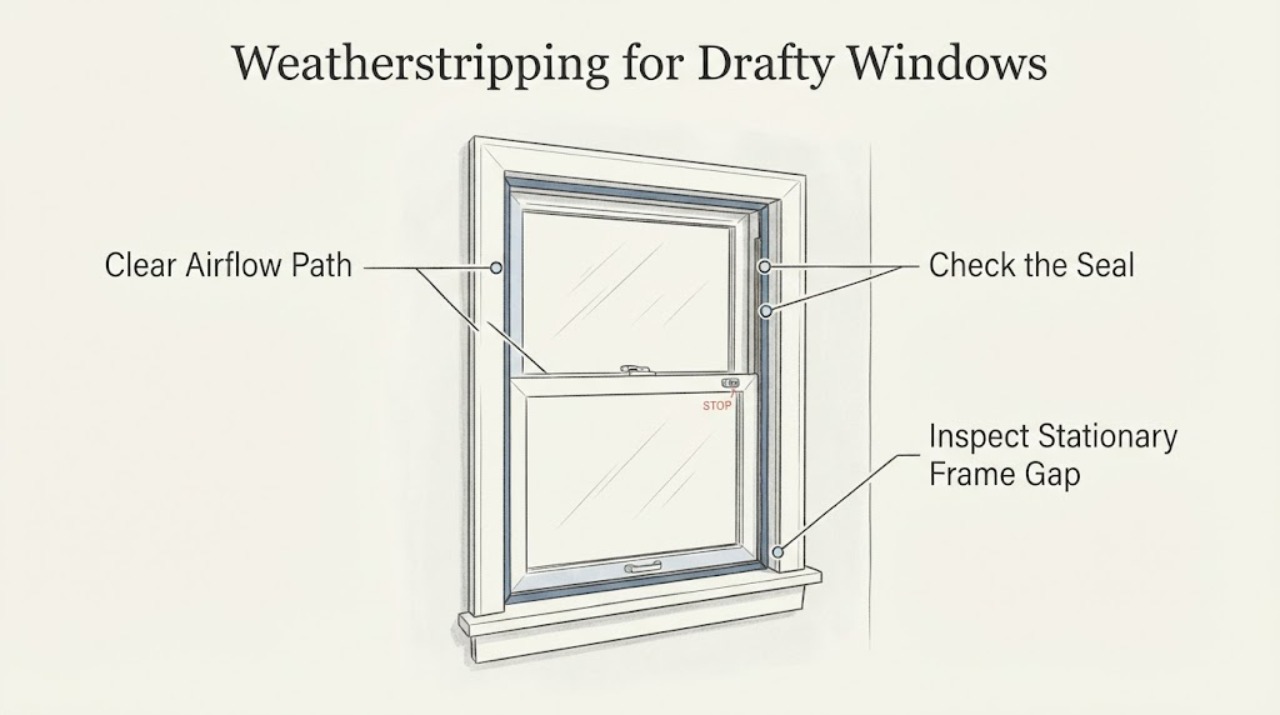
Weatherstripping for Drafty Windows: Find and Fix Air Leaks
Find the leak before buying weatherstripping. With the window closed and latched, use a paper test or watch a smoke source from a safe position around the sash, meeting rail, corners, frame, and trim.