
HVAC components
HVAC Condensate Drains Guides
Guidance for condensate drainage, overflow, clogs, pans, and water around HVAC equipment.
Published condensate drains guides
Use the equipment name and symptom in each title to choose the most relevant guide.
-
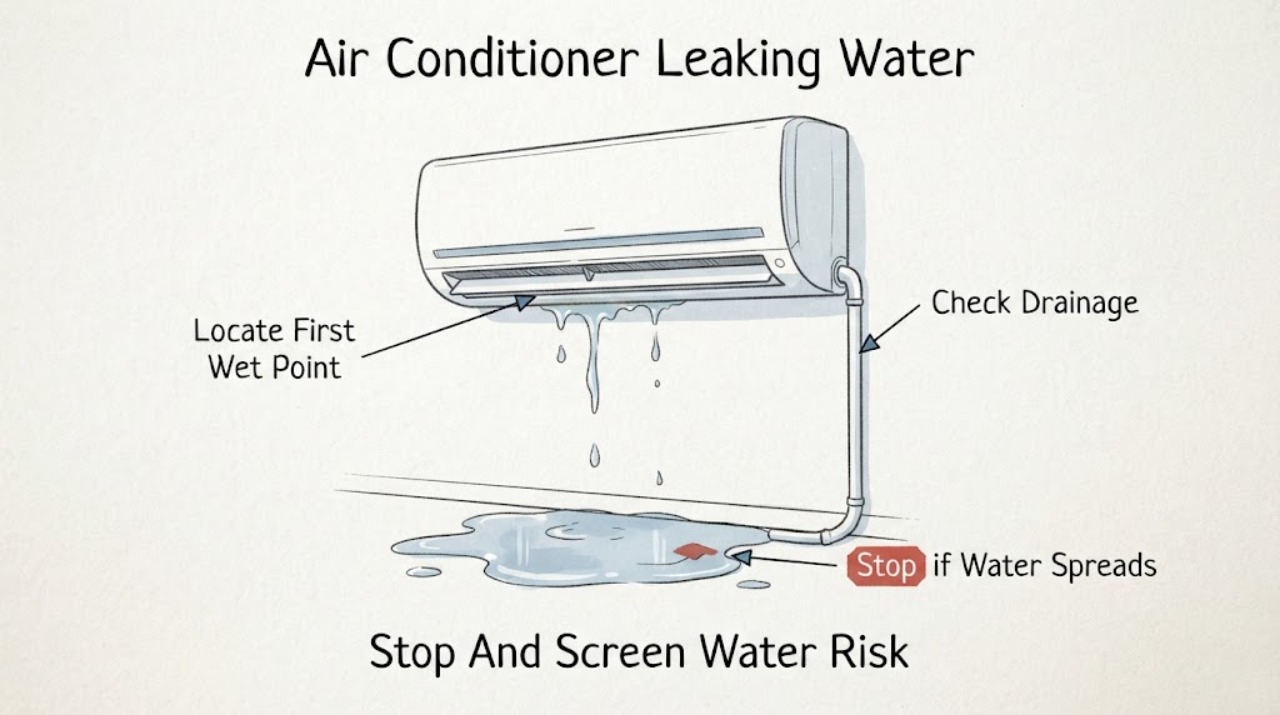
Air Conditioner Leaking Water: Find the First Wet Point Safely
Turn the air conditioner off when water is reaching electrical equipment, a ceiling is bulging, the leak is large or continuous, sewage or mold is involved, or the indoor unit is unsafe to approach. The first wet point matters: water at the indoor unit or wall can come from a blocked, detached, or frozen condensate drain; water at a ceiling or roof opening can also be building or plumbing water; water outside at the drain outlet may be normal condensate discharge.
-
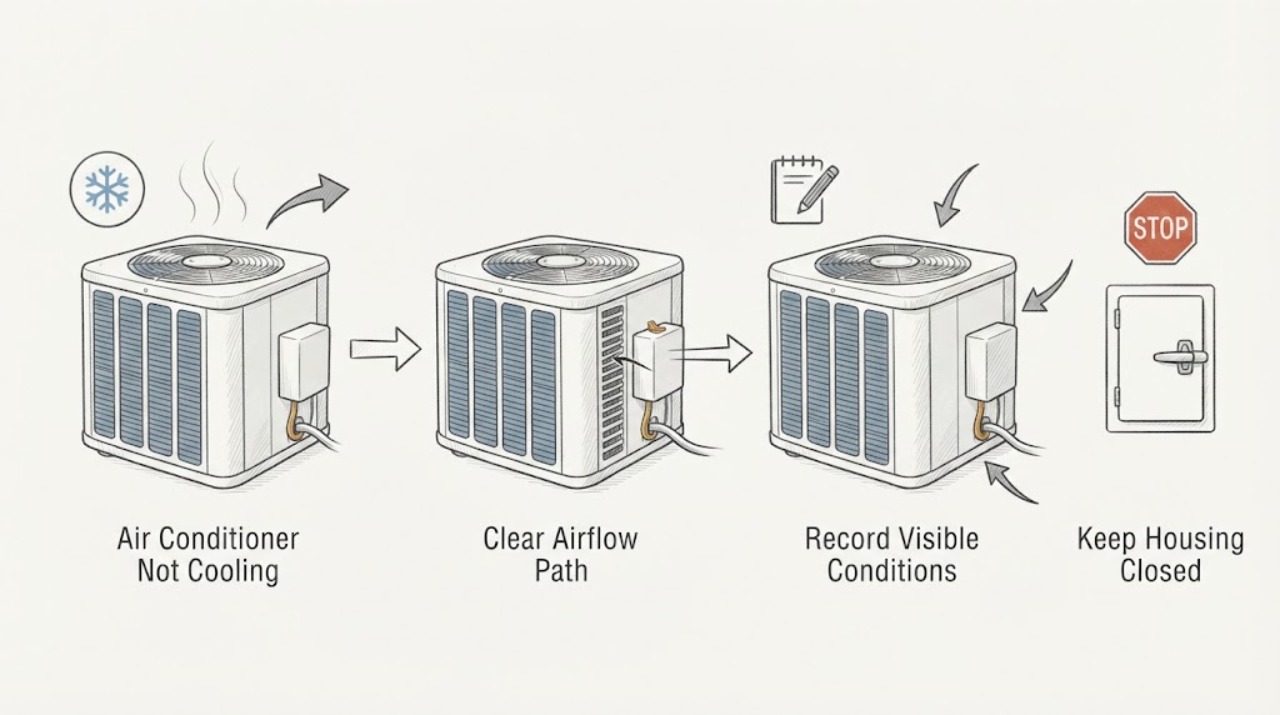
Air Conditioner Not Cooling: Check Airflow, Drainage, and Capacitor Symptoms Safely
Start with the thermostat mode and setpoint, then check the accessible air filter and whether supply air is weak. Look for ice on visible tubing or the indoor coil area and for condensate water near the indoor unit or drain outlet.
-
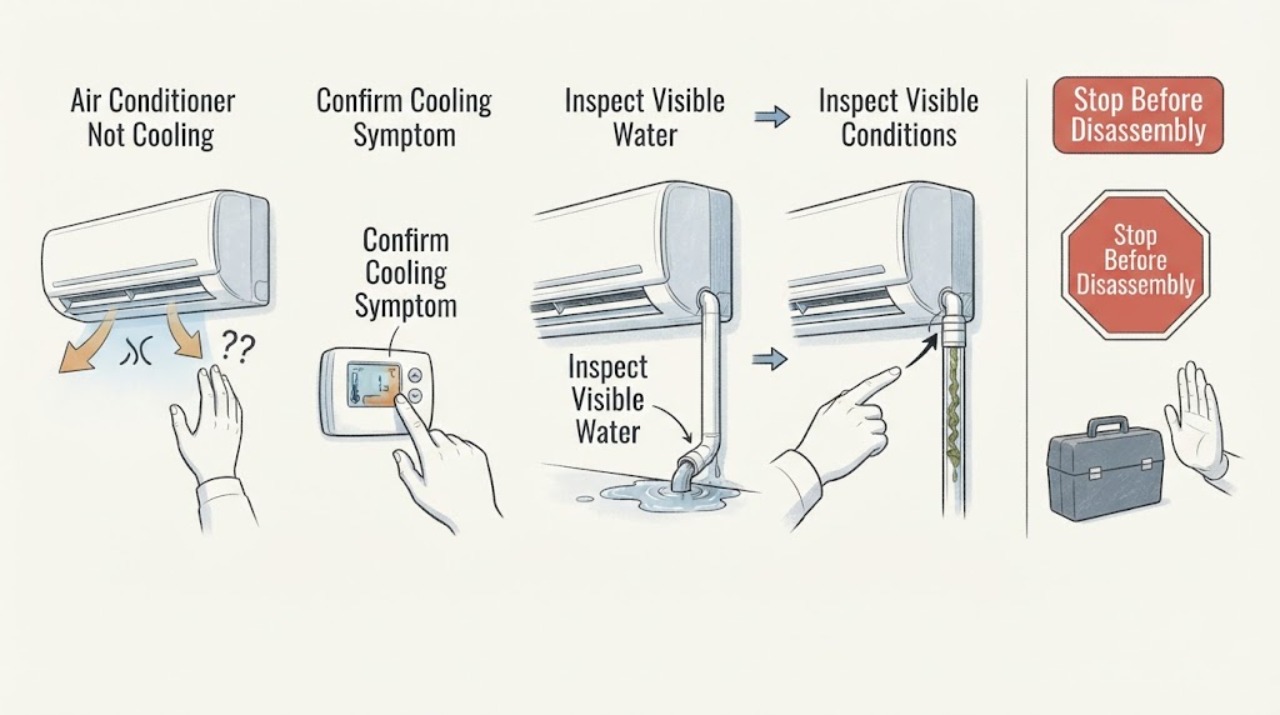
Air Conditioner Not Cooling: Check the Condensate Drain Line
A blocked condensate drain line or pan can make an air conditioner stop cooling because water backs up and a condensate overflow switch may shut down the compressor, outdoor fan, or indoor fan. Look only from safe, ordinary access for standing water, a wet area near the indoor unit, or no water leaving the known drain outlet; also note whether a safety switch has stopped the system.
-
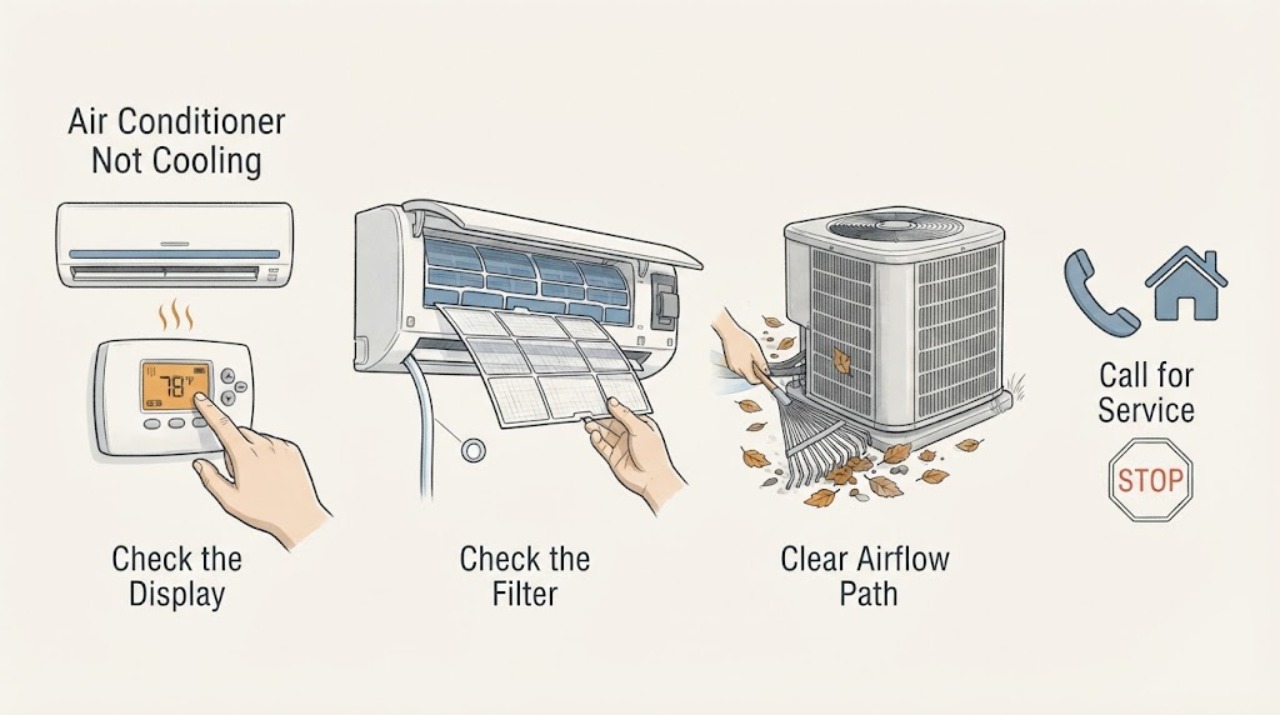
Air Conditioner Not Cooling: Thermostat, Airflow, and Drain Checks
First confirm that the thermostat is actually calling for cooling, then check the dry, user-accessible filter and airflow. If airflow is weak or absent, the filter, return path, blower motor, or indoor control may be involved.
-
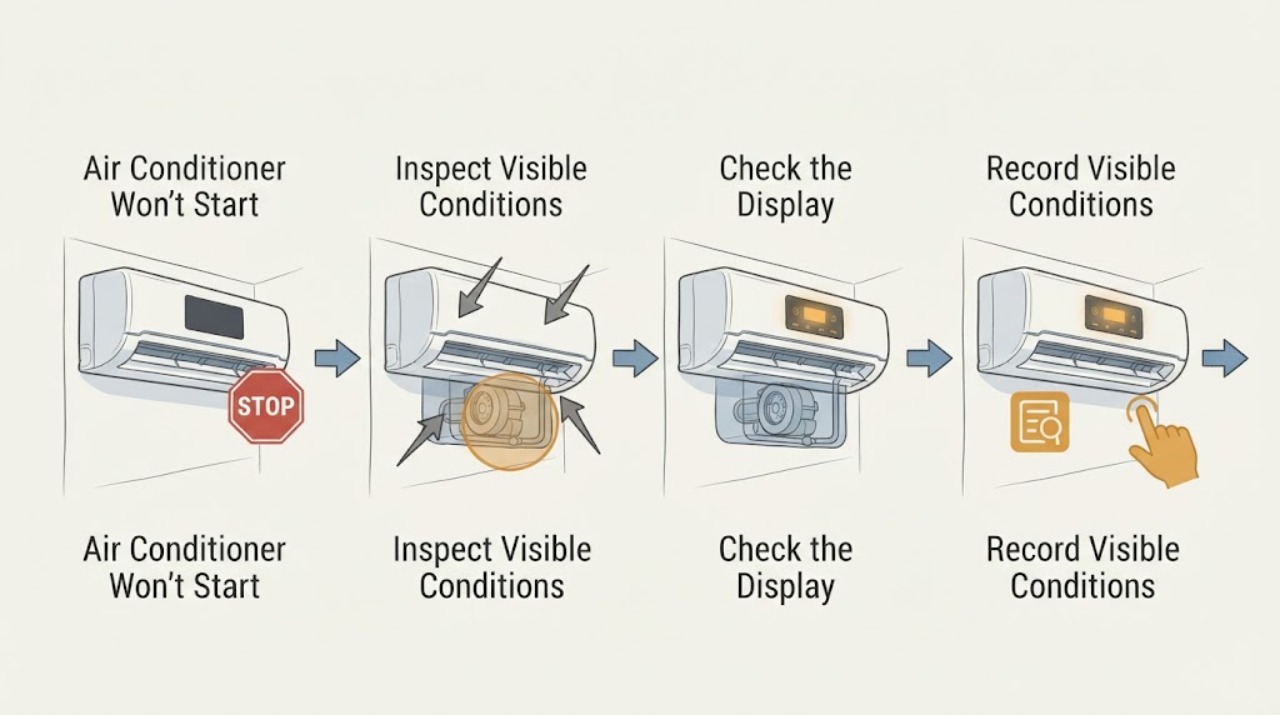
Air Conditioner Won't Start: Check the Thermostat, Drain Line, and Blower Safely
An air conditioner that will not start may have a thermostat command or power problem, a condensate drain blockage that has tripped a float switch, or an internal blower-motor, capacitor, control, or safety fault. Start with the thermostat display, mode, setpoint, batteries if applicable, and the exact symptom: no display, no indoor airflow, or no outdoor response.
-
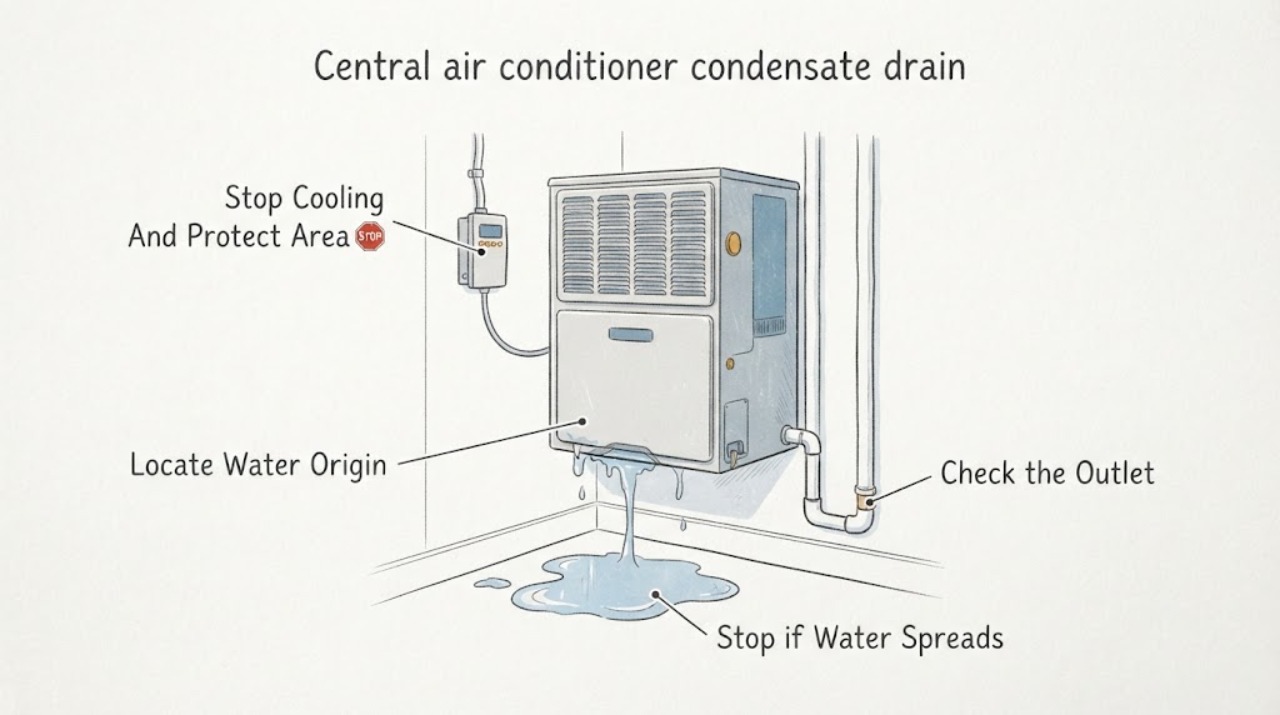
American Standard central air conditioner condensate drain leaking water: What to Check and What to Do Next
Water from an American Standard central air conditioner near the indoor unit commonly points to a backed-up condensate drain, an overflowing or damaged drain pan, a frozen evaporator coil that is thawing, or a leak at a connection. Turn cooling off, keep water away from electrical equipment, and document where the water starts and whether the pan or visible drain outlet is full.
-
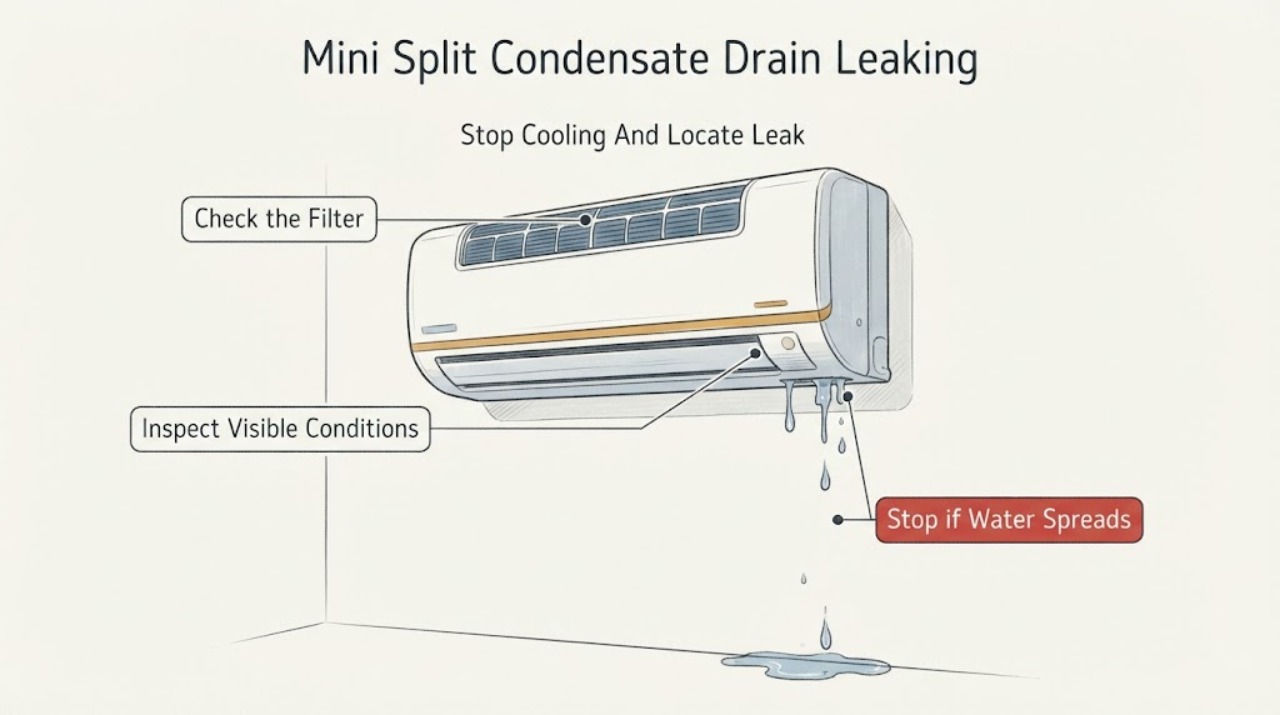
Carrier Mini Split Condensate Drain Leaking Water: What to Check and What to Do Next
Water from a Carrier mini split's indoor unit usually means condensate is not reaching its drain safely, but a clogged drain is not the only possibility. Turn cooling off, protect the wall and floor, and identify whether water is dripping from the indoor unit, the drain connection, the line along the wall, or a nearby pipe.
-
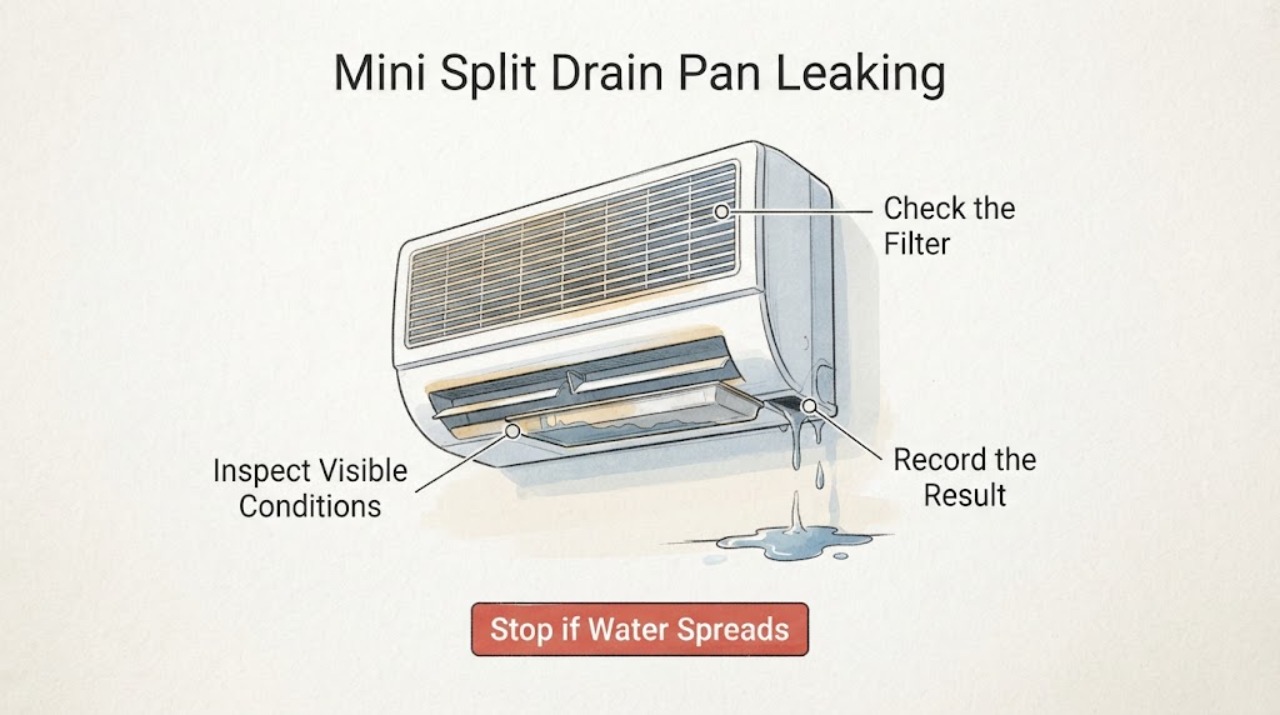
Carrier Mini Split Drain Pan Leaking Water: What to Check and What to Do Next
If a Carrier mini split appears to leak from its drain pan, first stop cooling from the normal controller, protect the wall and floor, and identify whether water is coming from the indoor unit, the drain-line connection, or a separate source. A clogged condensate line can back water up into the pan; a dirty filter can restrict airflow, freeze the indoor coil, and produce a surge of meltwater; and a cracked, corroded, tilted, or poorly supported pan can leak directly.
-
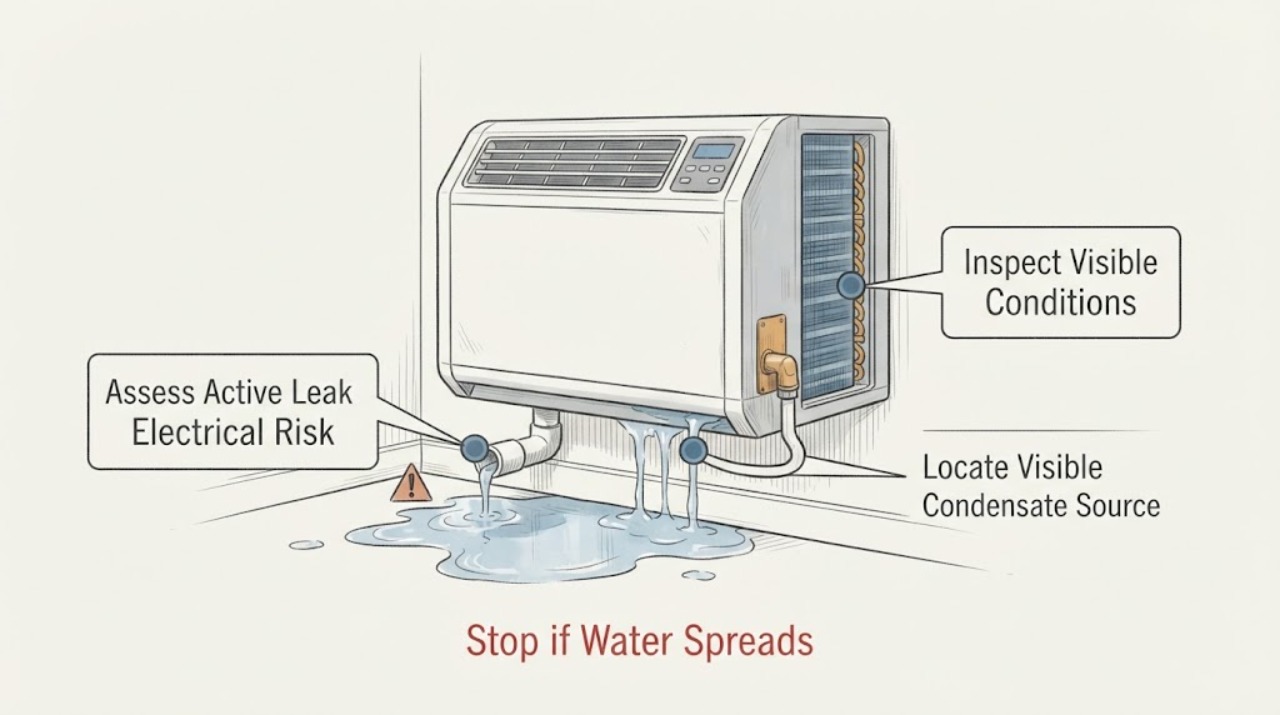
Central air conditioner condensate drain leaking water: What to Check and What to Do Next
Turn the air conditioner off at the thermostat if water is actively leaking, and keep it off until the source is understood. From a dry, safe position, identify whether water is coming from the indoor unit, a visible drain-pan edge, a condensate-pipe joint, or nearby ceiling or wall; note whether the pan is overflowing, the drain outlet is producing water, or ice is visible.
-
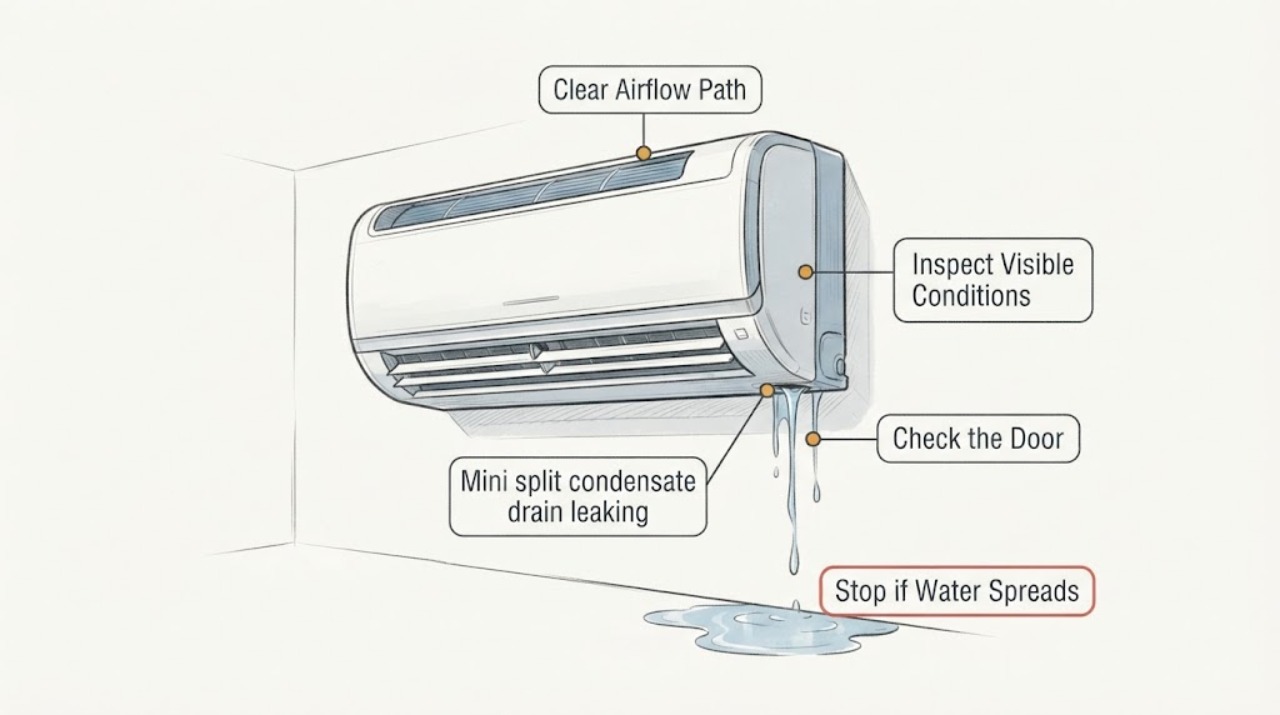
Mini split condensate drain leaking water: What to Check and What to Do Next
For a wall-mounted mini split leaking water, start by locating the first indoor wet point and checking whether the outside condensate outlet produces water during cooling. A blocked, kinked, sagging, or poorly sloped drain can back up into the indoor pan; a dirty filter or restricted airflow can freeze the coil and create a later melt overflow.
-
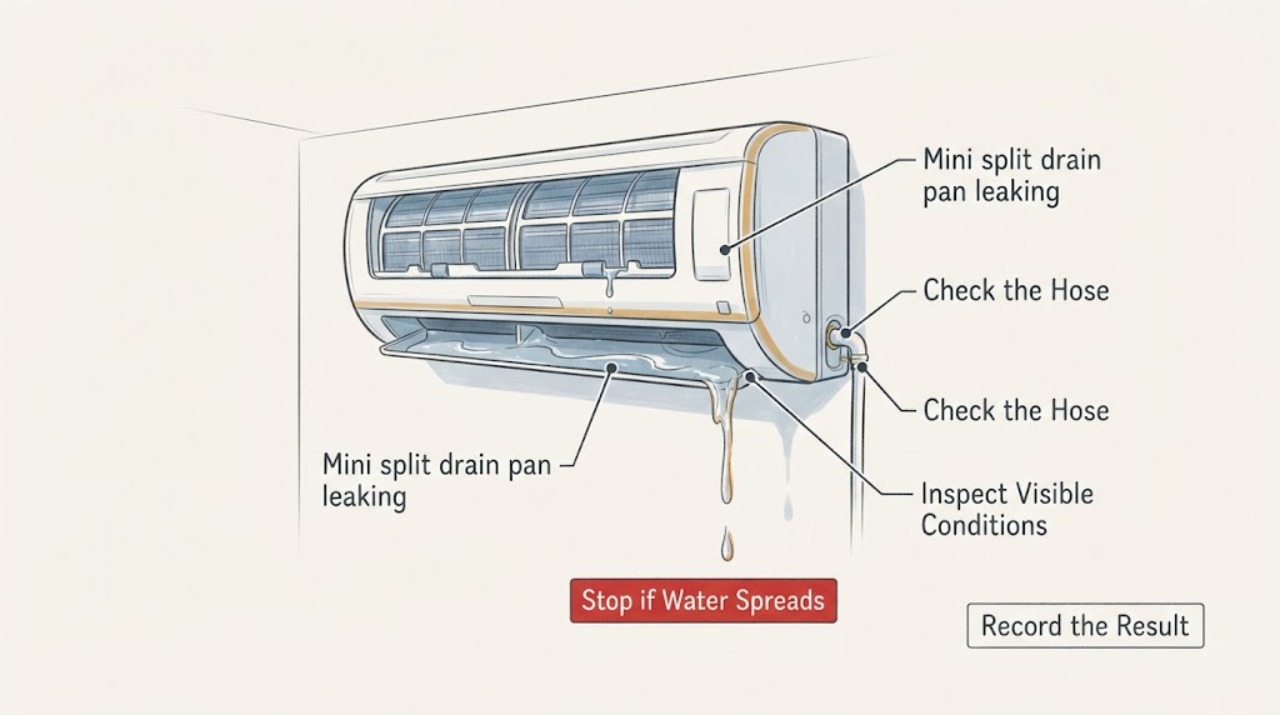
Mini split drain pan leaking water: What to Check and What to Do Next
For a mini-split drain pan leaking water, first locate the first wet point from the floor and stop operation if water can reach electrical parts. Check whether the pan visibly holds or overflows water, whether the condensate hose is kinked or blocked-looking, whether ice or weak airflow is creating meltwater, and whether a separate condensate pump alarms or fails to discharge.