
GE appliance guidance
GE Ice Maker Repair Guides
Troubleshooting and repair guidance for published GE Ice Maker problems, symptoms, and maintenance questions.
Published GE Ice Maker guides
Choose the guide whose symptom or condition most closely matches what you are seeing.
-
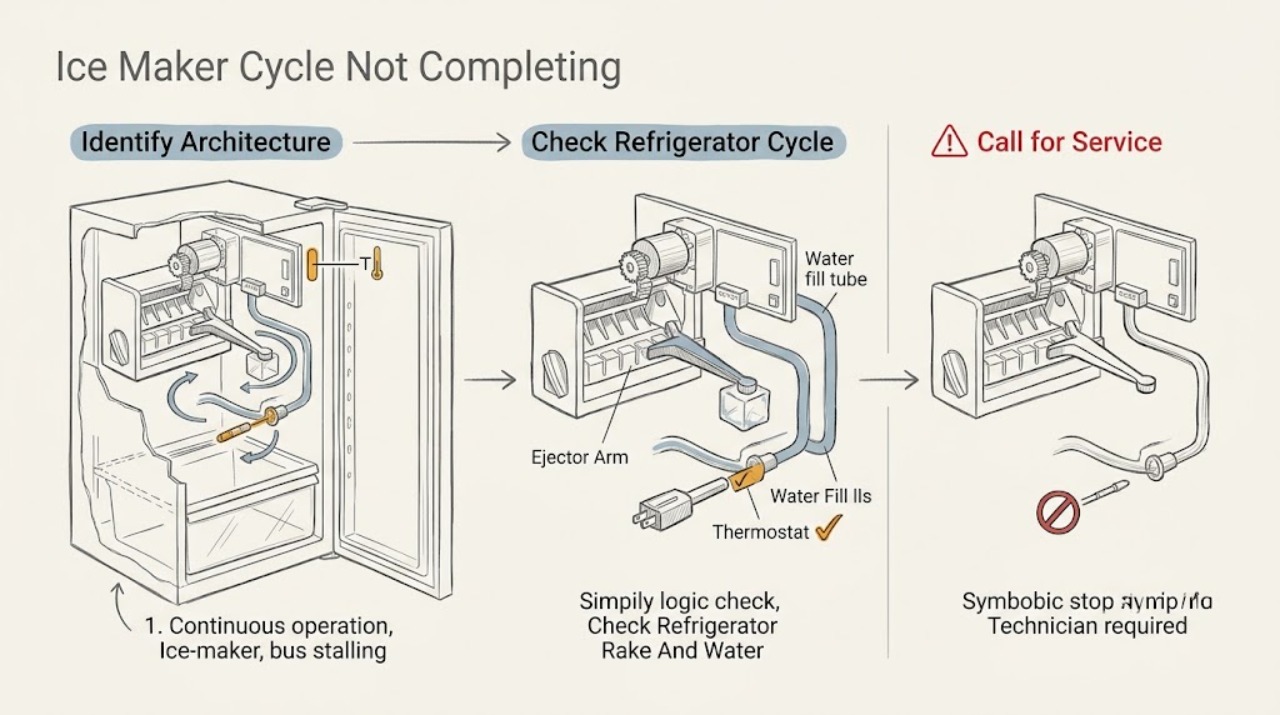
GE Ice Maker Cycle Not Completing: Refrigerator vs. Opal Checks
First identify the architecture: a GE refrigerator icemaker uses the freezer, a water supply and an ejector rake, while a GE Profile Opal is a separate countertop ice maker with a reservoir, bin and model-specific display or app behavior. On a refrigerator, confirm the icemaker is on, the freezer is cold enough for a cycle, water flow is available if the model uses it, and no cube is visibly blocking the ejector rake.
-
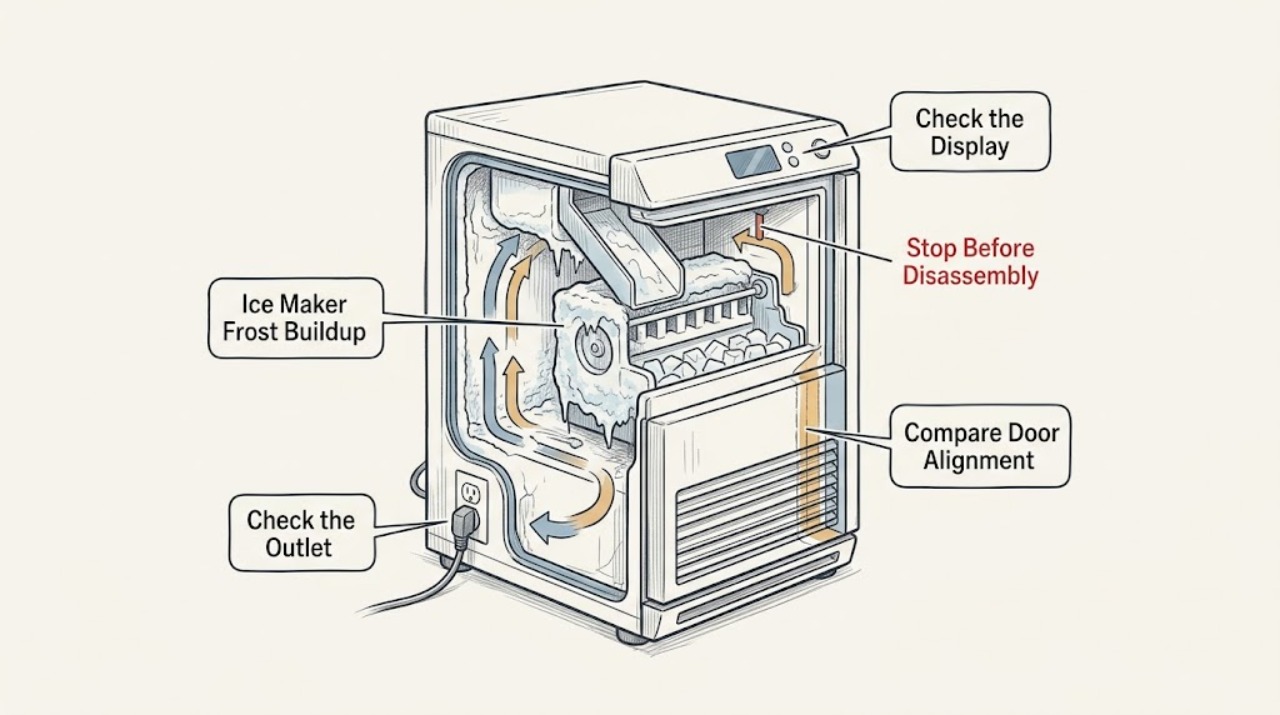
GE Ice Maker Frost Buildup
First identify whether this is a GE refrigerator's built-in ice maker or a separate GE Profile Opal countertop ice maker; their frost and defrost behavior is different. In a refrigerator, frost on the freezer wall or around the ice chute commonly follows warm humid air entering through a door, gasket, package, or dispenser flap; a small amount in a chute after repeated crushed-ice dispensing can be normal.
-
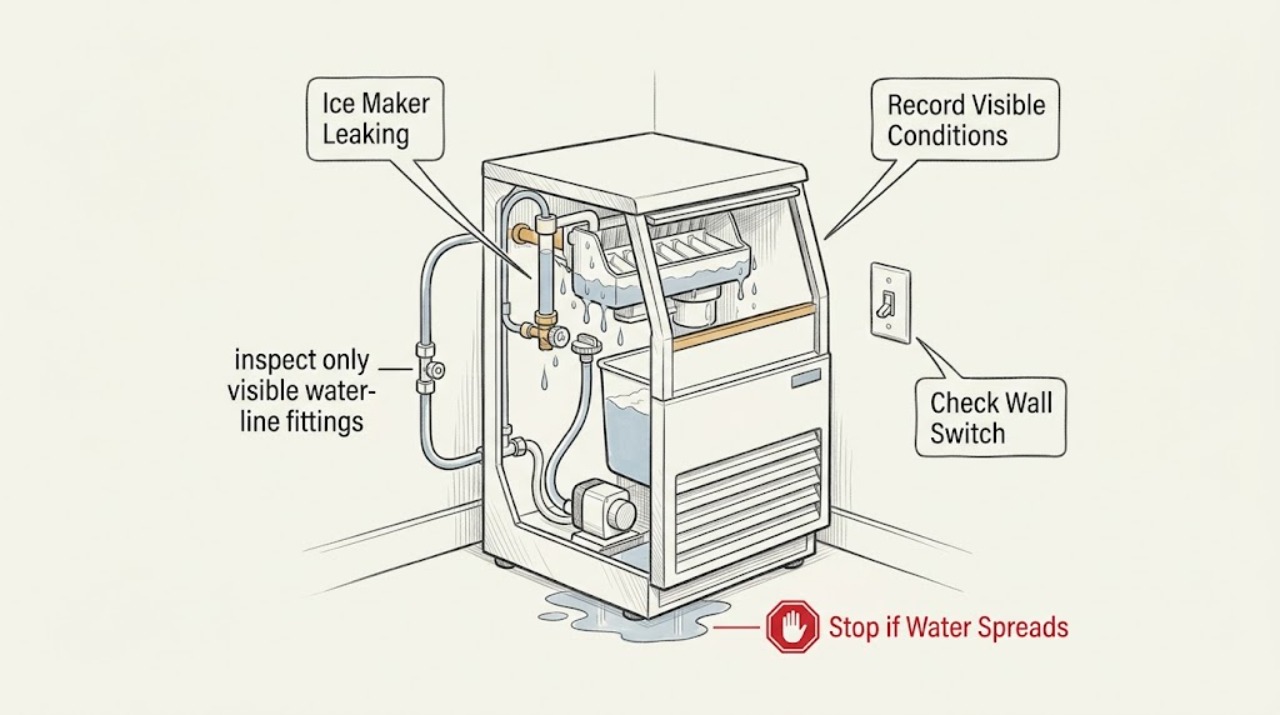
GE Ice Maker Leaking: Identify the Refrigerator, Stand-Alone, or Opal Water Path
First identify the product: GE's refrigerator icemaker guidance is not the same as its stand-alone ice maker guidance, and an Opal unit has its own troubleshooting path. If water is near a plug or outlet, stop the appliance and disconnect power only from a safe, dry position.
-
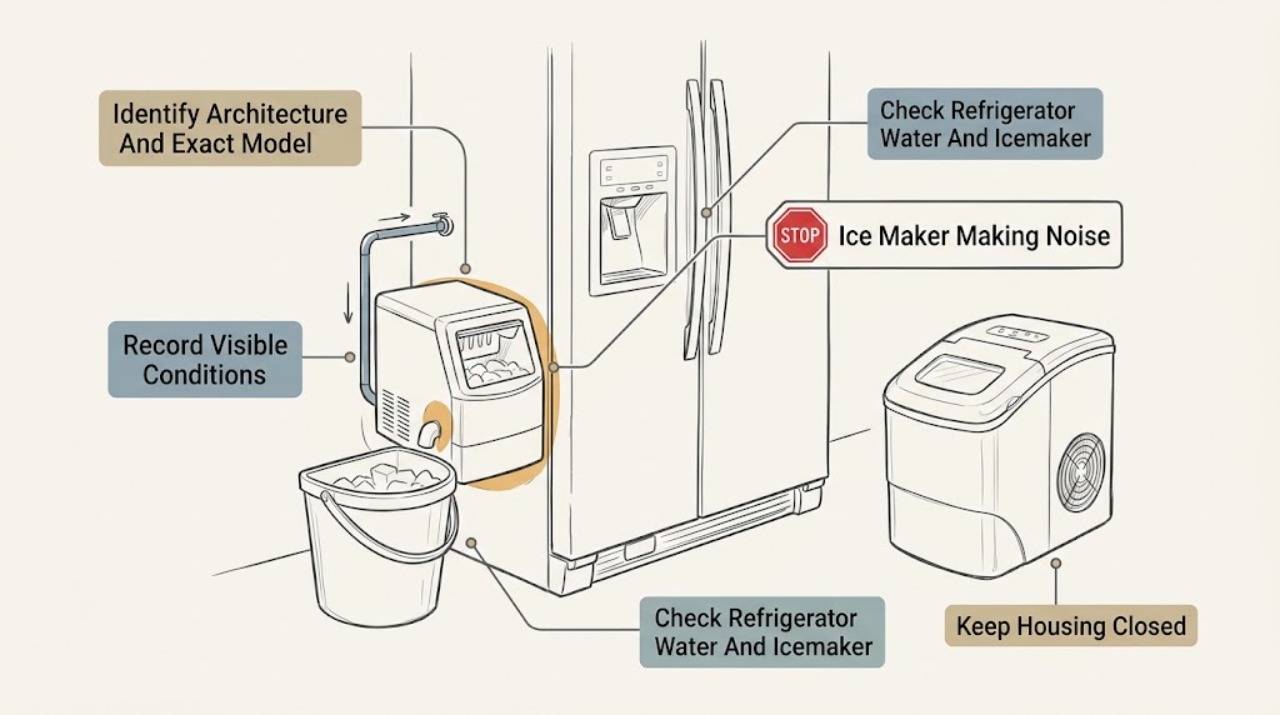
GE Ice Maker Making Noise: Separate a Refrigerator Icemaker from an Opal
First identify the machine: a refrigerator-installed icemaker, a standalone GE ice maker, or a GE Profile Opal nugget-ice maker. For a refrigerator icemaker, GE describes ice dropping into the bucket, a brief fill hum or click, and a buzz about every 15 minutes when the icemaker is on but its water supply is off as possible operating patterns; turn the installed icemaker off using its documented control if water is unavailable.
-
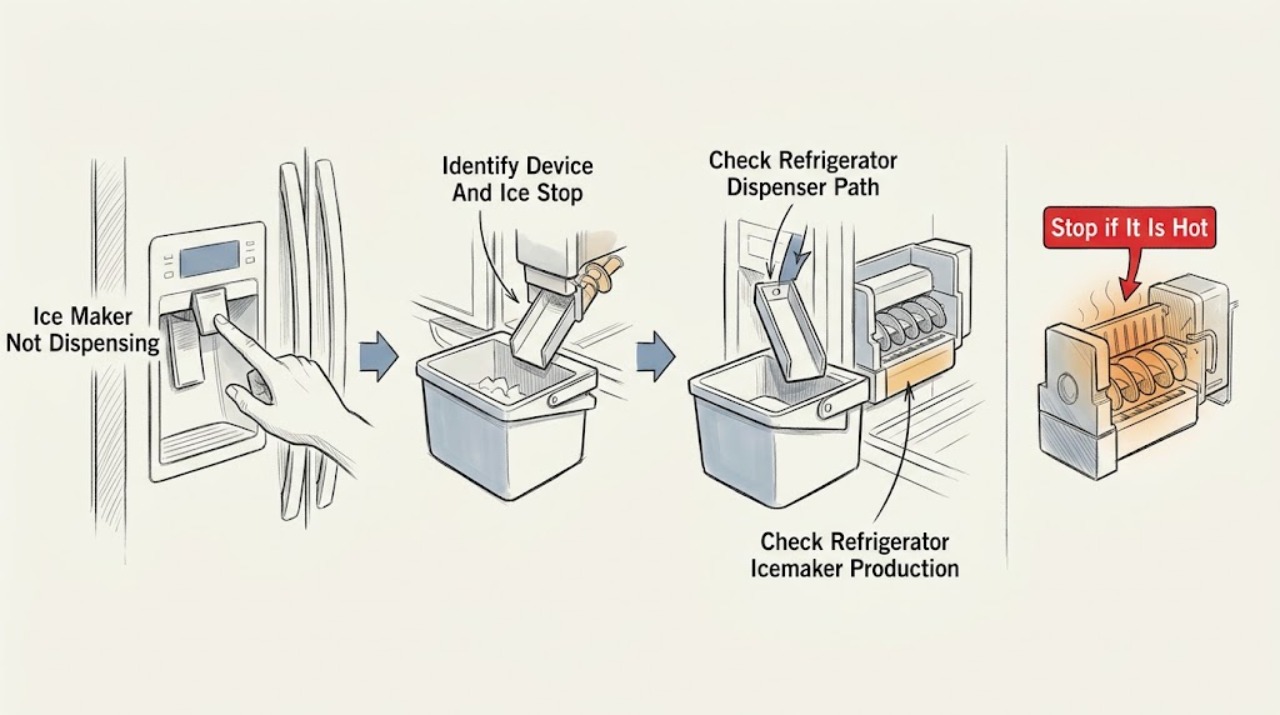
GE Ice Maker Not Dispensing: Identify the Refrigerator or Opal Path
First identify the machine and where ice stops. A refrigerator door dispenser with ice in its bucket calls for fully closed doors, a correctly seated bucket, clumped cubes, and a visible chute jam check; GE says recurring clumping can indicate icemaker leaking or overfilling and needs service.
-
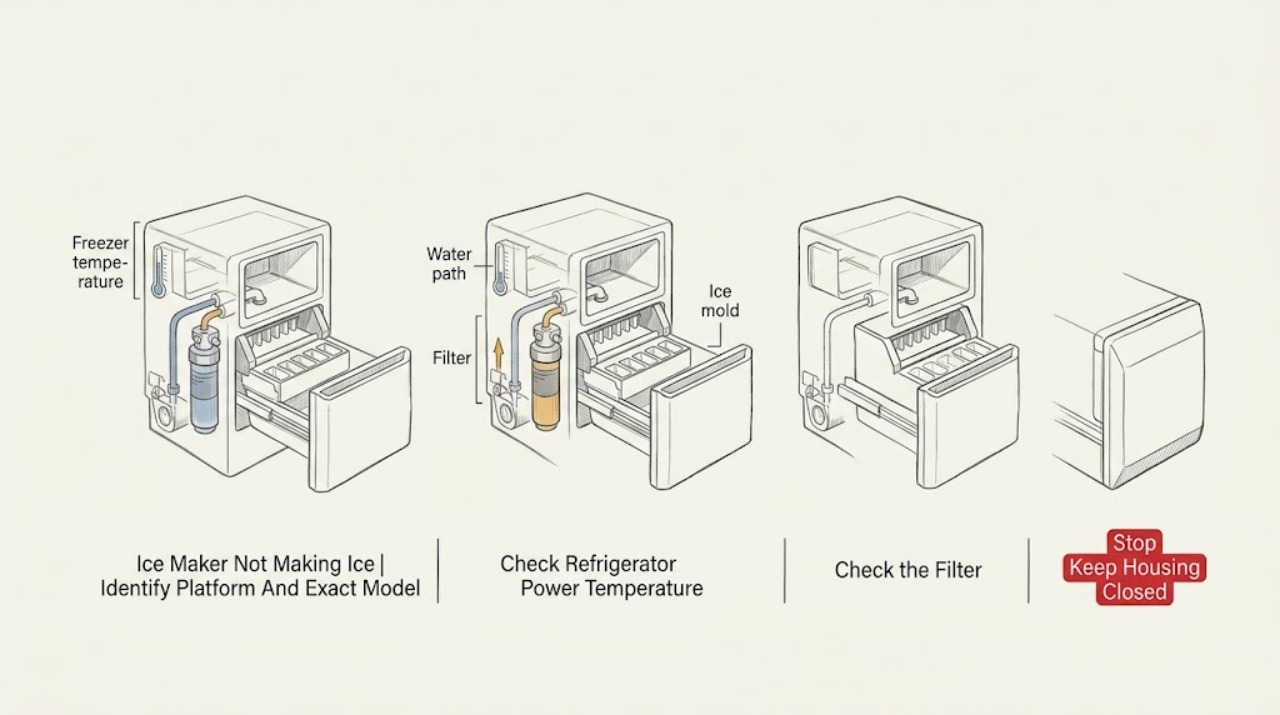
GE Ice Maker Not Making Ice: Identify the Refrigerator or Opal Cause
First identify the architecture: refrigerator-installed icemaker, standalone GE ice maker, or GE Profile Opal. For a refrigerator icemaker, confirm it is on, the freezer is cold enough for the model, the water supply and filter are not restricting flow, and no cube is blocking the mold or ejector.
-
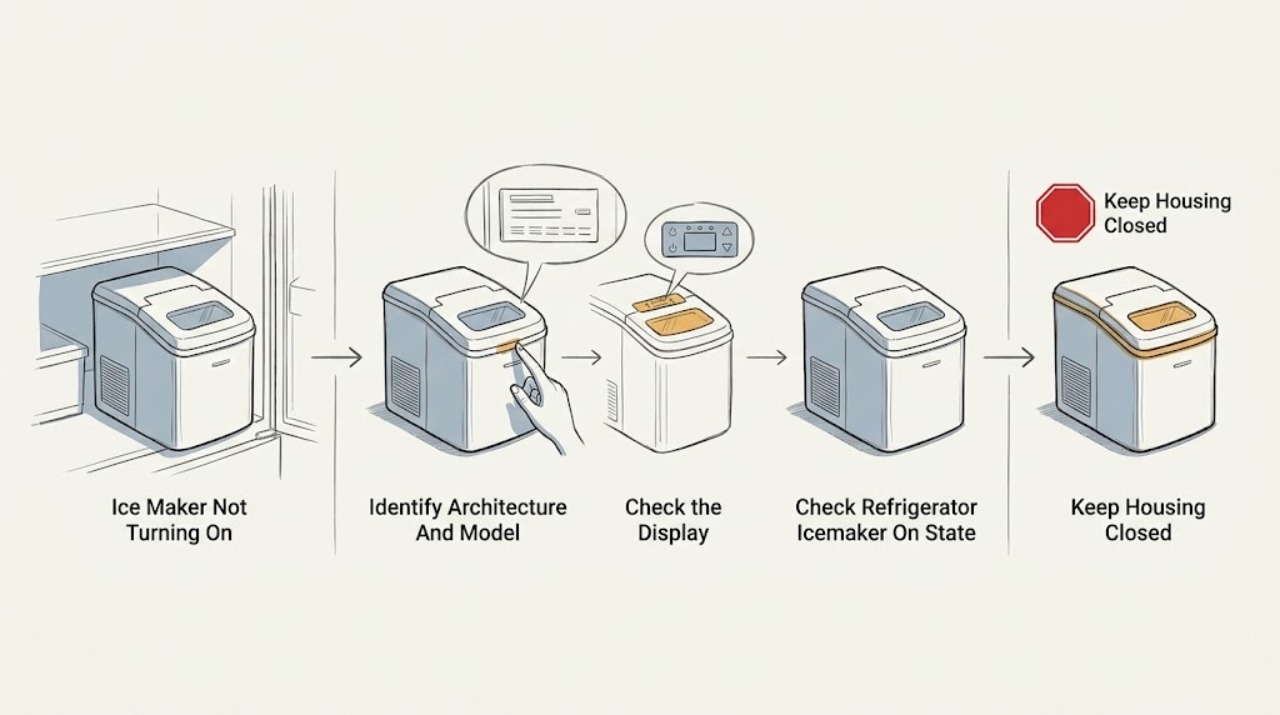
GE Ice Maker Not Turning On: Check the Right Configuration
First determine whether this is a GE icemaker installed in a refrigerator or a GE standalone ice maker; GE's standalone guidance explicitly says it does not apply to refrigerator icemakers. For a refrigerator icemaker, use the exact manual to identify the control-panel setting, toggle or slide switch, or wire feeler arm, then check that it is ON and that a full bin or clumped ice is not holding the paddle or arm in the stop position.
-
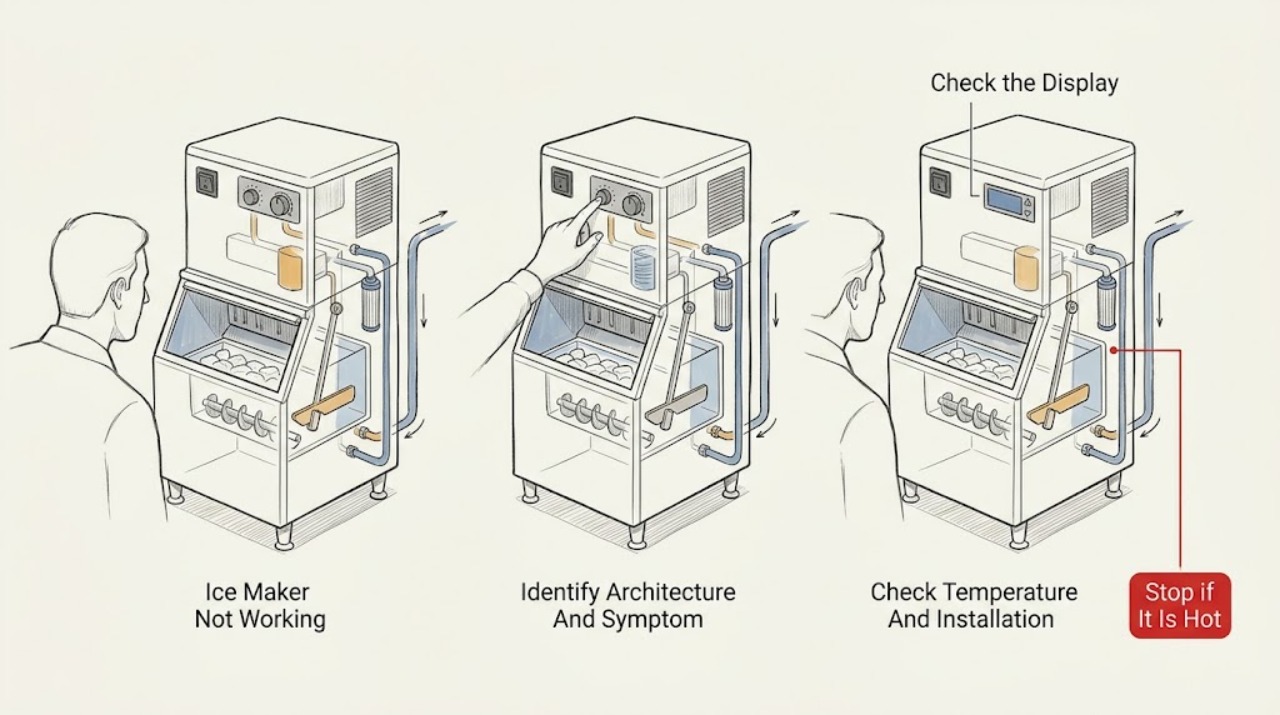
GE Ice Maker Not Working: Separate Standalone and Refrigerator Models First
First identify whether the GE ice maker is a standalone appliance or an ice maker installed inside a refrigerator; GE publishes separate troubleshooting for those architectures. For a refrigerator ice maker, confirm the exact model's ice control or feeler arm is on, the freezer is cold enough, the water supply is open, and a filter is not restricting flow.