
Repair problem
Causes Short Cycling Troubleshooting Guides
Published FixGraph guidance for diagnosing and responding to causes short cycling.
Matching published guides
Choose a guide that matches the service, equipment, and conditions you are seeing.
-
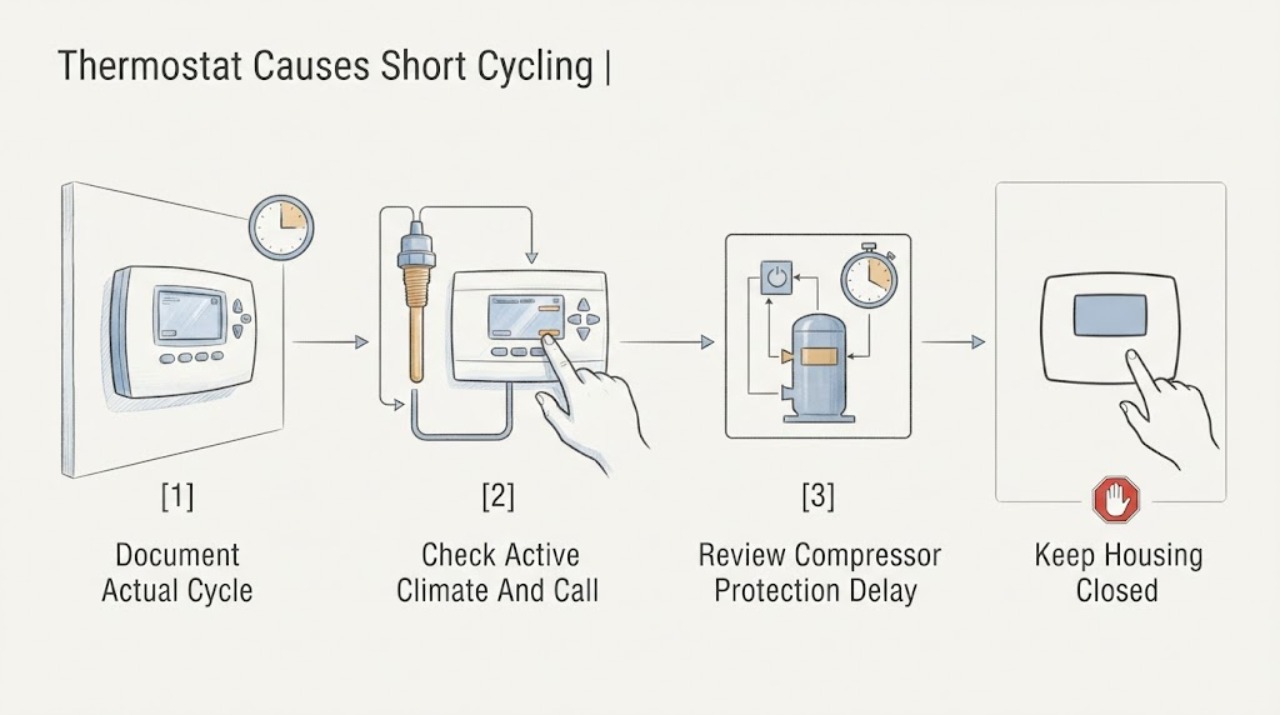
Ecobee Thermostat Causes Short Cycling: What to Check and What to Do Next
An ecobee thermostat can appear to cause short cycling when its temperature reading, sensor participation, schedule, hold, equipment configuration, or call for heating or cooling does not match the HVAC system. First confirm that the equipment is actually starting and stopping rapidly before satisfying the setpoint, and check the ecobee mode, active climate, sensor reading, schedule, and any compressor-protection delay.
-
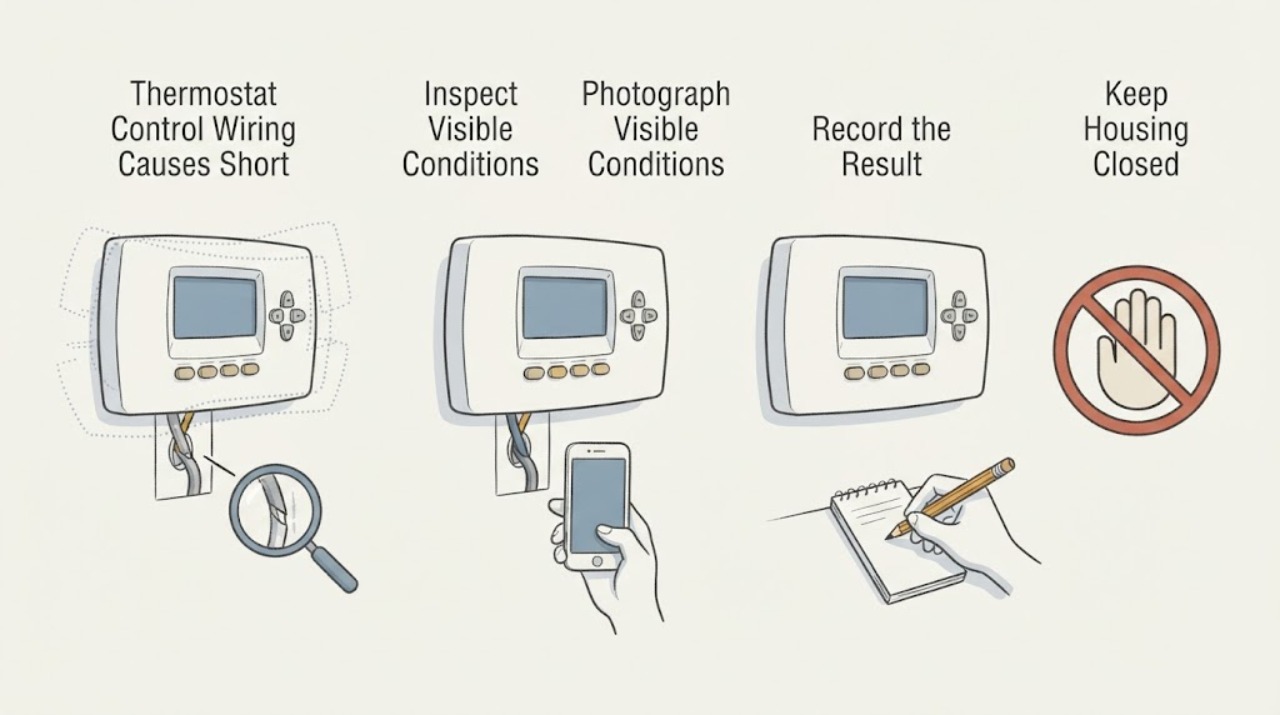
Ecobee Thermostat Control Wiring Causes Short Cycling: What to Check and What to Do Next
Loose, misidentified, or incorrectly configured ecobee control wiring can make an HVAC system respond to the wrong call or lose the call, but short cycling is not proof of a wiring fault. First record whether the ecobee still shows an active heat or cool call, then turn HVAC power off before making a visual check of the thermostat terminals and any recent installation work.
-
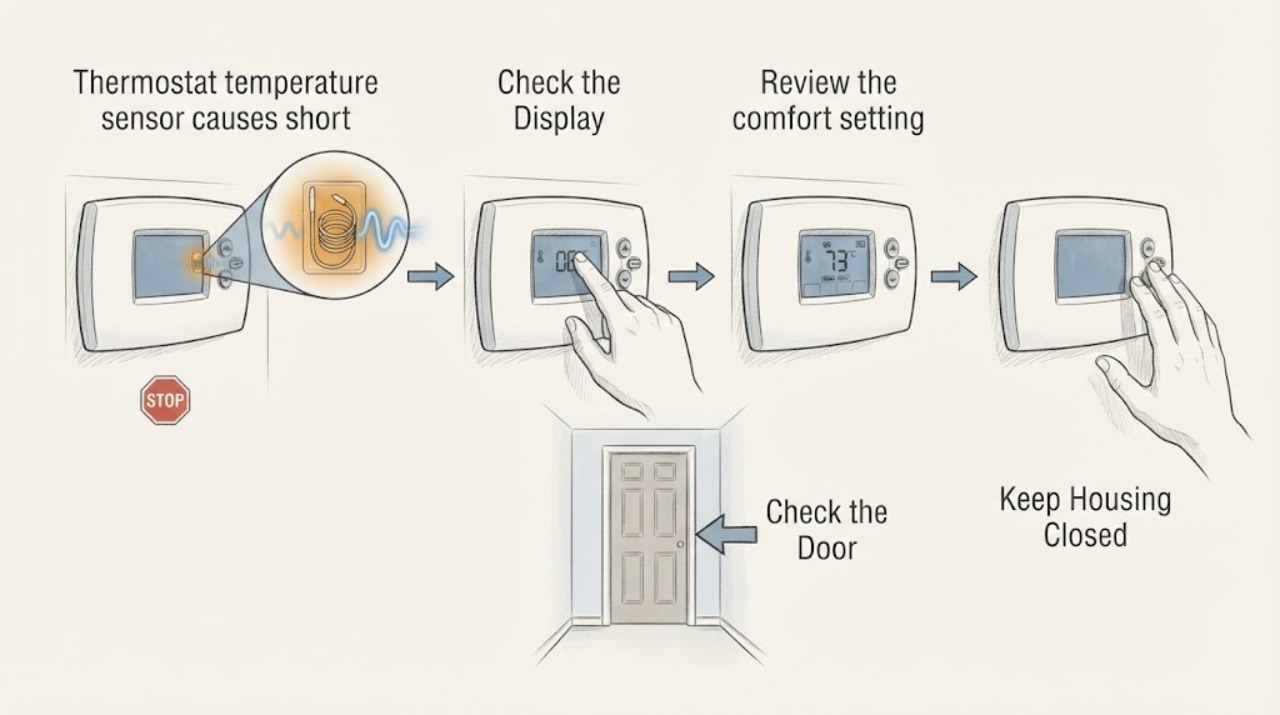
Ecobee thermostat temperature sensor causes short cycling: What to Check and What to Do Next
An ecobee temperature sensor can influence which room the thermostat uses for comfort, but a sensor reading alone does not prove it is causing short cycling. First record the ecobee displayed temperature, the active comfort setting or schedule, which sensors are participating, the heat or cool call, equipment start and stop times, and whether the HVAC system actually satisfies the setpoint.
-
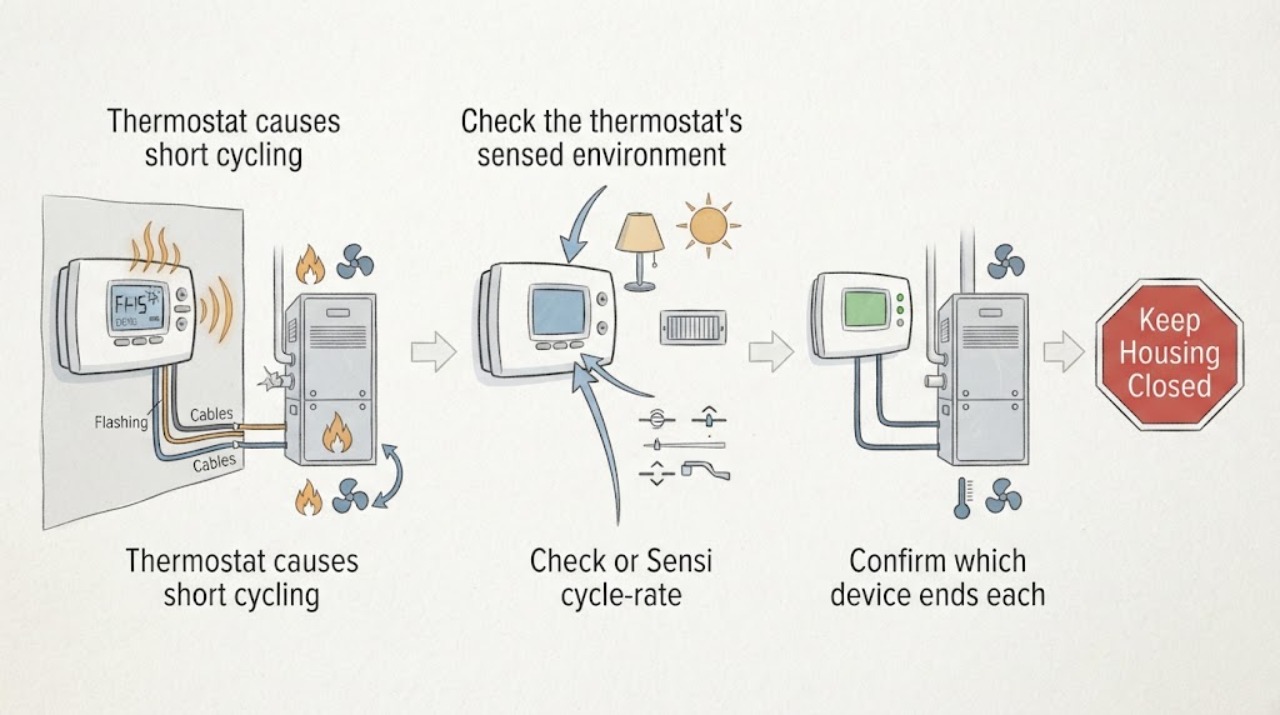
Emerson thermostat causes short cycling: What to Check and What to Do Next
An Emerson thermostat can appear to cause short cycling when its cycle-rate setting, system configuration, schedule, sensor location, or control signal starts and stops the HVAC equipment too often, but the thermostat is not the only possible cause. First confirm that the system is actually starting and stopping rapidly rather than running a normal fan or protection delay, then note whether the thermostat still shows a heat or cool call when the equipment stops.
-
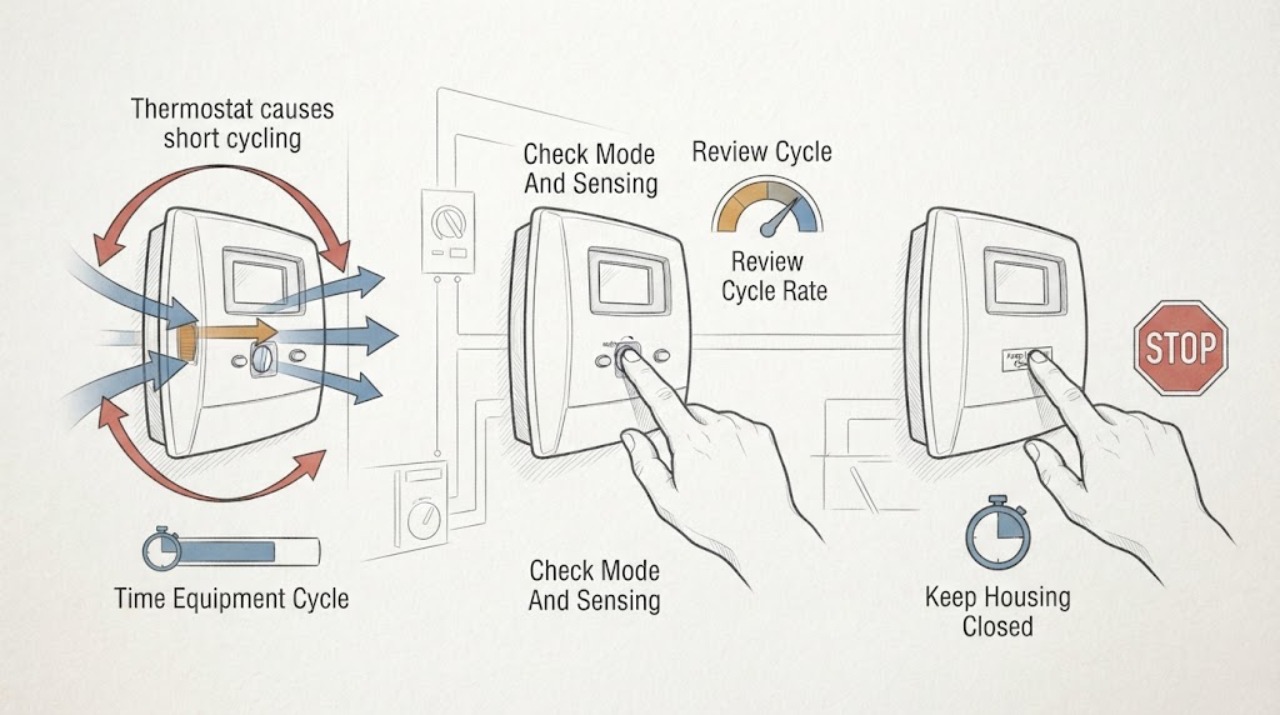
Honeywell thermostat causes short cycling: What to Check and What to Do Next
A Honeywell thermostat can influence cycling through its system configuration, cycle-rate setting, temperature sensing, wiring, or compressor-protection delay, but frequent short cycles are not proof that the thermostat is the cause. First time the actual equipment cycle and confirm whether the thermostat still shows a call for heat or cooling when the equipment stops.
-
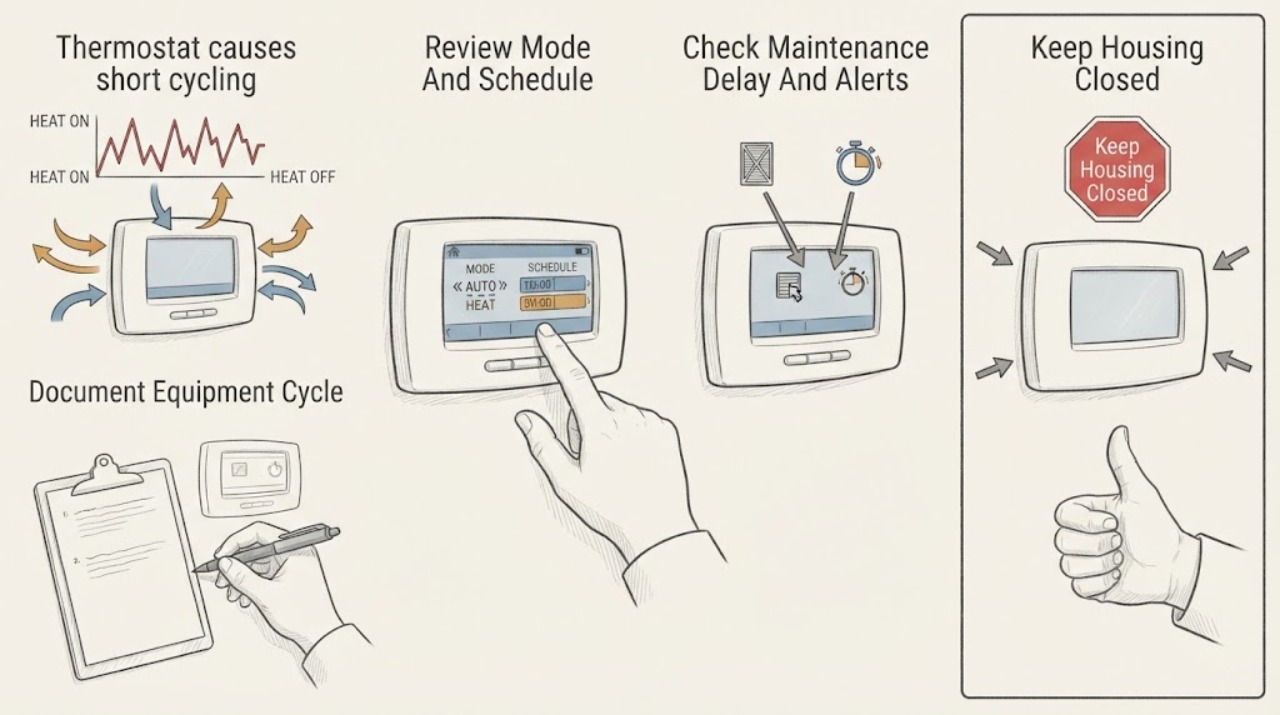
Nest thermostat causes short cycling: What to Check and What to Do Next
A Nest thermostat can appear to cause short cycling when the heating or cooling equipment starts and stops before it satisfies the target, but the thermostat is not automatically the failed part. Nest uses a maintenance band and delays to limit rapid cycling; a manually scheduled or independent fan run is a different symptom.
-
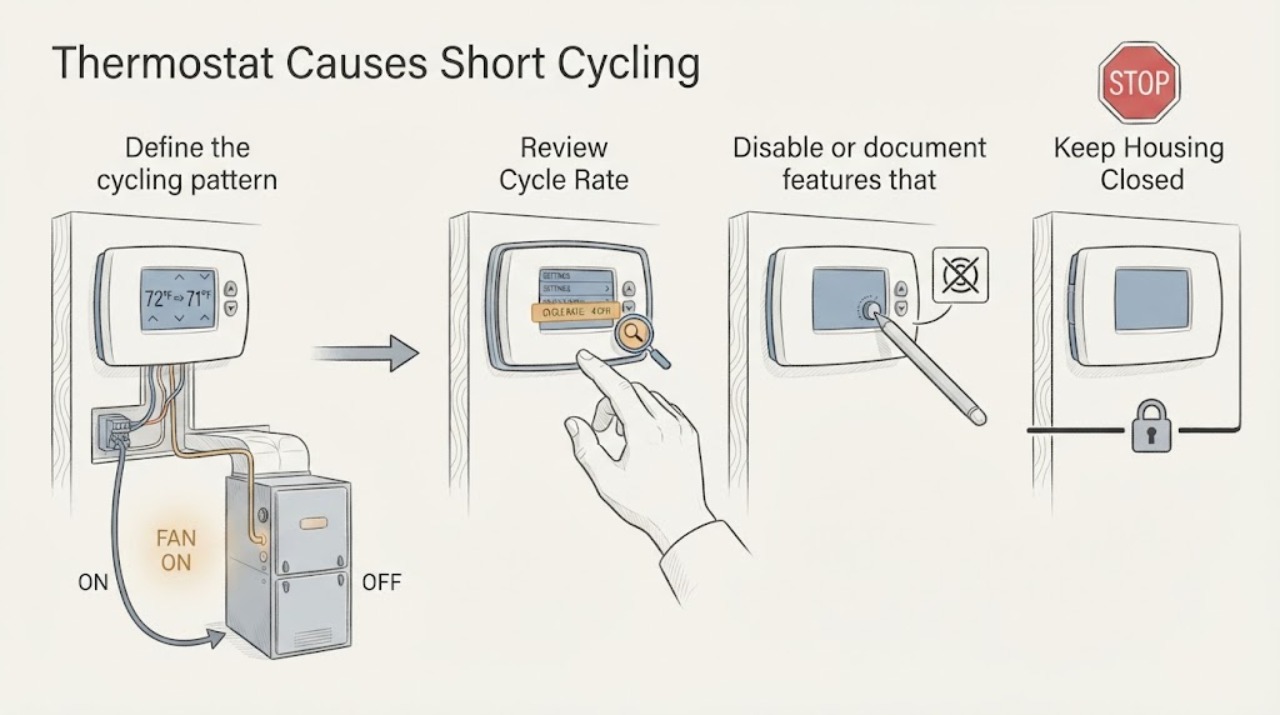
Sensi Thermostat Causes Short Cycling: What to Check and What to Do Next
First confirm what is cycling: the HVAC equipment may be starting and stopping, or the indoor fan may simply be set to run continuously. In the Sensi app, check Cycle Rate and the system's Fan, Circulating Fan, humidity-control, schedule, and setpoint settings; a faster cycle rate intentionally produces shorter on/off cycles.
-
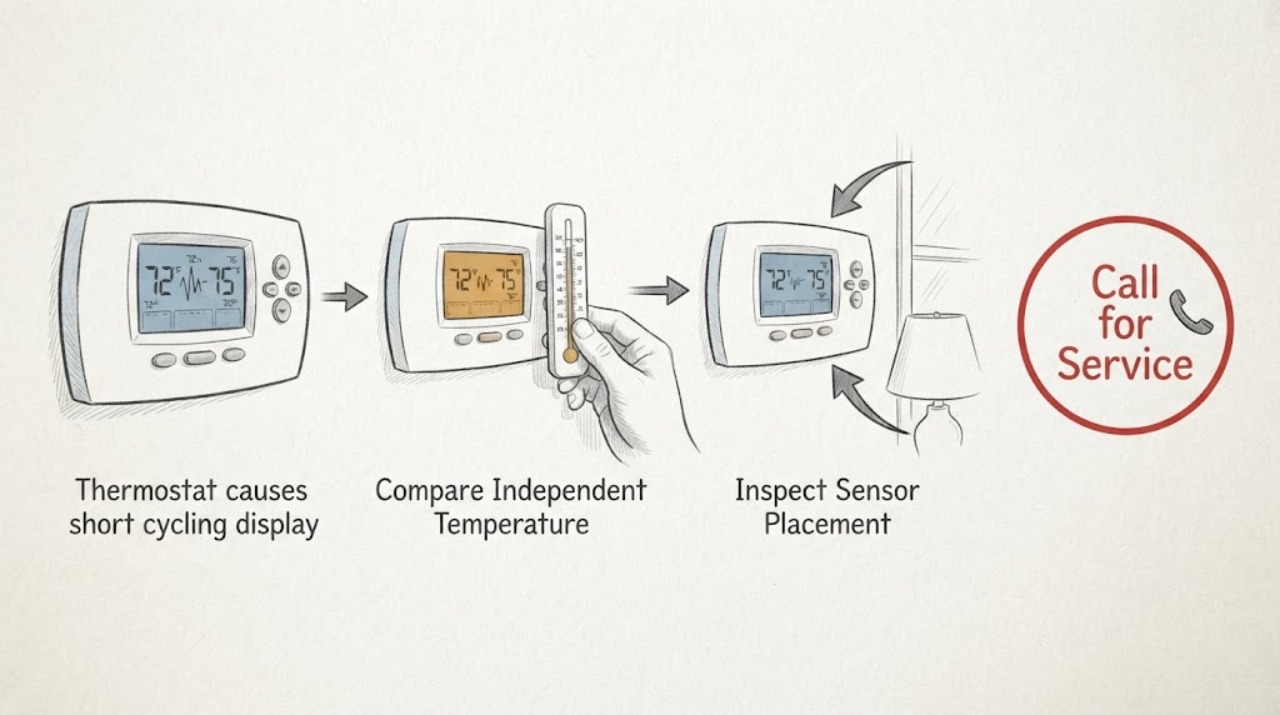
Thermostat causes short cycling display temperature jumps: What to Check and What to Do Next
A thermostat can contribute to short cycling when its sensor reads the room inaccurately, its placement is exposed to sun, a draft, a vent, or a nearby heat source, or its control or power is unstable. A jumping display does not prove the thermostat is bad: normal temperature swing, schedules, remote-sensor changes, a dirty filter, a frozen coil, refrigerant trouble, or another HVAC safety control can also make the system start and stop.
-
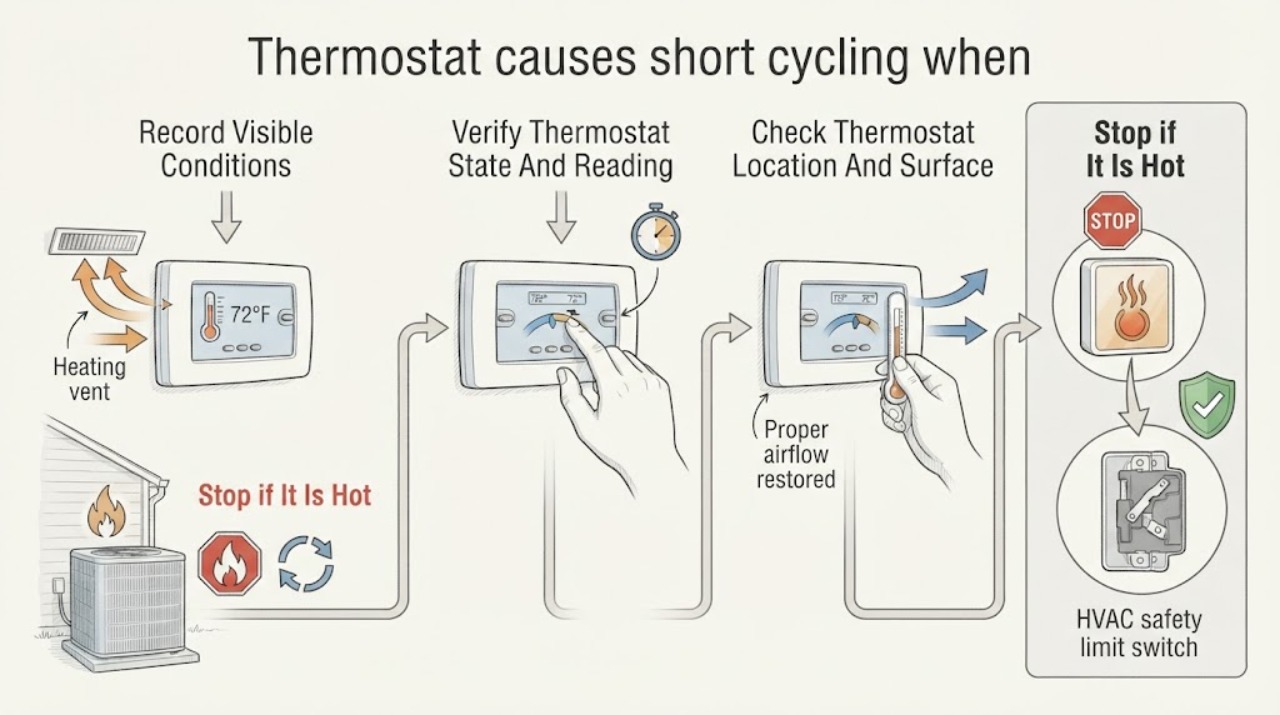
Thermostat causes short cycling when the setpoint is stable: What to Check and What to Do Next
A steady thermostat setpoint does not prove that the temperature reading or call signal is steady. Short cycling can come from a mispositioned or inaccurate sensor, low thermostat power, a control signal that drops out, a normal compressor-protection delay, restricted airflow, an HVAC safety shutdown, or equipment that reaches the set temperature too quickly.
-
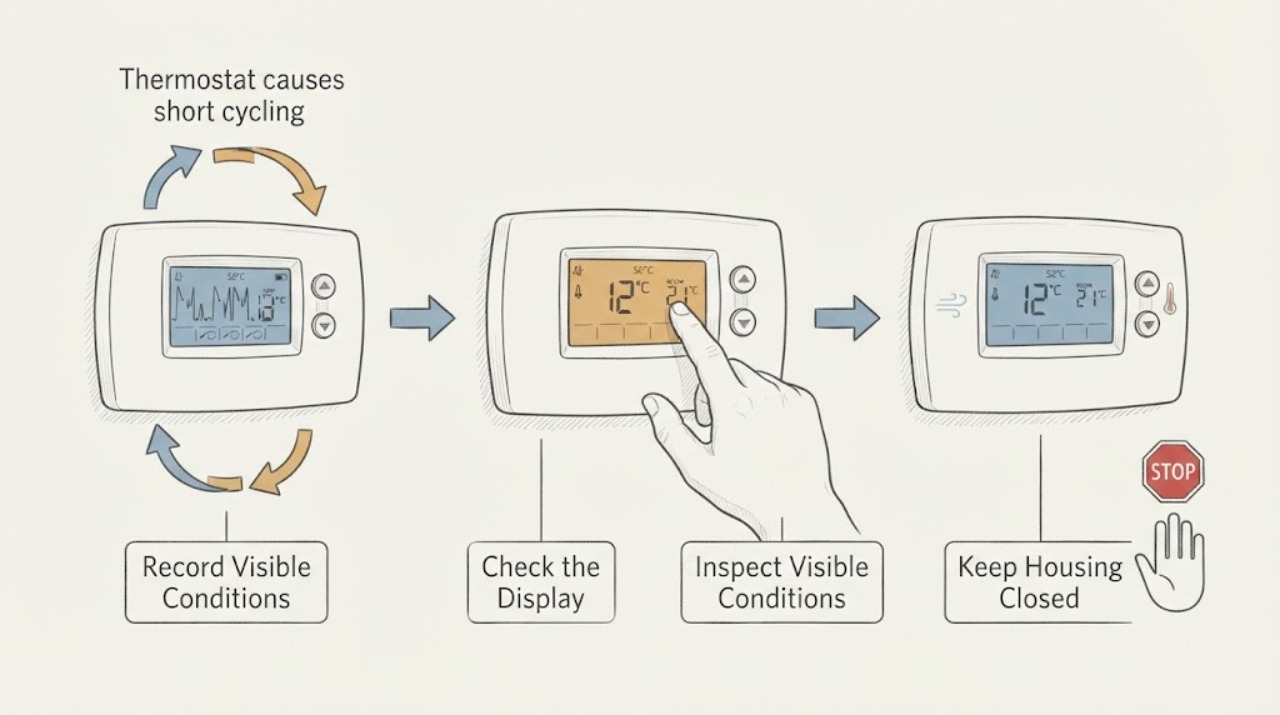
Thermostat causes short cycling: What to Check and What to Do Next
Short cycling is a system symptom, not proof that the thermostat itself is defective. From the normal thermostat display and safe room position, record the actual run/stop timeline, mode, setpoint, schedule, displayed room temperature, alerts, and whether the reading changes when the nearby environment changes.
-
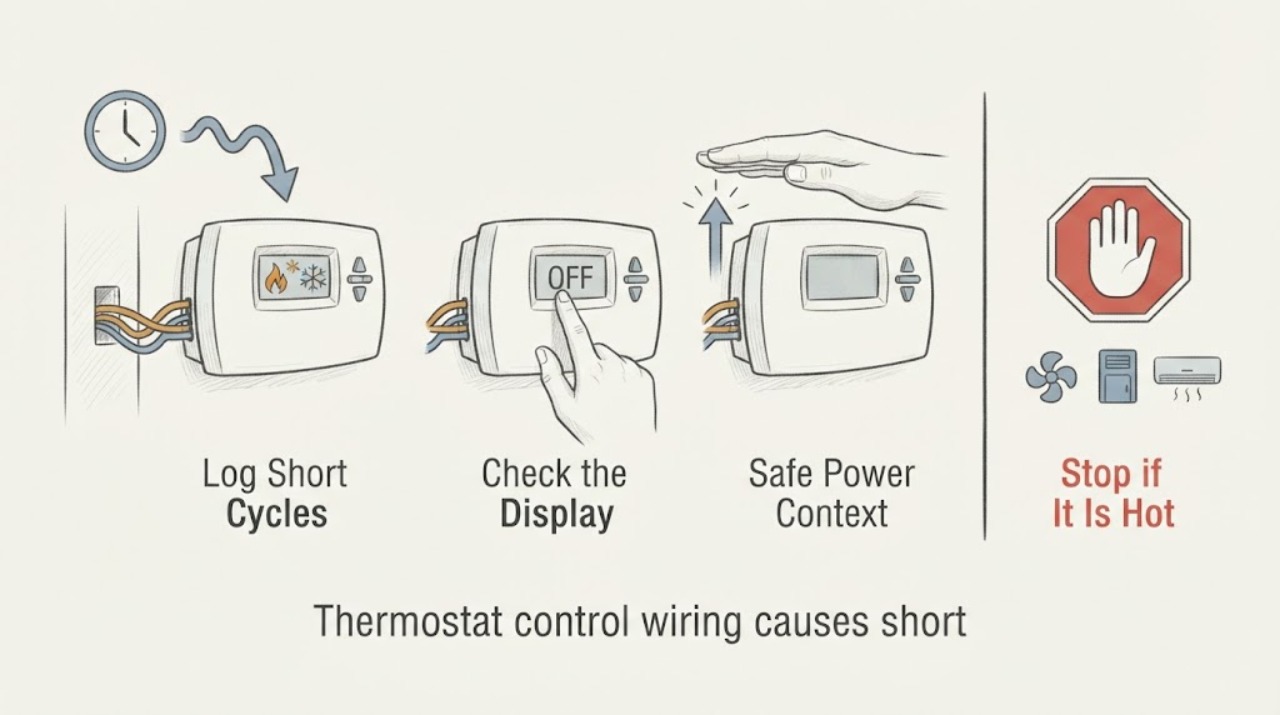
Thermostat control wiring causes short cycling: What to Check and What to Do Next
Do not assume thermostat control wiring is the cause of short cycling. First log whether the system starts and stops on its own schedule, whether the thermostat display or power changes, and whether the fan, heat, or cooling call ends with an airflow or equipment warning.