
Repair problem
Ice Maker Not Making Ice Troubleshooting Guides
Published FixGraph guidance for diagnosing and responding to ice maker not making ice.
Matching published guides
Choose a guide that matches the service, equipment, and conditions you are seeing.
-
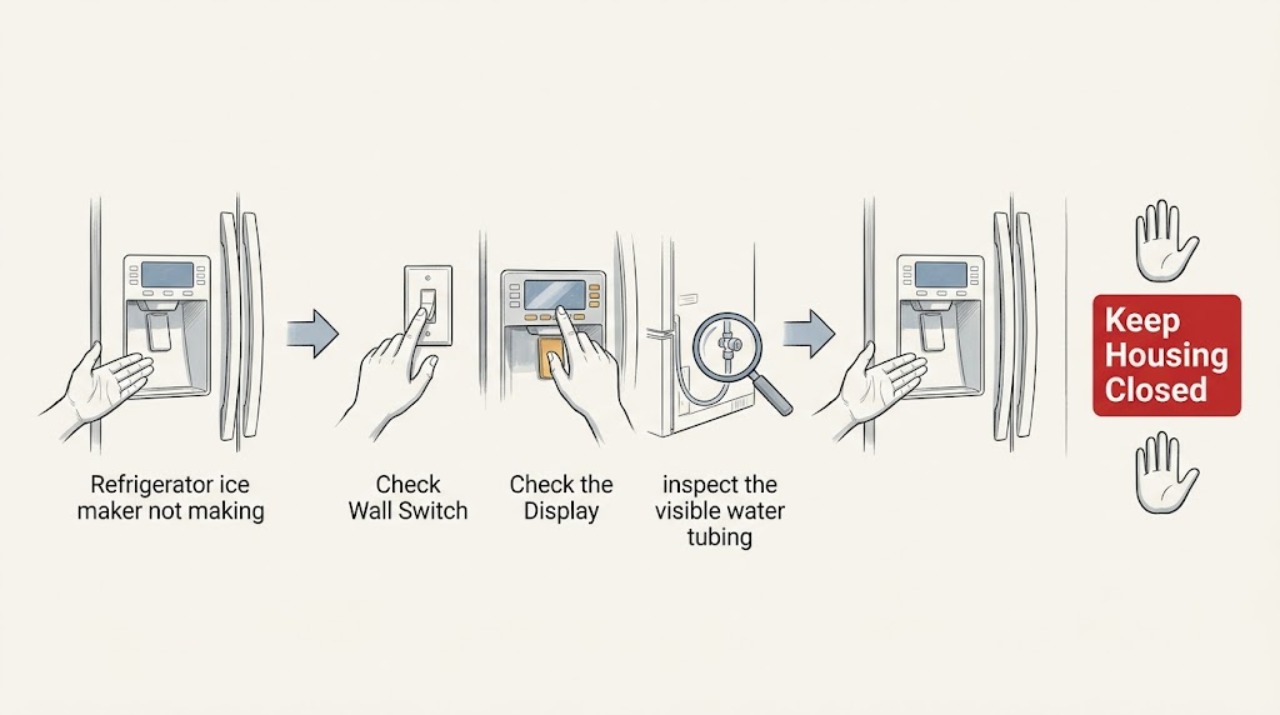
Amana refrigerator ice maker not making ice: What to Check and What to Do Next
An Amana refrigerator that is not making ice may have a shared water-flow problem, a warm freezer, an ice maker that is off, a misplaced bin, or a fill or harvest fault. Check the model-specific ice-maker setting and bin, confirm that the freezer is actually cold, compare dispenser flow when the model has one, and inspect only the accessible water line and filter condition.
-
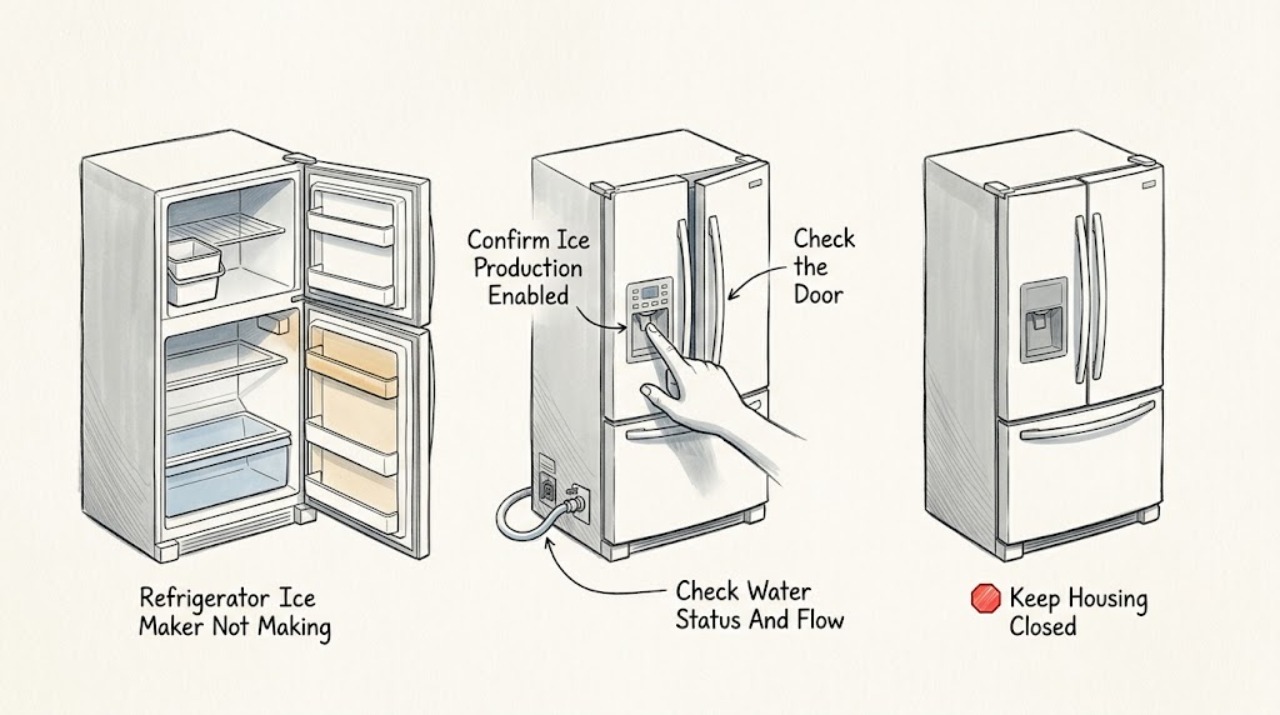
Bosch Refrigerator Ice Maker Not Making Ice: What to Check and What to Do Next
When a Bosch refrigerator ice maker is not making ice, start with the reversible checks: confirm ice production is enabled, the ice container and door are fully seated and closed, the freezer is cold enough according to the model manual, and the refrigerator has water with its shutoff open. A kinked water line, blocked or incorrectly installed filter, low supply flow, a blocked fill-level sensor or ejector, or a recent startup can stop or delay production.
-
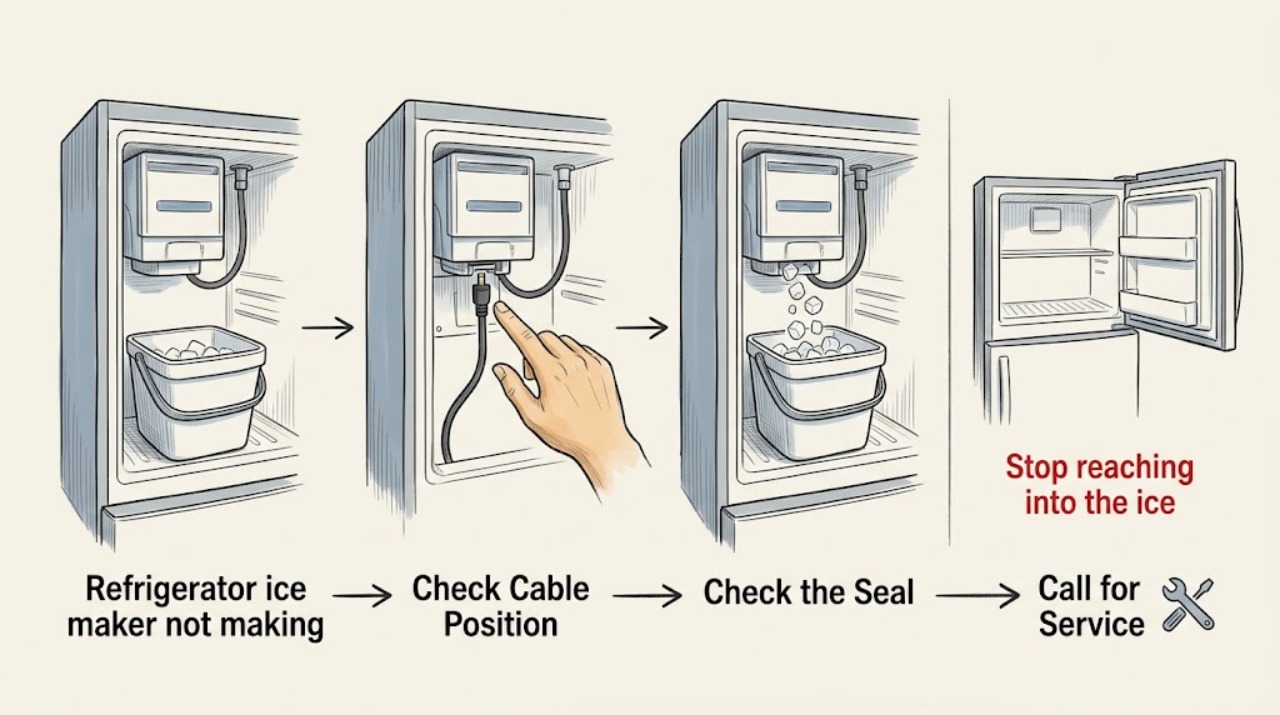
Frigidaire refrigerator ice maker not making ice: What to Check and What to Do Next
When a Frigidaire refrigerator ice maker is not making ice, first confirm that the ice maker is turned on, the bin is seated, the freezer is cold enough to operate normally, and the refrigerator has a water supply. Check water dispensing, the filter, and the rear water line for slow flow, a kink, or a recent installation that still contains air.
-
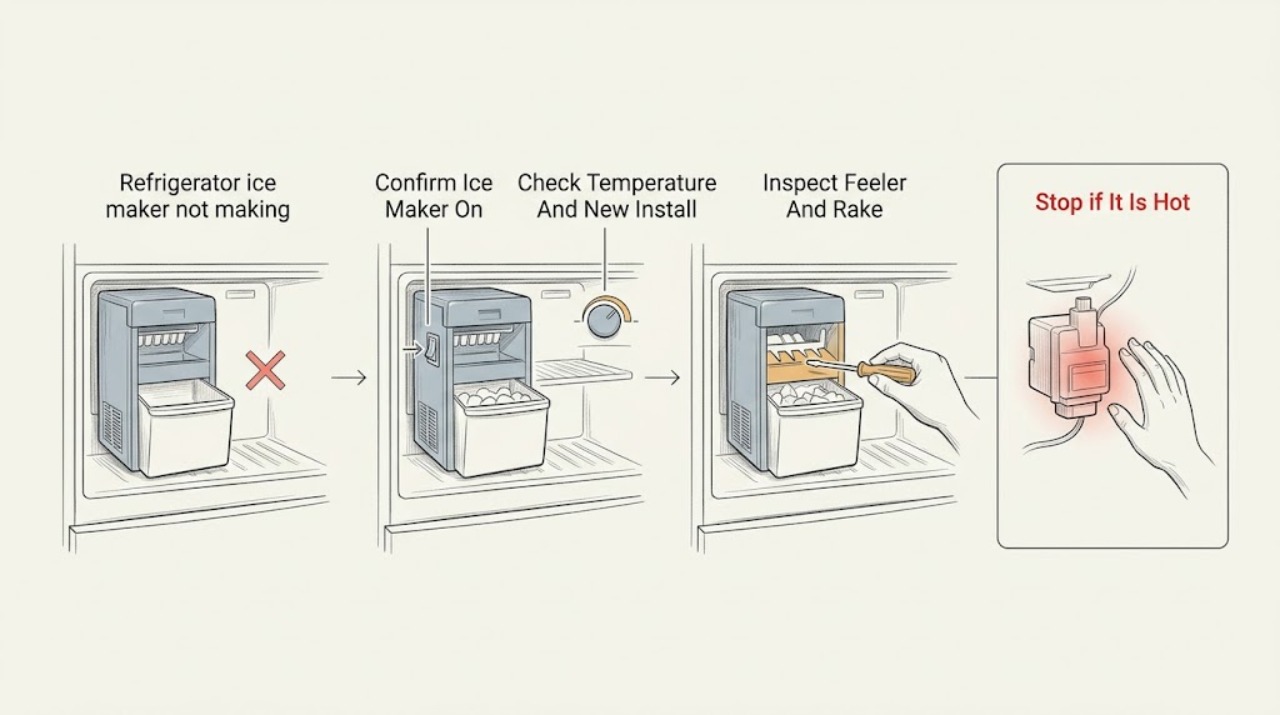
GE refrigerator ice maker not making ice: What to Check and What to Do Next
When a GE refrigerator ice maker stops making ice, first confirm that the ice maker is turned on for the exact model, the feeler arm or paddle can move, the freezer is cold enough for an ice-making cycle, and the water supply and filter are not restricting fill. A stuck rake or clumped ice can stop a cycle, while a frozen fill tube, weak water flow, or a water-valve problem needs service-level diagnosis.
-
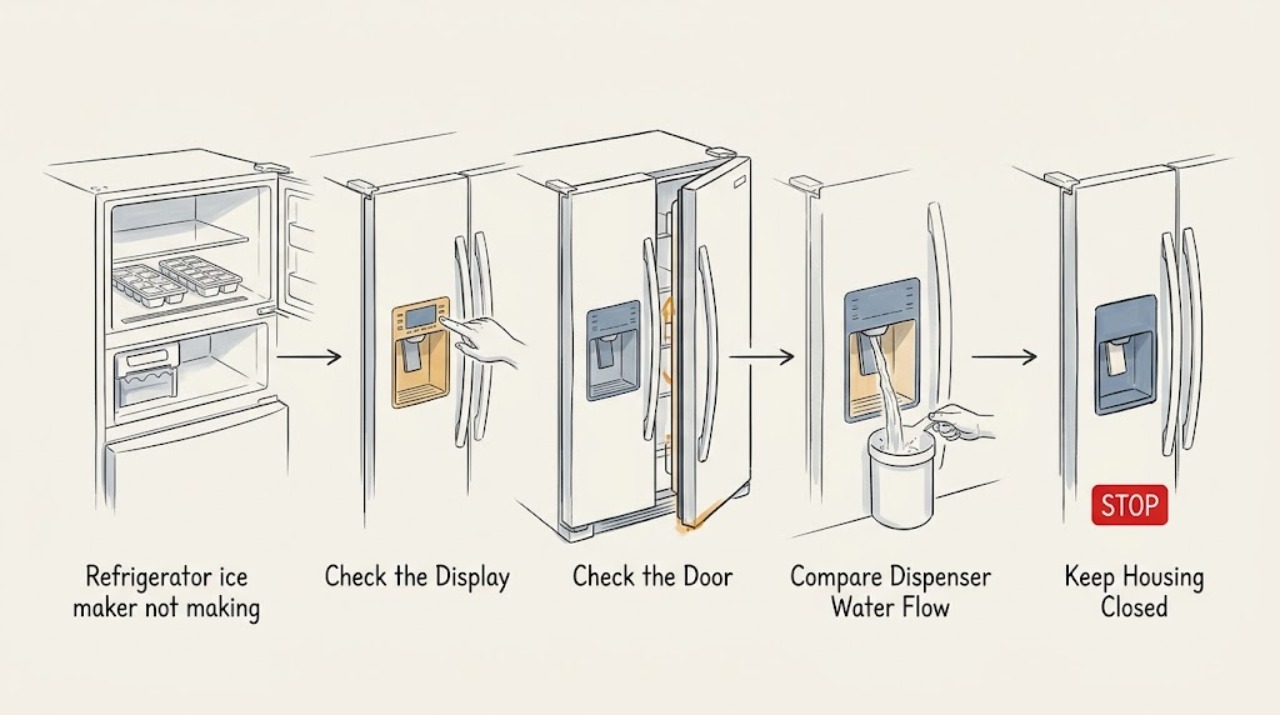
Kenmore refrigerator ice maker not making ice: What to Check and What to Do Next
When a Kenmore refrigerator stops making ice, first confirm that ice making is turned on, the ice bin or shutoff arm is not signaling full, the freezer door closes, and the freezer is cold enough according to the exact owner's manual. Then check for a kinked water line, a restricted or recently changed filter, a frozen-looking fill opening, and whether the water dispenser is also weak.
-
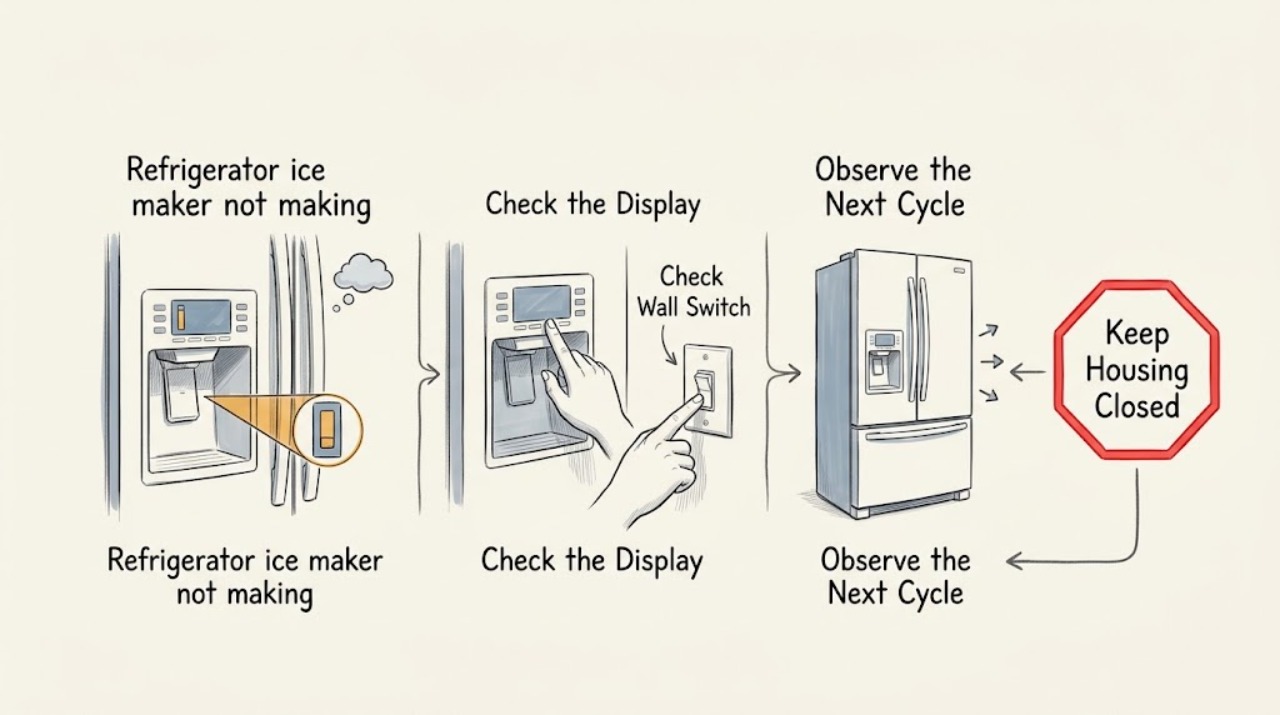
KitchenAid refrigerator ice maker not making ice: identify the missing step before replacing a part
Start by separating a production problem from a dispensing problem: look for cubes in the KitchenAid ice bin, then check the maker's model-specific on state, freezer cooling, water flow, and filter seating. KitchenAid's troubleshooting guidance points to a closed or restricted water supply, an incorrectly installed or clogged filter, freezer temperature, and an ice maker that is off as common causes.
-
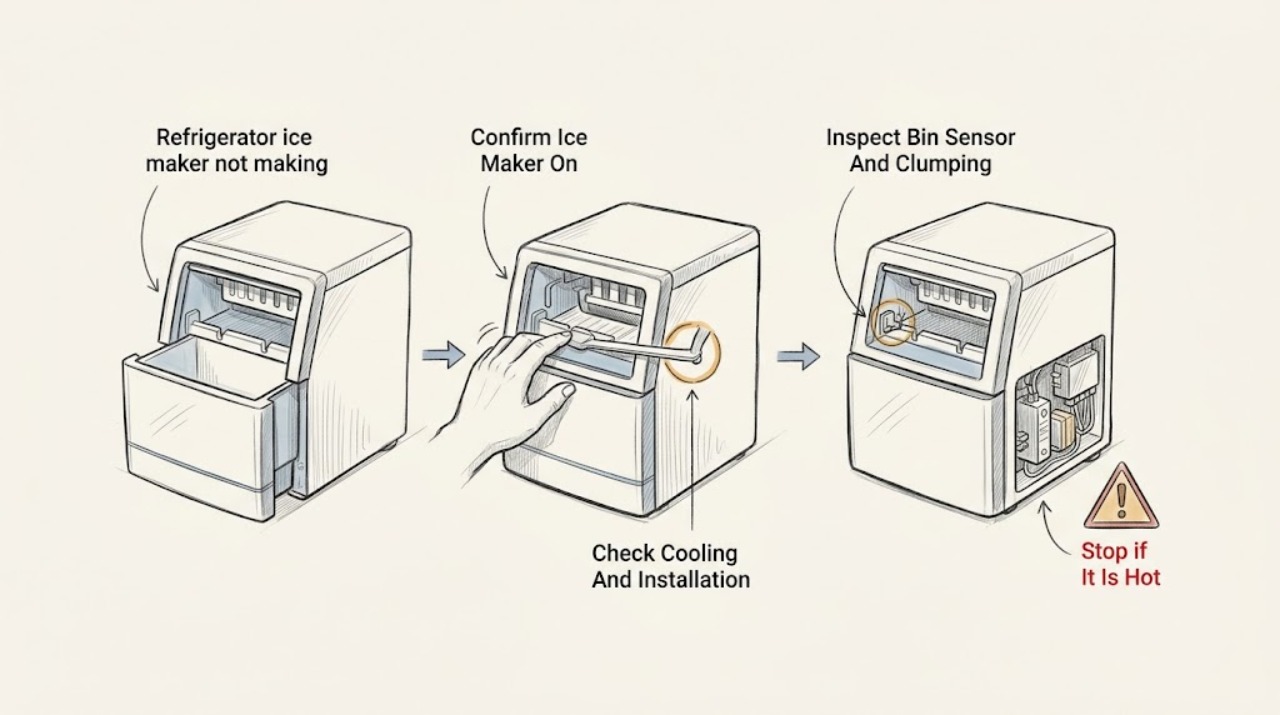
LG refrigerator ice maker not making ice: What to Check and What to Do Next
When an LG refrigerator ice maker is not making ice, first confirm that the ice maker is on for the exact model, the control panel is unlocked, and the freezer is actually cooling normally. Then check whether the bin is full or clumped, the feeler arm or sensor is blocked, and the accessible water supply or filter is restricting fill.
-
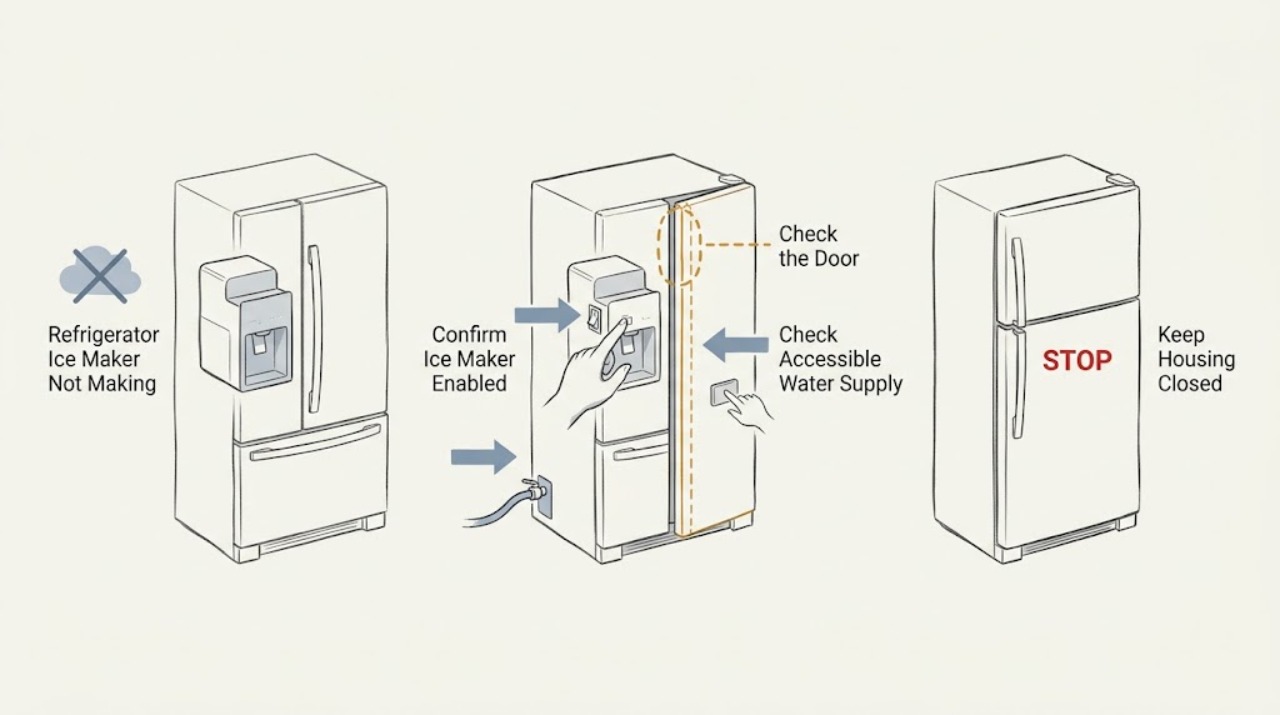
Maytag Refrigerator Ice Maker Not Making Ice: What to Check and What to Do Next
When a Maytag refrigerator ice maker is not making ice, first confirm that ice production is enabled through the model's normal control, the ice bin and freezer door are correctly seated and closed, the freezer is at the model's ice-making setting, and the refrigerator has an open water supply. A kinked line, restricted or incorrectly seated filter, low water flow, a blocked ejector or sensor area, recent installation, or a separate ice-maker fault can also stop production.
-
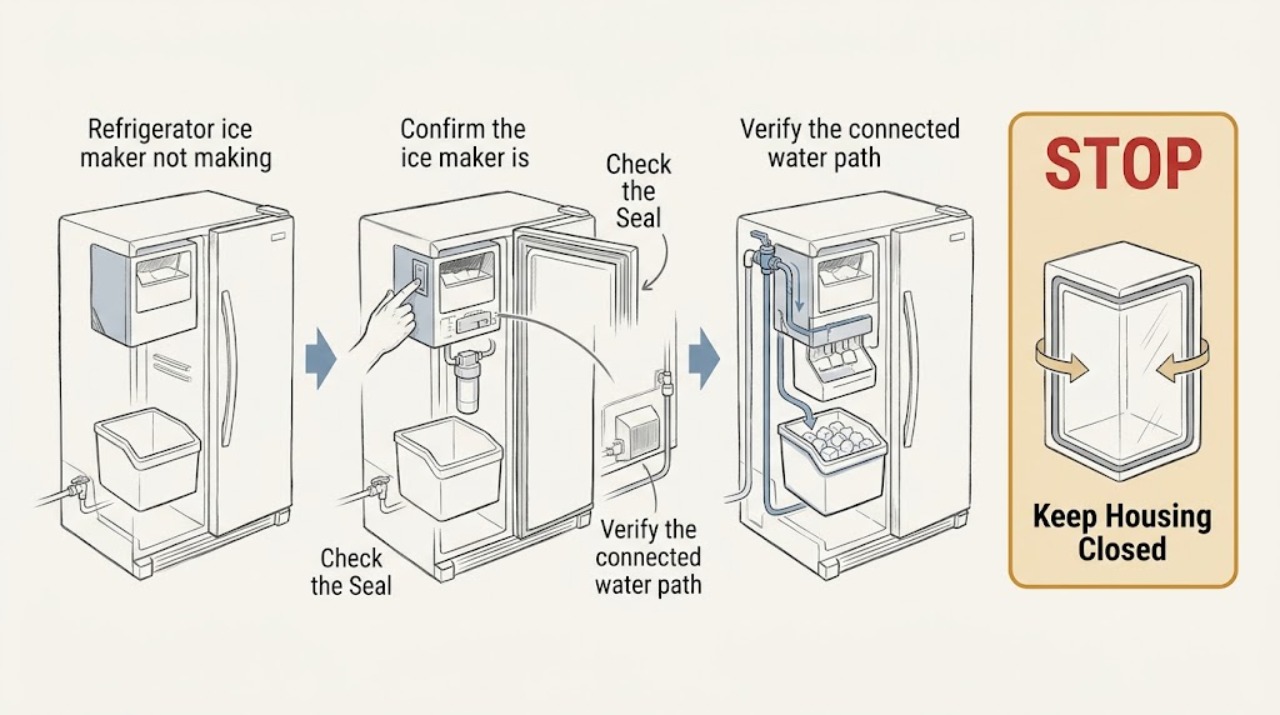
Refrigerator ice maker not making ice when water supply is connected: What to Check and What to Do Next
A connected water line does not prove that the ice maker is receiving usable water or reaching an ice-making temperature. First confirm the ice maker is On, the freezer or ice-maker compartment is cold enough according to the owner's manual, the ice bucket is seated and not full or jammed, the line is not kinked, and the water filter is not restricting flow.
-
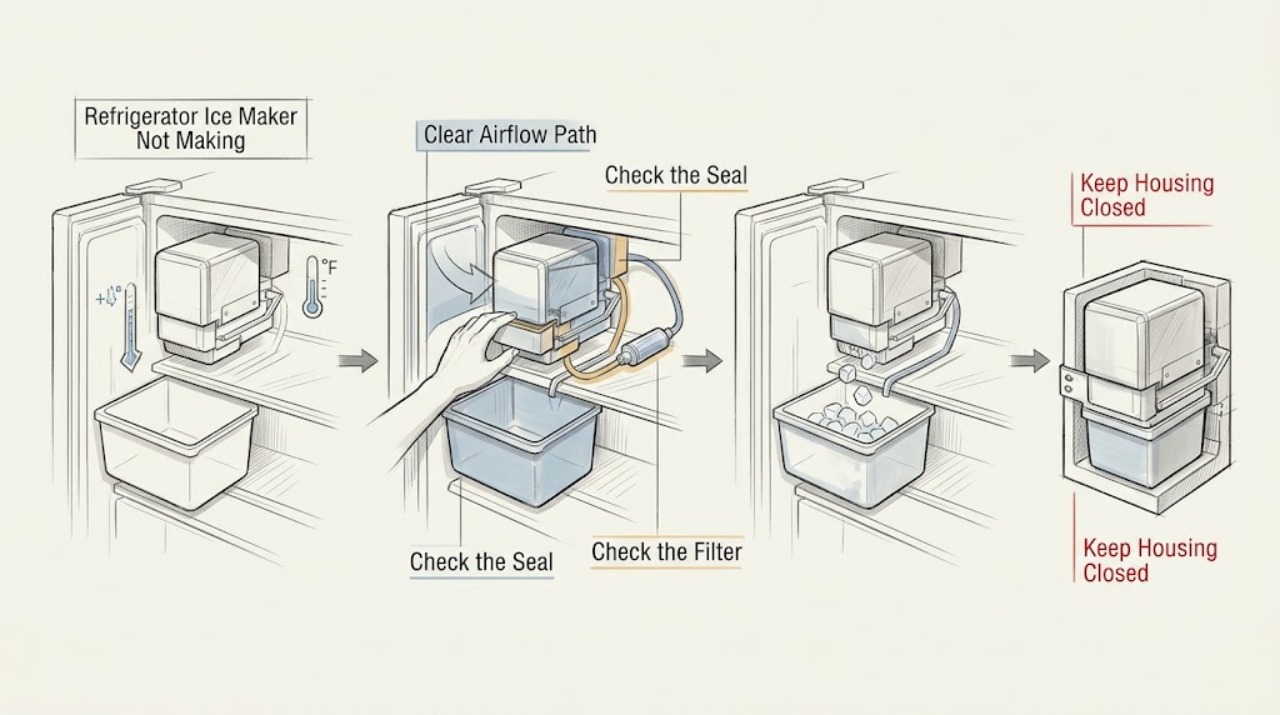
Refrigerator Ice Maker Not Making Ice, Freezer Is Cold: What to Check and What to Do Next
If the freezer is cold but the refrigerator ice maker is not making ice, verify the ice maker is turned on, the bin or feeler arm is not signaling full, and the freezer door and ice-maker bucket are seated and sealing correctly. Check the visible water shutoff valve and line for a closed valve, kink, or recent filter installation that restricted flow.
-
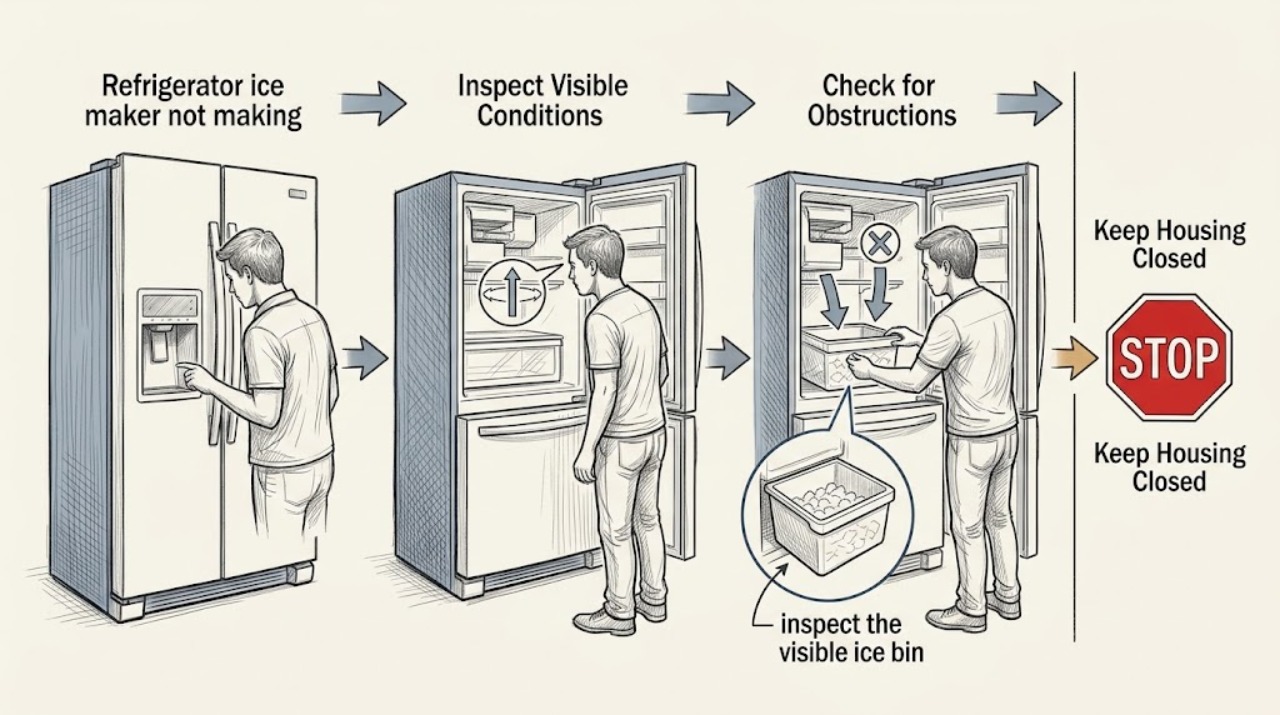
Refrigerator ice maker not making ice: What to Check and What to Do Next
Start with the visible controls, freezer temperature display, ice bin, door closure, and water-dispenser or filter symptoms. A newly installed refrigerator may need time to cool and begin an ice cycle. If the ice maker is on but the freezer is cold and no ice is produced, do not remove panels or perform live electrical tests; arrange qualified refrigerator service. Shut off the refrigerator's water supply before any hose or water-connection service.
-
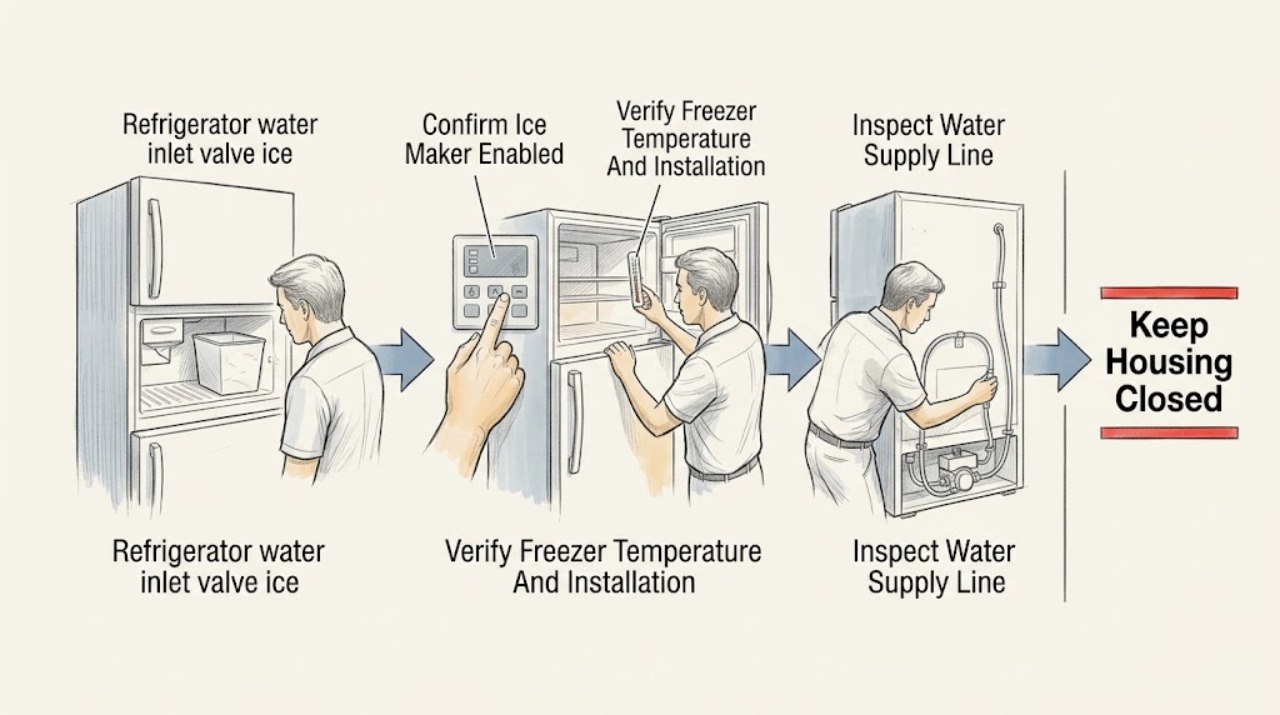
Refrigerator water inlet valve ice maker not making ice: What to Check and What to Do Next
If a refrigerator ice maker is not making ice and the water inlet valve is suspected, first confirm that ice production is enabled, the feeler arm or paddle can move, and the freezer is at the model's ice-making temperature. Then check the accessible water shutoff, supply line, filter, dispenser flow, and fill-tube area without pulling the refrigerator or opening the rear panel.