
Repair problem
Water Heater Leaking Troubleshooting Guides
Published FixGraph guidance for diagnosing and responding to water heater leaking.
Matching published guides
Choose a guide that matches the service, equipment, and conditions you are seeing.
-
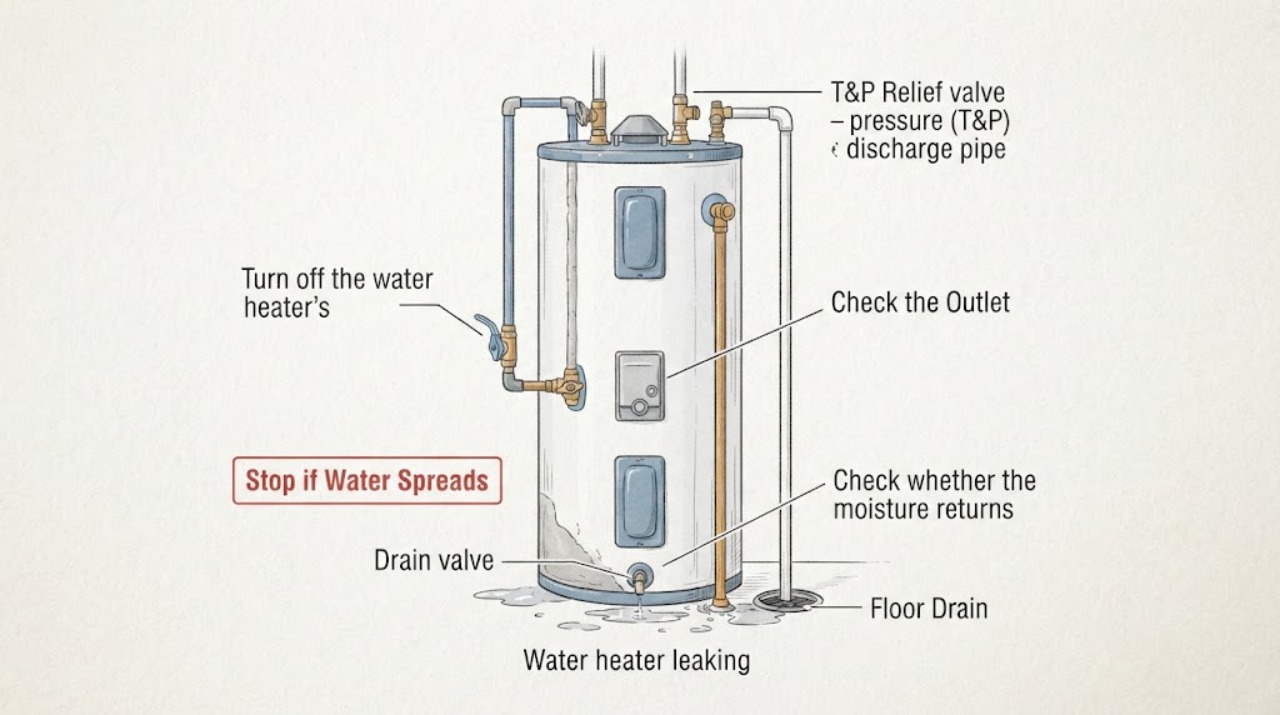
A. O. Smith water heater leaking: What to Check and What to Do Next
If an A. O.
-
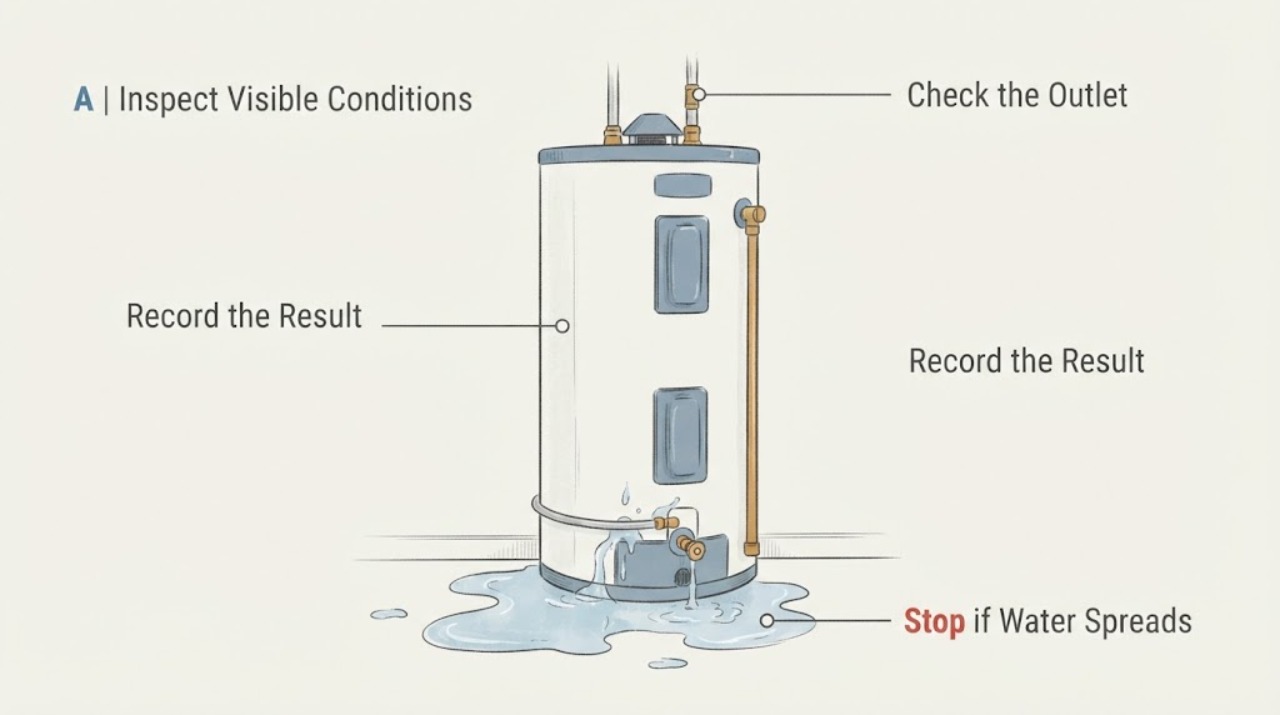
A. O. Smith Water Heater Drain Valve Leaking: What to Check and What to Do Next
If an A. O.
-
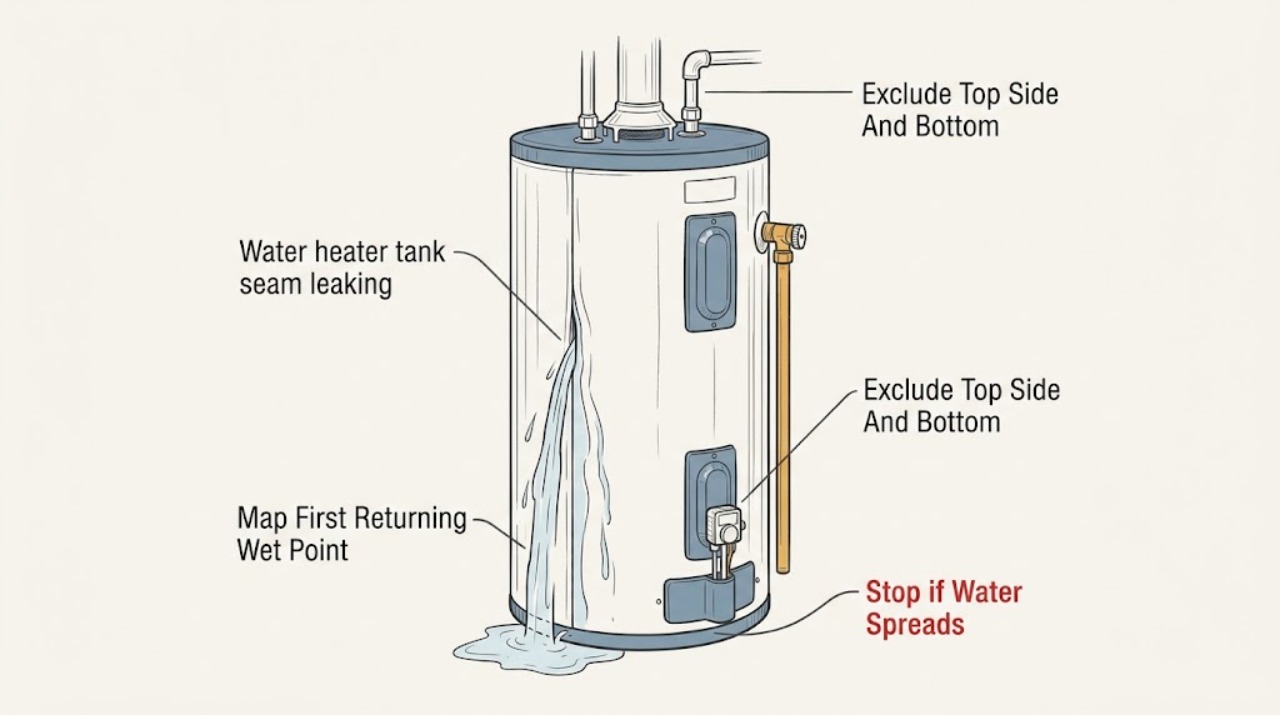
A. O. Smith water heater tank seam leaking: What to check and what to do next
A leak that truly emerges from the tank shell, a welded seam, or a welded tank fitting is a structural tank leak, not an ordinary adjustment. A.
-
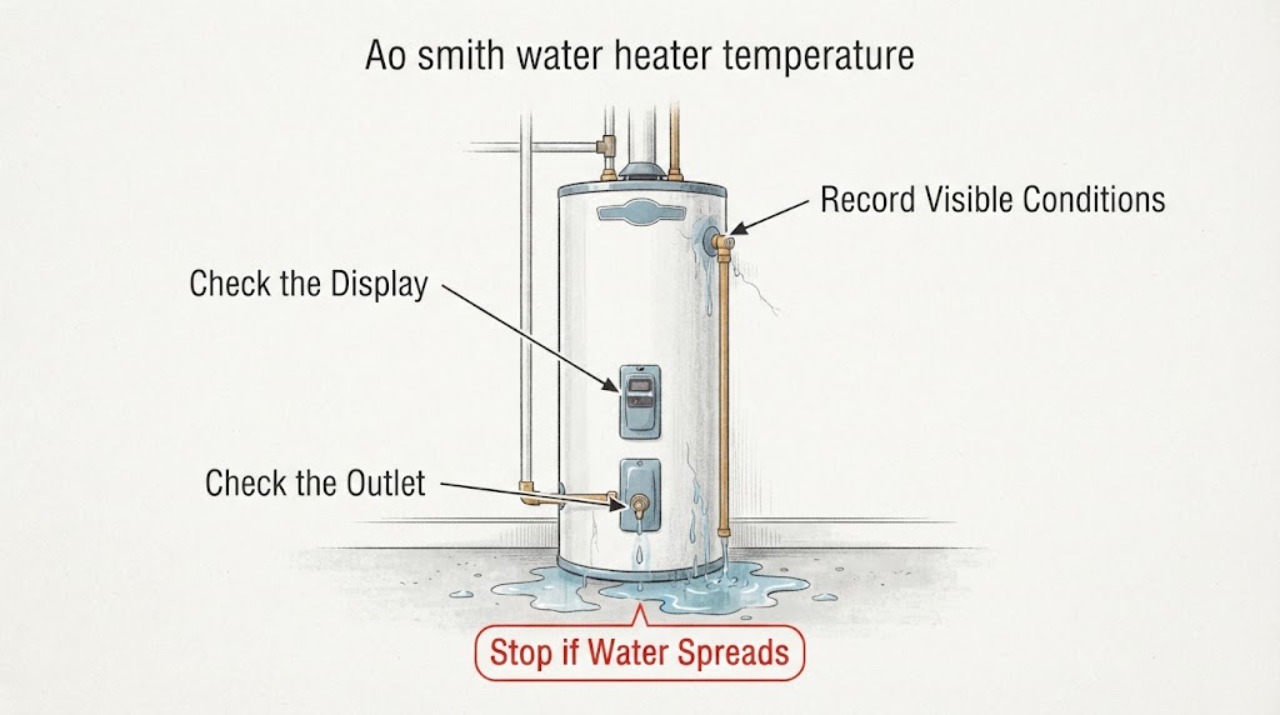
Ao smith water heater temperature pressure relief valve leaking: What to Check and What to Do Next
A leaking A. O.
-
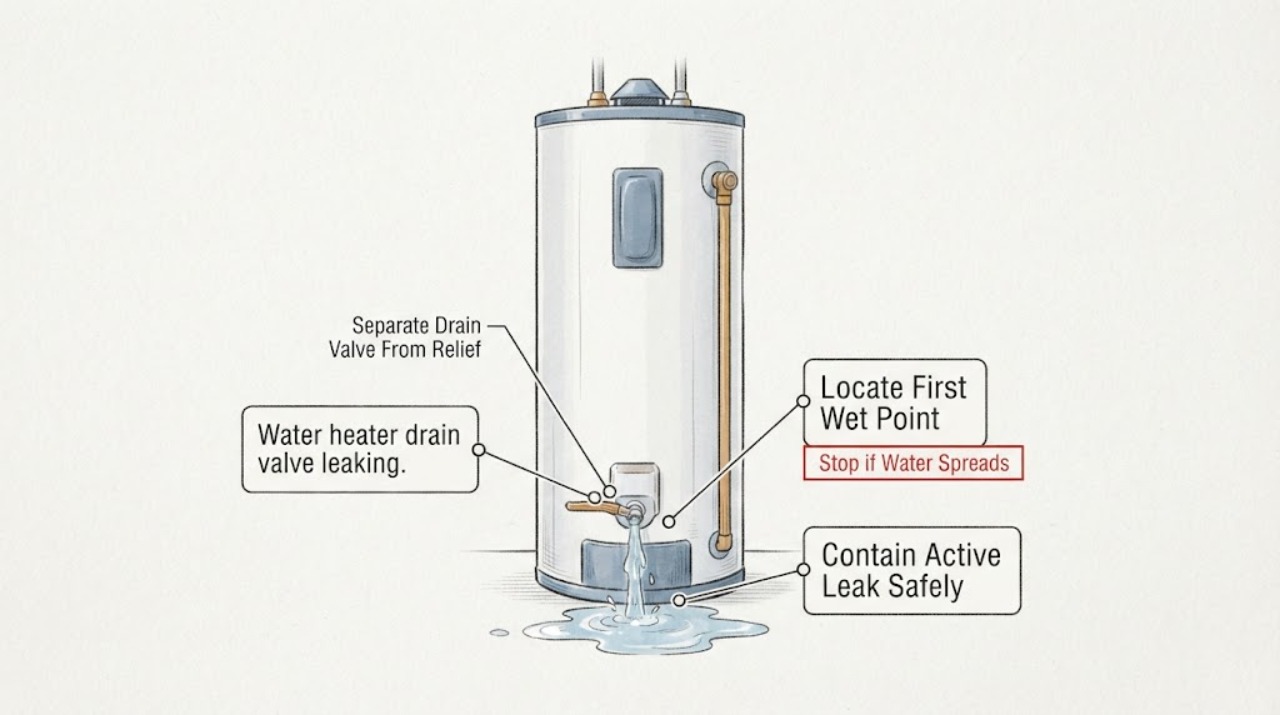
Bradford white water heater drain valve leaking: What to Check and What to Do Next
A Bradford White water heater that appears to leak at the drain valve may instead be leaking from the drain-valve outlet or stem, a nearby water connection, the temperature-and-pressure relief discharge, a condensate line, or the tank itself. Do not touch or open the drain valve while the water may be hot or pressurized, and never plug the relief-valve outlet.
-
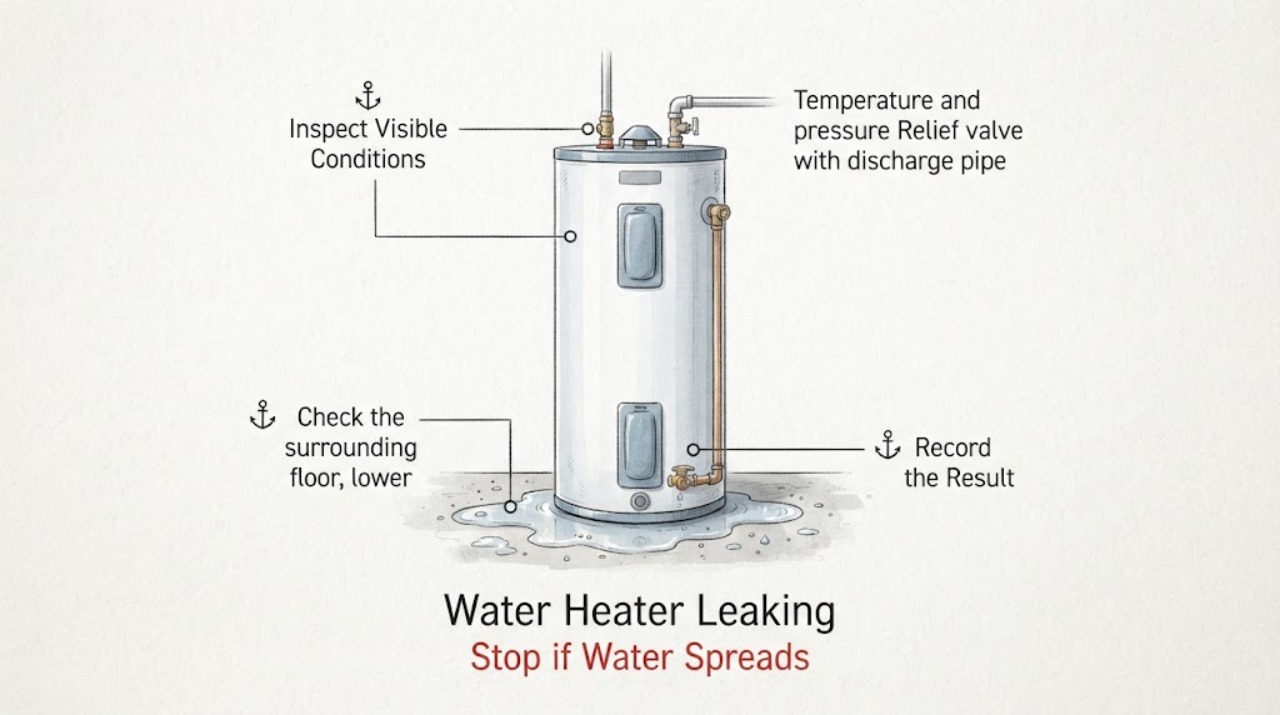
Bradford White Water Heater Leaking: What to Check and What to Do Next
First find the highest wet point rather than assuming the tank has failed. Water at a threaded connection, drain valve, or fitting can have a different remedy from water emerging through the tank shell; water at the temperature and pressure relief discharge can indicate a relief or pressure condition, and water on a condensing model may be condensate or a blocked drain.
-
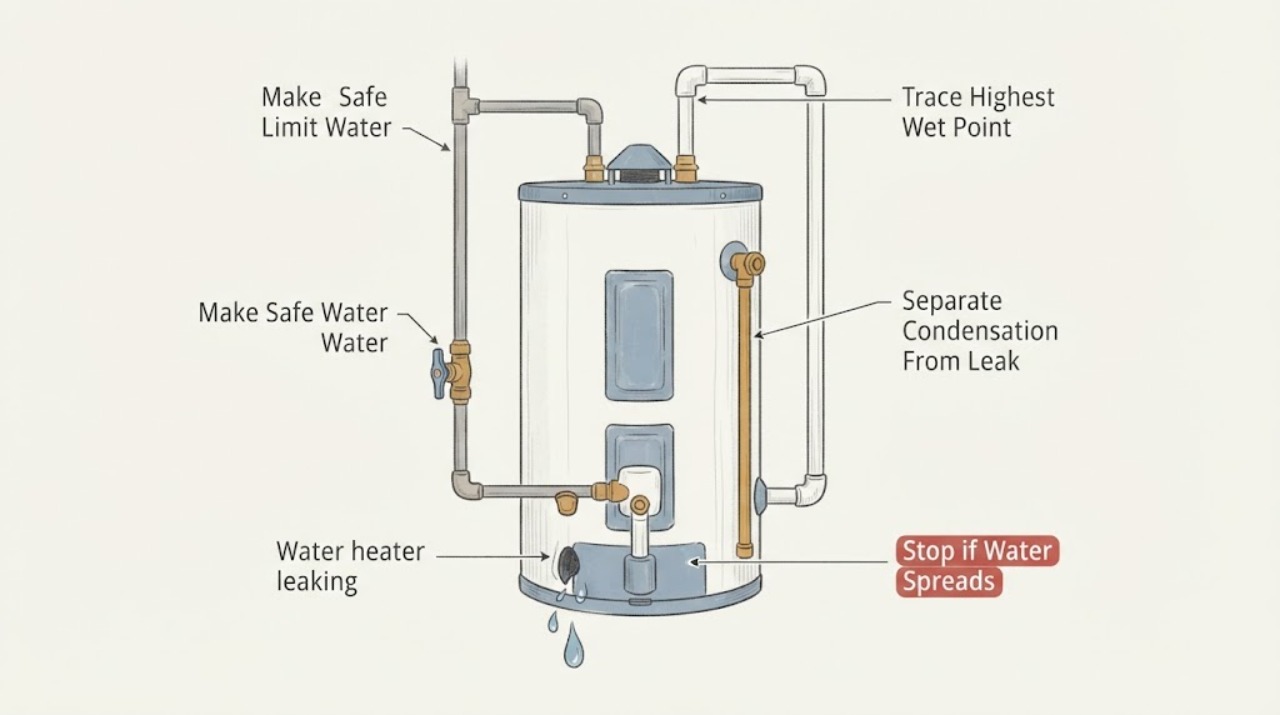
Rheem water heater leaking: What to Check and What to Do Next
Treat a Rheem water-heater leak as a water-damage and equipment-safety issue, not as a reason to tighten every fitting or open the heater. From a dry, safe position, identify whether water is coming from an external pipe or fitting, the temperature-and-pressure relief discharge, the drain or service opening, condensation, or the tank body.
-
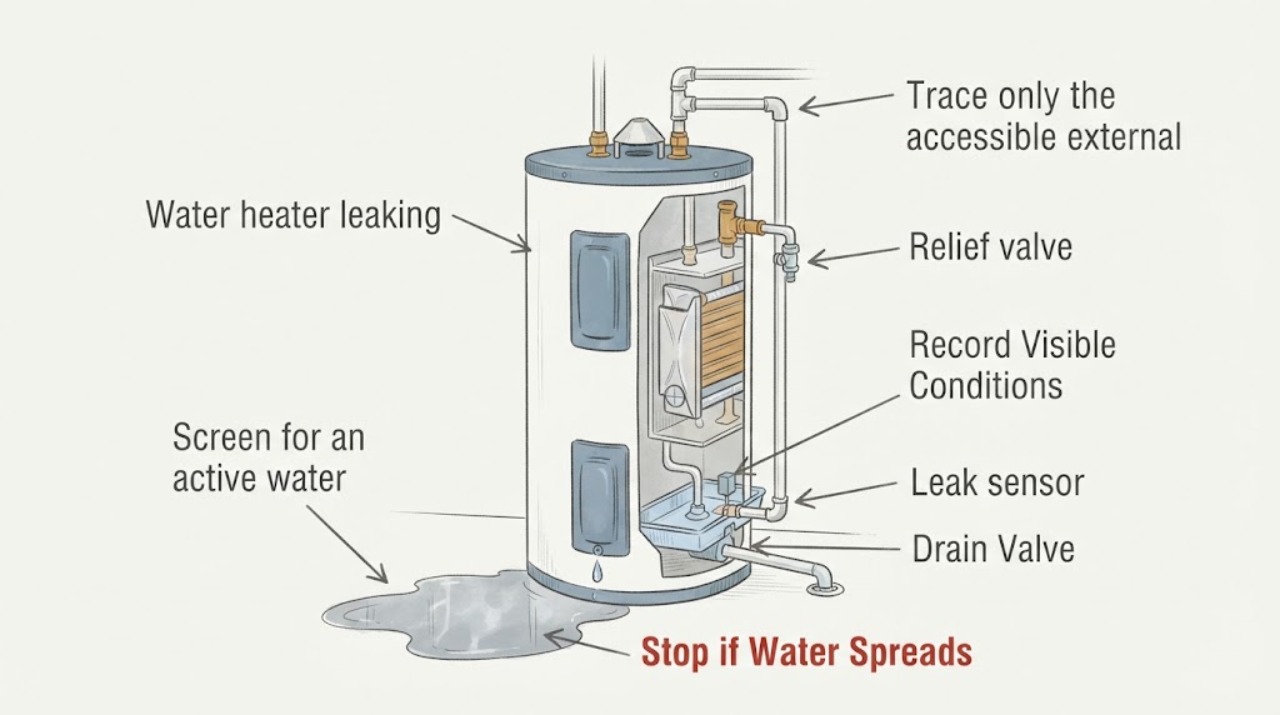
Rinnai water heater leaking: What to Check and What to Do Next
A leaking Rinnai water heater should be treated as a water-damage and, for gas or powered models, an electrical or combustion safety problem until the source is known. From a dry position, stop using hot water at the unit and identify whether the water is coming from an external pipe connection, relief discharge, condensate or drain path, the bottom pan, or inside the cabinet.
-
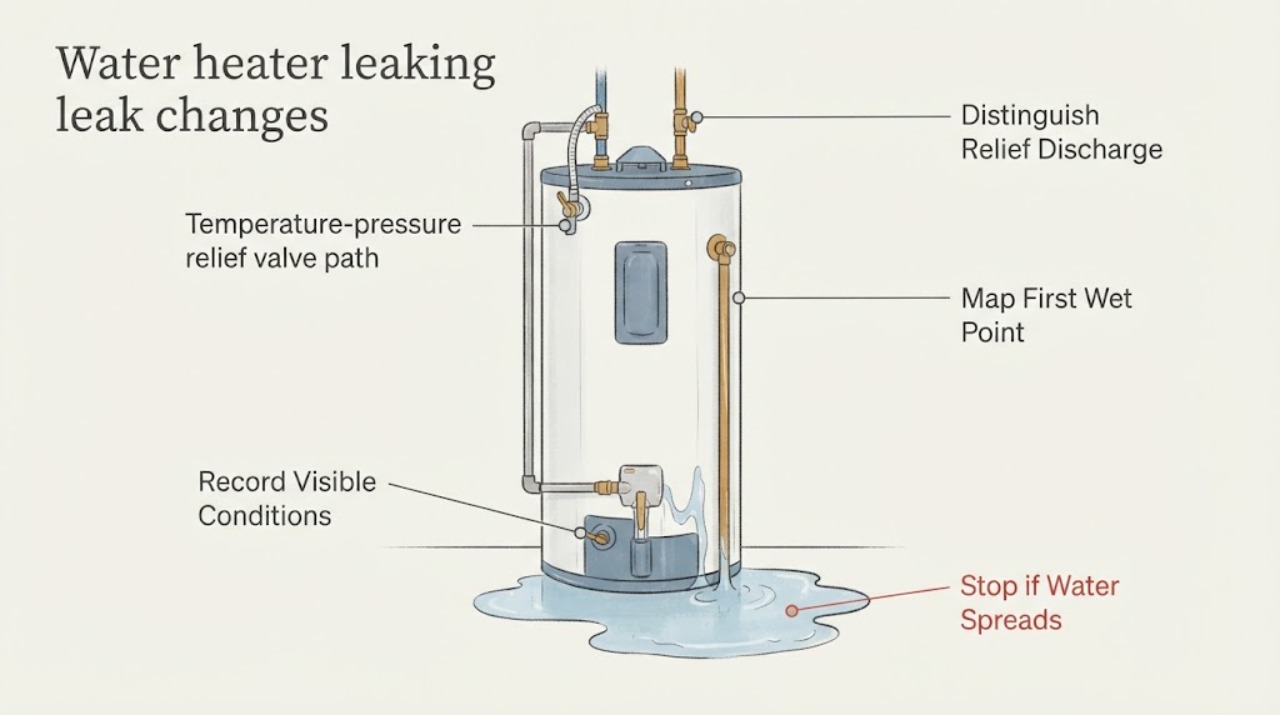
Water heater leaking leak changes with heating: What to Check and What to Do Next
A water-heater leak that appears or gets worse during a heating cycle often points to water expansion and pressure at the temperature-and-pressure (T&P) relief path, but the timing alone does not identify the failed part. From a safe distance, identify whether water exits the relief discharge pipe, a top connection, the drain valve, a side seam, or the tank base, and note whether it is cool, warm, intermittent, or a growing stream.
-
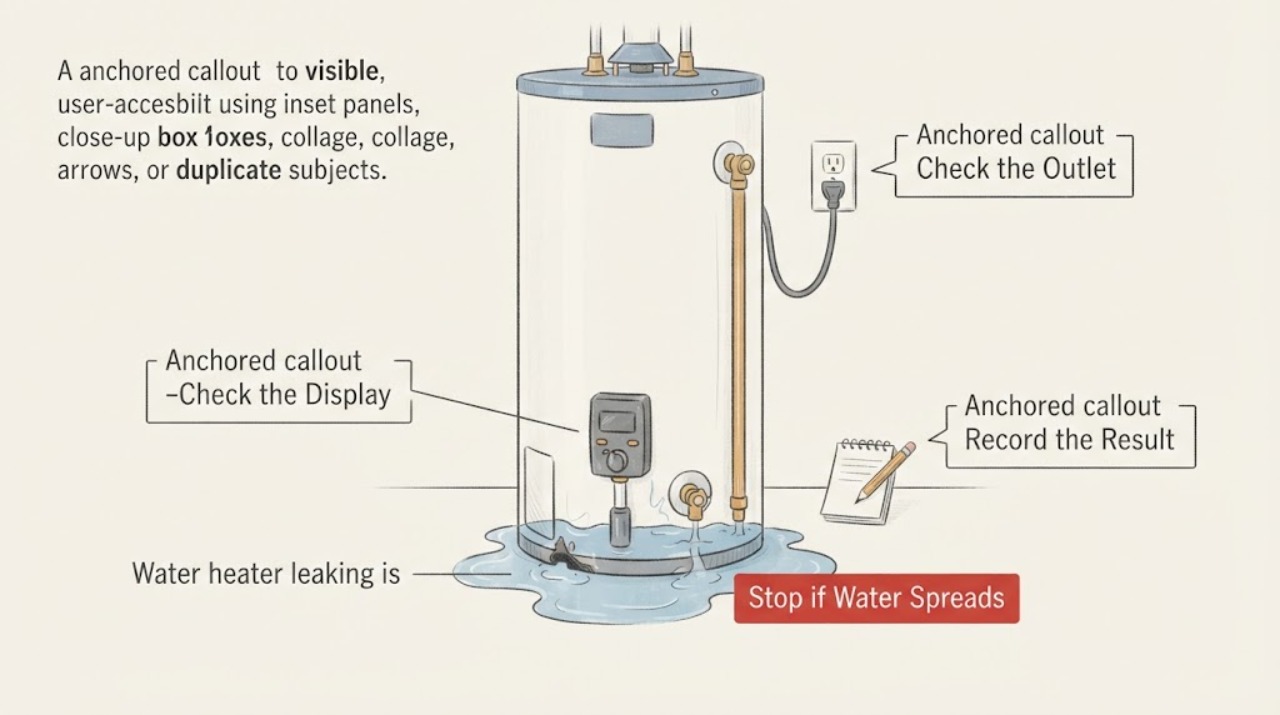
Water heater leaking is at tank base or valve: What to Check and What to Do Next
Water at a water heater's base can come from a loose connection, drain valve, temperature-and-pressure relief valve or discharge pipe, condensation, an electric-element gasket, or a tank leak that is tracking down behind the jacket. First keep people away from hot discharge, turn off the heater's energy source as the manual permits, and close the cold-water inlet if water is actively escaping.
-
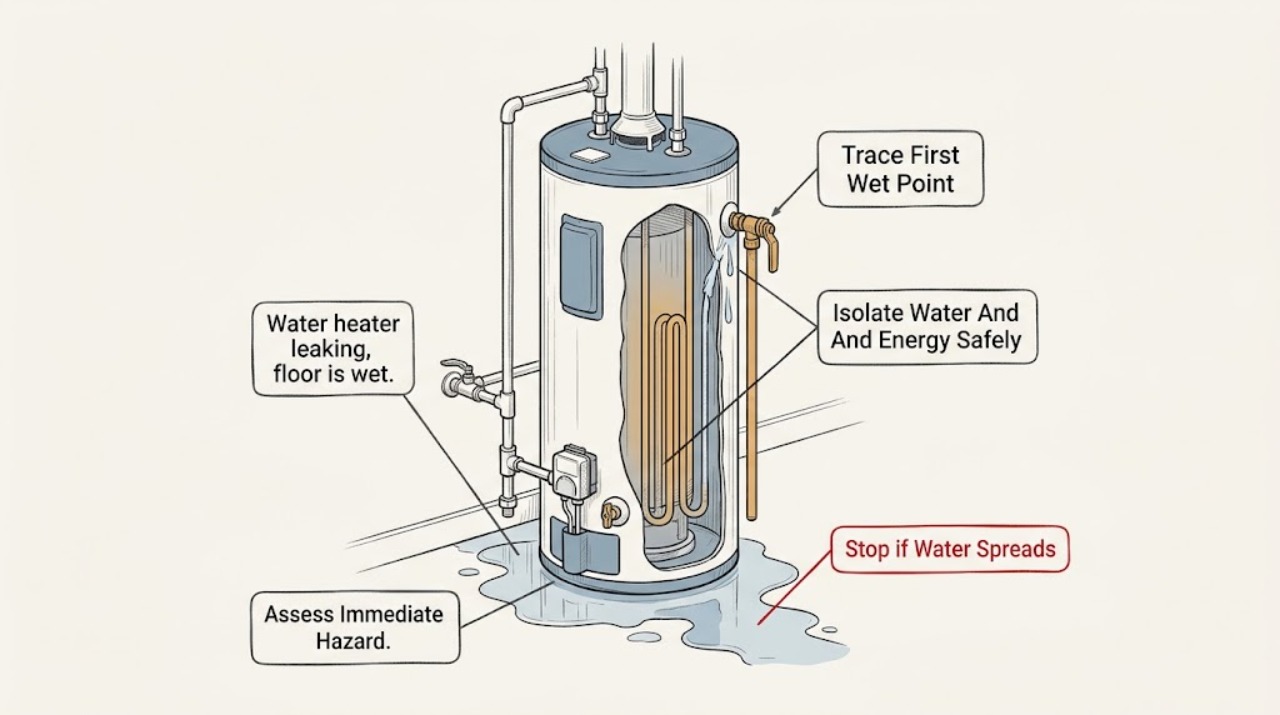
Water heater leaking, floor is wet: What to Check and What to Do Next
A wet floor below a water heater does not prove that the tank itself has failed. Water may come from condensation, the hot or cold connections, a drain valve, a temperature-and-pressure relief valve or its discharge pipe, an electric-element gasket, or the tank.