
Frigidaire appliance guidance
Frigidaire Ice Maker Repair Guides
Troubleshooting and repair guidance for published Frigidaire Ice Maker problems, symptoms, and maintenance questions.
Published Frigidaire Ice Maker guides
Choose the guide whose symptom or condition most closely matches what you are seeing.
-
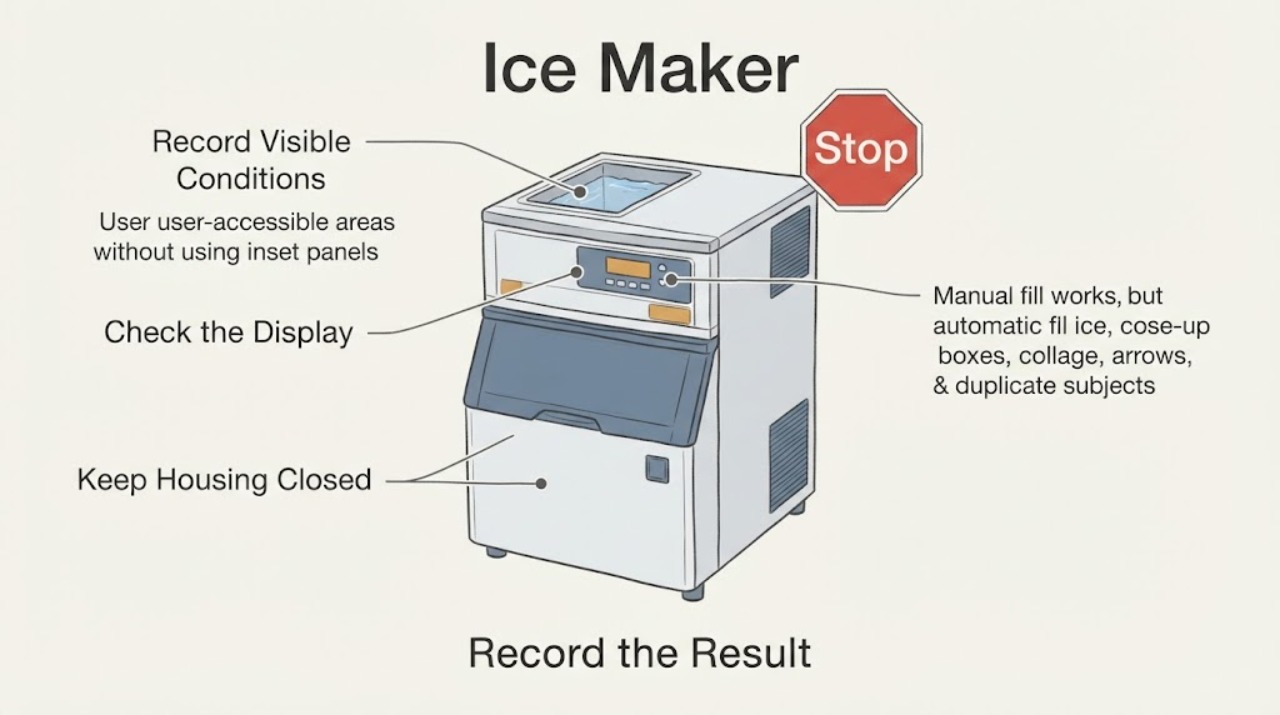
Frigidaire FFHB27507D7 Ice Maker: Manual Fill Freezes but Automatic Filling Does Not
If water added manually to the FFHB27507D7 ice-maker mold freezes but the ice maker does not fill by itself, treat that result as a clue, not proof of a bad water inlet valve. It suggests the freezer can freeze that water, but manual filling bypasses the automatic fill command, water-delivery path, and the maker's normal sensing/harvest sequence.
-
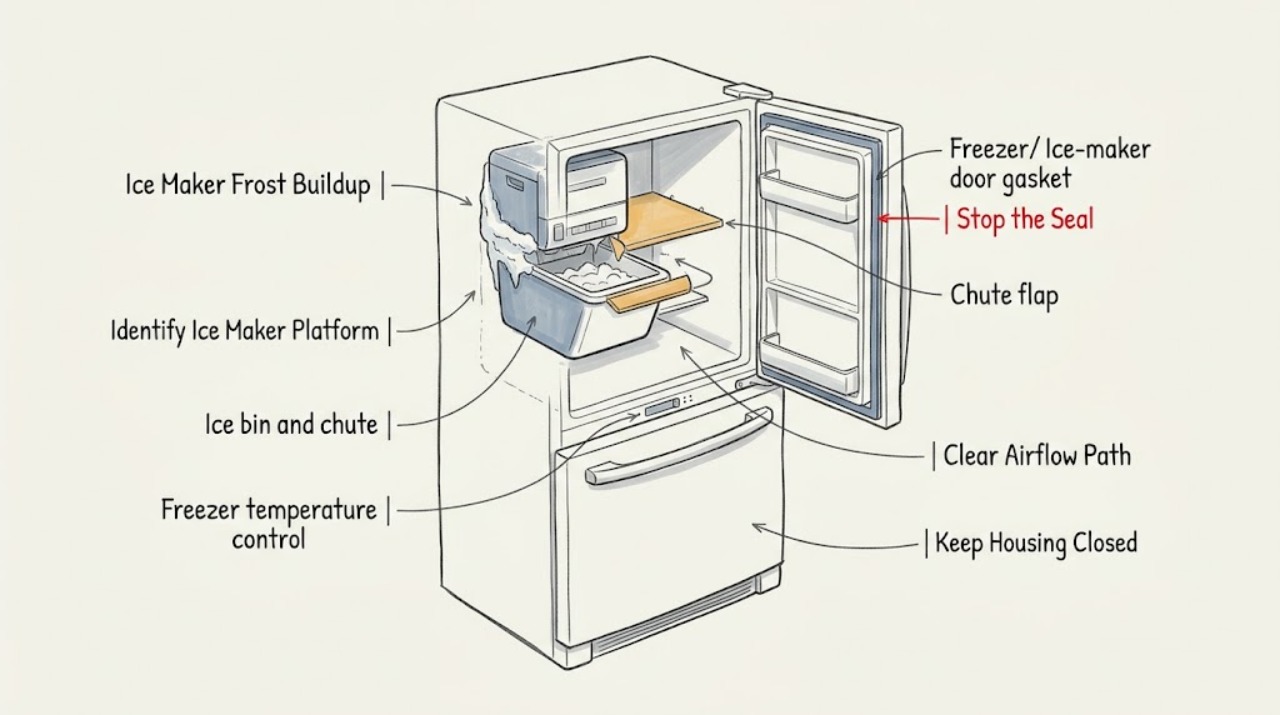
Frigidaire Ice Maker Frost Buildup: Locate the Frost and Check the Air Seal Safely
First locate the frost before assuming the ice maker itself is defective. Frost only on the ice bin or dispenser chute is often an accessible air-seal or ice-path issue: check that the ice chute flap closes, the door or freezer gasket seals, and no ice or food prevents closure.
-
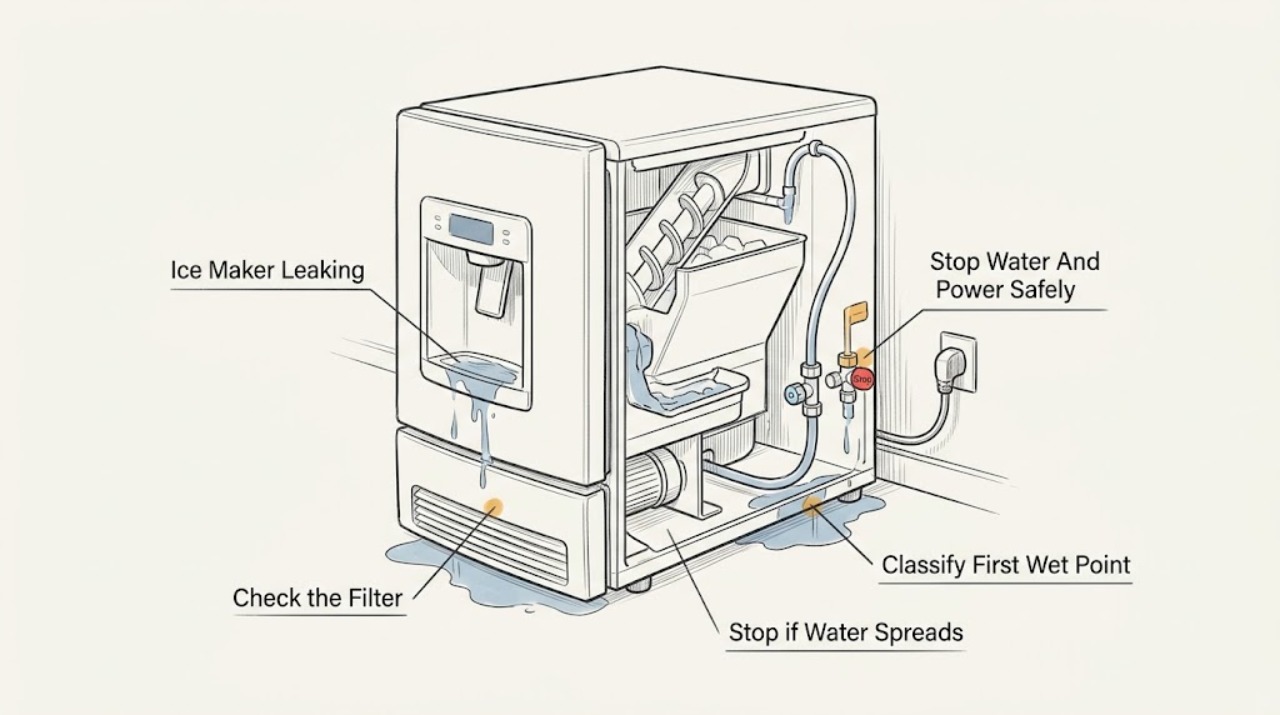
Frigidaire Ice Maker Leaking: Trace the Water Before Replacing Parts
If a Frigidaire ice maker is actively leaking, stop the water first at the refrigerator's accessible shutoff or household supply valve, and disconnect power only from a safe, dry location if water is near electrical parts.
-
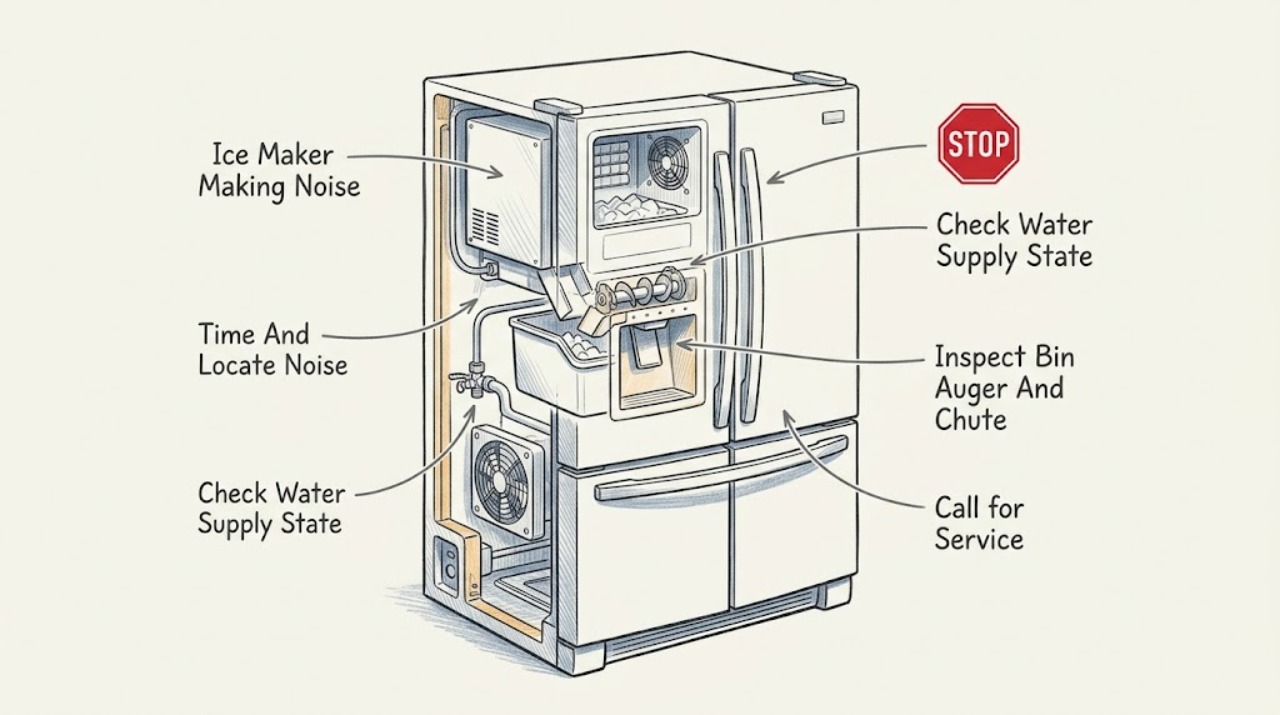
Frigidaire Ice Maker Making Noise: Tell Normal Fill and Harvest Sounds from Rattles
First identify when the noise happens. A short buzz while the tray fills, a motor or ice-loosening sound during a cycle, running water, or cubes dropping into the bin can be normal for a refrigerator's automatic ice maker.
-
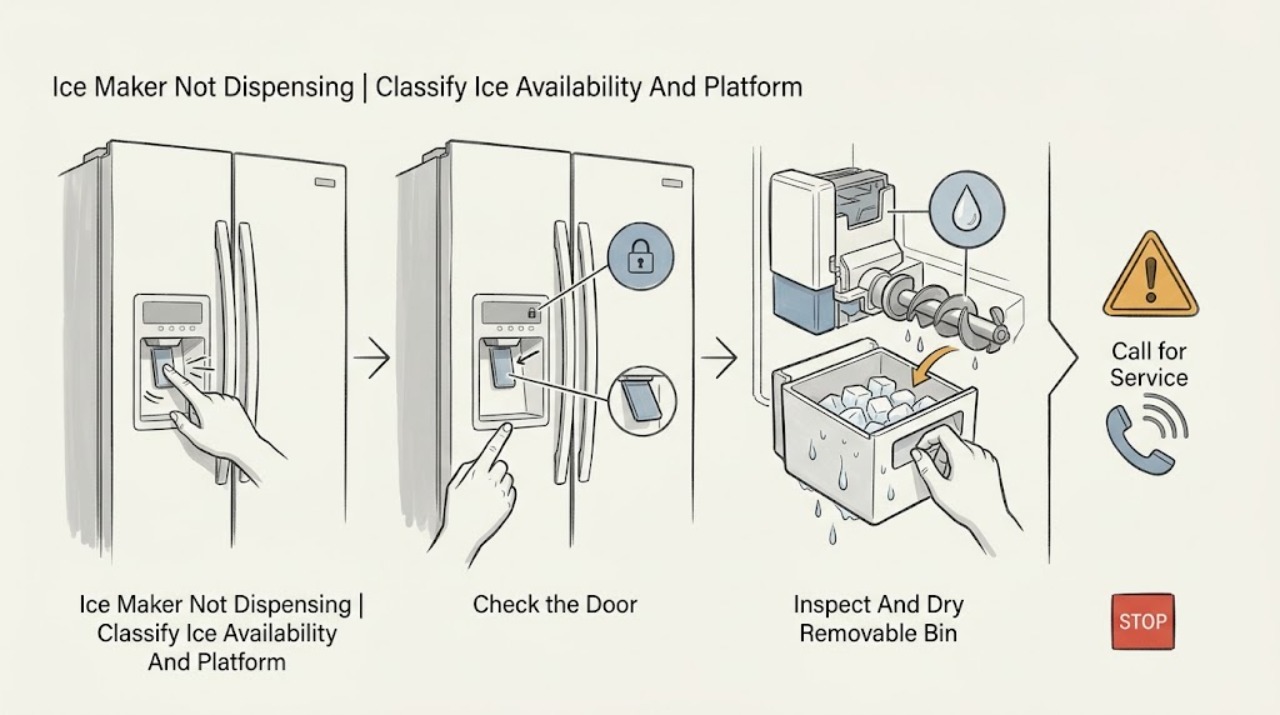
Frigidaire Ice Maker Not Dispensing: Separate an Empty Bin from an Ice Jam
First separate “there is no ice” from “there is ice but it will not come out.” Frigidaire's dispenser guidance applies to French Door, Side-by-Side, and Top Freezer refrigerators with an ice dispenser, and says to check the control lock, closed doors, ice in the bin, and the dispenser's shutoff after prolonged paddle use.
-
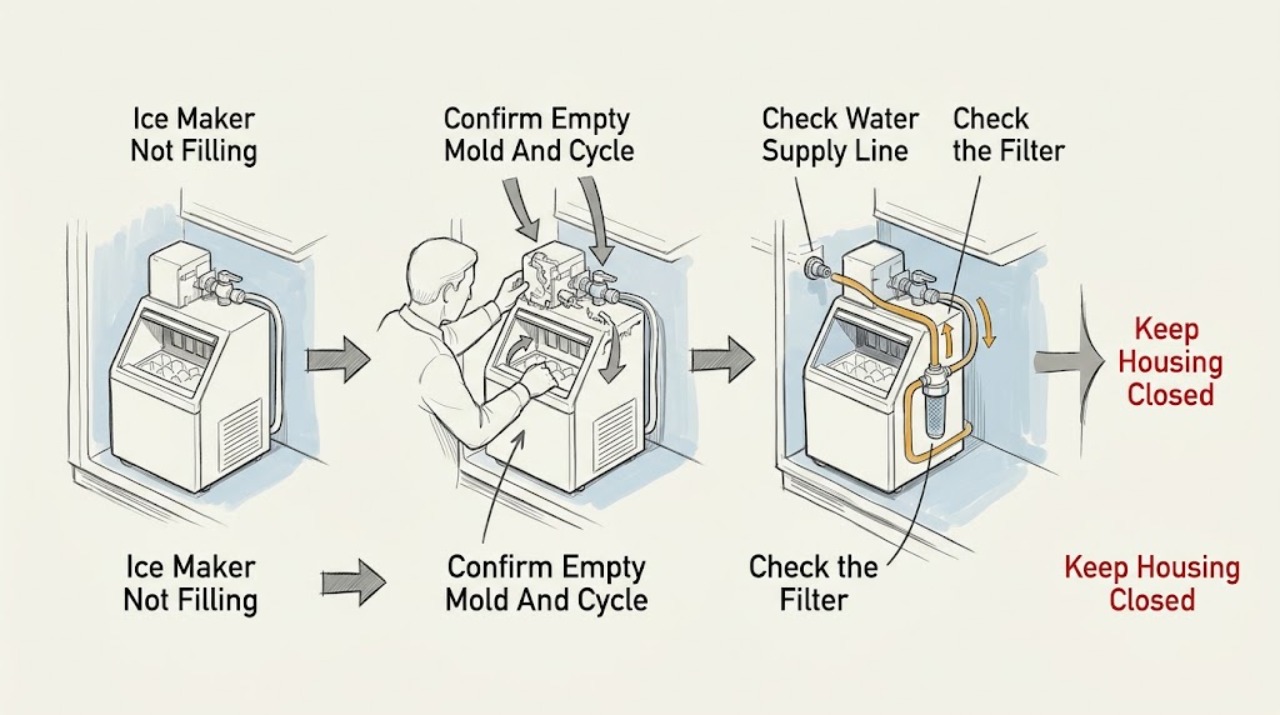
Frigidaire Ice Maker Not Filling: Check the Water Path and Fill Cycle
First confirm that this is the ice maker's fill problem, not a dispenser-flow problem: the ice mold is empty after a harvest or fill attempt, while the refrigerator may still dispense water. Verify the exact model's ice-maker On/Off state, water supply valve, and unobstructed supply line.
-
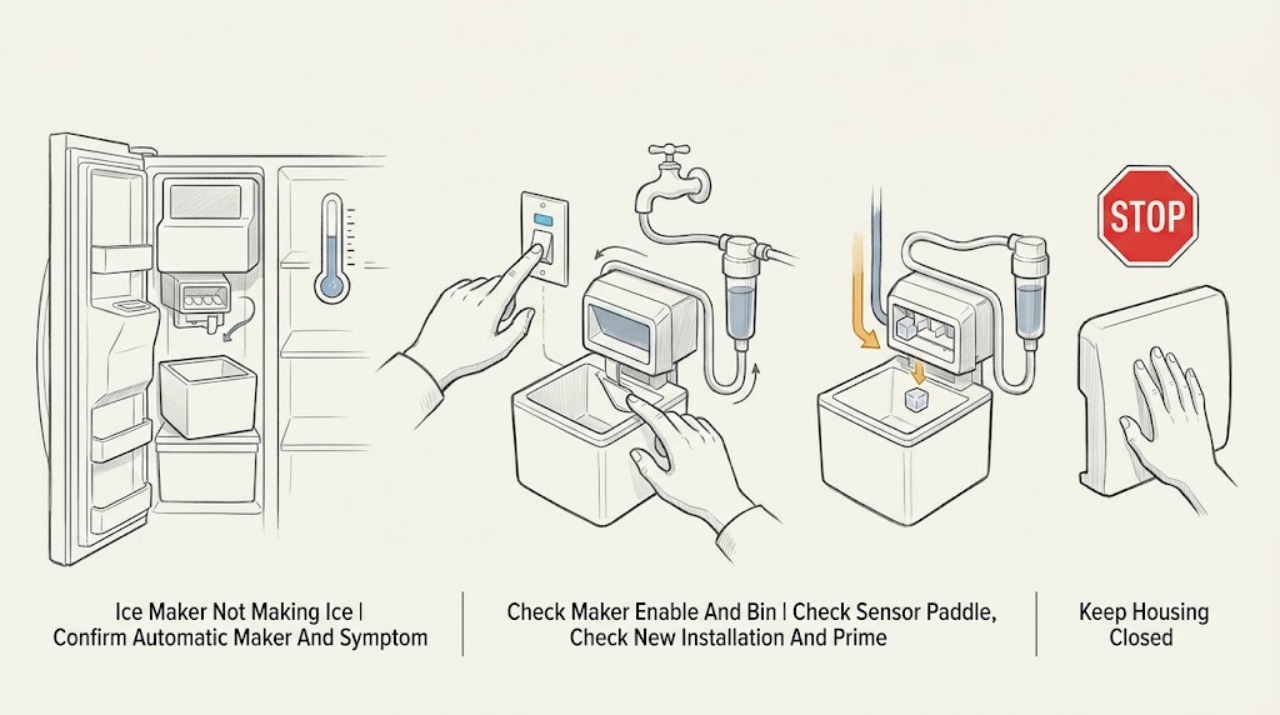
Frigidaire Ice Maker Not Making Ice
If a Frigidaire refrigerator's automatic ice maker is making no new ice, first confirm that the appliance actually has an automatic ice maker and that the complaint is an empty or unchanged ice bin—not ice that is already made but will not dispense. Check the exact model's ice-maker ON control or signal arm, seat the bin as the manual shows, and make sure the freezer is cold and the refrigerator has had time to stabilize.
-
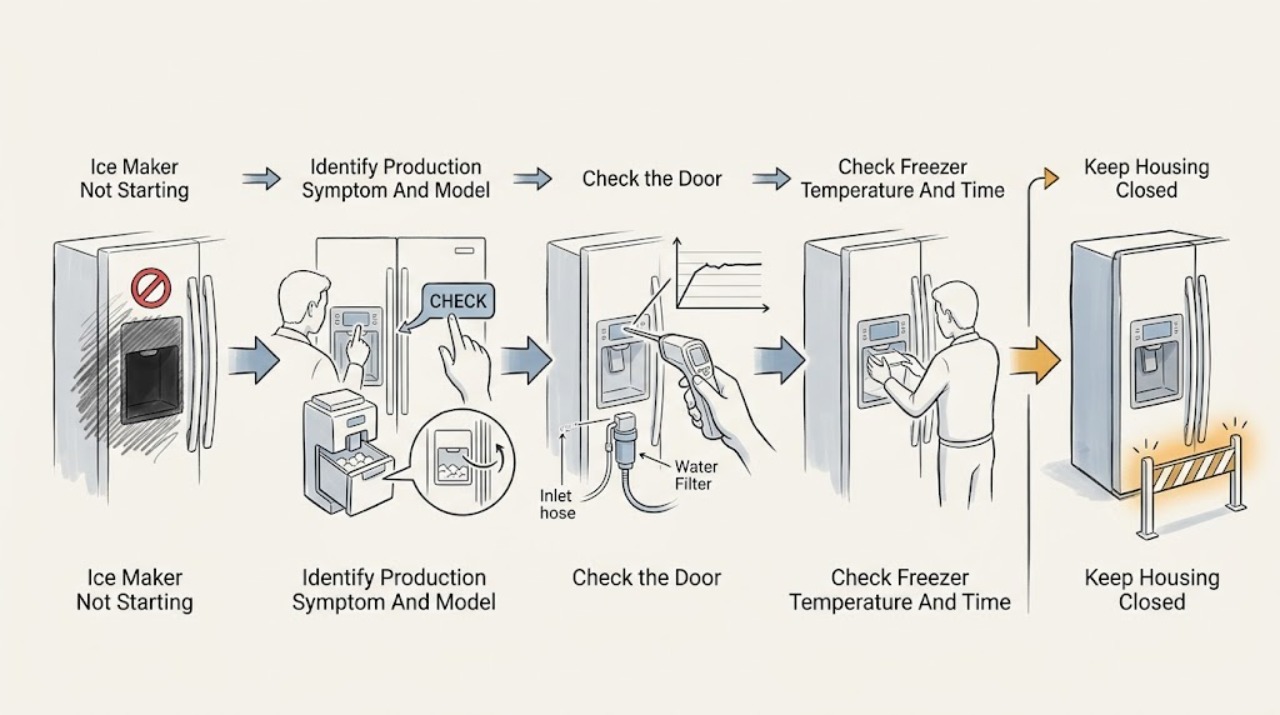
Frigidaire Ice Maker Not Starting: Check the Cycle Conditions First
First confirm that the complaint is no ice production, not a dispenser jam. Read the exact refrigerator model and use its manual to verify that the ice maker is enabled; do not assume every Frigidaire uses the same switch, signal arm, display, bin, or ice-maker location.
-
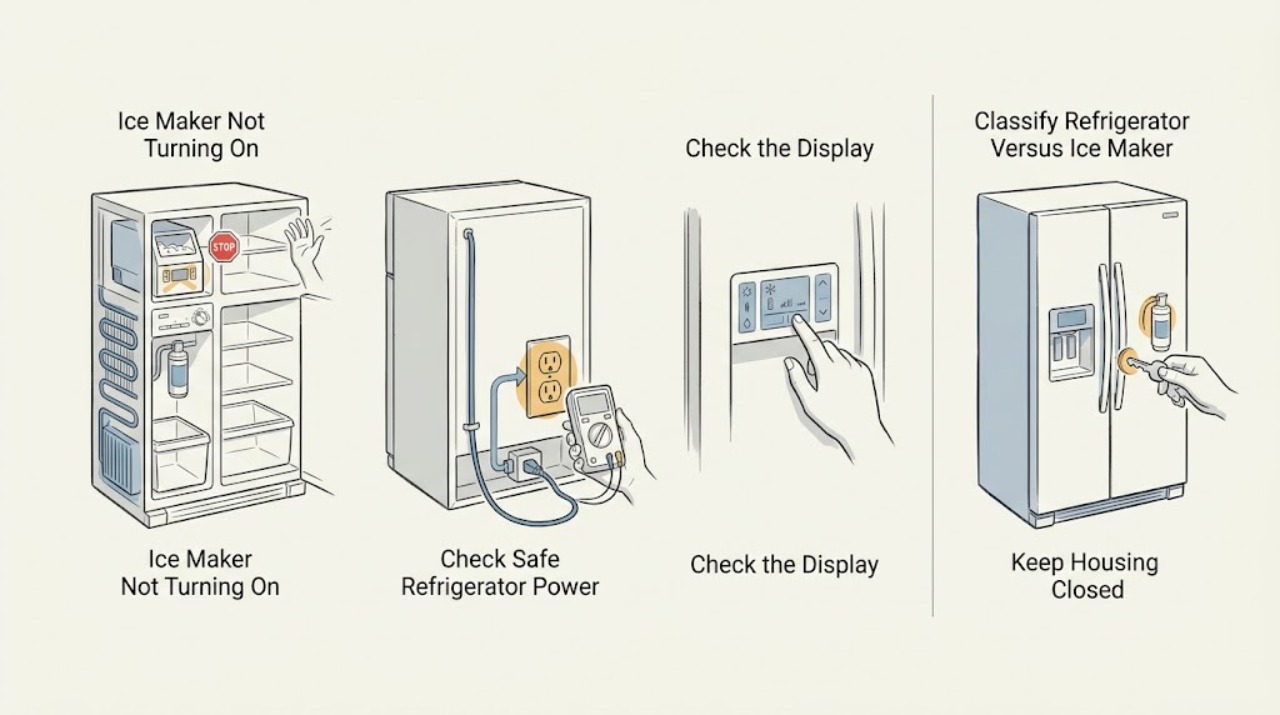
Frigidaire Ice Maker Not Turning On: Control, Power, and Model Checks
Frigidaire ice makers are integrated into refrigerator models with different control layouts. First decide whether the refrigerator itself has power and whether the ice-maker function is disabled.
-
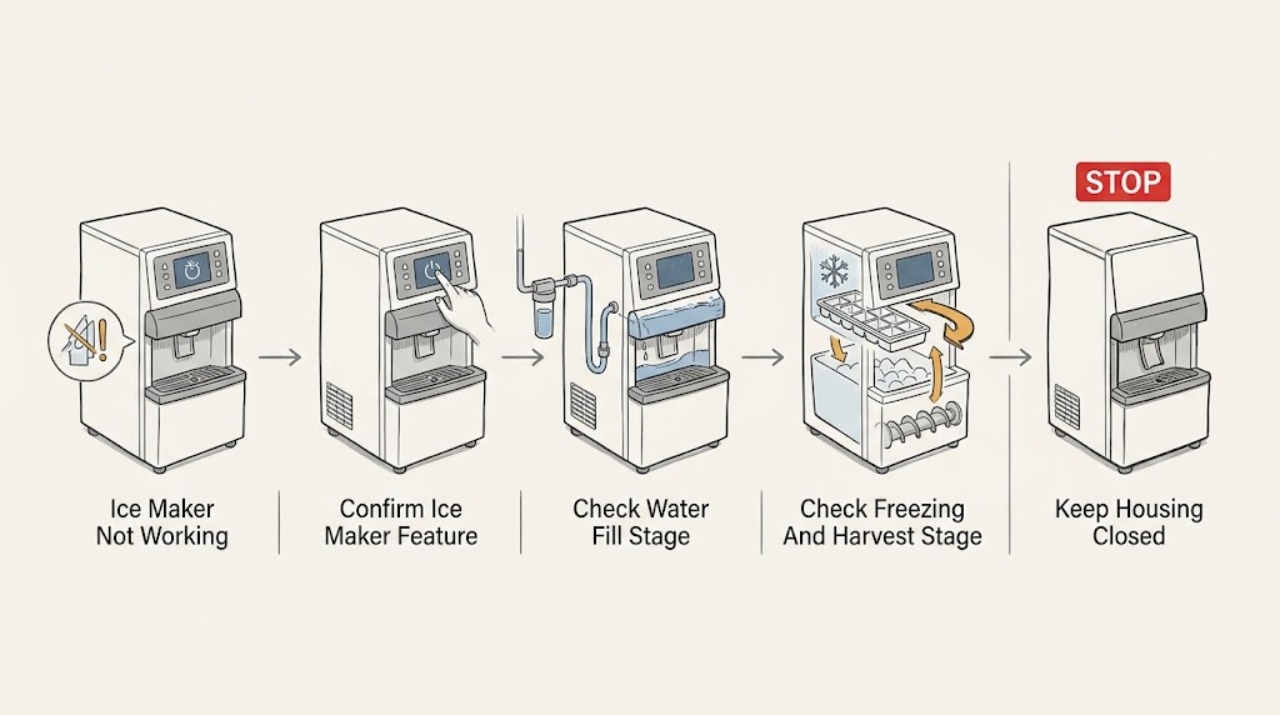
Frigidaire Ice Maker Not Working: Start With the Failure Stage
First identify the stage that is failing instead of treating every empty ice bin as the same fault. Confirm that the exact Frigidaire refrigerator has an ice maker and that it is switched on.
-
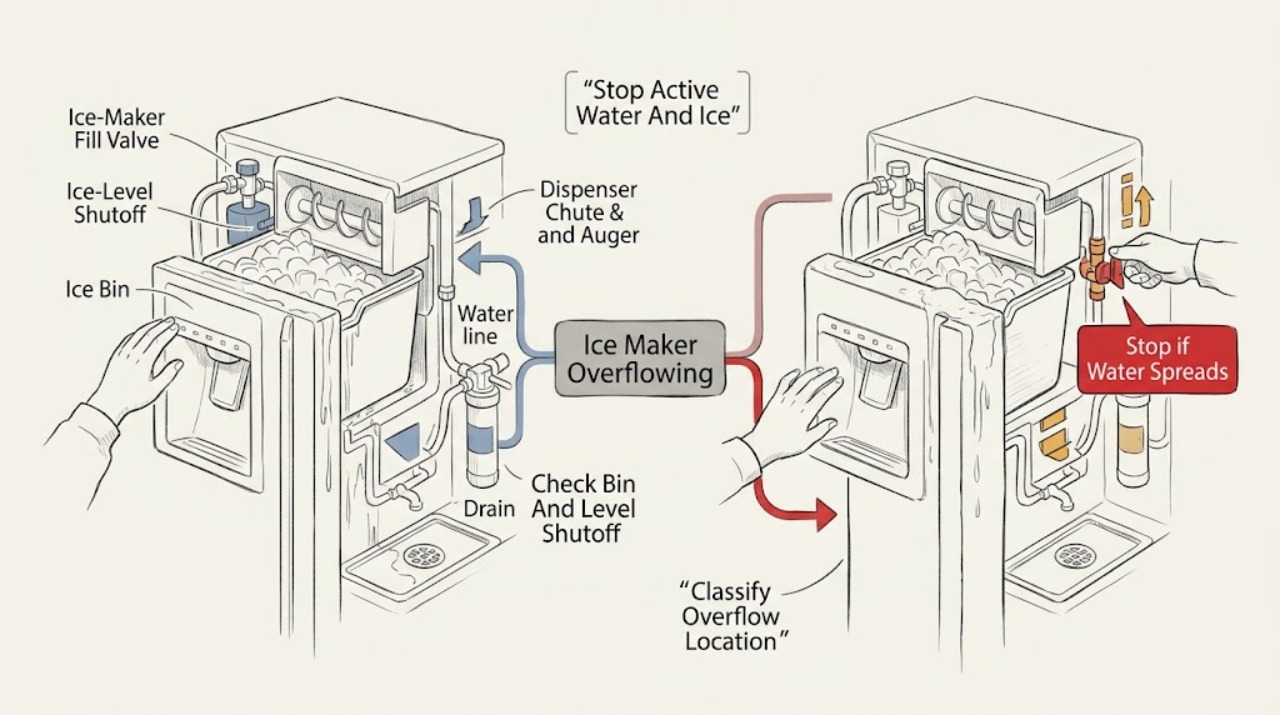
Frigidaire Ice Maker Overflowing: Stop the Water and Separate Fill, Bin, and Meltwater Causes
If water is still entering the ice maker or pooling around the refrigerator, turn the ice maker off using the exact model's control or raise its wire signal arm if that is the documented control, then close the refrigerator's water shutoff from a safe, dry location. Do not keep dispensing or run an ice-making test while water is escaping.