
Hamilton Beach appliance guidance
Hamilton Beach Blender Repair Guides
Troubleshooting and repair guidance for published Hamilton Beach Blender problems, symptoms, and maintenance questions.
Published Hamilton Beach Blender guides
Choose the guide whose symptom or condition most closely matches what you are seeing.
-
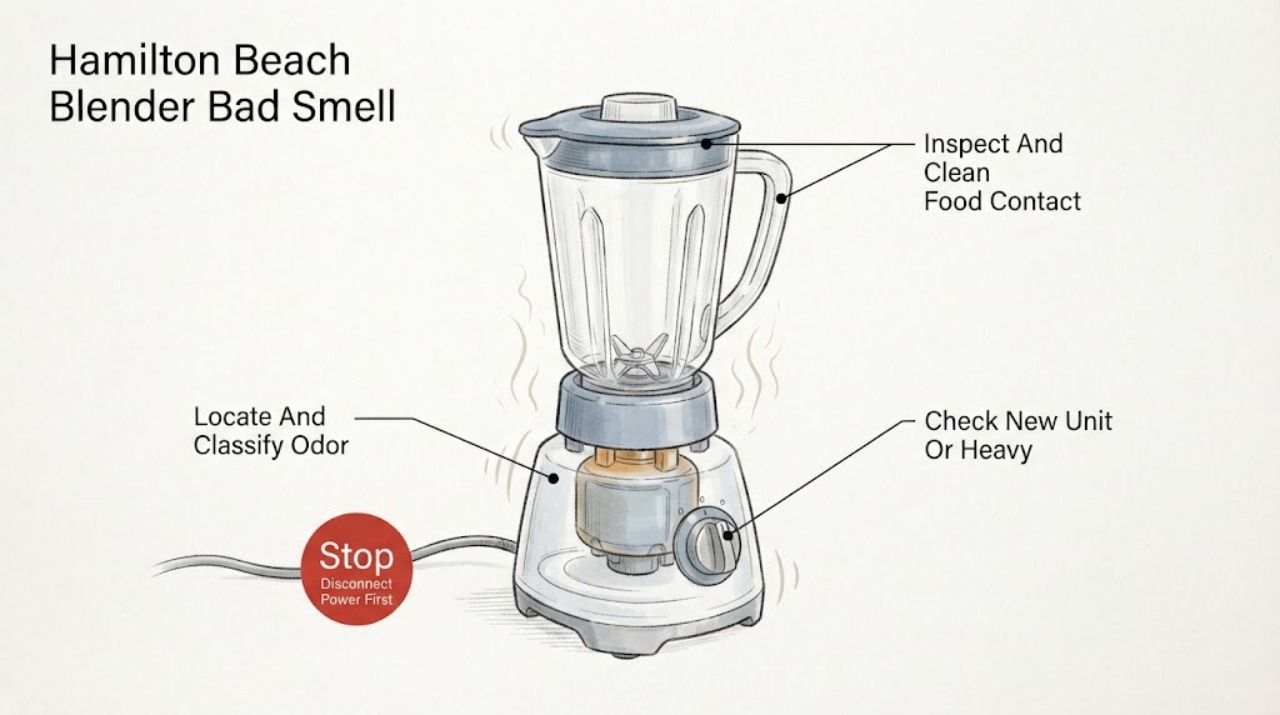
Hamilton Beach Blender Bad Smell
First identify where the smell comes from and when it appears. A food or sour odor usually stays in the jar, lid, gasket, collar, or cutting assembly after ingredients; clean and dry only the removable parts as the exact Use & Care guide permits, and store the jar without its lid if the smell is confined to the container.
-
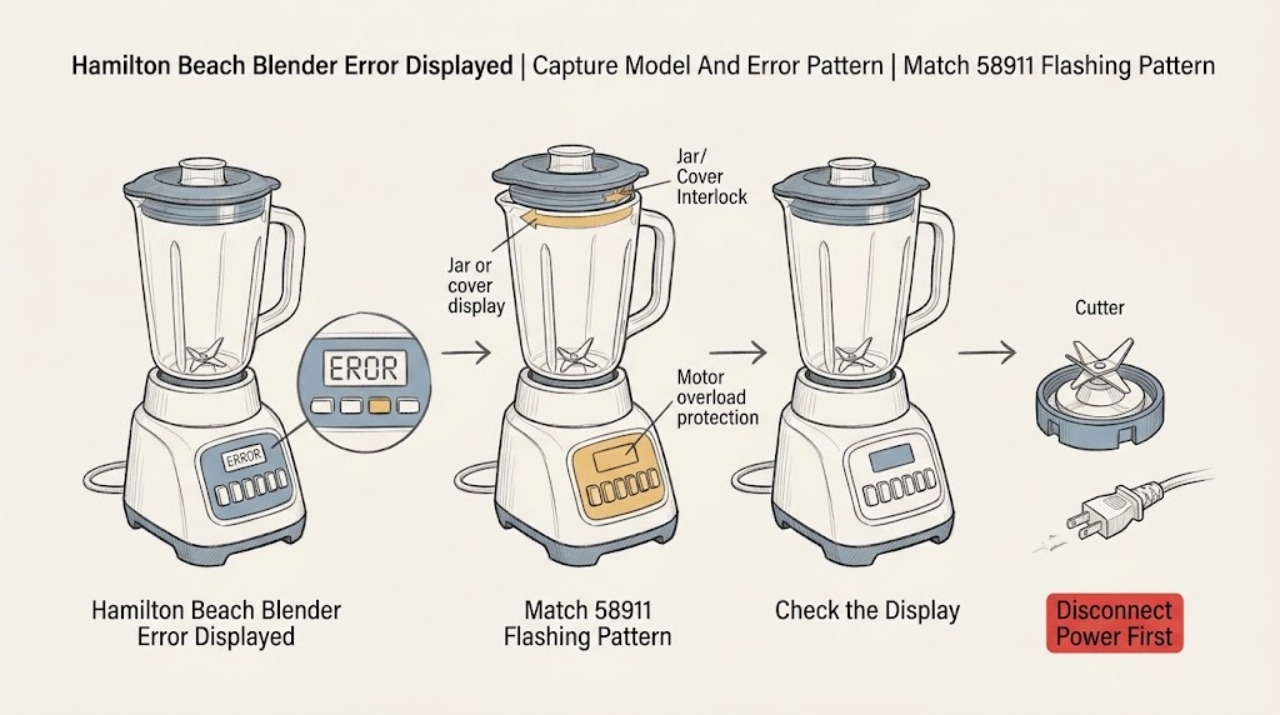
Hamilton Beach Blender Error Displayed: Match the Pattern to the Model
Do not apply a generic Hamilton Beach error-code list. Read the model, type, and series from the rating label on the bottom or rear of the motor housing, then photograph or write down the exact text, button names, and flashing sequence before pressing anything else.
-
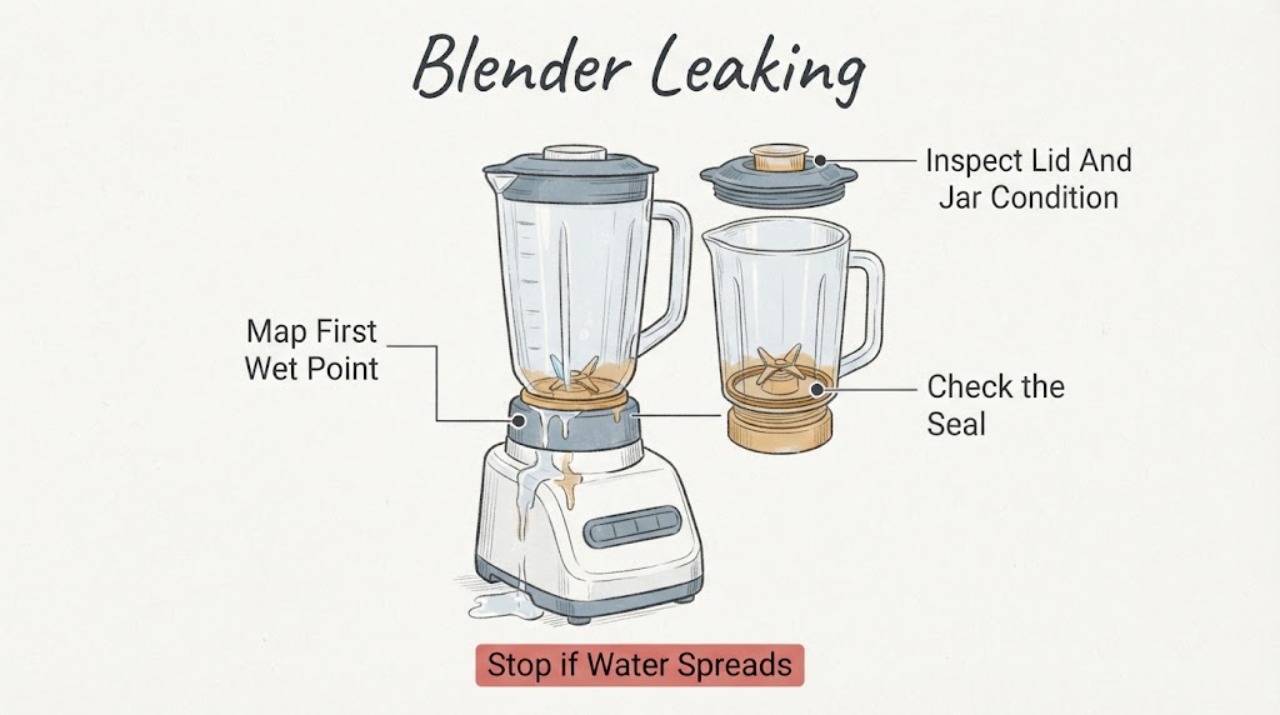
Hamilton Beach Blender Leaking
If a Hamilton Beach blender is leaking, unplug it and identify the first wet point before running it again: the lid or filler cap, the jar seam or collar, the bottom around the cutting assembly, a personal jar, or the motor base. Hamilton Beach's use-and-care troubleshooting lists a loose cutting assembly, a lid or filler cap that is not seated, and a gasket that is damaged, twisted, or missing as leak causes.
-
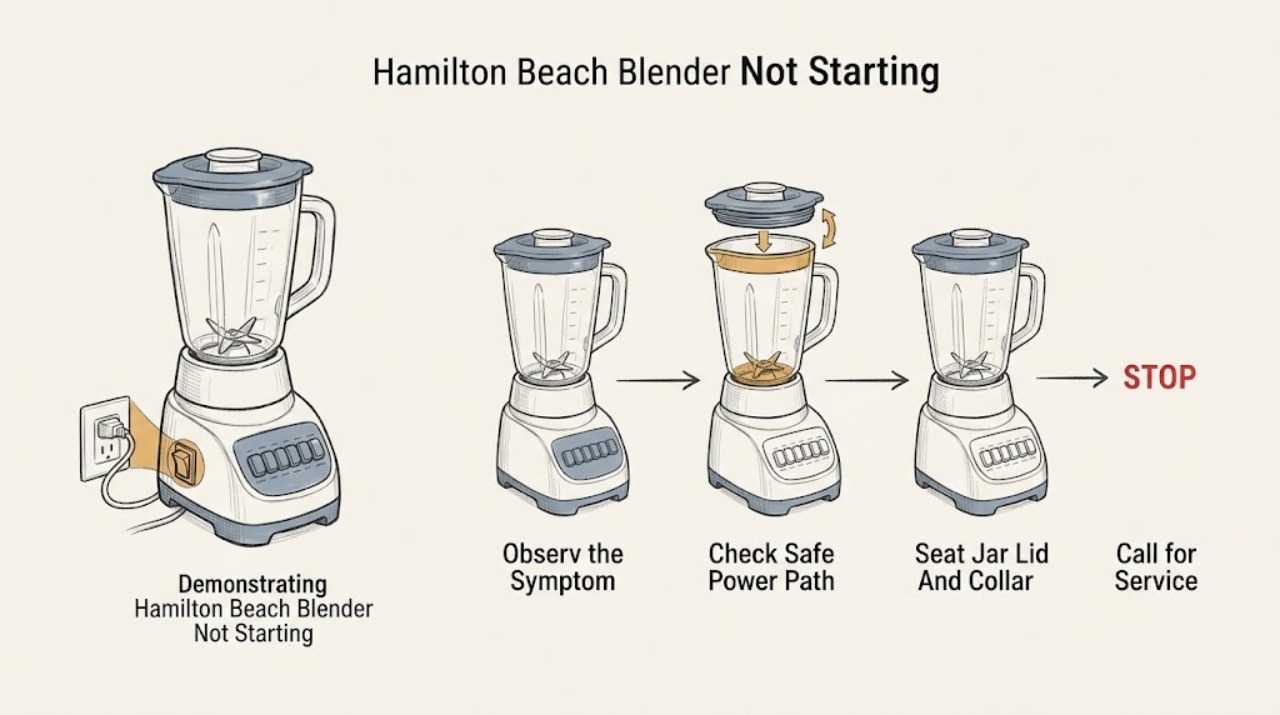
Hamilton Beach Blender Not Starting: Check Power, Jar Seating, and Thermal Protection
Start with the symptom: a completely dark blender points to the power switch, plug, outlet, fuse, or breaker, while an illuminated control that will not run points first to model-specific jar, collar, lid, or control conditions. Hamilton Beach's consumer Use & Care guidance says the jar must be securely seated and the lid secured before blending; some models also stop after overheating and document unplugging for about 15 minutes before retrying.
-
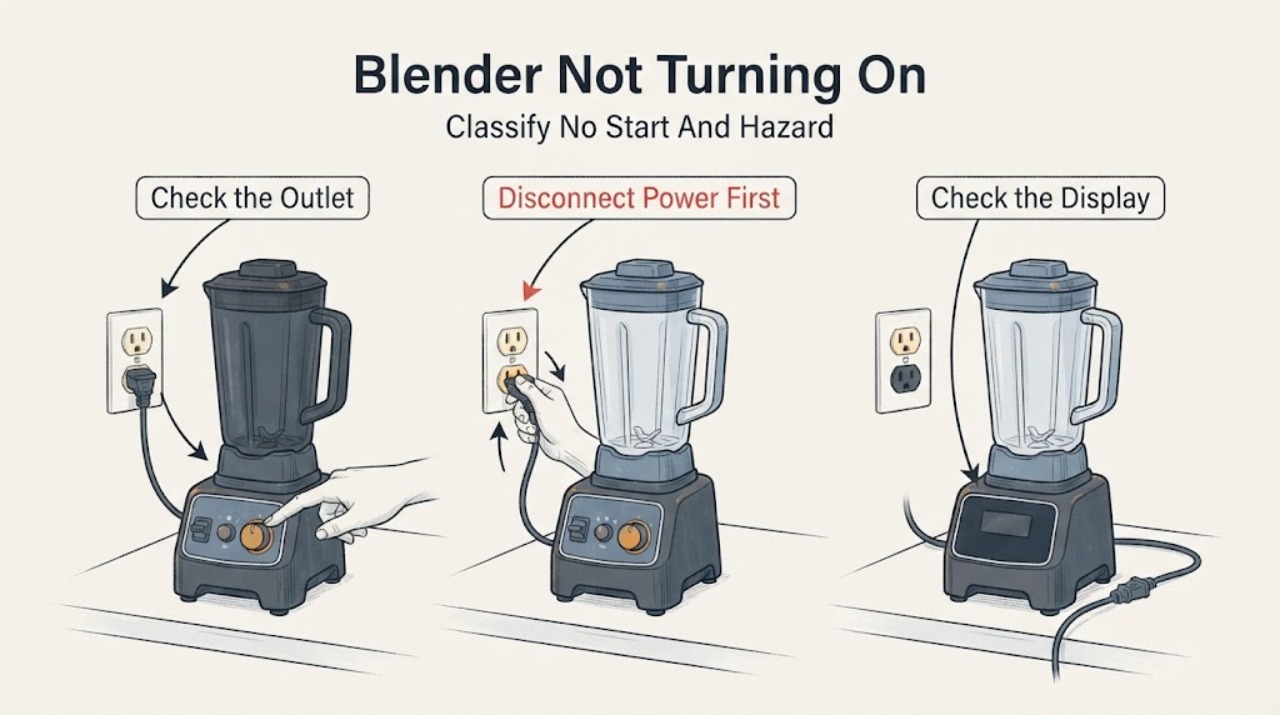
Hamilton Beach Blender Not Turning On: Check Power, Controls, and Overload Protection
Unplug the blender before handling the jar, blades, or base. First check the plug, grounded outlet, and any user-accessible power switch; Hamilton Beach manuals say a blender that fails to start should be checked for a secure plug, a tripped outlet breaker or fuse, and an OFF power switch.
-
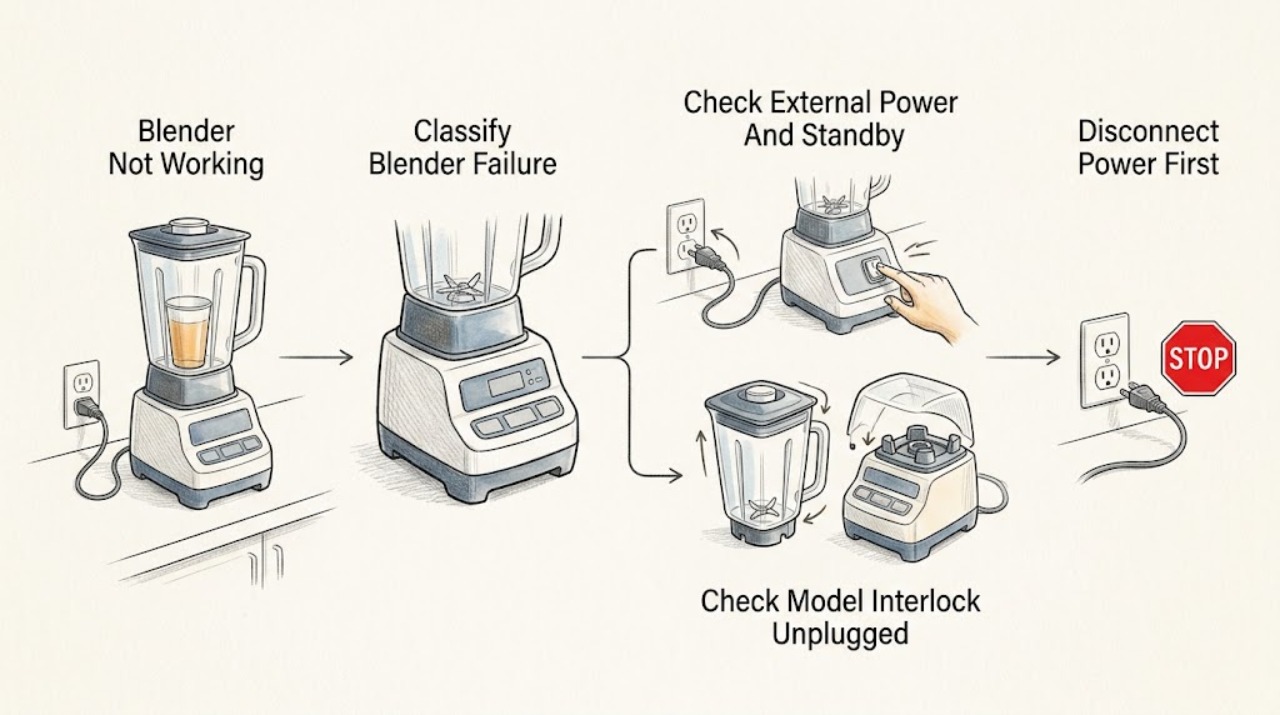
Hamilton Beach Blender Not Working: Separate Power, Interlock, and Overload Symptoms
First classify what “not working” means: a completely dark unit, a powered unit that will not start, a blender that stops while running, a jar that will not turn, or a panel that flashes or remains unresponsive. Record the exact model, type, and series before applying a procedure.