
Hotpoint appliance guidance
Hotpoint Freezer Repair Guides
Troubleshooting and repair guidance for published Hotpoint Freezer problems, symptoms, and maintenance questions.
Published Hotpoint Freezer guides
Choose the guide whose symptom or condition most closely matches what you are seeing.
-
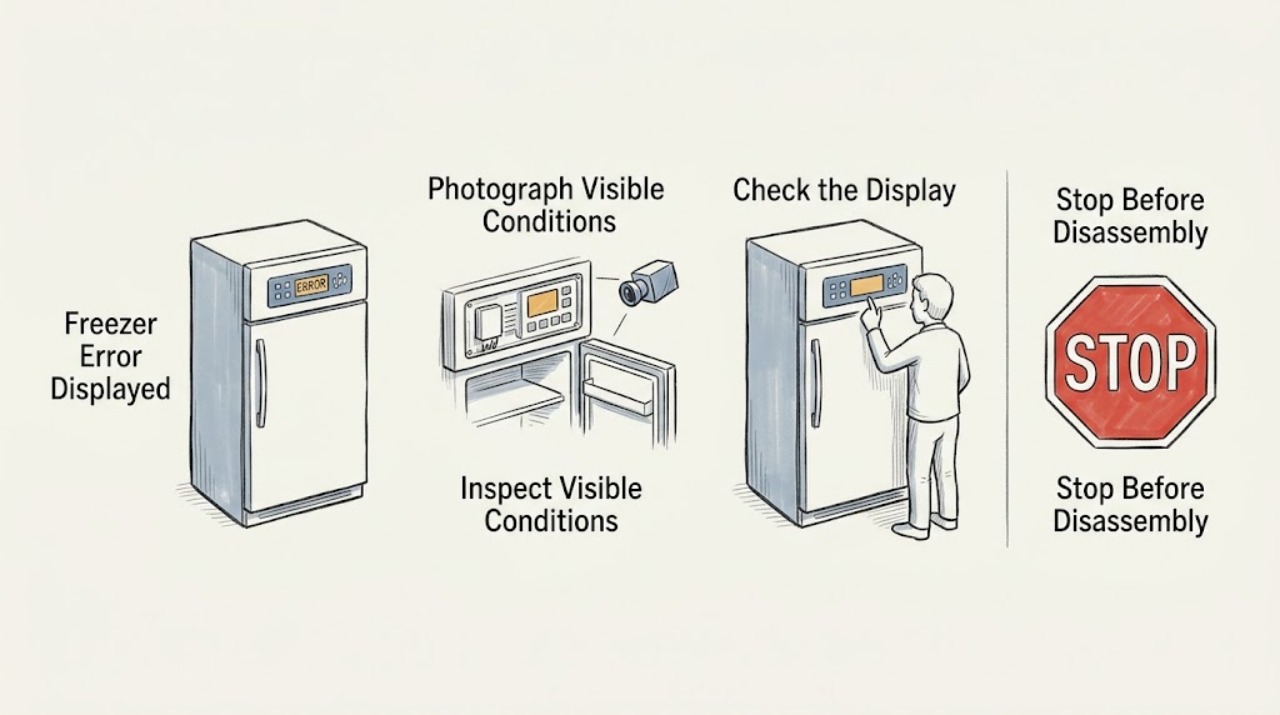
Hotpoint Freezer Error Displayed: Identify the Code Safely
When a Hotpoint freezer displays an error, photograph or write down the exact letters, number, and flashing-light pattern before changing anything. Hotpoint's published freezer list includes E2 for a freezer sensor fault, E5 for a freezer defrost sensor fault, E6 for a control/display fault, E7 or E8 for an environmental-temperature sensor fault, E9 for a high-temperature alarm, and EE for an ice-maker circuit fault when fitted.
-
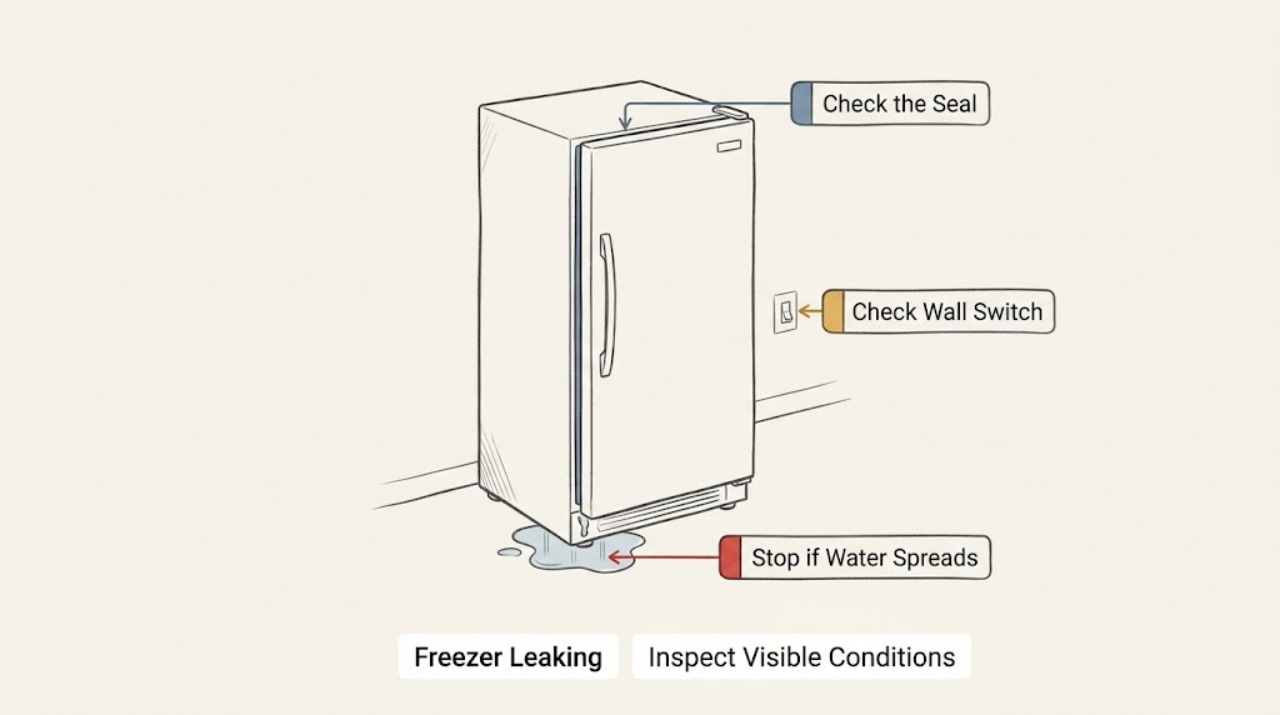
Hotpoint Freezer Leaking
A Hotpoint freezer that is leaking usually needs the water source separated first: moisture on the inner base commonly points to a blocked gutter outlet or food touching the rear wall, while water at the rear can involve the defrost collection point. Switch the appliance off and disconnect power only when it is safe before repair or part work.
-
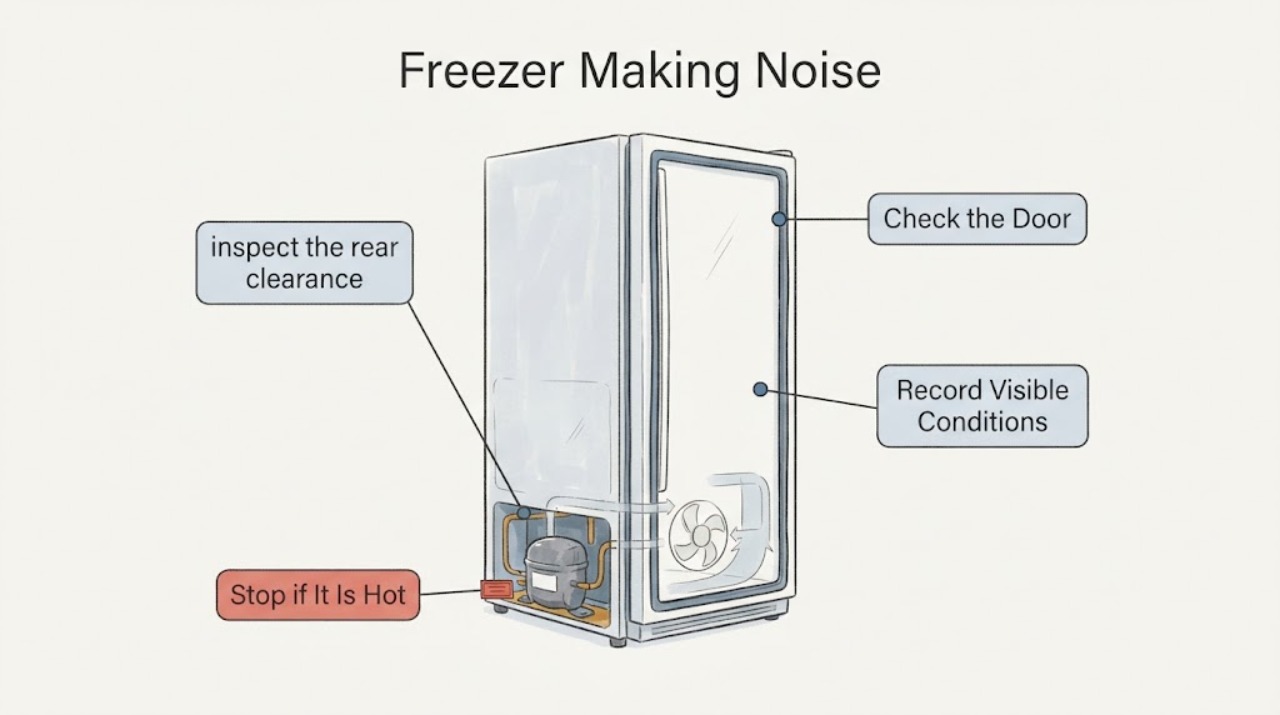
Hotpoint Freezer Making Noise
Many Hotpoint freezer sounds are normal: a compressor can buzz or hum, refrigerant can gurgle or bubble, a fan can whirr, and temperature changes can cause brief cracking. A new or frost-free freezer may sound different from an older one.
-
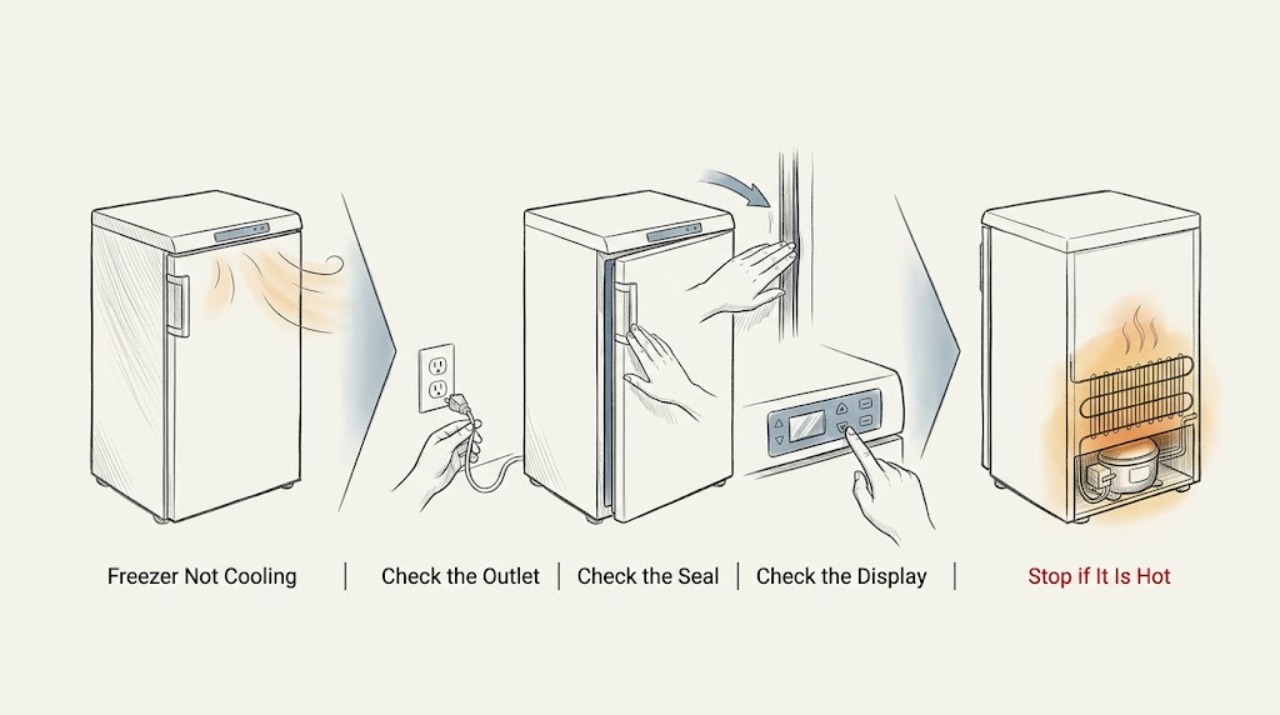
Hotpoint Freezer Not Cooling
If a Hotpoint freezer is not cooling, keep the door closed and first check the visible power connection, door seal, temperature setting, ventilation, and whether a large fresh load or recent power interruption explains the delay. Hotpoint's general guidance uses -18 °C or colder as the safe freezer temperature for applicable models; use a suitable appliance thermometer and the exact manual rather than guessing from cabinet feel.
-
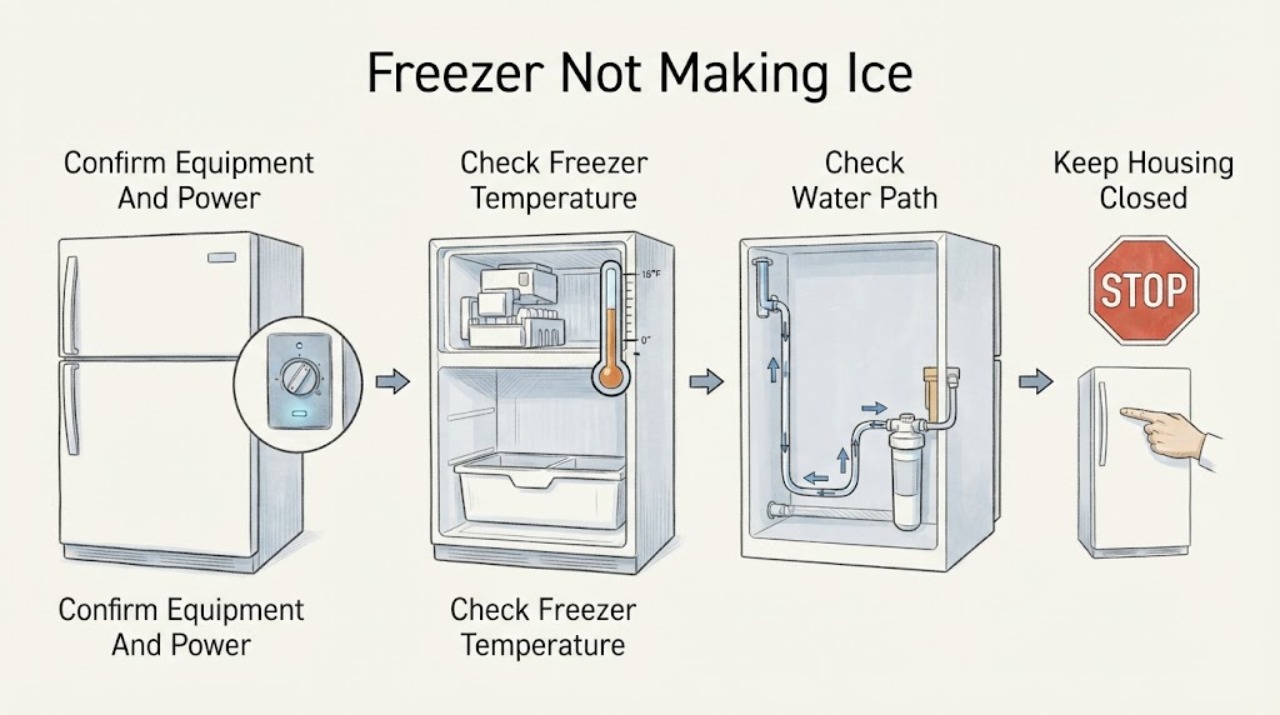
Hotpoint Freezer Not Making Ice: Check Power, Temperature, Water, and the Ice Bin
First confirm that the Hotpoint freezer model actually has an installed icemaker and that its control is On; some models require a separately installed kit. Then check that the freezer is cold enough, the water supply and any filter are flowing, and the ice bin or feeler arm is not blocked by clumped ice.
-
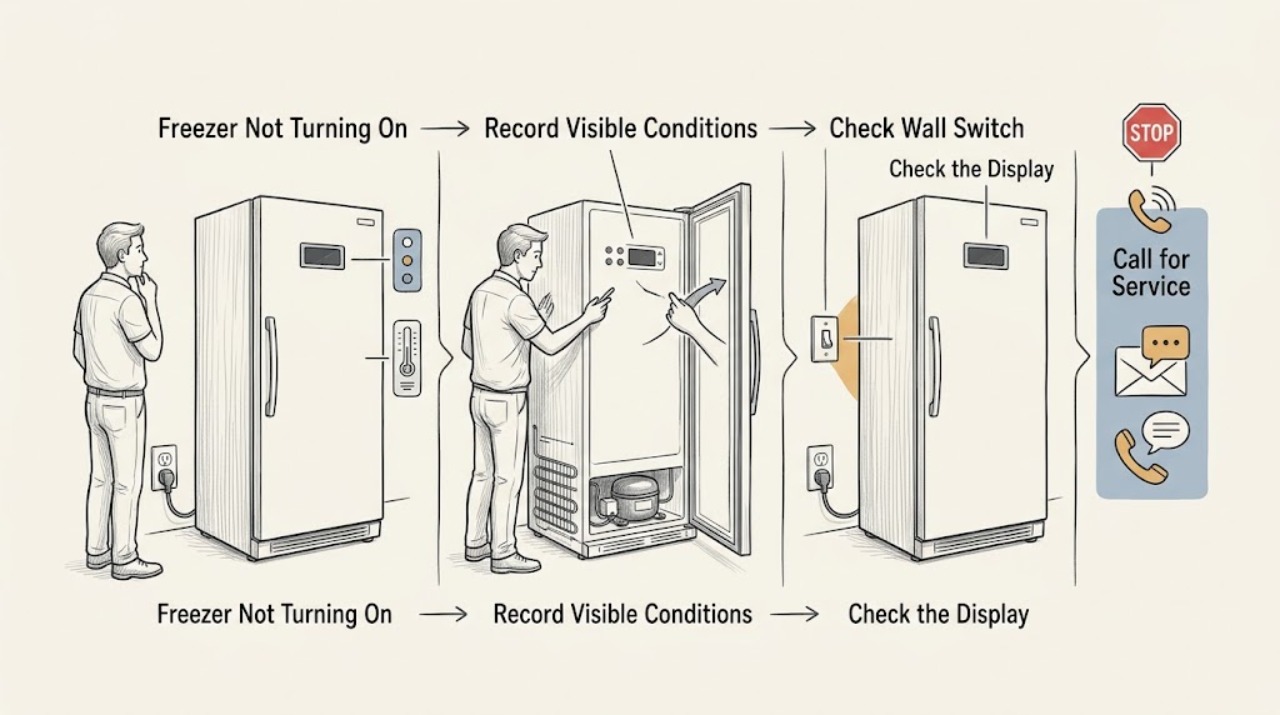
Hotpoint Freezer Not Turning On: Safe Checks
Keep the Hotpoint freezer door closed and protect the food before repeated checks. From a dry, safe position, confirm the plug is firmly seated, the supply switch is on, the accessible outlet works, and the fuse or breaker has not tripped.
-
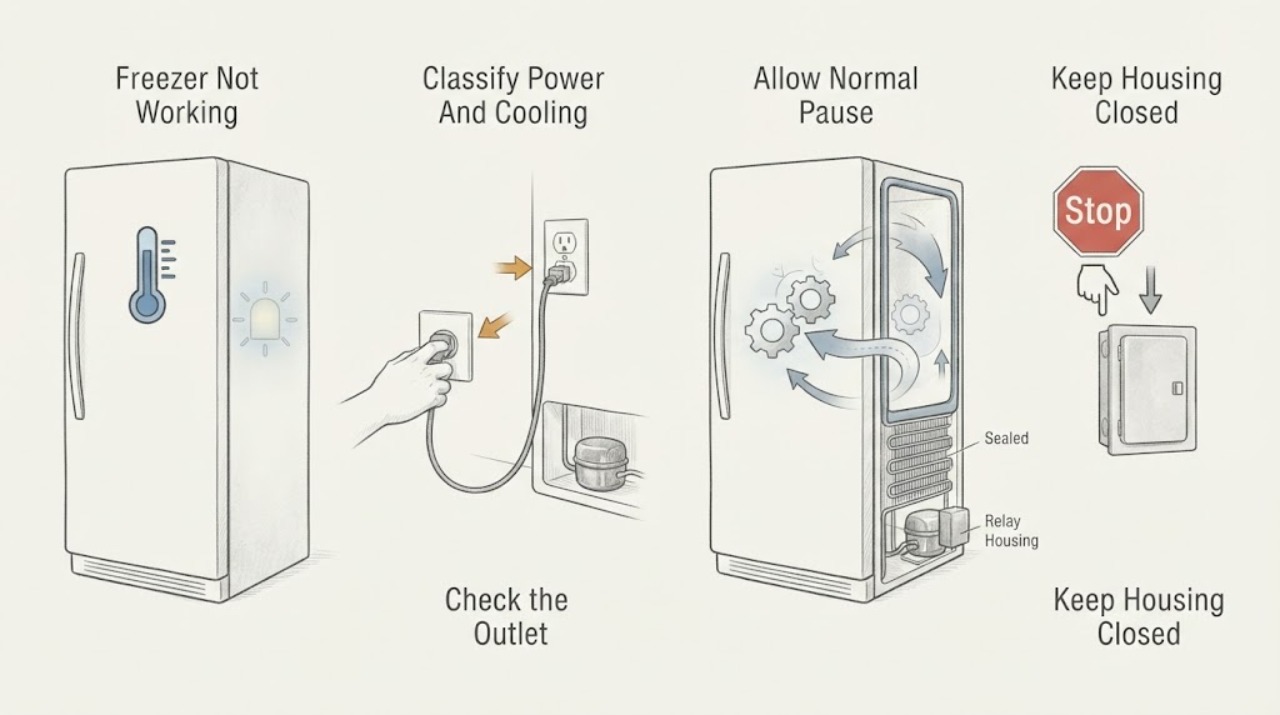
Hotpoint Freezer Not Working: Check Power, Controls, Defrost, and Cooling Safely
Start by separating a freezer with no power from one that has lights but is not cooling. Check the outlet and plug only from a safe, dry position, confirm the temperature control was not set to Off or a demo mode, and listen for the normal pause of a defrost cycle or the short delay after a power interruption.
-
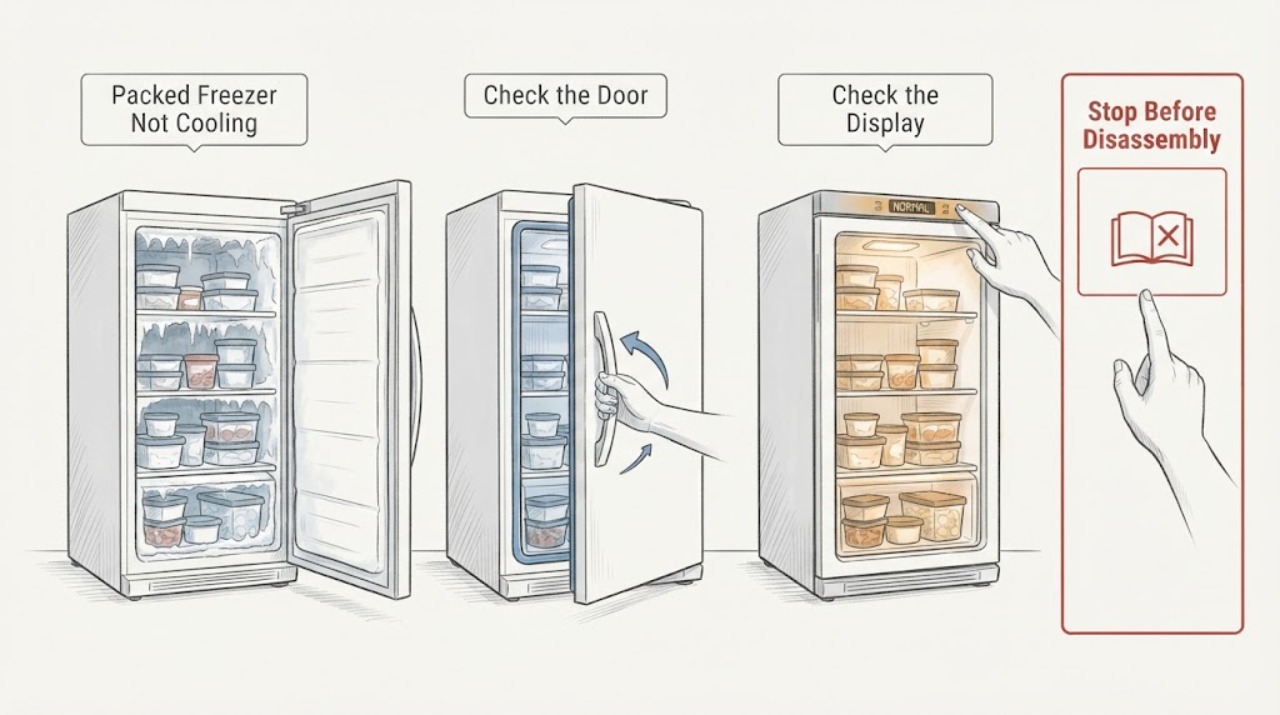
Hotpoint HTS18GBSBRWW Packed Freezer Not Cooling: Protect Food Before Checking Airflow
If a Hotpoint HTS18GBSBRWW freezer is packed with food and items thawed, protect the food before repeatedly opening the door or changing controls. Keep the door closed, separate packages, and check each item for ice crystals or a temperature of 40°F/4°C or below; USDA guidance says food meeting either condition may be safely refrozen or cooked, while food above 40°F for more than two hours should be discarded.
-
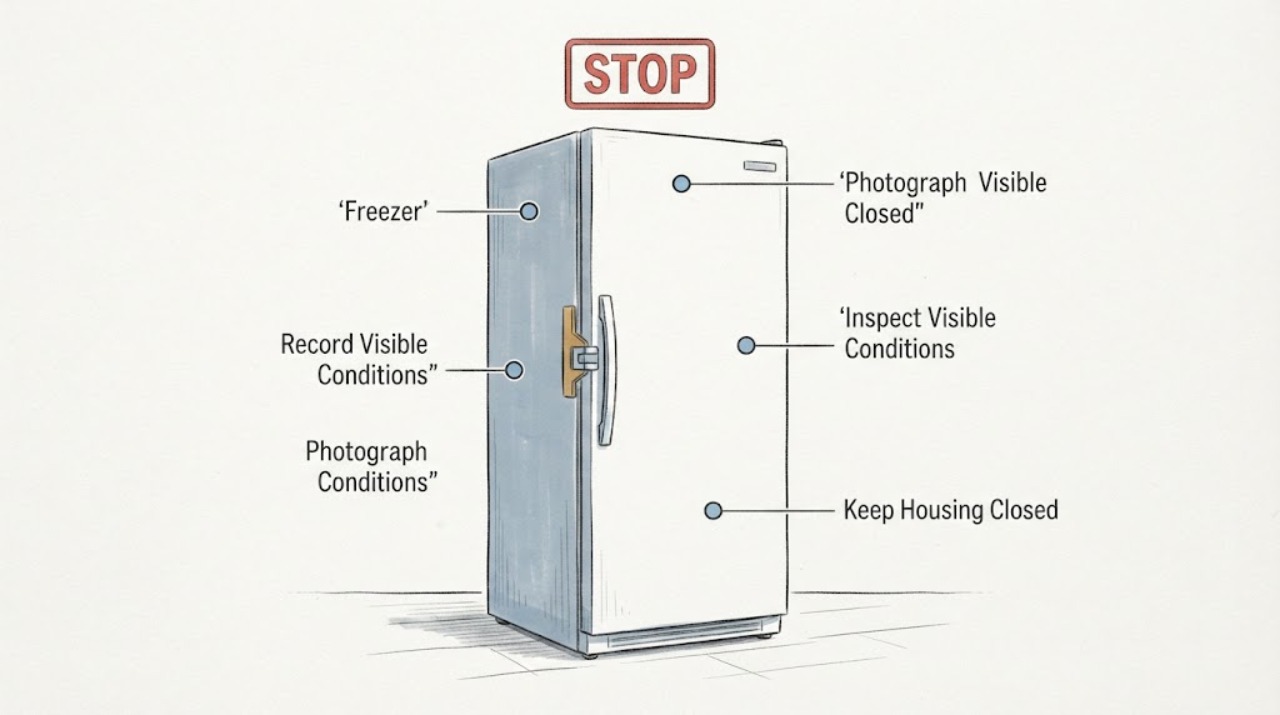
Hotpoint UH6F1CW1 Freezer: What a Constant High-Pitched Noise Means
A constant high-pitched sound on a second-hand Hotpoint UH6F1CW1 should not be labelled a failed compressor from sound alone. Hotpoint lists compressor hum, refrigerant circulation, fan movement and some defrost sounds as normal, but a continuous new tone that changes when the door opens deserves a fan, frost, clearance and cooling check.
-
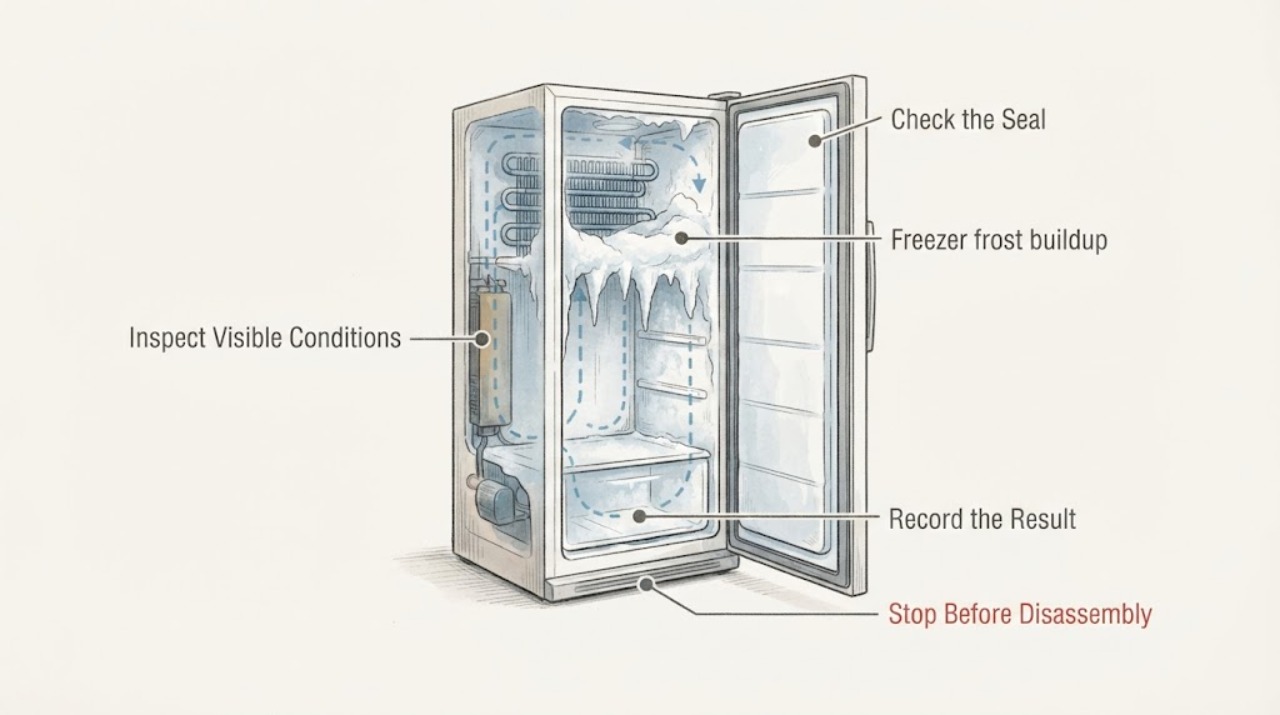
How to Stop Frost Buildup in a Hotpoint Freezer
Frost in a Hotpoint freezer usually points to moist room air entering through a door that is not sealing or closing, blocked airflow, or a defrost condition that depends on the model. First identify whether the cabinet is frost-free, then check the closure and airflow without disturbing the sealed refrigeration tubing.