
Repair problem
Blowing Cold Air Troubleshooting Guides
Published FixGraph guidance for diagnosing and responding to blowing cold air.
Matching published guides
Choose a guide that matches the service, equipment, and conditions you are seeing.
-
Amana furnace blowing cold air: What to Check and What to Do Next
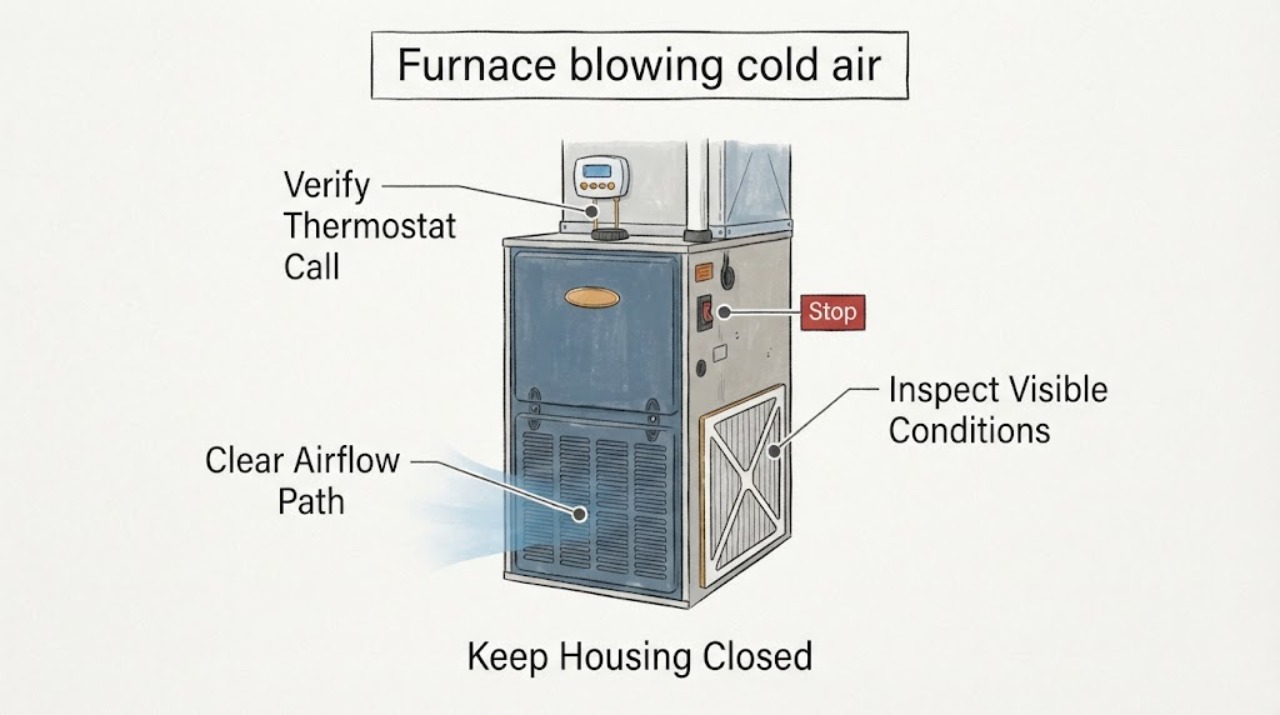
An Amana furnace can blow cool air briefly at the start of a cycle or while the blower is circulating air, but air that stays cold while the thermostat calls for heat means the heating sequence is not completing. First verify that the thermostat is calling for heat and the fan is set to Auto, then check the user-accessible filter and supply-air pattern without opening the furnace.
-
Carrier furnace blowing cold air: What to Check and What to Do Next
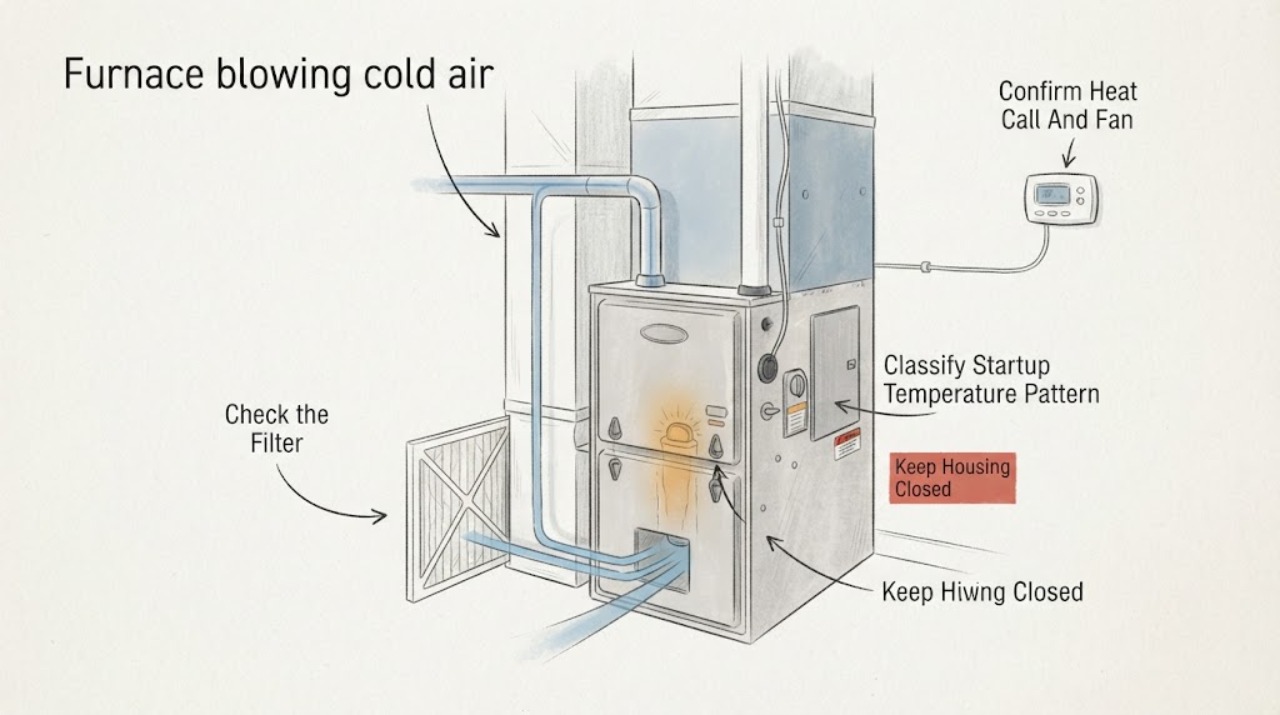
A Carrier furnace can feel cold briefly while its heat exchanger warms, or it can circulate room-temperature air when the thermostat fan is set to On. If the air stays cold, becomes cold after the furnace starts, or arrives with weak airflow or repeated cycling, check the thermostat call, the user-accessible filter, registers, returns, and any reachable exterior intake or exhaust for blockage.
-
Furnace blowing cold air because the burner does not stay lit: What to Check and What to Do Next
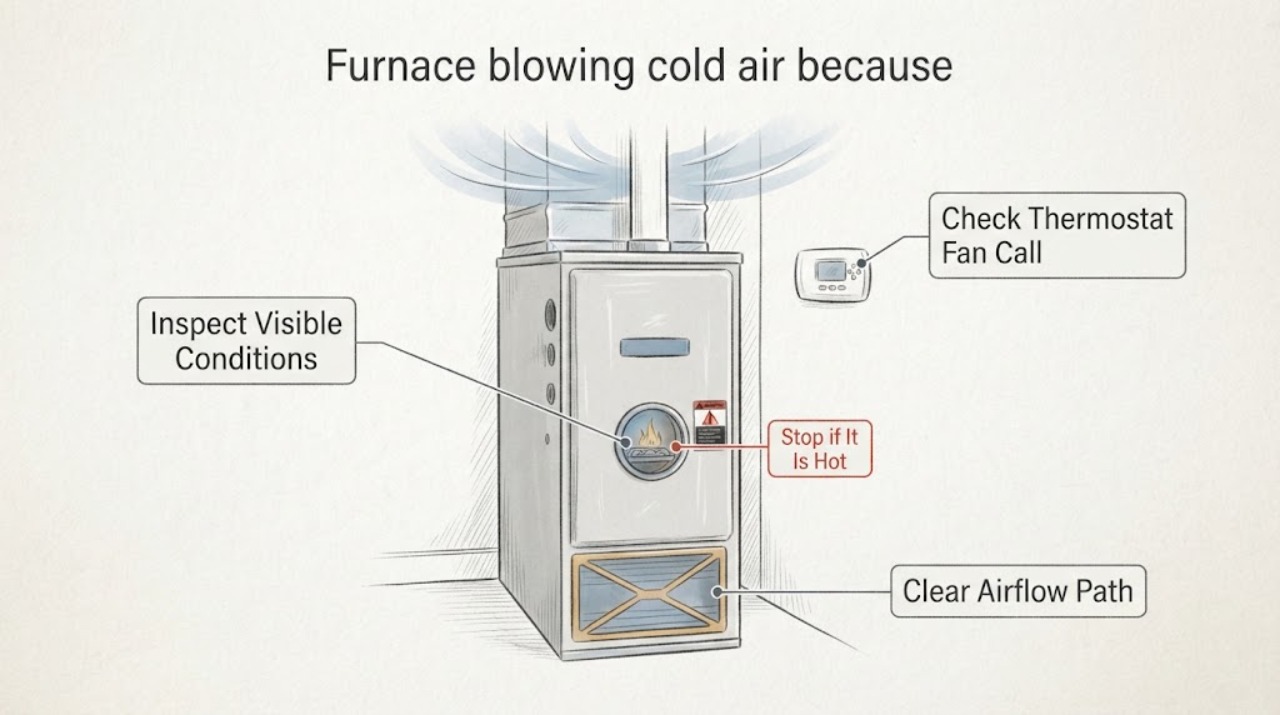
If a fuel-burning furnace lights its burner and then shuts it off while the blower sends cold air, the shutdown may be a safety response rather than a simple thermostat problem. A dirty or restricted filter can cause overheating and a limit switch to stop the burner; a flame sensor or pilot-safety problem can shut off fuel when flame is not proven; and burners, ignition, gas supply, controls, or venting can also be involved.
-
Furnace Blowing Cold Air Blower Runs: What to Check and What to Do Next
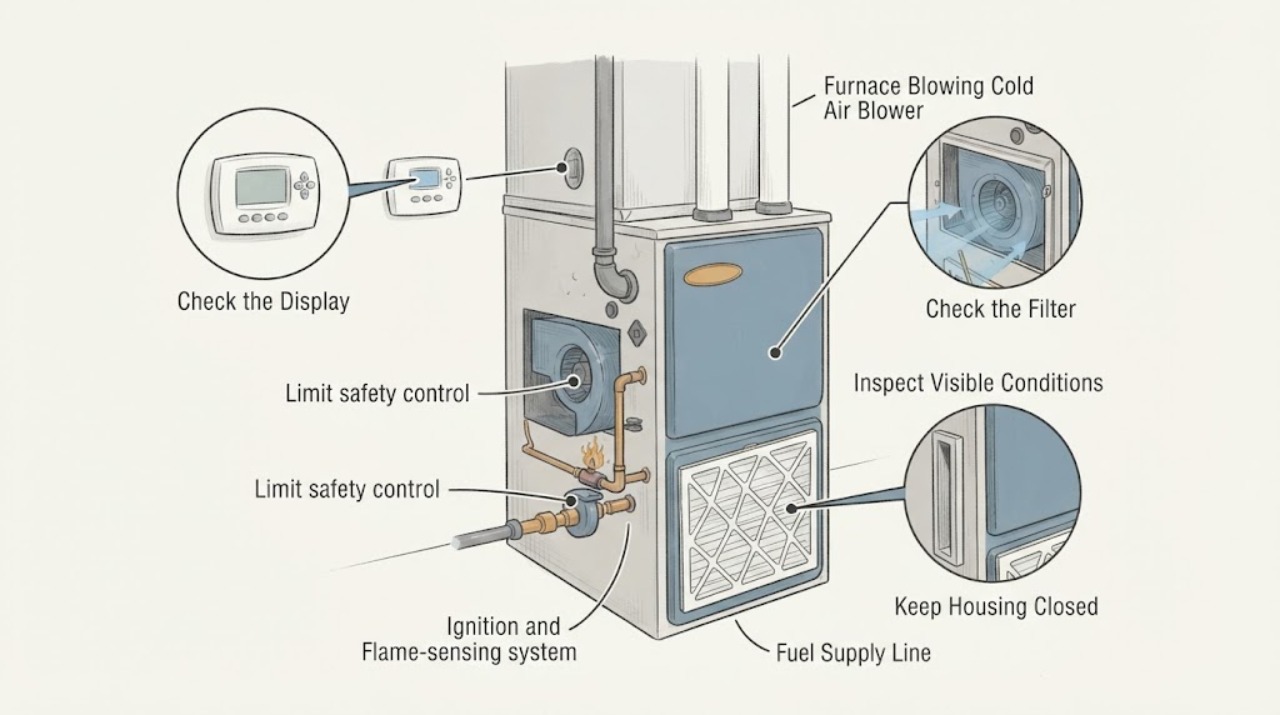
If the furnace blower runs but the registers feel cold, first check the thermostat mode and fan setting. Fan set to On can circulate room-temperature air when the burners are off, and a short blower run at startup or after shutdown can be normal while the heat exchanger warms or residual heat is distributed.
-
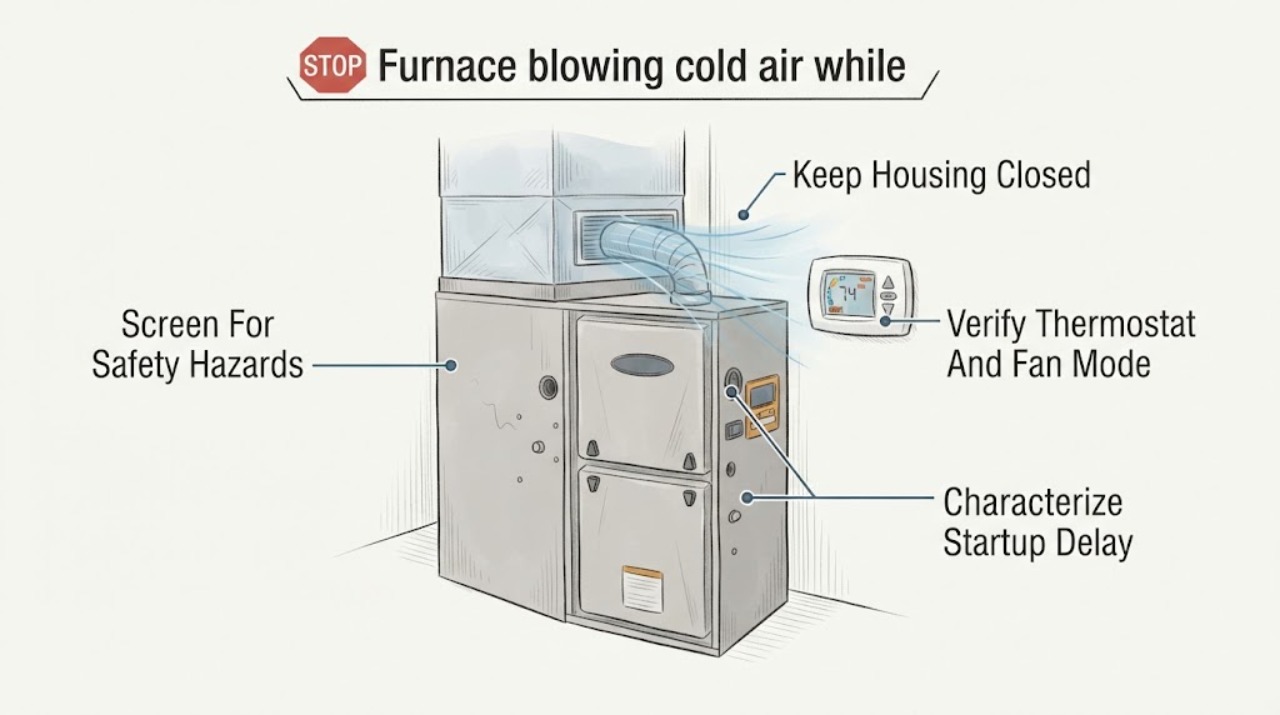
Furnace blowing cold air while the thermostat calls for heat: What to Check and What to Do Next
A furnace can blow room-temperature air even while the thermostat calls for heat when the fan is set to On, when the blower is in its normal startup or shutdown delay, or when the burners are being stopped by an airflow or safety control. First check that the thermostat is on Heat, the set temperature is above the room temperature, and the fan is on Auto; an On setting can circulate unheated air.
-
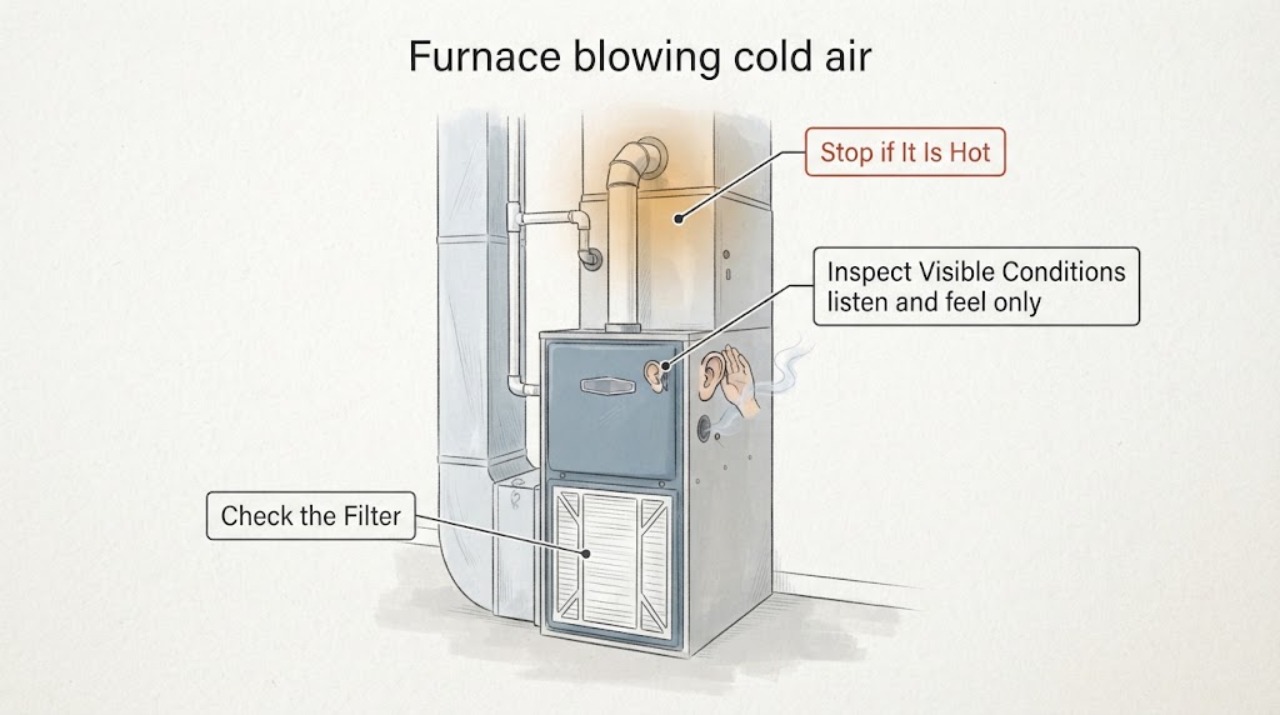
Furnace blowing cold air: What to Check and What to Do Next
A furnace can blow cool air briefly while a heat cycle starts, or continuously when the thermostat is calling for heat but the burners are not heating. First check the thermostat mode, setpoint, and fan setting, then observe one normal cycle, the accessible filter, and the open supply and return vents.
-
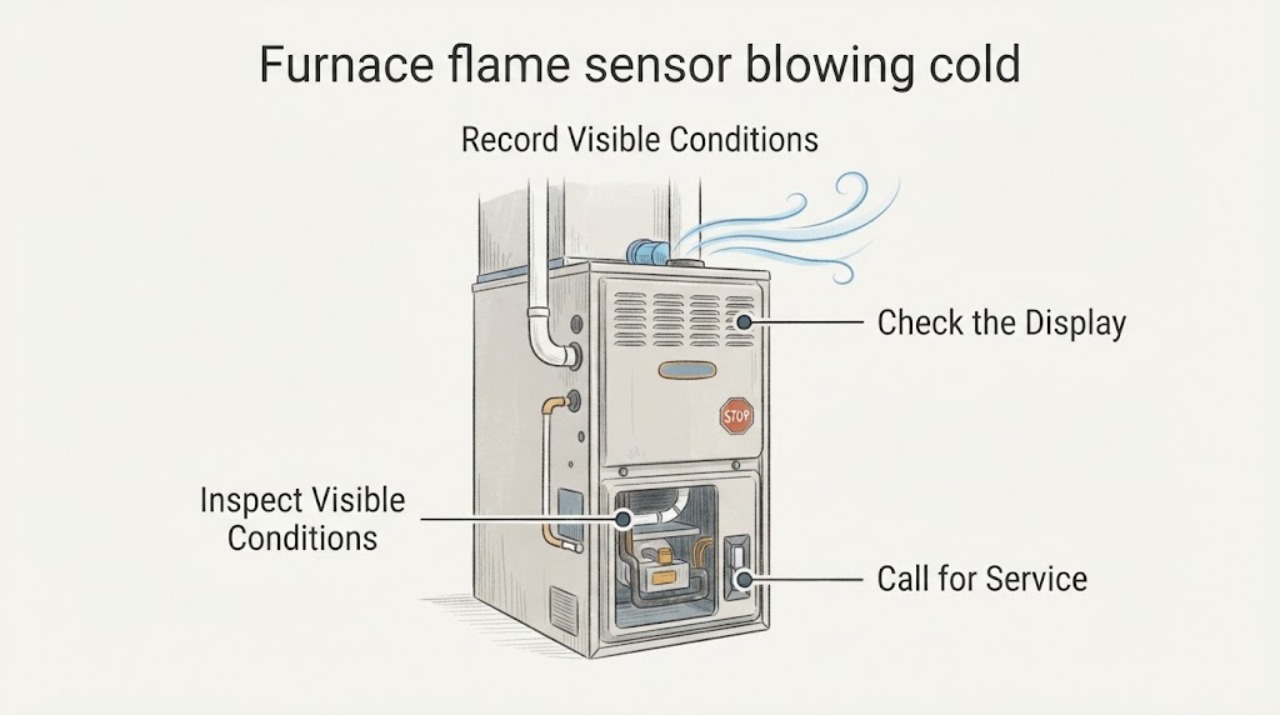
Furnace flame sensor blowing cold air: What to Check and What to Do Next
A furnace that starts and then blows cold air may be losing the burner after the ignition sequence, but thermostat settings, airflow, a limit control, fuel delivery, venting, or another safety control can look similar. Observe only from normal safe positions: note the call for heat, burner and blower timing if visible without opening the unit, filter condition, and any fault indicator.
-
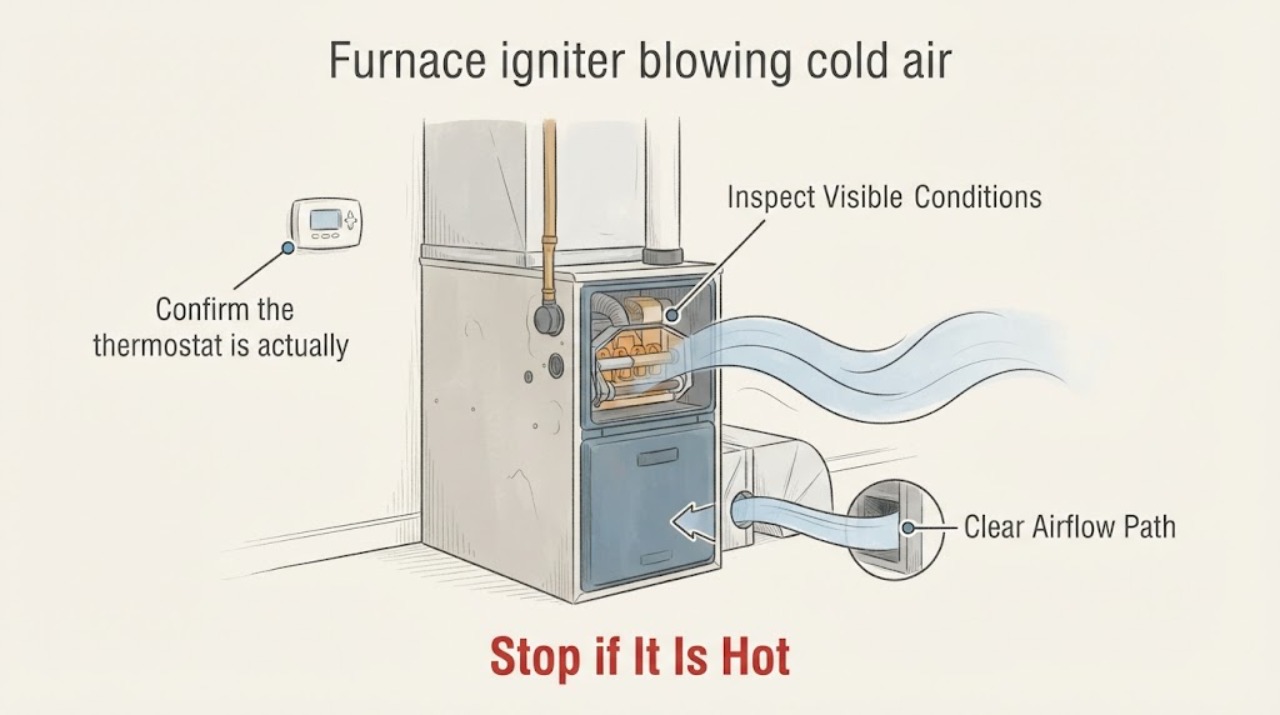
Furnace igniter blowing cold air: What to Check and What to Do Next
If a gas furnace blows cold air and the igniter is suspected, do not open the burner compartment, touch the igniter, test live voltage, clean a flame sensor, or replace a gas or flame component. From outside the cabinet, confirm a heat call, note whether the blower runs before any warm air, check the accessible filter and supply registers, and record any status light pattern or unusual sound.
-
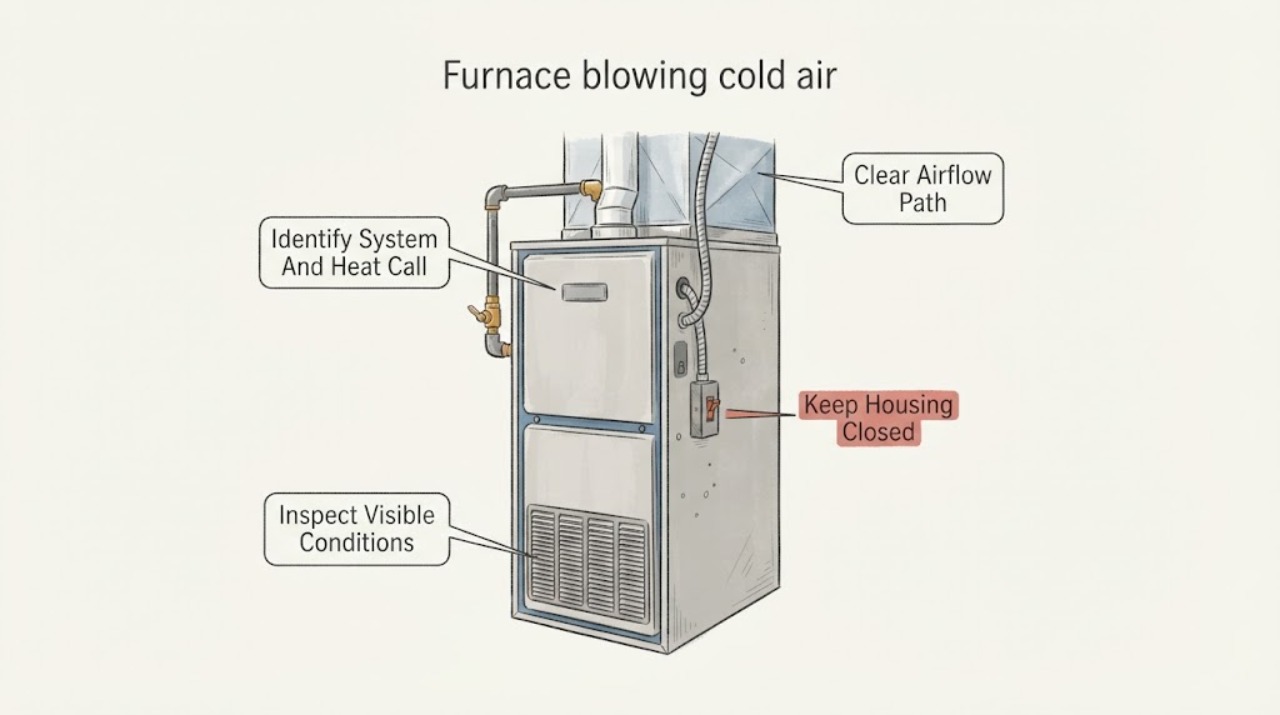
Goodman furnace blowing cold air: What to Check and What to Do Next
A Goodman furnace can blow cool air when the thermostat is not actually calling for heat, the fan is set to run independently, or the blower is completing a normal start-up or post-cycle period. If a valid heat call produces no warmth at all, or the air becomes warm and then turns cold, the furnace may be stopping its heating sequence because of an airflow, venting, condensate, ignition, flame-sensing, control, or other equipment problem.
-
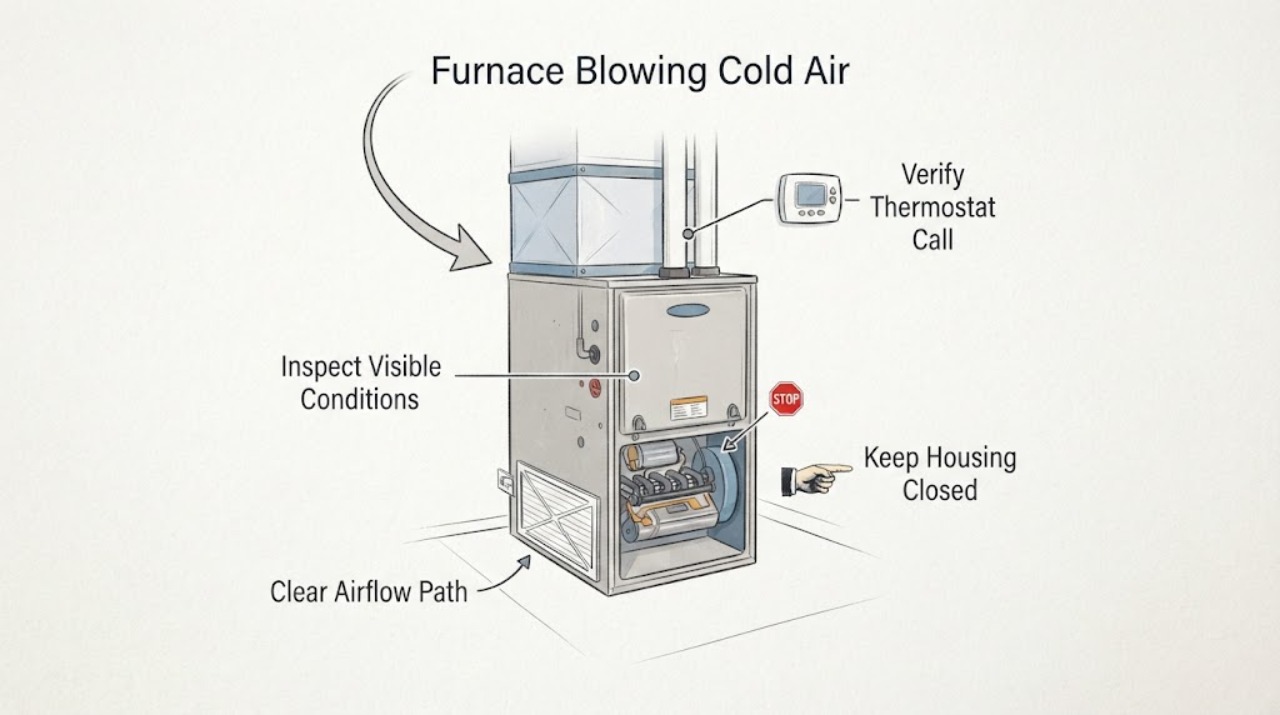
Lennox Furnace Blowing Cold Air: What to Check and What to Do Next
A brief cool stream when a Lennox furnace first starts can be air that was sitting in the ducts, but air that stays cold, turns cold after the burners light, or returns repeatedly means the heat cycle is not completing or the heat is not reaching the rooms. First confirm the thermostat is in Heat, the target is above room temperature, and the fan is set to Auto rather than On.
-
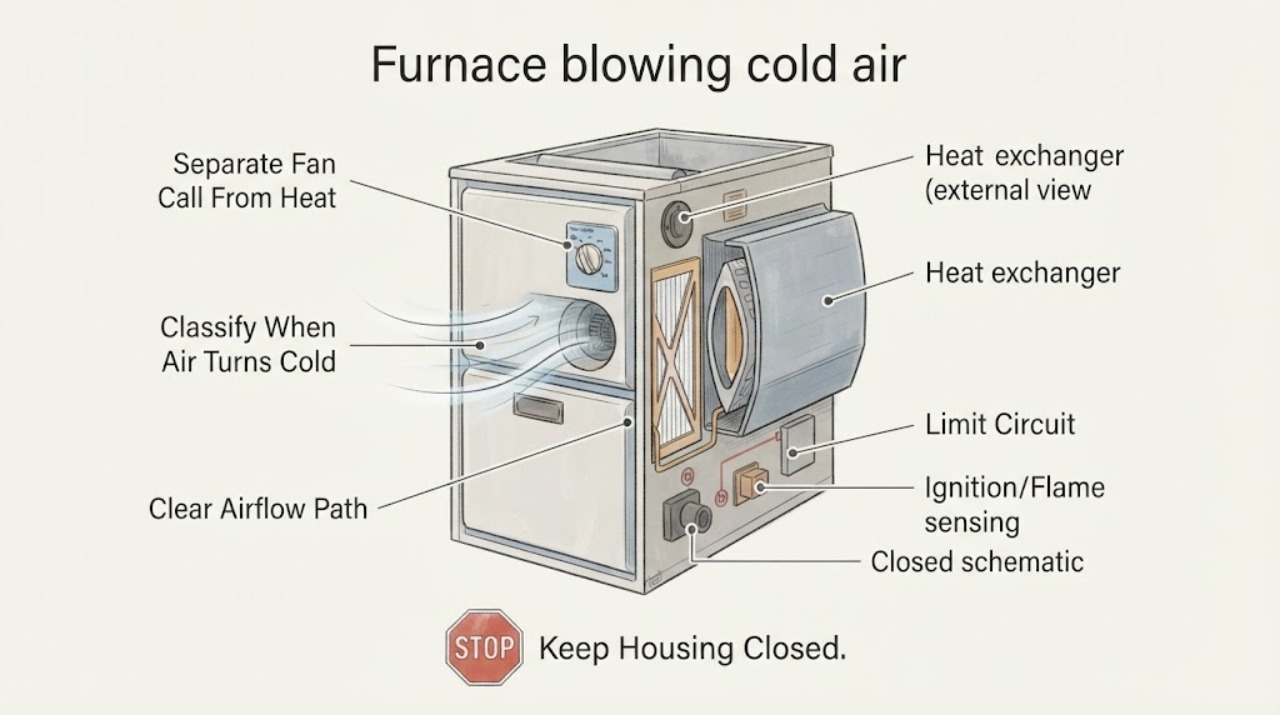
Rheem furnace blowing cold air: follow the heat-call sequence
First decide whether the air is cold only because the Rheem thermostat fan is set to On, or because a heat call is failing. Set the thermostat to Heat and Fan Auto, then observe one call from a safe location: a short room-temperature period before warm air can be normal, but air that stays cold, becomes cold after ignition, or follows a repeated shutdown is a fault pattern.
-
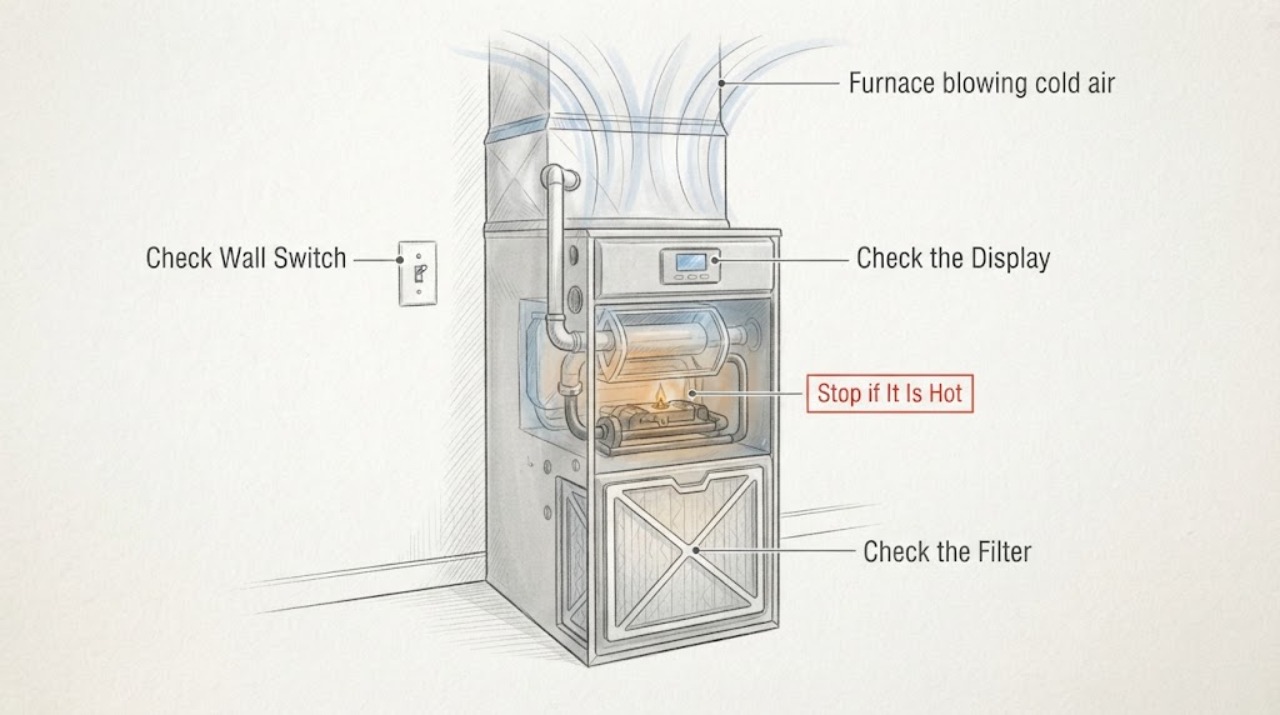
Trane furnace blowing cold air: What to Check and What to Do Next
A Trane furnace can blow cool air when the thermostat is set to Fan On, is in the wrong mode, or is misreading the room; when a dirty filter restricts airflow and trips an overheat limit; when a high-efficiency furnace’s condensate drain blocks ignition; or when fuel, ignition, burner, flame-sensing, blower, duct, or control trouble prevents sustained heat.
-
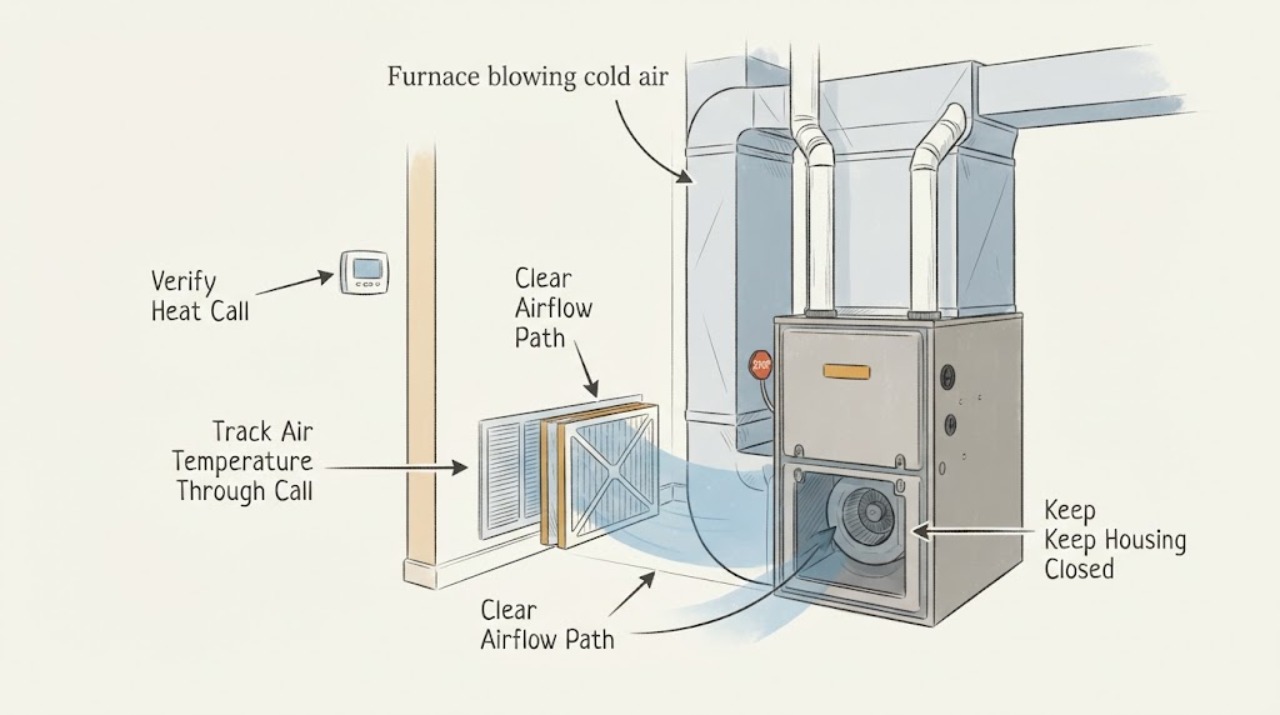
York furnace blowing cold air: What to Check and What to Do Next
First separate a brief cool period at the beginning or end of a call from air that stays cool for the whole call. York sells furnaces with single-stage, two-stage, modulating, and variable-speed features, so a startup ramp or a lower first stage is not the same as a failed heater; the air should still become warm and the room should recover.