
Repair problem
Central Air Conditioner Not Cooling Troubleshooting Guides
Published FixGraph guidance for diagnosing and responding to central air conditioner not cooling.
Matching published guides
Choose a guide that matches the service, equipment, and conditions you are seeing.
-
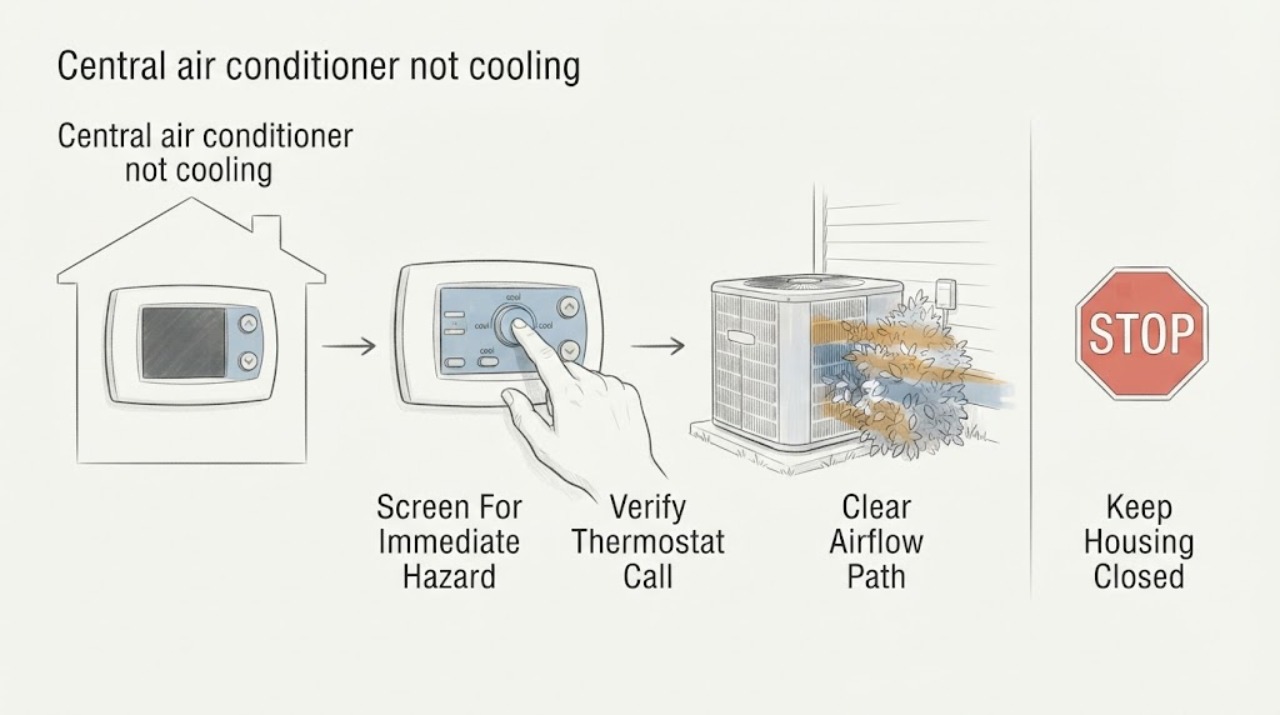
American standard central air conditioner not cooling: What to Check and What to Do Next
When an American Standard central air conditioner is not cooling, first separate a control or airflow problem from a refrigeration or outdoor-unit fault. From a dry, safe position, confirm the thermostat is on COOL with the fan on AUTO, check the air filter and open registers, and inspect the outdoor unit for leaves or other blockage without touching the equipment.
-
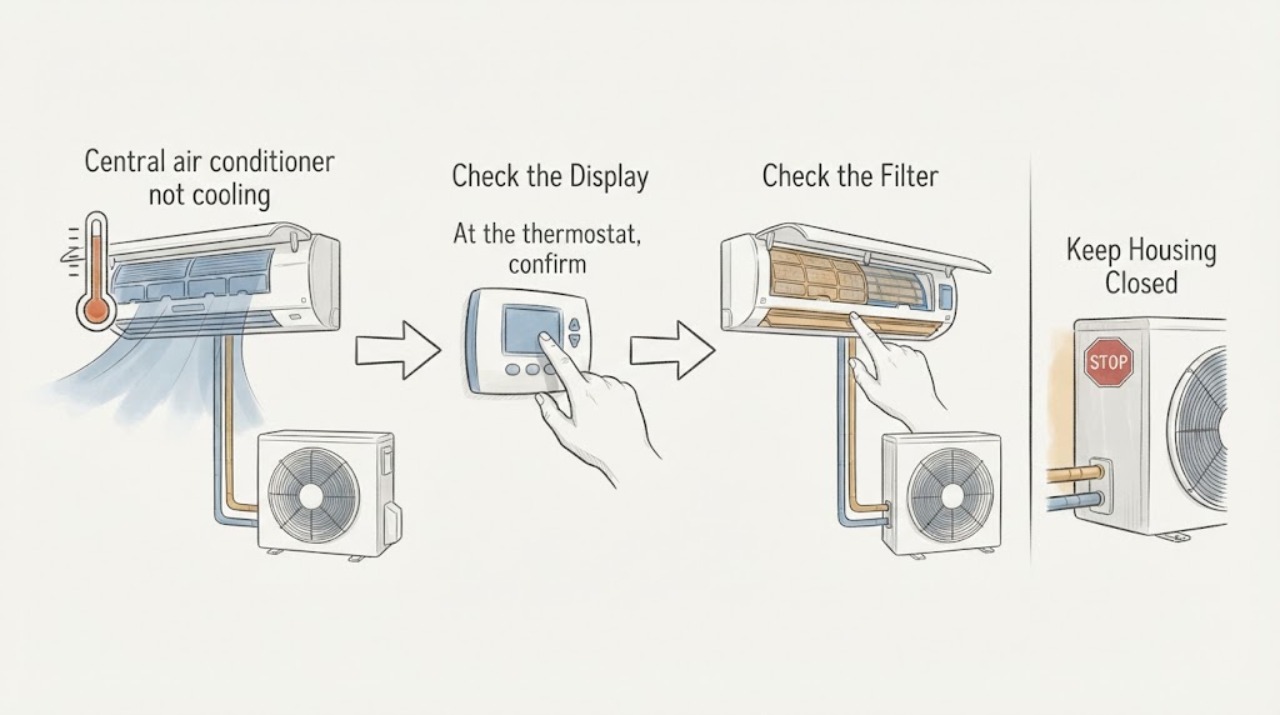
Carrier central air conditioner not cooling: What to Check and What to Do Next
A Carrier central air conditioner that is not cooling may have an incorrect thermostat mode, restricted airflow, a blocked outdoor coil, a tripped electrical circuit, a frozen evaporator coil, a condensate safety shutdown, low refrigerant, or an outdoor-unit component fault. Check the thermostat, filter, supply airflow, visible ice or water, and outdoor-unit status from a safe distance.
-
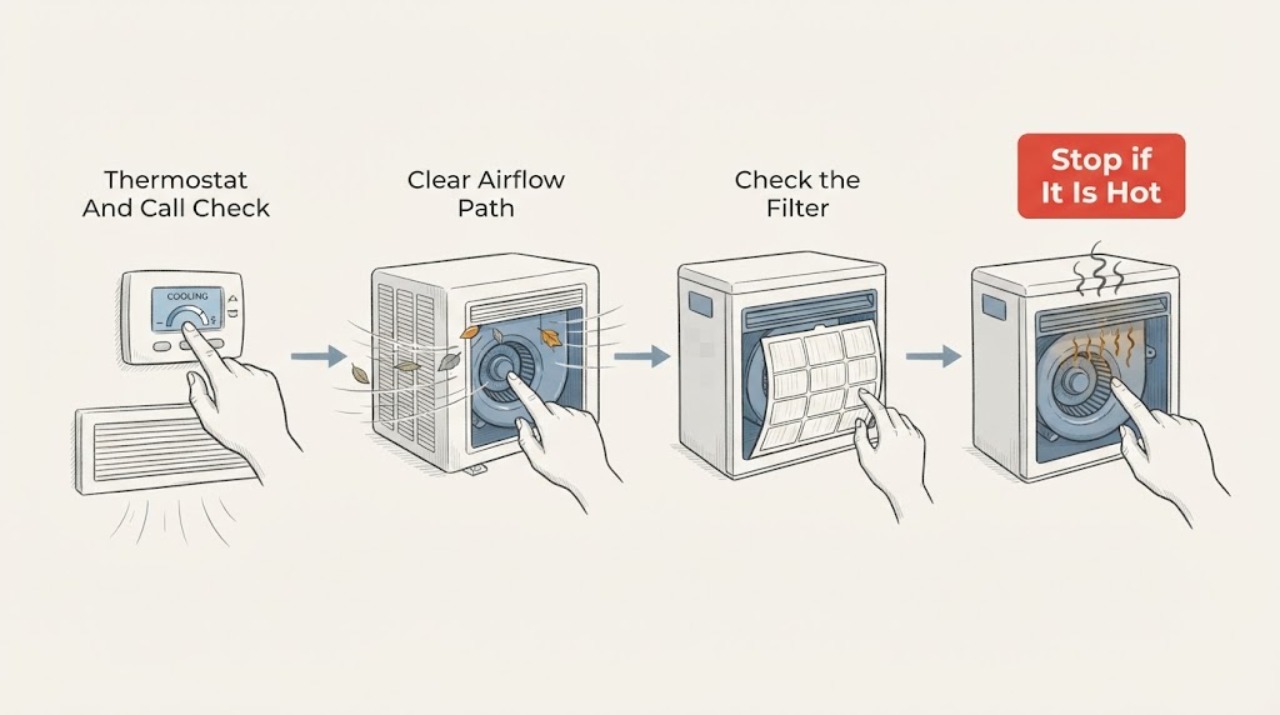
Central air conditioner blower motor not cooling: What to Check and What to Do Next
A central AC blower motor problem usually shows up as weak or no indoor airflow, but warm air can also come from thermostat settings, a restricted filter, a frozen coil, an outdoor-unit fault, or another control problem. Start with safe observations: read the thermostat, compare airflow at several registers, inspect only an accessible filter, and look and listen at the air handler and outdoor unit without opening panels.
-
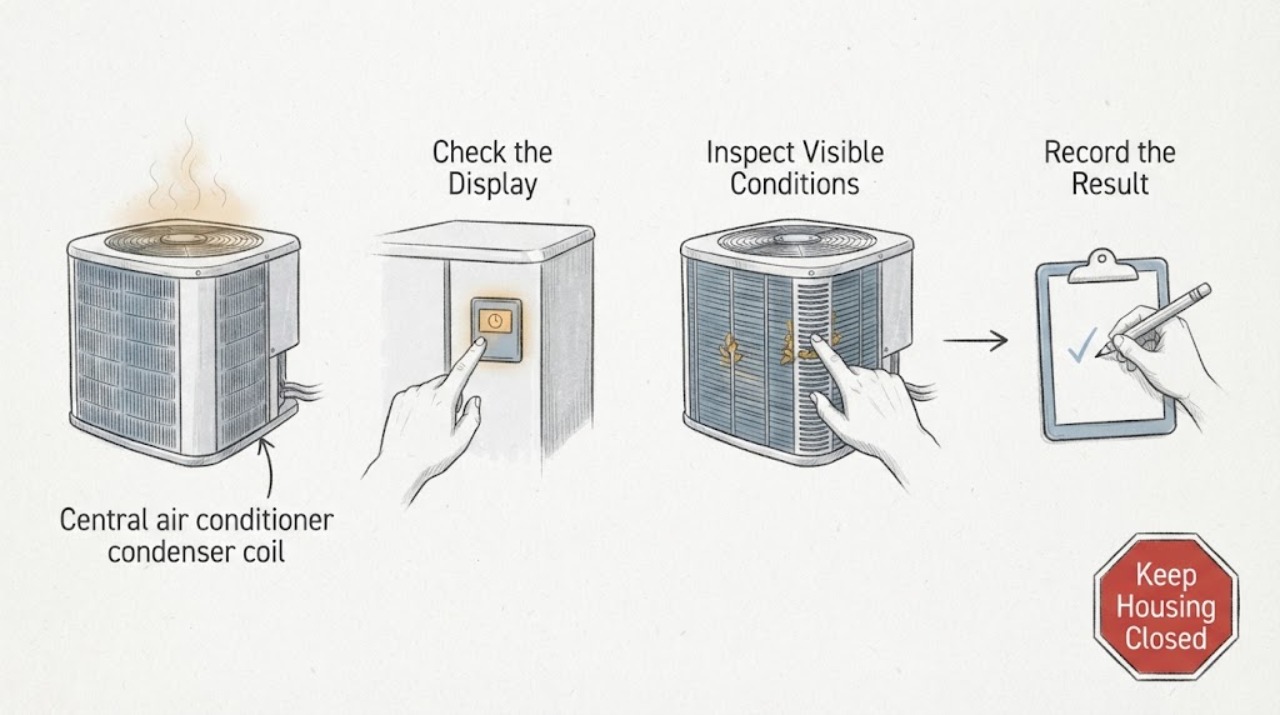
Central air conditioner condenser coil not cooling: What to Check and What to Do Next
A central AC condenser coil does not make indoor air cold; it releases the heat captured indoors to outdoor air. If the home is not cooling, first record the thermostat demand, indoor airflow, accessible filter condition, outdoor fan behavior, visible coil obstruction, ice, water, and breaker or odor symptoms without opening the equipment.
-
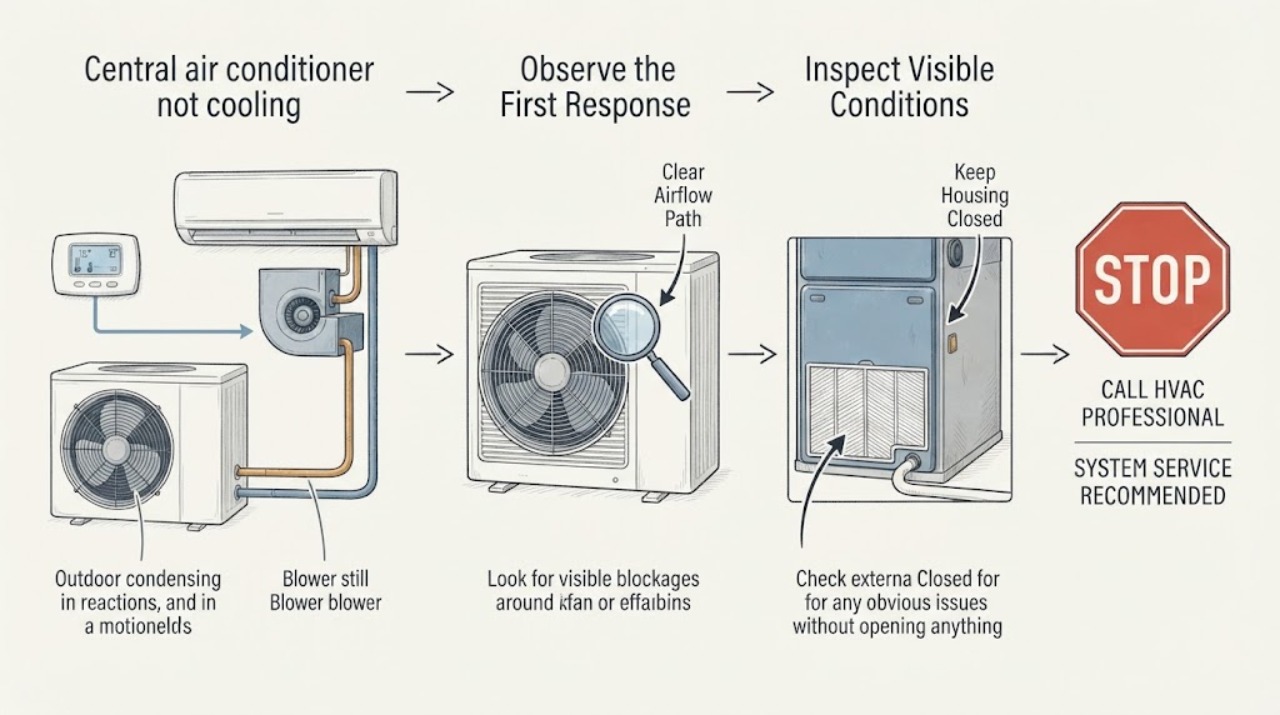
Central air conditioner not cooling when the thermostat calls for cooling: What to Check and What to Do Next
A thermostat call proves that the control is requesting cooling, not that the indoor coil, outdoor condenser, compressor, or refrigerant circuit is operating. Set the thermostat to Cool with the fan on Auto, confirm the setpoint is below room temperature, and observe whether air moves from the registers.
-
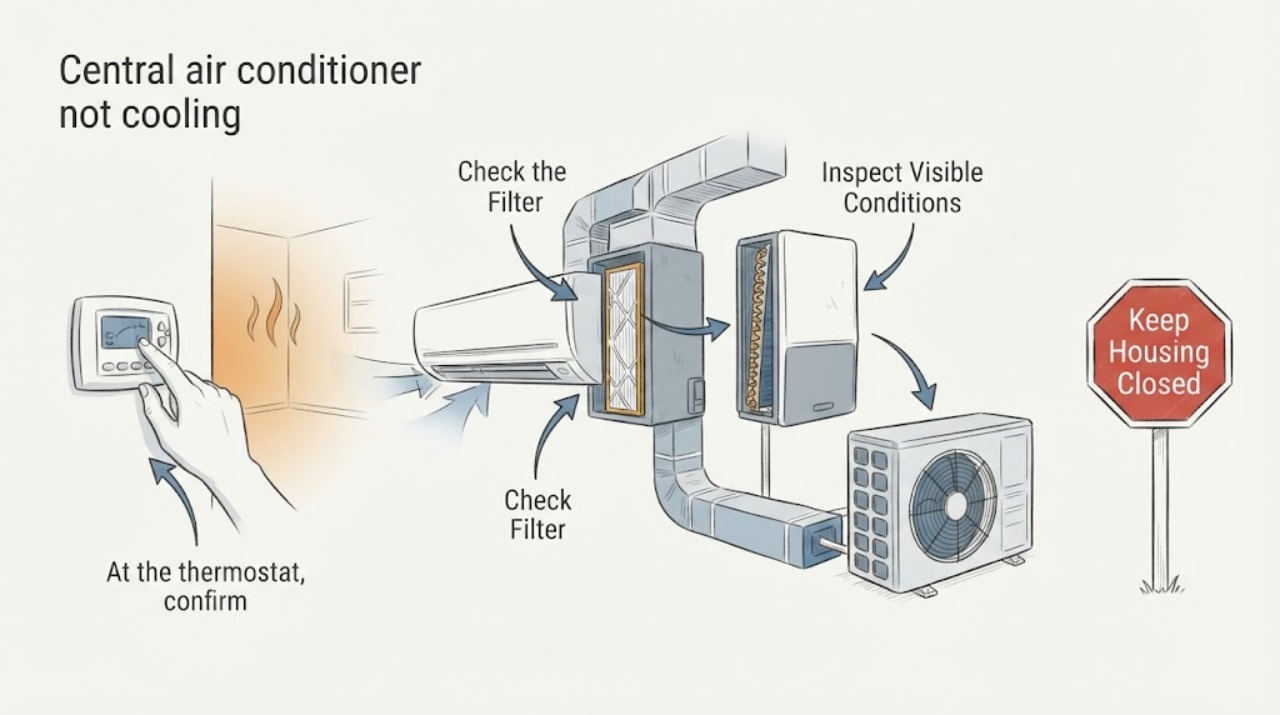
Central air conditioner not cooling, indoor air is warm: What to Check and What to Do Next
Warm air from a central air conditioner usually points first to a thermostat or fan setting, restricted airflow, a frozen coil, a non-running outdoor unit, a refrigerant problem, or a duct-delivery problem. Set the thermostat to Cool with the fan on Auto, check the filter and visible registers, and observe the outdoor unit from a safe distance during a cooling call.
-
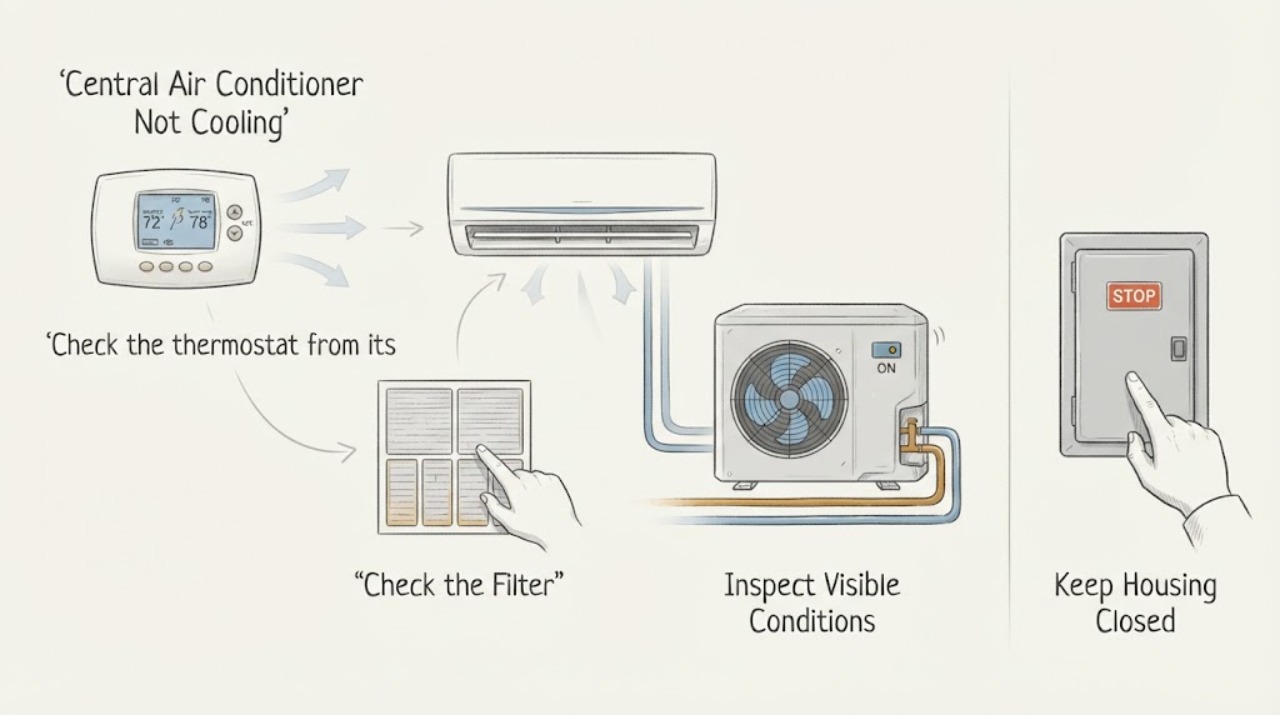
Central Air Conditioner Not Cooling, Outdoor Unit May Run: What to Check and What to Do Next
An outdoor fan running does not prove that a central air conditioner is producing cooling. First confirm the thermostat is calling for cooling with the indoor fan set appropriately, then check whether air is moving through a clean filter and registers.
-
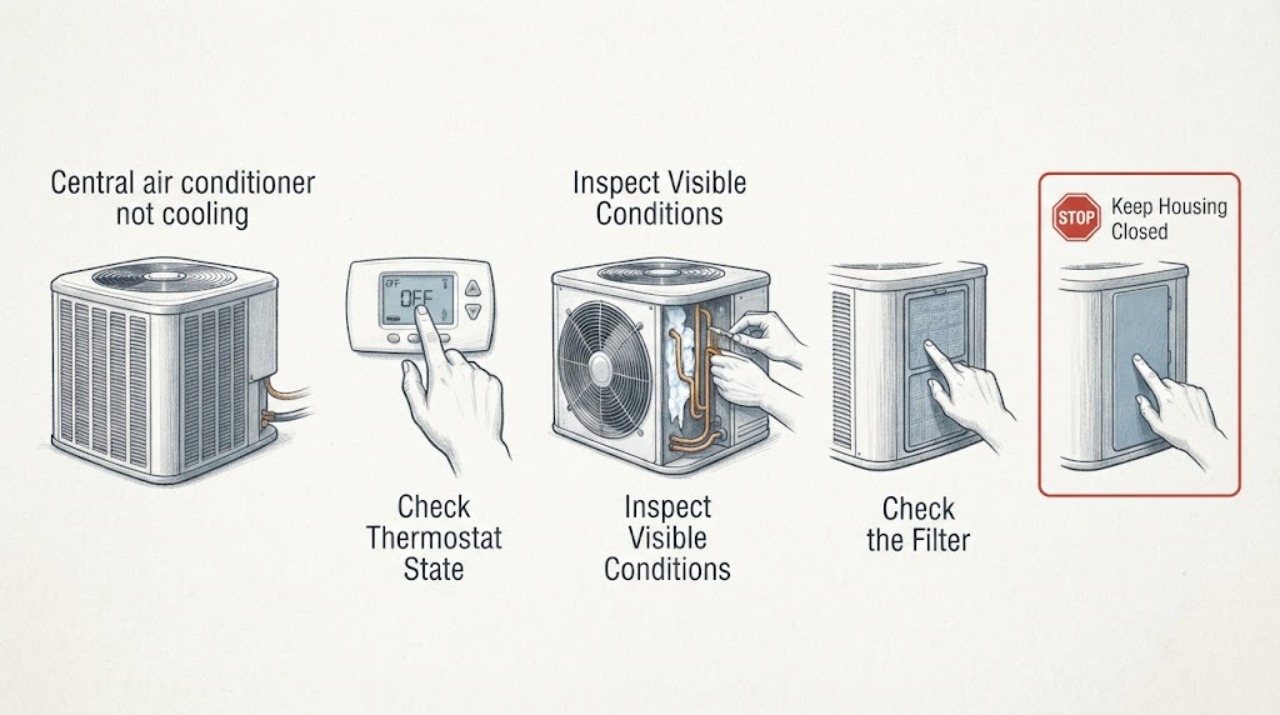
Central air conditioner not cooling: What to Check and What to Do Next
Start with safe observations: confirm the thermostat is calling for cooling, compare airflow at the registers, inspect an accessible air filter without opening equipment, and observe the outdoor unit from a clear ground-level position. Ice, burning odor, repeated breaker trips, exposed wiring, unusual electrical noise, or water near electrical equipment are stop conditions—turn the system off using normal controls if safe and call an HVAC professional.
-
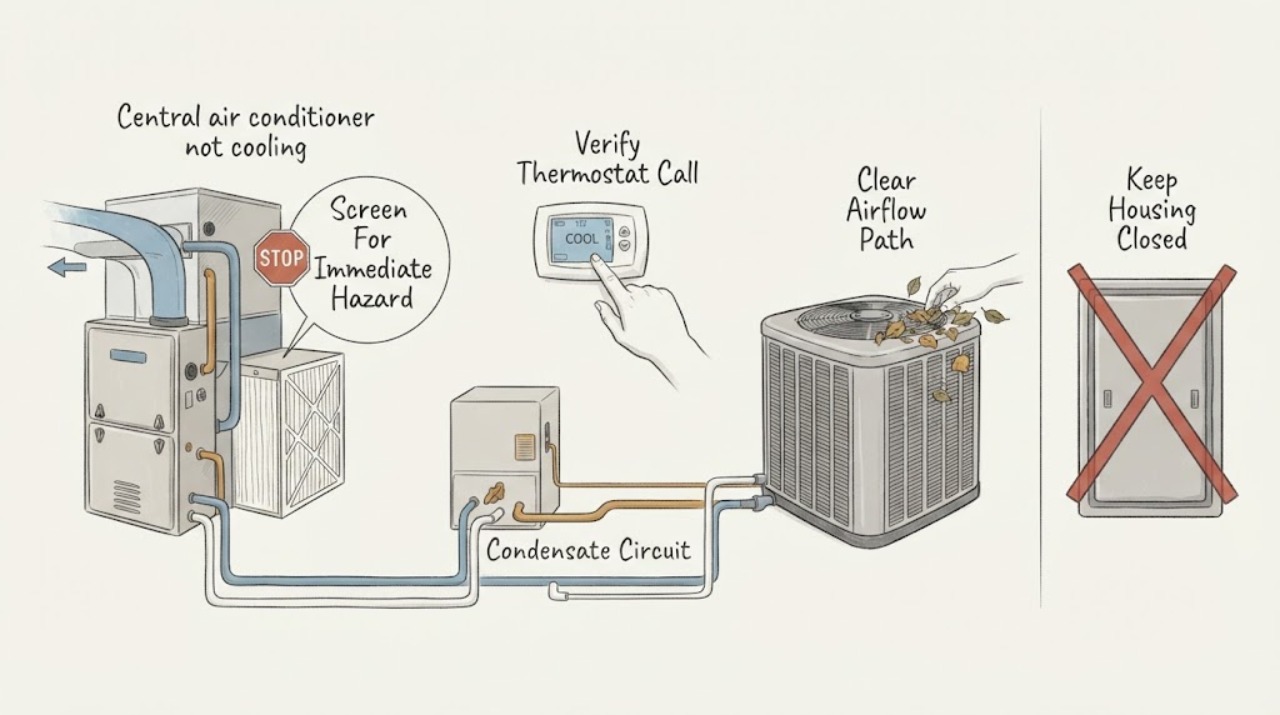
Goodman central air conditioner not cooling: What to Check and What to Do Next
When a Goodman central air conditioner is not cooling, first check the thermostat call, filter, registers, and visible outdoor obstructions from a dry, safe position. Then note whether the indoor blower and outdoor unit run, whether airflow is weak, whether ice or condensate water is visible, and whether a breaker or system alert has appeared.
-
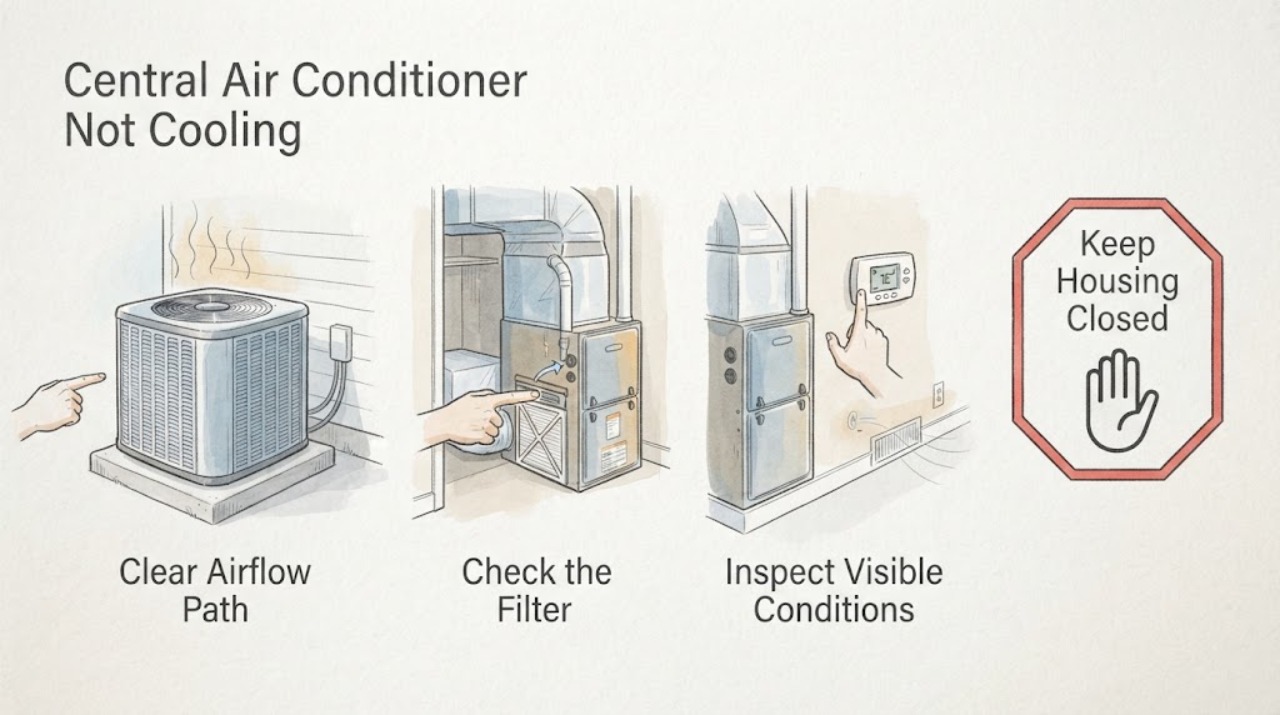
Lennox Central Air Conditioner Not Cooling: What to Check and What to Do Next
When a Lennox central air conditioner is not cooling, first determine whether the indoor air handler runs, whether the outdoor condenser runs, and whether the thermostat is still calling for cooling. Check the thermostat mode and setpoint, the filter and supply airflow, the indoor and outdoor units from a safe exterior position, and any visible ice, condensate overflow, or alert code.
-
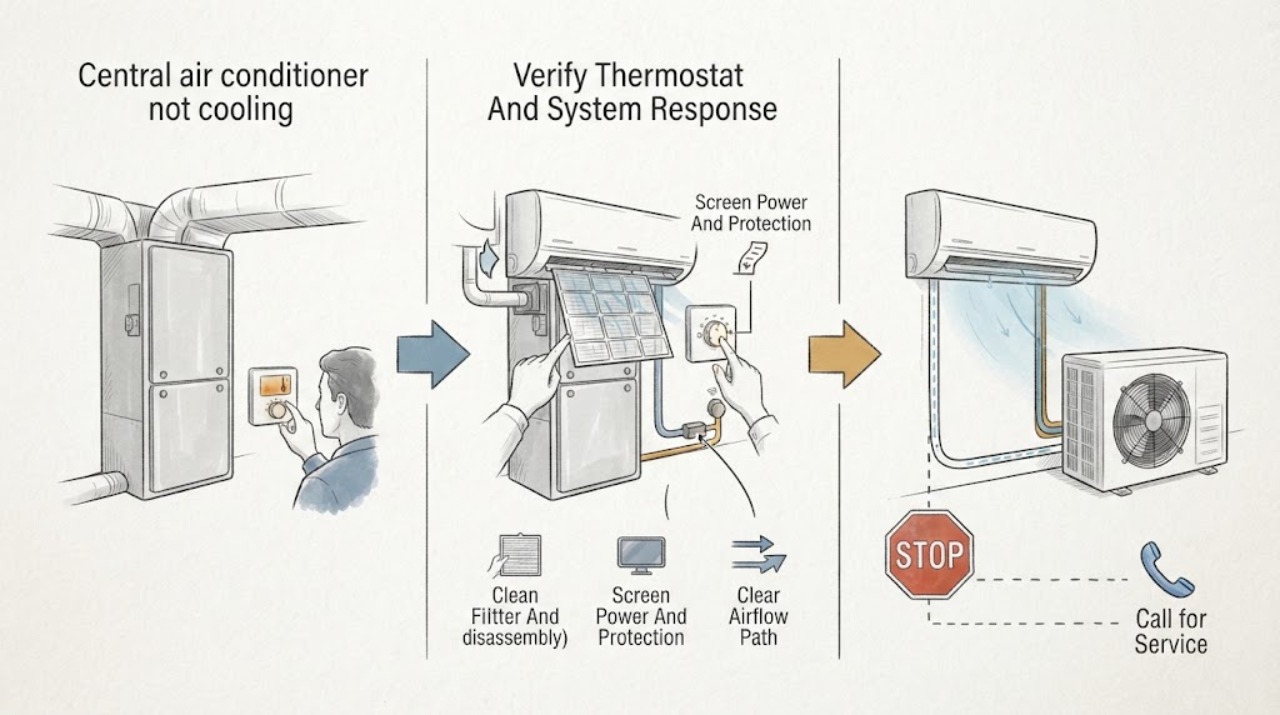
Rheem central air conditioner not cooling: What to Check and What to Do Next
When a Rheem central air conditioner is not cooling, first confirm that the thermostat is calling for cooling and that the indoor blower and outdoor unit respond. Then check the filter, return and supply airflow, and visible debris around the outdoor condenser.
-
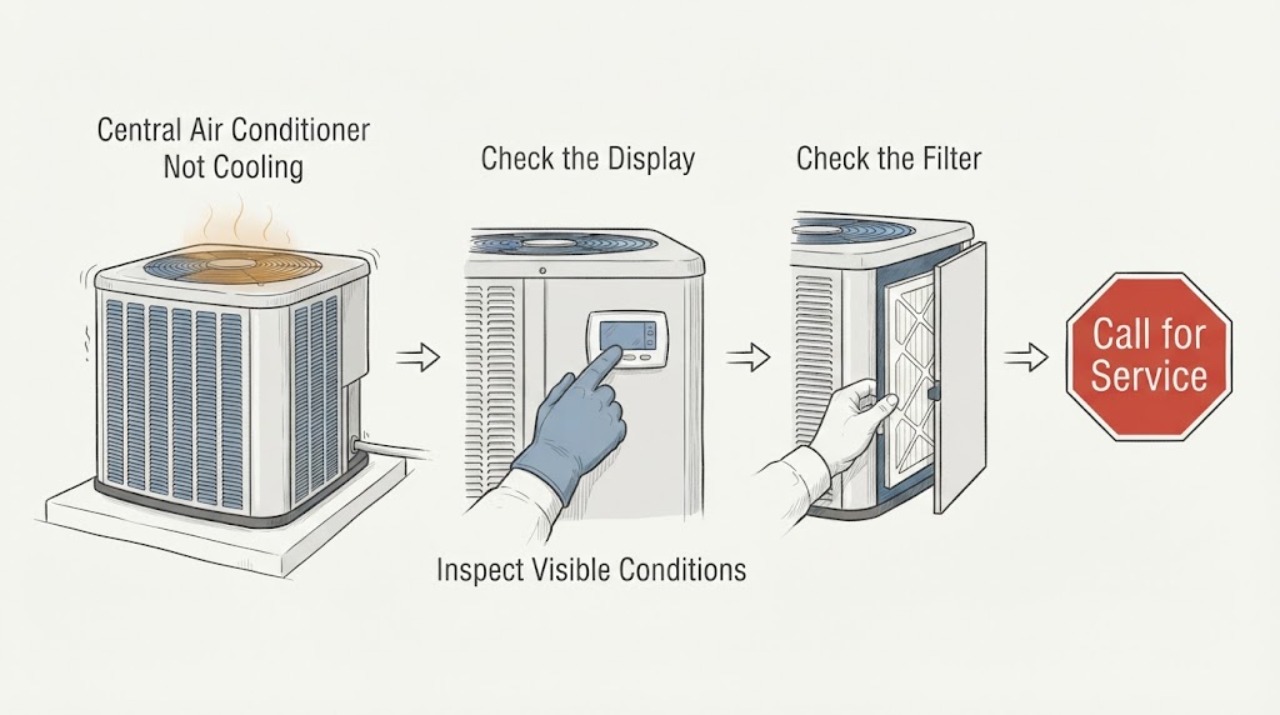
Trane Central Air Conditioner Not Cooling: What to Check and What to Do Next
When a Trane central air conditioner is not cooling, first verify the thermostat is calling for cooling and the indoor fan is set appropriately, then check the accessible air filter, supply and return airflow, visible outdoor-unit debris, and any visible condensate overflow. A tripped breaker, incorrect thermostat mode, dirty filter or coil, blocked outdoor coil, frozen evaporator coil, clogged condensate drain, low refrigerant, or motor fault can produce similar symptoms.
-
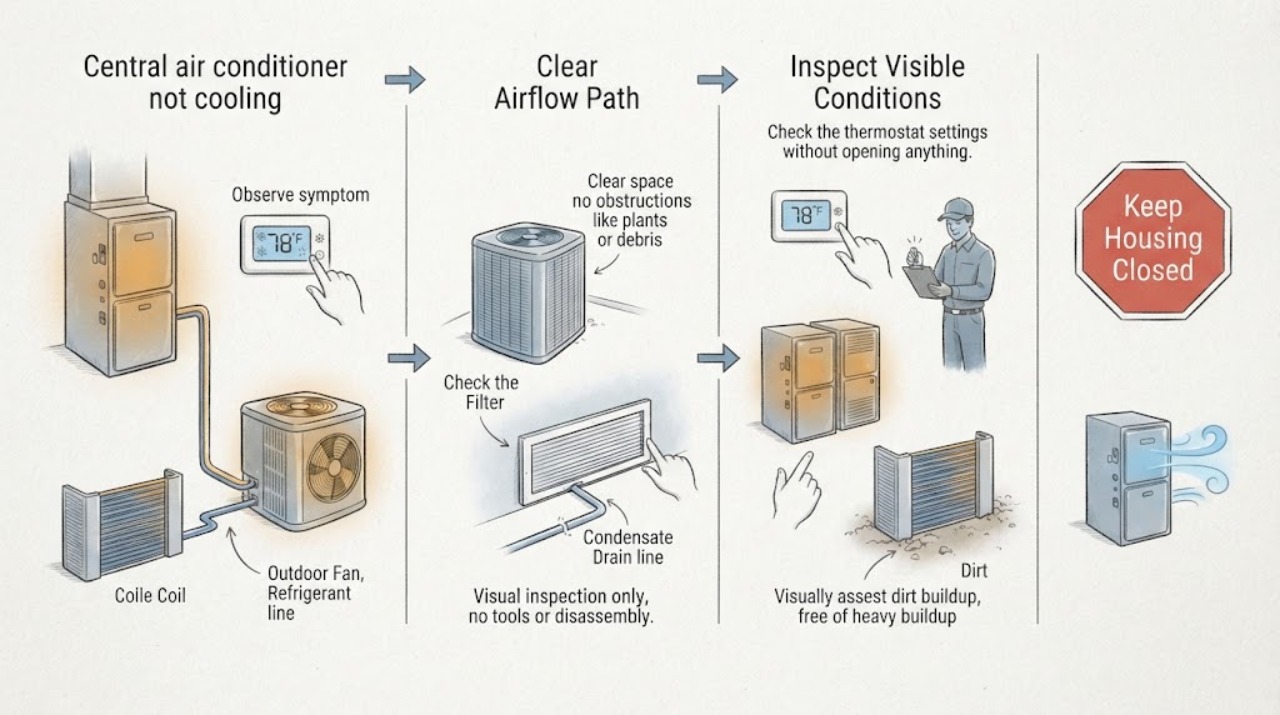
York central air conditioner not cooling: What to Check and What to Do Next
A York thermostat call does not prove that the indoor blower, outdoor condenser, compressor, or refrigerant circuit is producing cooling. Confirm Cool mode, a setpoint below room temperature, and Fan Auto; then note whether air is moving at several registers.