
Repair problem
Making Loud Noise Troubleshooting Guides
Published FixGraph guidance for diagnosing and responding to making loud noise.
Matching published guides
Choose a guide that matches the service, equipment, and conditions you are seeing.
-
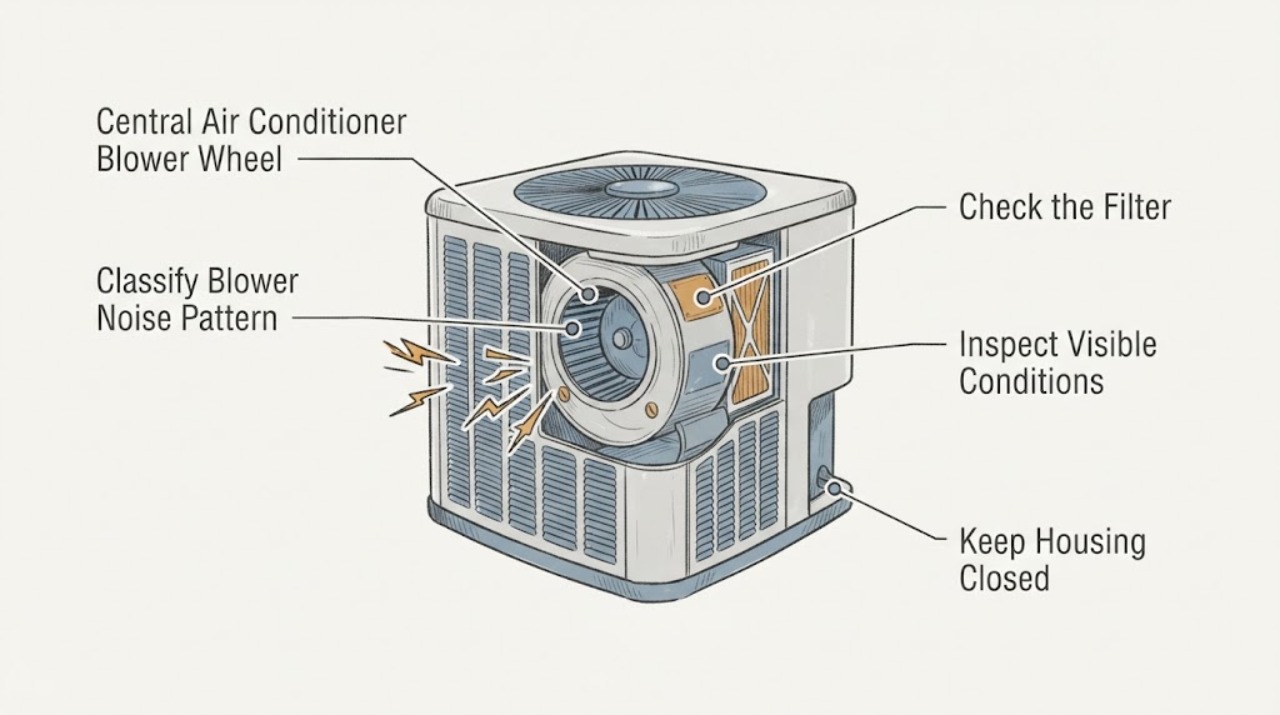
American Standard Central Air Conditioner Blower Wheel Making Loud Noise: What to Check and What to Do Next
A loud noise that seems to come from the blower wheel of an American Standard central air conditioner can be caused by a restricted filter or return, a loose or damaged blower-wheel or housing component, motor or bearing wear, belt or pulley trouble, vibration, or sound transmitted through the ductwork.
-
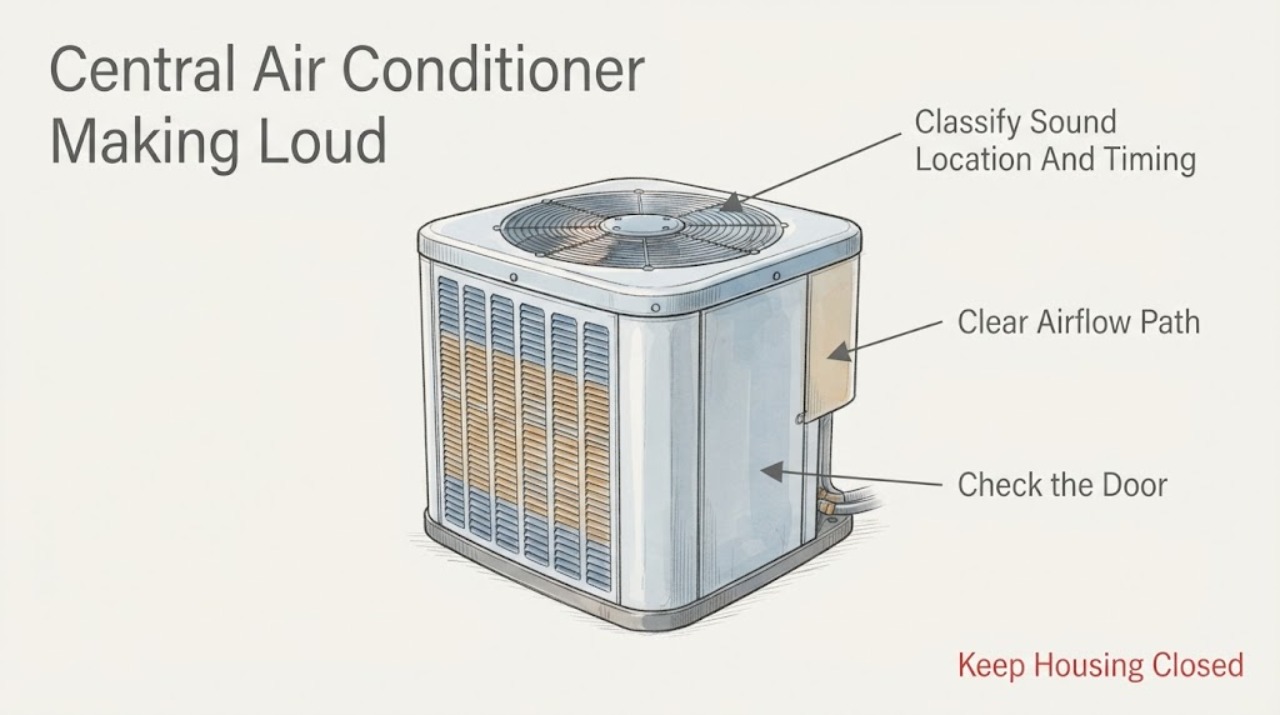
American Standard Central Air Conditioner Making Loud Noise: What to Check and What to Do Next
A new or unusually loud American Standard central-air-conditioner sound should be treated as a change in system behavior, not diagnosed by noise name alone. First note whether the sound comes from the indoor air handler, ductwork, or outdoor condenser and whether it happens at startup, during cooling, continuously, or at shutdown.
-
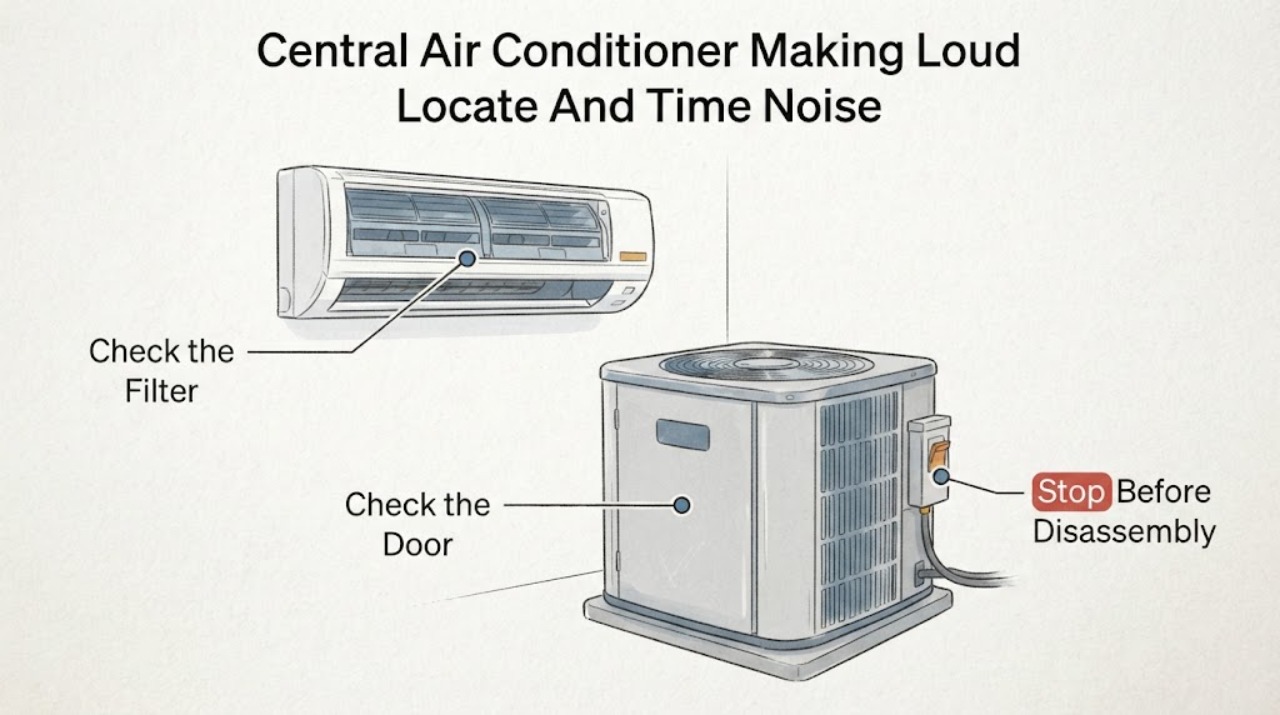
Carrier Central Air Conditioner Making Loud Noise: What to Check and What to Do Next
A loud Carrier central-air-conditioner noise should be diagnosed by location, timing, and system behavior—not by replacing a part from the sound alone. Turn the system off promptly for grinding, scraping, banging, loud buzzing, burning odor, smoke, water, or a noise that starts with abnormal vibration.
-
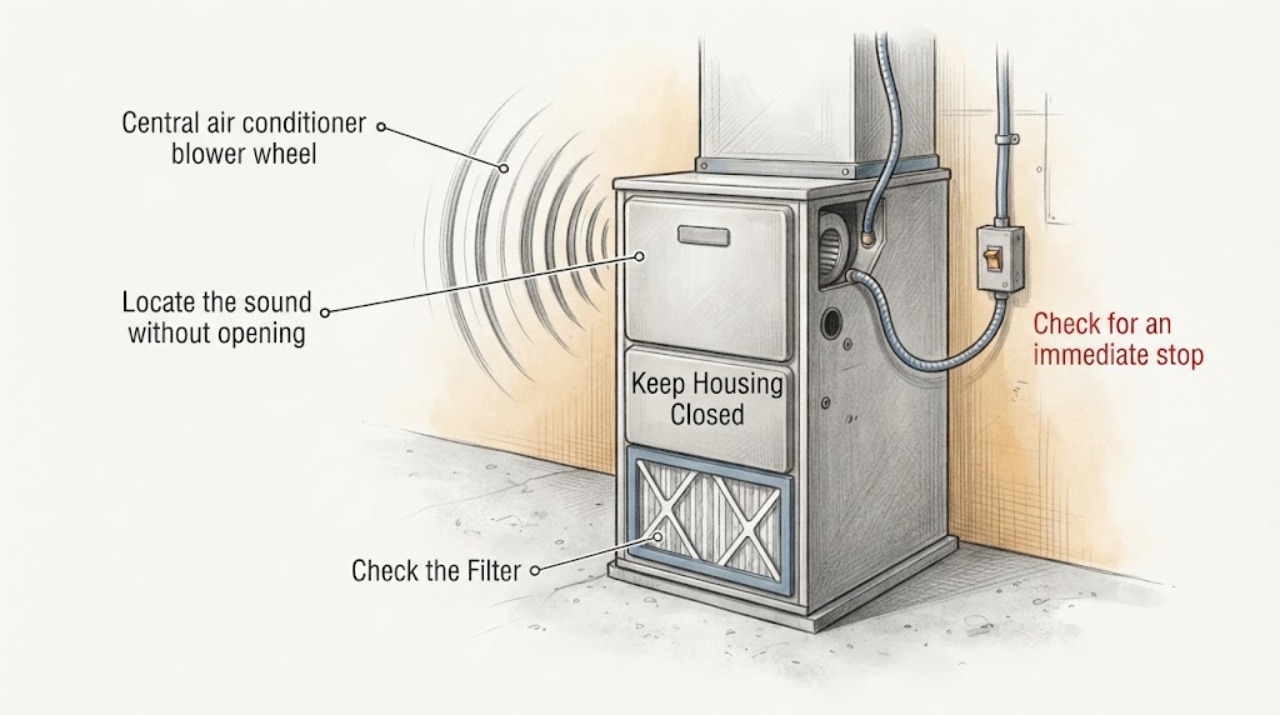
Central air conditioner blower wheel making loud noise: What to Check and What to Do Next
A new loud noise from a central-air blower wheel is a stop-and-diagnose symptom, not a reason to reach into the air handler. Turn the system off at the thermostat, note whether the sound is scraping, rattling, humming, or accompanied by vibration or a burning smell, and check only the accessible filter and registers.
-
Central Air Conditioner Making a Loud Noise While Cooling May Continue: What to Check and What to Do Next
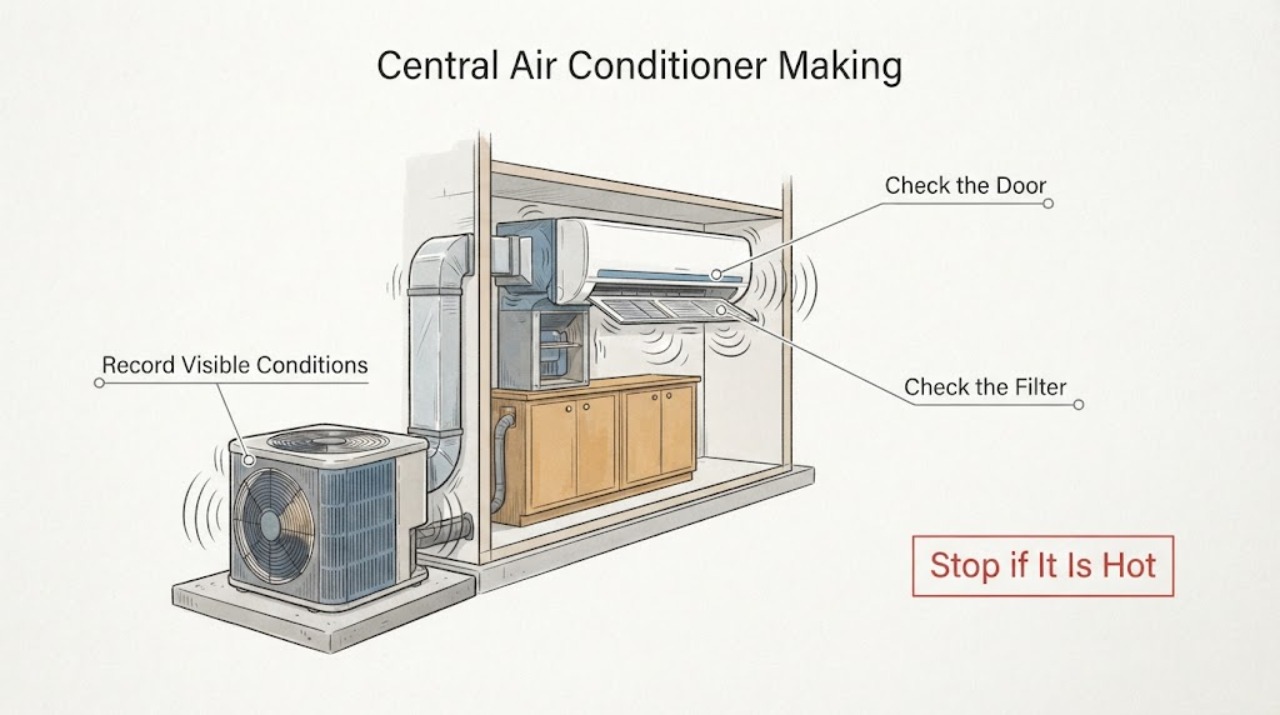
A central air conditioner that still cools while making a new or unusually loud noise should not be treated as normal simply because the temperature is falling. First note whether the sound is indoors or outdoors and whether it is humming, rattling, grinding, banging, hissing, clicking, or vibrating; turn the system Off for smoke, burning odor, arcing, refrigerant hissing, a damaged fan blade, severe vibration, or a noise that suddenly changed.
-
Central Air Conditioner Making Loud Noise Comes From Indoor or Outdoor Unit: What to Check and What to Do Next
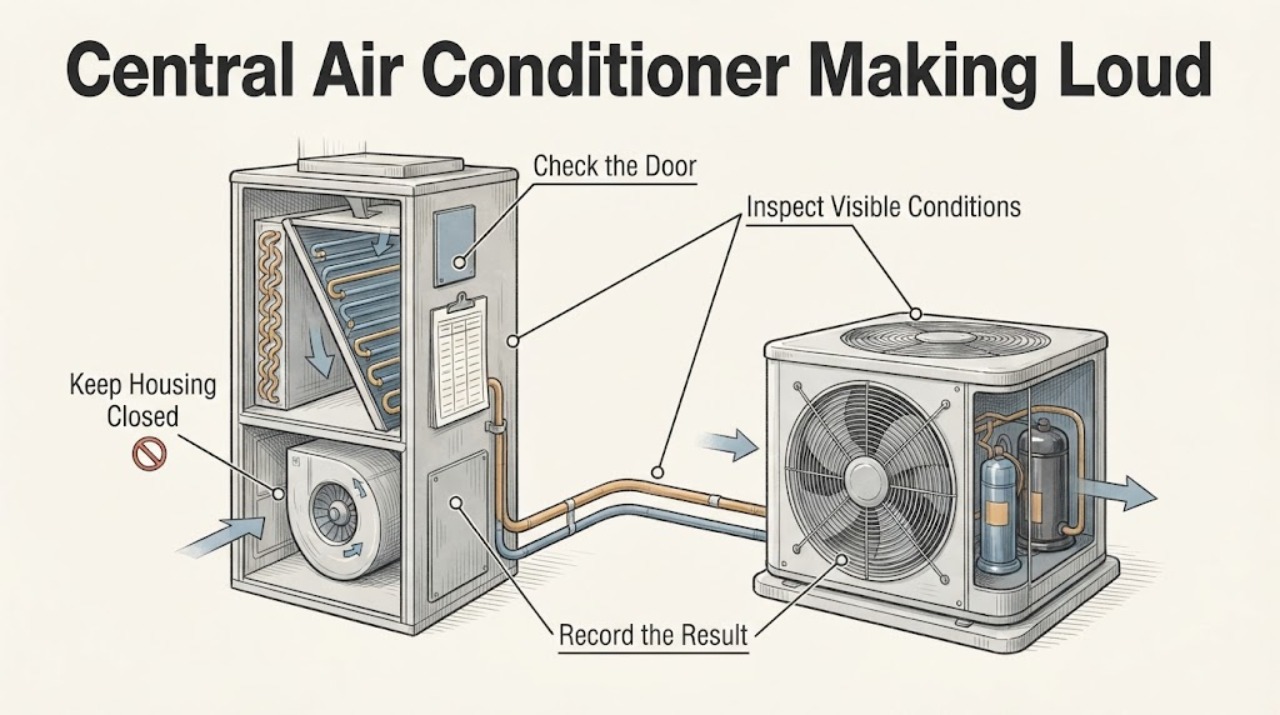
A new or unusually loud sound is more useful when you identify which unit makes it and when it happens. In a split central system, the indoor unit contains the evaporator and blower while the outdoor unit contains the condenser fan and compressor.
-
Central air conditioner making loud noise, sound changes with fan: What to Check and What to Do Next
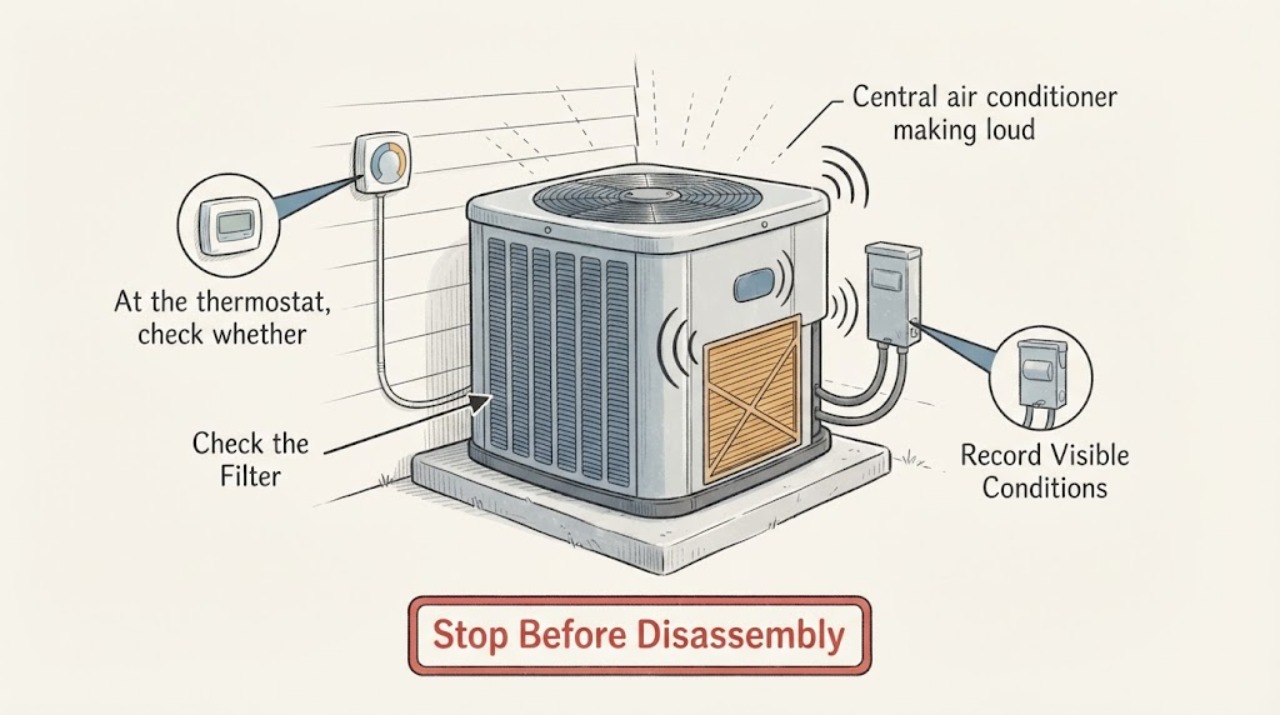
When a central air conditioner's loud sound changes as the indoor or outdoor fan starts, stops, or changes speed, first locate the source and distinguish airflow noise from a mechanical or electrical noise. Check whether the thermostat fan is set to Auto or On, inspect the filter and visible registers, and look at the outdoor unit from a safe distance for obstructions or a damaged blade.
-
Central air conditioner making loud noise: What to Check and What to Do Next
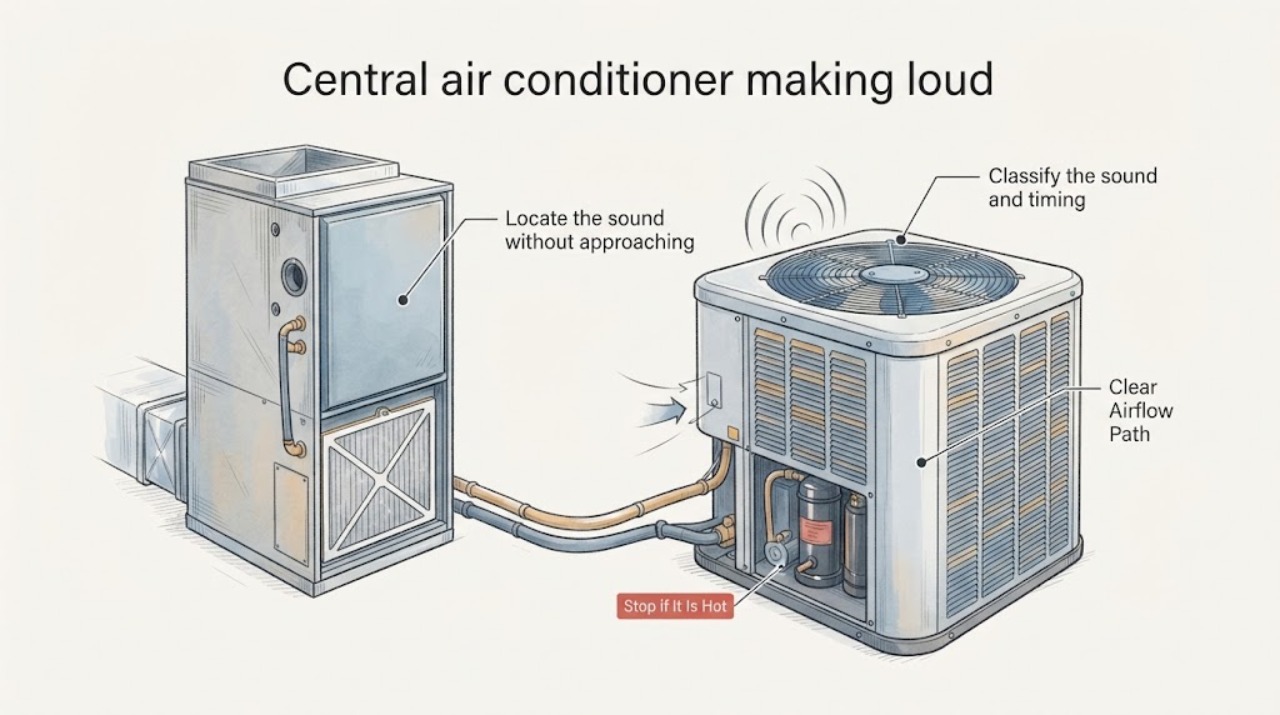
A new or unusually loud central-AC sound should be treated as a service clue, especially if it is grinding, scraping, rattling with vibration, hissing, or accompanied by a burning smell, ice, weak airflow, or poor cooling. From a safe distance, record the sound type, whether it comes from the indoor or outdoor unit, when it occurs, and any airflow, ice, water, or odor changes.
-
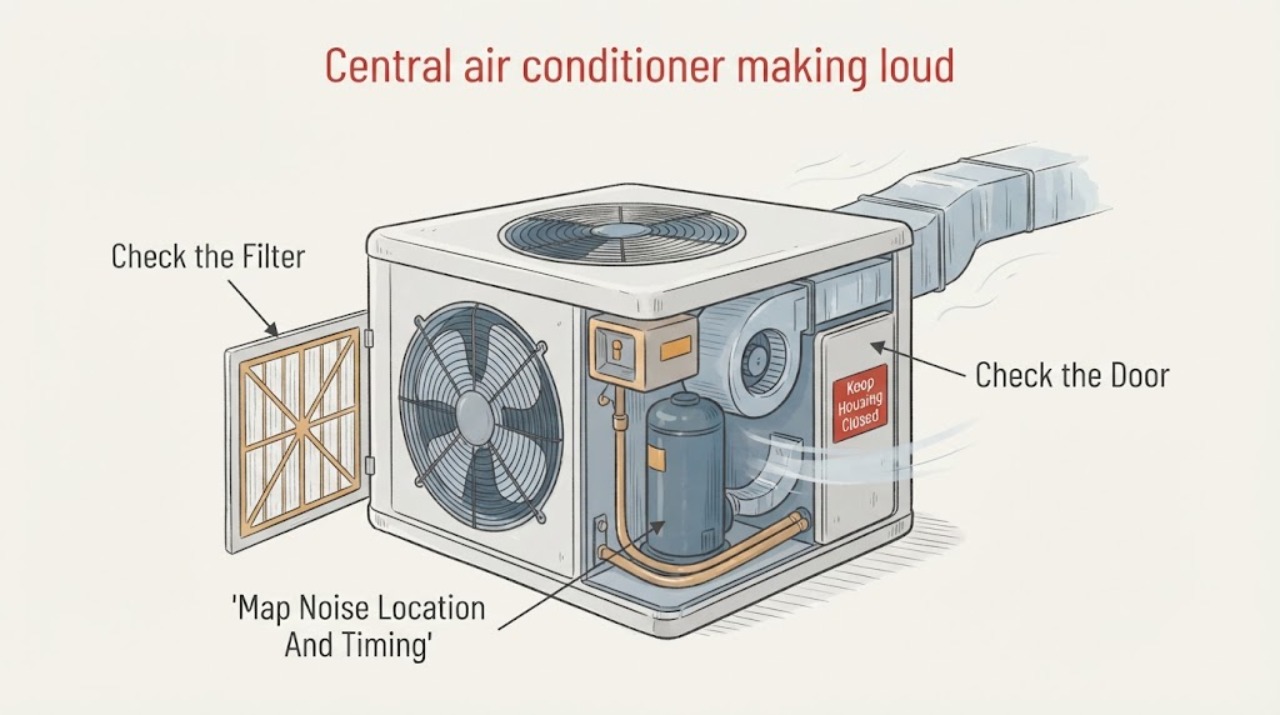
Goodman central air conditioner making loud noise: What to Check and What to Do Next
A Goodman central air conditioner may make some normal startup, shutdown, airflow, or variable-speed sounds, but a new or significantly louder hum, buzz, rattle, roar, screech, or grinding sound deserves attention. First locate whether the sound comes from the outdoor unit, indoor air handler or furnace, ductwork, or a register, and note whether it changes with the fan, compressor, or thermostat cycle.
-
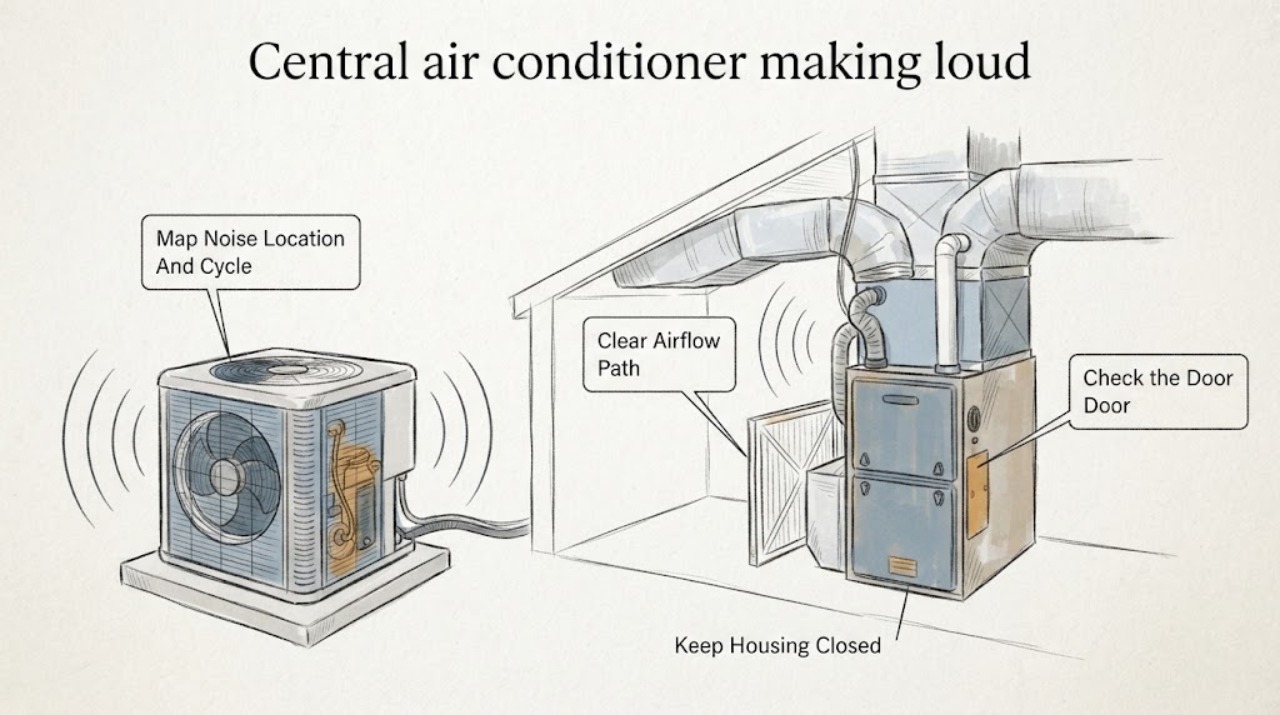
Lennox central air conditioner making loud noise: What to Check and What to Do Next
A Lennox central air conditioner may have a normal startup or operating hum, but a new or significantly louder buzzing, rattling, banging, squealing, grinding, or vibration needs attention. First locate whether the sound comes from the outdoor unit, indoor air handler or furnace, ductwork, or a register, and note whether it changes with the indoor fan, outdoor fan, compressor, or thermostat cycle.
-
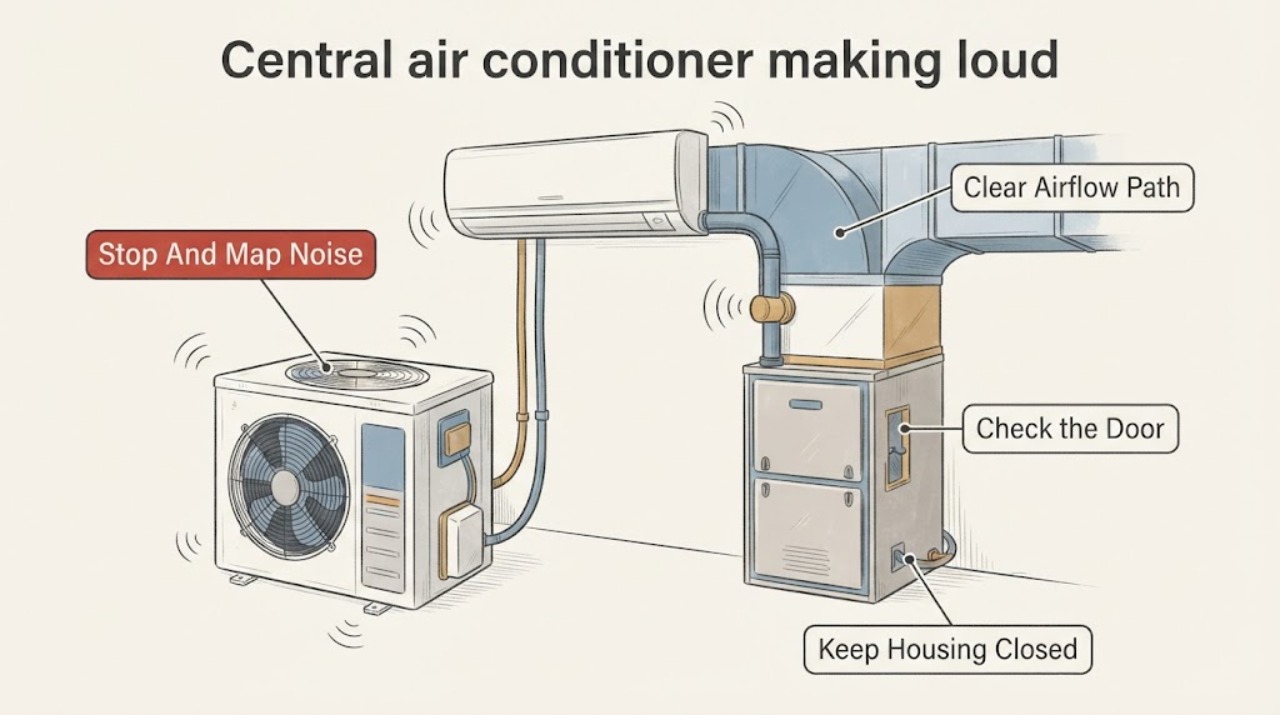
Rheem central air conditioner making loud noise: What to Check and What to Do Next
When a Rheem central air conditioner suddenly makes a loud noise, turn cooling off and identify where and when the sound occurs: indoor air handler, outdoor condenser, duct or register, startup, steady operation, shutdown, or only after rain or debris. A brief normal operating change can differ from rattling, scraping, grinding, buzzing, humming, banging, or a fan that is striking something.
-
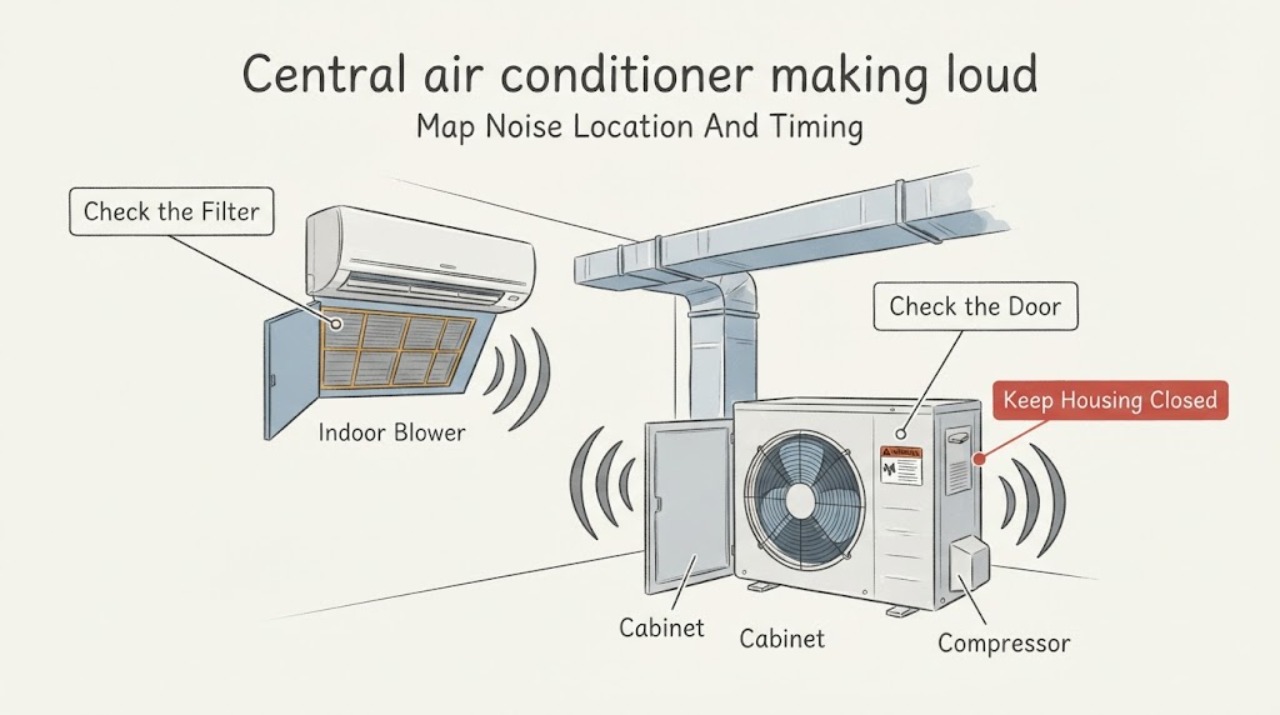
Trane central air conditioner making loud noise: What to Check and What to Do Next
A Trane central air conditioner can make a predictable hum or brief startup, shutdown, or speed-change sound, but a new or noticeably louder rattle, bang, grind, screech, high-pitched sound, or electrical buzz is not a normal noise test. First locate whether the sound is indoors, outdoors, or at a register and note whether it follows the indoor blower, outdoor fan, compressor, startup, or shutdown.
-
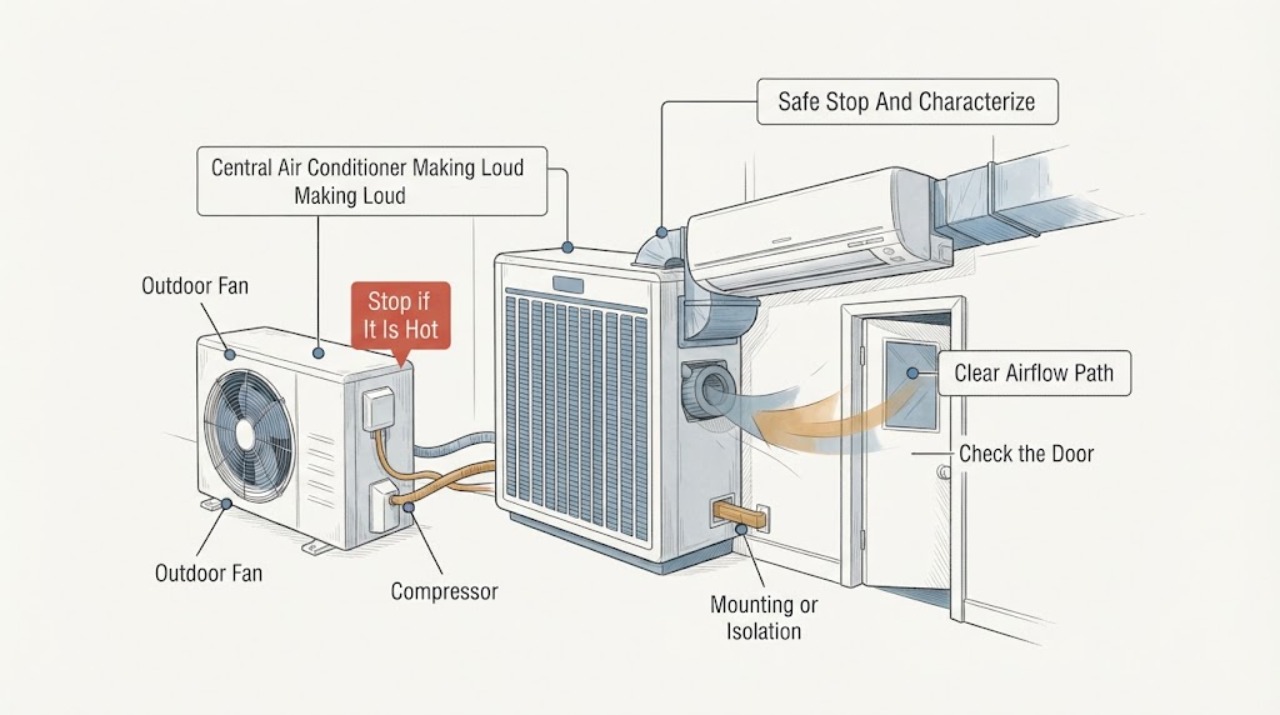
York Central Air Conditioner Making Loud Noise: What to Check and What to Do Next
A York central air conditioner that suddenly becomes loud should not be treated as normal background hum. First switch cooling off for banging, scraping, squealing, clanging, severe vibration, burning odor, smoke, or electrical symptoms, then identify whether the sound is indoors, outdoors, in the ductwork, or at the thermostat and whether it occurs at startup, during operation, or shutdown.