
Repair problem
Pull Down Faucet Sprayer Leaking Troubleshooting Guides
Published FixGraph guidance for diagnosing and responding to pull down faucet sprayer leaking.
Matching published guides
Choose a guide that matches the service, equipment, and conditions you are seeing.
-
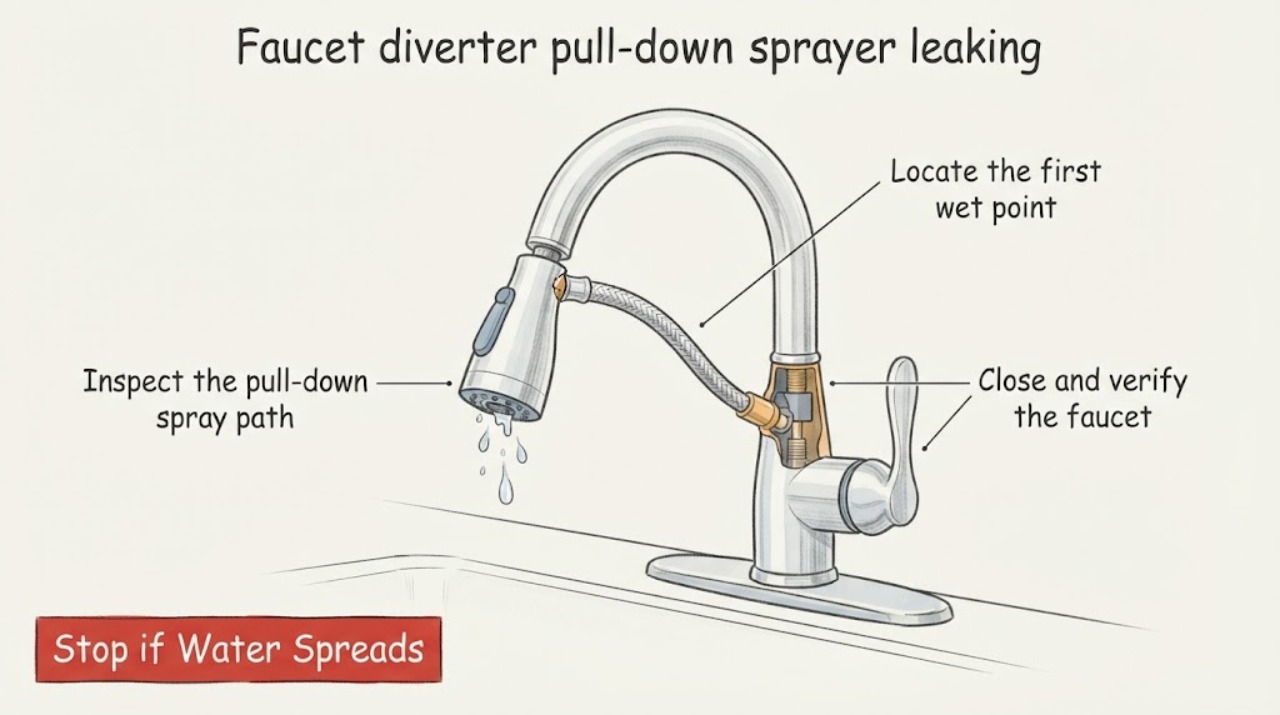
American Standard faucet diverter pull-down sprayer leaking: What to Check and What to Do Next
A leaking American Standard pull-down sprayer is not automatically a failed diverter. First identify whether water appears at the spray head, hose connection, spout neck, diverter area, faucet base, or supply connection, and whether it happens in stream mode, spray mode, or both.
-
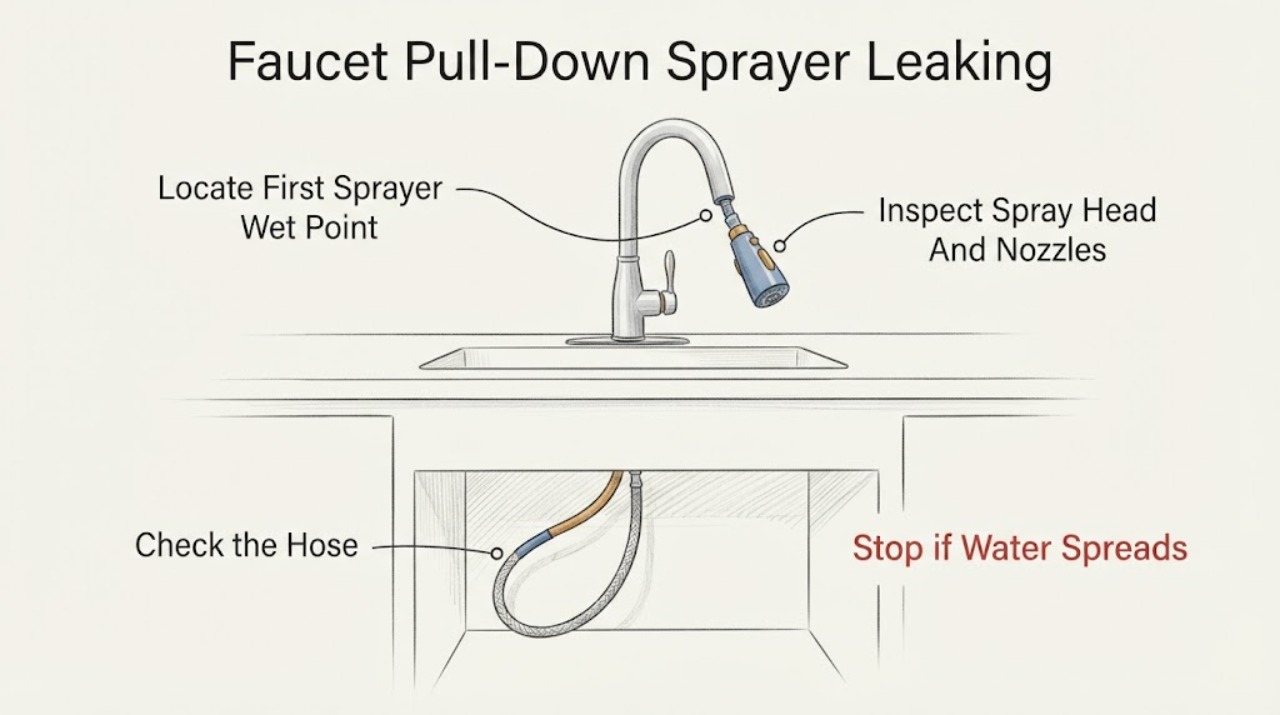
American Standard Faucet Pull-Down Sprayer Leaking: What to Check and What to Do Next
When an American Standard pull-down sprayer leaks, first identify whether water starts at the spray face, the spray-head connection, the pull-down hose, the hose-to-valve connection under the sink, or the faucet body. A spray head that leaks only while spray mode is running can have a worn seal, clogged or damaged outlet, or a connection that is not seating; water under the sink during spray use points more toward the hose, O-ring, washer, or adapter.
-
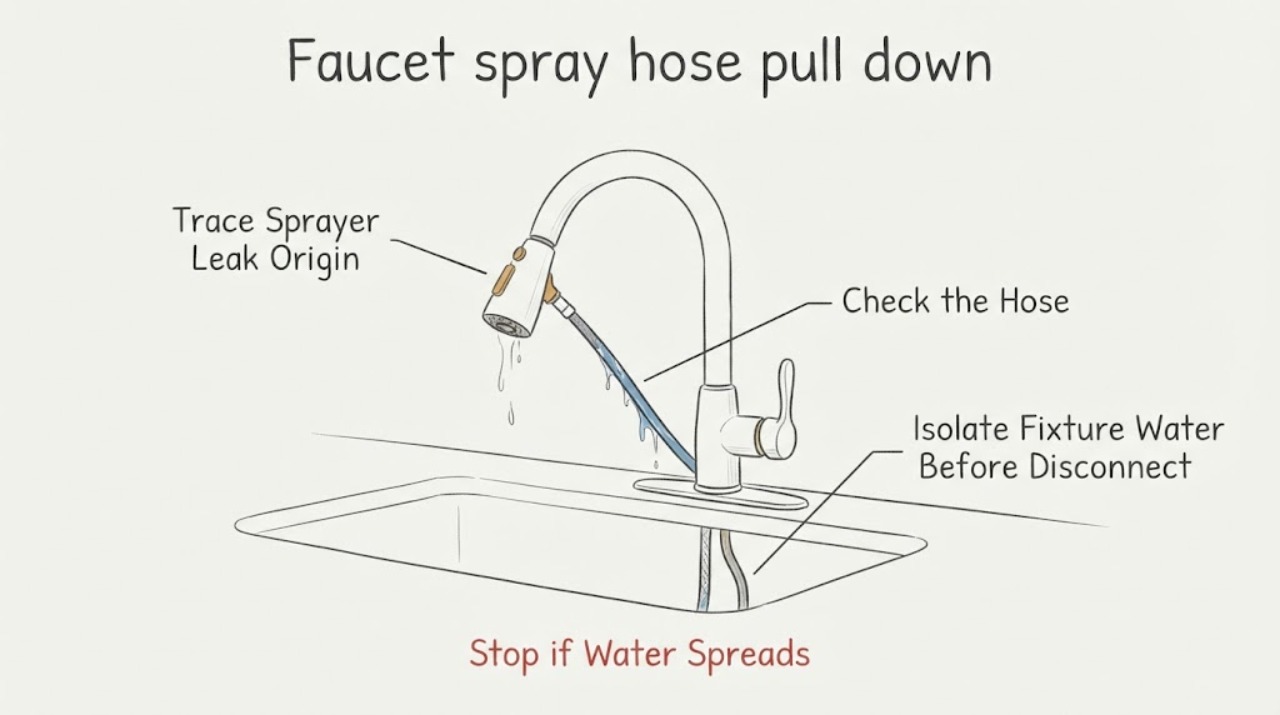
American standard faucet spray hose pull down sprayer leaking: What to Check and What to Do Next
A leaking American Standard pull-down sprayer can be caused by the spray head, the hose, an O-ring or washer at a connection, a quick-connect fitting, or a leak elsewhere in the faucet. Dry the sprayer and the underside of the sink, run the faucet briefly, and identify where water first appears: at the spray-head seam, where the hose joins the head or valve, or at a supply line or faucet body.
-
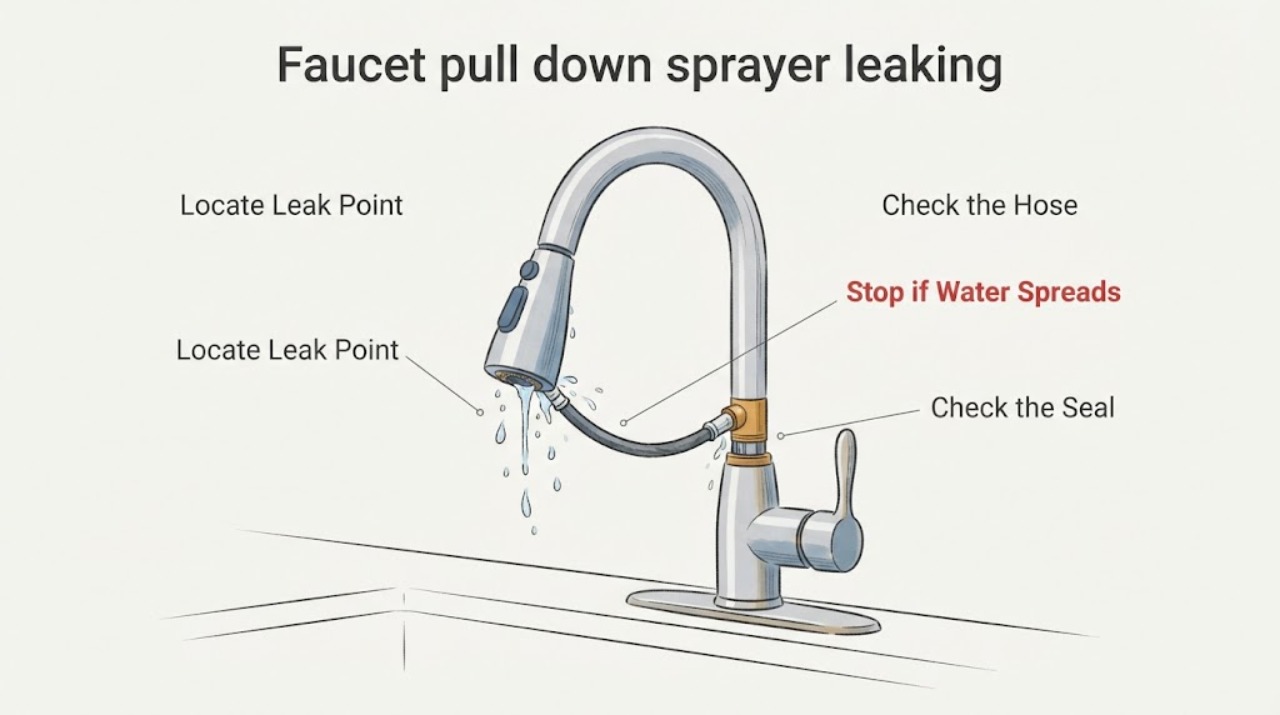
Delta faucet pull down sprayer leaking: What to Check and What to Do Next
A Delta pull-down sprayer leak must be located before choosing a repair. A few drops from the long hose just after shutoff can be residual water, but water from the spray head while the faucet is on, the wand-to-hose joint, the hose under the sink, or a clip and fitting is a real leak.
-
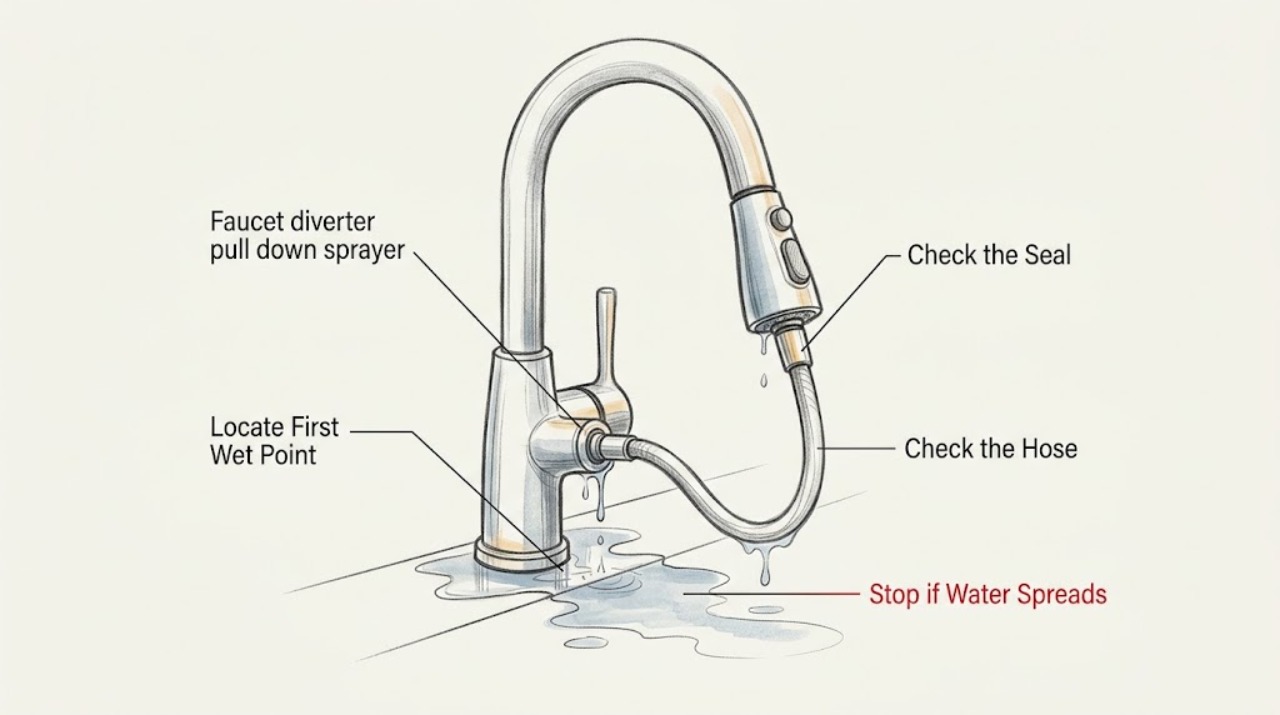
Faucet diverter pull down sprayer leaking: What to Check and What to Do Next
A pull-down sprayer leak is usually narrowed down by where the first drop appears: the sprayhead-to-hose joint, the flexible hose under the sink, the hose's diverter quick-connect, or the faucet body. Dry the visible parts, shut off the faucet supplies before loosening anything, and use a brief controlled test only to locate the leak.
-
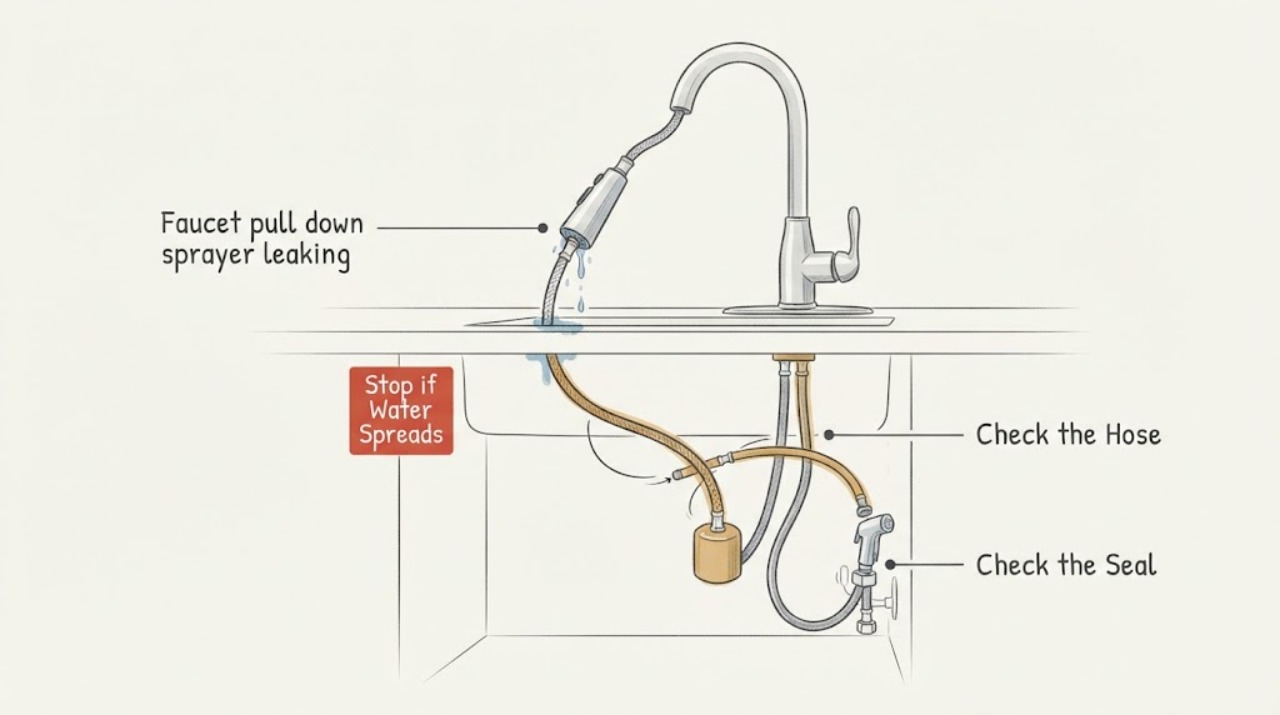
Faucet pull down sprayer leaking hose retracts poorly: What to Check and What to Do Next
A pull-down wand can leave a small amount of water in its long flexible hose after shutoff, but an active leak, water under the sink, a cracked wand or hose, or a connection that leaks while the faucet runs needs attention. Dry the cabinet, place a container under visible connections, and identify whether water comes from the wand-to-hose joint, hose, quick connection, faucet base, or spout.
-
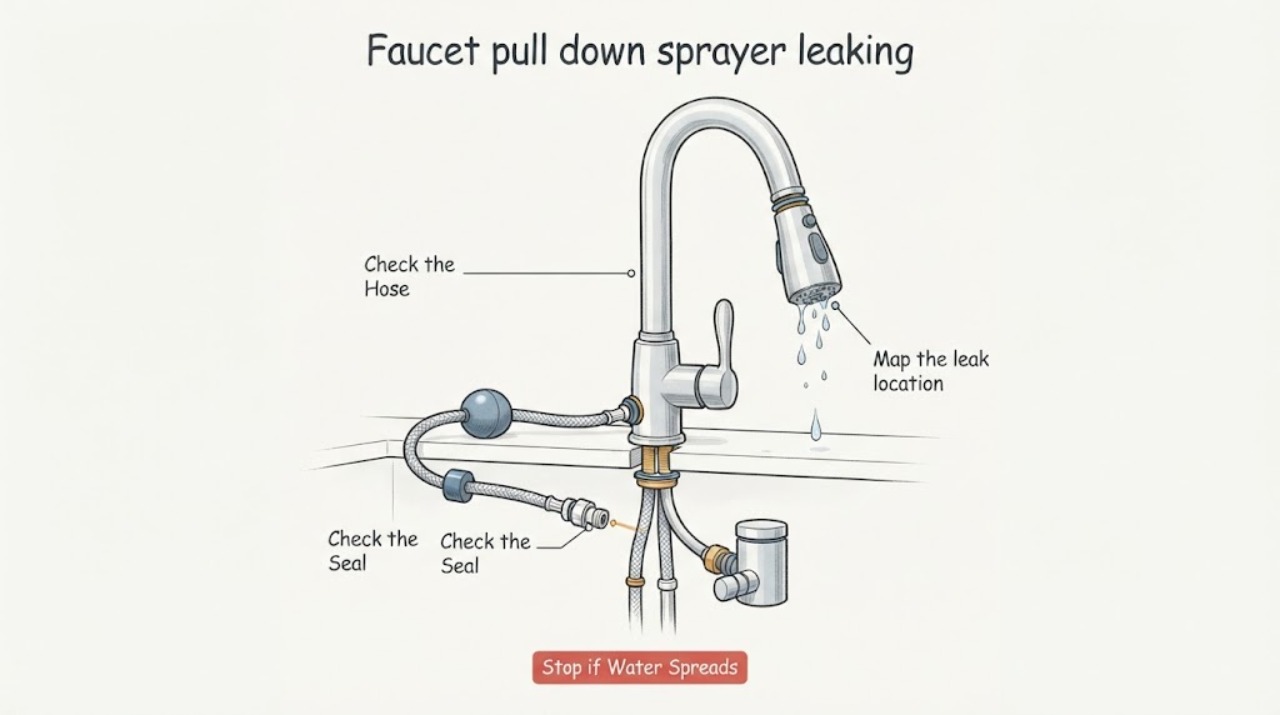
Faucet pull down sprayer leaking: What to Check and What to Do Next
First locate where the pull-down sprayer leaks: at the wand, hose, quick connection under the sink, faucet body, or diverter path. From a dry position, inspect the wand, hose routing, visible fittings, and cabinet contents without pulling hard or opening the faucet.
-
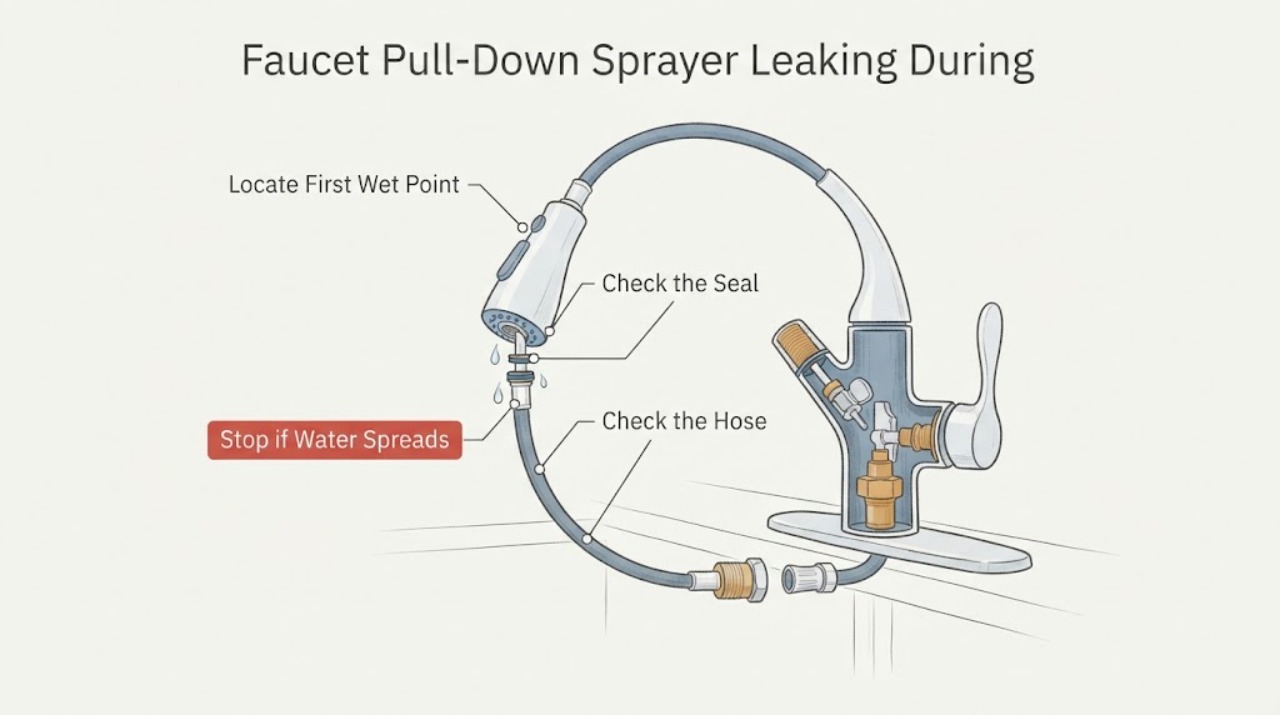
Faucet Pull-Down Sprayer Leaking During Spray Use: What to Check and What to Do Next
A leak that appears only when the pull-down sprayer is in use is usually somewhere in the pressurized spray path: the sprayhead-to-hose seal or connection, the wand or hose, an under-sink quick connection, or a diverter and spout path. First find the first wet point rather than tightening everything.
-
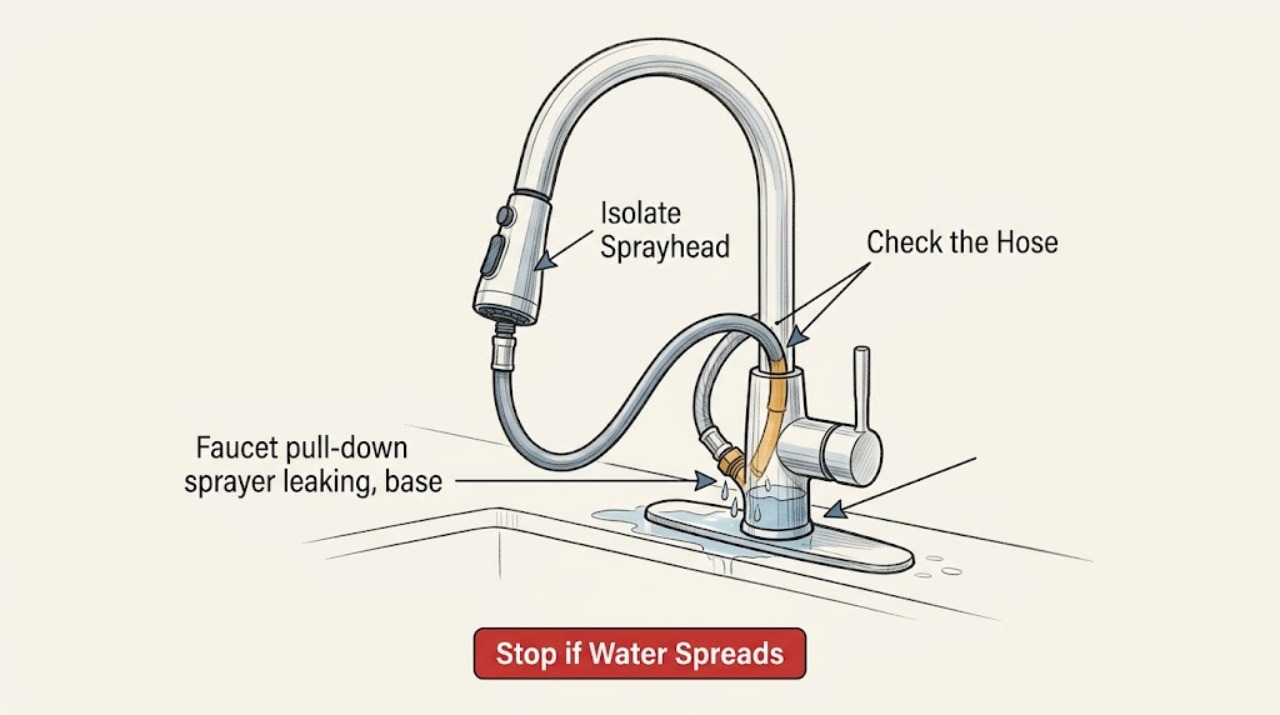
Faucet pull-down sprayer leaking, base dry or wet: What to Check and What to Do Next
A pull-down faucet can leak at the sprayhead, the hose connection under the sink, the spout or handle seals, or a supply connection; the wet or dry base is a useful location clue, not a diagnosis. Dry the faucet and hose, make a short test while watching the sprayhead and the cabinet, then turn both hot and cold supplies off before disconnecting any hose or connection.
-
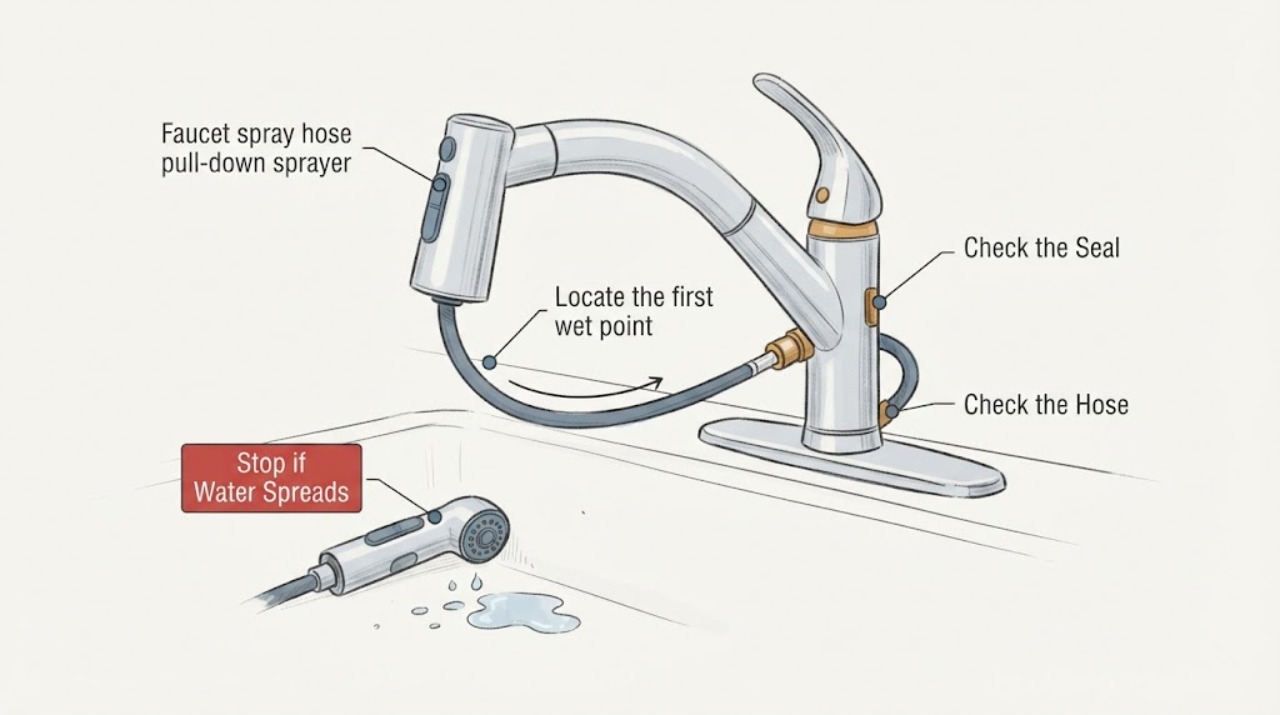
Faucet spray hose pull-down sprayer leaking: What to Check and What to Do Next
First find where the water starts: the spray wand face or body, the wand-to-hose joint, the hose or quick-connect below the deck, or the faucet body. Put a towel or container under the connections, turn off the faucet's hot and cold supplies before loosening anything, and identify the faucet model.
-
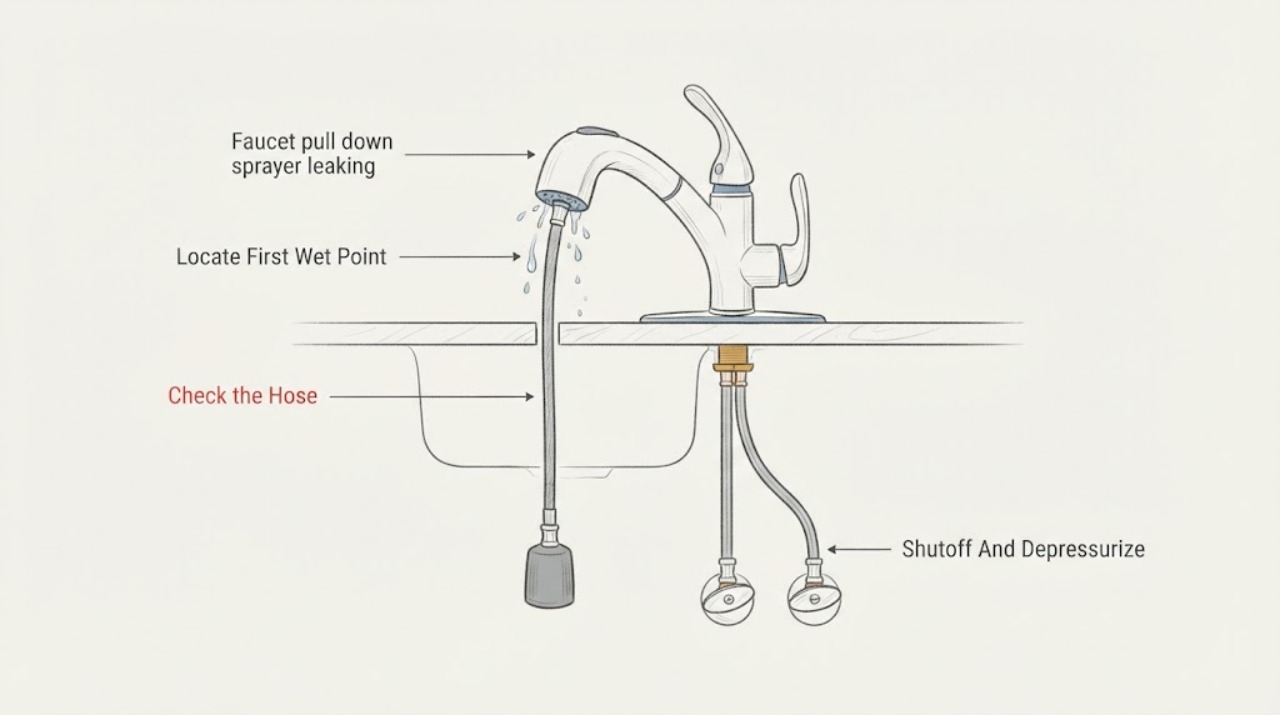
Kohler faucet pull down sprayer leaking: What to Check and What to Do Next
First identify whether water escapes at the sprayhead-to-hose connection, from the sprayhead face or body, along the pull-down hose below the counter, or at a supply connection. If water is spreading, close the hot and cold faucet shutoffs under the sink without force, open the faucet briefly to release residual pressure, and place a towel or bucket below the connections.
-
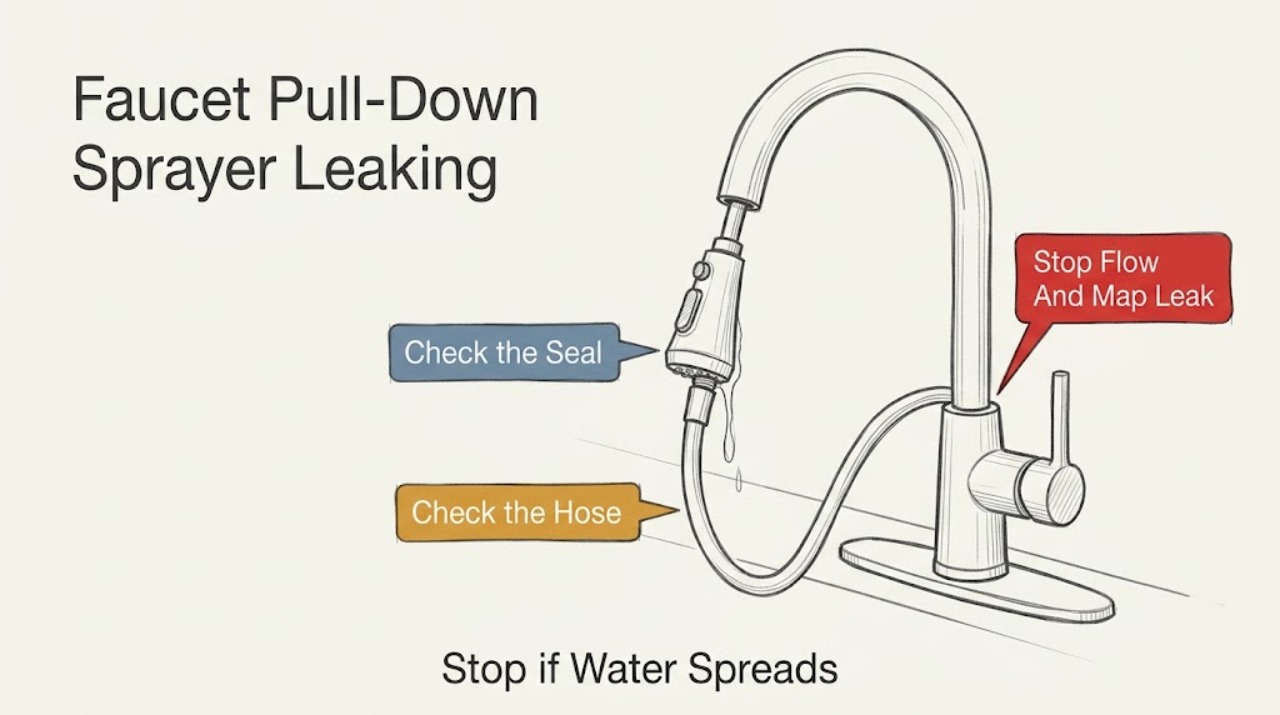
Moen Faucet Pull-Down Sprayer Leaking: What to Check and What to Do Next
First identify whether water is coming from the spray-wand connection, the braided hose, the spout receptor or faucet base, or the spray outlet after shutoff. With the handle off, wipe only the accessible area dry and avoid disconnecting a pressurized hose.
-
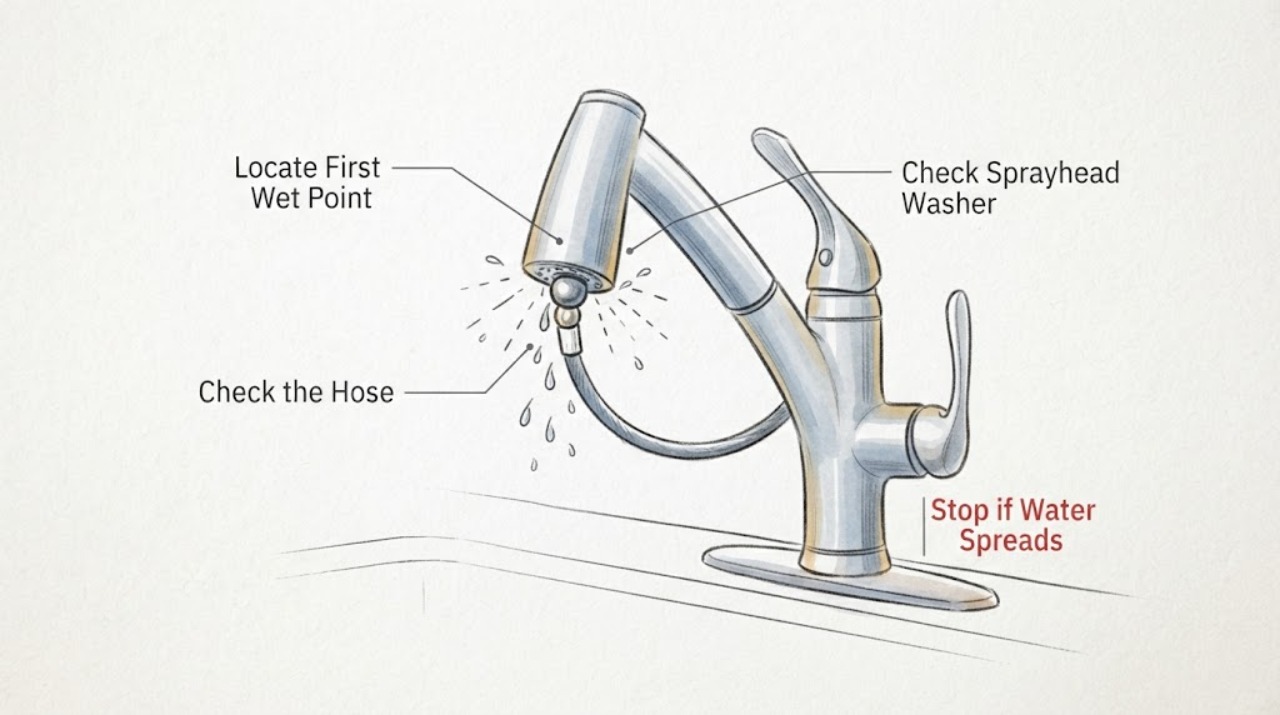
Pfister faucet pull-down sprayer leaking: What to Check and What to Do Next
A Pfister pull-down sprayer leak is easiest to diagnose by location. Water at the sprayhead or ball joint can come from a missing or displaced washer, a loose ball-joint piece, or a sprayhead that needs replacement.