
Repair problem
Faucet Low Water Pressure Troubleshooting Guides
Published FixGraph guidance for diagnosing and responding to faucet low water pressure.
Matching published guides
Choose a guide that matches the service, equipment, and conditions you are seeing.
-
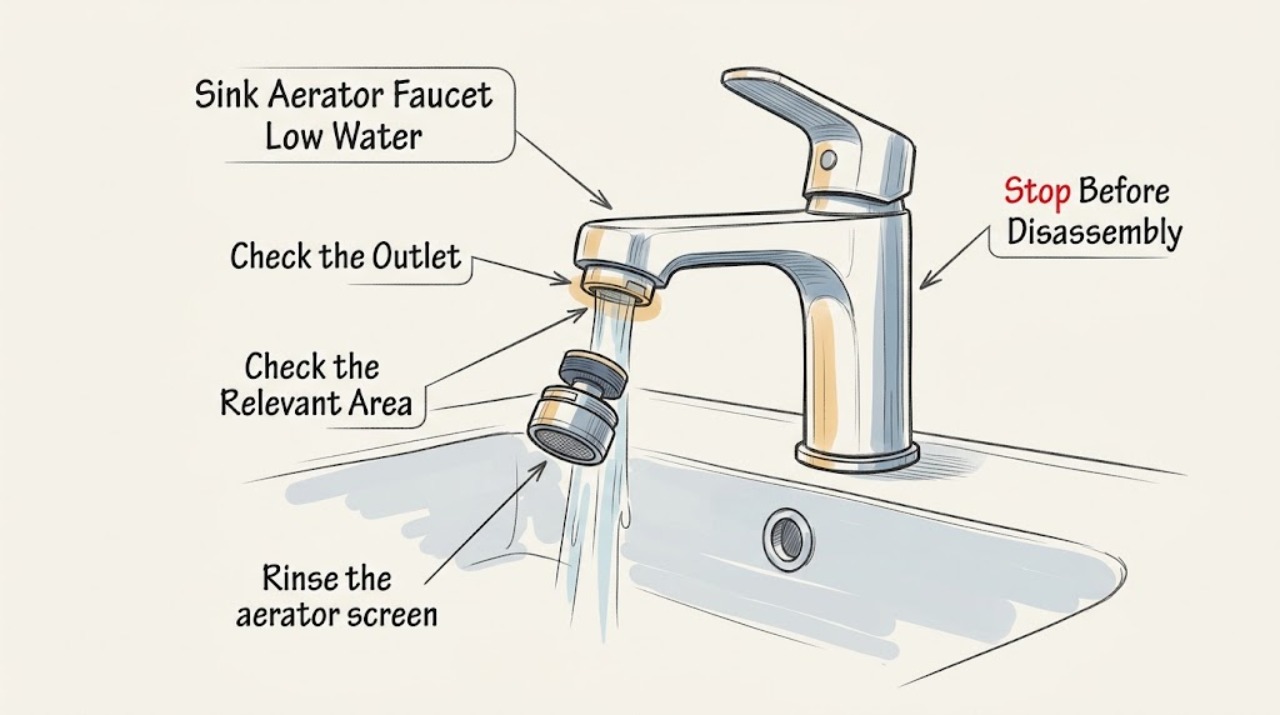
American Standard Sink Aerator Faucet Low Water Pressure: What to Check and What to Do Next
When one American Standard sink faucet has weak flow, first compare the stream at the spout, spray outlet, and both temperature positions, then remove and rinse the aerator and briefly retest with it out. If flow returns, the aerator screen or flow insert is restricted; clean it or identify the exact model before replacing it.
-
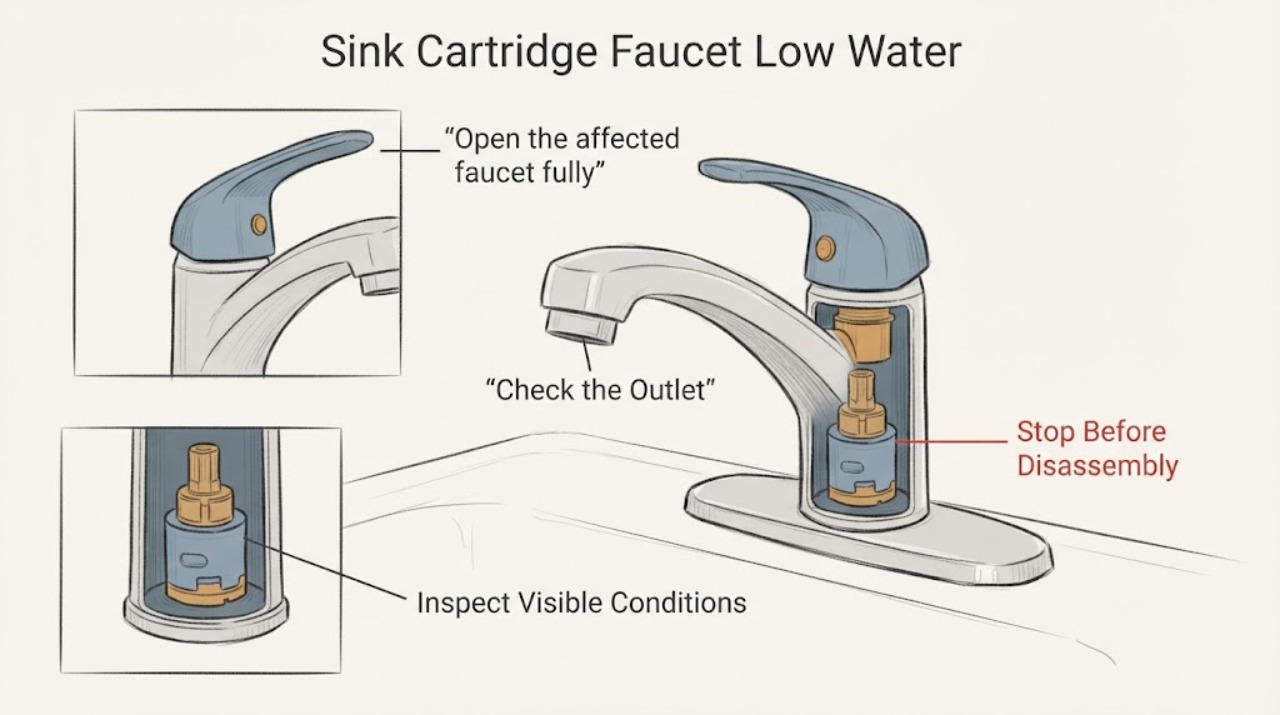
American Standard Sink Cartridge Faucet Low Water Pressure: What to Check and What to Do Next
When an American Standard sink faucet has low water pressure, first determine whether the restriction is at the faucet outlet, one supply side, or the whole sink. Remove and rinse a dirty aerator or spray outlet, confirm both stop valves are fully open and the hoses are not kinked, then compare hot and cold flow with another nearby fixture.
-
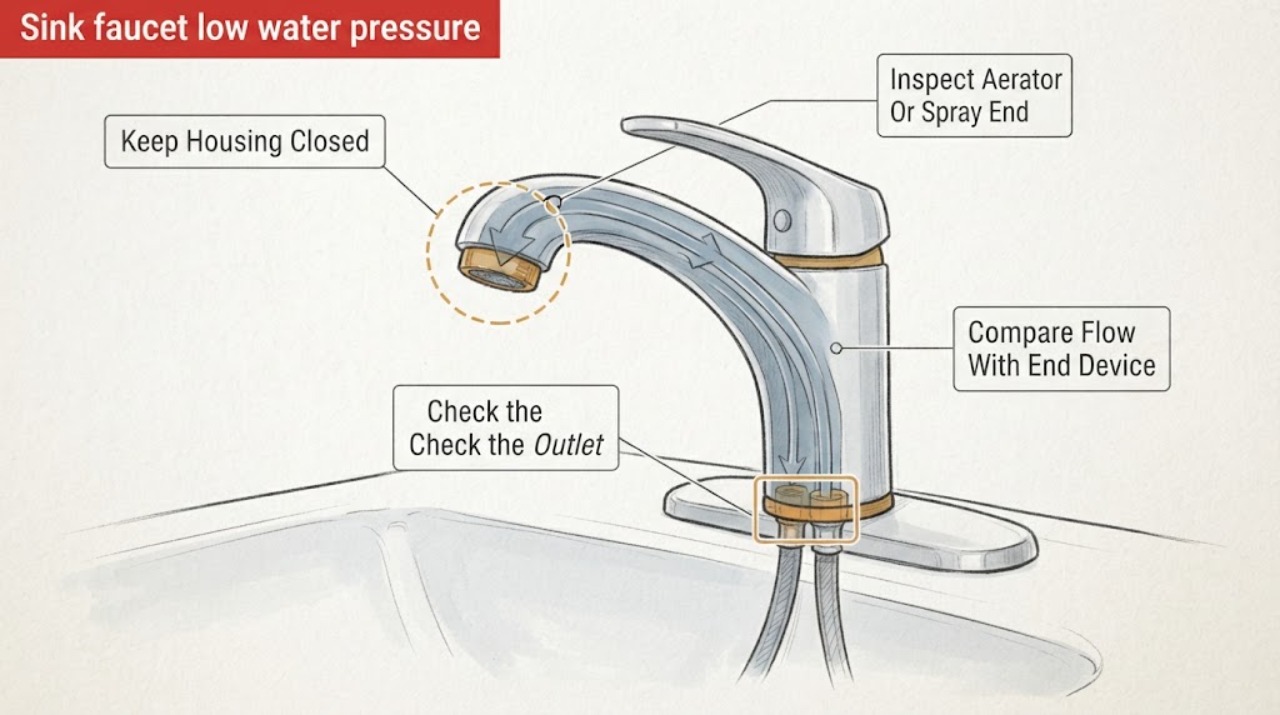
American standard sink faucet low water pressure: What to Check and What to Do Next
When an American Standard sink faucet has low flow, first compare it with another nearby faucet and compare hot with cold. If only this outlet is weak, close the handles, place a cloth over the drain, and inspect the removable aerator or spray head for scale or debris; clean it only as the faucet instructions allow, then test with the end device removed into the sink.
-
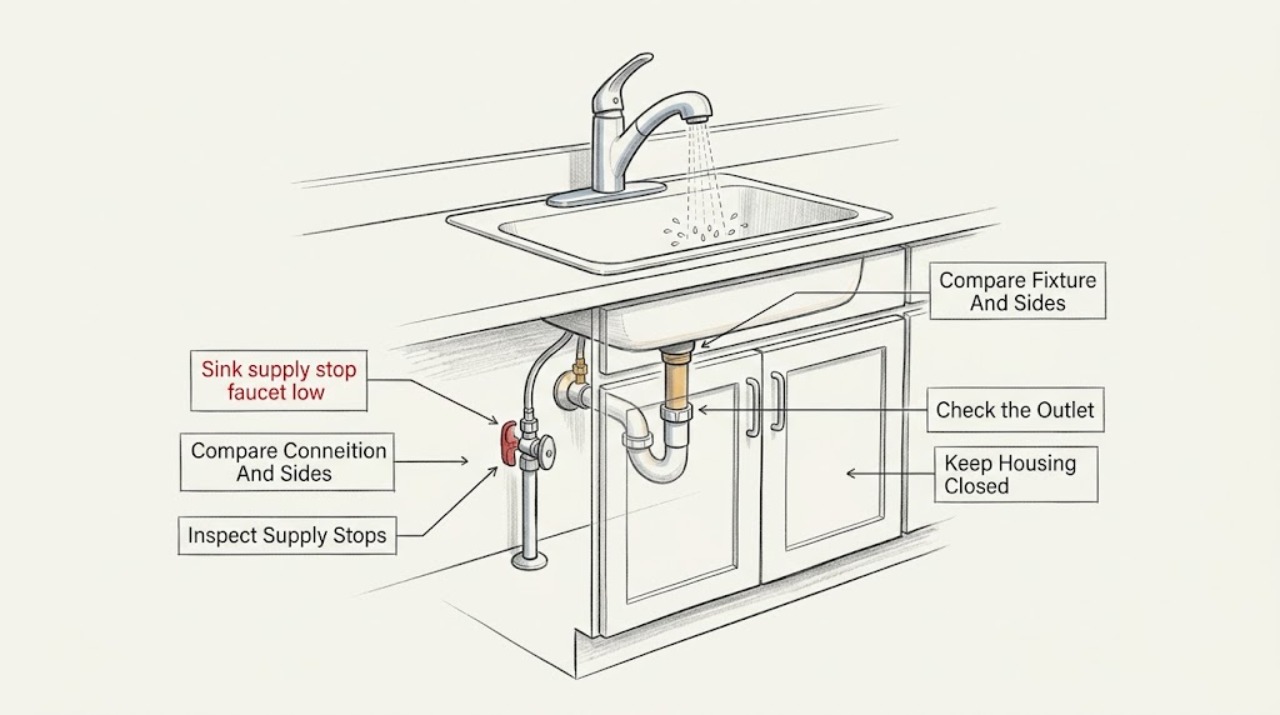
American Standard sink supply stop faucet low water pressure: What to Check and What to Do Next
First determine whether low flow affects only this American Standard faucet or the whole sink, then compare hot and cold flow. If one side is weak, check that its accessible supply stop is fully open and not visibly leaking; if both sides are weak only at the faucet, inspect an accessible aerator or spray outlet for debris.
-
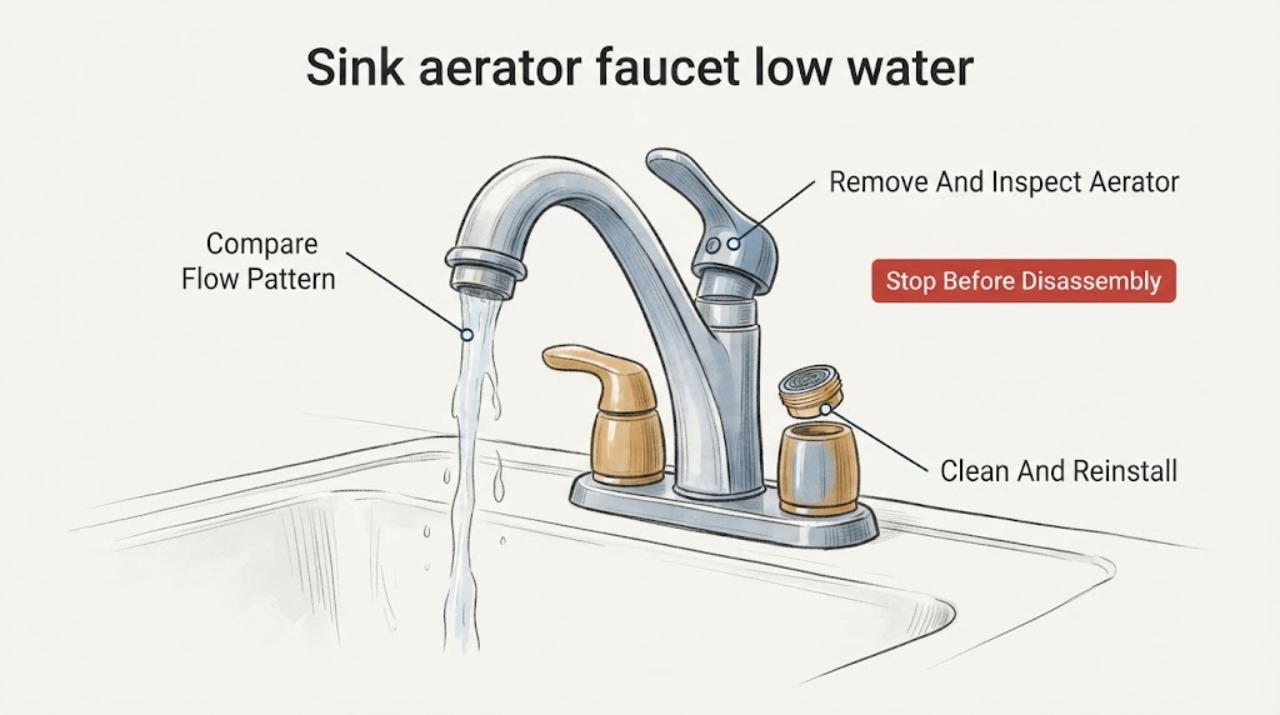
Delta sink aerator faucet low water pressure: What to Check and What to Do Next
If only this Delta sink faucet has weak flow, compare hot and cold flow and another nearby fixture first. Delta says a clogged aerator or flow restrictor can greatly reduce faucet flow; remove the aerator only as the exact faucet instructions allow, clean its screen and gasket without force, and reinstall it correctly.
-
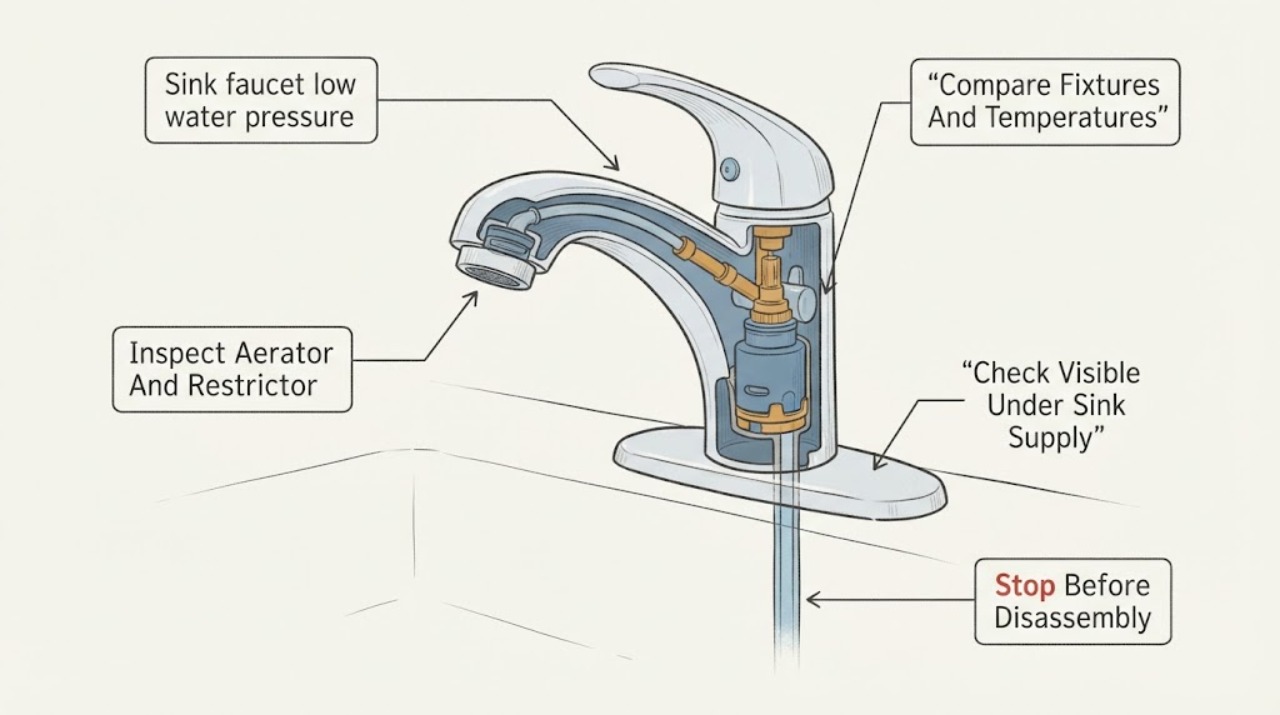
Delta sink faucet low water pressure: What to check and what to do next
Low pressure at a Delta sink faucet is usually a restriction or supply problem, not a reason to remove the faucet's flow-control parts. First compare the affected faucet with another nearby fixture and test hot and cold separately.
-
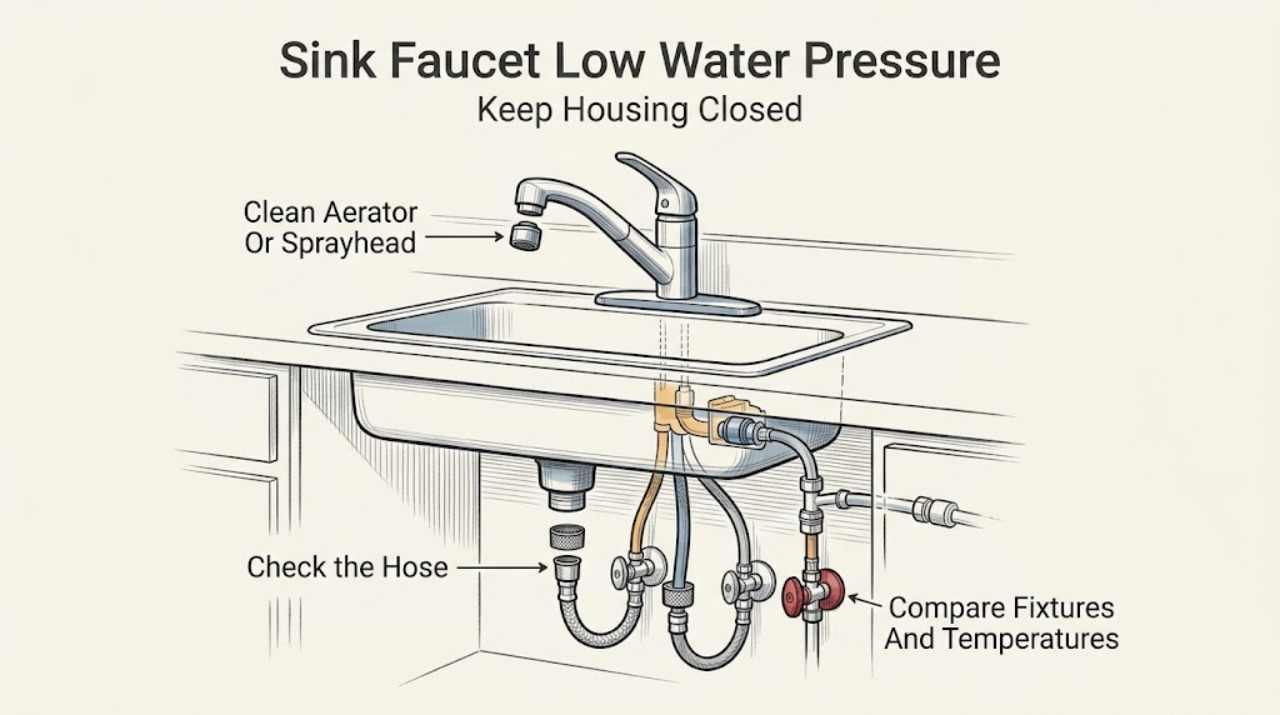
Kohler Sink Faucet Low Water Pressure: What to Check and What to Do Next
Low flow at a Kohler sink faucet usually comes from a restricted aerator or sprayhead, a partly closed supply stop, a kinked hose, debris in a screen or supply line, or a valve or cartridge restriction. First compare this faucet with another fixture and test hot and cold separately.
-
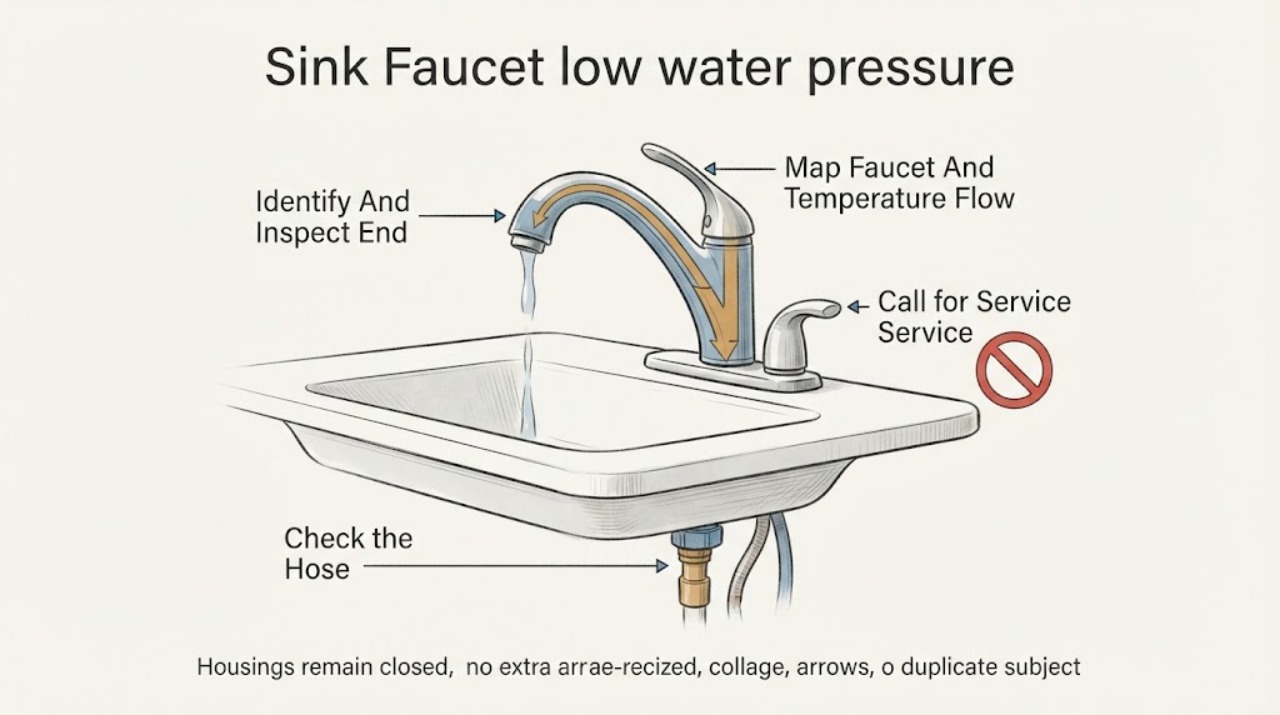
Moen sink faucet low water pressure: What to Check and What to Do Next
When a Moen sink faucet has low flow, first compare it with another nearby fixture and compare hot with cold. If only this faucet is weak, check the removable aerator, spray wand screen, or side-spray path for debris, then test flow at the hose or spout only as the Moen model instructions permit.
-
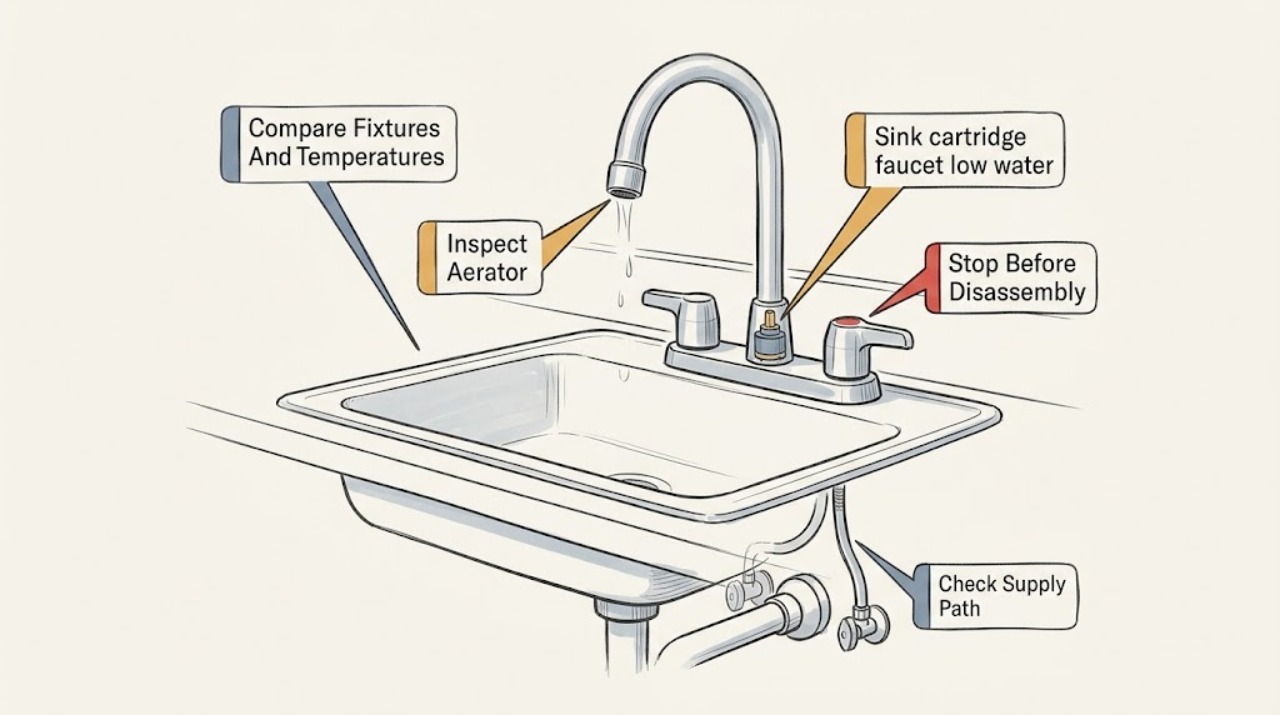
Sink cartridge faucet low water pressure: What to check and what to do next
When one sink faucet has low flow but nearby fixtures are normal, start at the faucet outlet and supply path: compare hot and cold, inspect the aerator, and check that the visible shutoff valves are open without forcing them. If the aerator is clear and both sides remain weak, debris or wear in the cartridge or valve body becomes more likely.
-
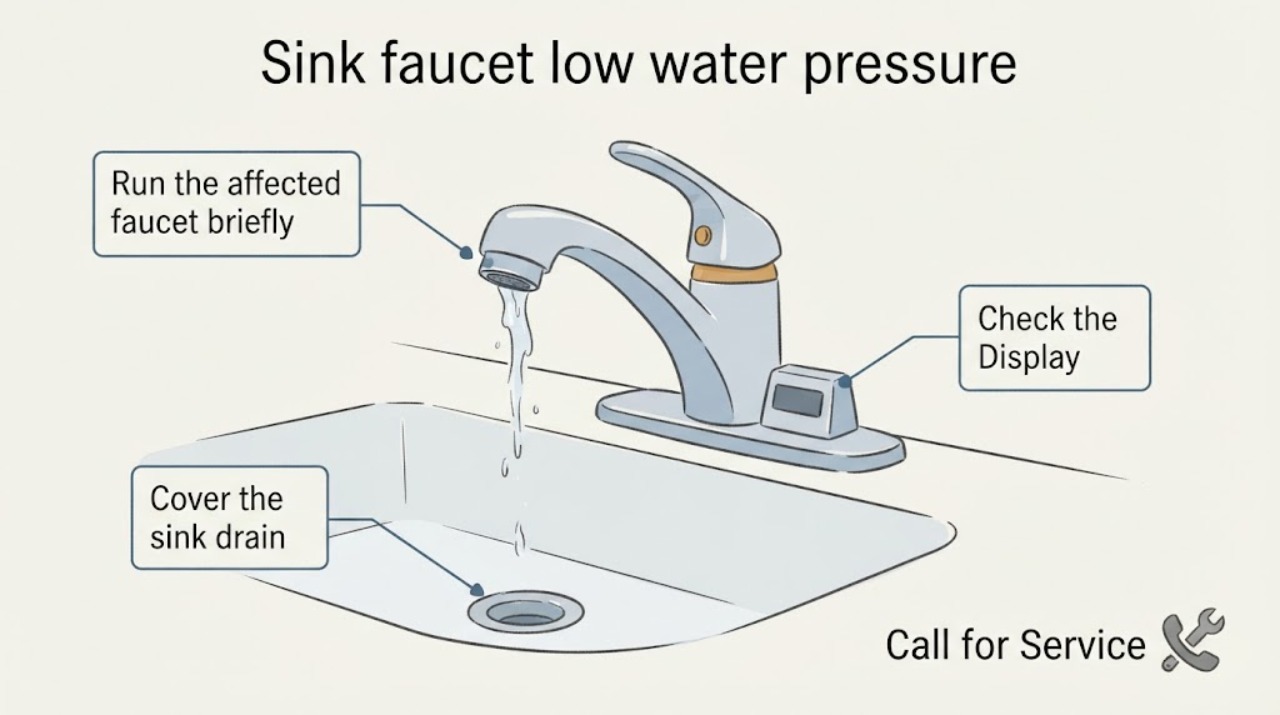
Sink faucet low water pressure other fixtures have normal flow: What to Check and What to Do Next
When other fixtures have normal flow, low flow at one sink faucet usually points to a local restriction rather than a whole-house pressure problem. Compare hot and cold flow, then cover the drain and remove the faucet aerator or screen if it is accessible.
-
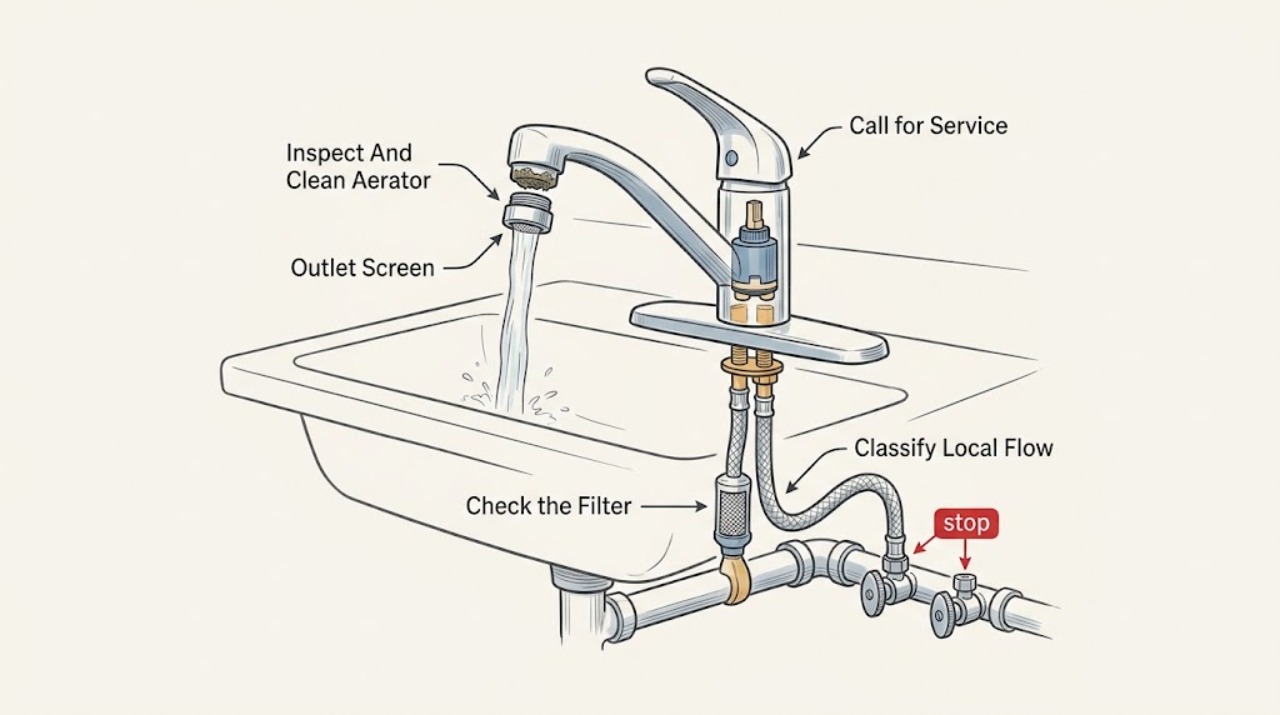
Sink faucet low water pressure screen may be clogged: What to Check and What to Do Next
Low flow at one sink faucet is often caused by mineral scale or debris in the aerator or outlet screen, a partly closed stop valve, a kinked supply line, or a faucet-specific filter. First compare that faucet with another fixture and compare hot with cold.
-
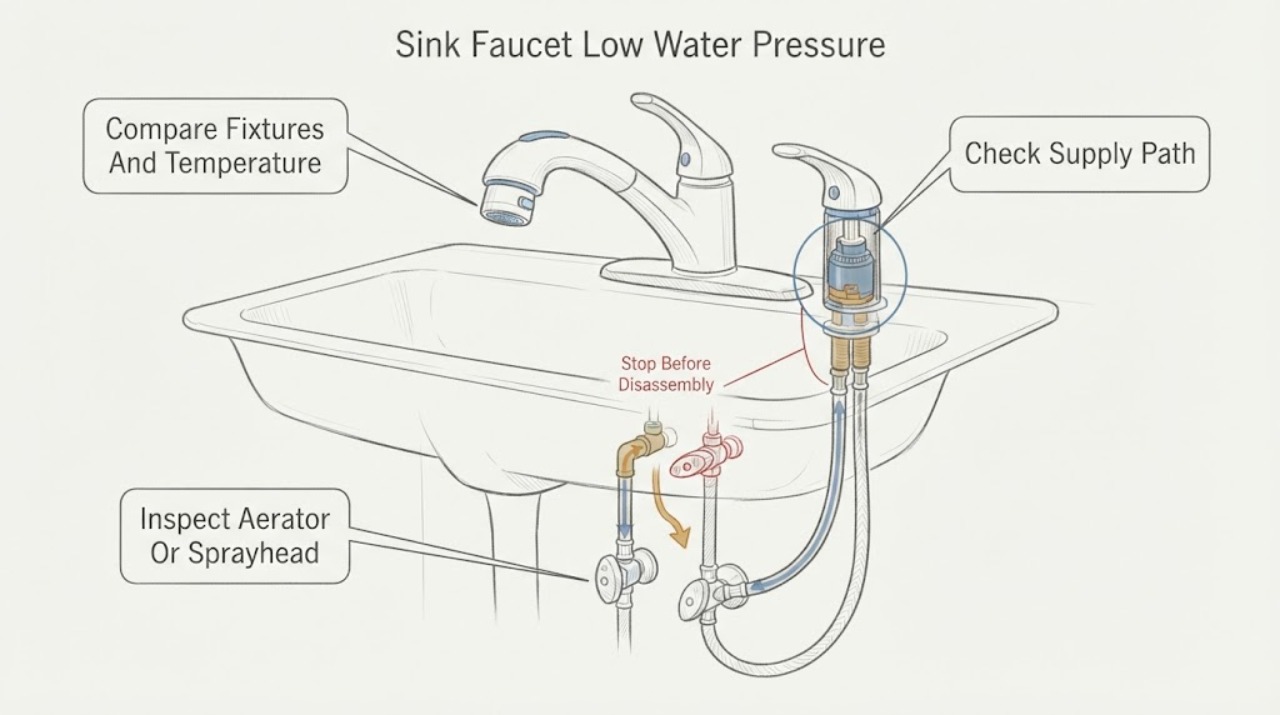
Sink faucet low water pressure one is affected: What to Check and What to Do Next
When only one sink faucet has low flow, a restriction at that fixture is more likely than a whole-house pressure problem. Start by comparing hot and cold flow and nearby faucets, then inspect or rinse the aerator or sprayhead, check that the under-sink shutoff valves are open and the supply hoses are not kinked, and identify whether a side spray or pull-out hose changes the symptom.
-
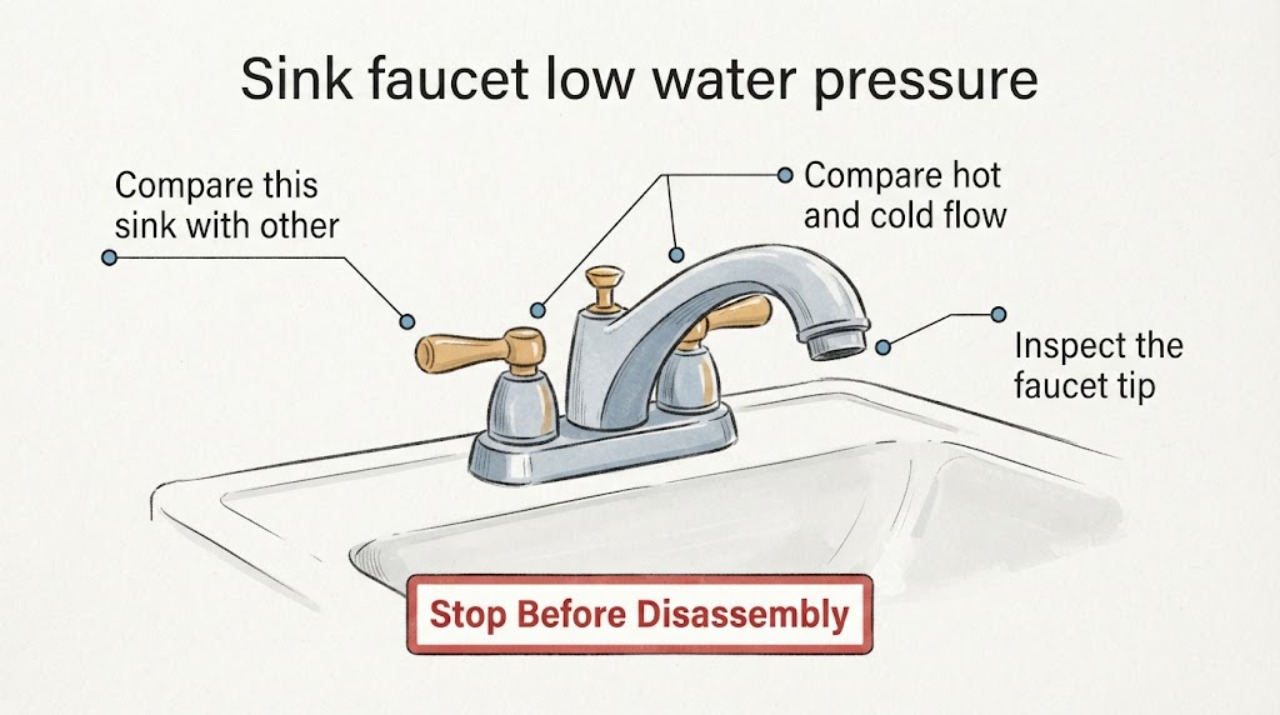
Sink faucet low water pressure: What to Check and What to Do Next
First determine whether the weak flow is limited to this sink or affects other fixtures, then compare hot and cold flow and inspect the faucet tip and visible supply area without taking anything apart. A single-faucet problem can be caused by a restricted aerator, cartridge, or supply path; a whole-home or sudden pressure change points to the building supply or a larger plumbing issue.
-
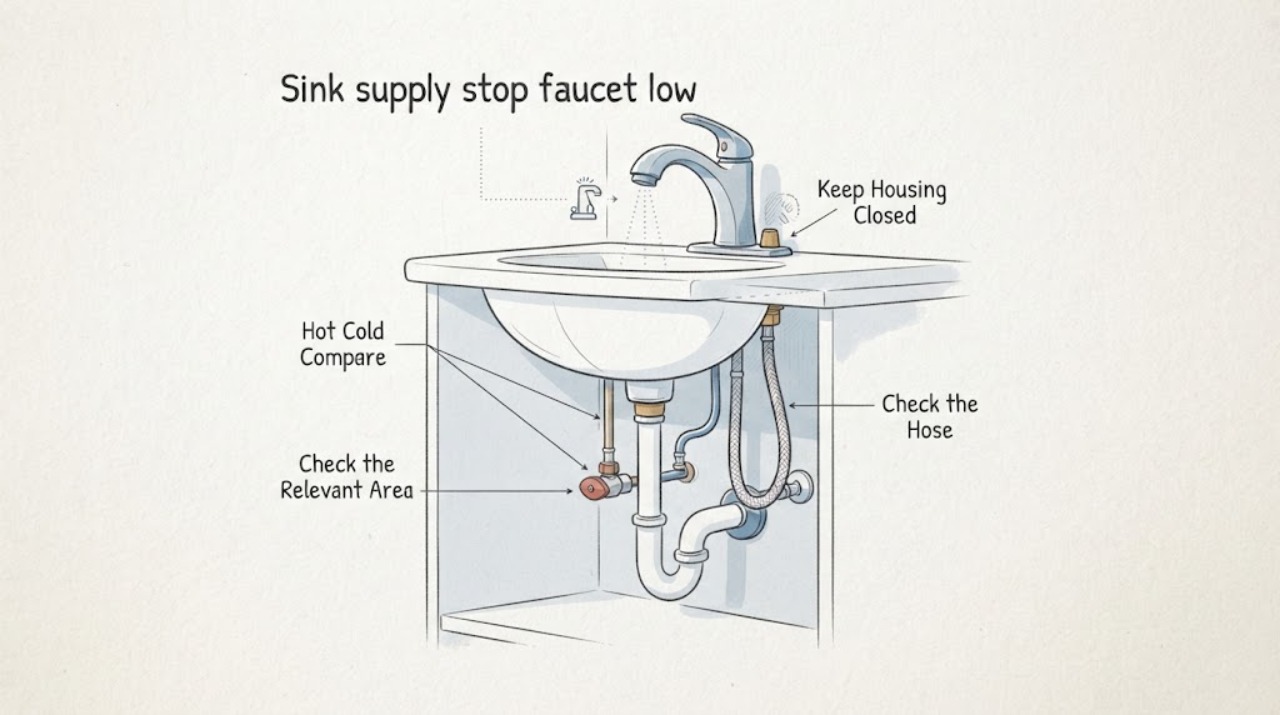
Sink supply stop faucet low water pressure: What to Check and What to Do Next
For a sink with low faucet pressure, first compare hot-only and cold-only flow, then inspect the matching supply stops and hoses for a fully open-looking position, abnormal resistance, leakage, kink, or crush point. If the exposed aerator turns by hand without force, remove it and compare flow with the screen off: improvement points toward the aerator, while no improvement keeps the supply path, cartridge, faucet body, or house pressure in scope.