
Repair problem
Leaking At Handle Troubleshooting Guides
Published FixGraph guidance for diagnosing and responding to leaking at handle.
Matching published guides
Choose a guide that matches the service, equipment, and conditions you are seeing.
-
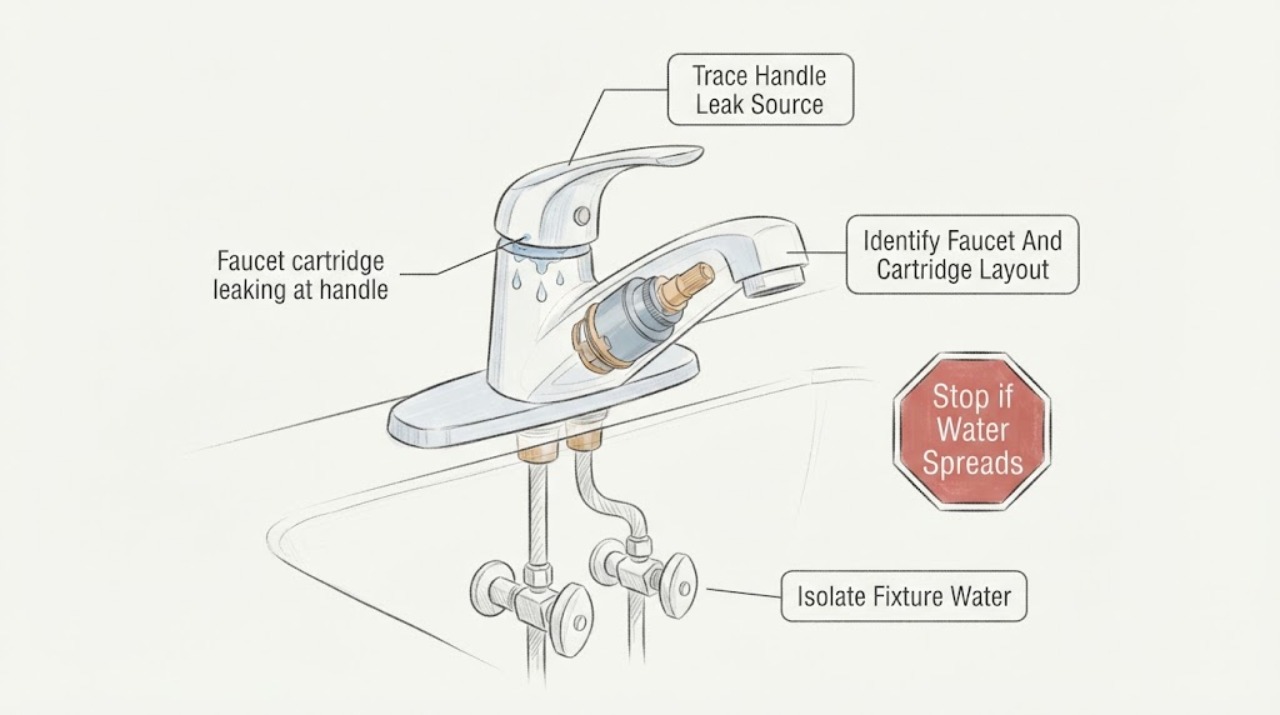
American standard faucet cartridge leaking at handle: What to Check and What to Do Next
A leak at an American Standard faucet handle is not automatically proof that the cartridge is bad. First dry the faucet and identify whether water starts at the handle base only when the faucet is pressurized, drips from the spout with the handle off, or comes from a supply connection below the deck.
-
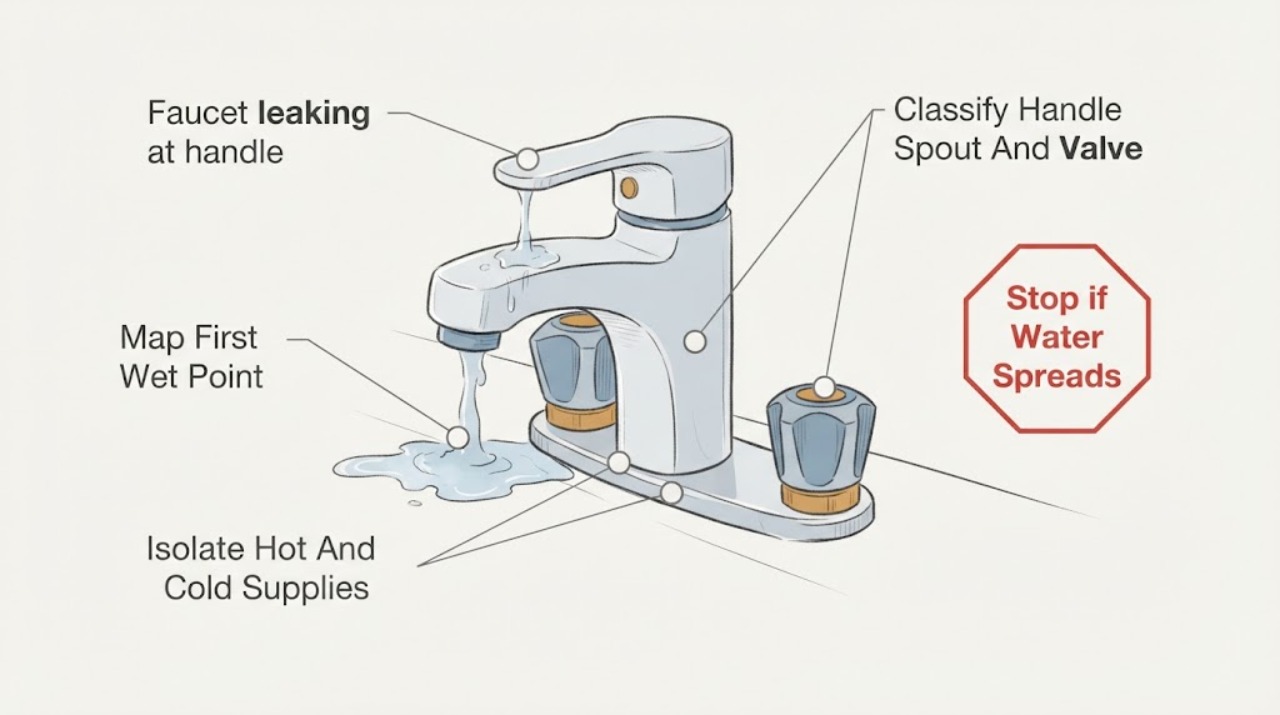
American Standard faucet leaking at handle: What to Check and What to Do Next
First dry the faucet and identify whether water starts under the handle, at the spout, around the base, or below the counter. Close the hot and cold angle stops before removing a handle or cartridge, then test one supply side at a time only when the stops are clearly identified and the area is safe.
-
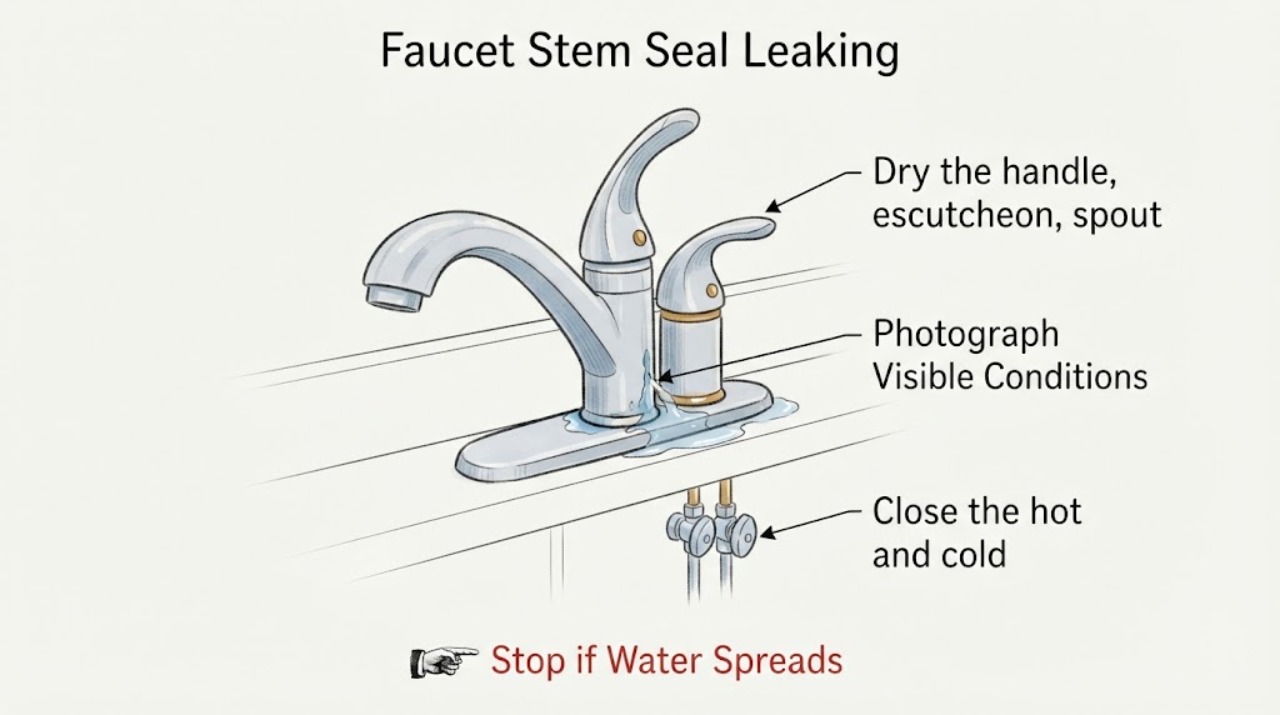
American Standard Faucet Stem Seal Leaking at Handle: What to Check and What to Do Next
Water appearing around an American Standard faucet handle usually means water is escaping at the valve stem, handle or bonnet area, but it can also be running down from the spout or a supply connection. Dry the faucet, trace the first wet point while the faucet is opened and closed, identify the exact model, and shut off the water before any disassembly.
-
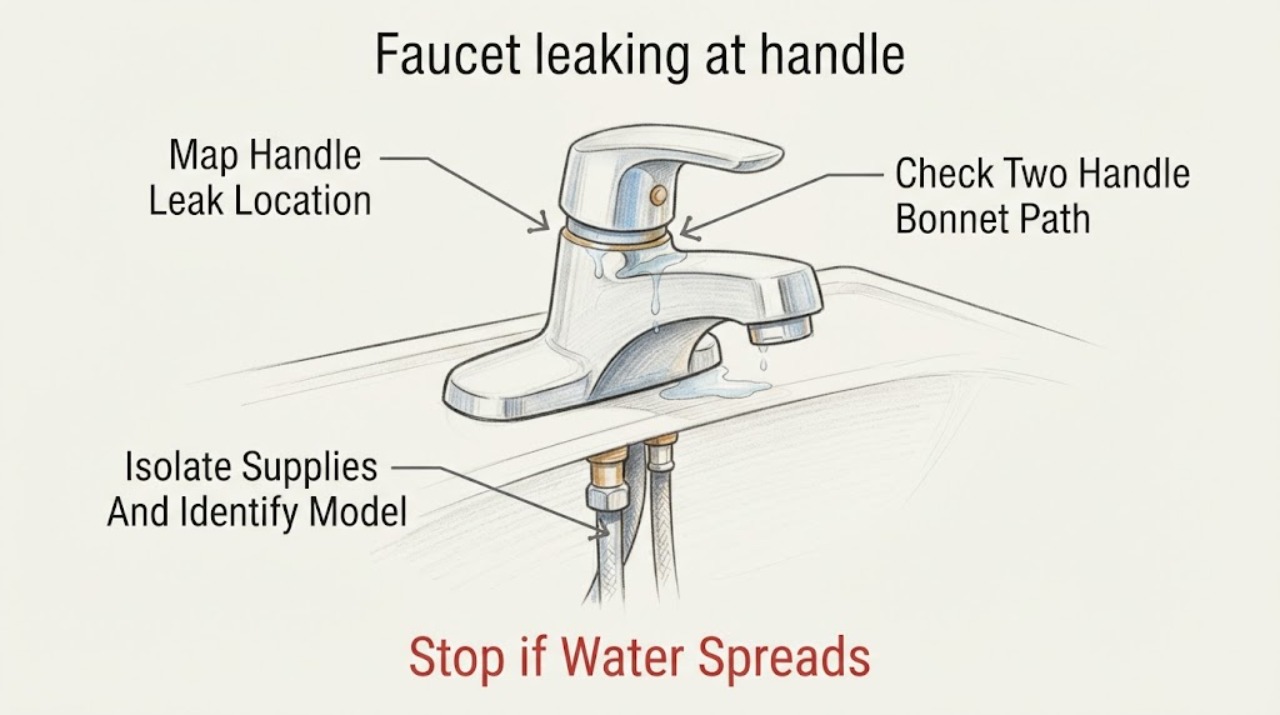
Delta faucet leaking at handle: What to Check and What to Do Next
First confirm that the water is actually coming from the handle area, not the spout tip, spout base, supply connection, or below the counter. A Delta two-handle faucet that leaks under one handle can need a bonnet or stem-related check, while a single-control faucet may need a model-specific cartridge or seal diagnosis; a leak that appears only while water is running points to a different path than a leak that continues with the handle off.
-
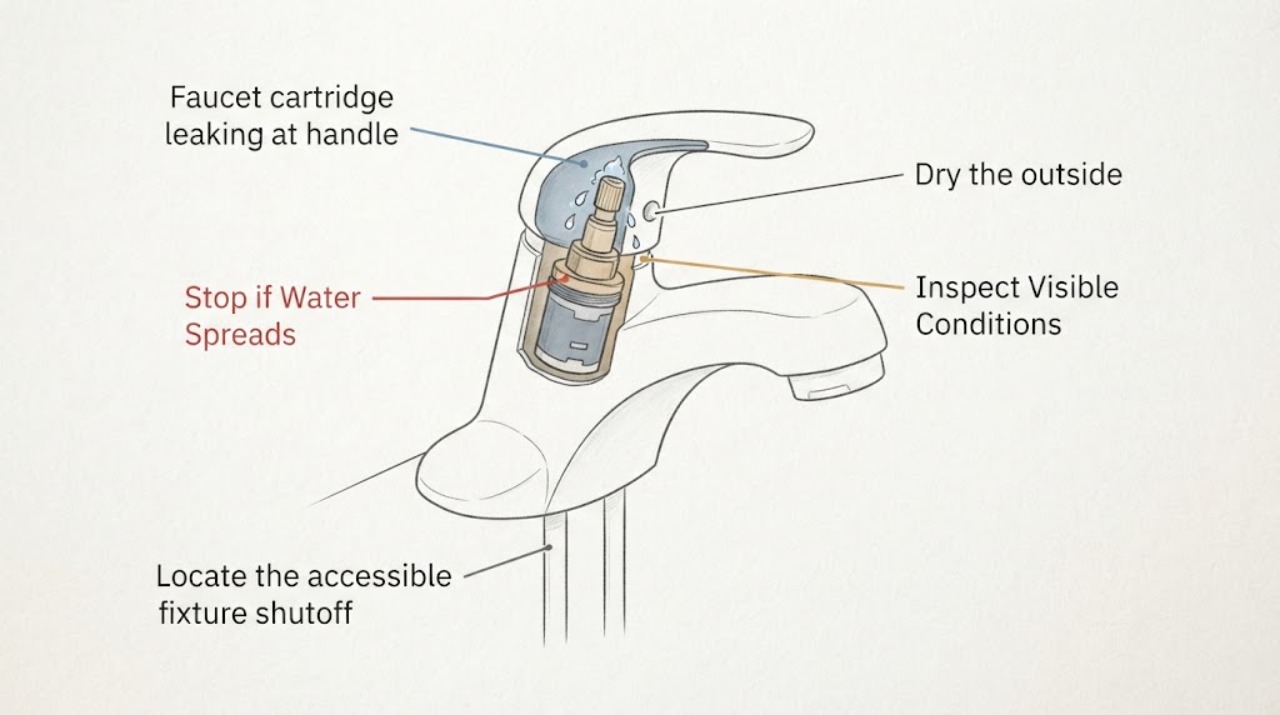
Faucet cartridge leaking at handle: What to Check and What to Do Next
First identify whether water is truly coming from beneath the handle, the faucet base, the spout, or a supply connection, and whether it happens only while the faucet runs or continues when it is off. A handle-area leak is commonly associated with the valve or cartridge, but the exact cartridge and seals depend on the faucet model.
-
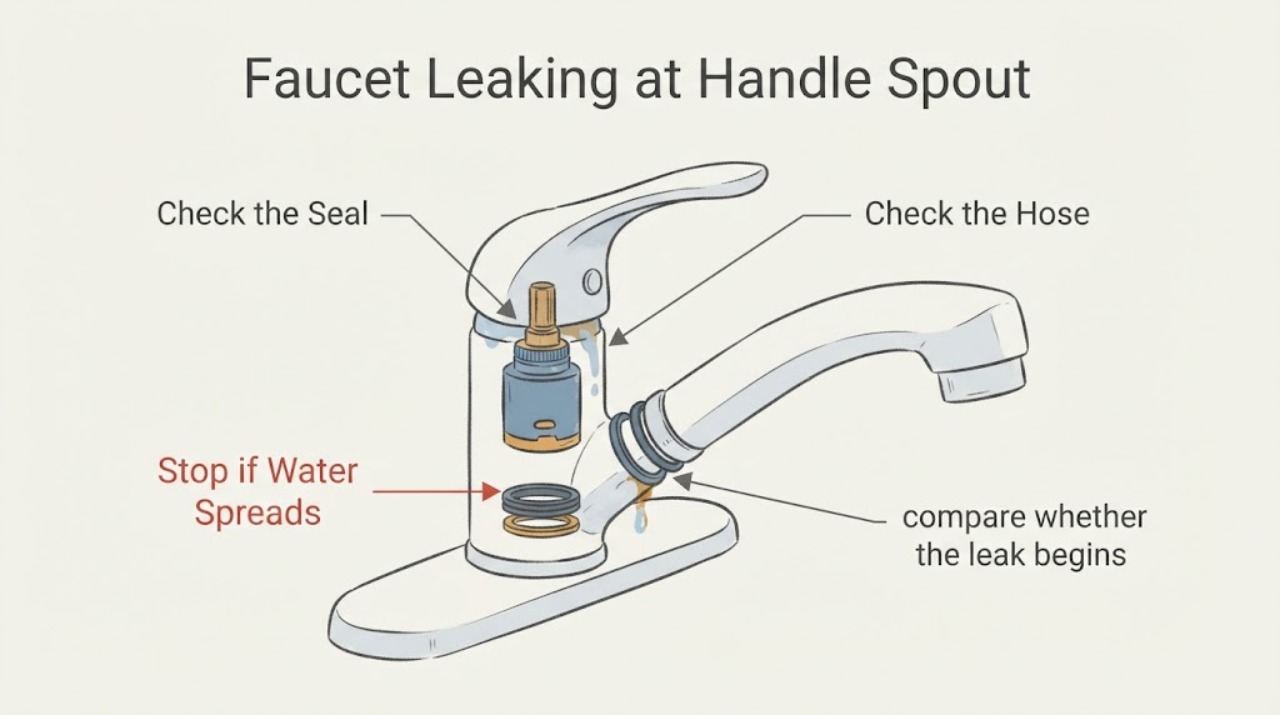
Faucet Leaking at Handle Spout May Be Dry: What to Check and What to Do Next
A faucet can leak around or under its handle while the spout stays dry. First identify whether the water appears only while the faucet is running or continues after the handle is off, and whether it starts at the handle, spout-to-body joint, or underneath the counter.
-
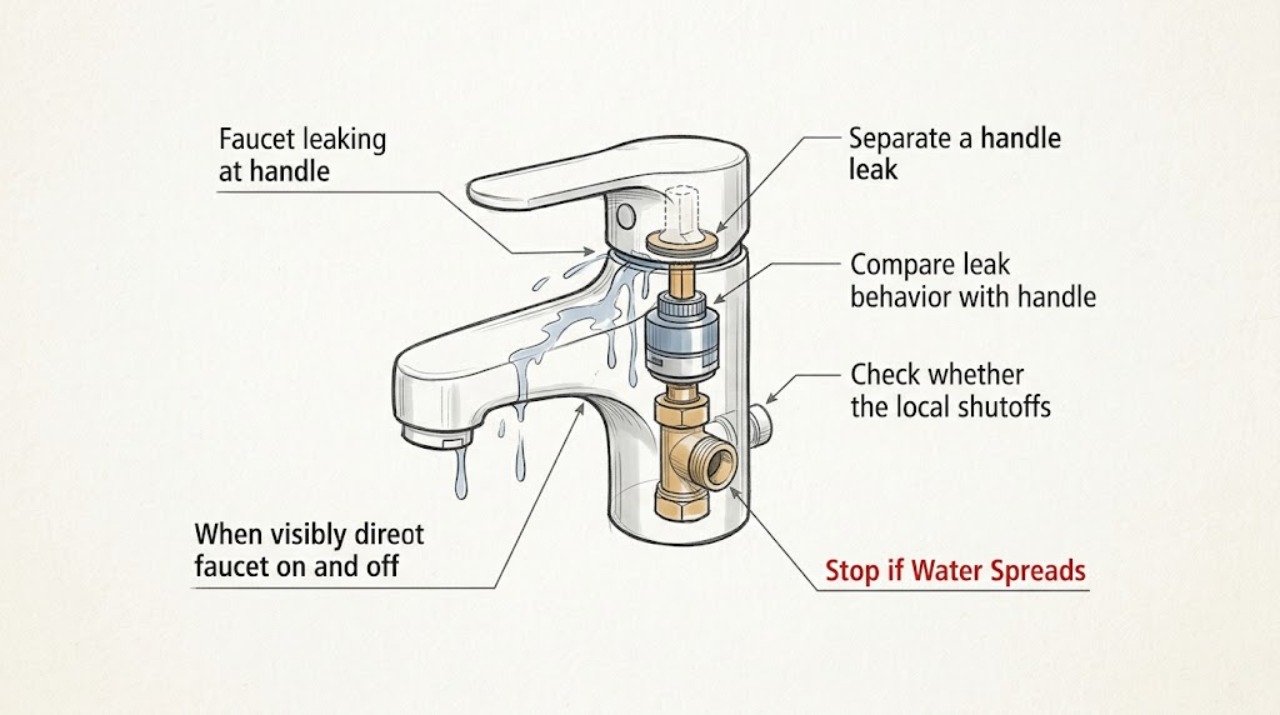
Faucet leaking at handle: What to Check and What to Do Next
First locate when and where the water appears. A leak that emerges around the handle while the faucet is running or continues when it is off often points to the valve or cartridge area, but water can also travel from the spout, supply connections, or the base and look like a handle leak.
-
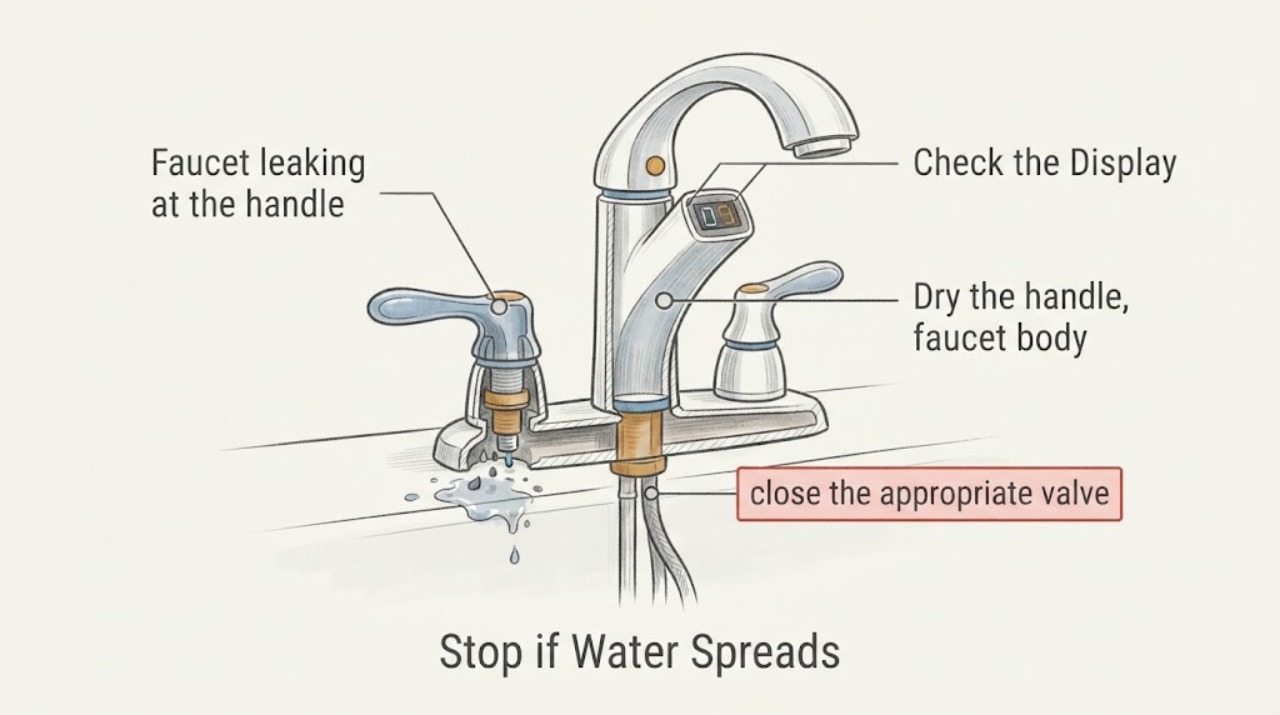
Faucet leaking at the handle, one or two handles affected: What to Check and What to Do Next
Water appearing around a faucet handle usually points to the valve cartridge in a single-handle faucet or a stem, cartridge, or seal under one of the handles in a two-handle faucet. First dry the faucet and identify whether water starts only when the handle moves, whether one or both handles are involved, and whether the trail actually begins at the spout base or a supply connection.
-
Faucet Leaking at the Handle: Water Appears When It Moves
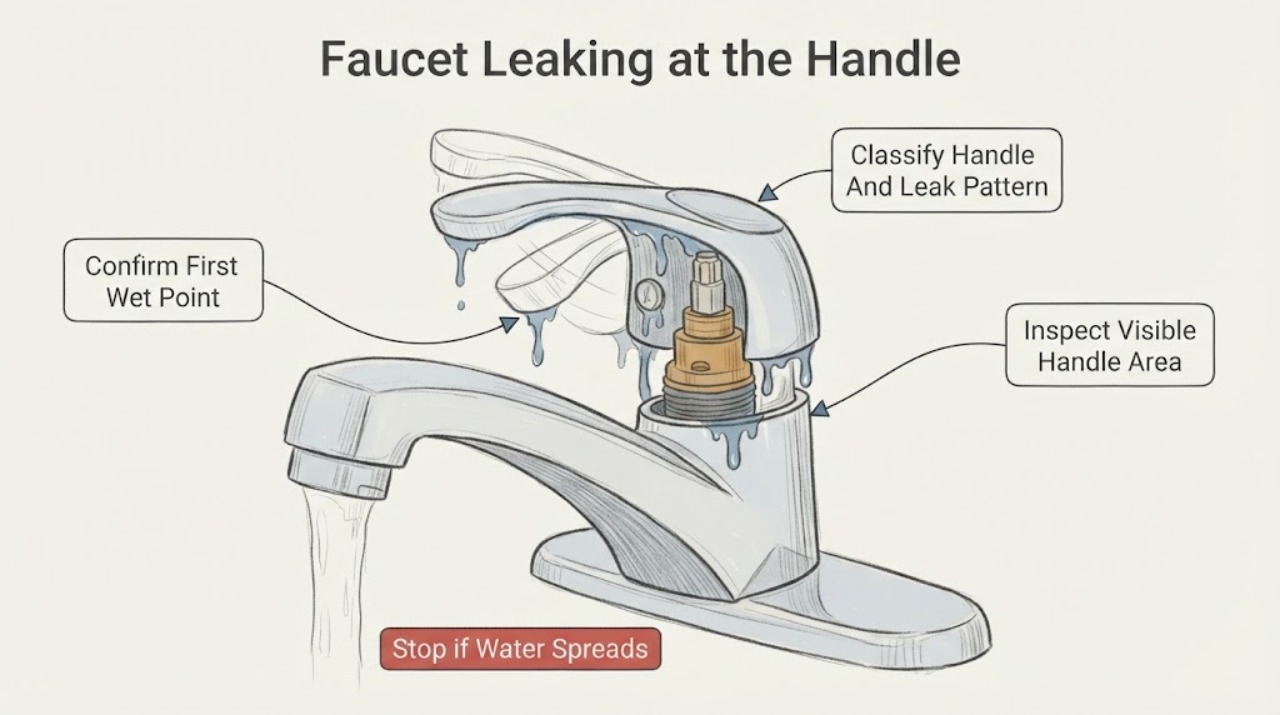
Water that appears around a faucet handle only while the handle moves usually means water is escaping from the control assembly or a seal, but first confirm that it is not running down from the spout, base, supply connection, or under the sink. Dry the faucet, operate the handle normally once, and watch the first wet point without forcing a stiff or loose control.
-
Faucet stem seal leaking at handle: What to Check and What to Do Next
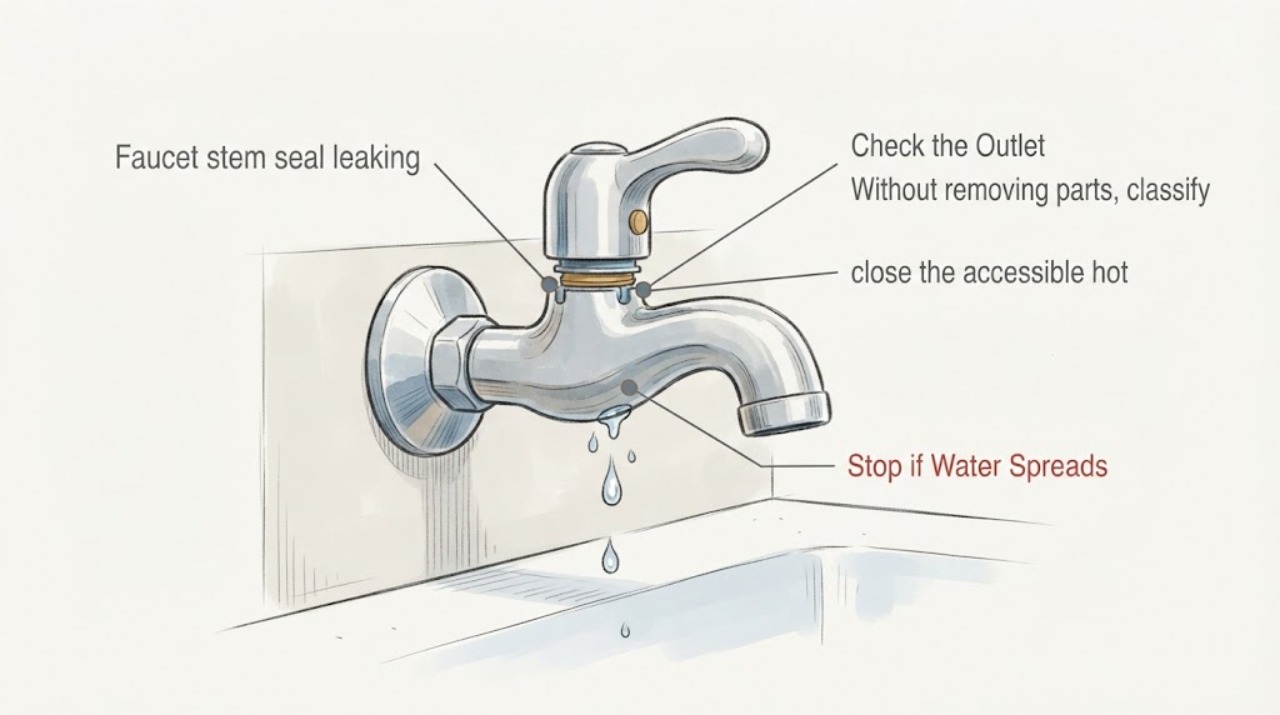
A leak at a faucet handle can involve the stem seal, a cartridge, the spout, or the faucet base, so do not assume an O-ring or stem is the right repair from the wet spot alone. First locate the first point that becomes wet and note whether it happens only while that handle is open or continues with the handle closed.
-
Kohler faucet leaking at handle: What to Check and What to Do Next
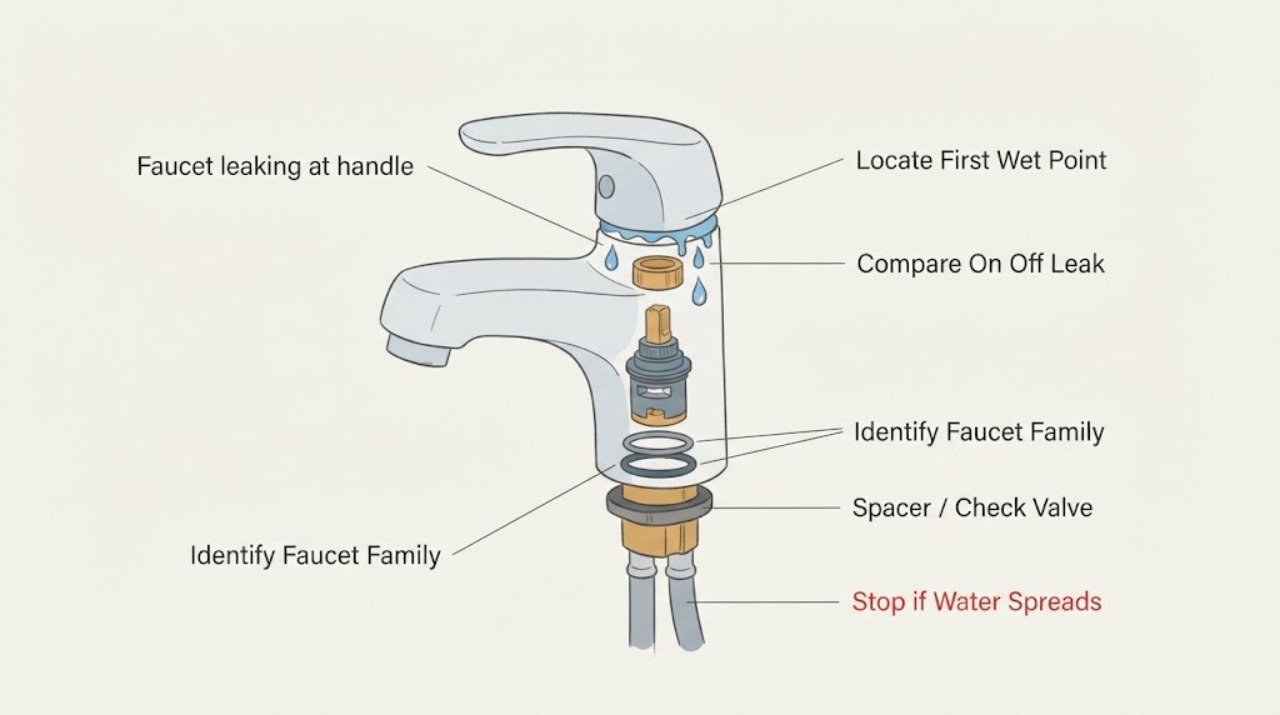
A Kohler faucet that leaks at the handle needs the leak path identified before a part is chosen. Dry the area, operate the faucet, and watch whether water appears under the handle only while the faucet is on, while it is off, or from a nearby supply or deck connection.
-
Moen Faucet Leaking at Handle: What to Check and What to Do Next
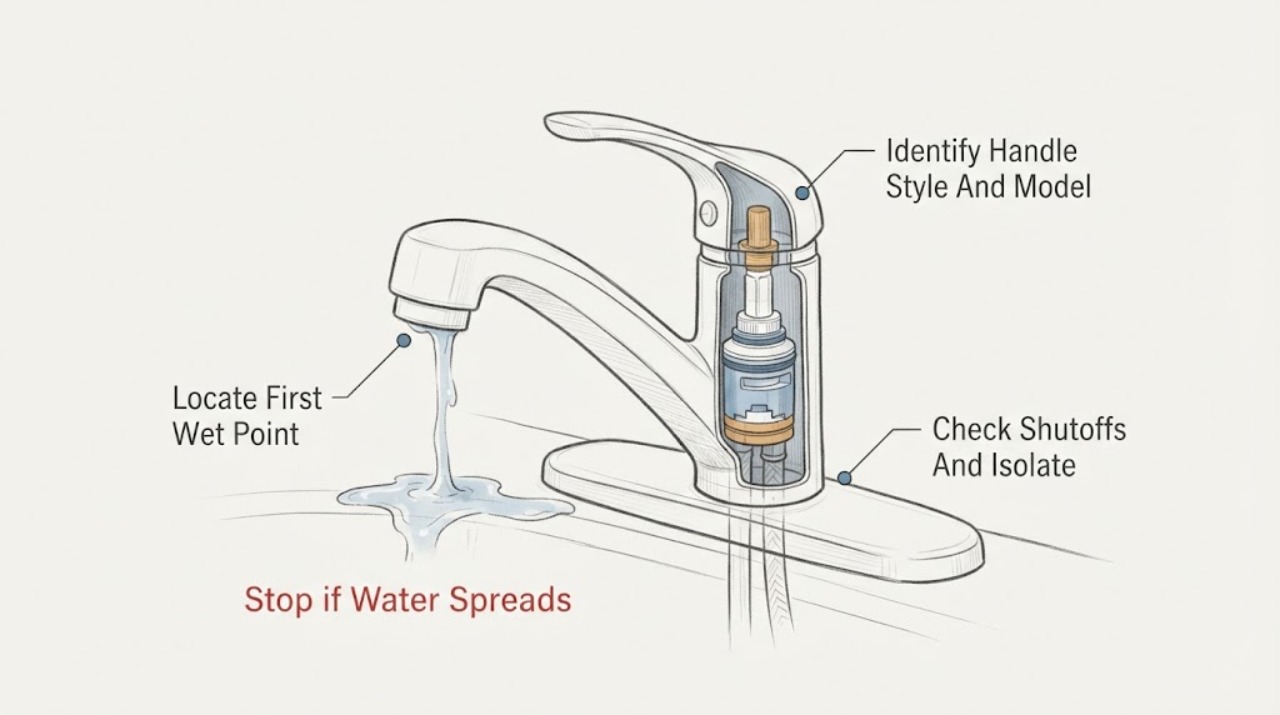
Water coming from a Moen faucet handle is usually a cartridge or handle-seal problem, but first confirm where the water starts. Dry the handle, spout, and base, wrap a paper towel around the handle, and turn the faucet on briefly.
-
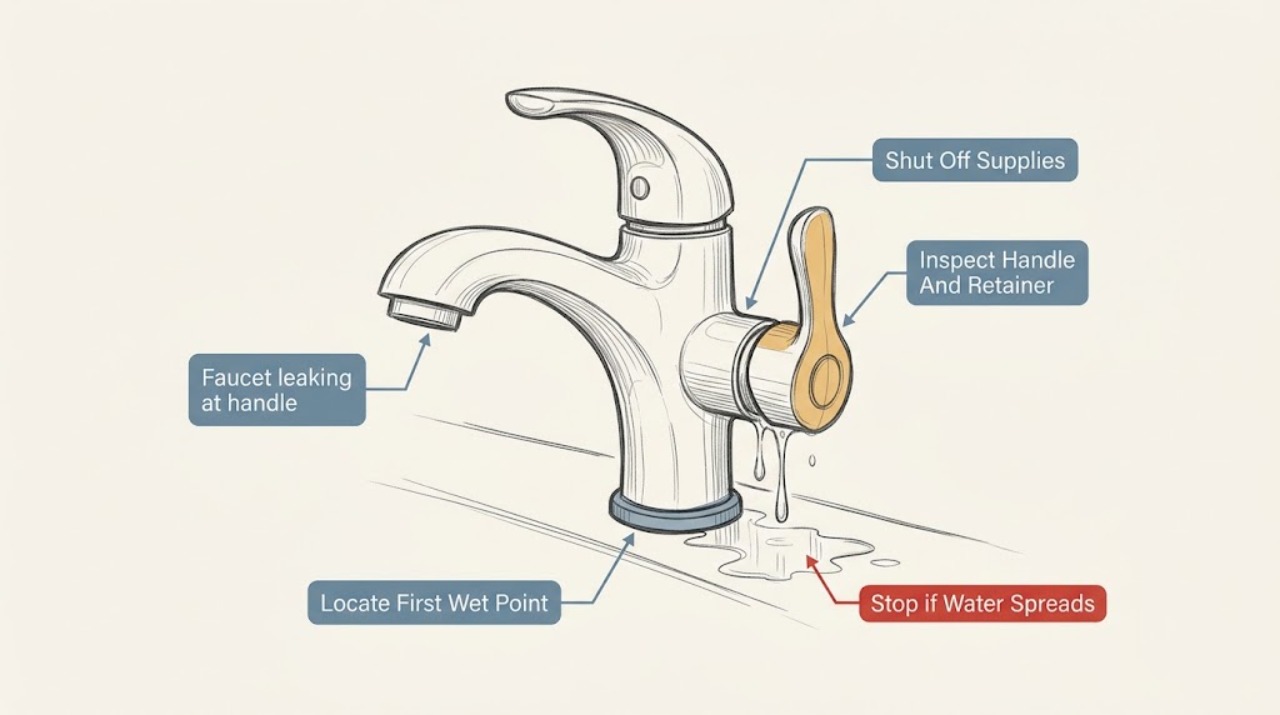
Pfister faucet leaking at handle: What to Check and What to Do Next
A Pfister faucet leaking under or around the handle usually needs the leak location separated from a leak at the spout, hose, supply line, or underbody. Dry the faucet and connections, run water briefly, and watch the first place that becomes wet.