
Repair problem
Not Cleaning Dishes Troubleshooting Guides
Published FixGraph guidance for diagnosing and responding to not cleaning dishes.
Matching published guides
Choose a guide that matches the service, equipment, and conditions you are seeing.
-
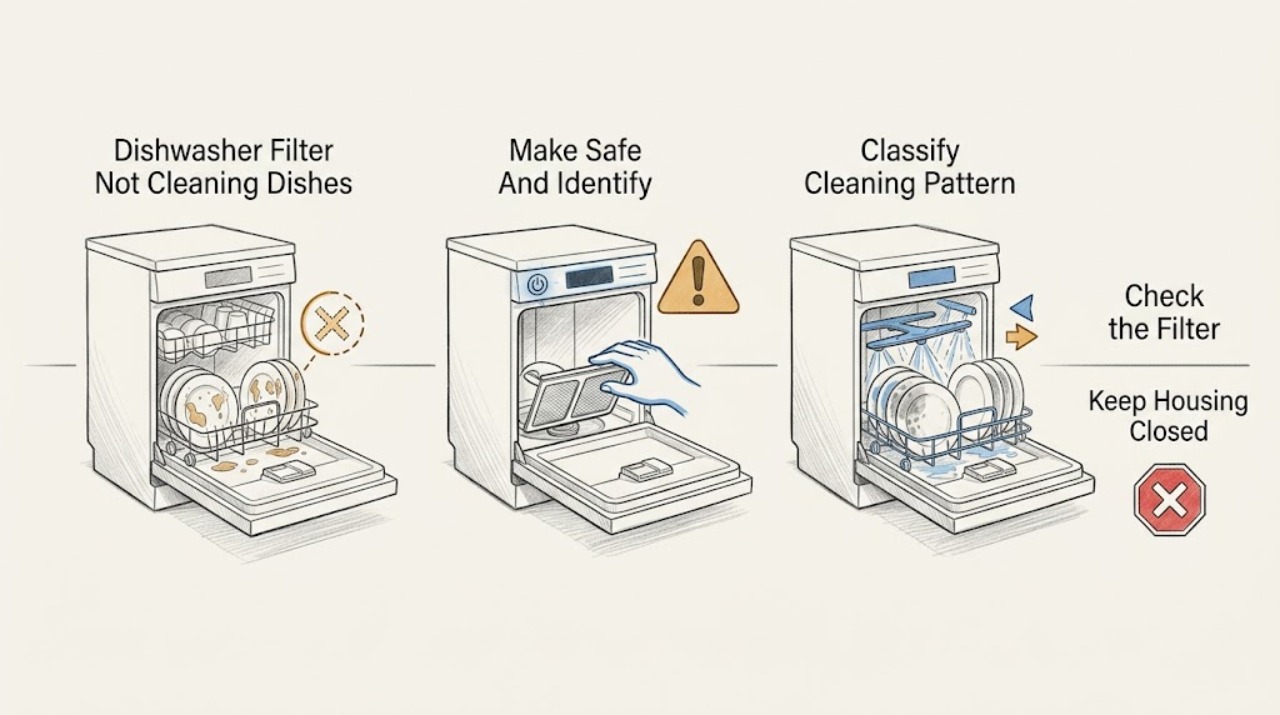
Bosch Dishwasher Filter Not Cleaning Dishes: What to Check and What to Do Next
A Bosch dishwasher filter that is packed with food soil, damaged, or not locked into its filter system can reduce wash performance and let debris recirculate, but a dirty filter is not the only possible cause of dishes remaining dirty. Check the exact model manual before removing parts, then let the tub and water cool, remove only owner-accessible filter components, rinse them with mild soap and a soft brush, and reinstall them fully.
-
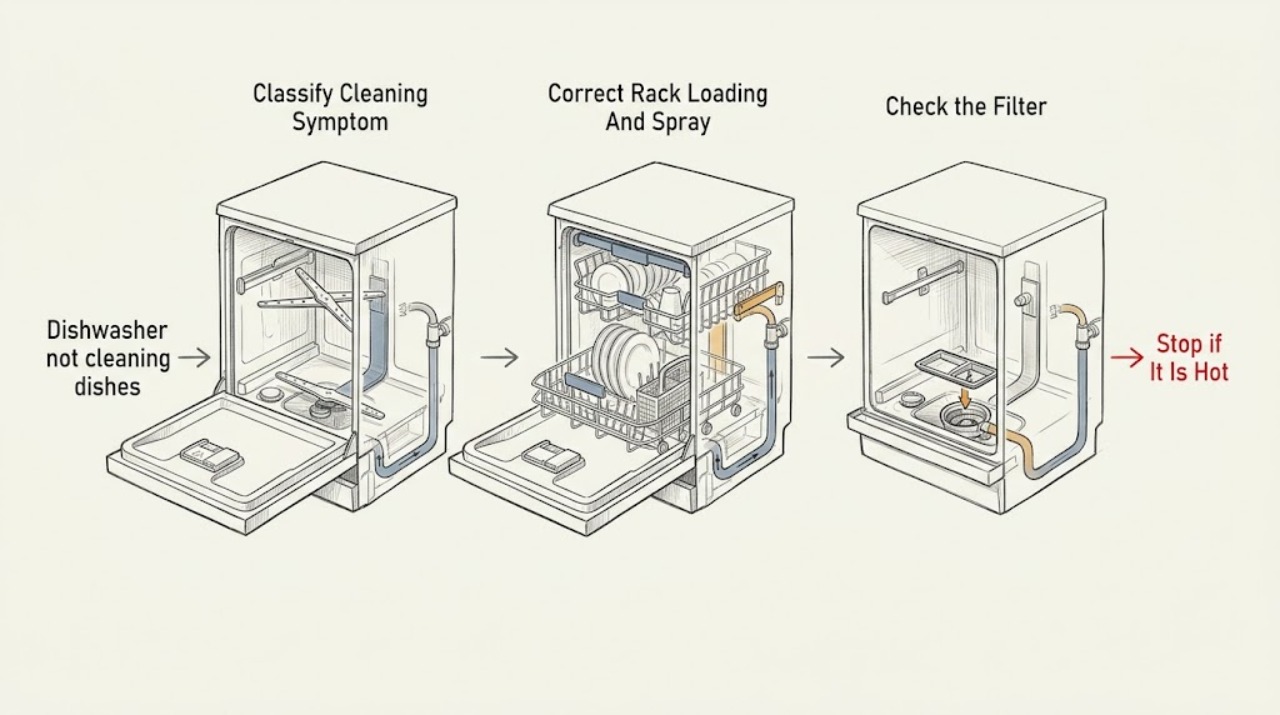
Bosch dishwasher not cleaning dishes: What to Check and What to Do Next
When a Bosch dishwasher leaves food or grit on dishes, start with the mechanical path that delivers clean water: scrape large food pieces, load dishes with space between them, make sure tall items do not block the spray arms, and inspect the filter at the bottom of the tub. Clean the filter and spray-arm openings only as the exact Bosch model instructions allow, and use the specified detergent and rinse-aid guidance.
-
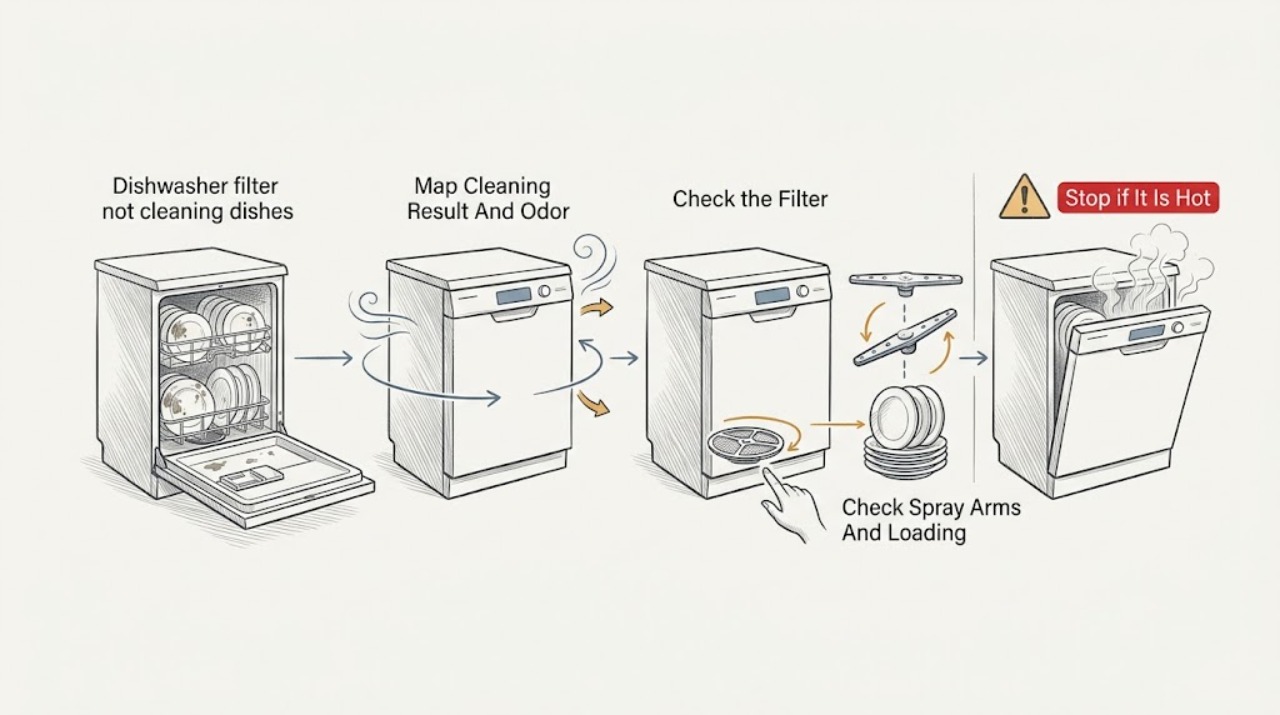
Dishwasher filter not cleaning dishes: What to Check and What to Do Next
A clogged dishwasher filter can let food circulate, reduce cleaning performance, and contribute to an unpleasant odor, but a filter is only one part of the wash path. Note whether soil is on every rack or only one area, then turn the dishwasher off and follow the exact manual to inspect and clean the accessible filter.
-
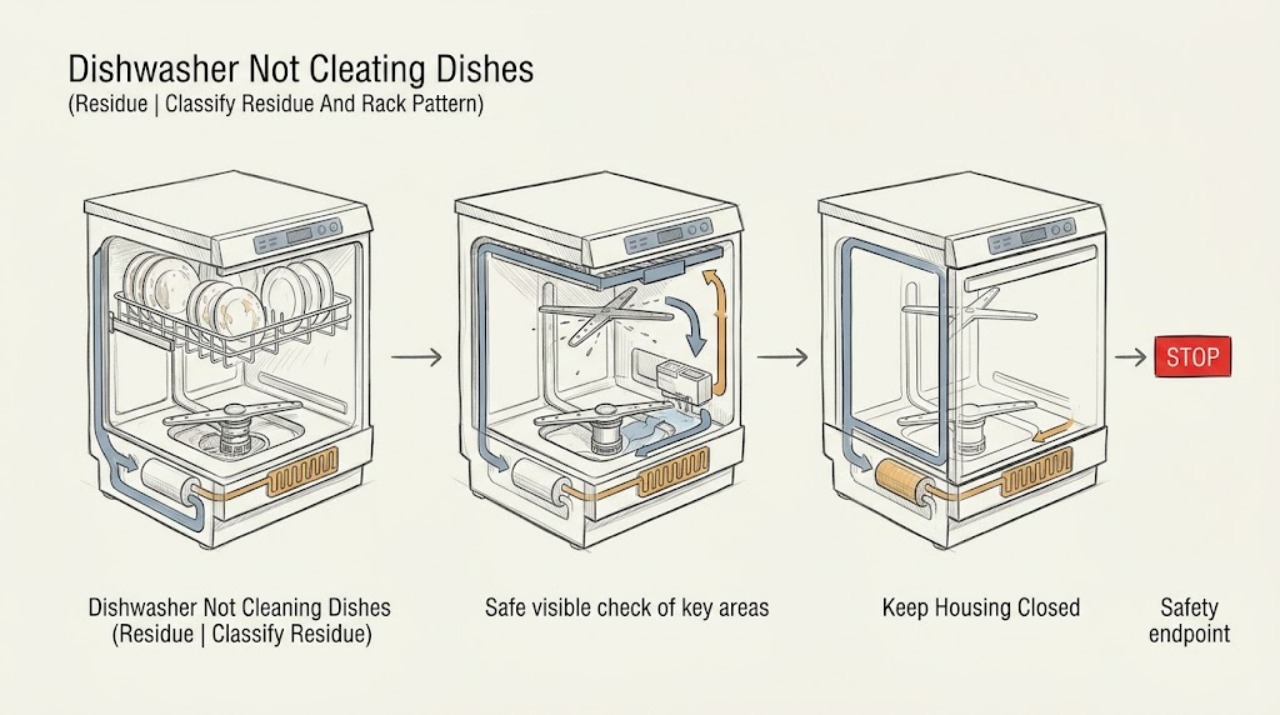
Dishwasher Not Cleaning Dishes (Residue Remains): What to Check and What to Do Next
When a dishwasher leaves residue, first identify whether it is food soil, greasy film, detergent, or a white mineral haze, and note whether it affects every rack or only certain items. A dirty filter, blocked spray arm, crowded loading, blocked dispenser, unsuitable detergent, low water supply, or insufficient heat can leave residue even when the cycle finishes.
-
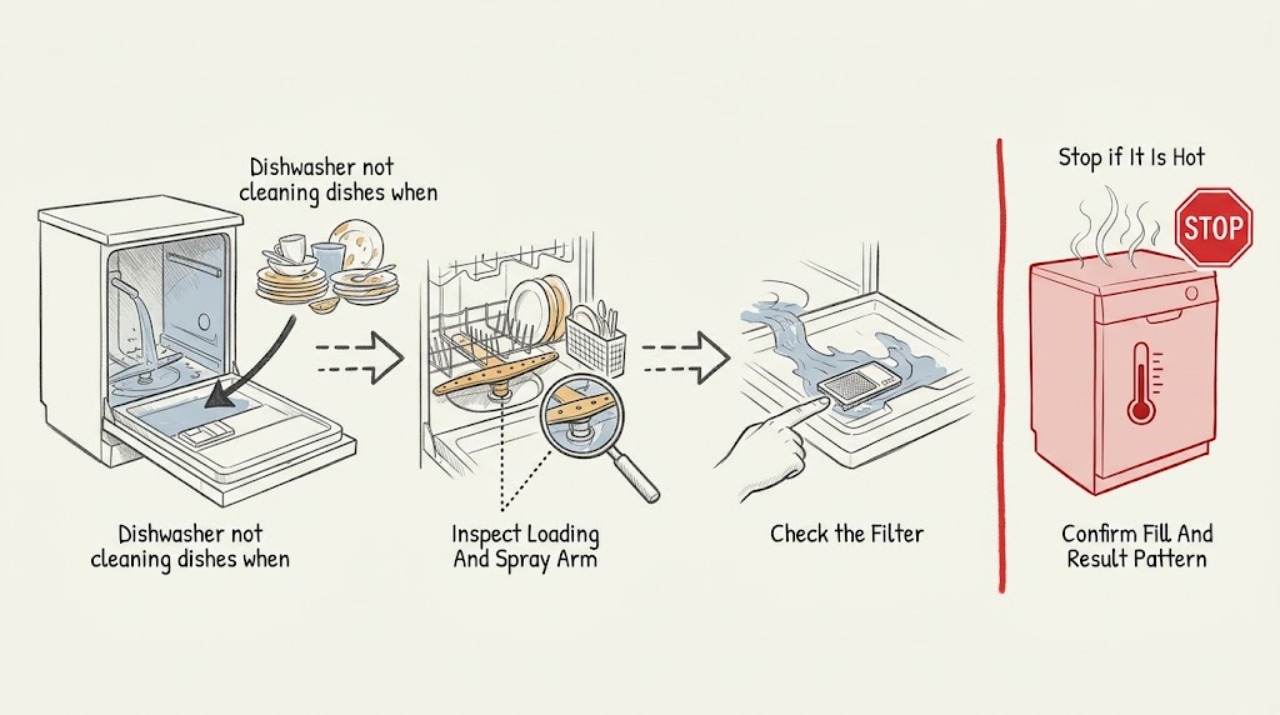
Dishwasher not cleaning dishes when water enters the tub: What to Check and What to Do Next
If water enters the dishwasher tub but dishes remain dirty, the problem is usually water distribution, filtration, loading, detergent release, or insufficient wash conditions rather than a simple no-fill fault. Start with the cleanable filter, spray-arm movement and blocked nozzles, rack loading, detergent dispenser, selected cycle, and any visible food or mineral buildup.
-
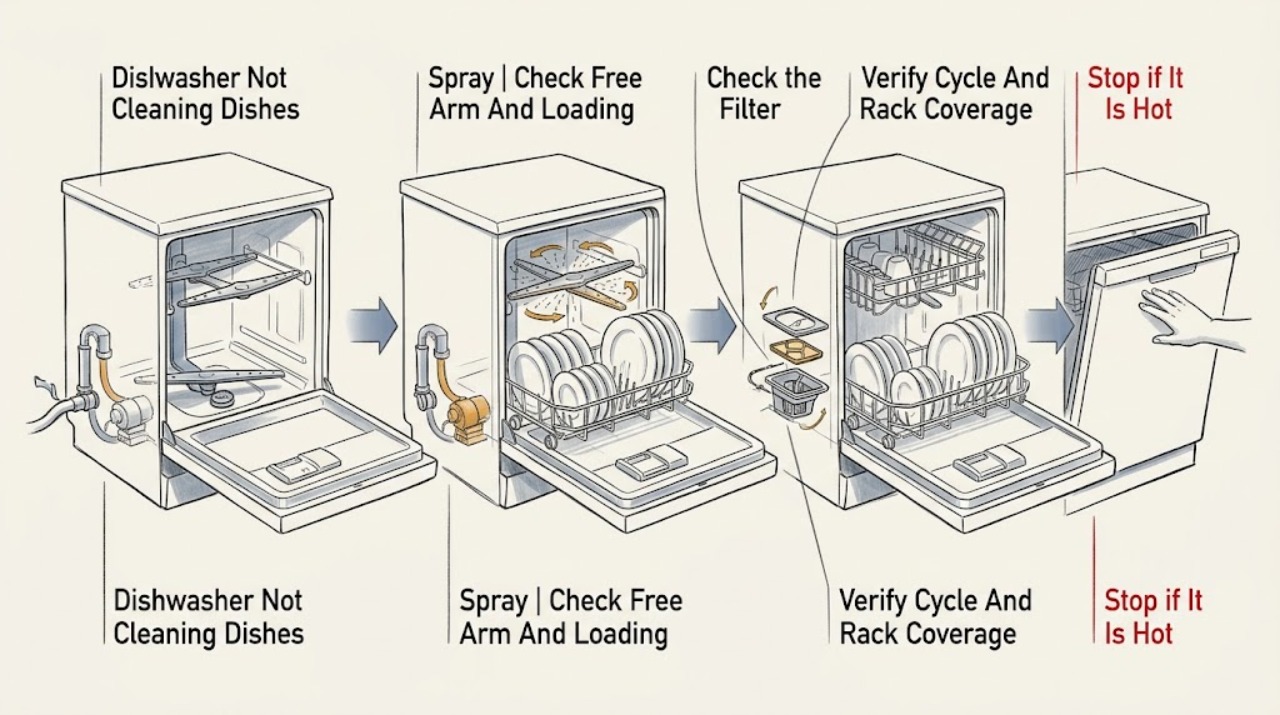
Dishwasher Not Cleaning Dishes, Spray Arms Do Not Rotate: What to Check and What to Do Next
If a dishwasher is not cleaning and its spray arms do not rotate, first turn the dishwasher off and let hot parts cool, then spin each arm by hand to find a rack, utensil, tall pan, misaligned docking tube, or debris obstruction. Clean only removable spray arms and the filter as the exact owner's manual permits.
-
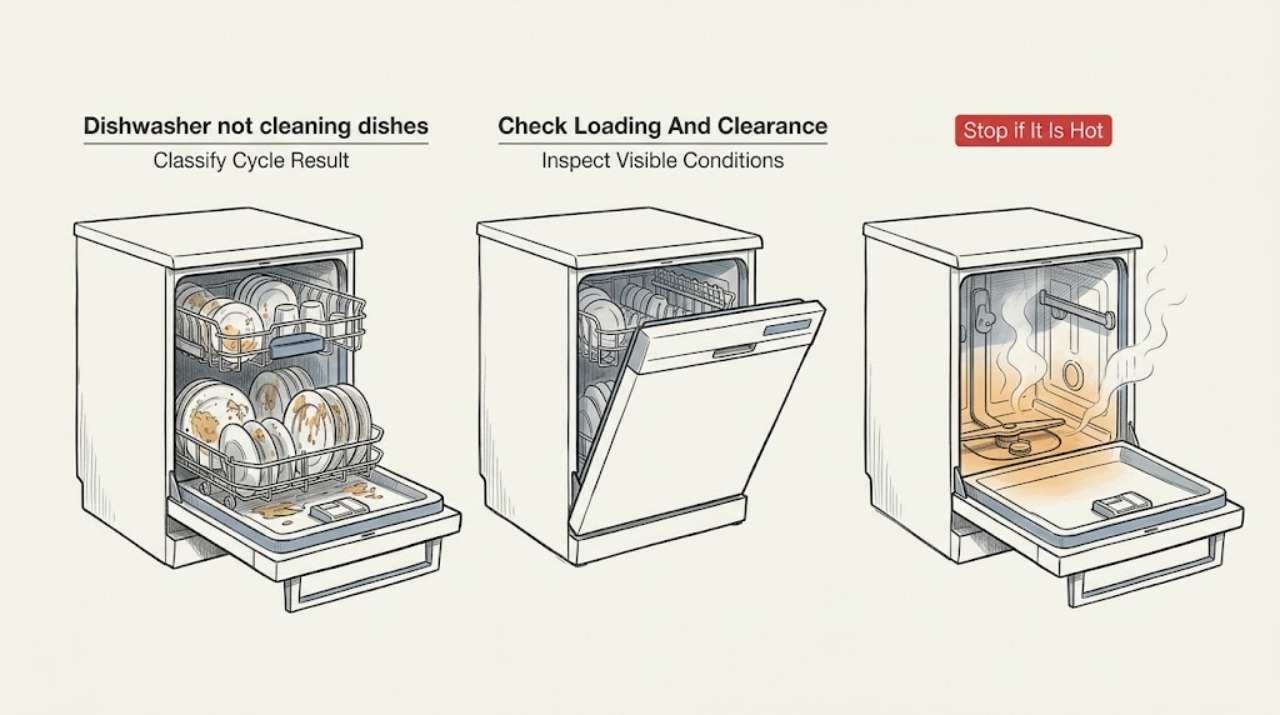
Dishwasher not cleaning dishes: What to Check and What to Do Next
Use the dirty-dish pattern to narrow the cause: note which rack or surfaces remain dirty, whether the chosen cycle matches the soil, whether loading blocks visible spray-arm paths, whether the filter looks obstructed when safely accessible, and whether detergent and incoming water conditions appear normal. Do not reach into a running dishwasher, mix cleaners or detergents, remove pump or spray-arm assemblies, or access live wiring.
-
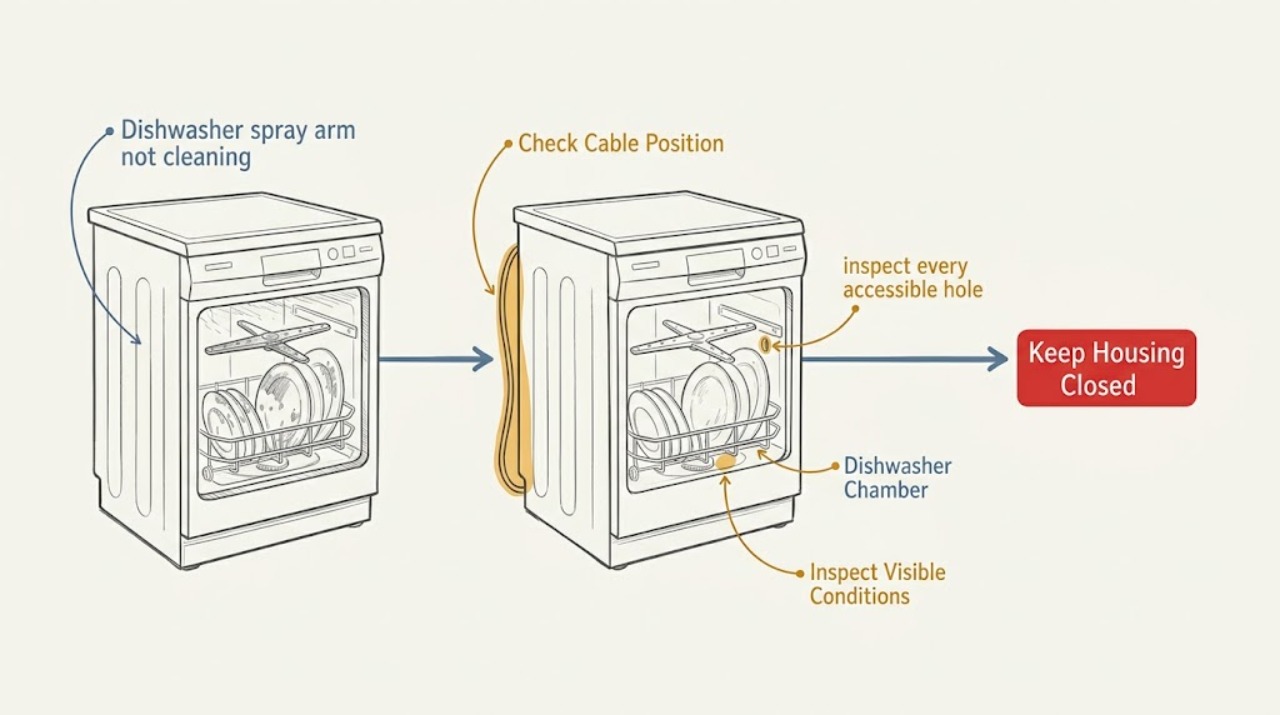
Dishwasher spray arm not cleaning dishes: What to Check and What to Do Next
If a dishwasher is not cleaning dishes, let it cool and isolate power with the model's safe instruction before reaching inside. Check the accessible spray-arm holes for food or mineral blockage, turn each arm gently by hand, and look for dish or rack interference.
-
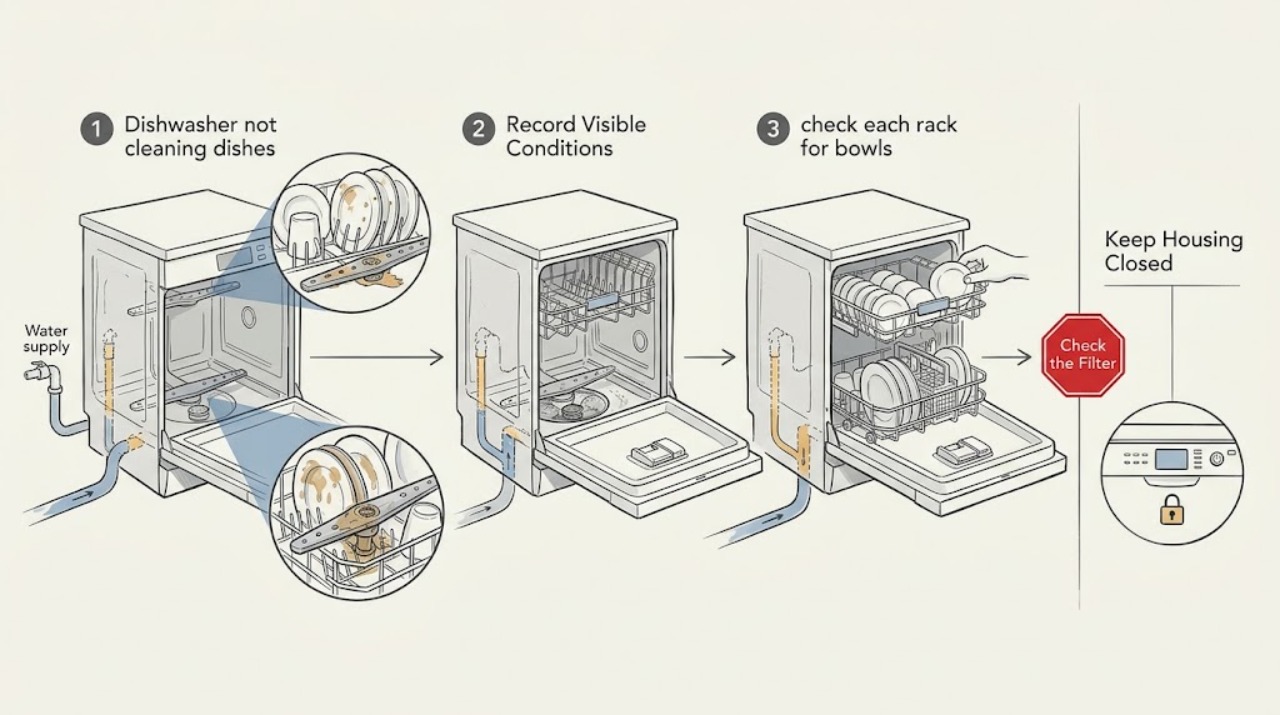
Frigidaire dishwasher not cleaning dishes: What to Check and What to Do Next
A Frigidaire dishwasher can leave dishes dirty when the selected cycle is only a rinse or short wash, dishes block the spray arms or detergent dispenser, the filter or glass trap is clogged, detergent is damp or incorrectly dosed, incoming water is too cool or pressure is low, or the unit is not draining. Start by noting which rack is dirty, whether the detergent cup opened, whether water remains, and whether the problem affects every load or only heavily soiled items.
-
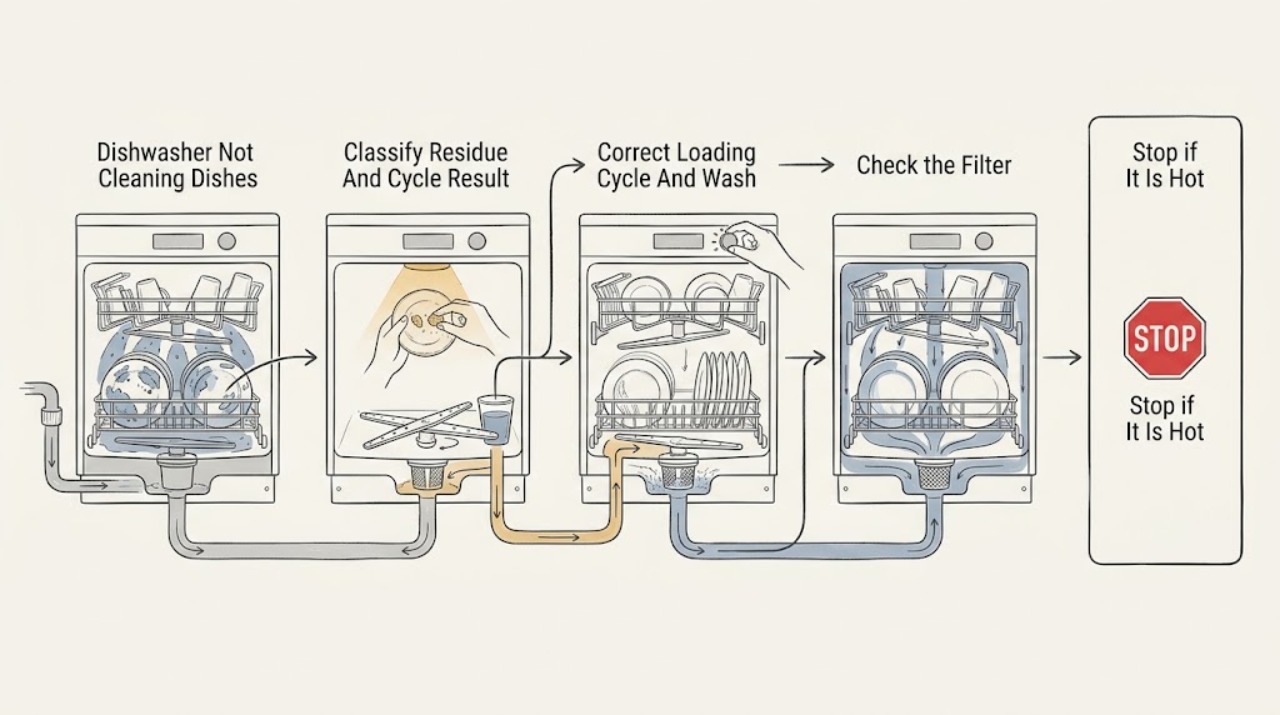
GE Dishwasher Not Cleaning Dishes: What to Check and What to Do Next
When a GE dishwasher leaves food, detergent, grit, or film on dishes, first separate a loading or detergent problem from a low-water, filtration, spray-arm, or drain problem. Empty the racks and note whether the residue is food, undissolved detergent, or a white film.
-
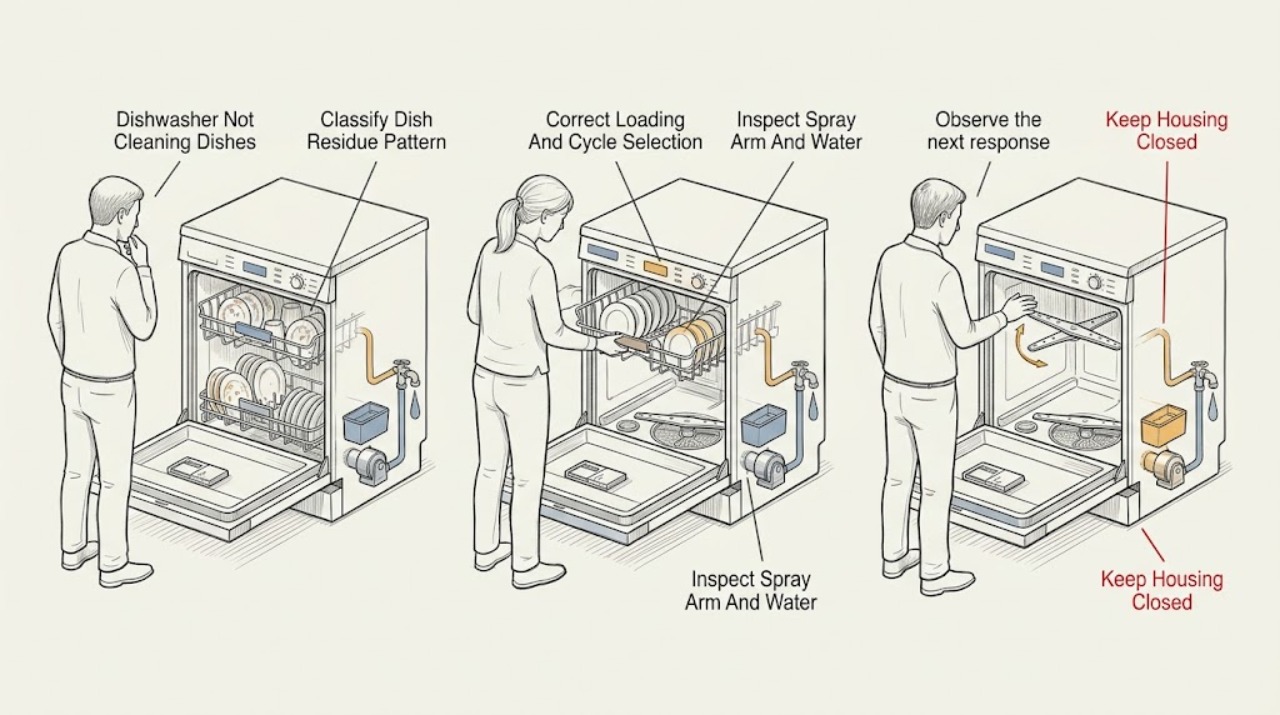
KitchenAid Dishwasher Not Cleaning Dishes: What to Check and What to Do Next
If a KitchenAid dishwasher leaves food or film on dishes, start with the water path rather than replacing a part: check that the racks and dishes do not block the spray arms or detergent dispenser, confirm the selected cycle matches the soil, and use fresh automatic-dishwasher detergent in the correct dispenser. With the machine off, spin the accessible spray arms by hand and clean the filter only as the exact model manual allows.
-
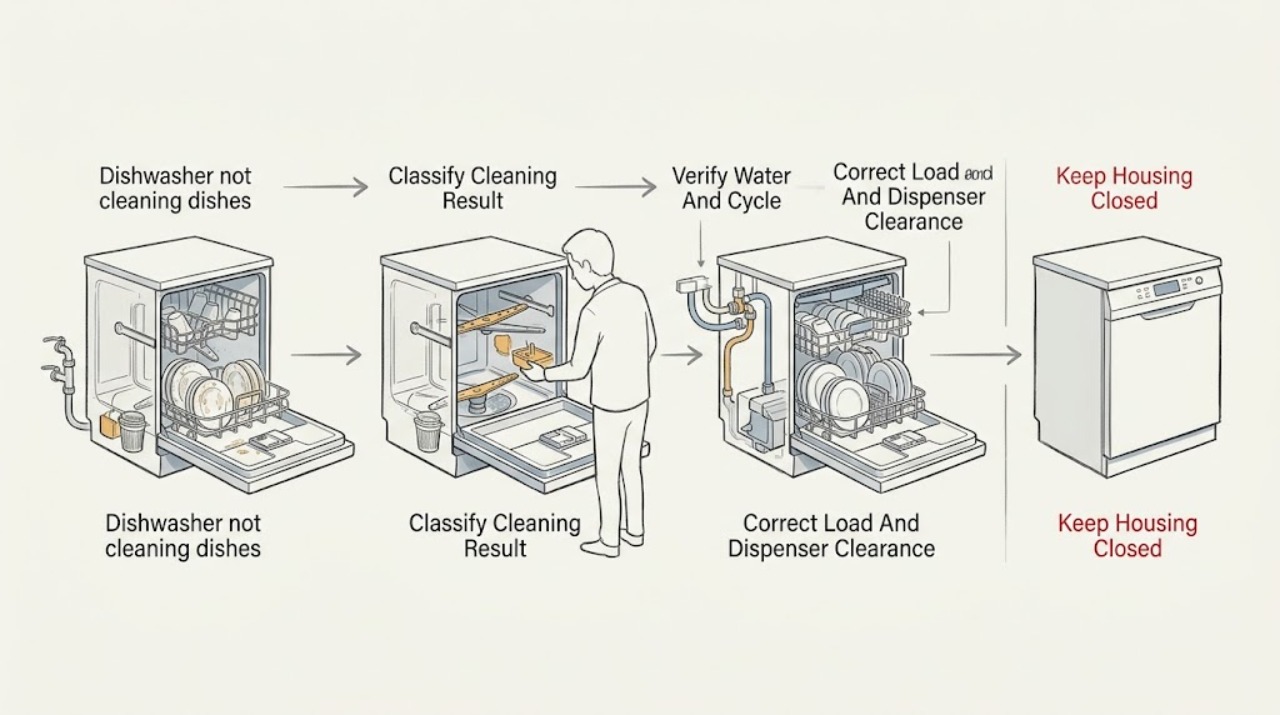
Maytag dishwasher not cleaning dishes: What to Check and What to Do Next
Start by describing the result: food remains on every dish, only one rack is dirty, white film or grit is left, or the dishwasher fills but does not spray well. Check that the water supply is open, select a cycle suited to the soil, and load dishes so spray arms and the detergent dispenser are not blocked.
-
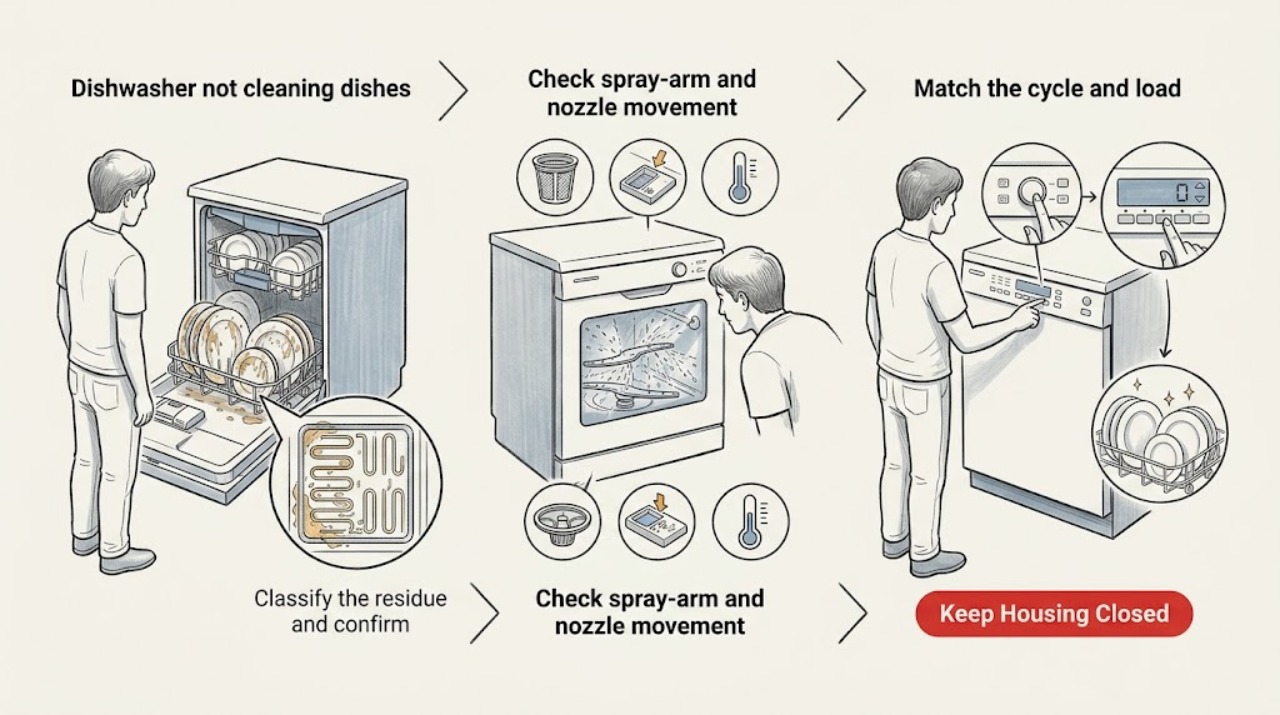
Samsung dishwasher not cleaning dishes: What to Check and What to Do Next
When a Samsung dishwasher finishes with food or film still on the dishes, first separate a cleaning problem from a stopped cycle or an error. Check the exact model's cycle selection, rack loading, spray-arm/nozzle movement, filter, detergent dispenser, rinse aid, and incoming water temperature.