
Repair problem
Has Excessive Frost Troubleshooting Guides
Published FixGraph guidance for diagnosing and responding to has excessive frost.
Matching published guides
Choose a guide that matches the service, equipment, and conditions you are seeing.
-
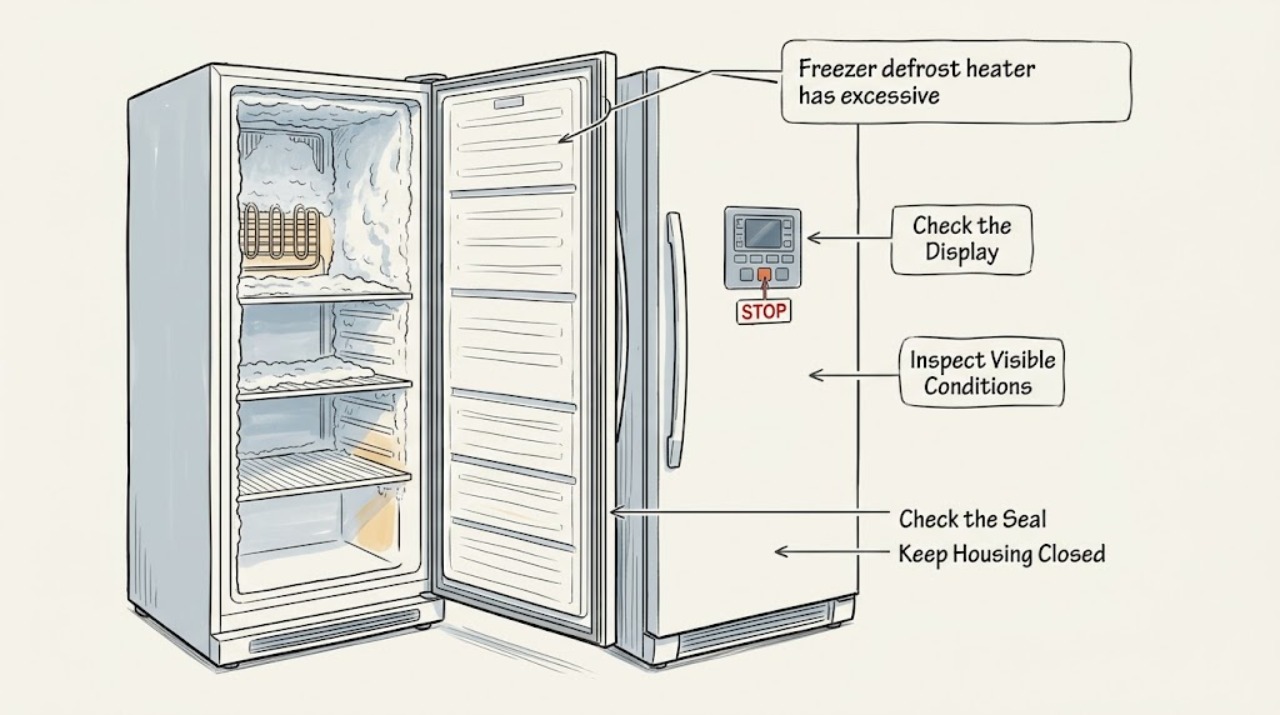
Freezer defrost heater has excessive frost: What to Check and What to Do Next
Excessive frost does not prove that the defrost heater itself has failed. In an automatic-defrost freezer, the heater melts frost from the evaporator, while a timer or adaptive control starts the cycle and a drain carries away meltwater.
-
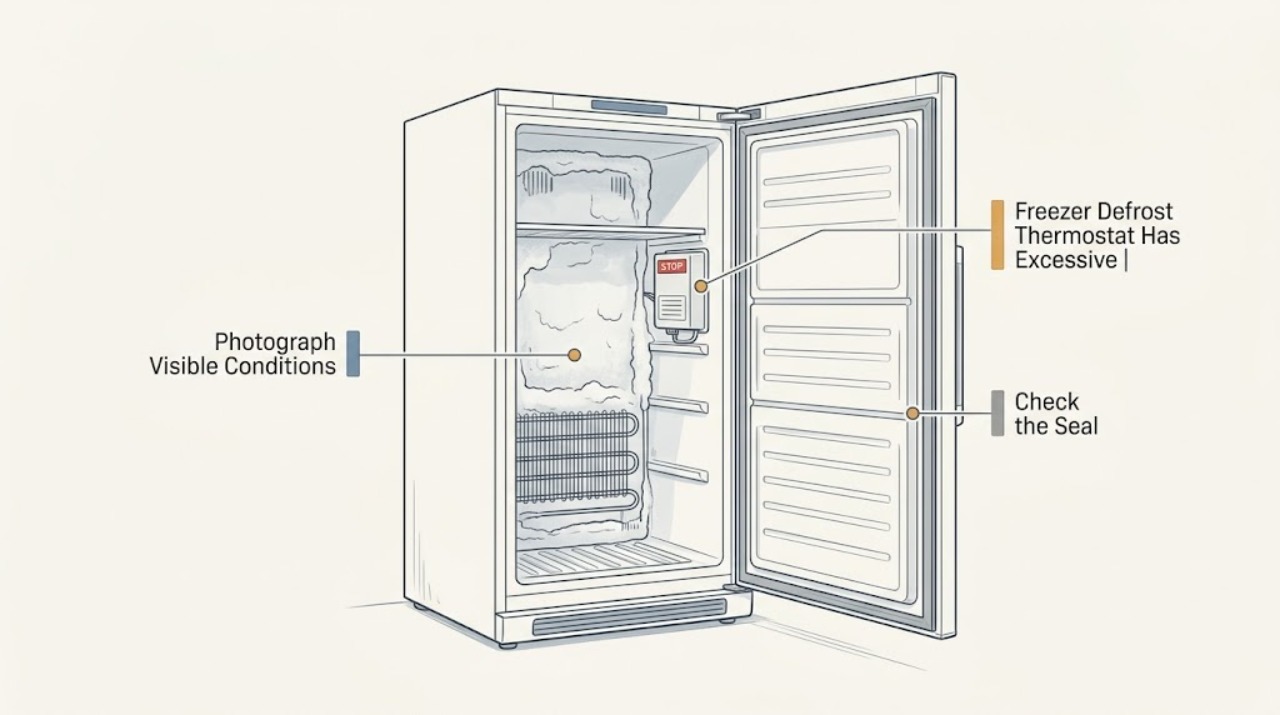
Freezer Defrost Thermostat Has Excessive Frost: What to Check and What to Do Next
Excessive frost does not prove the defrost thermostat is bad. Frost can come from warm moist air entering through a door or gasket, blocked vents, a warm food load, or a fan or airflow problem; in a frost-free freezer, frost that returns after a proper defrost can also indicate a defrost thermostat, heater, timer, control, drain, or fan fault.
-
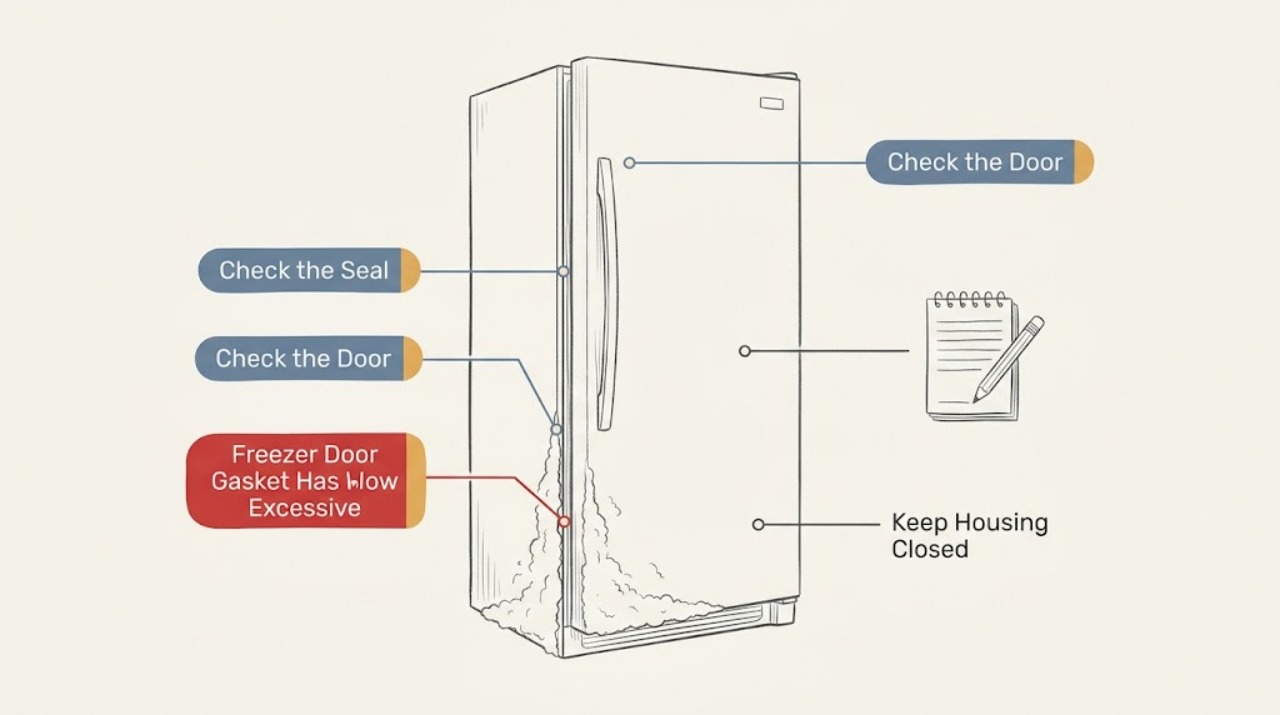
Freezer Door Gasket Has Excessive Frost: What to Check and What to Do Next
Excessive frost at a freezer door gasket usually means warm, moist air is entering through a door that is blocked, misaligned, dirty, damaged, or not sealing evenly. First remove only an obvious package or drawer obstruction, clean and dry the gasket with a soft cloth, and check the seal around the entire perimeter with a sheet of paper; do not use a knife, heat gun, or hair dryer to remove ice.
-
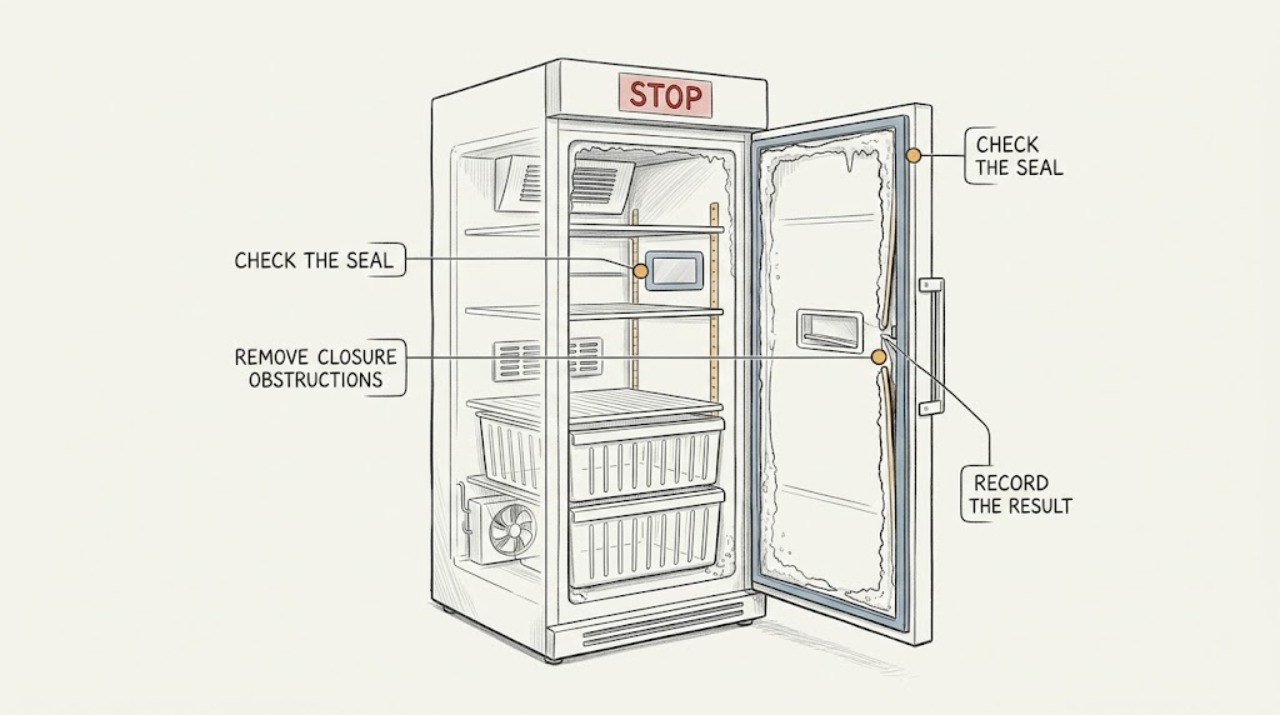
Freezer Has Excessive Frost and Door Seal Gaps: What to Check and What to Do Next
Excessive freezer frost with gaps at the door or lid seal usually means warm, humid room air is entering and freezing on cold surfaces. First confirm the gap around the entire gasket, then check for packages, shelves, baskets, ice, or an unlevel cabinet preventing full closure.
-
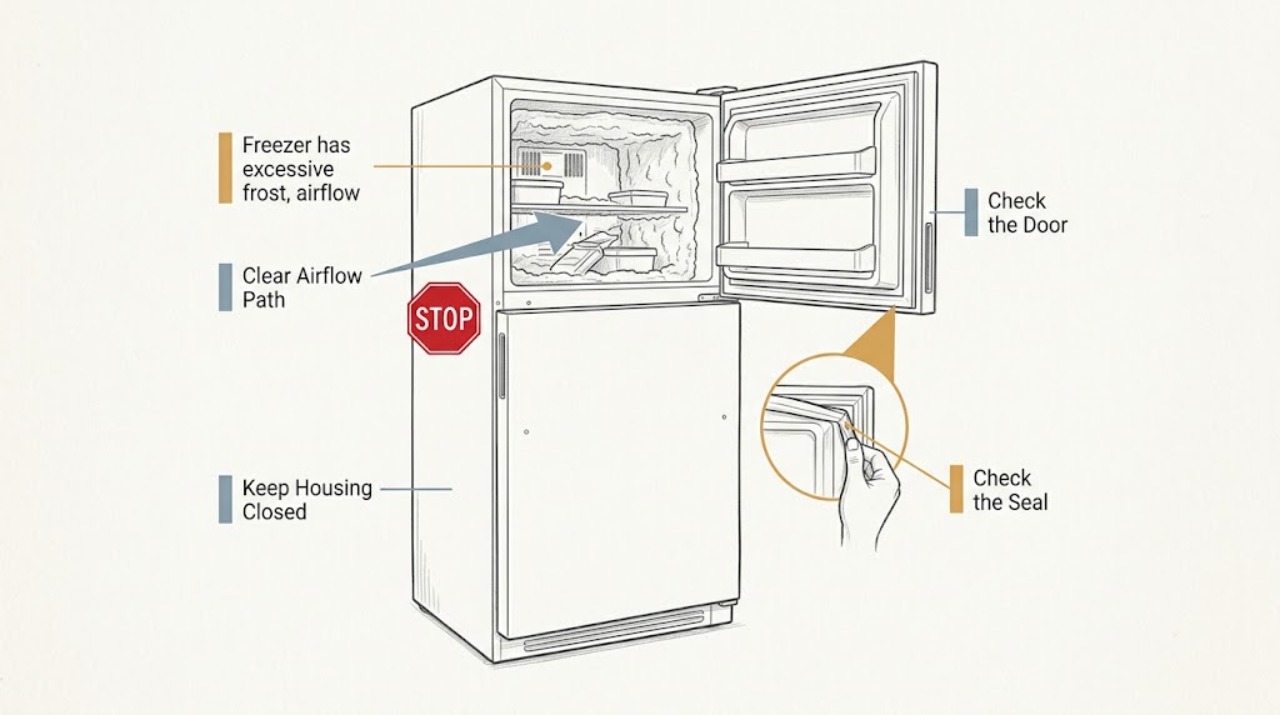
Freezer has excessive frost, airflow is reduced: What to Check and What to Do Next
Excessive frost can cover freezer vents or the evaporator area and reduce airflow, but the frost is usually a result of moisture entering or a defrost problem rather than a stand-alone part diagnosis. First check that packages are not blocking vents, the door closes completely, and the gasket is clean and intact.
-
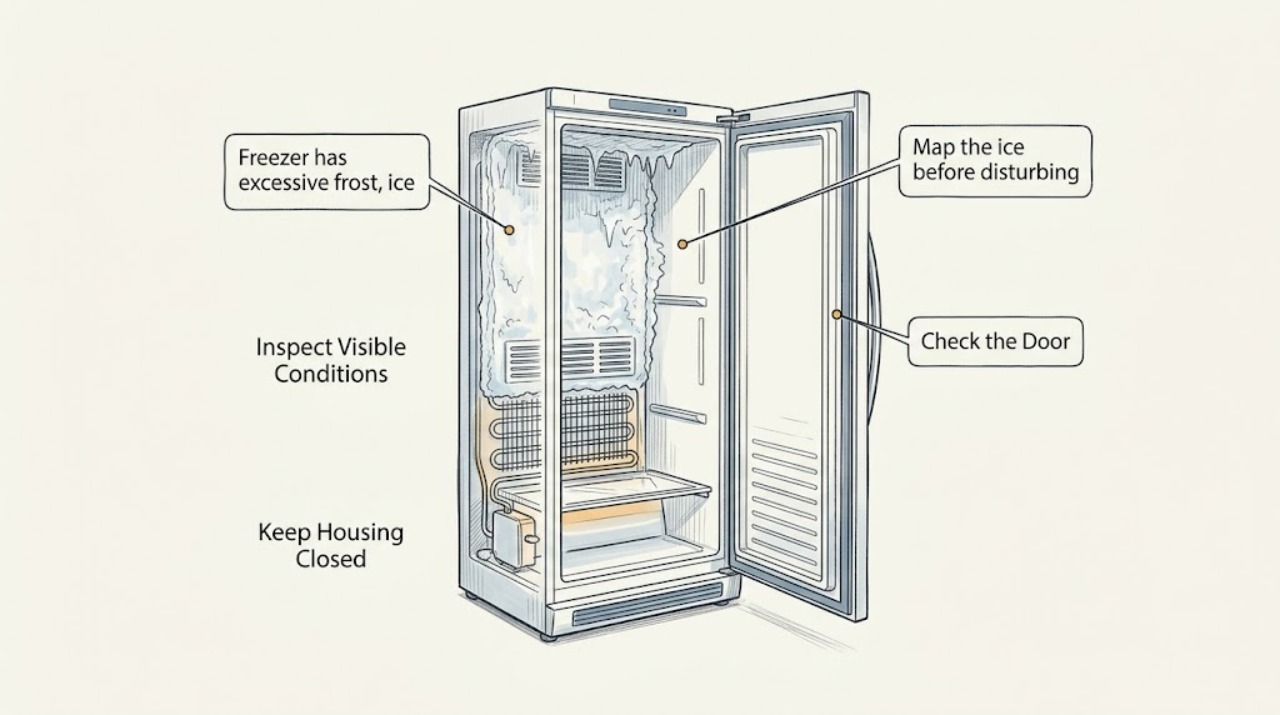
Freezer has excessive frost, ice covers rear wall: What to Check and What to Do Next
Ice covering the rear wall can block the freezer's air path and may point to packages touching the wall, a door that is not sealing, warm humid air entering, or a defrost problem. First move food away from the rear wall and vents, confirm the door closes fully, and clean and inspect the gasket.
-
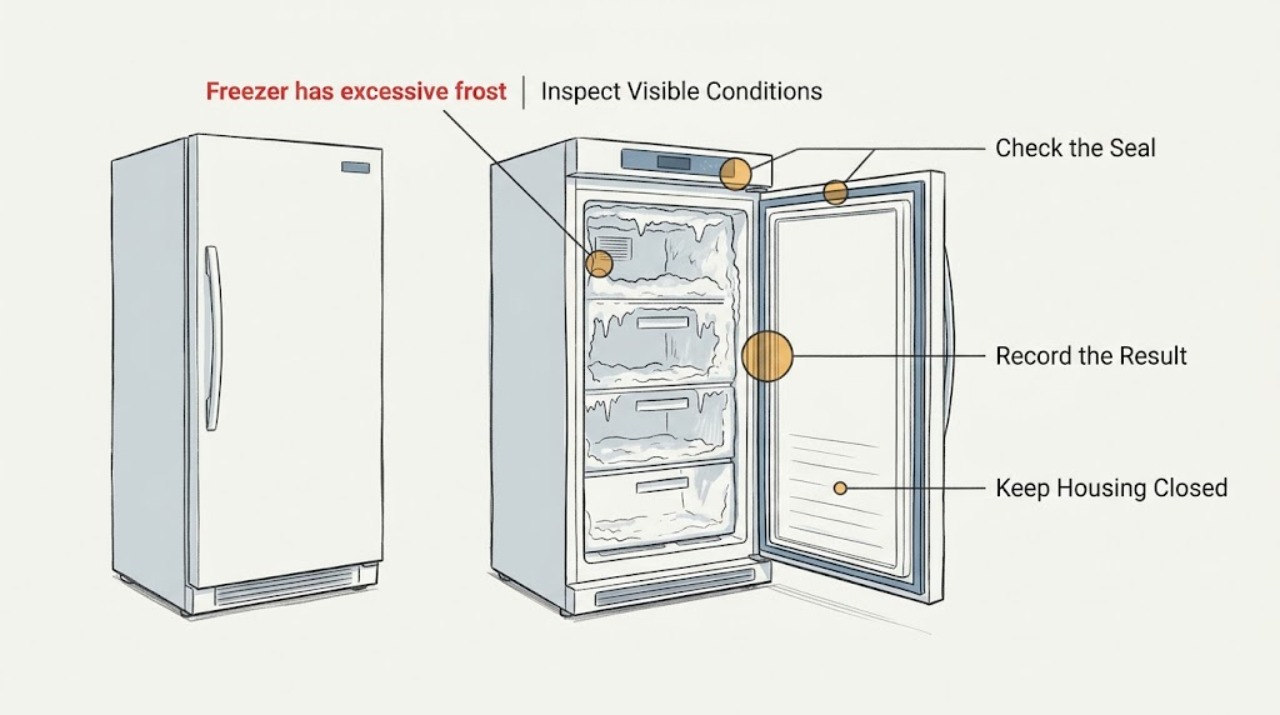
Freezer has excessive frost: What to Check and What to Do Next
Some frost can be normal, but heavy or repeatedly returning frost usually means warm, moist air is entering, a door is not sealing, airflow is blocked, or a frost-free system needs service. Start with user-visible checks: where the frost is concentrated, whether the door closes and its gasket looks intact, whether food blocks vents or the door, and whether temperature or food condition is changing.
-
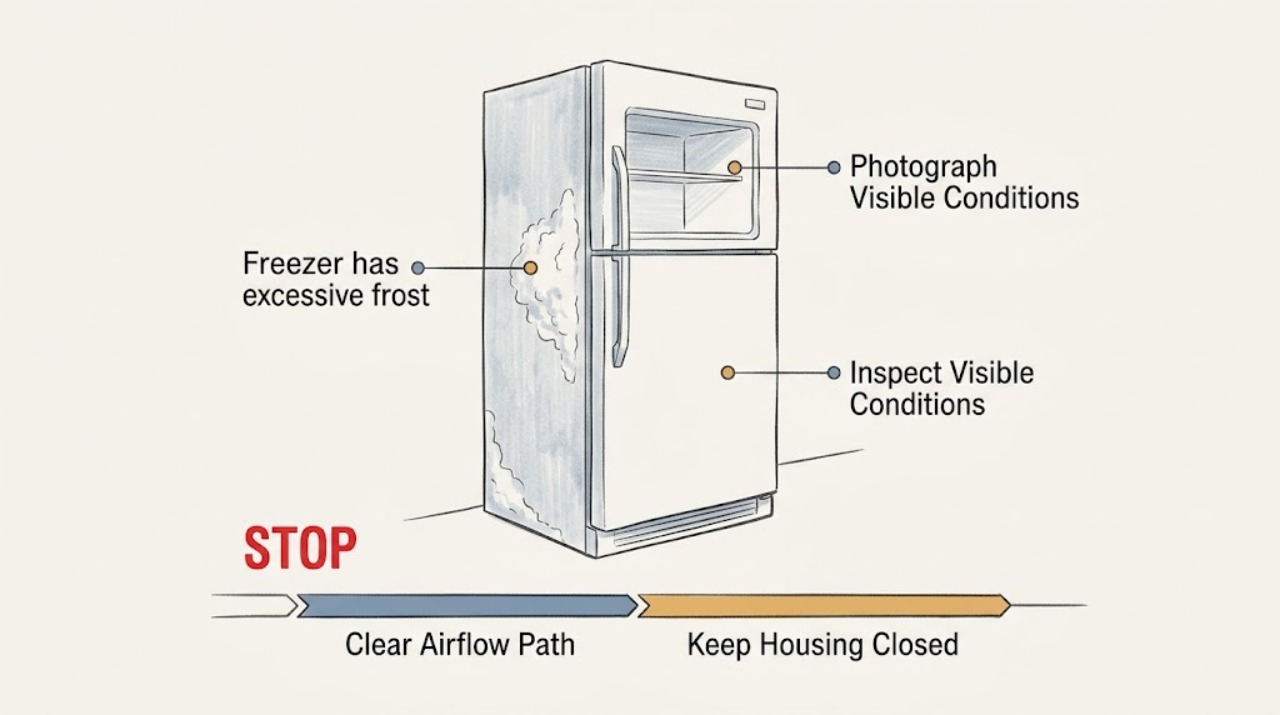
Frigidaire freezer has excessive frost: What to Check and What to Do Next
Excessive frost in a Frigidaire freezer usually means warm, moist air is entering, airflow is being blocked, or the freezer is operating at an unsuitable setting; Frigidaire specifically points to a poor door or gasket seal, an ice-chute flap that does not close, very low settings, and blocked vents. First confirm the door or lid closes fully, inspect the gasket and chute if fitted, keep vents and the rear wall clear, and verify that the freezer has power.
-
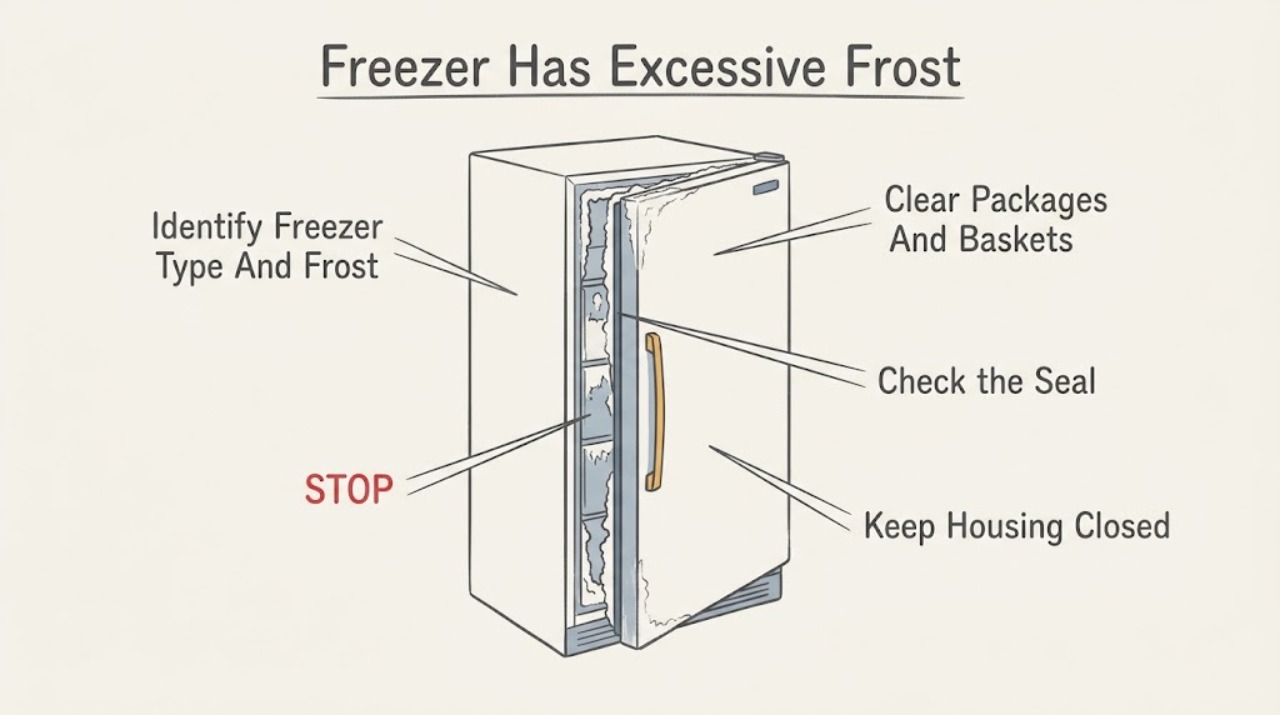
GE Freezer Has Excessive Frost: What to Check and What to Do Next
Excessive frost in a GE freezer usually means warm, moist air is entering or frost is not being removed as designed. First check for packages, shelves, baskets or bins holding the door or drawer open; then inspect the full gasket perimeter for cuts, tears, gaps or uneven contact.
-
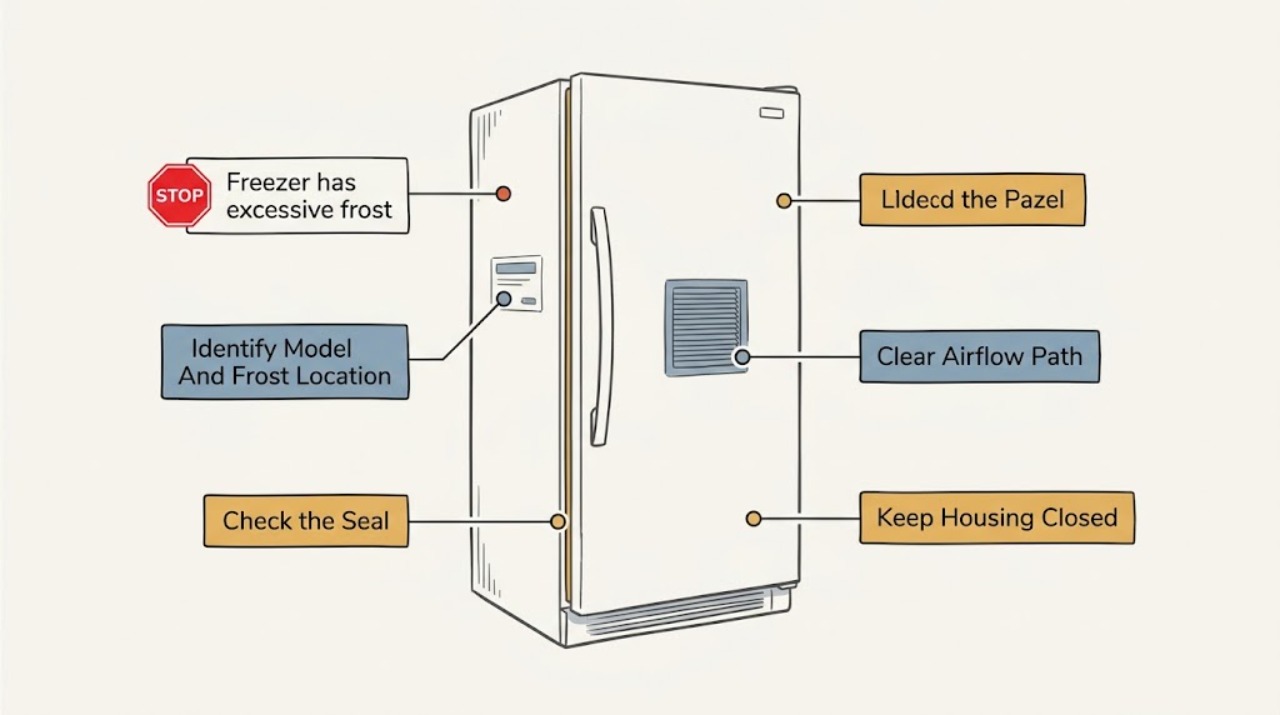
Haier freezer has excessive frost: What to Check and What to Do Next
Excessive frost in a Haier freezer usually means moisture is entering and freezing, the unit is a manual-defrost model that needs its normal defrost, or a frost-free model has a door-seal, airflow, or defrost problem. Check whether the door closes fully, the gasket seals all around, packages block the door or vents, and hot or uncovered food has added moisture.
-
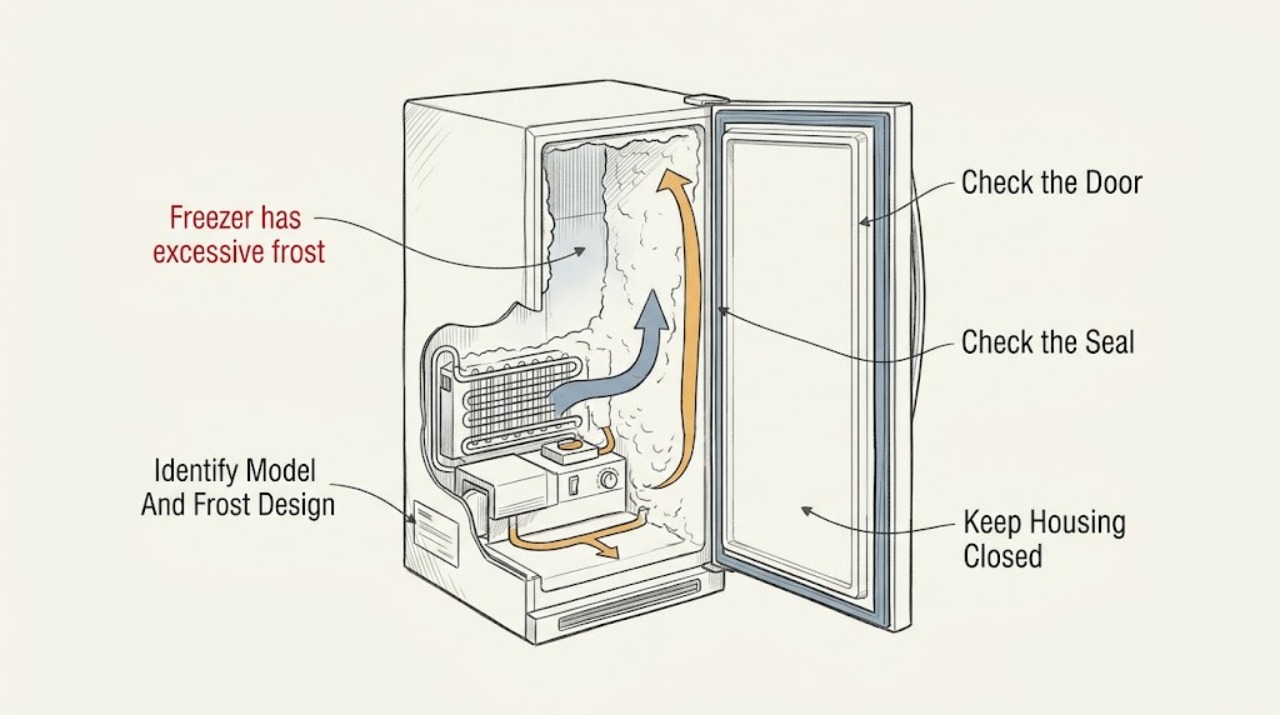
Kenmore freezer has excessive frost: What to Check and What to Do Next
Excessive frost in a Kenmore freezer usually means too much warm humid air is entering, air cannot circulate, the control is set too cold, or an automatic defrost system is not clearing ice. Start by identifying the exact model and whether it is manual-defrost or frost-free.
-
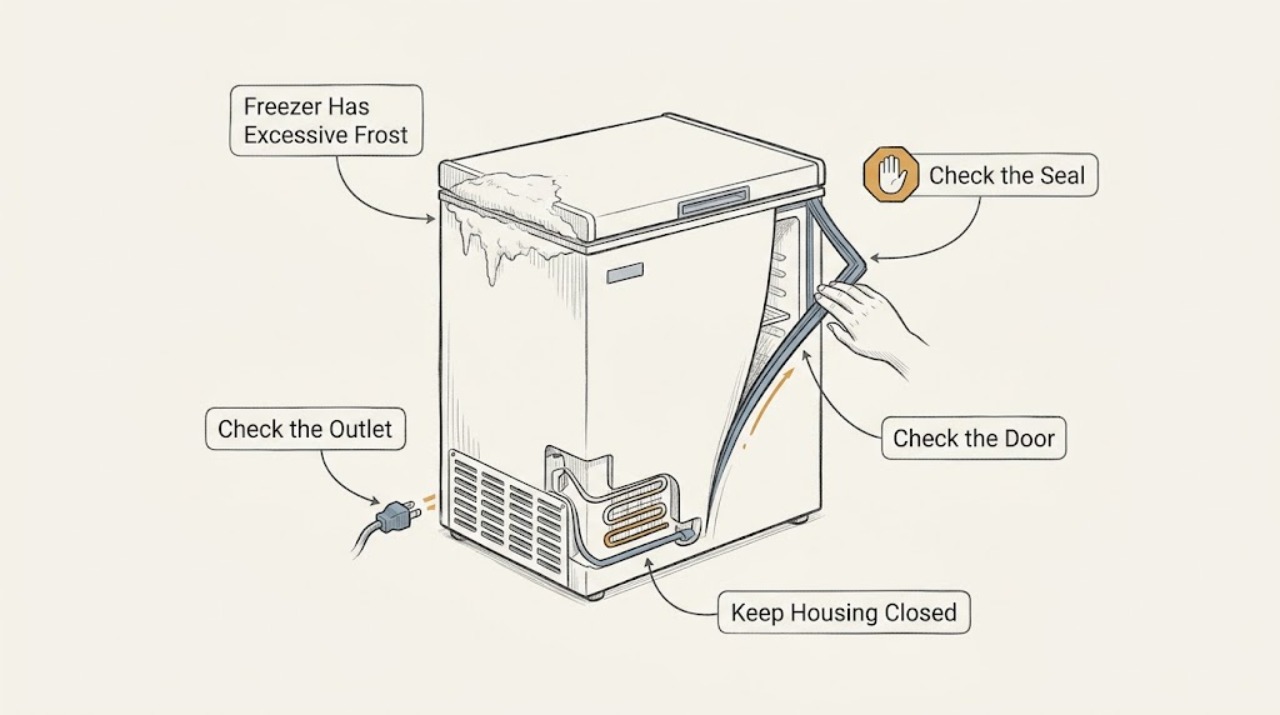
LG Freezer Has Excessive Frost: What to Check and What to Do Next
Excess frost in an LG freezer is often moisture that entered with humid air, hot or uncovered food, a door that did not seal, an overfilled compartment, or a recent power interruption. First note where the frost is concentrated and whether it returns.
-
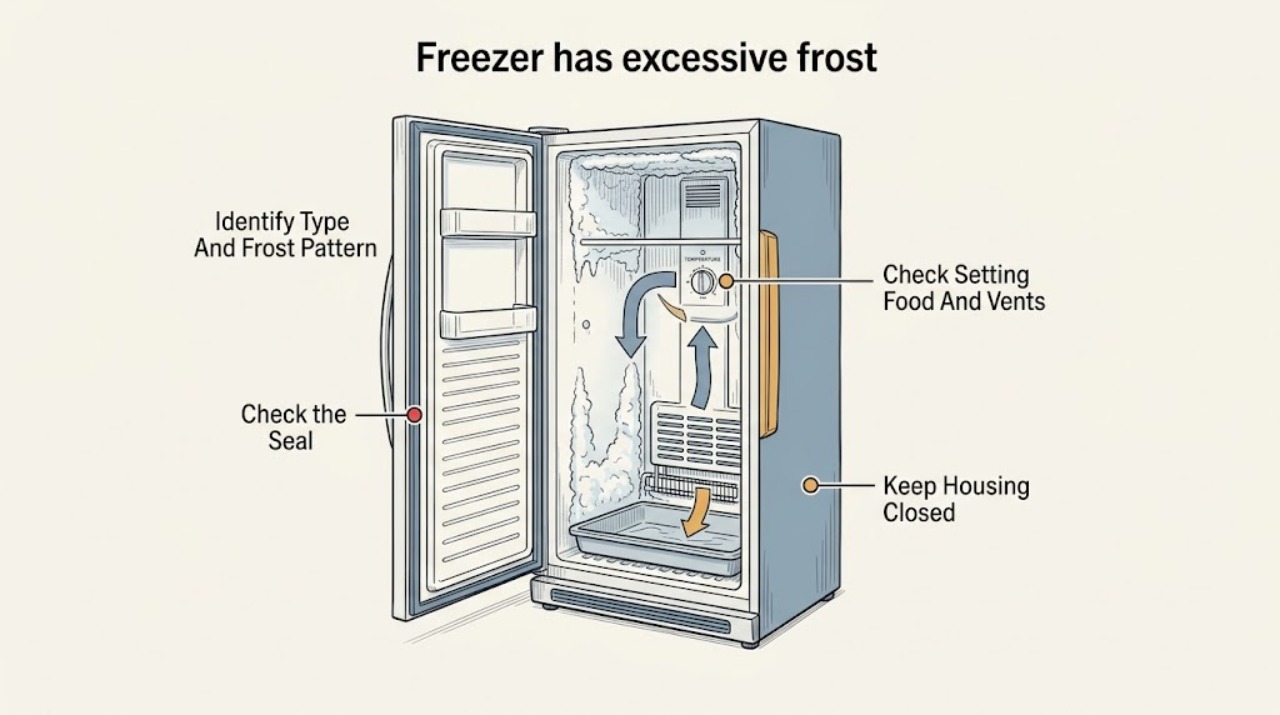
Midea freezer has excessive frost: What to Check and What to Do Next
Excessive frost in a Midea freezer is usually moisture from frequent or prolonged door opening, a door gasket that does not seal, food or ice blocking the air path, or a setting or defrost condition that does not match the model. First confirm the freezer is in freezer mode and the setting is appropriate, then check the gasket and door closure with the Midea paper or dollar-bill test, clear packages from the door and vents, and avoid loading hot or uncovered food.
-
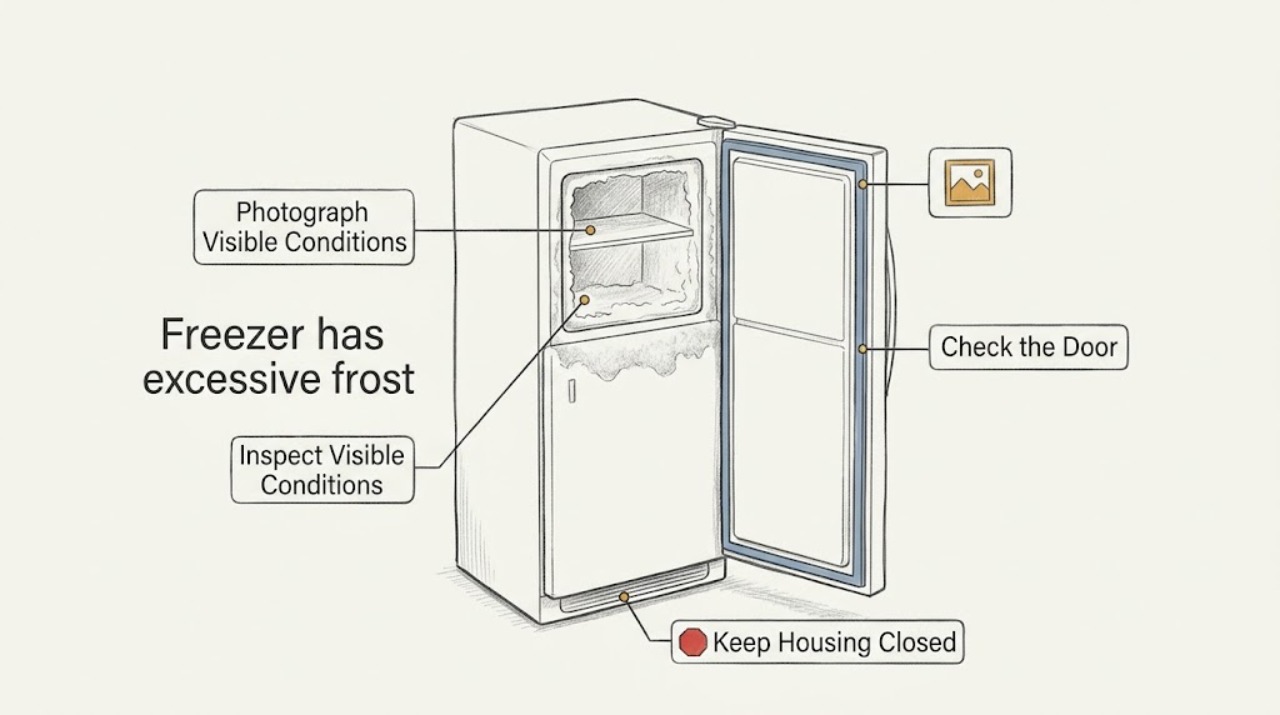
Samsung freezer has excessive frost: What to Check and What to Do Next
Excessive frost in a Samsung freezer is usually a moisture and air-seal problem: warm, humid air enters through a door left open, hot food, a blocked closure, or a damaged seal, then freezes. Start by checking that the door or freezer drawer closes fully, that food is not blocking it, that the rubber seal is clean and undamaged, and that interior vents have about the clearance Samsung specifies.
-
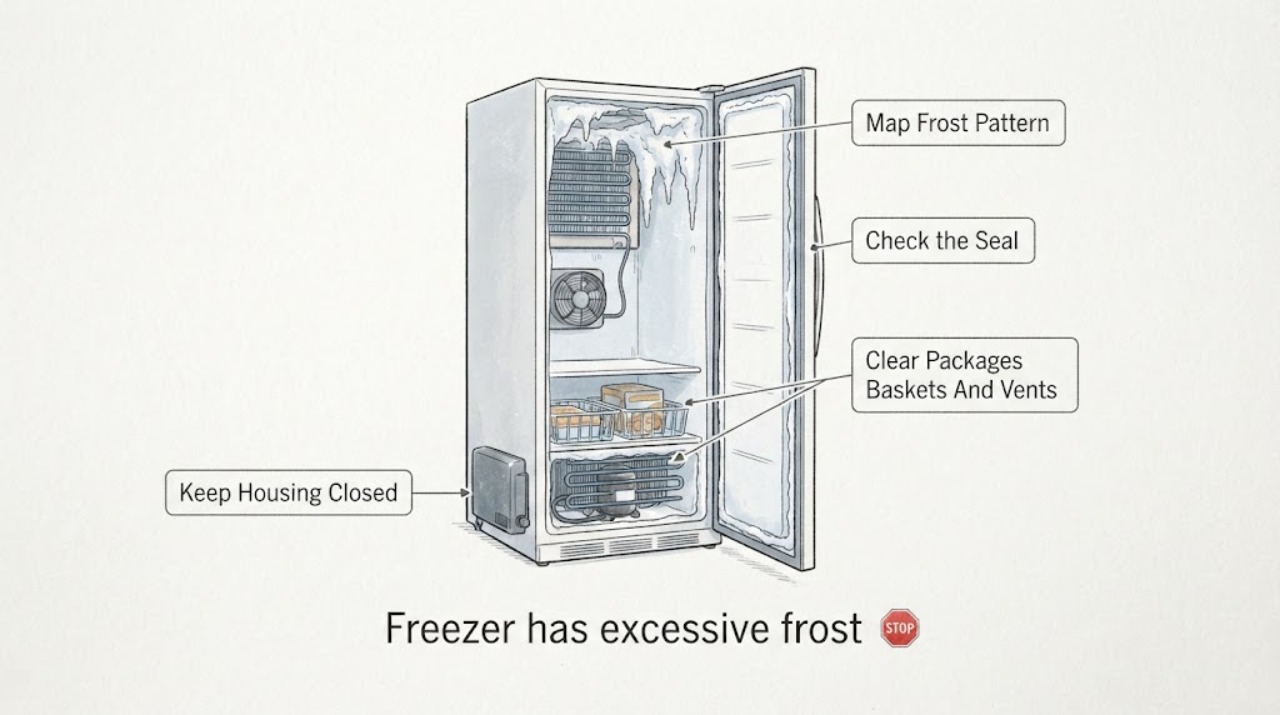
Whirlpool freezer has excessive frost: What to Check and What to Do Next
Excessive frost in a Whirlpool freezer usually means warm, humid air is entering through frequent or prolonged door openings, a package or basket is blocking closure, a dirty or damaged gasket is leaking air, or airflow is restricted. Check the door seal, shelves or baskets, packages, vents, room conditions, and frost location without using sharp tools or removing panels.