
Brand-independent appliance guidance
General Food Processor Repair Guides
Brand-independent troubleshooting and repair guidance for common food processor problems and maintenance questions.
General food processor guides
Use these guides when the problem is not limited to a specific manufacturer.
-
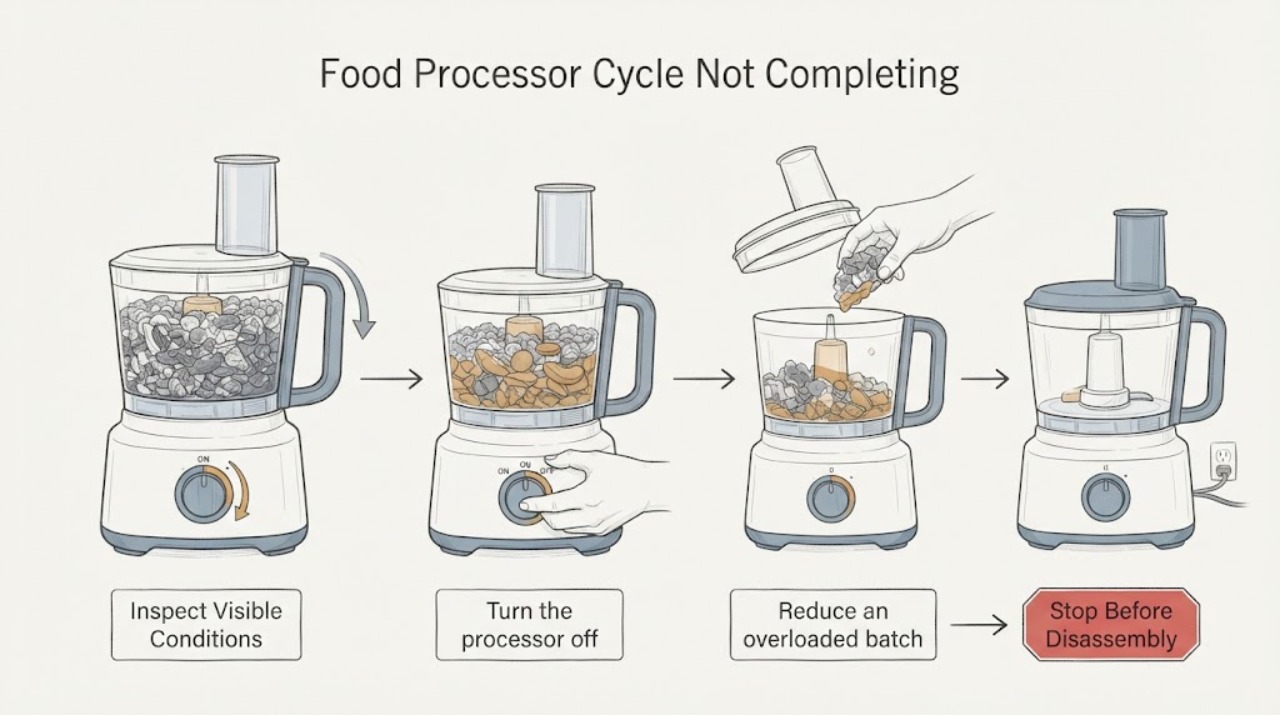
Food Processor Cycle Not Completing
To troubleshoot a food processor that is cycle not completing, first identify the exact stage and accompanying signs, then make only the safe external checks supported by the owner guidance. Stop for hazards or recurrence and arrange qualified service.
-
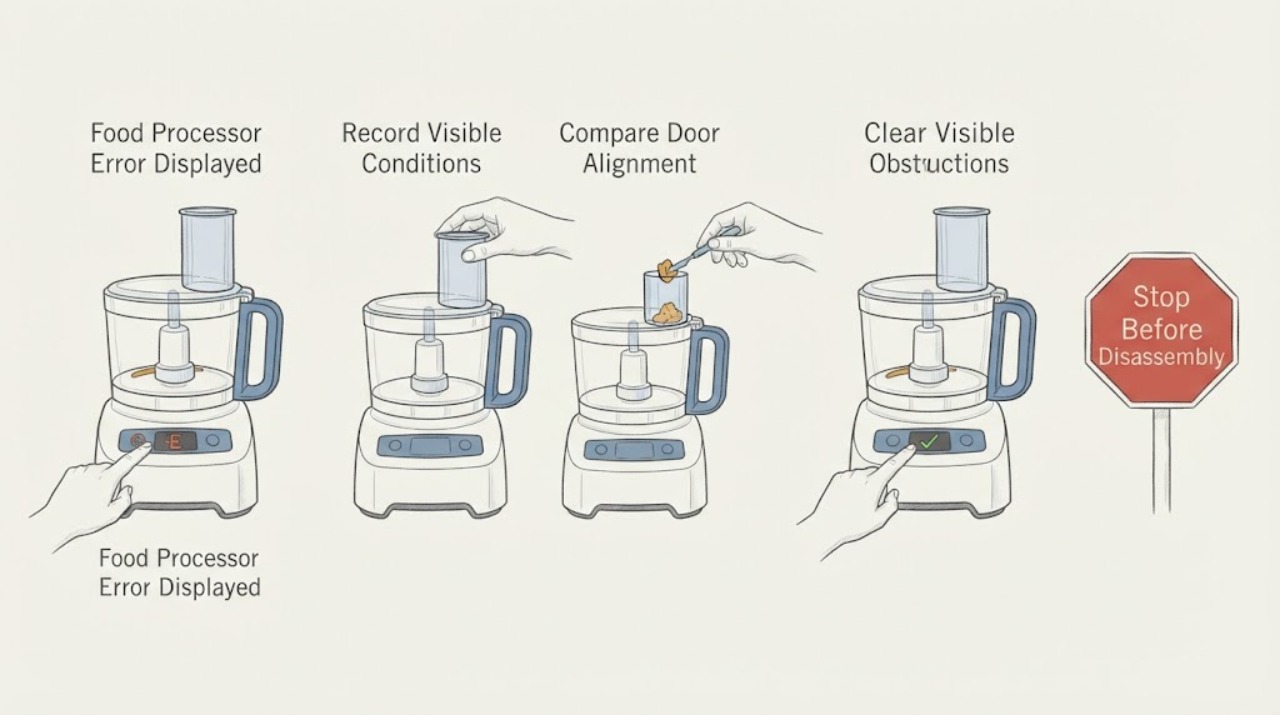
Food Processor Error Displayed: Record the Display and Check the Lock State
A food processor error display must be read with the bowl/lid lock, motor temperature, load, and power state. KitchenAid guidance supports checking bowl/lid alignment, allowing a hot motor to cool, resetting a locked motor with the documented control, and verifying a grounded outlet. Record the exact display and use the model manual; do not bypass the interlock or open the base.
-
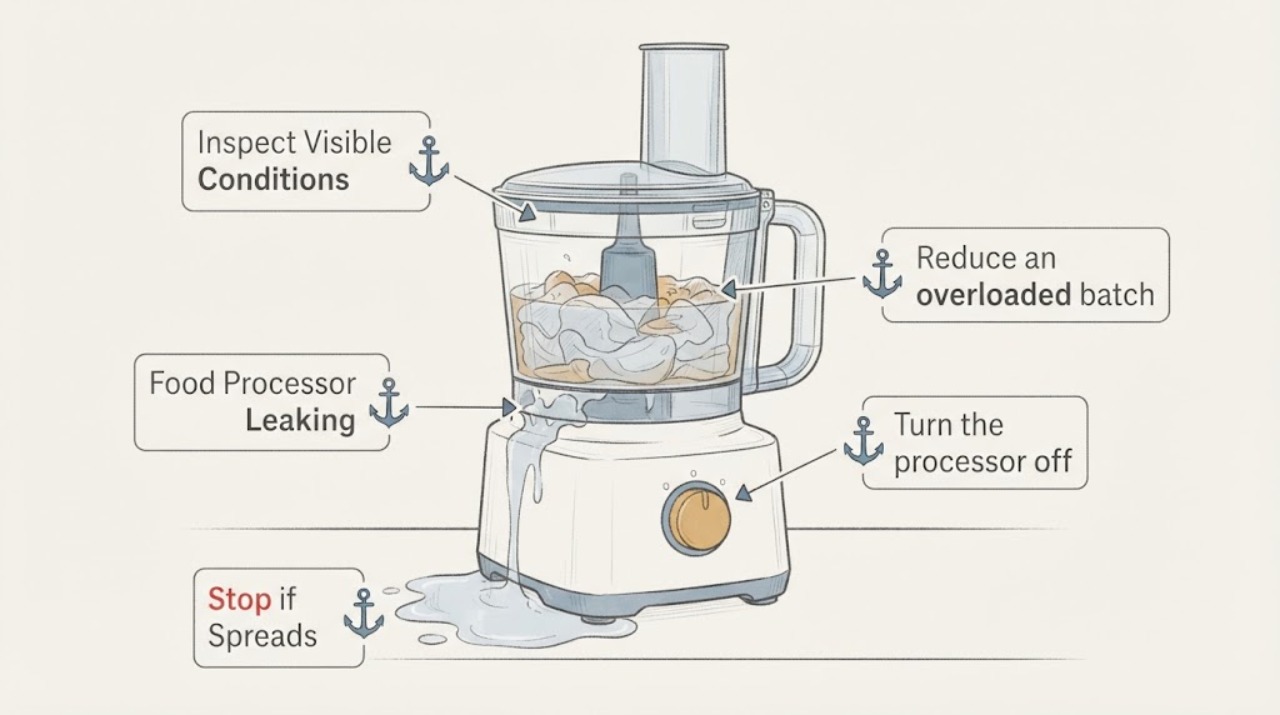
Food Processor Leaking
To troubleshoot a food processor that is leaking, first identify the exact stage and accompanying signs, then make only the safe external checks supported by the owner guidance. Stop for hazards or recurrence and arrange qualified service.
-
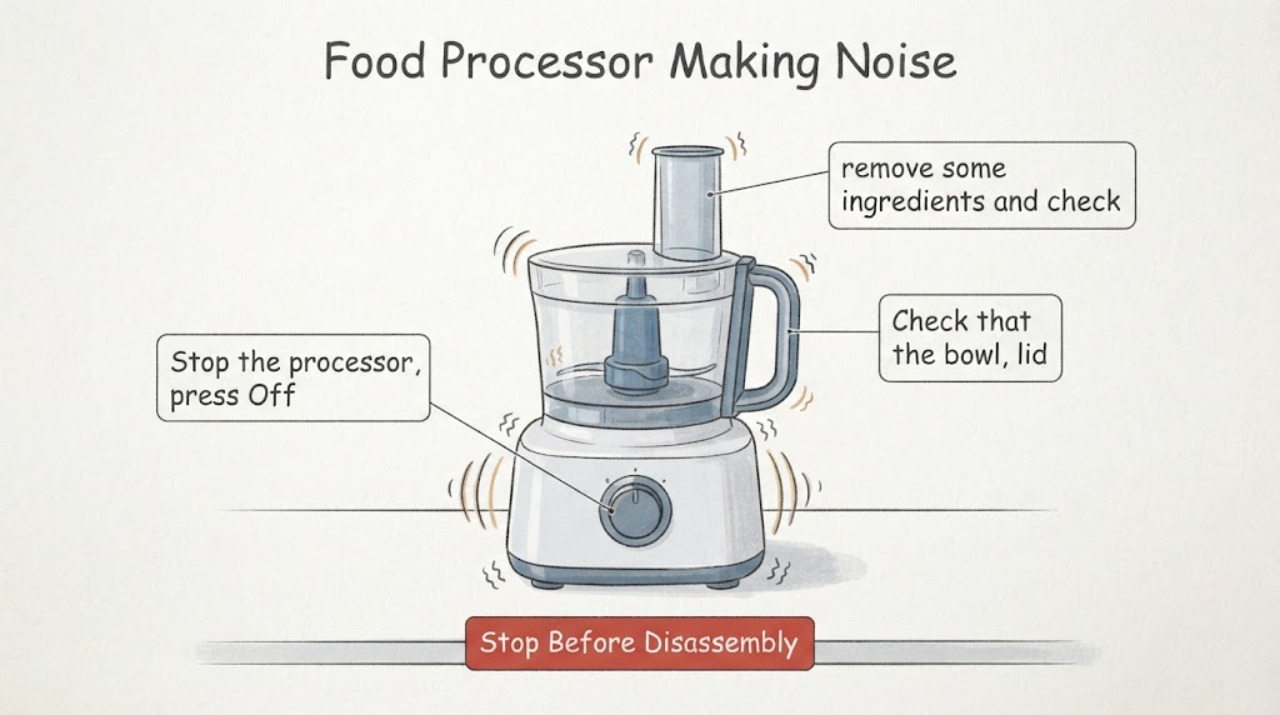
Food Processor Making Noise
A food processor’s noise pattern matters. A brief click or pop under a dense load can be clutch engagement, while repeated grinding, scraping, metal-on-metal noise, burning odor, or worsening movement is a stop-use signal. Turn it off and unplug it before touching the bowl, blade, or lid; then check load size, hard seeds or foreign pieces, assembly, and the level surface. If the noise returns with an empty correctly assembled bowl, arrange service.
-
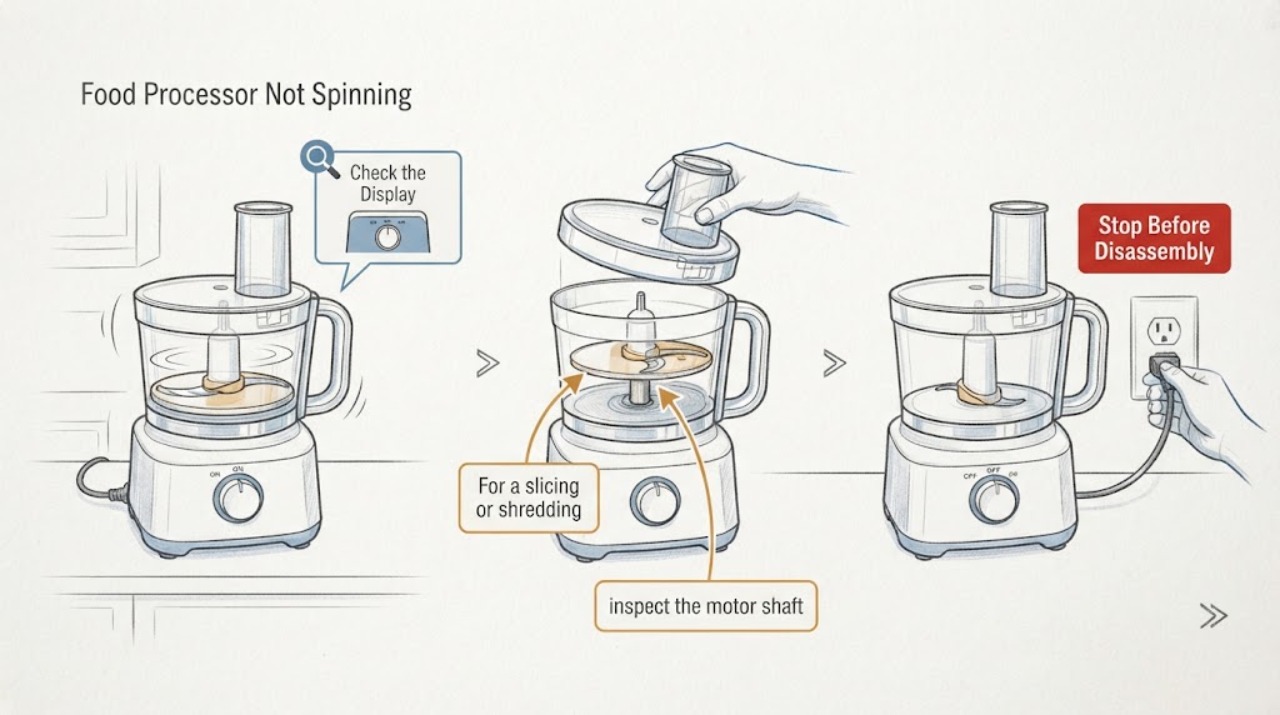
Food Processor Not Spinning
If a food processor has power but the blade is not spinning, unplug it before checking whether the bowl and lid are correctly aligned and locked, whether a disc is in its processing position rather than storage position, and whether the blade or motor shaft shows damage. Never reach into the bowl while powered. If the assembly is correctly locked but the drive still does not move, stop and arrange model-specific service.
-
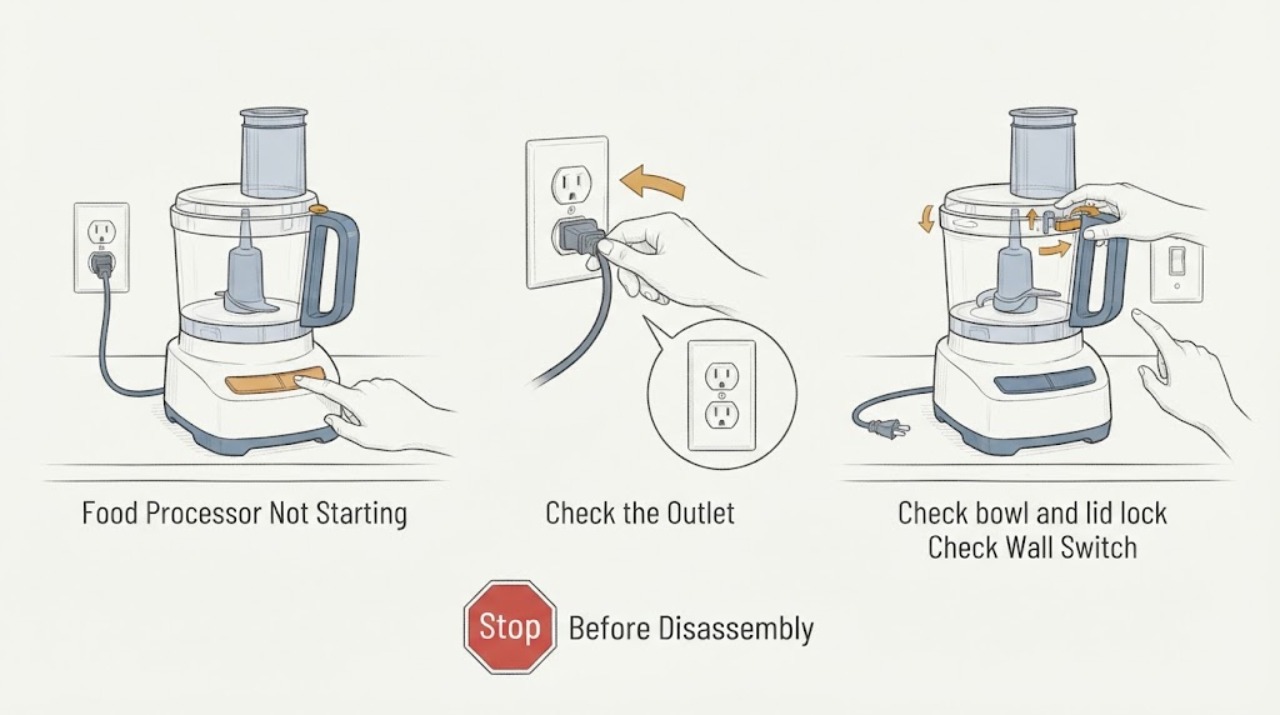
Food Processor Not Starting
For a food processor that will not start, check the outlet, power switch, bowl, lid, and safety interlock, then allow a thermal protector to cool if the manual describes one. Hamilton Beach says all parts must be properly assembled and locked. Do not bypass the interlock.
-
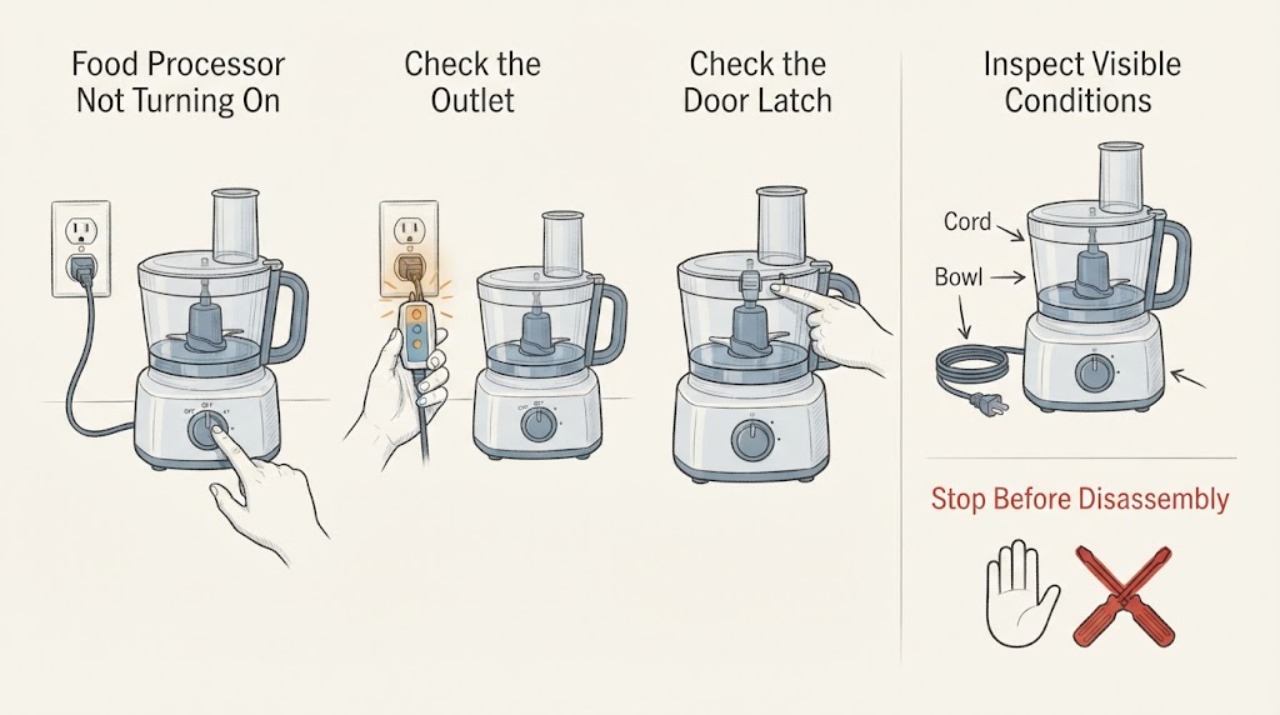
Food Processor Not Turning On
Start with a working outlet, then reseat the bowl and lid until the safety interlock is fully engaged. If power and locking are confirmed but the processor stays silent, hums, trips the supply, or smells hot, unplug it and arrange service.
-
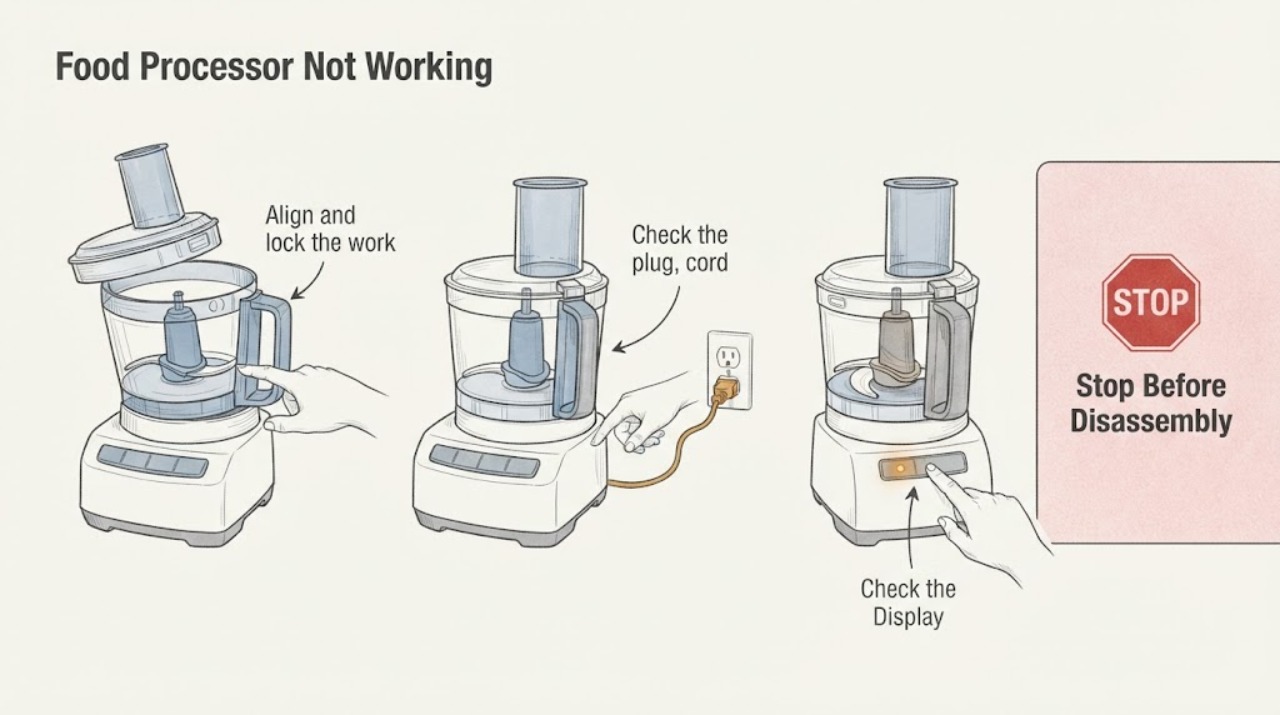
Food Processor Not Working
A food processor that will not work usually needs separate checks for the bowl and lid interlock, feed tube seating, overfill, household power, and an overload or locked motor. KitchenAid’s opened guidance treats these as different observations and directs unresolved faults to service.