
Miele appliance guidance
Miele Dryer Repair Guides
Troubleshooting and repair guidance for published Miele Dryer problems, symptoms, and maintenance questions.
Published Miele Dryer guides
Choose the guide whose symptom or condition most closely matches what you are seeing.
-
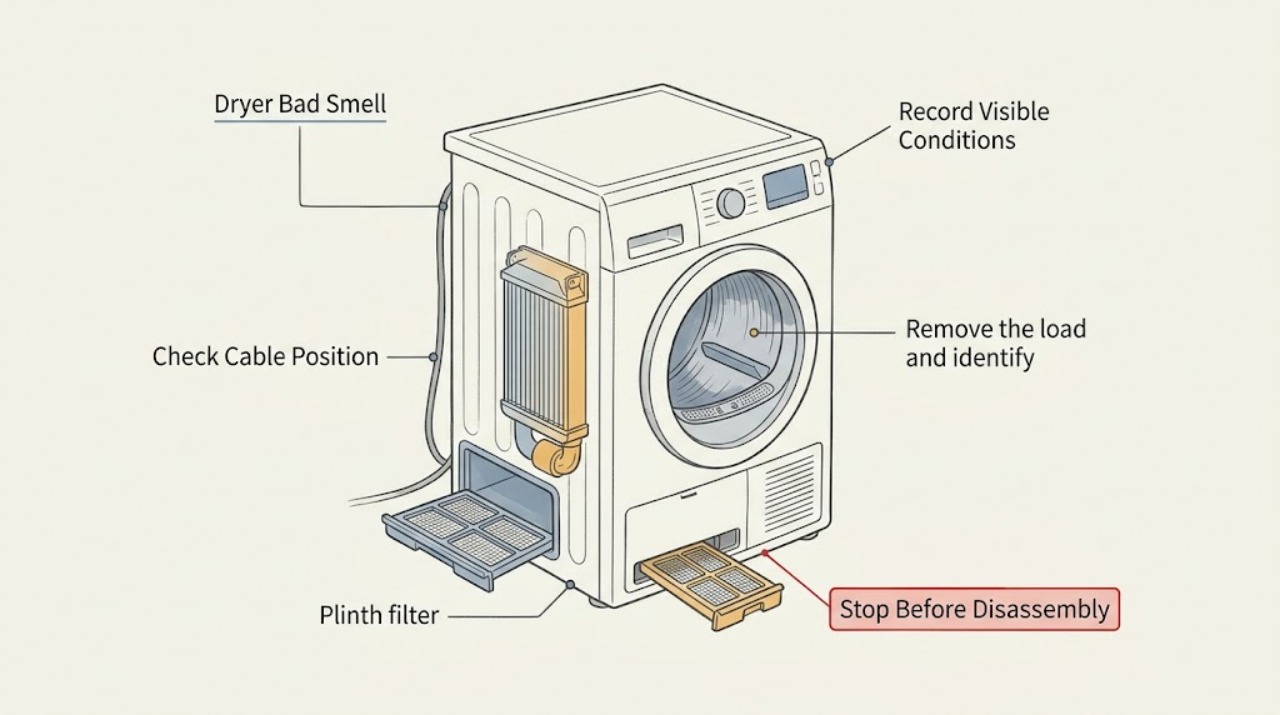
Miele Dryer Bad Smell: Find the Source Safely
First separate a normal new-appliance rubber odor or a smell coming from the laundry from a burning, electrical, gas, or overheated-appliance odor. Stop immediately for smoke, flame, sparks, melting, a strong burning or electrical smell, unusual heat, a damaged cord, or a dryer that will not shut off.
-
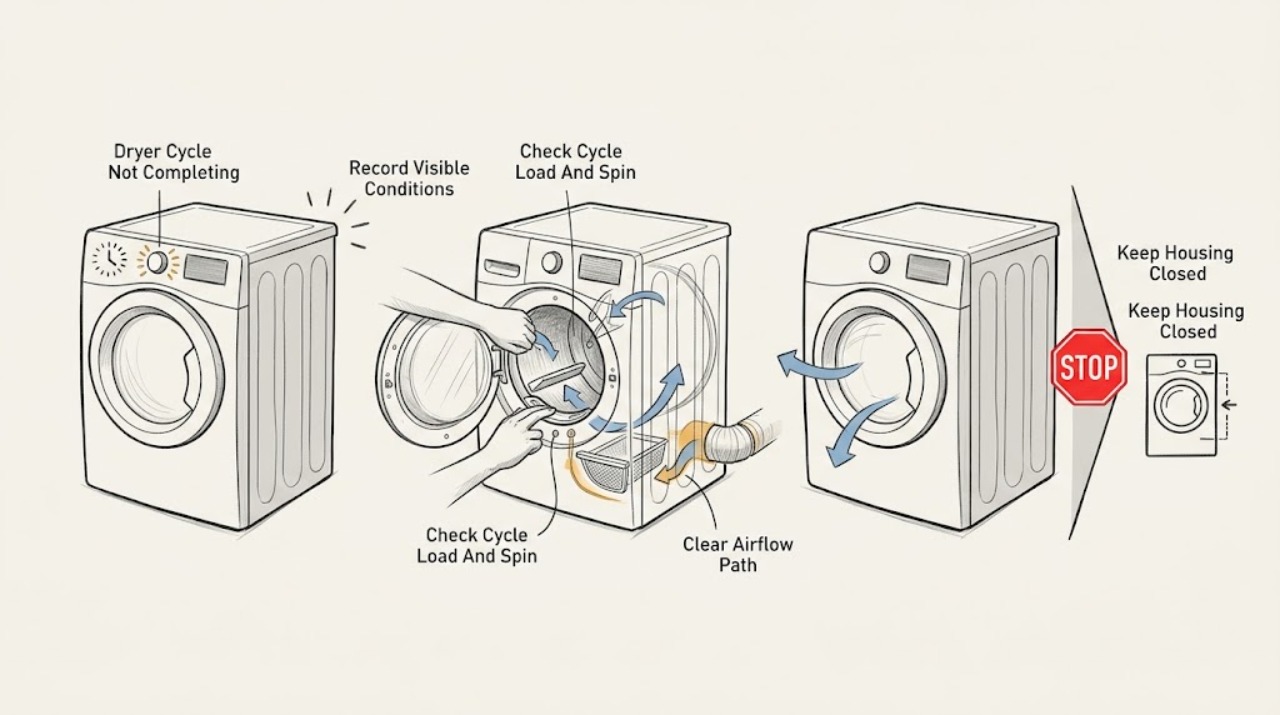
Miele Dryer Cycle Not Completing: Check the Load, Airflow and Water Path
First decide whether the Miele dryer is showing a normal time estimate or has actually stopped. Miele says a time display can pause at 10 minutes while drying continues, while an empty or nearly empty load can interrupt a sensor program.
-
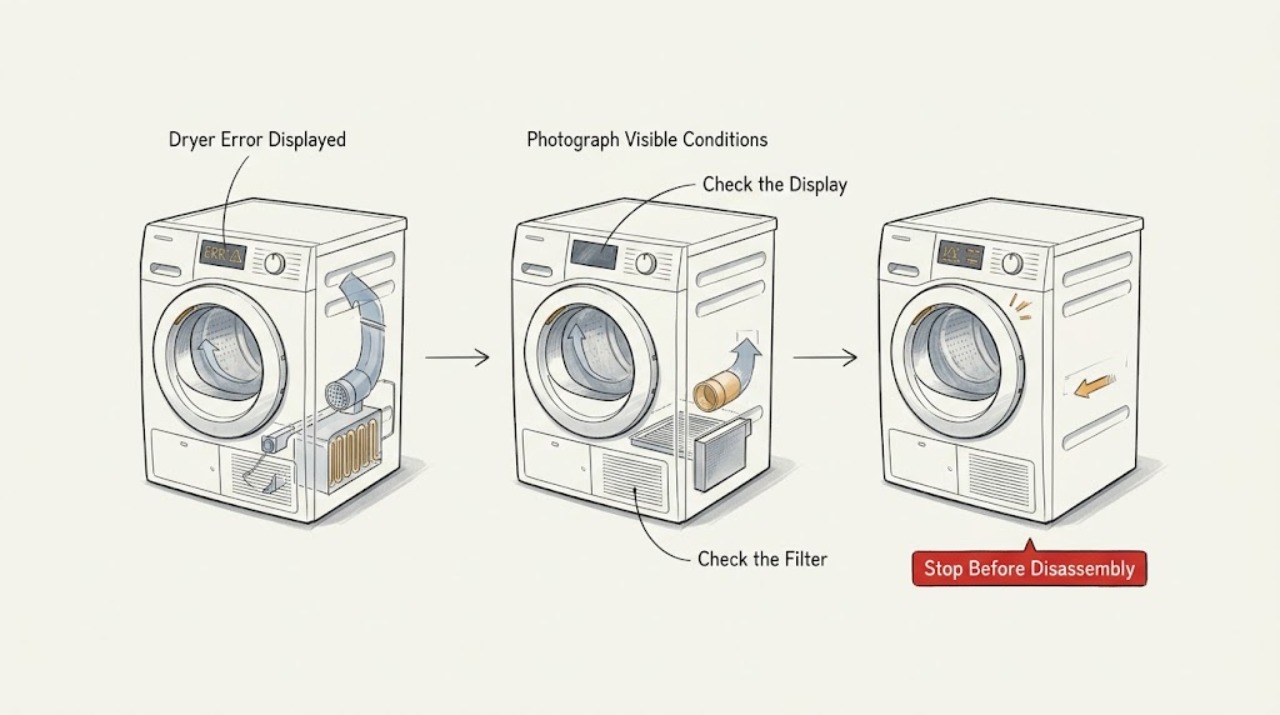
Miele Dryer Error Displayed: Record the Code and Choose the Safe Next Step
Do not diagnose a Miele dryer from a generic error list. Photograph or write down the exact code, symbols, wording, model identifier, program, and point in the cycle when it appeared.
-
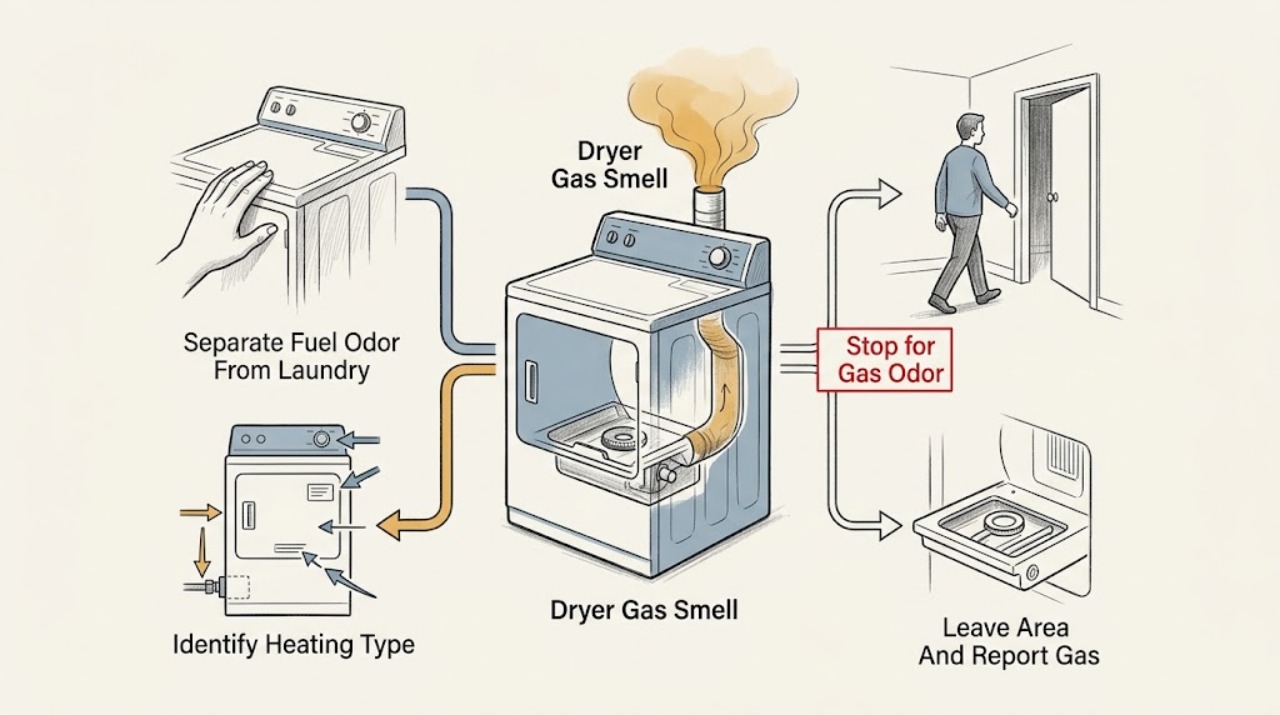
Miele Dryer Gas Smell: Leave the Area and Verify the Dryer Type Safely
Treat a gas smell as an emergency before treating it as a dryer fault. Leave the area, avoid flames and electrical switches, and contact the gas emergency service or emergency services from a safe location.
-
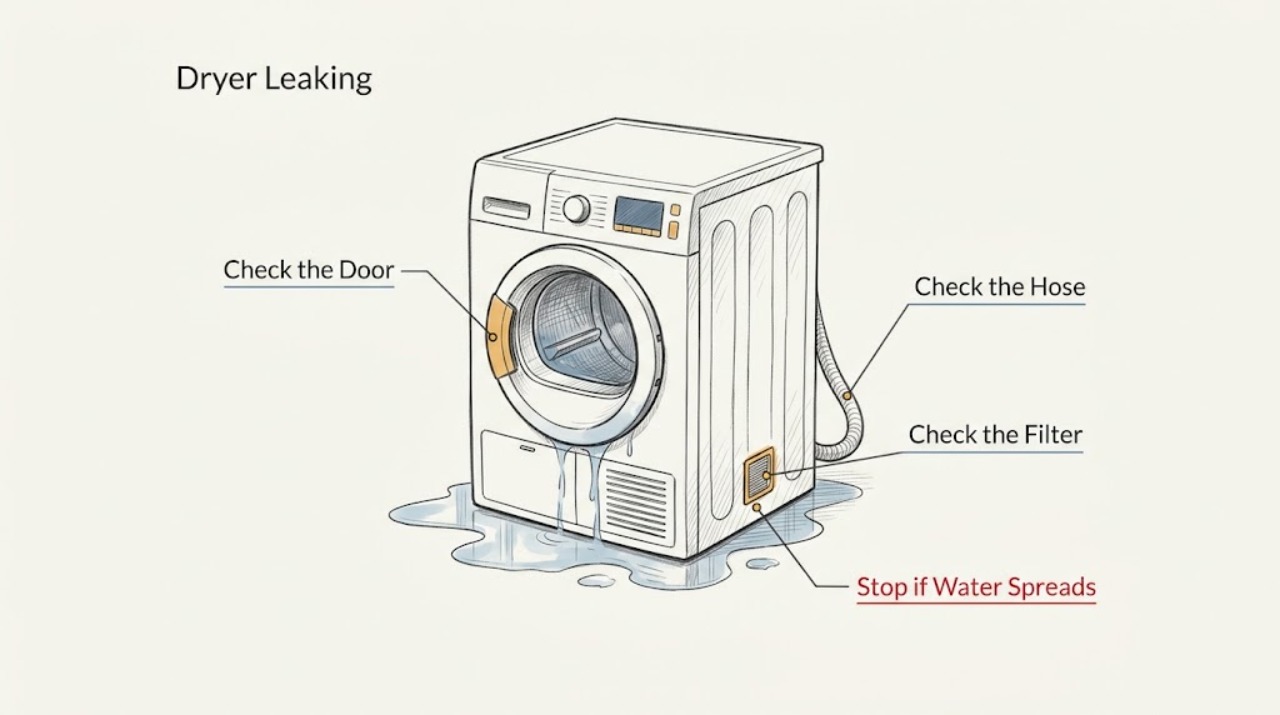
Miele Dryer Leaking: Trace the Condensate Safely
Stop the Miele dryer and identify where water first appears before changing anything. Miele's support identifies an incorrectly connected drain hose, a missing, clogged, or incorrectly fitted non-return valve, and back-flow from a drain shared with a washing machine as leak paths.
-
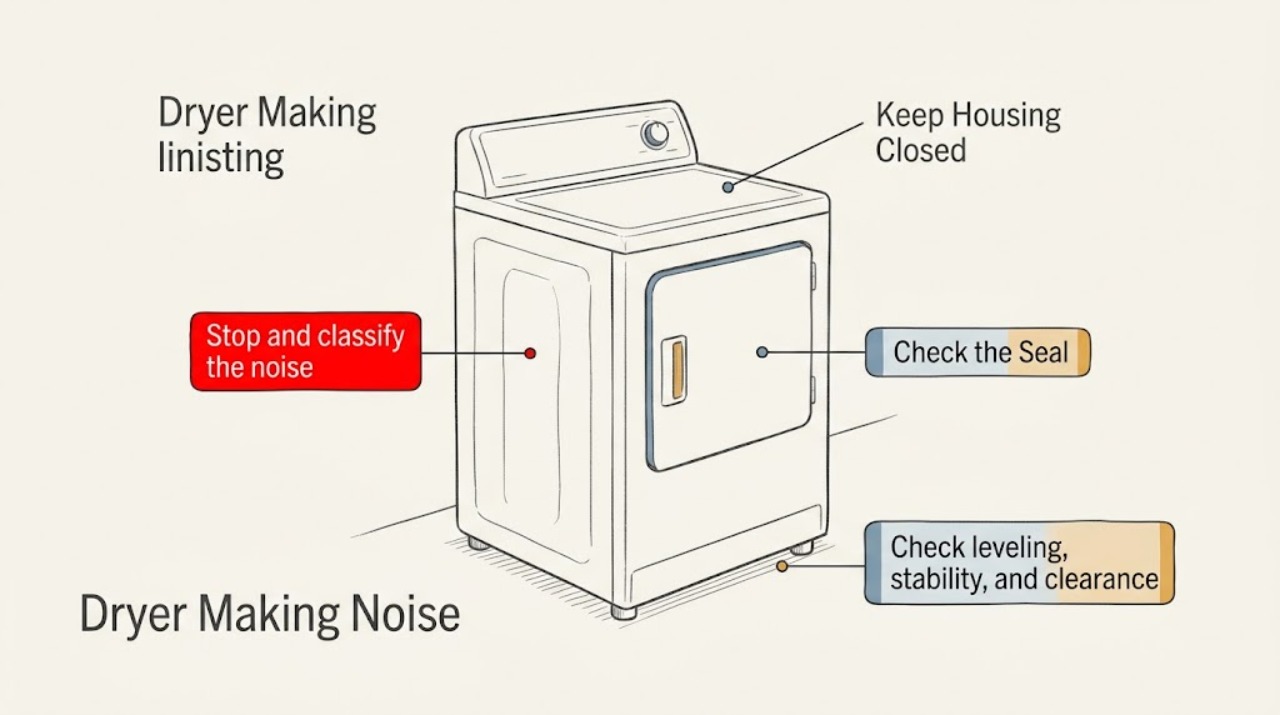
Miele Dryer Making Noise: Identify Normal Sounds and Safe Stop Points
First identify the sound and when it occurs. Miele says a low buzz or hum can be normal when a heat-pump compressor or condensed-water pump operates, rollers can make some rubbing or squeaking, and a cold dryer can make start-up noises for the first few minutes.
-
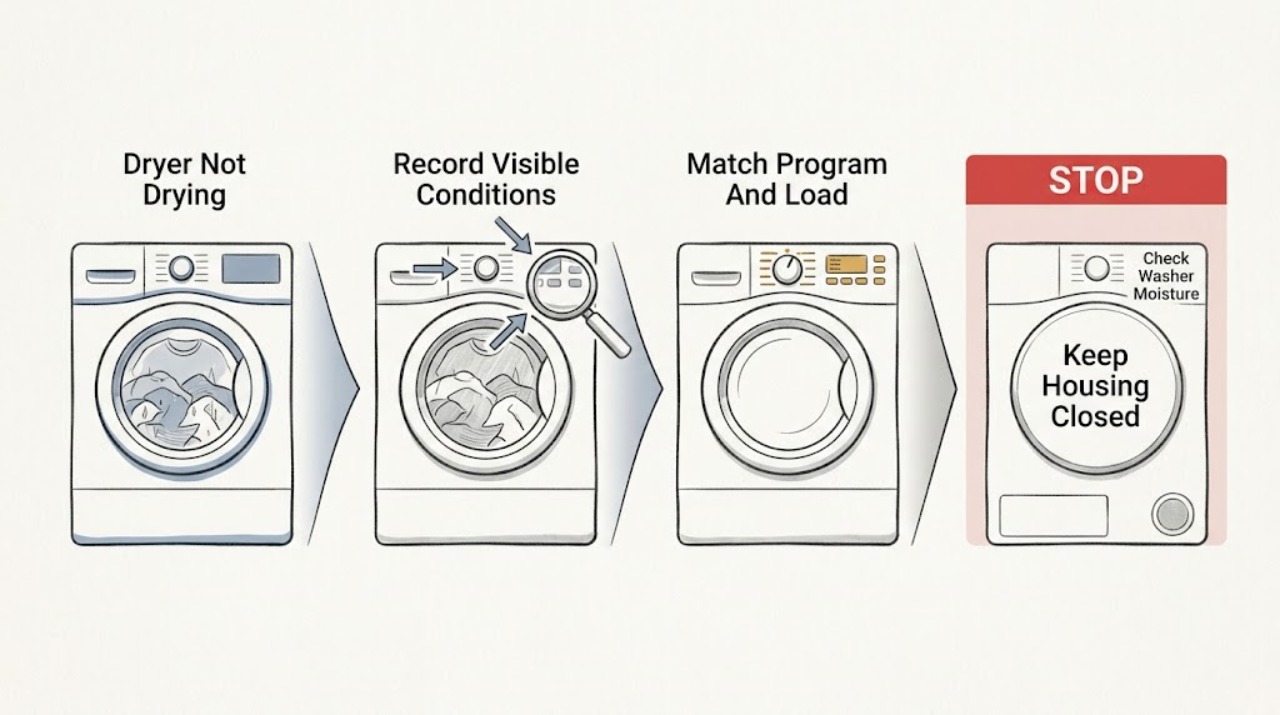
Miele Dryer Not Drying: Check the Program, Filters, Airflow, and Moisture Sensing
When a Miele dryer leaves laundry damp, first identify whether the load is mixed, overloaded, still too wet from the washer, or ending early because the moisture sensor sees little moisture. Select the program that matches the fabric and load, then clean the door lint filters and the plinth filter exactly as the model instructions describe.
-
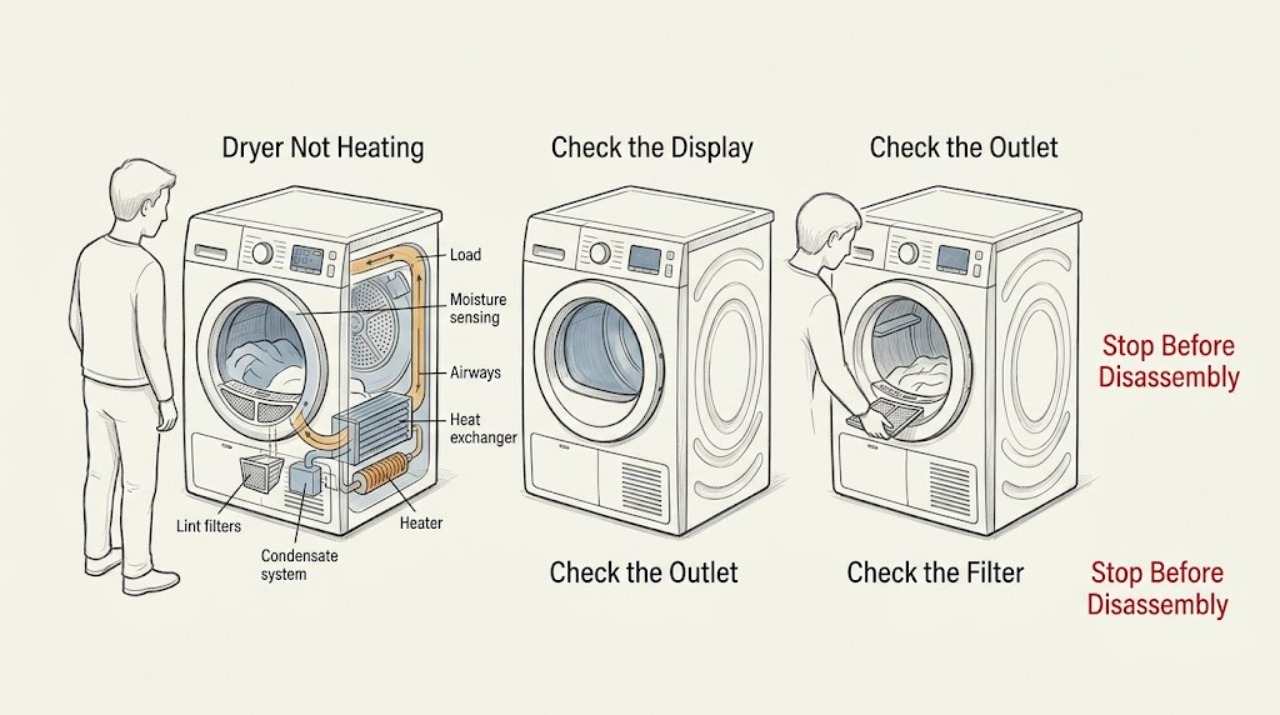
Miele Dryer Not Heating: Check the Program, Airflow, Filters, and Moisture System
First separate a true no-heat symptom from a cycle or sensing result: record the selected program, load, whether the drum and airflow run, and whether the display shows Clean out airways, Empty out container, Cold air, Finish, or a fault. Stop using the dryer for smoke, a burning or electrical smell, sparks, unusual heat, a damaged cord, a breaker that trips again, or any unsafe condition.
-
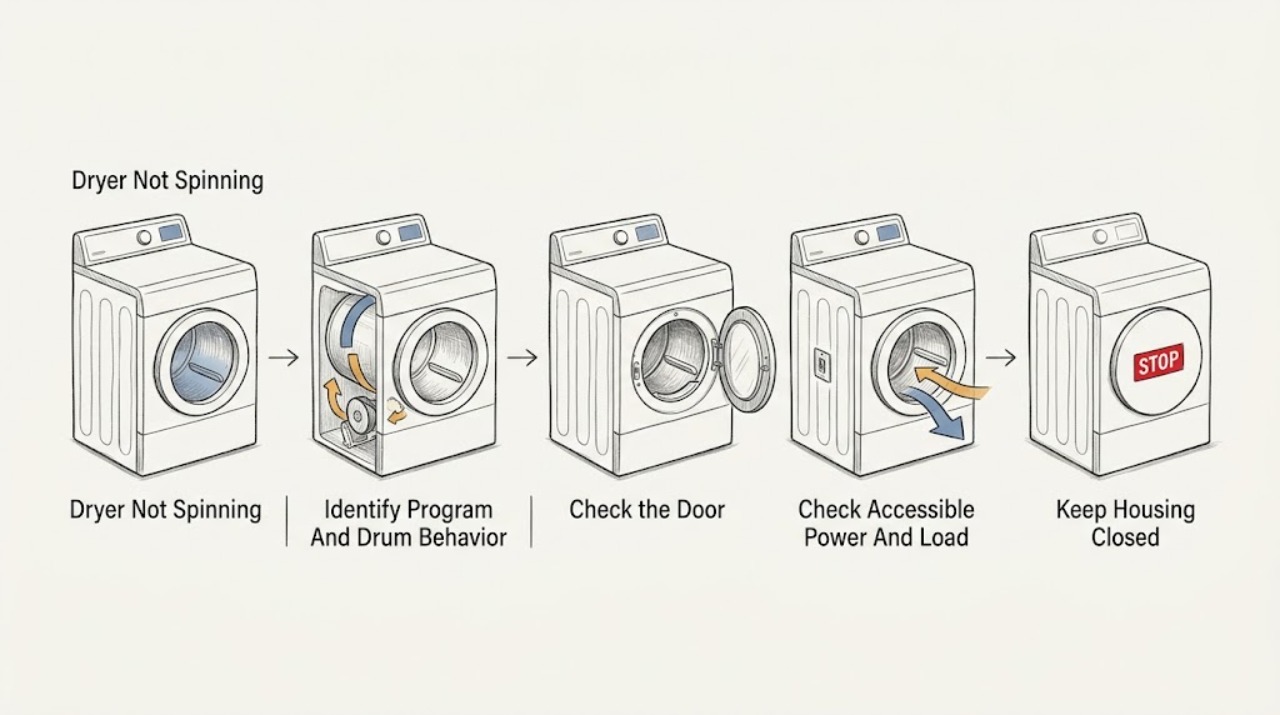
Miele Dryer Not Spinning: Check the Door, Program and Drum Safely
First determine whether the drum never started or stopped after the program began. Miele lists an incompletely closed door and an active delay-start function as reasons a drum can remain inoperative after program start, and it treats the Normal Economy program's lack of direction reversal as normal.
-
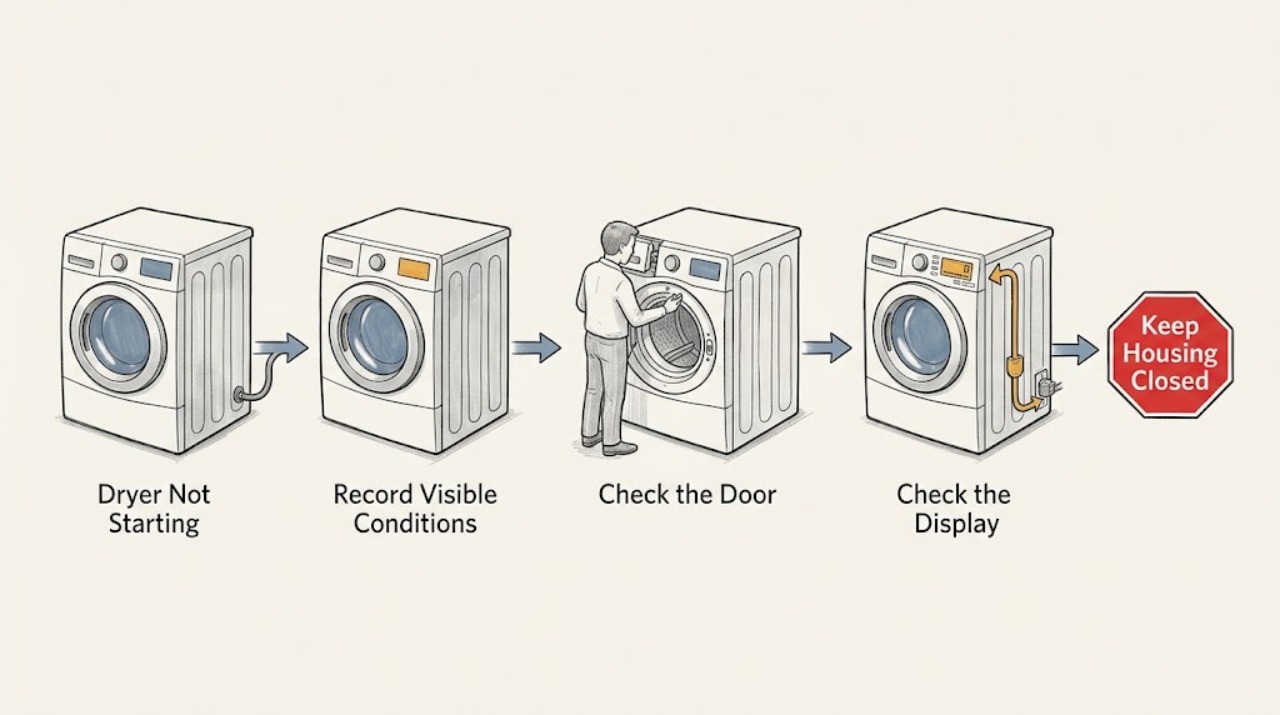
Miele Dryer Not Starting: Check the Door, Delay and Safe Power Path
Start with the exact Miele model and the display state, then check the door, selected program, delay start, lock indicator, accessible plug and breaker. Miele identifies an improperly closed door, an active delay-start function and an activated lock function as model-dependent reasons a program may not start.
-
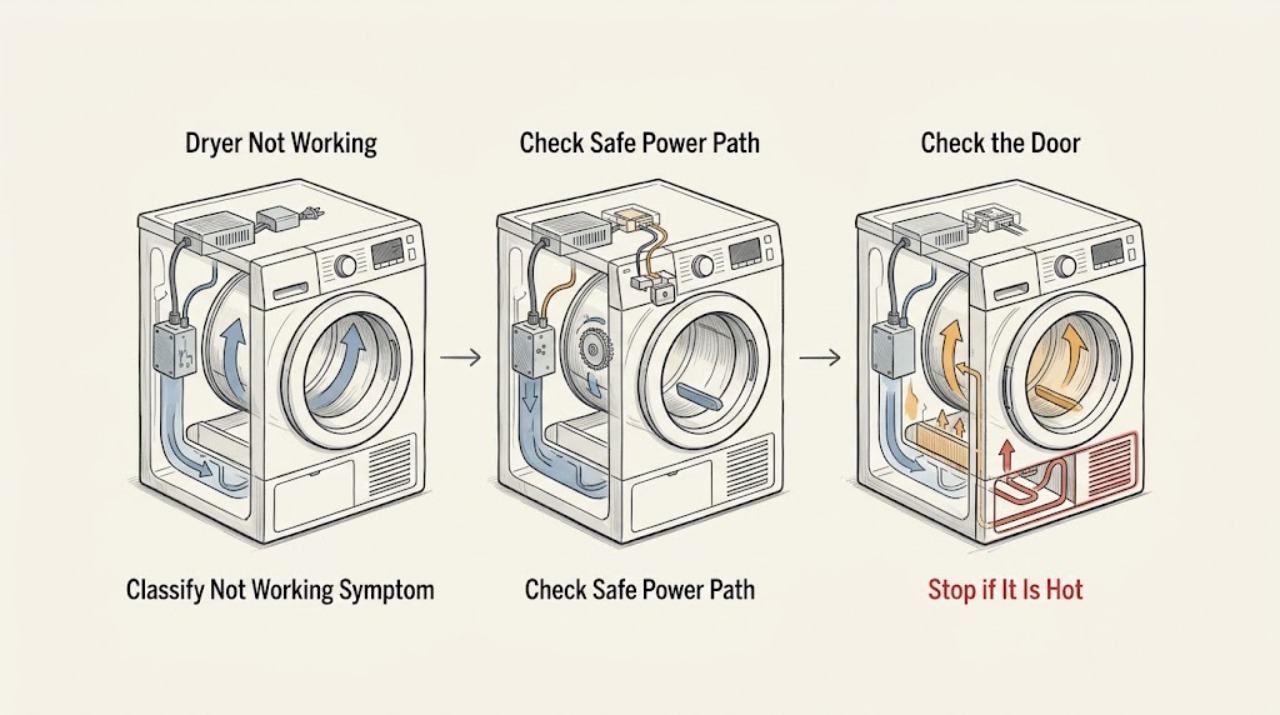
Miele Dryer Not Working: Separate Power, Start, Airflow, and Heating Faults
“Not working” can mean no display, no start, no drum movement, no heat, or a cycle that stops early. First stop the dryer if there is smoke, a burning smell, abnormal heat, sparking, or a tripped breaker.
-
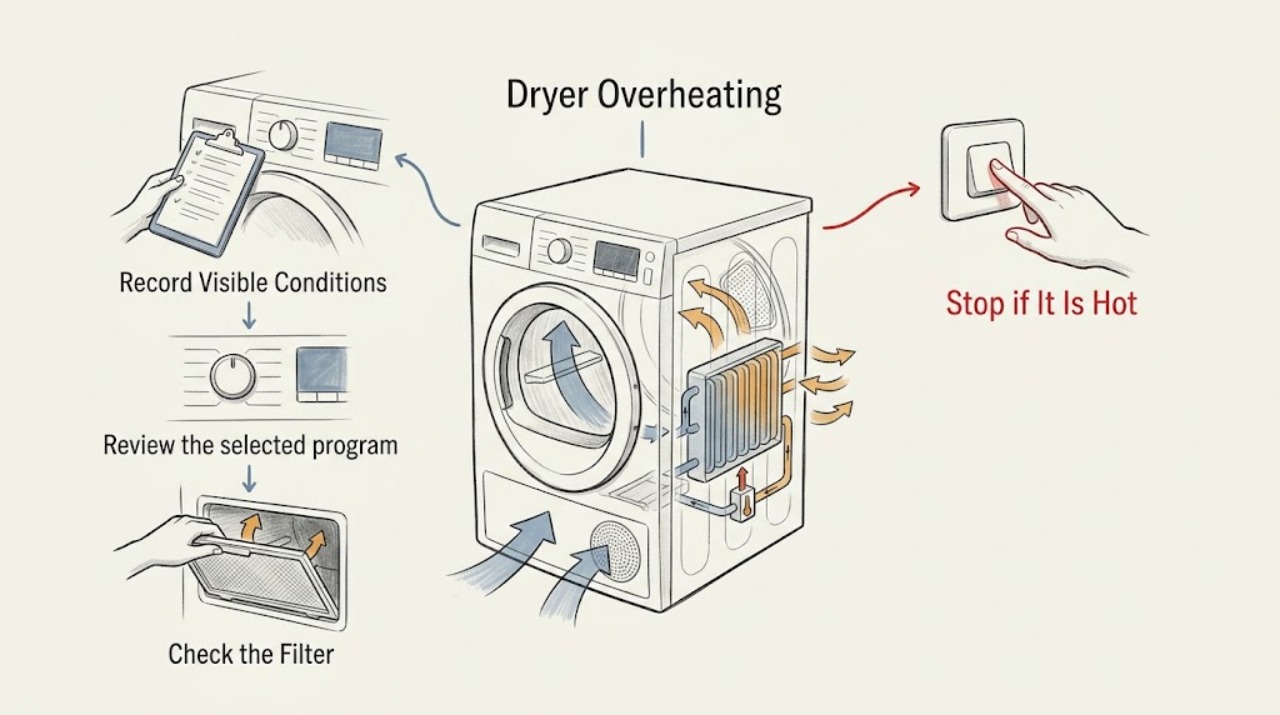
Miele Dryer Overheating: Check Airflow, Load and Condensate Safely
Stop the Miele dryer immediately if you smell burning, see smoke or sparks, find scorched fabric, feel abnormal heat at the outer cabinet, or a breaker trips. A rolling-bar display at the end of a cycle can simply be the normal cooling phase, but an appliance-overheated fault such as F158 is a technical fault that requires Miele service.
-
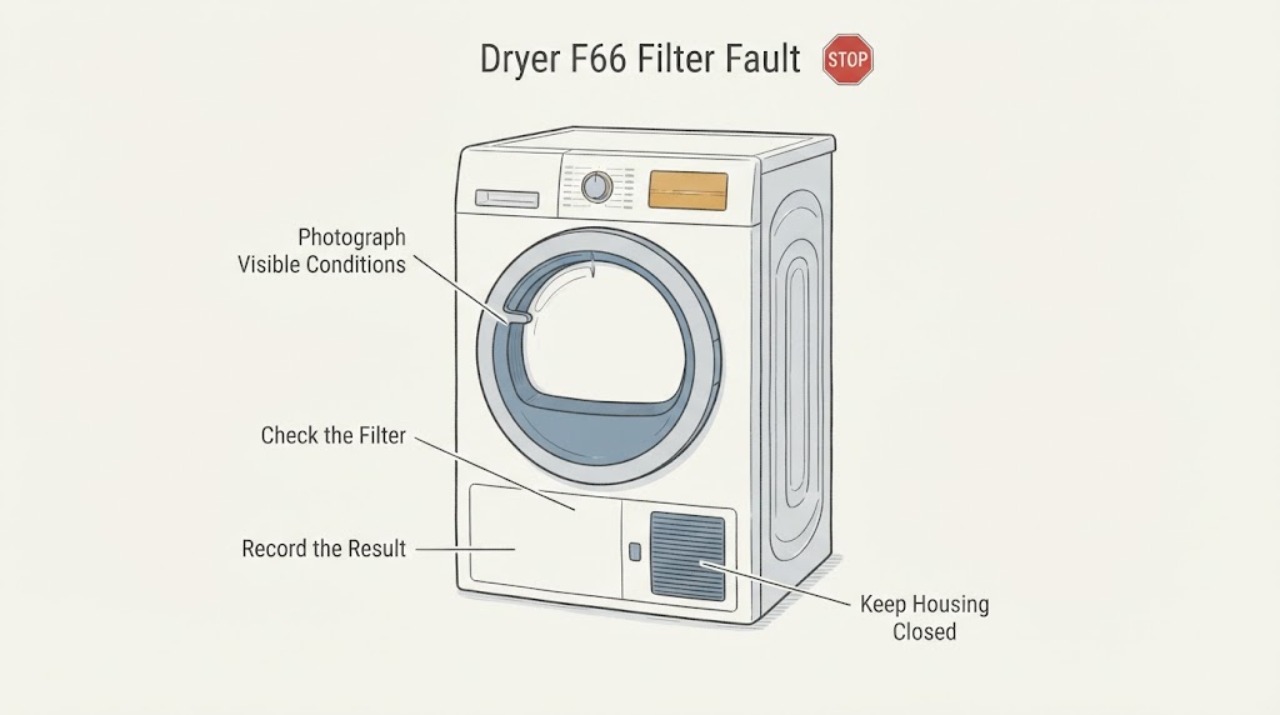
Miele T1 Dryer F66 Filter Fault: Do You Need a Sensor?
Do not choose a sensor from F66 alone. Miele USA's F66 guidance says the fault commonly appears when the lint filters or plinth filter are dirty or insufficiently cleaned, and it also directs you to check the air path, ventilation, load, filter condition, and heat exchanger.
-
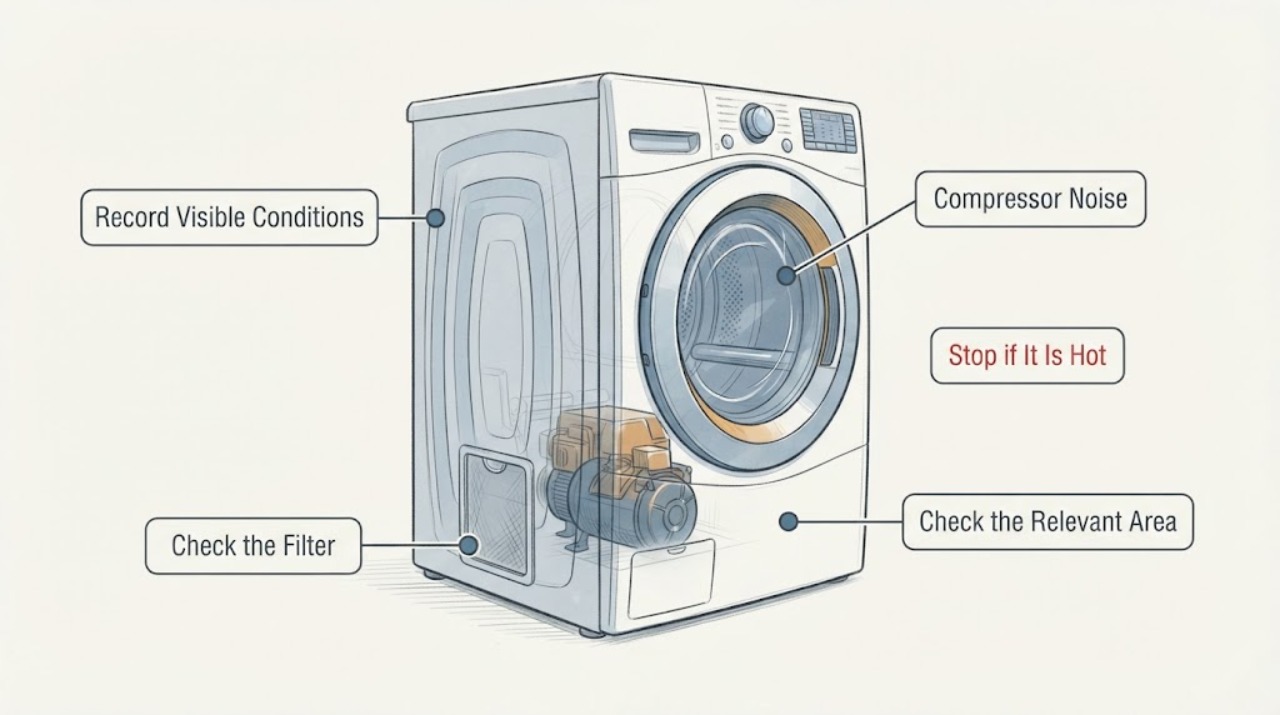
Miele TSH783WP Compressor Noise: Which Sounds Are Normal?
On the Miele TSH783WP, a steady low buzz or hum during a heat-pump or condensed-water function can be normal: Miele attributes those sounds to the compressor or condensed-water pump. Brief start-up noise in a cold room and some drum-roller squeak can also be normal.