
Whirlpool appliance guidance
Whirlpool Freezer Repair Guides
Troubleshooting and repair guidance for published Whirlpool Freezer problems, symptoms, and maintenance questions.
Published Whirlpool Freezer guides
Choose the guide whose symptom or condition most closely matches what you are seeing.
-
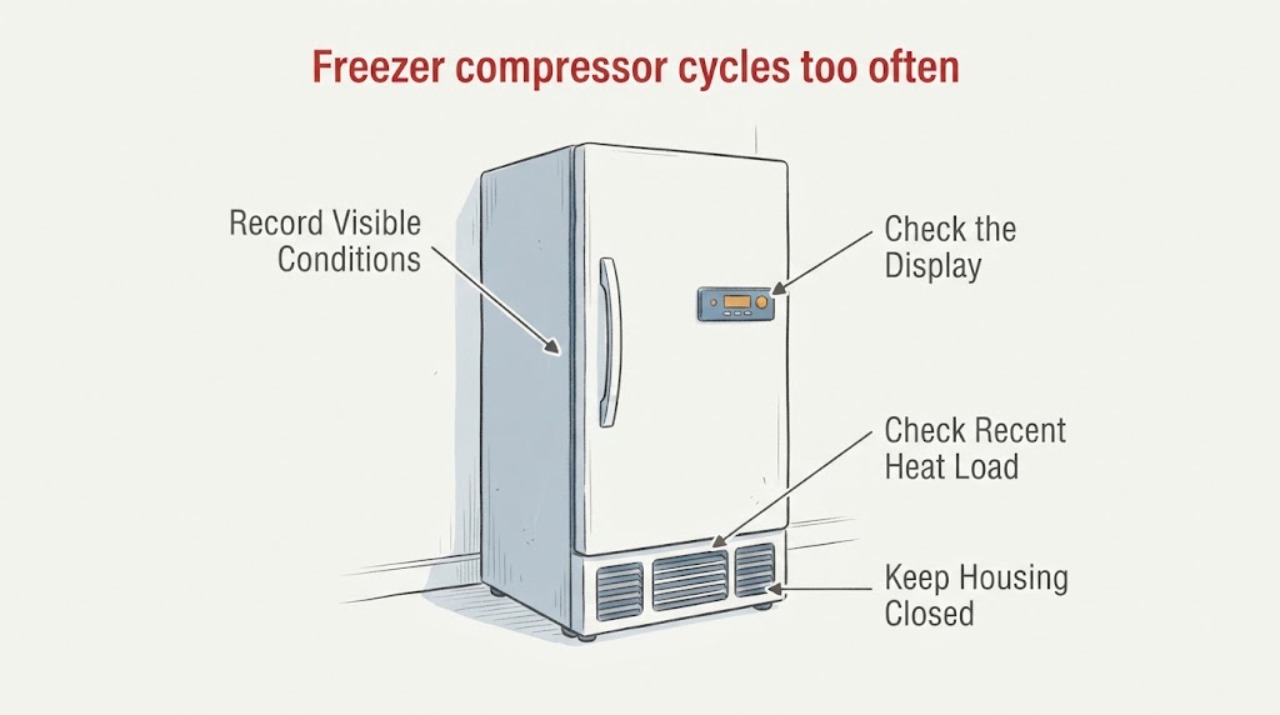
Whirlpool freezer compressor cycles too often: What to Check and What to Do Next
A Whirlpool freezer may run more often after a large food load, frequent door openings, a warm room, or a control setting colder than needed. First determine whether the freezer is actually holding its target temperature, then check the control setting, door or lid seal, clearance around the cabinet, and signs of frost or restricted airflow without removing panels.
-
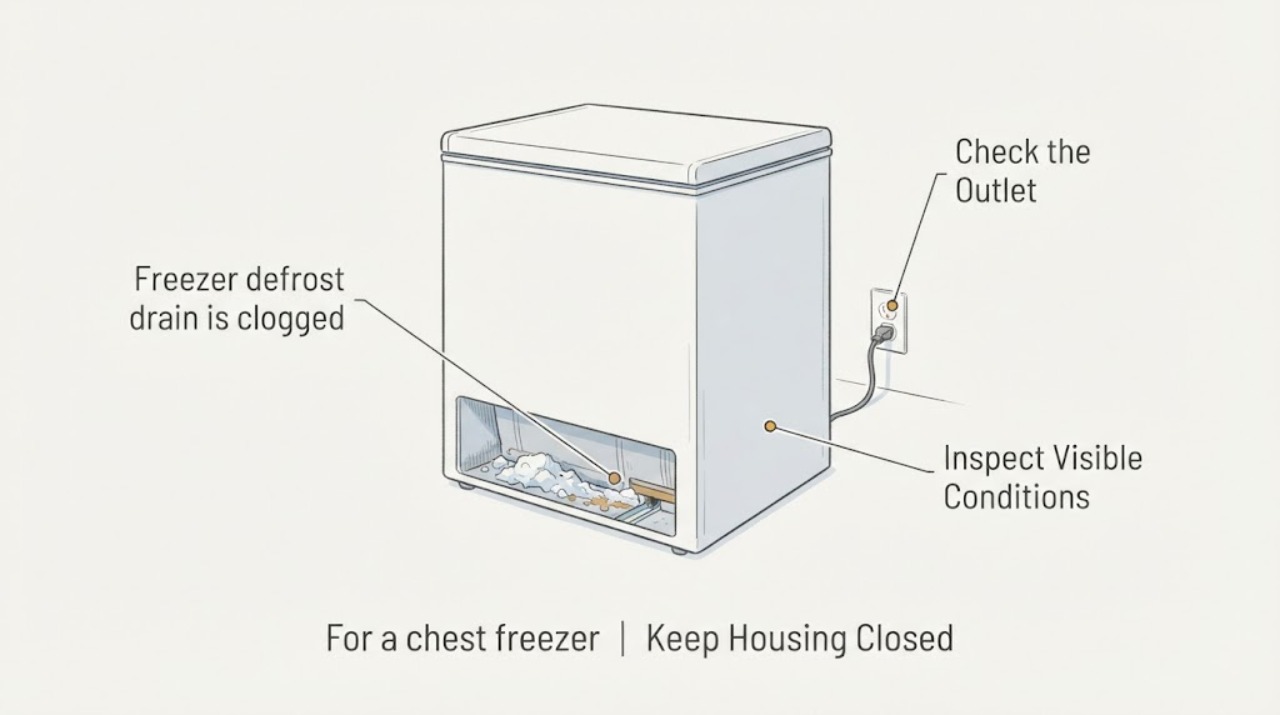
Whirlpool freezer defrost drain is clogged: What to Check and What to Do Next
A clogged Whirlpool freezer defrost drain commonly shows as ice or water collecting at the bottom of the freezer, water returning after a defrost, or a drain pan that does not receive meltwater. First identify whether the appliance is a chest freezer with an external drain plug or an upright/frost-free design with an internal route, protect the food and floor, and disconnect power from a dry, safe location.
-
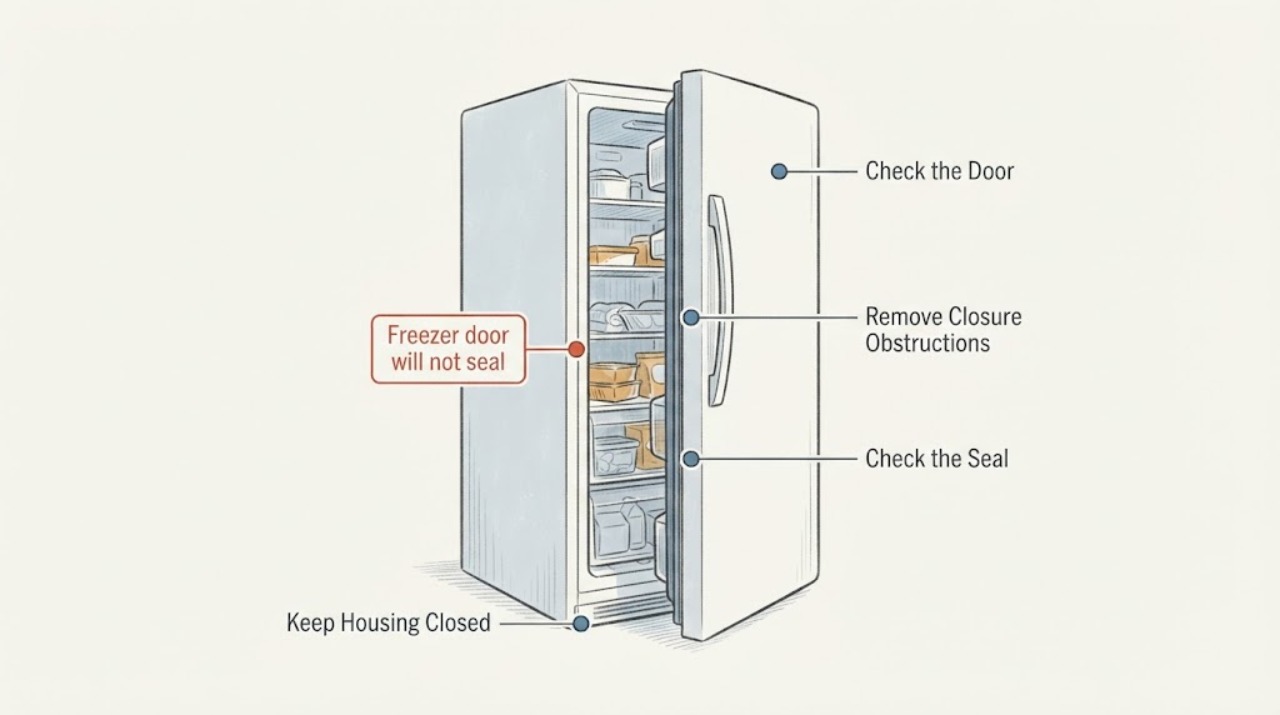
Whirlpool freezer door will not seal: Safe checks before service
A Whirlpool freezer door or lid that will not seal is usually being held open by a package, shelf, basket, shipping material, frost, a dirty or damaged gasket, or an out-of-level or misaligned cabinet. First identify the exact gap and whether the door closes fully without being held, then move only loose obstructions and check the gasket from ordinary access.
-
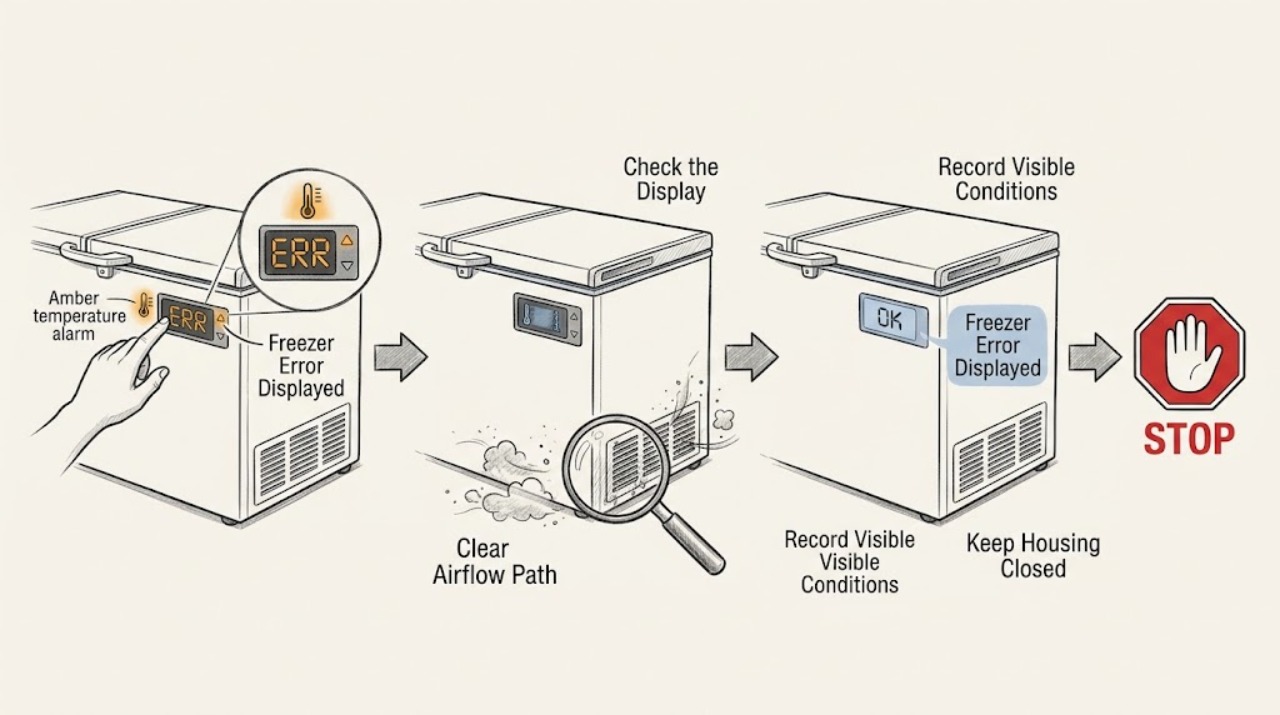
Whirlpool Freezer Error Displayed: Record the Code and Check the Safe Basics
Do not guess what a Whirlpool freezer code means from a different model. Record the exact characters, flashing pattern, indicator color, alarm sound, model number, freezer type and the time or event when it appeared.
-
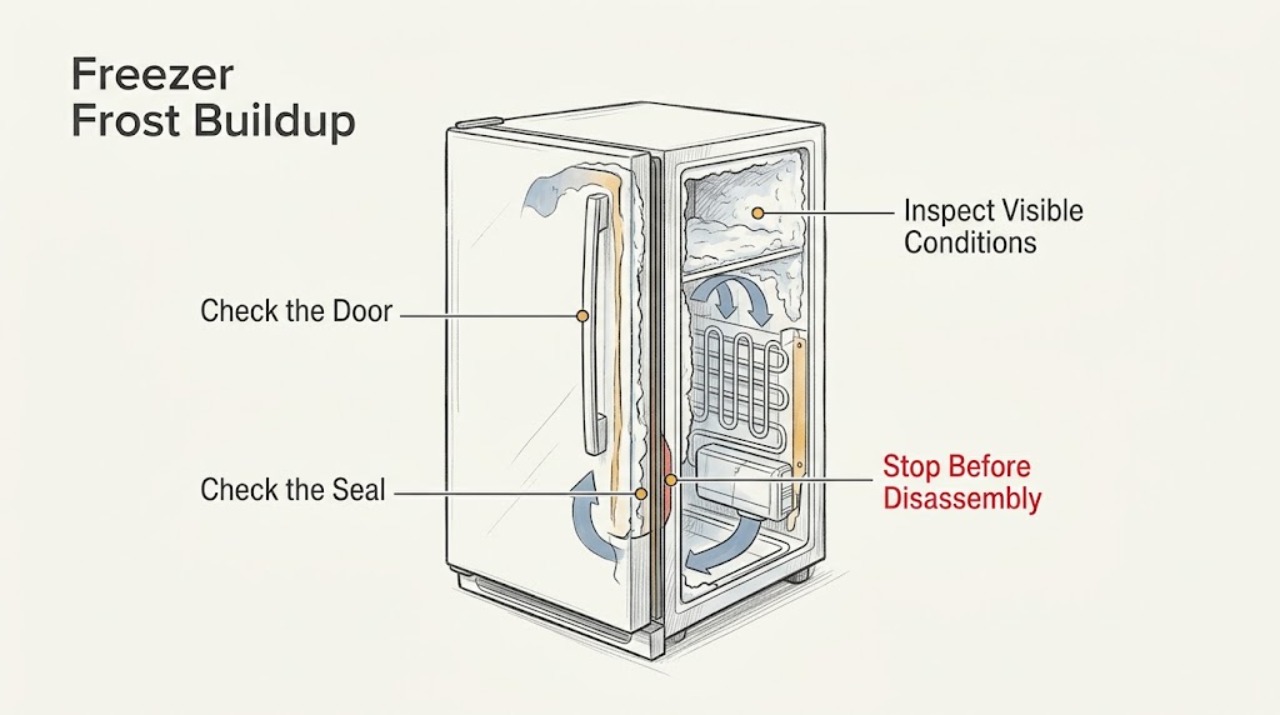
Whirlpool Freezer Frost Buildup: Find the Air Leak Before Defrosting
Whirlpool freezer frost usually comes from humid air entering through a door that is open, blocked, dirty, or not sealing, although blocked vents, overpacking, temperature conditions, and a defrost fault can also contribute. First note whether frost is a light, even layer or a thick patch around the door, back wall, vent, or drain.
-
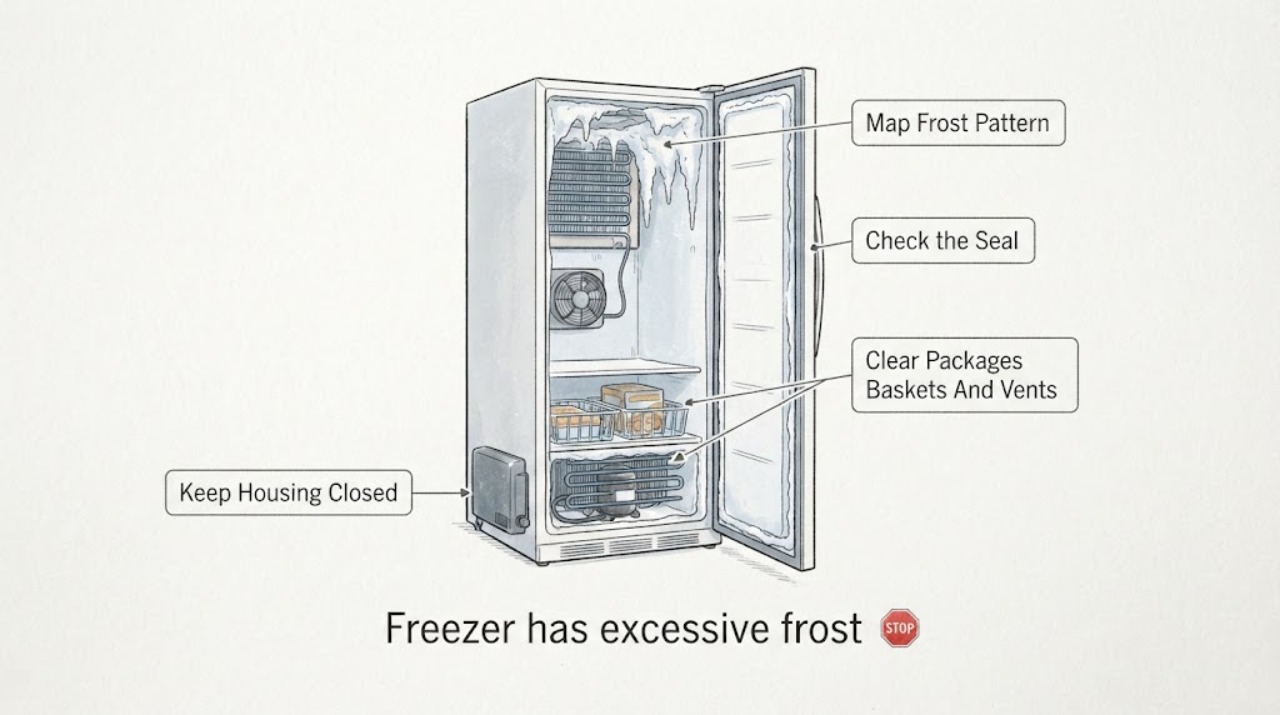
Whirlpool freezer has excessive frost: What to Check and What to Do Next
Excessive frost in a Whirlpool freezer usually means warm, humid air is entering through frequent or prolonged door openings, a package or basket is blocking closure, a dirty or damaged gasket is leaking air, or airflow is restricted. Check the door seal, shelves or baskets, packages, vents, room conditions, and frost location without using sharp tools or removing panels.
-
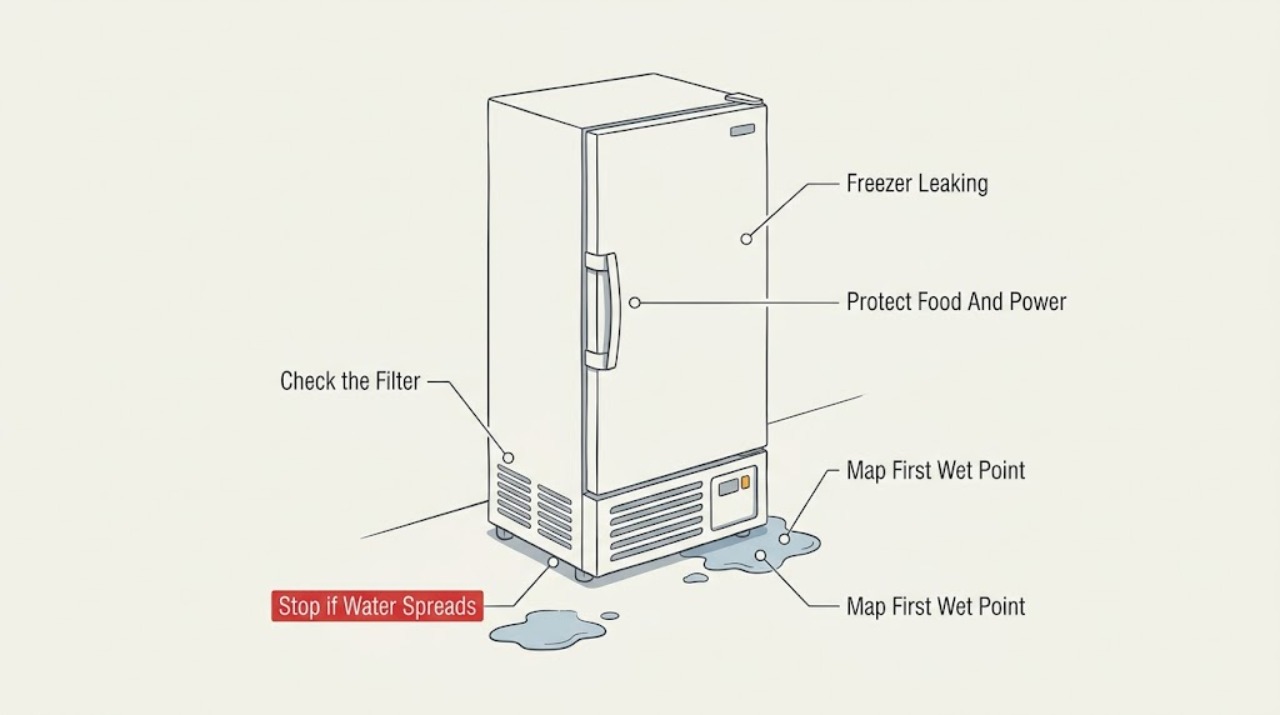
Whirlpool Freezer Leaking: Trace the Water, Ice Maker, Drain, and Door Seal
A leaking Whirlpool freezer can be receiving water from an ice-maker supply connection, releasing meltwater through a blocked defrost drain, losing water at a filter or door seal, or overflowing a drain pan. First protect food, stop the water source if the freezer has one, and keep water away from electrical parts.
-
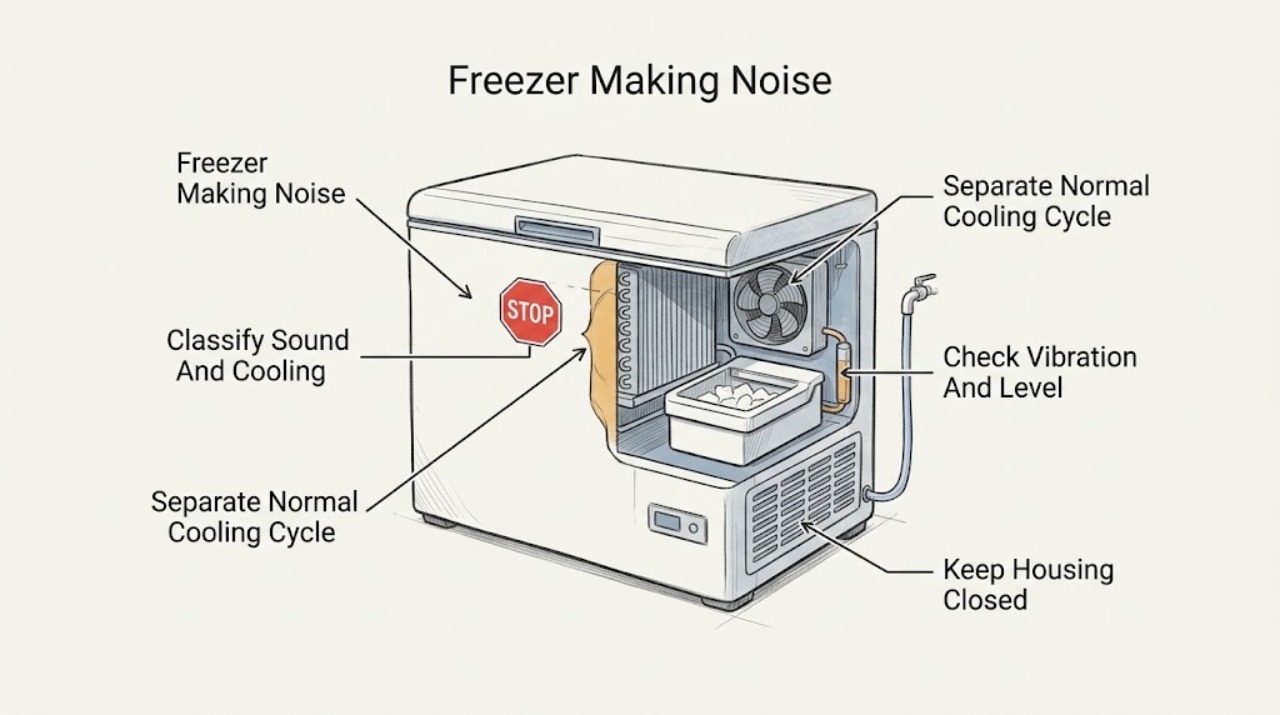
Whirlpool Freezer Making Noise: Tell Normal Cooling, Fan, Ice-Maker, and Vibration Sounds Apart
A Whirlpool freezer can hum, buzz, click, gurgle, hiss, crack, or whoosh during normal compressor, fan, refrigerant, defrost, or ice-making cycles. First locate the sound and note whether it is brief and cycle-related or continuous, scraping, metallic, rapidly worsening, or accompanied by warming, heavy frost, water, burning odor, smoke, sparks, abnormal heat, or a tripped circuit.
-
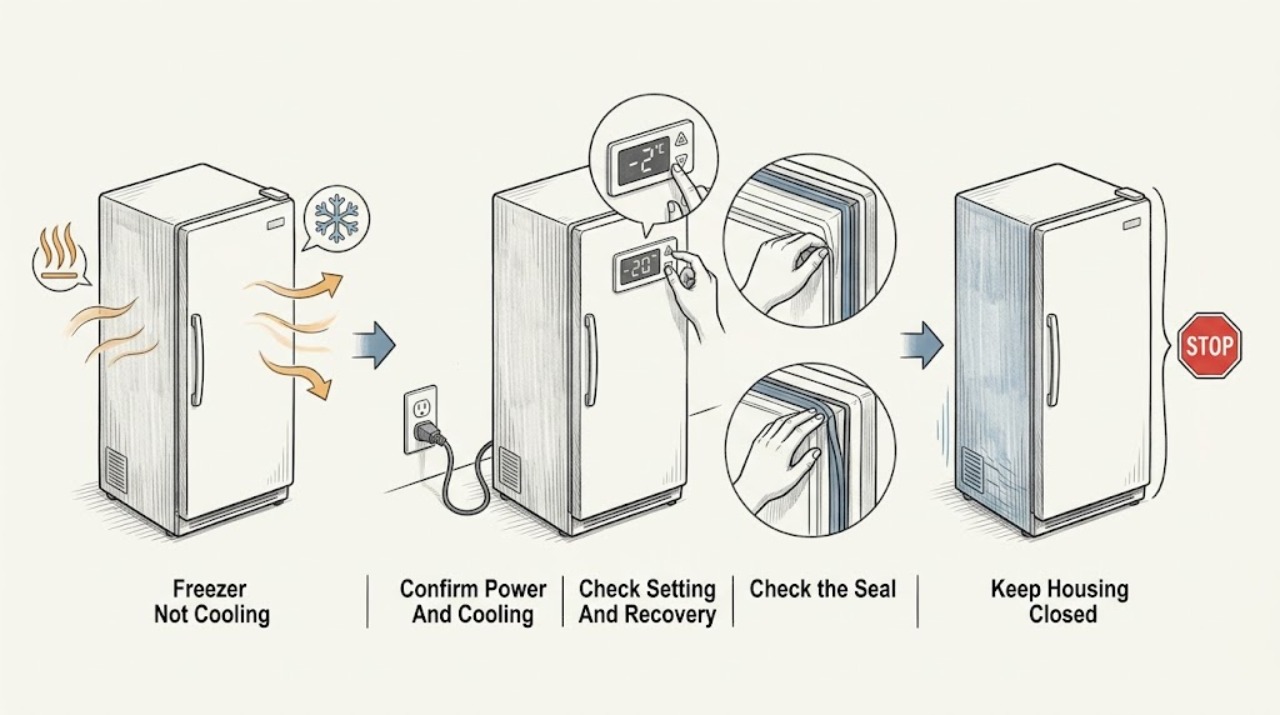
Whirlpool Freezer Not Cooling: Check Power, Settings, Door Seal, Frost, and Airflow
When a Whirlpool freezer is not cooling, first confirm that cooling is enabled and power is stable, then check the displayed setting, door closure, gasket, blocked vents, frost pattern, and room conditions. A large recent load or frequent door opening can temporarily raise temperature, while a damaged seal can admit warm humid air and create frost that blocks airflow.
-
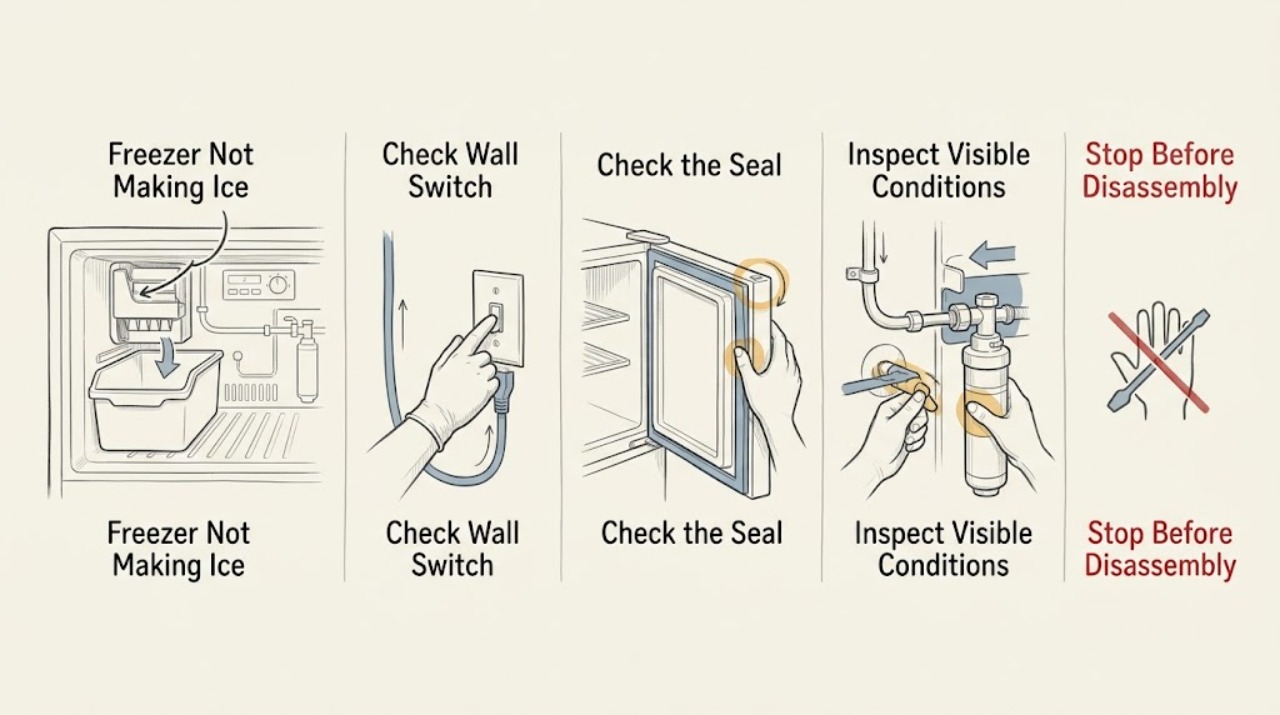
Whirlpool Freezer Not Making Ice: Check the Ice Maker, Temperature, and Water Supply
First determine whether the Whirlpool freezer has a manual ice tray or a plumbed automatic ice maker. For an automatic system, confirm the ice maker is on, the freezer is cold enough, the door closes fully, the ice bin and ejector are not jammed, and the water line is open and unkinked.
-
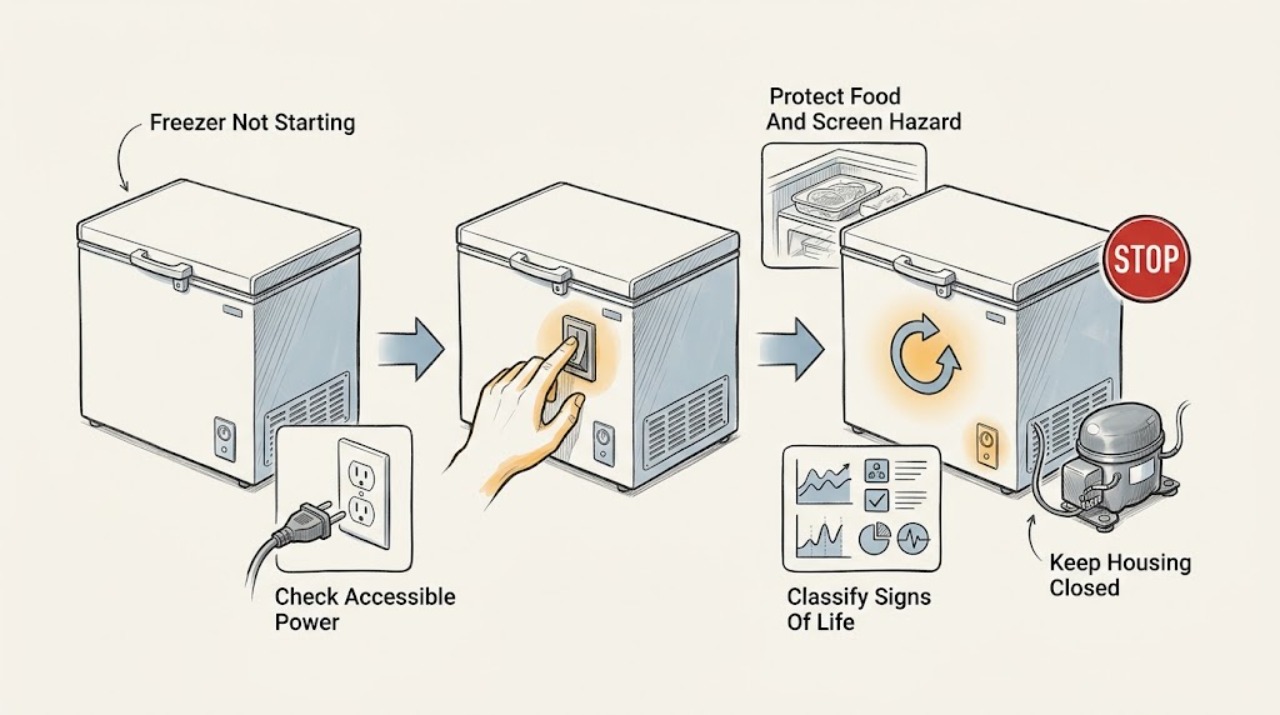
Whirlpool Freezer Not Starting: Check Power, Controls, and Cooling Safely
When a Whirlpool freezer is not starting, first protect the food and distinguish a completely dead appliance from a freezer that has power but is not cooling.
-
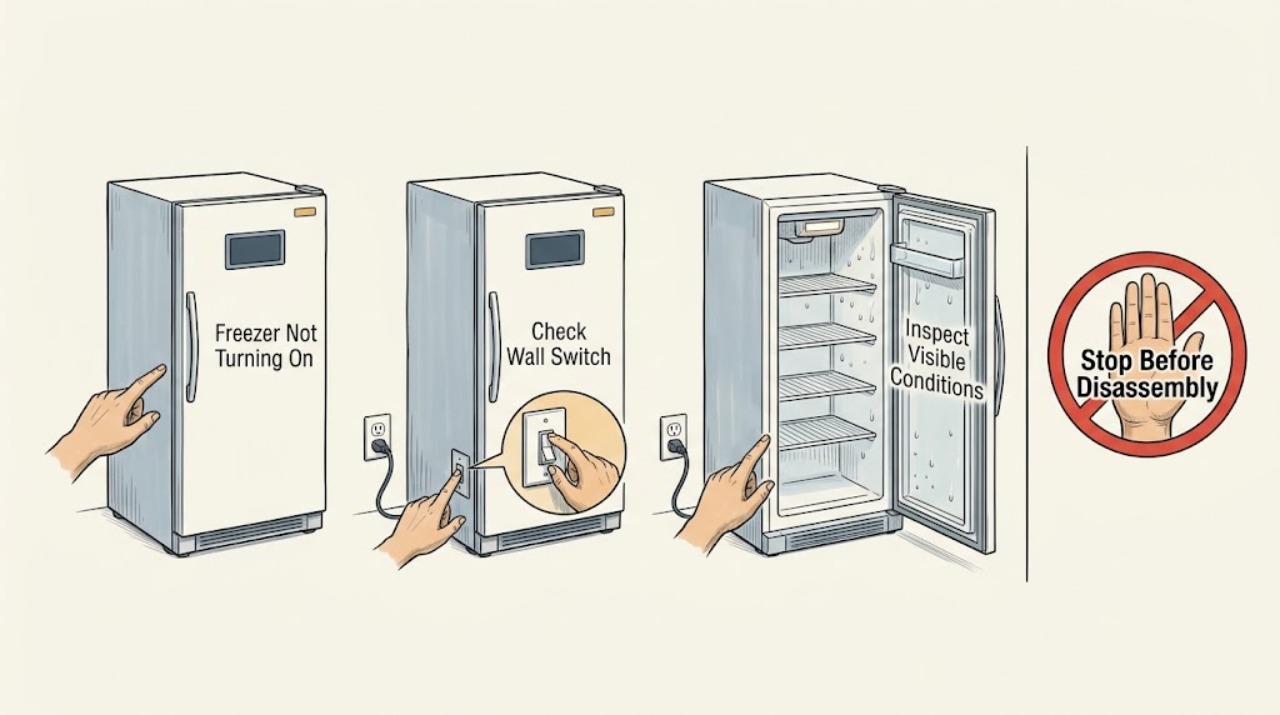
Whirlpool Freezer Not Turning On: Check Power, Controls, and Food Safety
If a Whirlpool freezer is not turning on, first separate a completely dead appliance from a freezer that has lights but is not cooling. Check the cord and outlet, inspect the accessible breaker or GFCI once, and confirm that the freezer and cooling controls are on rather than in an off or demonstration state.
-
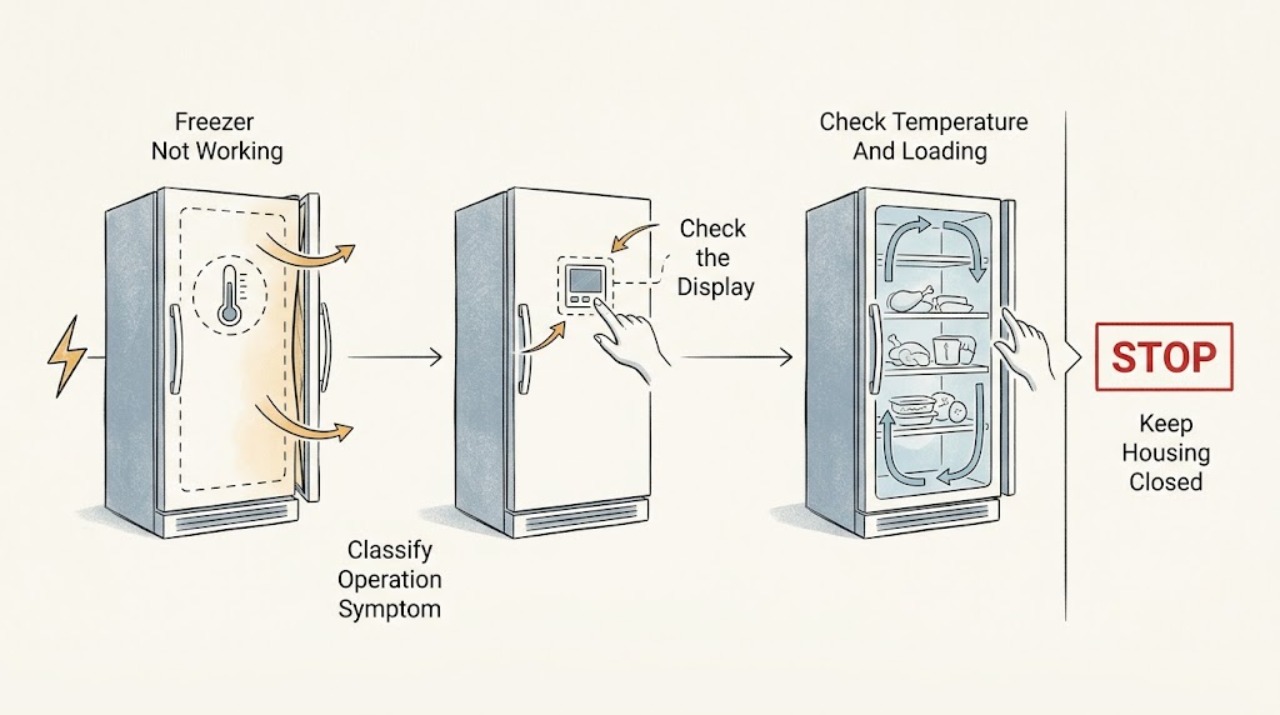
Whirlpool Freezer Not Working
A Whirlpool freezer that is not working may be completely without power, turned off at its controls, running but too warm, unable to seal, blocked by frost or airflow, or experiencing a refrigeration or component fault.
-
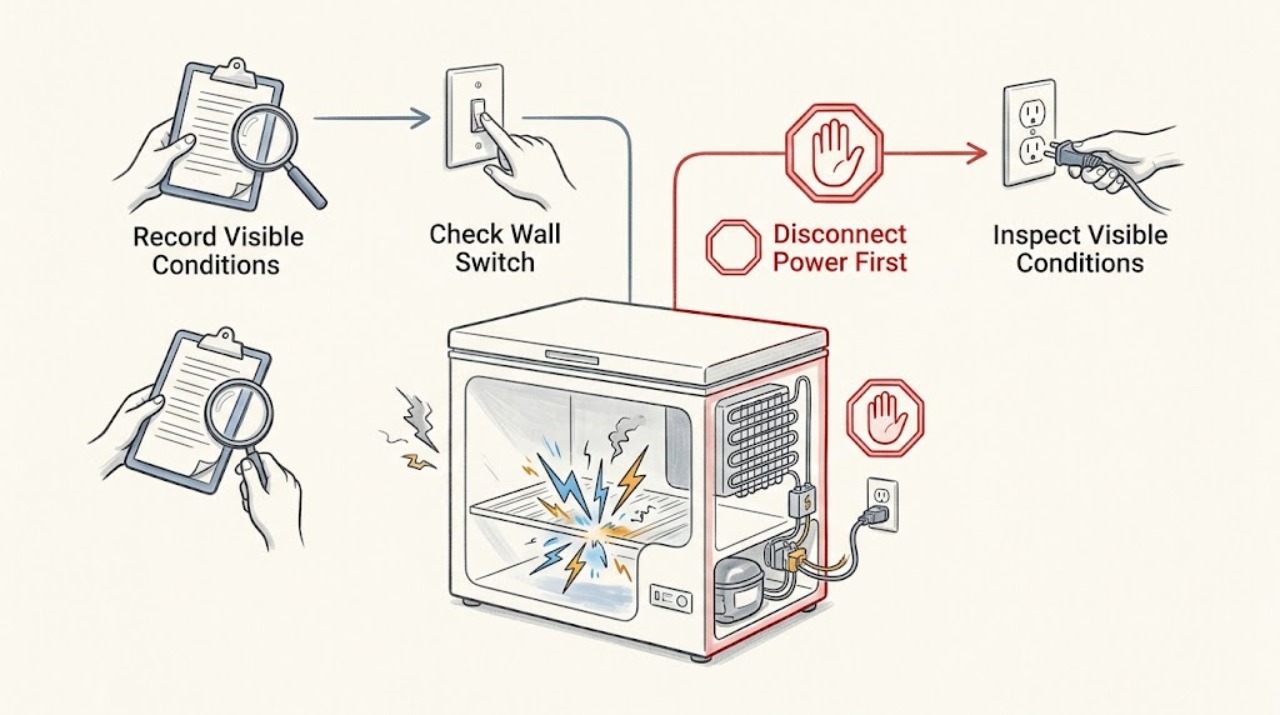
Whirlpool Freezer Sparking: Stop and Distinguish a Defrost Sound
Treat visible sparks, arcing, smoke, a burning smell, or a flash as an electrical safety event: stop using the Whirlpool freezer and disconnect power only from a dry, safe position, or switch off the freezer circuit if the plug cannot be reached safely. Do not open the cabinet or perform any energized inspection.
-
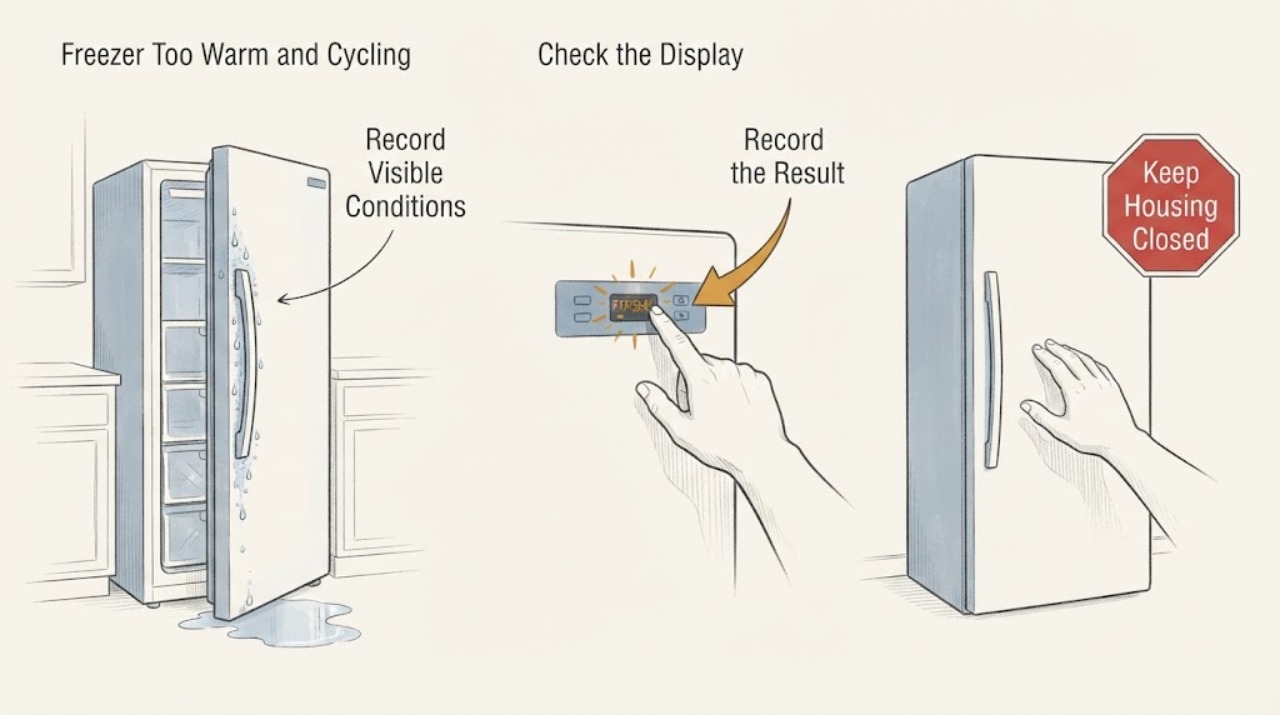
Whirlpool WRS325FNAM00 Freezer Too Warm and Cycling Often: Measure Before Blaming a Part
For a Whirlpool WRS325FNAM00 freezer that is warmer than expected and seems to cycle frequently, measure the food compartment with an appliance thermometer before interpreting the sound. Whirlpool's general refrigerator guidance uses 0°F as the freezer target and says to allow 24 hours after a small control adjustment; a recent installation or large warm load can take 24 to 48 hours to settle.