
HVAC guides
Air Handlers Repair Guides
Air-handler guidance for airflow, controls, filters, coils, and blower operation.
Published air handlers guides
Choose the guide that best matches the equipment and symptom you are seeing.
-
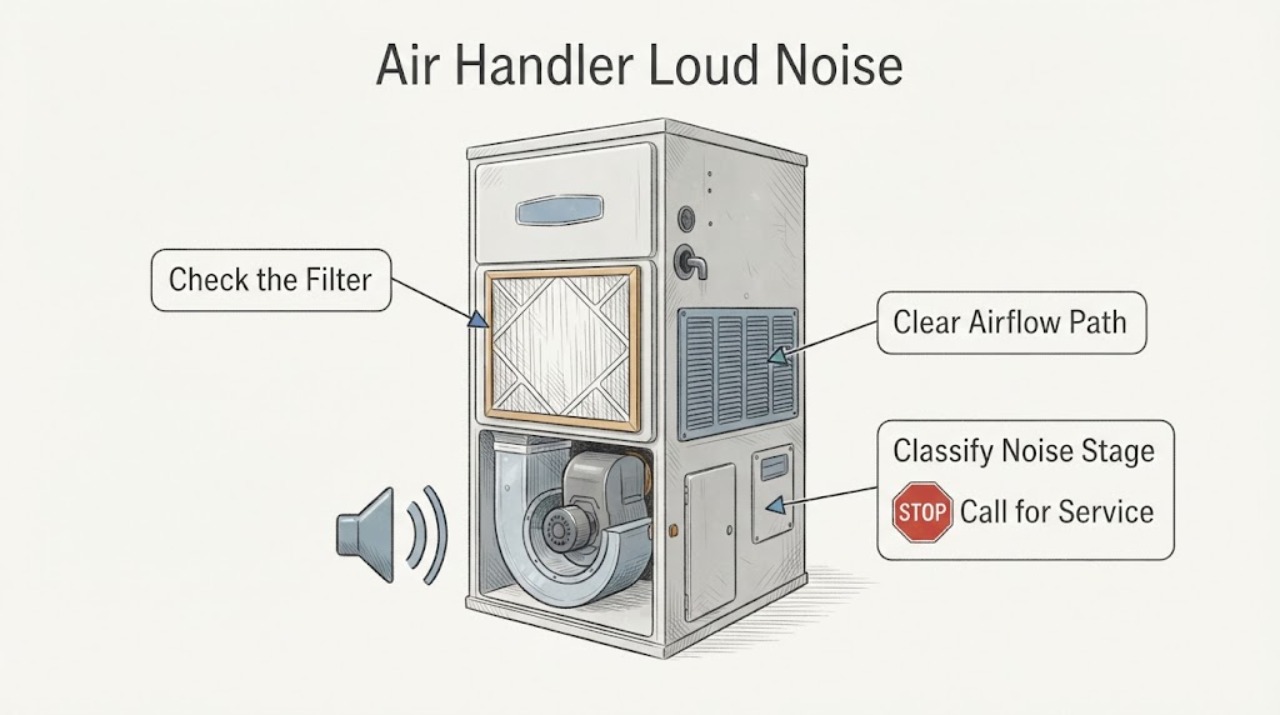
Air Handler Loud Noise: Safe Checks for Blower and Airflow
An air handler that suddenly becomes loud may have restricted airflow, a loose grille or cabinet part, a blower-wheel or fan problem, vibration, or a blower motor, capacitor, relay, or control fault. First classify the sound as a whistle, rattle, buzz, hum, grind, or vibration and note whether it occurs at startup, during airflow, or at shutdown.
-
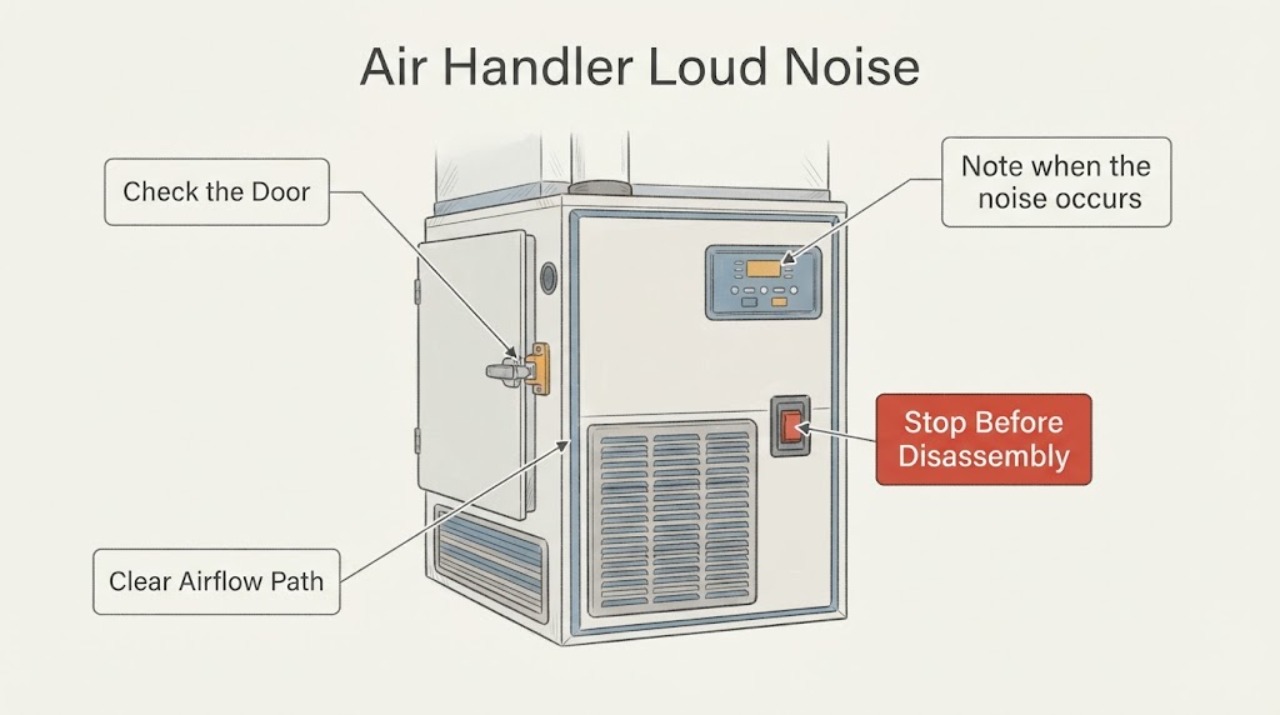
Air Handler Loud Noise: Safe Contactor-Focused Checks
A loud air-handler noise is not enough to prove a contactor is failing. First identify whether the sound comes from the indoor air handler, ductwork, registers, or the outdoor unit, and whether it occurs at startup, shutdown, or continuously.
-
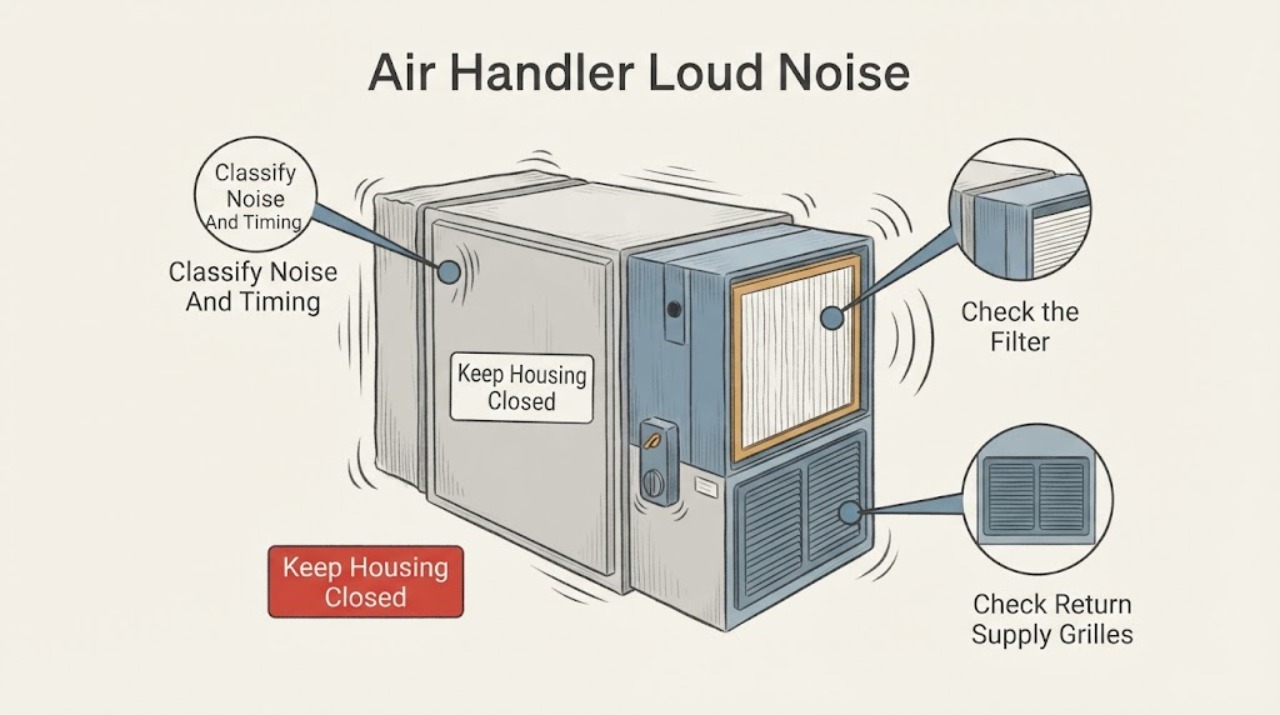
Air Handler Loud Noise: Check the Filter and Airflow Before Blaming the Blower
An air handler can sound loud because a filter is dirty, wet, damaged, missing, reversed, or the wrong size; return or supply grilles are blocked; a loose cover or duct is resonating; or an internal blower, motor, bearing, electrical, coil, or drain problem is present. First classify the sound as a whistle, rattle, buzz, hum, grinding, or bang and note whether it occurs at startup, steady airflow, or shutdown.
-
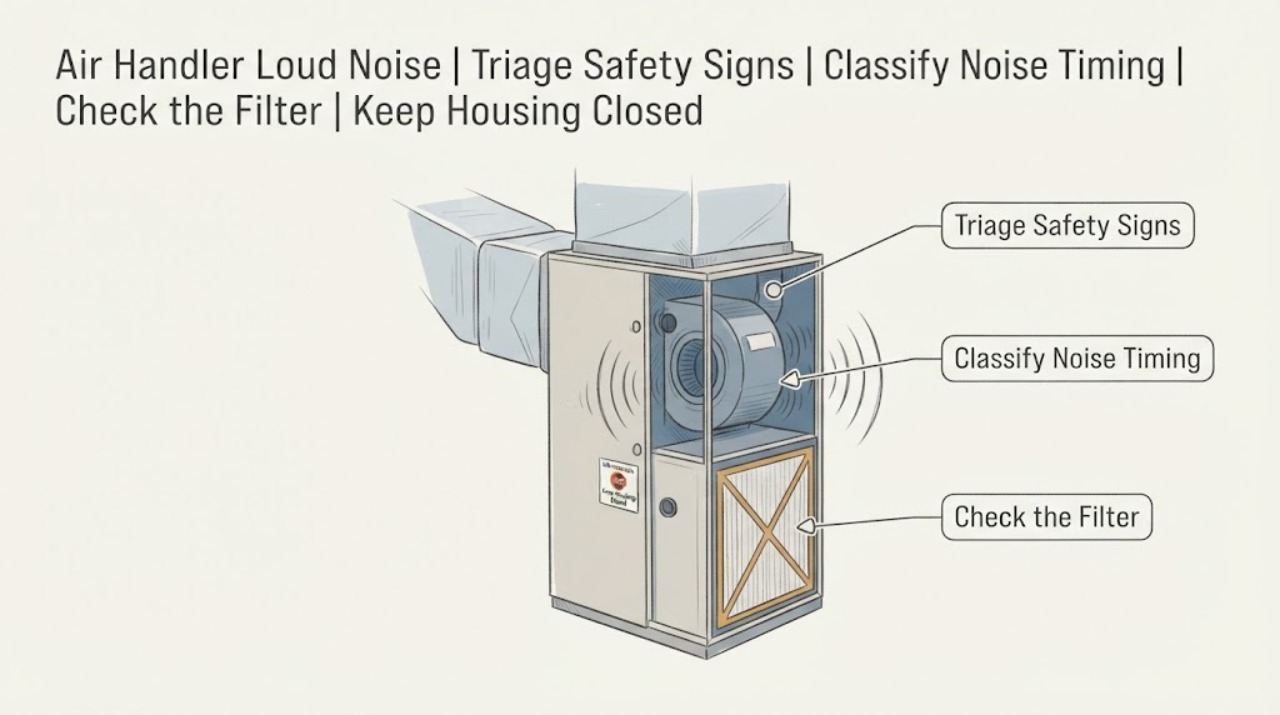
Air Handler Loud Noise: What to Check and When to Call HVAC Service
A loud air-handler noise is not automatically a blower failure, but a sudden or worsening change deserves attention. From a safe position, note whether the sound is rattling, scraping, squealing, humming, banging, or hissing; whether it occurs at startup, shutdown, or continuously; and whether airflow has changed.
-
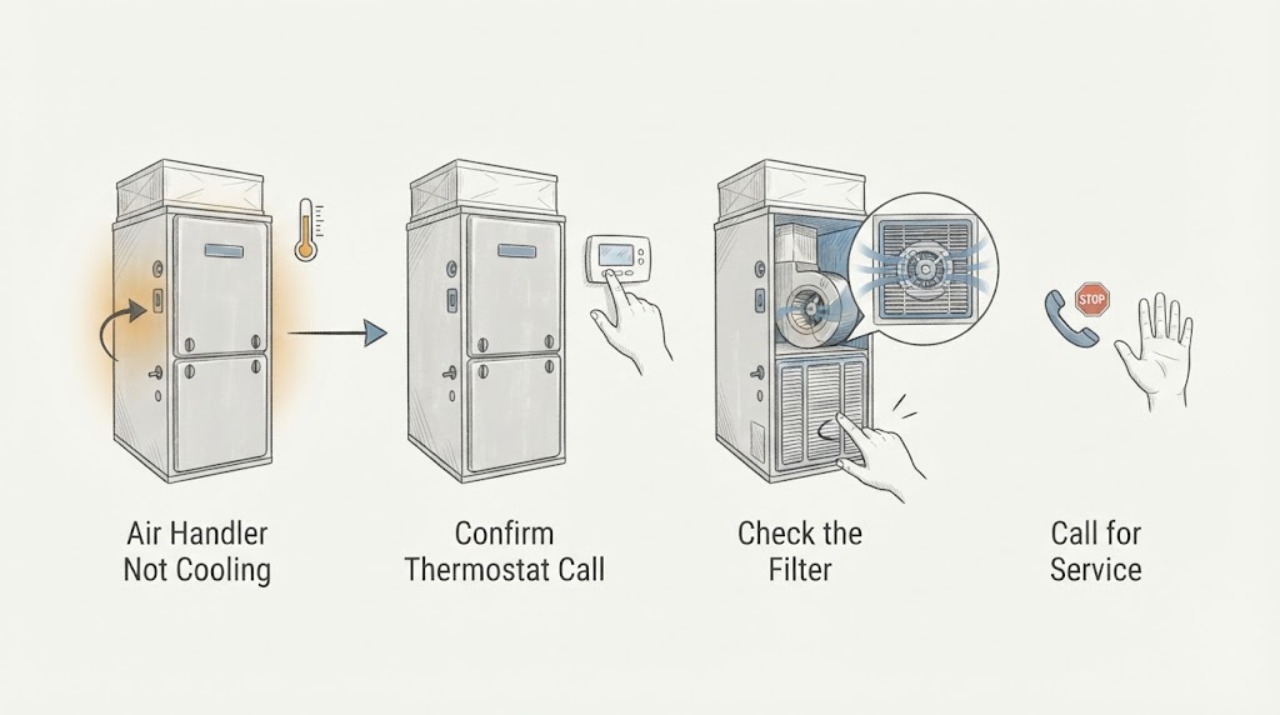
Air Handler Not Cooling: Blower Motor and Airflow Checks
An air handler that is not cooling may have no cooling call, restricted airflow, a frozen coil, a condensate or protection shutdown, or a fault in the blower motor or another HVAC component. First separate no cold air with normal airflow from no airflow at all: check the thermostat, accessible filter, return and supply registers, and visible ice or water from a safe position.
-
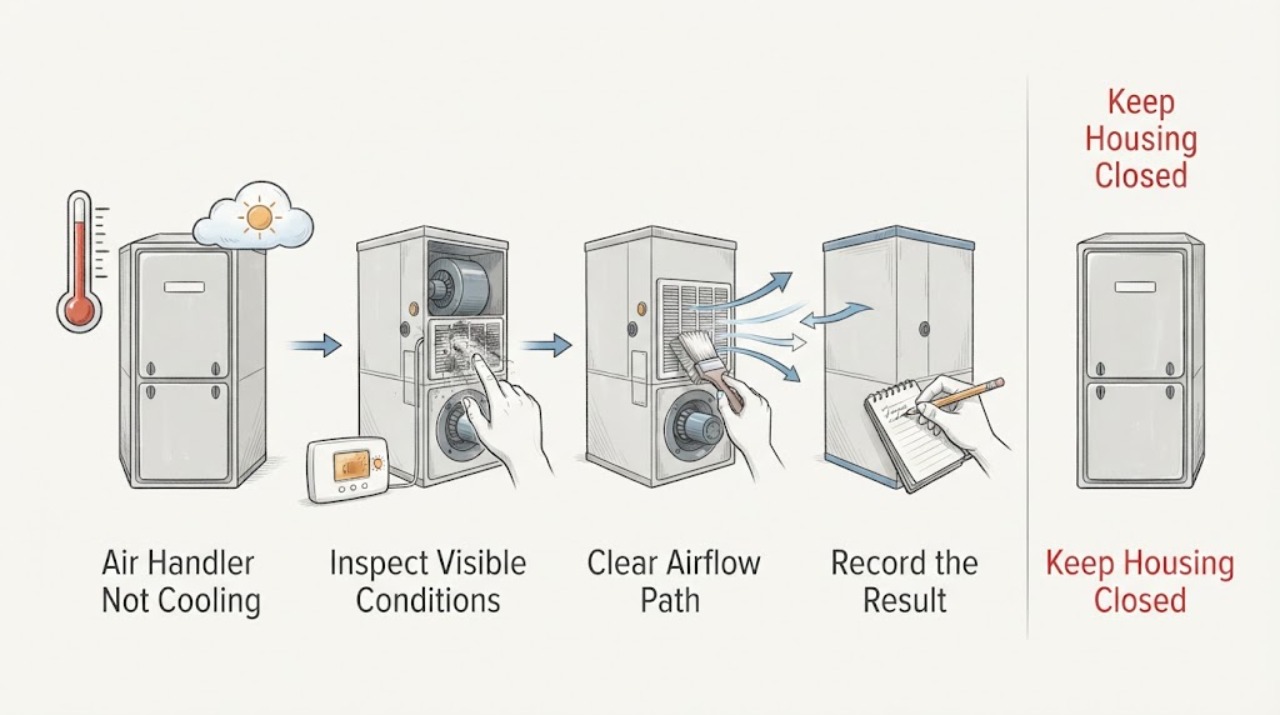
Air Handler Not Cooling: Blower Motor and Thermostat Checks
First determine whether the air handler has no airflow or is moving air that is not cool. Confirm that the thermostat is powered, set to Cool, and calling below the room temperature; then compare airflow at several registers.
-
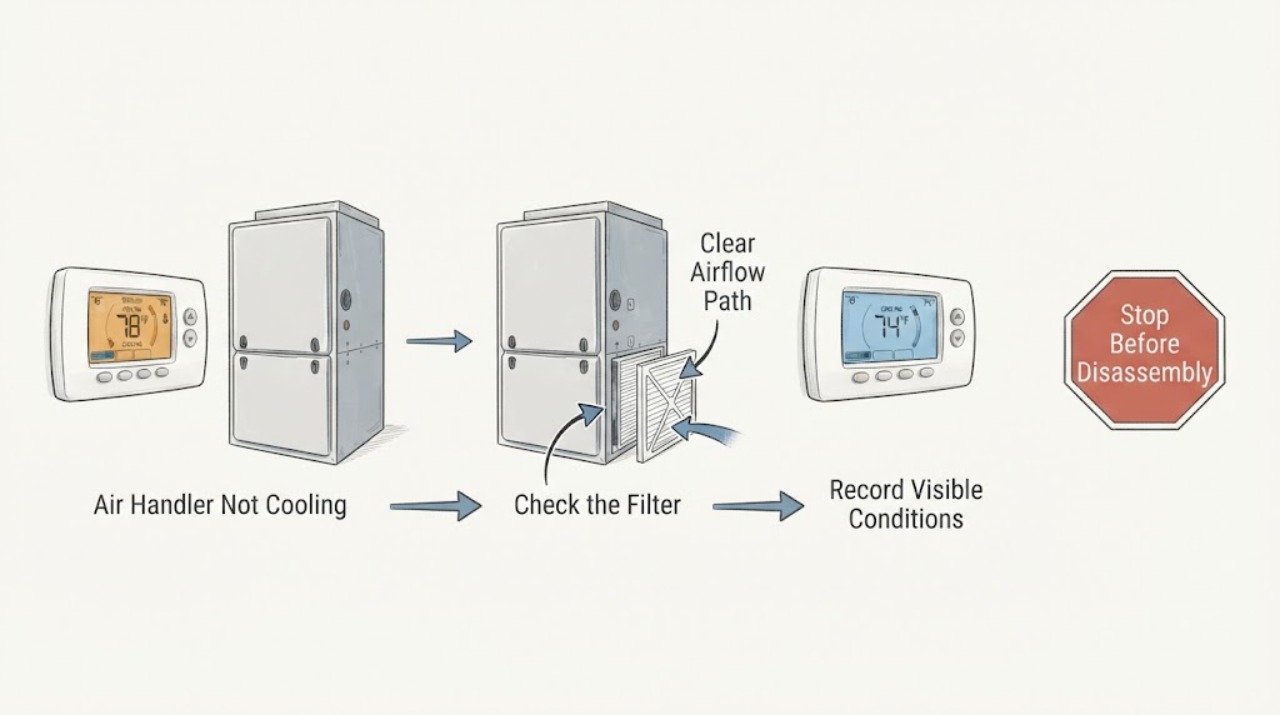
Air Handler Not Cooling: Check the Thermostat and Airflow Safely
An air handler that is not cooling can have two different symptoms: little or no air movement at the registers, or normal airflow that is warm. First check that the thermostat is in Cool, the setpoint is below the room temperature, the schedule or hold is not overriding it, and the indoor fan is set as expected.
-
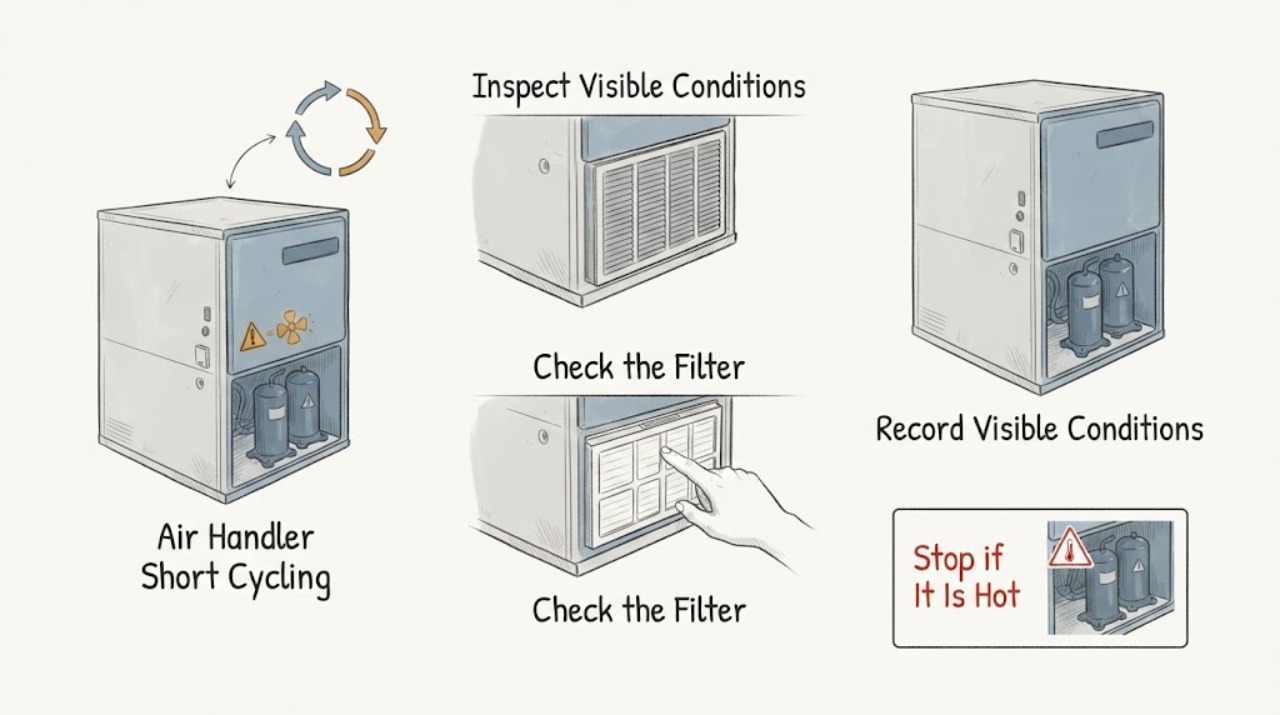
Air Handler Short Cycling: Protect the Compressor and Find the Safe Next Step
An air handler or central AC that starts and stops before completing a cooling cycle is short cycling. Record how long each run lasts, how long the off period lasts, whether the indoor blower and outdoor compressor respond together, and whether cooling or humidity changes.
-
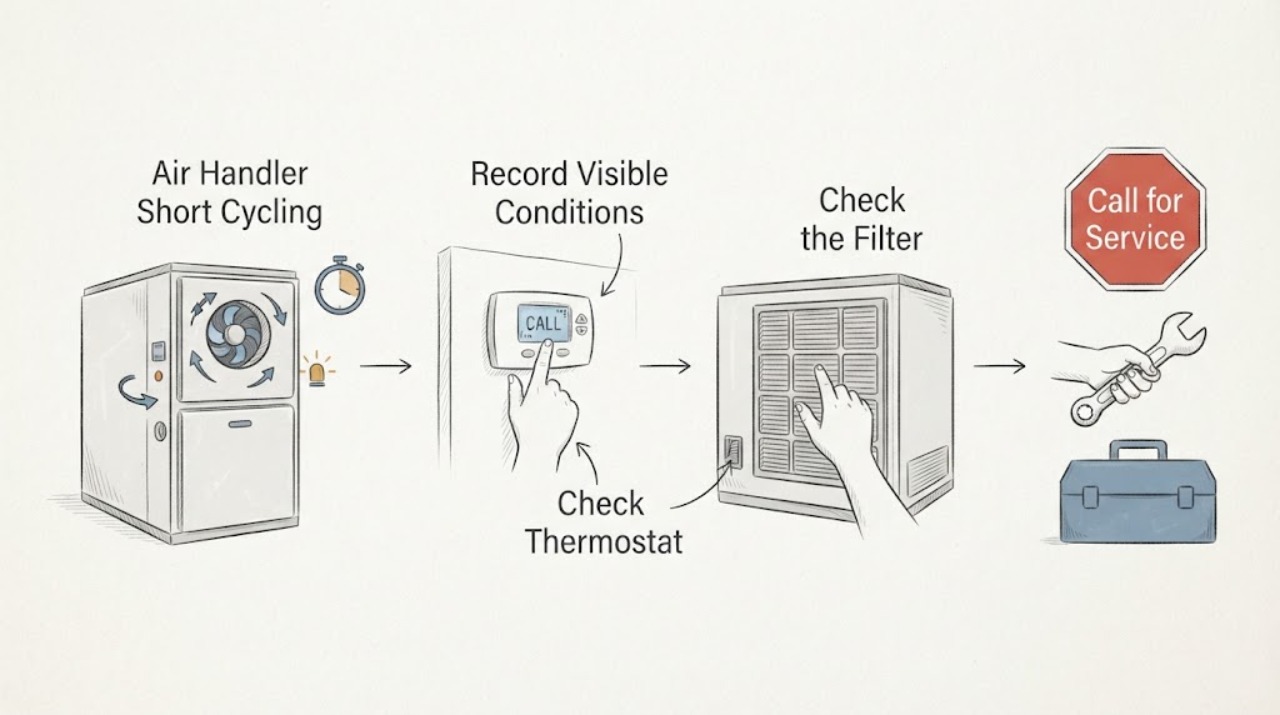
Air Handler Short Cycling: Check the Filter Before Service
Short cycling means the HVAC system starts and stops before completing a normal cooling cycle. A dirty, wet, wrong-size, collapsed, or backward filter can restrict airflow and contribute to coil freezing, motor strain, or a protective shutdown, but the filter is not the only possibility: thermostat placement or settings, condensate protection, system sizing, low refrigerant, controls, or the blower can also be involved.
-
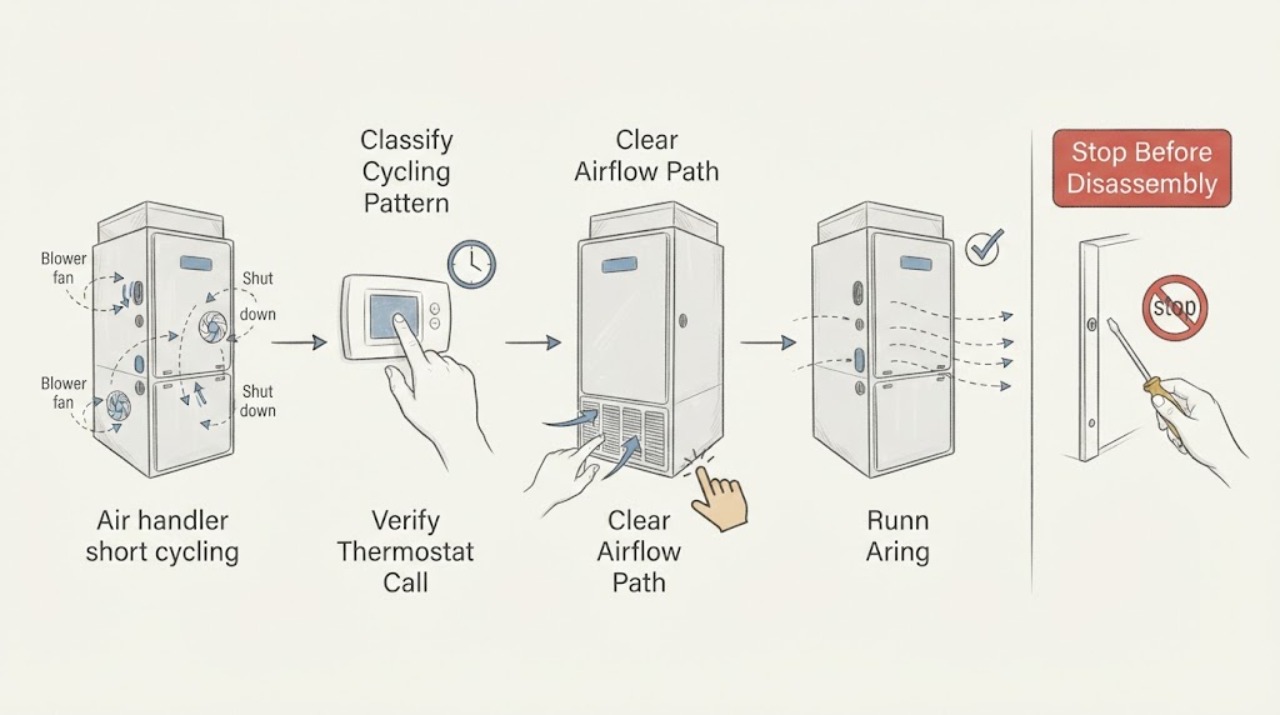
Air handler short cycling: safe checks before service
An air handler that repeatedly starts and stops may be showing a control or airflow problem, or it may be passing along short cycling from the connected air conditioner, heat pump, or heating equipment.
-
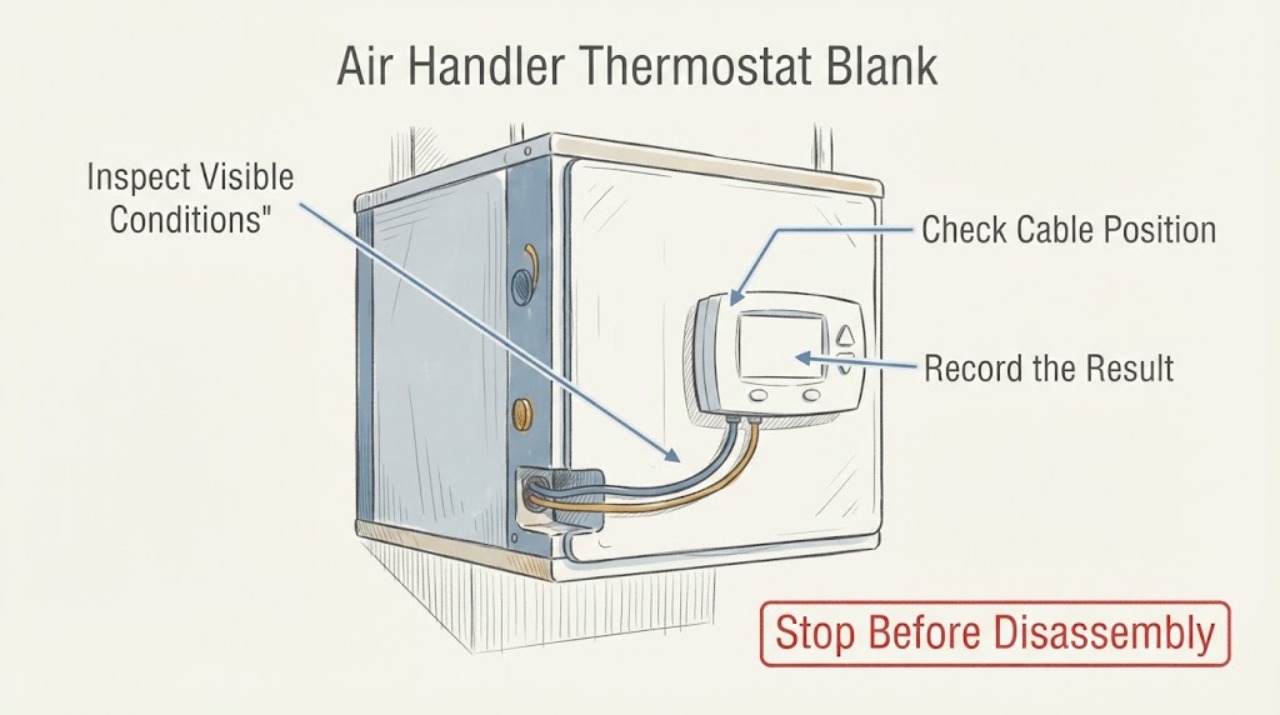
Air Handler Thermostat Blank: Safe Checks Before HVAC Service
A blank air-handler thermostat usually means the wall control has lost power, often from depleted batteries on a battery-powered model, a tripped HVAC breaker, an indoor service switch turned off, an unsecured equipment door, or a condensate safety float interrupting the control circuit. First determine whether the thermostat uses batteries, then check only clearly labeled external power controls from a dry, safe position.
-
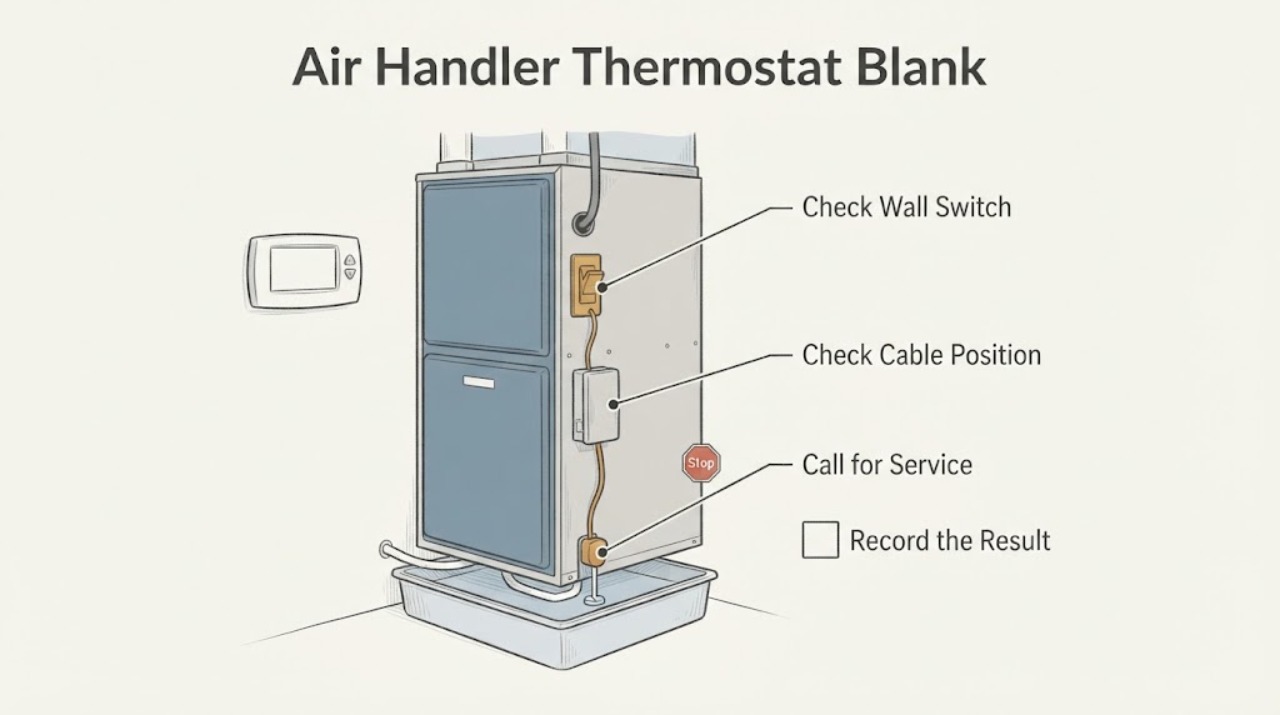
Air Handler Thermostat Blank: Check Battery or Power Before Calling for HVAC Service
A blank thermostat normally means the thermostat has lost power, not that the temperature setting is wrong. Start by determining whether it uses replaceable batteries, then check the HVAC or air-handler power path and look for a condensate-related shutdown without opening the equipment or touching thermostat wires.
-
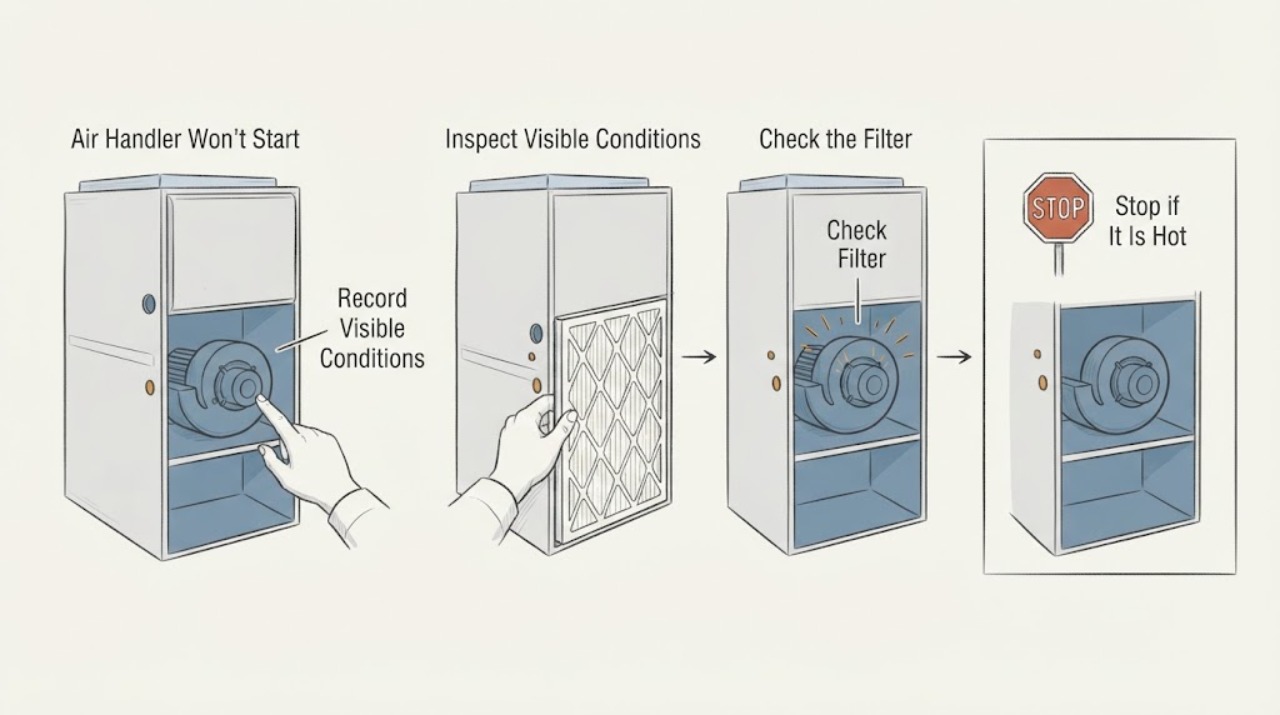
Air Handler Won't Start: Safe Blower Motor and Airflow Checks
If an air handler will not start and the blower motor is suspected, begin at the thermostat: confirm the display is active, the system is calling for the intended heating or cooling mode, and the fan setting is appropriate. Observe any visible power indicator or nearby service-switch position without opening equipment or resetting a breaker.
-
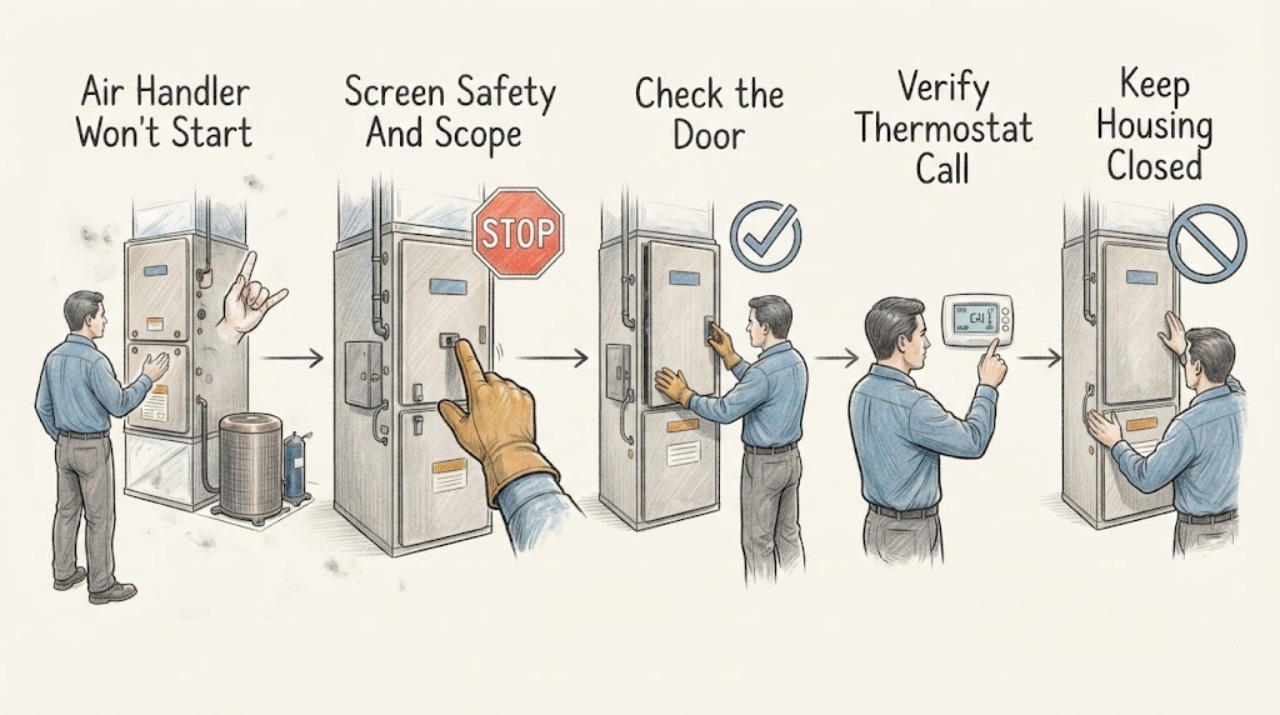
Air Handler Won't Start: Check Controls, Power, Filter, and Drain Safely
An air handler that will not start may have no indoor power, an incorrect thermostat call, a dirty filter or blocked airflow, a condensate overflow safety switch, an accessible service-door interlock, or an internal blower, control, wiring, compressor, or refrigerant problem. First determine whether the indoor fan is silent, whether the thermostat display and call are present, and whether the outdoor unit is also silent.
-
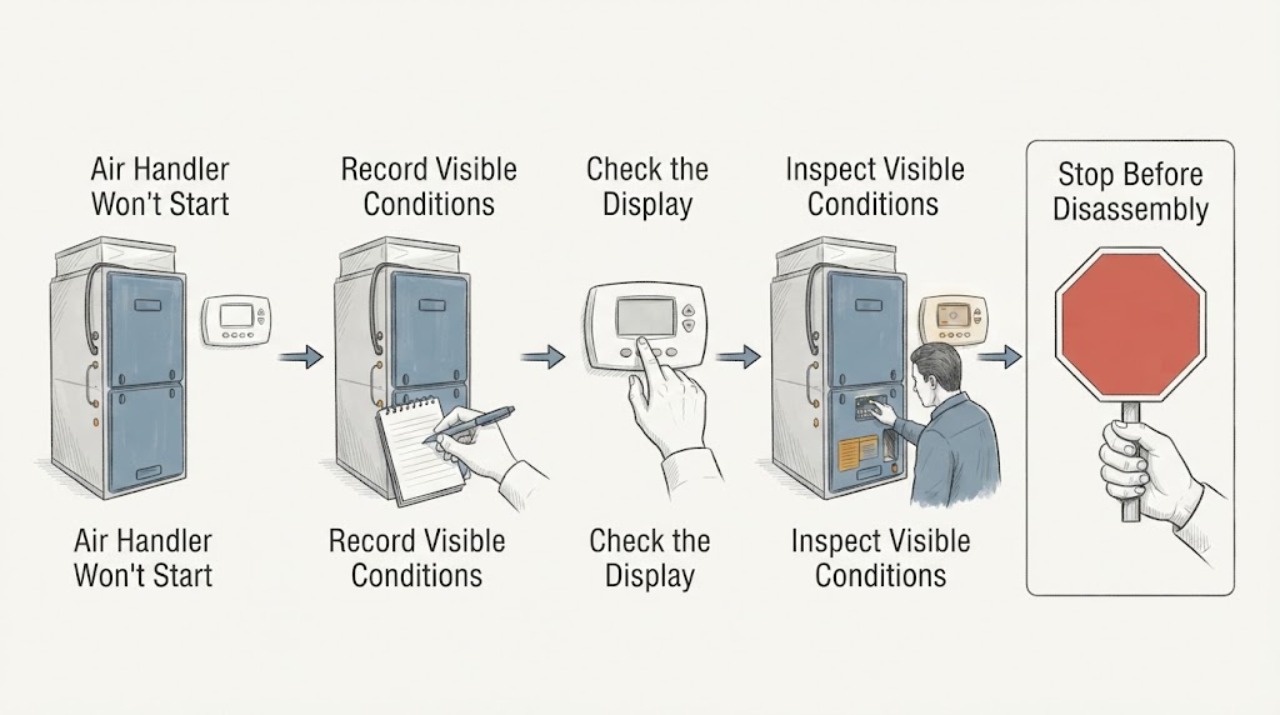
Air Handler Won't Start: Check the Thermostat and Power Safely
When an air handler will not start, first check the thermostat's mode, setpoint, schedule or hold, display, and any normal time delay. If the model uses batteries, replace them only as directed; otherwise check the clearly labeled HVAC breaker and indoor service switch from a dry, safe position.
-
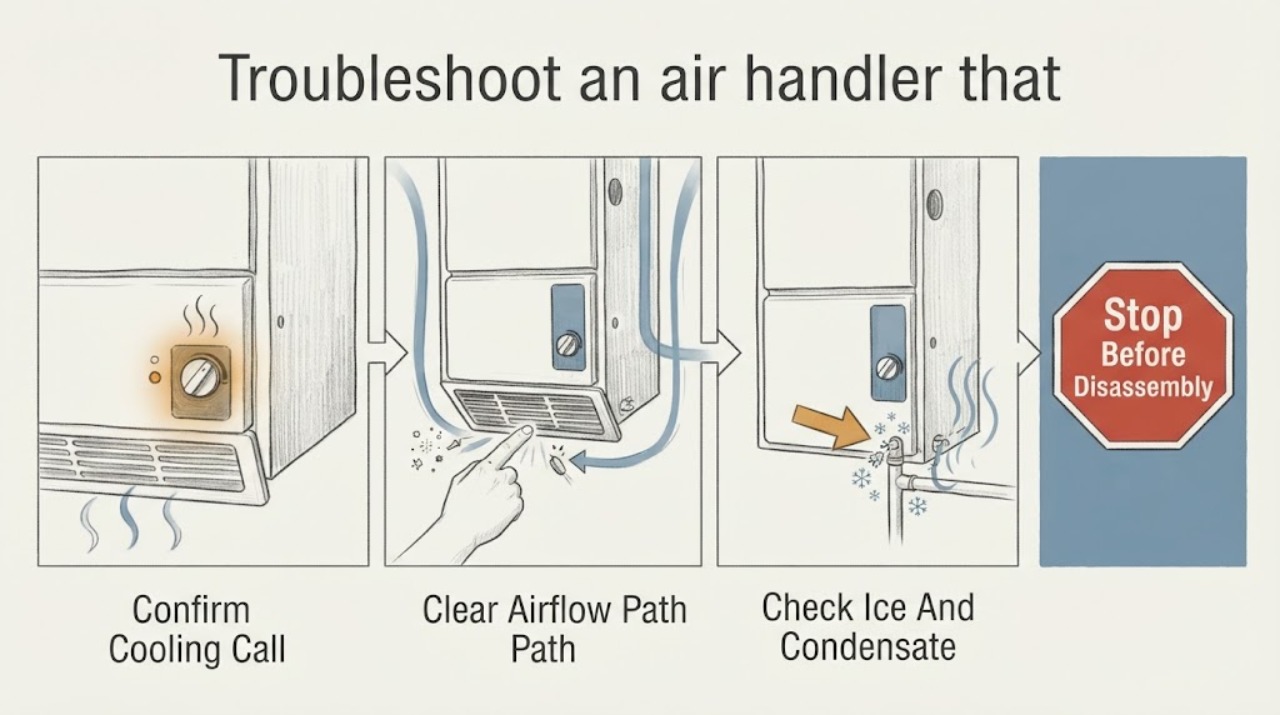
How to troubleshoot an air handler that is not cooling
First separate an airflow problem from a cooling problem: confirm the thermostat is set to Cool with the fan on Auto, then check the air handler's filter and supply/return airflow. With power off at the thermostat, look for ice or unusual water around the indoor coil; if you see ice, shut the system off and let a qualified HVAC professional diagnose the airflow or refrigerant cause.
-
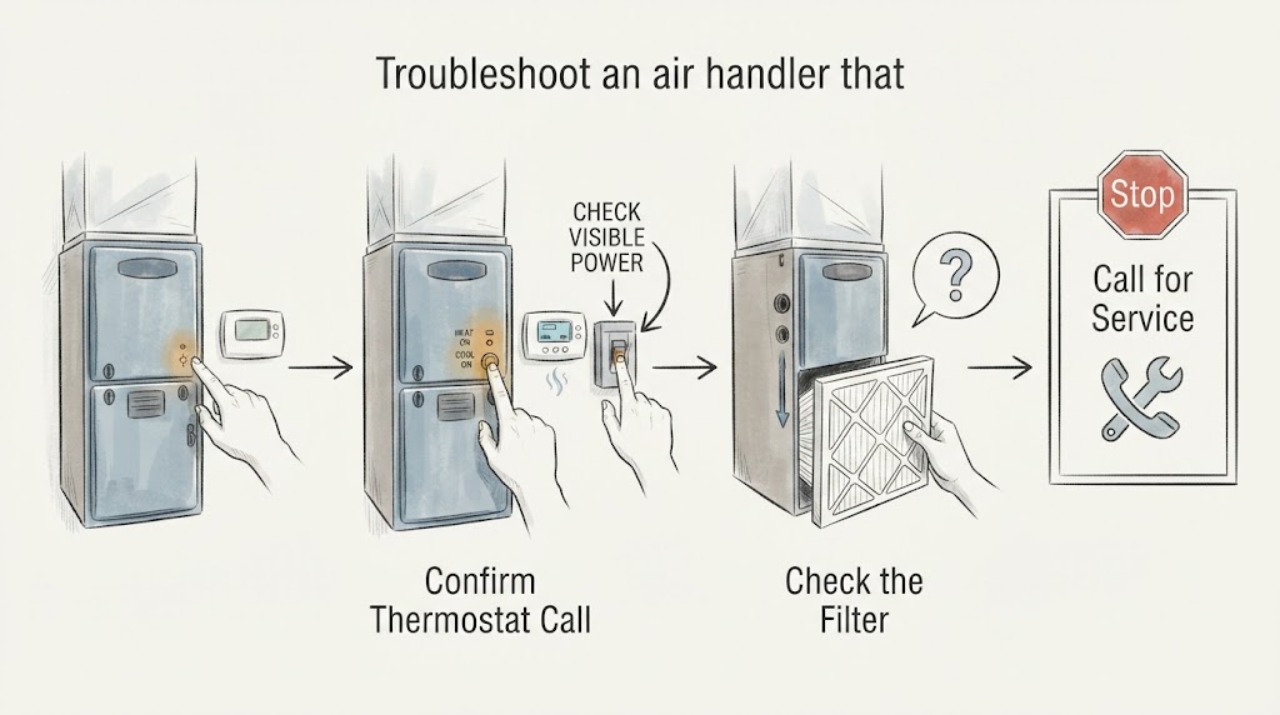
How to troubleshoot an air handler that won't start
Start with the thermostat: confirm it is calling for heat or cooling, the fan is set to On or Auto, and any thermostat batteries are usable. Then inspect the accessible filter and check that the nearby service switch is On, but do not open the air handler or reset a tripped breaker just to make it run.