
Ge Profile appliance guidance
Ge Profile Refrigerator Repair Guides
Troubleshooting and repair guidance for published Ge Profile Refrigerator problems, symptoms, and maintenance questions.
Published Ge Profile Refrigerator guides
Choose the guide whose symptom or condition most closely matches what you are seeing.
-
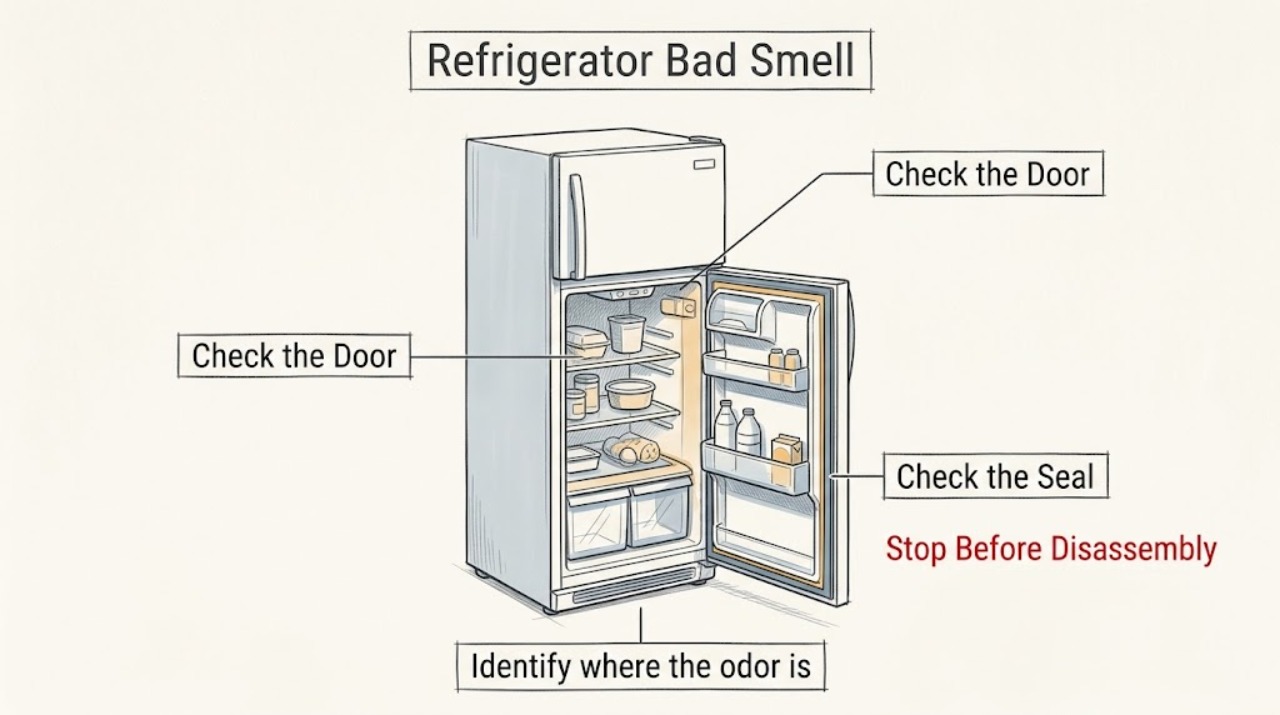
GE Profile Refrigerator Bad Smell
A bad smell in a GE Profile refrigerator is usually from uncovered or spoiled food, a spill hidden under a shelf or drawer, a dirty gasket, or an area that needs cleaning—not a mechanical part. Remove the source, clean the interior and gasket with the manufacturer-approved baking-soda solution, and avoid bleach, ammonia, petroleum products, and strongly scented cleaners.
-
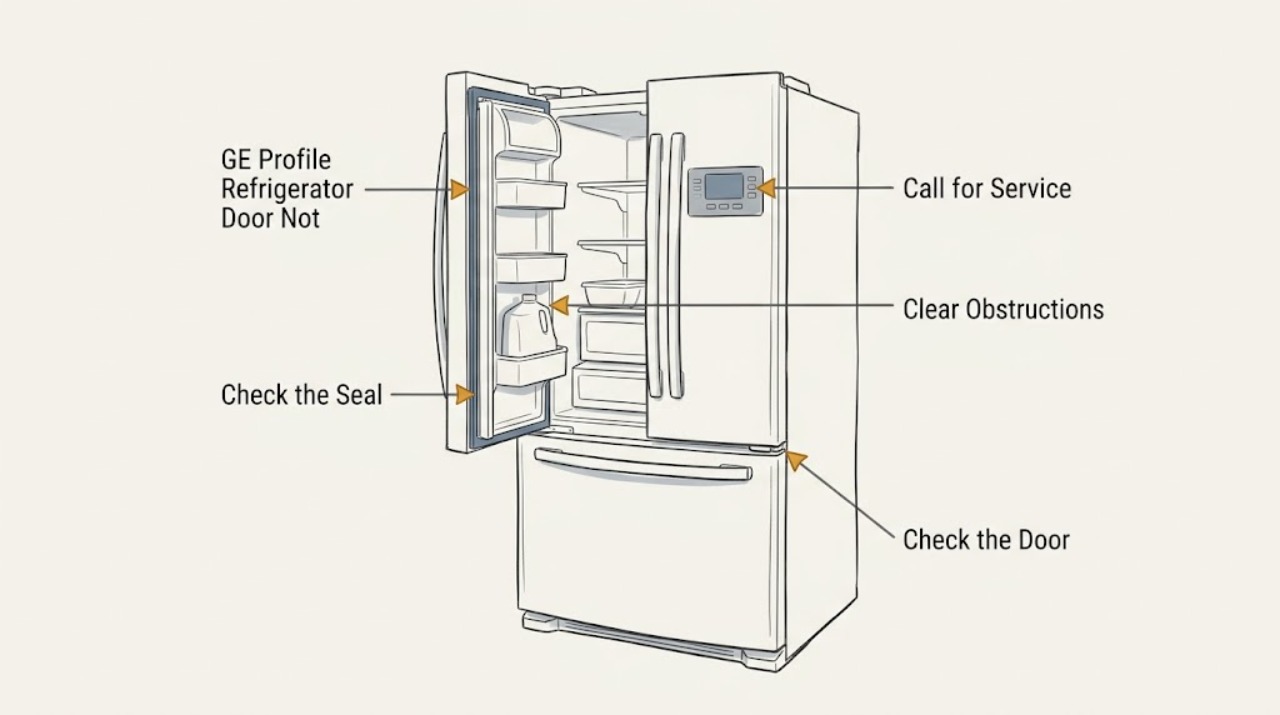
GE Profile Refrigerator Door Not Closing: Check Obstructions, Gasket, and Alignment
Start with the accessible closure path: remove a projecting tray, pizza box, tall container, open bin, heavy door item, or ice behind the ice bin, and make sure every drawer and bin is fully closed. GE Appliances says improper leveling can prevent a refrigerator door from shutting on its own and that a broken hinge requires service.
-
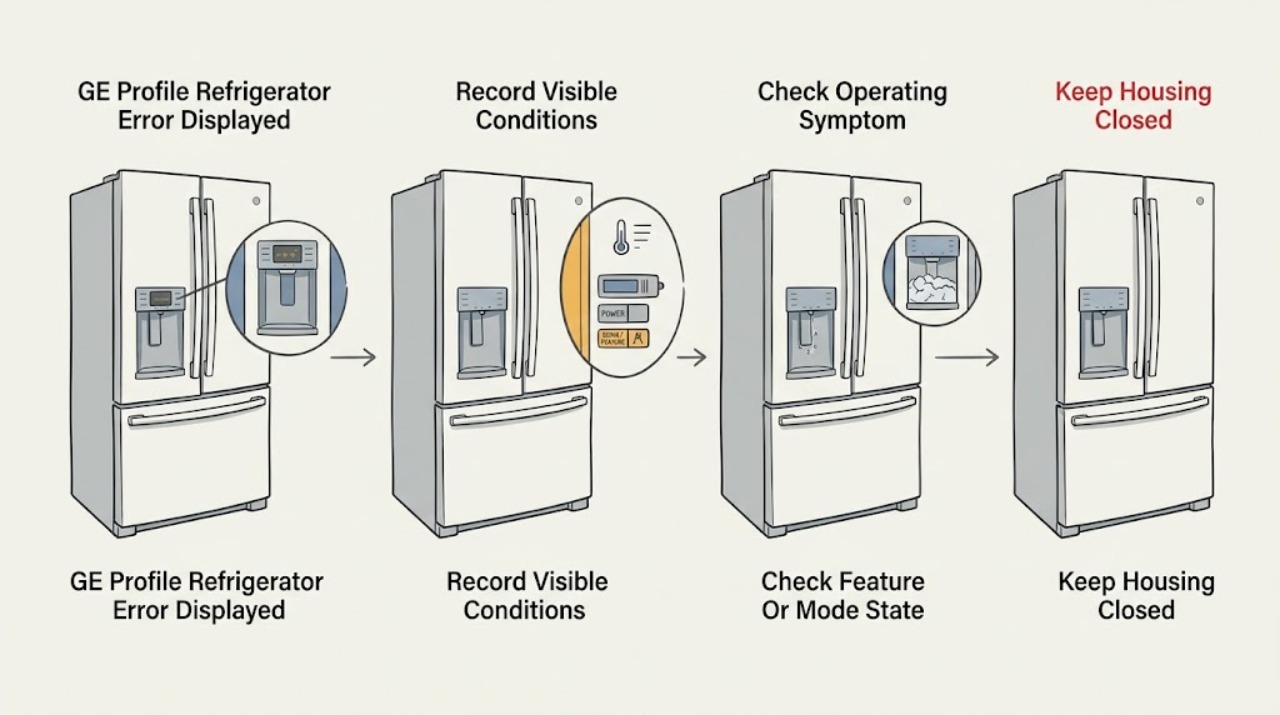
GE Profile Refrigerator Error Displayed: Identify the Code Before Resetting
Do not treat every displayed code as the same fault. Photograph or write the exact characters, capitalization, flashing pattern, beeps, and the refrigerator model before changing anything.
-
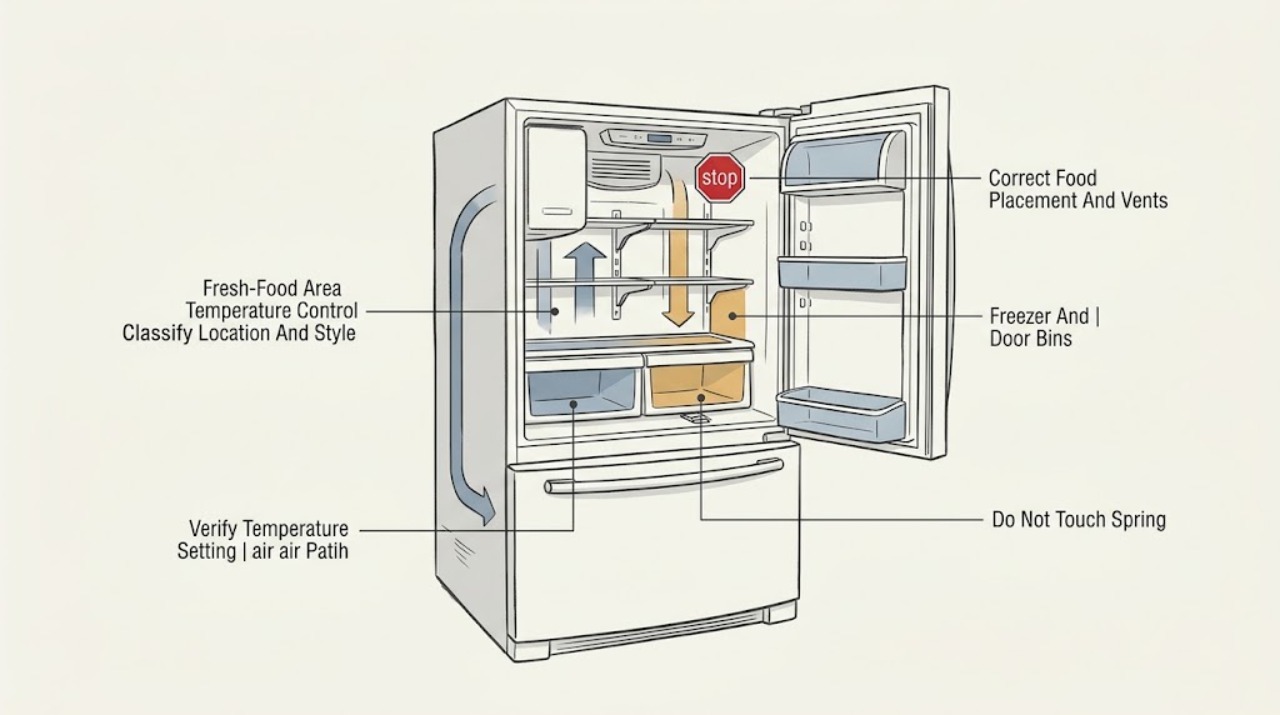
GE Profile Refrigerator Freezing Food: Check Settings, Cold Spots, and Airflow
First determine whether food is freezing in the fresh-food compartment, a drawer, a door bin, or only in the freezer, and record the complete GE Profile model and refrigerator style. GE's official guidance says freezing-food causes differ by side-by-side, bottom-freezer, and top-freezer design.
-
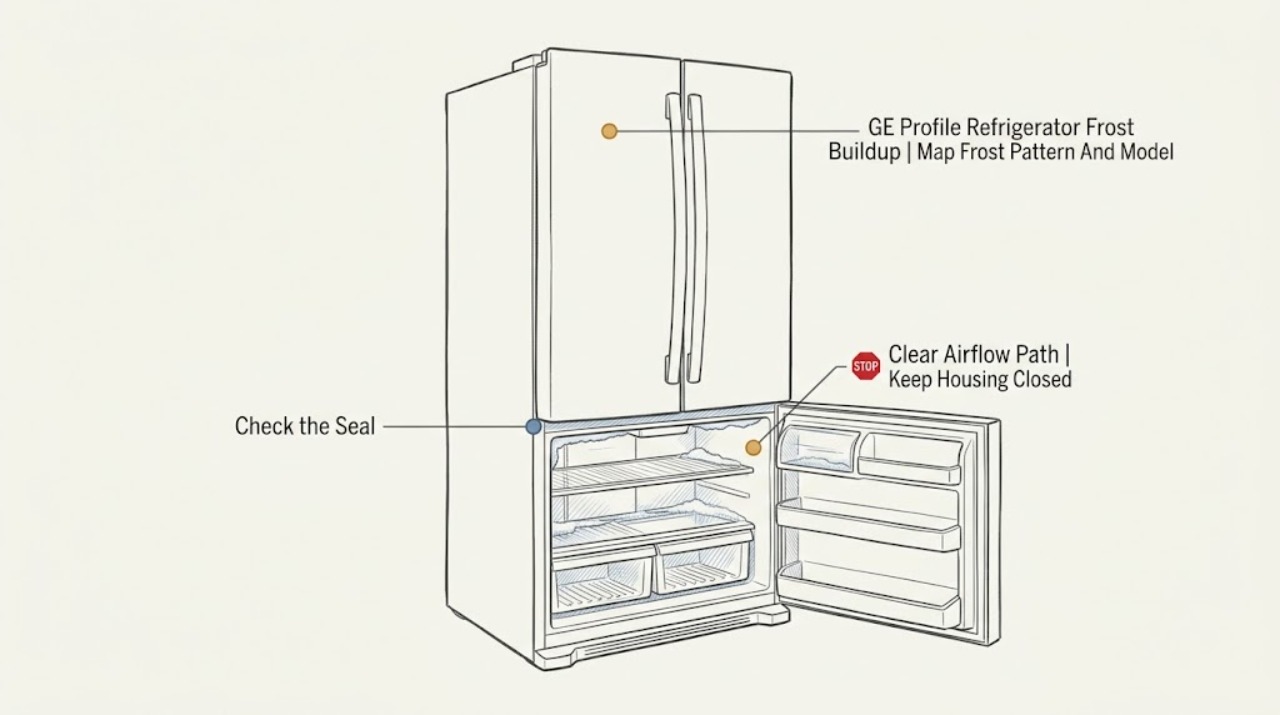
GE Profile Refrigerator Frost Buildup: Check the Seal and Airflow Before Defrosting
Start by identifying whether the frost is on packages, around the freezer opening, on one wall, or across much of the freezer, and whether the unit is a frost-free GE Profile model or a manual/cycle-defrost model. In a frost-free refrigerator, heavy wall frost is not expected: check for a package, shelf, basket, or drawer preventing full closure; inspect the visible gasket for a gap, tear, or loose section; and consider frequent opening, high humidity, or warm uncovered food.
-
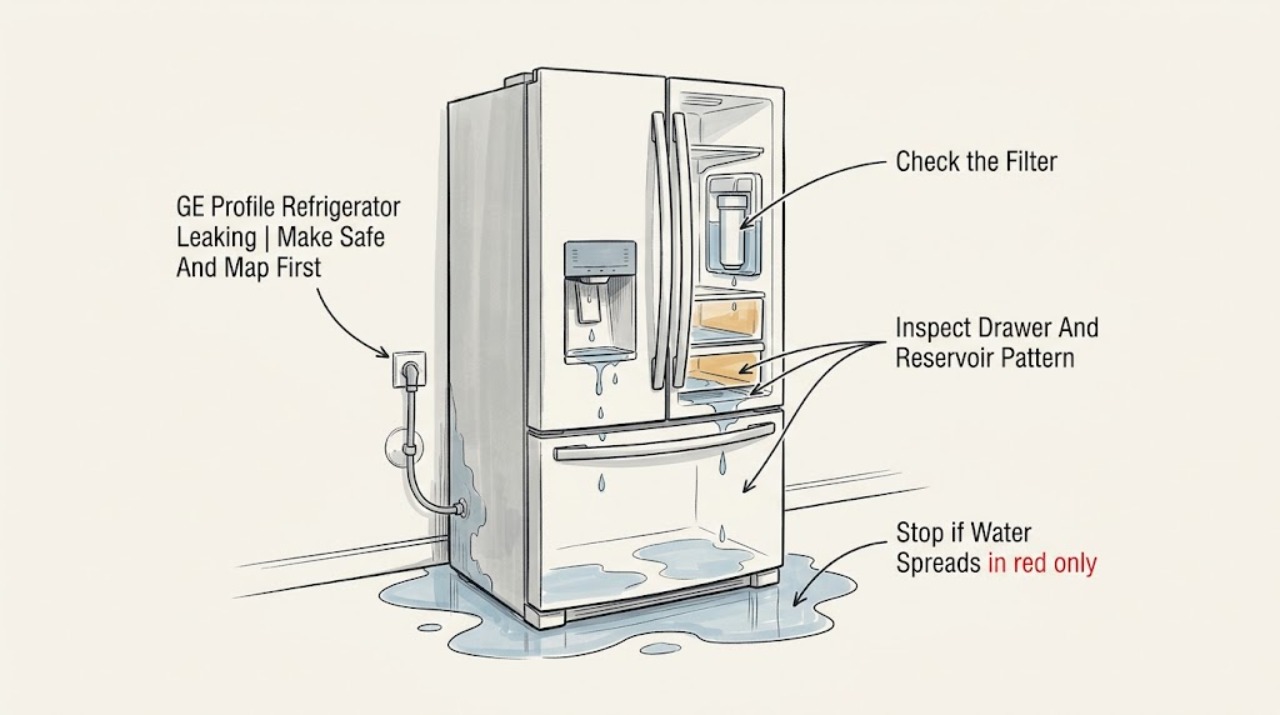
GE Profile Refrigerator Leaking: Trace the Water Before You Reset Anything
First contain the water and identify where it starts: dispenser recess, filter area, under fresh-food drawers, freezer floor, rear connection, or the floor in front. If water is near an outlet, cord, or other electrical part, stop using the refrigerator and isolate power only from a safe accessible point.
-
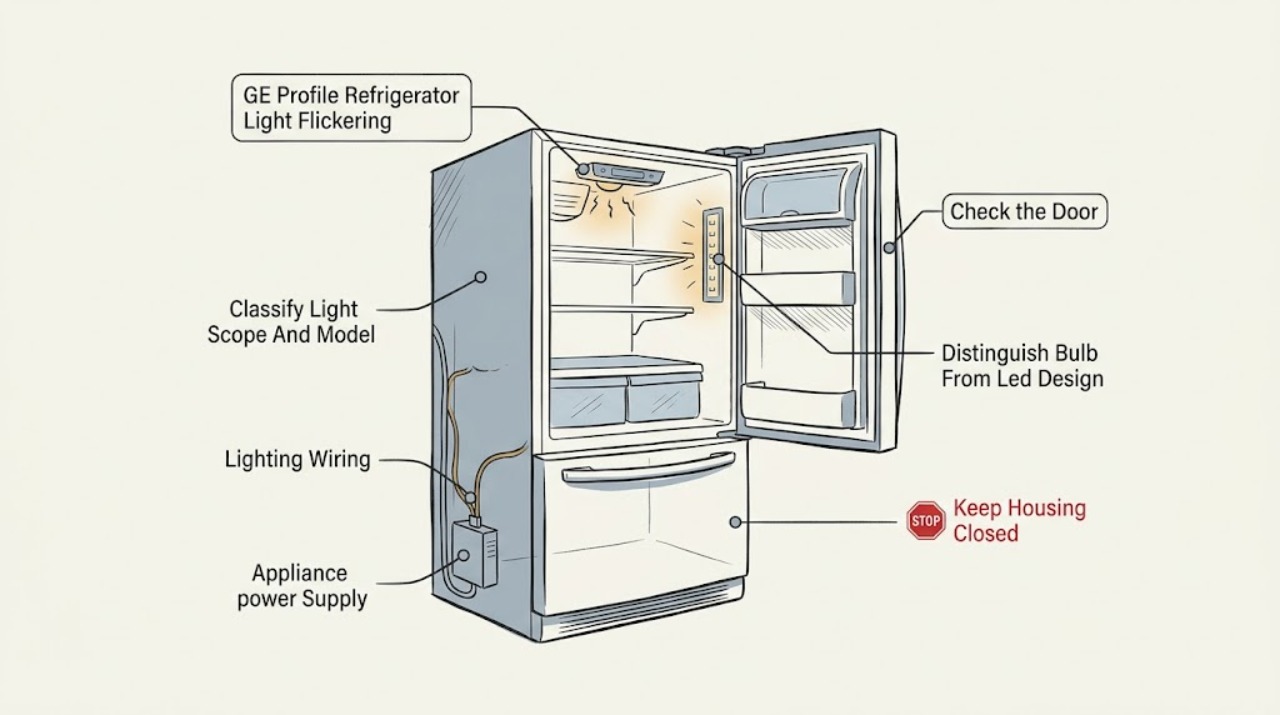
GE Profile Refrigerator Light Flickering: Separate LED, Door, and Power Symptoms
First identify where the flicker occurs and whether it affects one interior light, several interior lights, a dispenser light, or the refrigerator display as well. GE says refrigerator LED lights vary in number and location; some models use a slim LED panel and others use individual LED assemblies, while older designs may use a replaceable bulb.
-
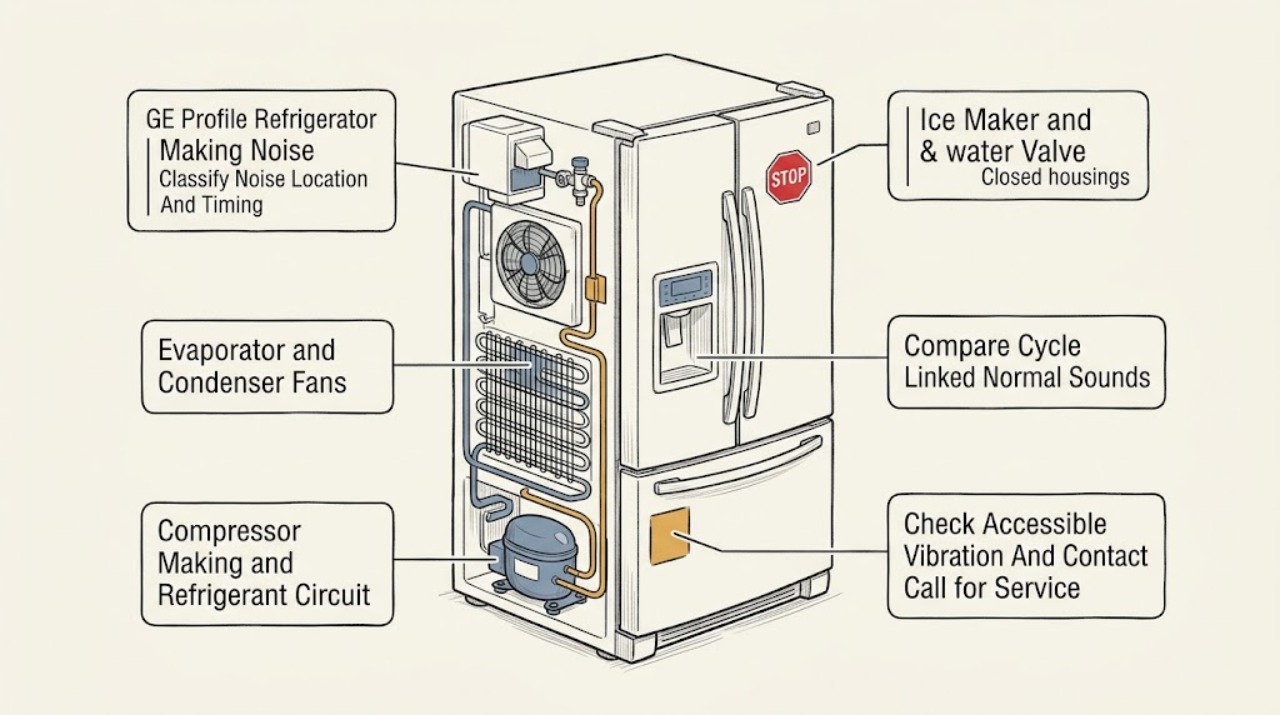
GE Profile Refrigerator Making Noise: Normal Sounds and Safe Checks
First identify where the sound comes from and when it occurs. GE Appliances says many GE refrigerator sounds are normal: a hum or pulsation from the compressor, air movement from changing fan speeds, gurgling from refrigerant or drain water, clicks from controls or dampers, cracking or popping around defrost, and ice-maker or water-valve sounds during a fill or harvest.
-
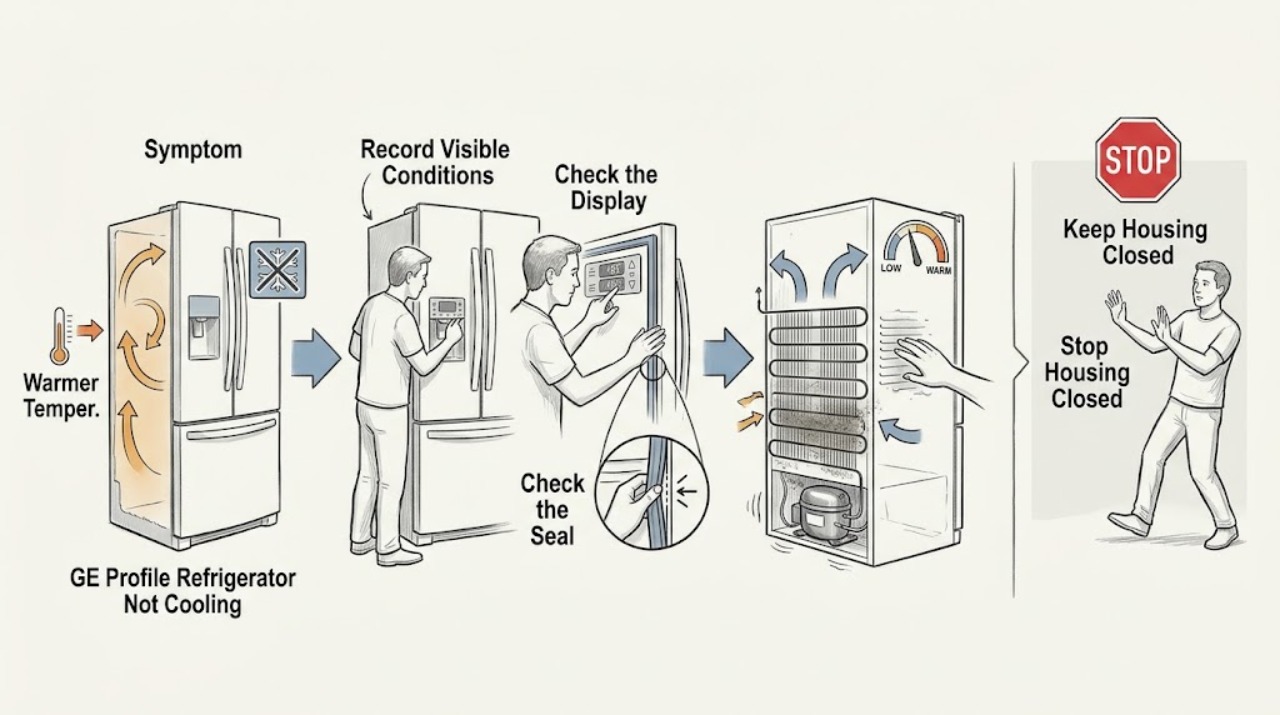
GE Profile Refrigerator Not Cooling
If a GE Profile refrigerator is not cooling, first distinguish a newly installed or heavily loaded cabinet from one that is warm despite correct settings. Record the exact model, displayed temperatures, whether the freezer is also warm, whether the compressor or fans run, and whether the doors and gaskets seal.
-
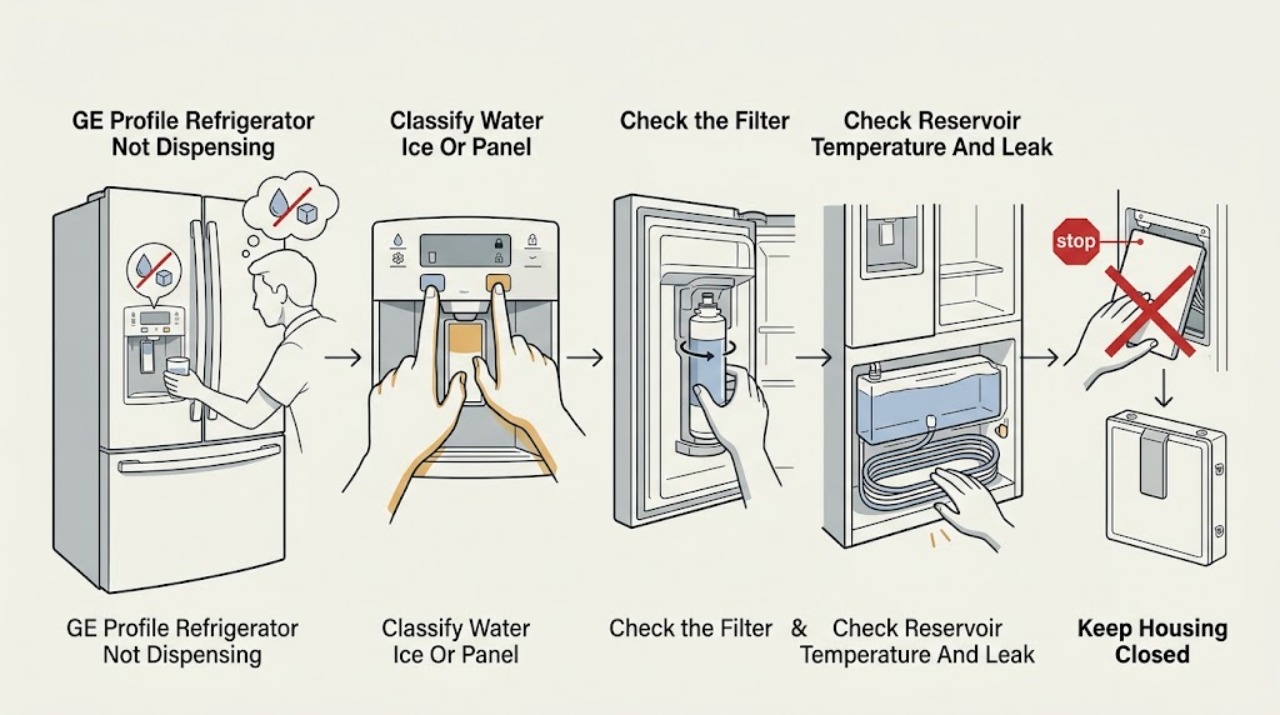
GE Profile Refrigerator Not Dispensing: Separate Water, Ice, Filter, and Control Faults
First identify whether the failure is water, cubed ice, crushed ice, the dispenser panel, or all dispenser functions. GE's support guidance separates no water from no ice and says the exact model manual controls the door wiring and lock procedure.
-
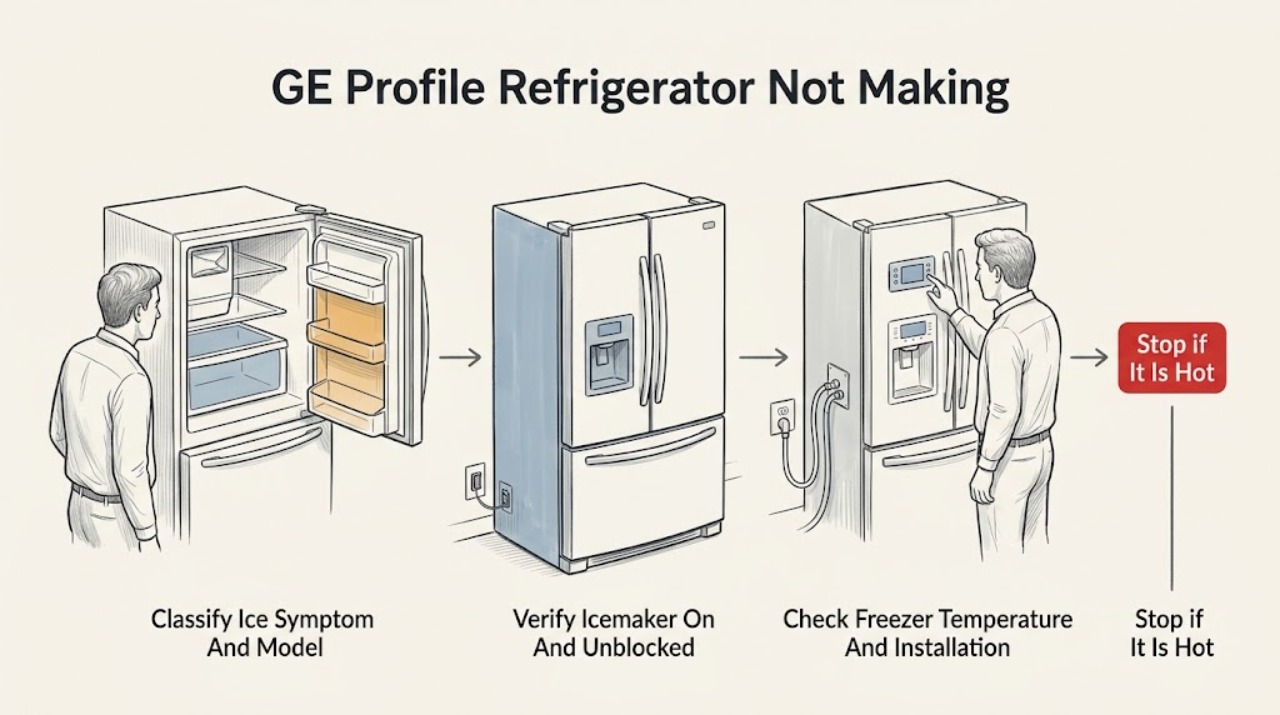
GE Profile Refrigerator Not Making Ice: Check the Ice-Maker Path
First decide whether the GE Profile refrigerator is making no ice at all, making ice that will not dispense, or has lost water to both the icemaker and dispenser.
-
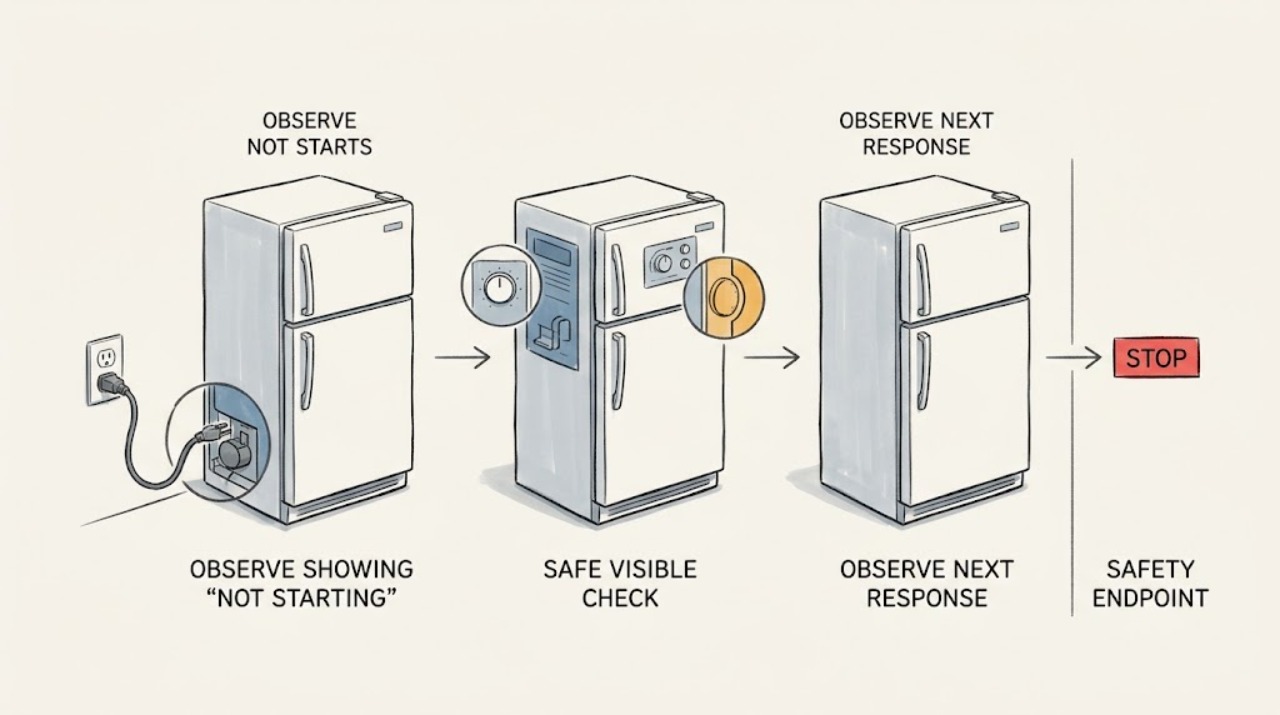
GE Profile Refrigerator Not Starting
If a GE Profile refrigerator will not start, first separate a completely dead cabinet from a powered cabinet whose compressor and fans are temporarily stopped. Check the interior light or display, the plug and household outlet, and the exact model's temperature controls.
-
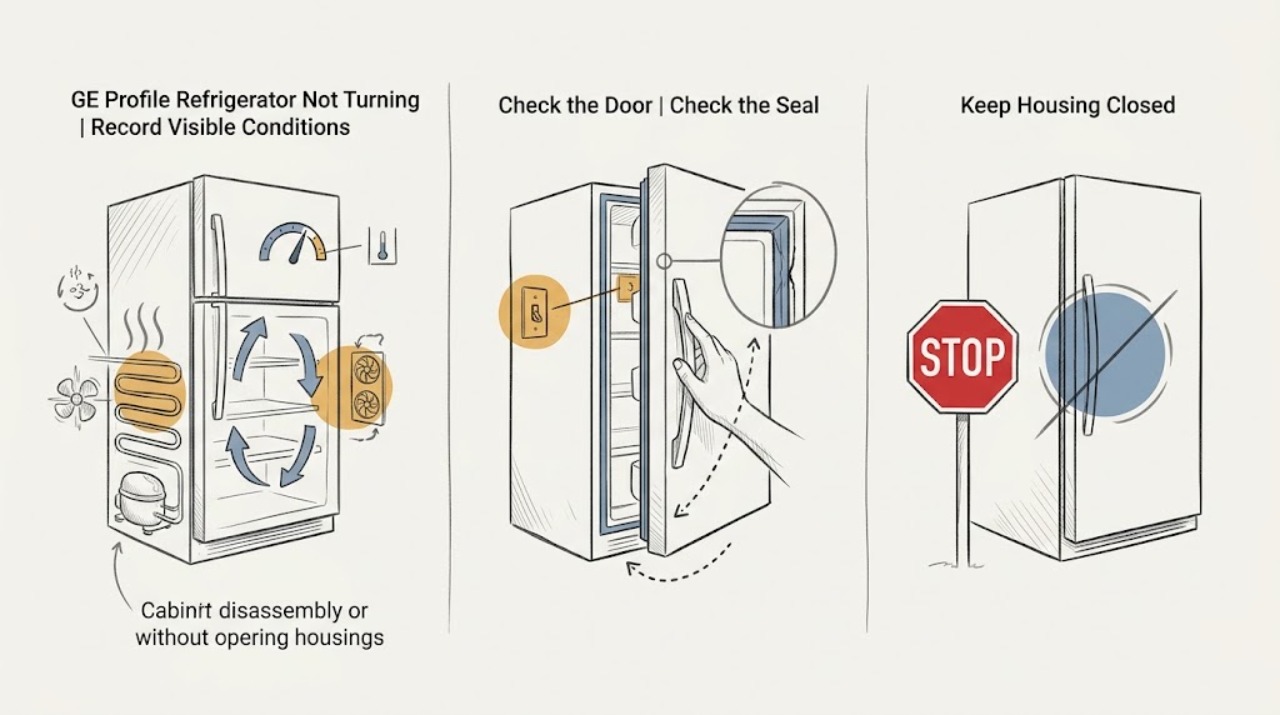
GE Profile Refrigerator Not Turning Off: When Continuous Running Is Normal
A GE Profile refrigerator that sounds as if it never turns off is not automatically broken. GE says modern refrigerator compressors are designed to run about 80% to 90% of the time, and run time can approach 100% in very hot or humid conditions.
-
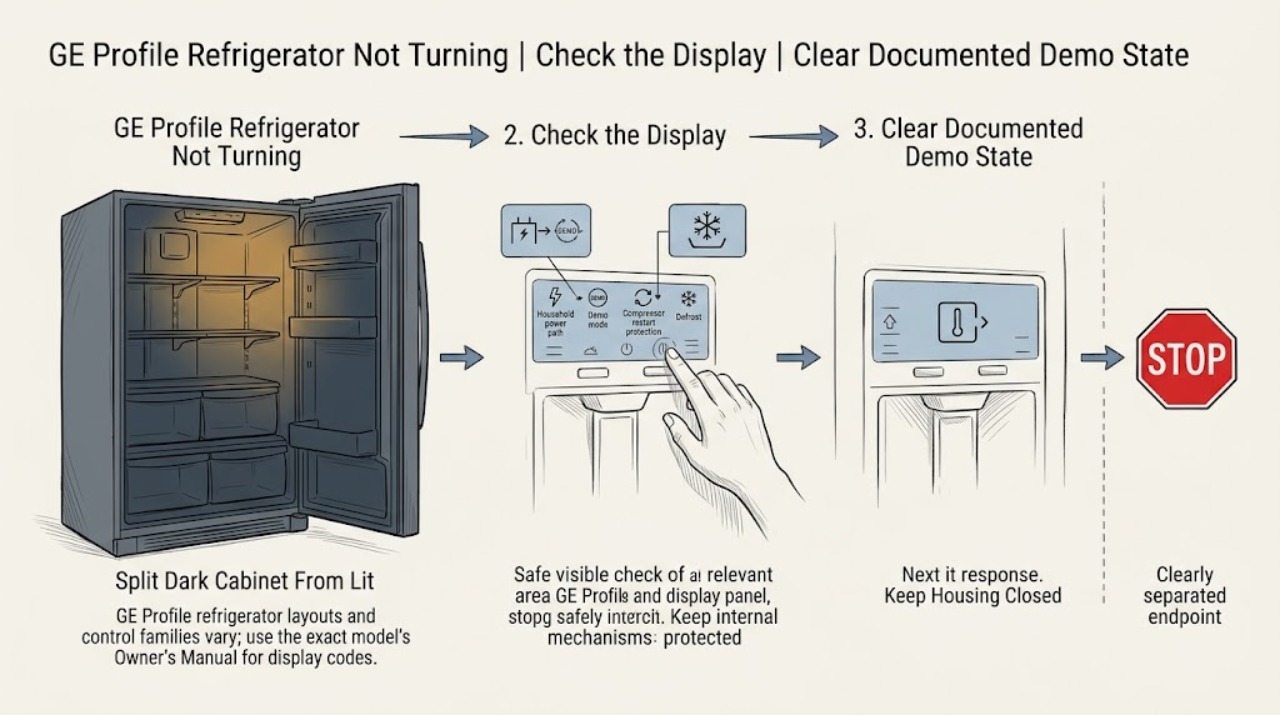
GE Profile Refrigerator Not Turning On: Check Demo, Power, and Restart States
On a GE Profile refrigerator, “not turning on” can mean a dark cabinet, a lit display with no cooling, a dispenser panel that ignores input, or a temporary quiet period. Begin by recording the model, every display character, and whether the interior light works.
-
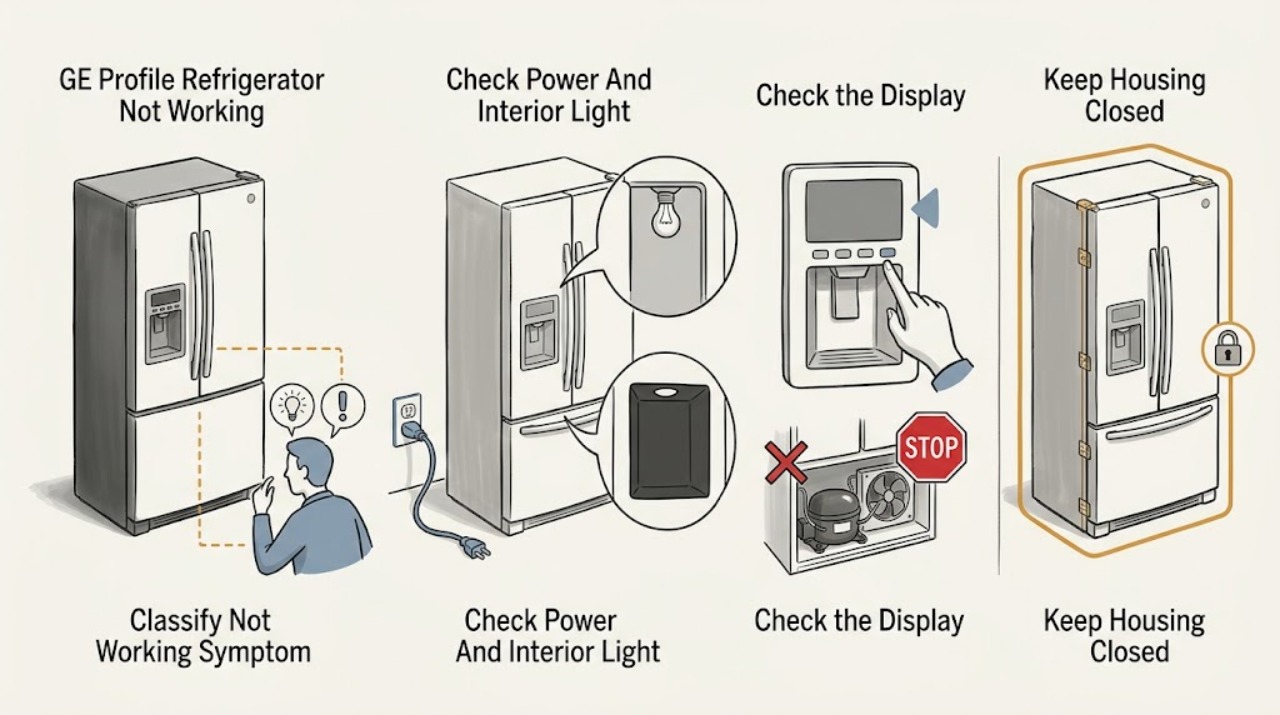
GE Profile Refrigerator Not Working: Check Power, Modes, and Cooling
First separate a completely dead GE Profile refrigerator from one that has lights or a display but is not cooling, and record the complete model number. If there is no interior light or display, check that the plug is fully seated and that the wall outlet has power; do not open the cabinet or test live wiring.
-
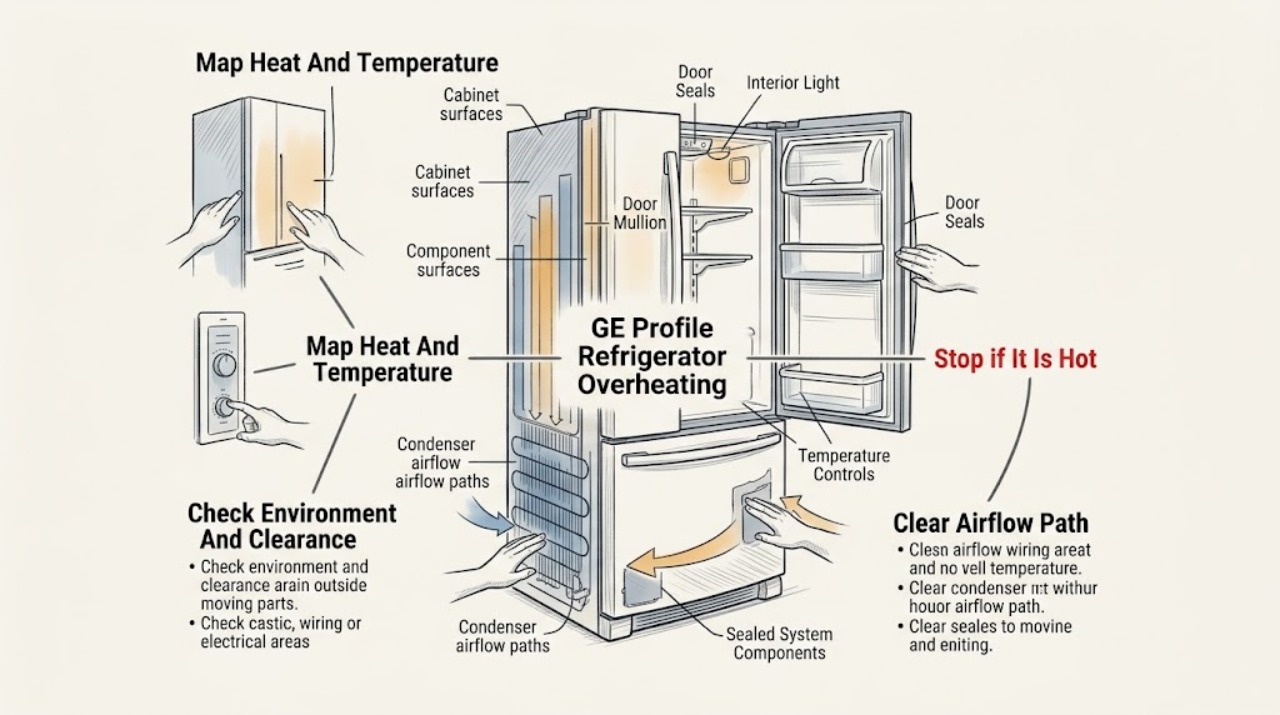
GE Profile Refrigerator Overheating: Separate Normal Cabinet Heat from a Real Fault
First identify what is hot and whether the food is staying at the model's set temperature. GE says warm or hot air from the bottom, sides, or rear can be normal on auto-defrost refrigerators, and the area between doors can feel hot because the system circulates warm liquid there to prevent condensation.
-
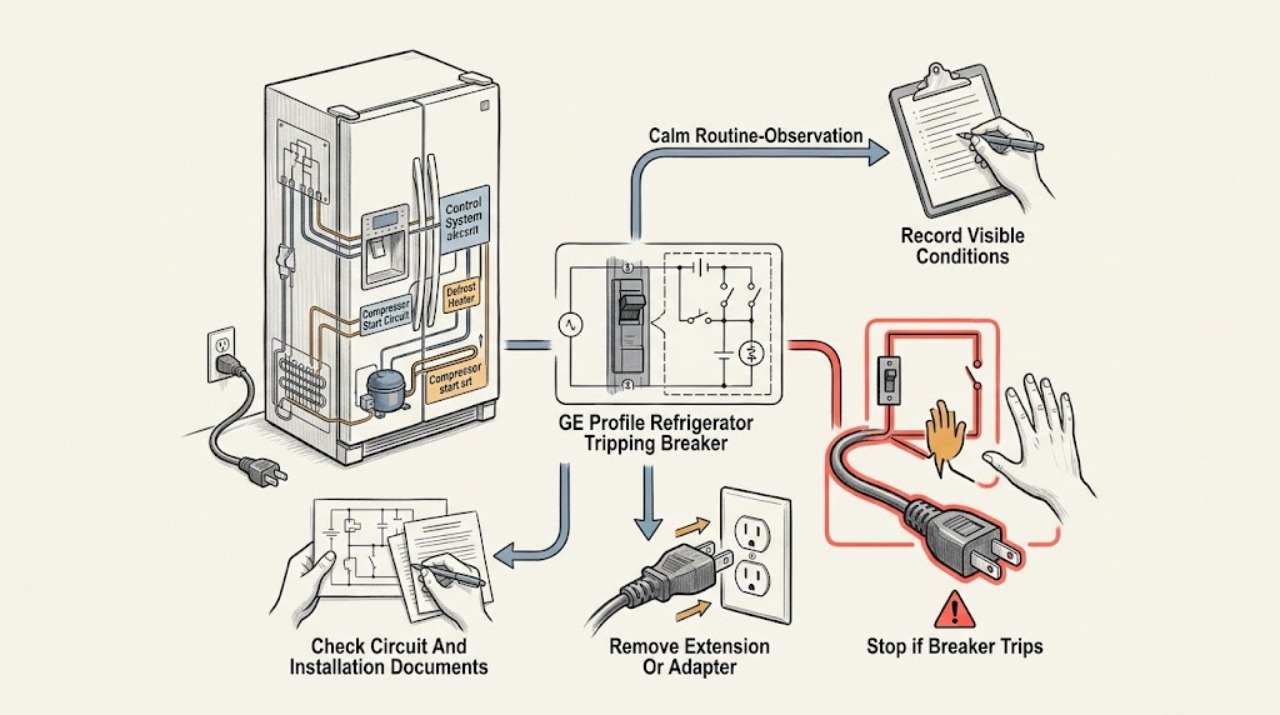
GE Profile Refrigerator Tripping Breaker
Treat a GE Profile refrigerator that trips a breaker as an electrical safety issue, not a routine cooling reset. First note whether the breaker trips immediately, only when the refrigerator is connected or starts, or after it has run for a while, and whether there is a hot plug, burning odor, smoke, water near electrical parts, or visible damage.